Ayamase.
Ofada Green Pepper Stew
Ayamase · say it: ah-yah-MAH-say
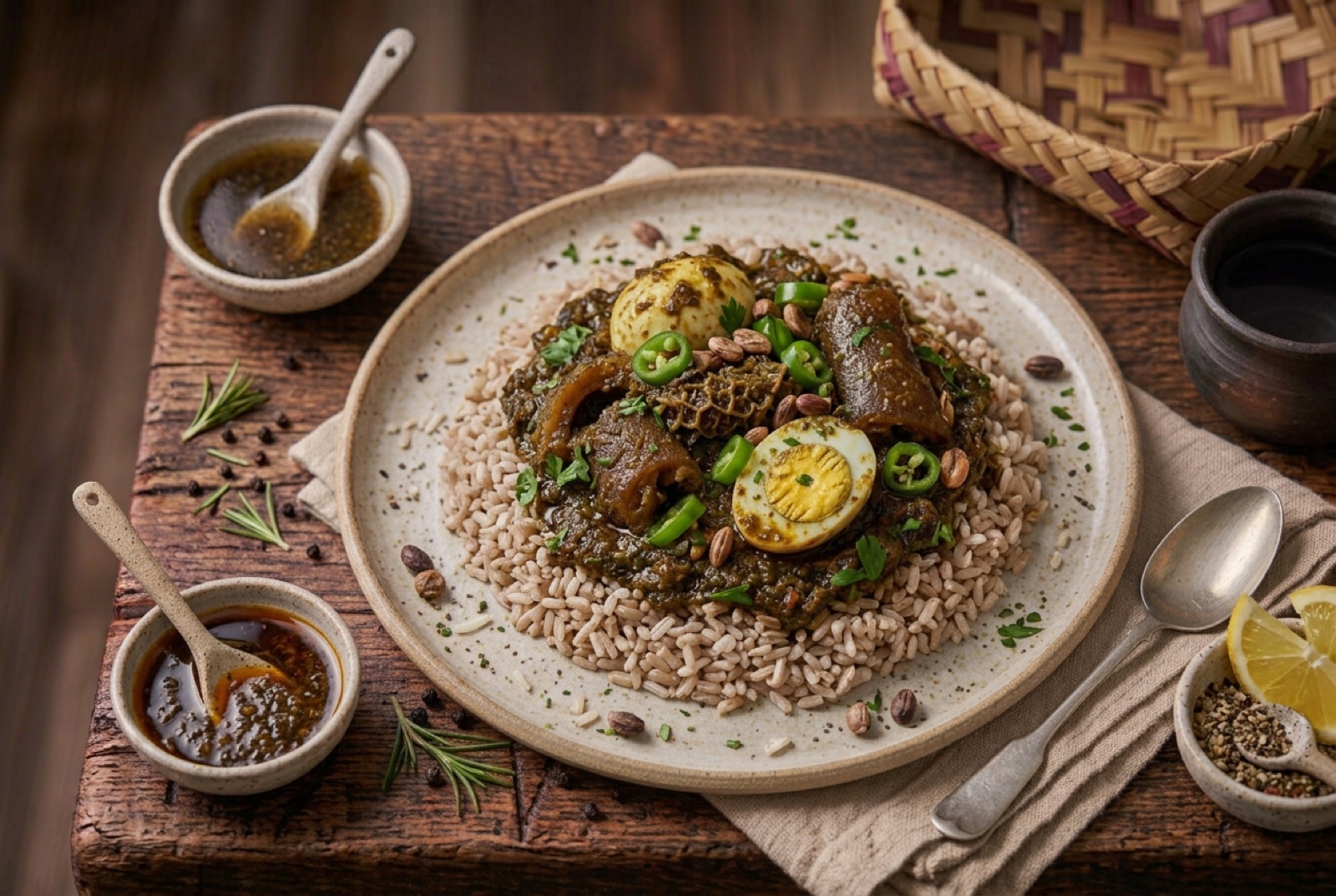
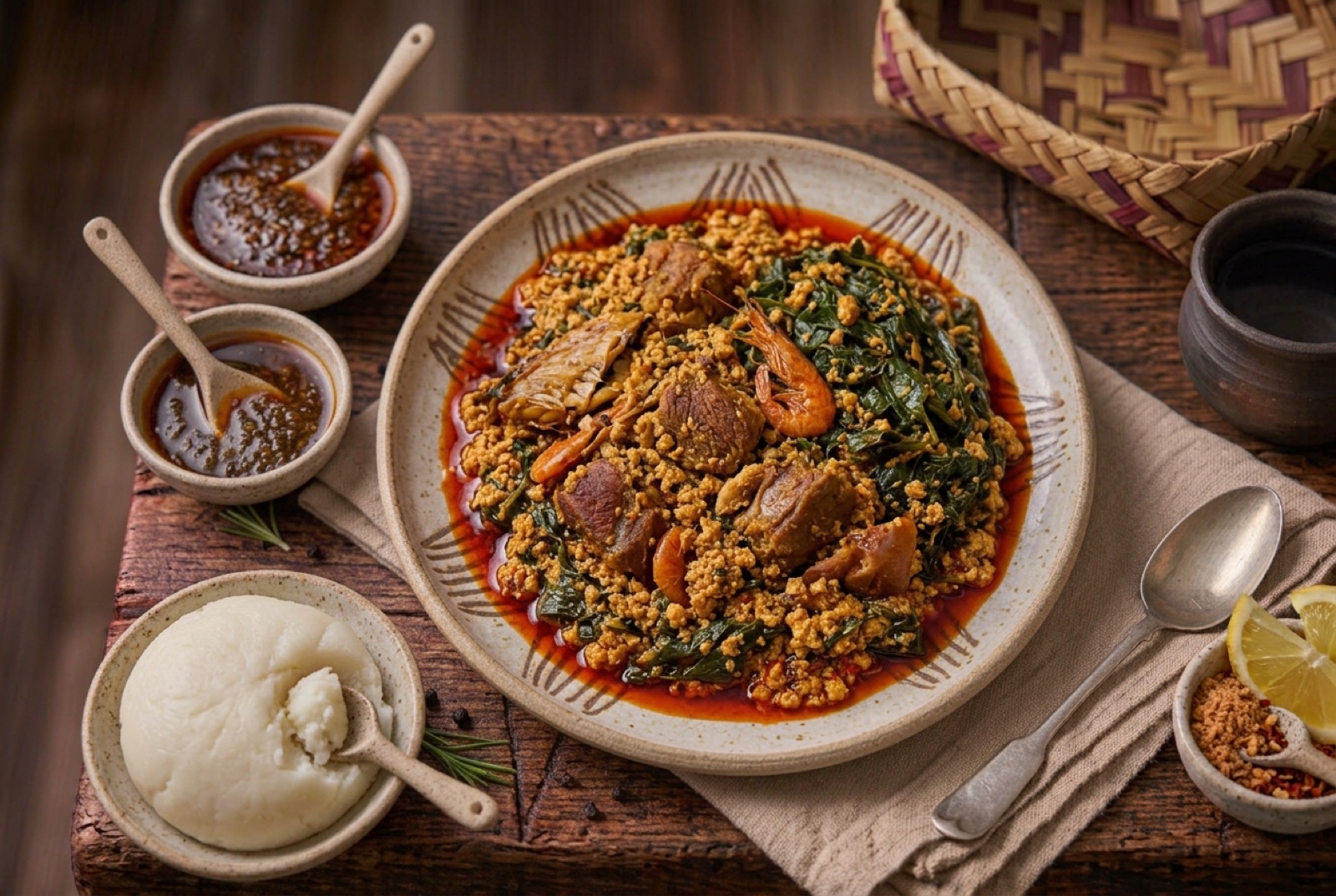
Ayamase is a stew built entirely from green peppers. Green bell peppers, green chillies and green scotch bonnets are blended raw and cooked down in palm oil that has been deliberately overheated until it loses its red colour, which is what turns the finished stew from bright green to a dark, smoky olive. Into it go fermented locust beans, assorted offal, cow skin and whole boiled eggs, and the whole thing is served flooded over ofada rice, a short, unpolished local grain with a faintly fermented aroma. The taste is sharp, smoky and seriously hot, and the pool of oil on top is a feature rather than an accident.

- Gate
- NigeriaSouth-West
- Prep
- 40 min
- Cook
- 1 hr 40 min
- Total time
- 2 hr 20 min
- Serves
- 6
- Status
- Takes skill
- Nutrition / serving · estimated
- Calories 720 kcal
- Protein 46 g
- Carbs 13 g
- Fat 55 g
- Fiber 4 g
- Sodium 1150 mg
Why this recipe works.
- Walks through bleaching palm oil safely, including the ventilation warning that most recipes skip entirely.
- Keeps the peppers green and raw-blended, so the stew develops its colour from the oil rather than from overcooking.
- Gives realistic separate cooking times for tripe, cow skin and beef instead of boiling everything into one texture.
- Explains what ofada rice is and how to cook it, since the stew was designed around that grain.
Ingredients.
14 itemsFor the meat
For the pepper base
To finish
Equipment
- Deep heavy pot
- Blender
- Extractor fan or an outdoor burner
- Sieve for draining the pepper purée
Instructions.
Boil the tripe and cow skin
Simmer the shaki in salted water for 60 minutes, until a knife goes through without dragging but the tripe still has spring. Add the ponmo for the last 40 minutes so it softens to a translucent chew. Drain both and set aside.
Cook the beef
In a separate pot, simmer the beef with the chopped onion, stock cubes and a little salt in just enough water to cover for 45 minutes, until tender. Keep the stock; it goes into the stew later.
Blend and drain the peppers
Blend the green bell peppers, green chillies, scotch bonnets and one onion to a coarse purée with no added water. Tip it into a sieve set over a bowl and leave it to drain for 10 minutes, discarding the watery liquid that collects.
Tip Keep every pepper green. A single red one will turn the finished stew a muddy brown.
Bleach the palm oil
Open the windows and turn the extractor to maximum, or work outdoors. Heat the palm oil in a deep pot over medium-high heat for 8 to 12 minutes, until the red colour drains away, the oil turns clear and then begins to darken, and it is smoking steadily. Take it off the heat at that moment.
Tip Keep a lid within reach and never walk away. Push the oil past darkening and it burns outright.
Fry the aromatics
Let the oil cool for 5 minutes, then return it to medium heat and fry the sliced onion for 4 minutes until soft. Stir in the iru and crayfish and cook for 2 minutes, until the locust beans smell pungent and start to break down.
Cook the pepper base
Add the drained pepper purée and cook over medium heat for 25 to 30 minutes, stirring every few minutes. It is ready when the mixture has darkened to a deep olive, thickened considerably, and the oil separates and floats clear on the surface.
Add the meats
Stir in the tripe, ponmo, beef and about 150 ml of the reserved beef stock, and simmer uncovered for 15 minutes so the meats take on the pepper and the sauce tightens again around them.
Finish with the eggs
Slide the whole boiled eggs into the stew, spoon sauce over them and simmer gently for a final 10 minutes until they have turned brown at the surface. Taste for salt, then rest off the heat before serving over ofada rice.
Tips from our kitchen.
- Bleach the oil outdoors or under a powerful extractor with the windows open. It smokes heavily for several minutes and the smell lingers for hours.
- Take the oil off the heat the moment it turns clear and starts to darken. Pushed further it burns and the bitterness stops being pleasant.
- Blend the peppers coarse and drain the purée in a sieve for ten minutes — excess pepper water dilutes the oil and slows everything down.
- Boil shaki for at least an hour before it joins the pot. Tripe that is merely warmed through stays tough all the way to the table.
- Add the boiled eggs whole in the last fifteen minutes so they colour and take on pepper without breaking apart.
- Rinse ofada rice several times and expect a stronger smell than you are used to; that fermented note is characteristic, not spoilage.
Substitutions.
- Bleached palm oil → Half unbleached palm oil, half neutral oil, with a pinch of smoked paprika
- Avoids the smoke entirely at the cost of the stew's defining bitterness and its dark colour. The result is a decent green pepper stew rather than ayamase.
- Green scotch bonnets and green chillies → Green jalapeños plus a couple of green bird's eye chillies
- Adjust for heat, not colour — the stew needs to stay entirely green at the blending stage, so no red peppers of any kind.
- Shaki (tripe) and ponmo → Extra stewing beef, or chicken thighs
- Perfectly workable and much easier to source. You lose the textural range that is a large part of why the dish is eaten in small, intense spoonfuls.
- Ofada rice → Brown rice, or ordinary long-grain white rice
- Brown rice is closer in bite and colour. Neither has the fermented aroma of true ofada, which is grown in southwestern Nigeria and sold at West African grocers.
Variations.
- Ofada stew with beef only
- The same green base and bleached oil without any offal, using chunks of stewing beef alone. Common in restaurants abroad where tripe and cow skin are hard to buy.
- Unbleached ayamase
- Made with fresh red palm oil straight from the bottle, giving a brighter, sweeter and much greener stew. Some cooks prefer it and consider the bleaching step unnecessary risk.
- Ayamase with locust bean and no eggs
- A leaner everyday pot with a heavier hand of iru and no boiled eggs, cooked in bulk and eaten through the week with rice or yam.
Storage & reheating.
Ayamase is a stew that improves over several days, as the bitterness of the bleached oil settles and the pepper spreads through the meats. It keeps 5 days refrigerated under its layer of set oil, which acts as a seal, and freezes for 3 months. Reheat slowly until the oil melts and the sauce loosens; a hard reheat can make the bitterness spike. Remove the boiled eggs before freezing, since their whites turn rubbery and weep on thawing, and add fresh ones when you reheat.
Serve with
Ofada rice, ideally steamed in banana or moi moi leaves, with fried plantain on the side.
The story behind Ayamase.
The dish belongs to Yoruba Ogun State and travels under several names. Ayamase and ofada stew are used almost interchangeably, though strictly speaking ofada refers to the rice — a locally grown, unpolished variety with a distinctive smell that many first-time eaters find odd and then miss when it is absent. The nickname "designer stew" attached itself in Lagos, where the dish became a status item at parties and restaurants, served in leaf wraps with the rice steamed inside them. The origin of the name ayamase is passed down orally, usually attributed to a particular cook whose household recipe spread, and the account is not documented well enough to state as fact.
What is documented is the technique, and it is unusual. Bleaching palm oil means heating it far past its normal cooking temperature until it stops being red and turns clear and then dark, giving off a great deal of acrid smoke on the way. The point is flavour: bleached oil loses the grassy sweetness of fresh palm oil and gains a smoky bitterness that defines this stew and no other. It is also genuinely unpleasant to do indoors, and Nigerian cooks who can will do it outside or under a strong extractor with the windows open. This is one of the rare cases where a technique warning is not caution for its own sake.
The rest of the pot is a study in offal. Shaki, the honeycomb tripe, is boiled long enough to go tender but keeps its chew. Ponmo contributes slipperiness. Boiled eggs go in whole and turn brown and slightly leathery on the outside, absorbing the pepper as they sit. Assorted beef and sometimes liver fill in the rest. None of it is decorative — the stew is designed to be eaten in small quantities with a large quantity of rice, so intensity is the whole strategy. Made properly, a single spoonful is enough to season an entire plate.
Questions, answered.
What does bleaching palm oil actually do?
Heating red palm oil well past normal cooking temperature destroys the carotenoids that give it its colour, so it turns from deep orange to clear and then darkens. The flavour changes with it, losing the fresh grassy sweetness and gaining a smoky bitterness. That bitterness is what makes ayamase taste like ayamase, and it is why the step is not optional in the traditional recipe.
Is bleaching palm oil dangerous?
It produces a lot of acrid smoke and the oil is extremely hot, so it demands respect: use a deep pan, never leave it unattended, keep a lid nearby, and work outdoors or under strong extraction with windows open. Overheated oil of any kind also degrades, which is a reason to bleach only what the recipe needs rather than a large batch.
What is ofada rice?
Ofada is a group of unpolished rice varieties grown in southwestern Nigeria, short-grained, brownish and speckled, with a pronounced earthy, slightly fermented aroma. Because the bran is left on, it takes longer to cook than white rice and has a firmer bite. It is traditionally served wrapped in leaves and is the intended partner for this stew.
Why is my ayamase still bright green?
Either the oil was not bleached, or it was not bleached far enough. The dark olive colour of a finished ayamase comes from the darkened oil coating the peppers, not from cooking the peppers themselves down. If you use fresh red palm oil, the stew stays green and orange-tinged, which is a legitimate variation but a different dish visually.
How hot is this stew?
Very. A traditional pot uses a large quantity of green scotch bonnets and is eaten in small spoonfuls with a lot of plain rice to balance it. To moderate the heat, replace most of the scotch bonnets with green bell peppers or deseeded jalapeños while keeping the total volume of pepper the same, since the peppers are the body of the stew as well as its heat.
You might also like.
All recipes →
Keep exploring Nigeria.
Nigeria has 9 more dishes in the atlas — Akara and Efo Riro, and 7 more.
All Nigeria recipes Bell pepper recipes Green chili recipes Eggs recipes maingluten freedairy freehalal friendlyRecipe by The DishRoute Kitchen · published August 20, 2026 · updated August 20, 2026