Num Plae Ai.
Khmer Palm Sugar Rice Balls
នំផ្លែអាយ · say it: num plai eye
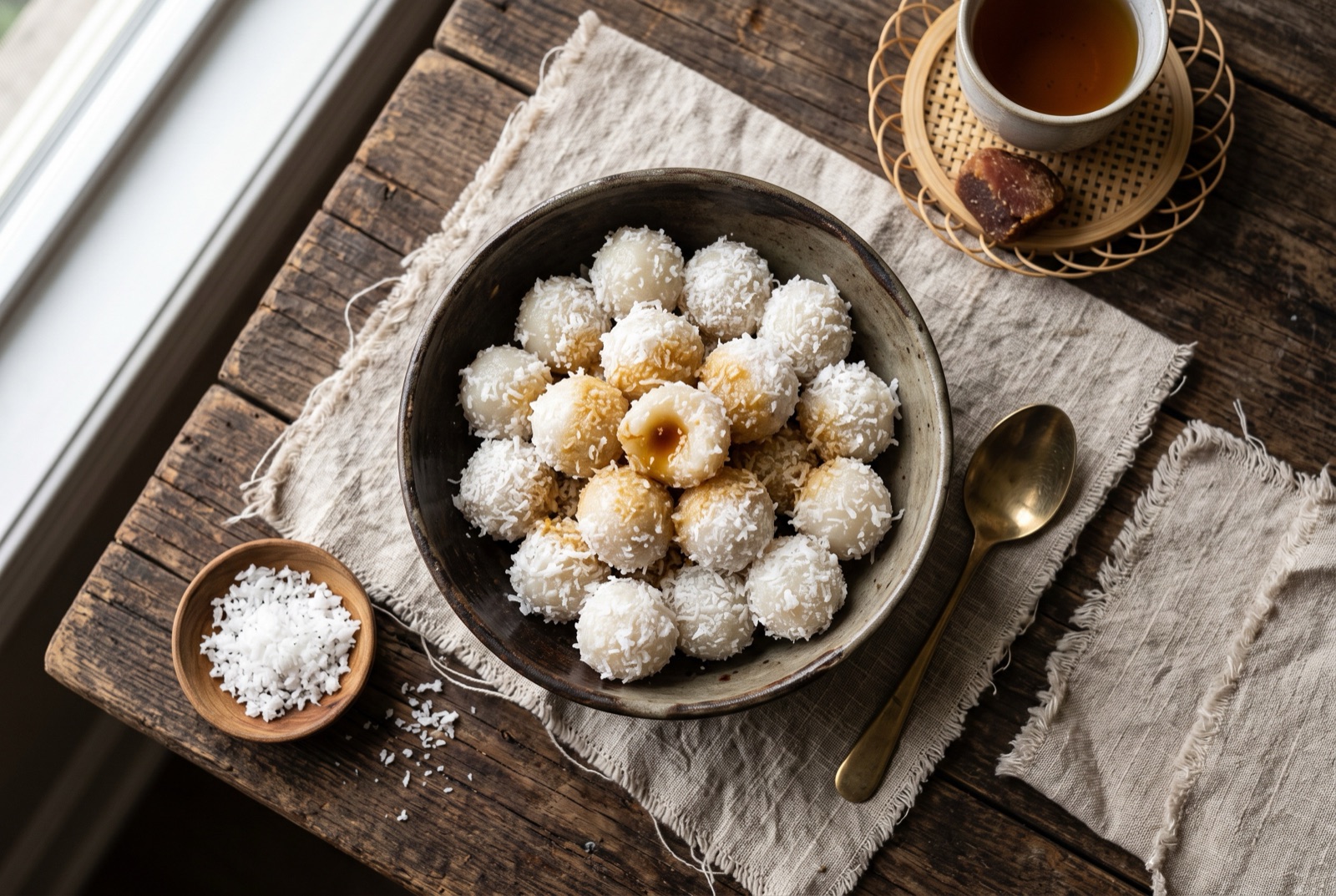
Num plae ai is a small chewy dumpling with a trick inside. A ball of glutinous rice flour dough is wrapped around a cube of hard palm sugar, dropped into boiling water and cooked until it bobs to the surface, then rolled while wet in fresh grated coconut mixed with a pinch of salt. Bite into one and the sugar, which melted during boiling, runs out as warm caramel syrup. The dough itself is barely sweet — soft, springy, faintly chewy — so the contrast between the neutral casing, the salty coconut and the sudden burst of palm caramel is the entire pleasure of the sweet. They are sold on market trays in pale green and white, take about half an hour, and are best eaten the day they are made.

- Gate
- CambodiaPhnom Penh
- Prep
- 30 min
- Cook
- 15 min
- Total time
- 45 min
- Serves
- 6
- Status
- Medium
- Nutrition / serving · estimated
- Calories 340 kcal
- Protein 3 g
- Carbs 62 g
- Fat 10 g
- Fiber 3 g
- Sugar 26 g
Why this recipe works.
- Dough hydration set so it seals reliably around the sugar instead of splitting in the pot.
- A sealing technique explained properly, which is the only place this sweet actually goes wrong.
- Salted fresh coconut coating, so the dumplings taste balanced rather than sugary.
- Optional pandan colouring using real leaves, with a note on what the powder gets you instead.
Ingredients.
8 itemsFor the dough
For the filling
For the coating
Equipment
- Wide saucepan
- Slotted spoon
- Shallow tray for the coconut
Instructions.
Season the coconut
Toss the grated coconut with the half teaspoon of salt and spread it in a shallow tray. If using frozen coconut, thaw and squeeze out excess water first so the coating clings rather than slides.
Tip Taste it — the coconut should be distinctly salty on its own, because it is the only thing balancing the sugar inside.
Make the dough
Put the glutinous rice flour and pinch of salt in a bowl and add the warm water a little at a time, working it in with your fingers, until you have a smooth dough with the feel of soft modelling clay. Knead for 2 minutes, then cover and rest 10 minutes.
Tip If it cracks when rolled into a ball it needs a teaspoon more water; if it sticks to your palm it needs a dusting more flour.
Colour half the dough
For the traditional two-tone tray, divide the dough and knead the strained pandan juice into one half until it takes on an even pale green. Add a little extra flour to compensate for the added liquid.
Wrap the sugar
Roll the dough into balls the size of a walnut, flatten each into a disc about 5 mm thick, sit a cube of palm sugar in the centre and fold the dough up around it. Pinch the seam shut, then roll firmly between your palms until the ball is completely smooth with no visible seam.
Tip Any line you can still see is where the sugar will escape. Roll until the surface looks unbroken.
Boil until they float
Bring a wide pan of water to a rolling boil and lower in the balls in batches, stirring once so they do not stick to the base. They will sink, then rise; once they are all floating, cook 2 minutes more so the centres are done.
Coat while wet
Lift the dumplings out with a slotted spoon, drain for a couple of seconds and roll them straight into the salted coconut while the surface is still wet. Scatter with sesame seeds if using and serve warm, within the hour.
Tips from our kitchen.
- Add the water to the flour gradually. The dough should feel like soft modelling clay — tacky but not sticky, and smooth when rolled between the palms.
- Cut the palm sugar into small cubes no larger than 1 cm. Bigger pieces stretch the dough thin and burst through as they melt.
- Seal each ball by pinching the seam shut and then rolling it firmly between your palms until no line is visible at all. A visible seam always leaks.
- Keep the water at a steady rolling boil. A lazy simmer leaves the dough gummy in the centre and gives the sugar time to eat through the wall.
- Give the balls another minute or two after they float. Floating means the outside is cooked; the centre needs a little longer.
- Roll them in coconut while still wet from the pot — dry dumplings shed the coating immediately.
Substitutions.
- Hard palm sugar → Jaggery, or soft palm sugar chilled and cut into cubes
- Jaggery is the closest widely available substitute. Brown sugar does not work — it dissolves and leaks out through the dough almost immediately.
- Fresh grated coconut → Frozen grated coconut, thawed, or unsweetened desiccated coconut rehydrated with a tablespoon of hot water
- Frozen is far better than desiccated. Dry desiccated coconut has no moisture and tastes papery against the hot dumpling.
- Pandan leaves → A few drops of pandan extract, or leave the dough white
- Extract gives the colour and some of the aroma but reads slightly artificial. Plain white dumplings are entirely traditional.
- Glutinous rice flour → There is no substitute
- Ordinary rice flour or wheat flour will not give the chewy, elastic texture and the dough will crack in the pot. Glutinous rice flour is sold in every Asian grocer, often labelled sweet rice flour.
Variations.
- Pandan green dumplings
- Half the dough coloured with pandan juice, so the tray comes out in the traditional two-tone green and white.
- Sesame-coated
- Rolled in toasted white sesame seeds mixed with a little sugar instead of coconut, for a nuttier, drier coating.
- In coconut cream
- Served in a shallow pool of lightly salted warm coconut cream rather than rolled dry, which turns the sweet into a spoon dessert.
Storage & reheating.
Eat num plae ai the day they are made, ideally within a few hours, while the dough is still soft and the sugar liquid. Refrigeration ruins them: the starch retrogrades and they turn hard and chalky overnight. If you must keep them, leave them covered at room temperature and revive them by steaming for 3 minutes, which softens the dough and remelts the sugar. Uncooked dough balls can be frozen on a tray, bagged once solid, and boiled straight from frozen with 2 minutes added.
Serve with
Nothing but strong Khmer coffee or hot tea — these are sweet enough to stand alone.
The story behind Num Plae Ai.
Palm sugar is the reason this sweet exists. Sugar palms grow all over the Cambodian countryside and are so tied to the landscape that the tree is a national symbol; climbers go up the trunks twice a day with bamboo ladders to collect sap from the cut flower stems, and the sap is boiled down to a thick paste that sets hard in moulds. That hard palm sugar — caramelly, slightly smoky, less sweet than cane sugar — is what goes inside num plae ai. Nothing else melts quite the same way or tastes like that.
The format is not unique to Cambodia. Similar filled glutinous rice balls appear across Asia, from Vietnamese bánh trôi to Chinese tang yuan to the Japanese and Korean varieties, and versions turn up wherever glutinous rice flour and a hard filling meet boiling water. What is Khmer is the palm sugar, the fresh coconut coating rather than a syrup bath, and the pale green colour that comes from pandan leaf juice worked into some of the dough.
Home cooks make num plae ai for New Year and for Buddhist merit-making ceremonies, and they are sold year-round on street trays. The technical bit is the seal: any gap in the dough and the sugar escapes into the pot, leaving you with a plain dumpling and a caramel-flavoured saucepan. Cambodians roll the dough thin, pinch it around the sugar cube, then work the seam closed between the palms until the ball is completely smooth with no seam visible. If you can see a line, it will leak. Everything else is easy — the dough needs no rising, no proving and no skill beyond rolling.
Questions, answered.
Why did the sugar leak out of my dumplings?
The seal failed. Either the dough was rolled too thin over the sugar, the seam was pinched but not smoothed, or the sugar cubes were too large and stretched the wall as they melted. Roll each ball firmly between your palms after sealing until the surface is completely smooth with no visible line, and keep the cubes under 1 cm.
What kind of palm sugar do I need?
You need the hard, solid kind that comes as discs, cylinders or blocks and has to be chopped with a knife, not the soft spreadable paste. It has to hold its shape while you wrap the dough around it and only melt once it is in the boiling water. Jaggery works the same way. Chill soft palm sugar for an hour if that is all you can find, and cut it quickly.
Can I make these ahead for a party?
Shape them ahead but boil them at the last minute. Uncooked balls sit happily on a floured tray for a few hours at room temperature, or freeze on a tray and go into the pot straight from frozen with an extra couple of minutes. Boiled dumplings start hardening within a few hours and are noticeably worse the next day.
Can I use desiccated coconut for the coating?
You can, but rehydrate it first: mix it with a tablespoon of hot water and a pinch of salt and let it sit ten minutes. Dry desiccated coconut is papery and sucks moisture out of the dumpling surface. Frozen grated coconut, sold in most Asian grocers, is much closer to fresh and thaws in minutes.
Are these dumplings gluten-free?
Yes. Glutinous rice flour is made from sticky rice and contains no wheat at all, despite the name — glutinous refers to the sticky texture, not to gluten. Palm sugar and coconut are also naturally gluten-free, so the whole sweet is suitable for coeliacs as long as the flour has not been milled in a shared facility.
You might also like.
All recipes →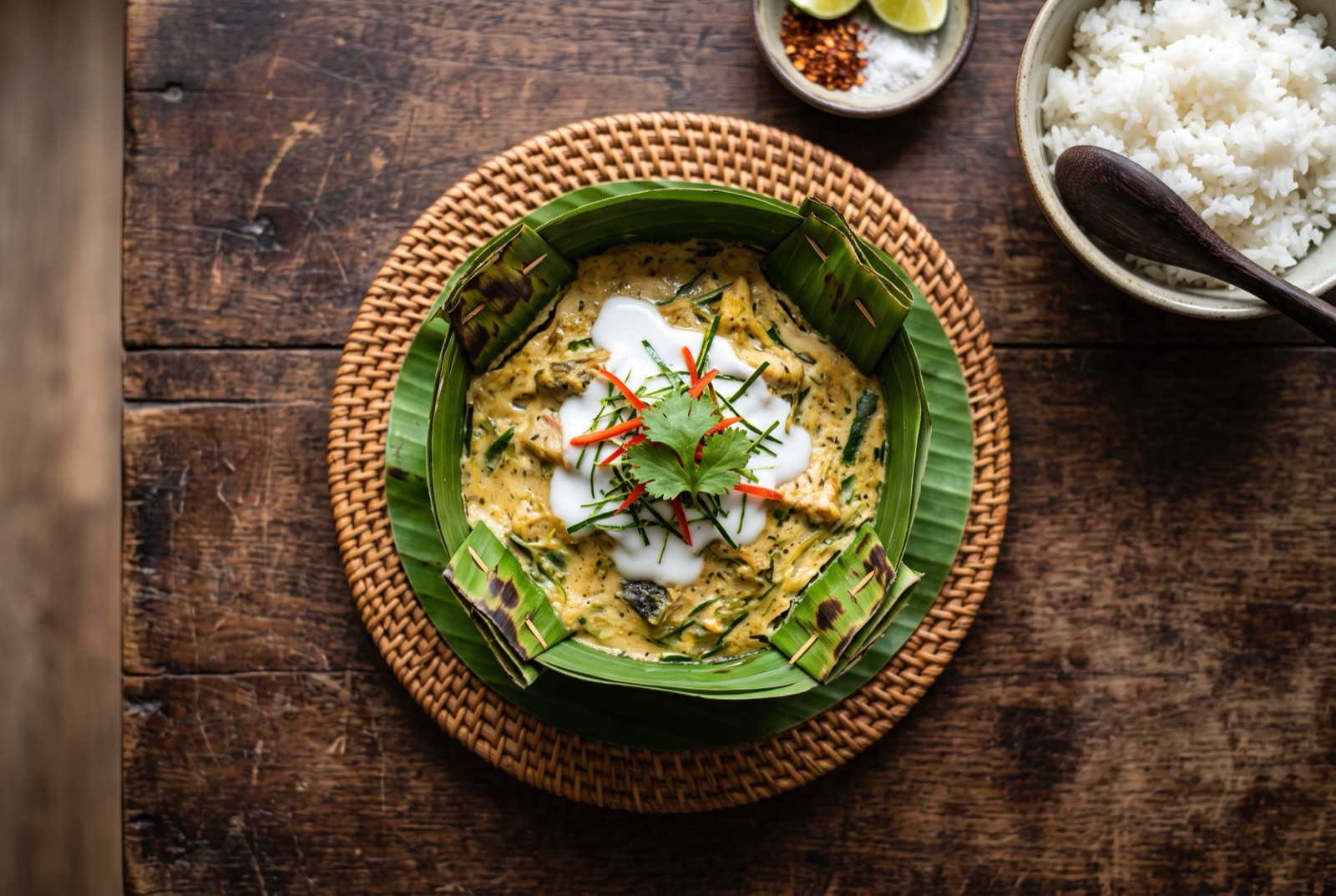
Keep exploring Cambodia.
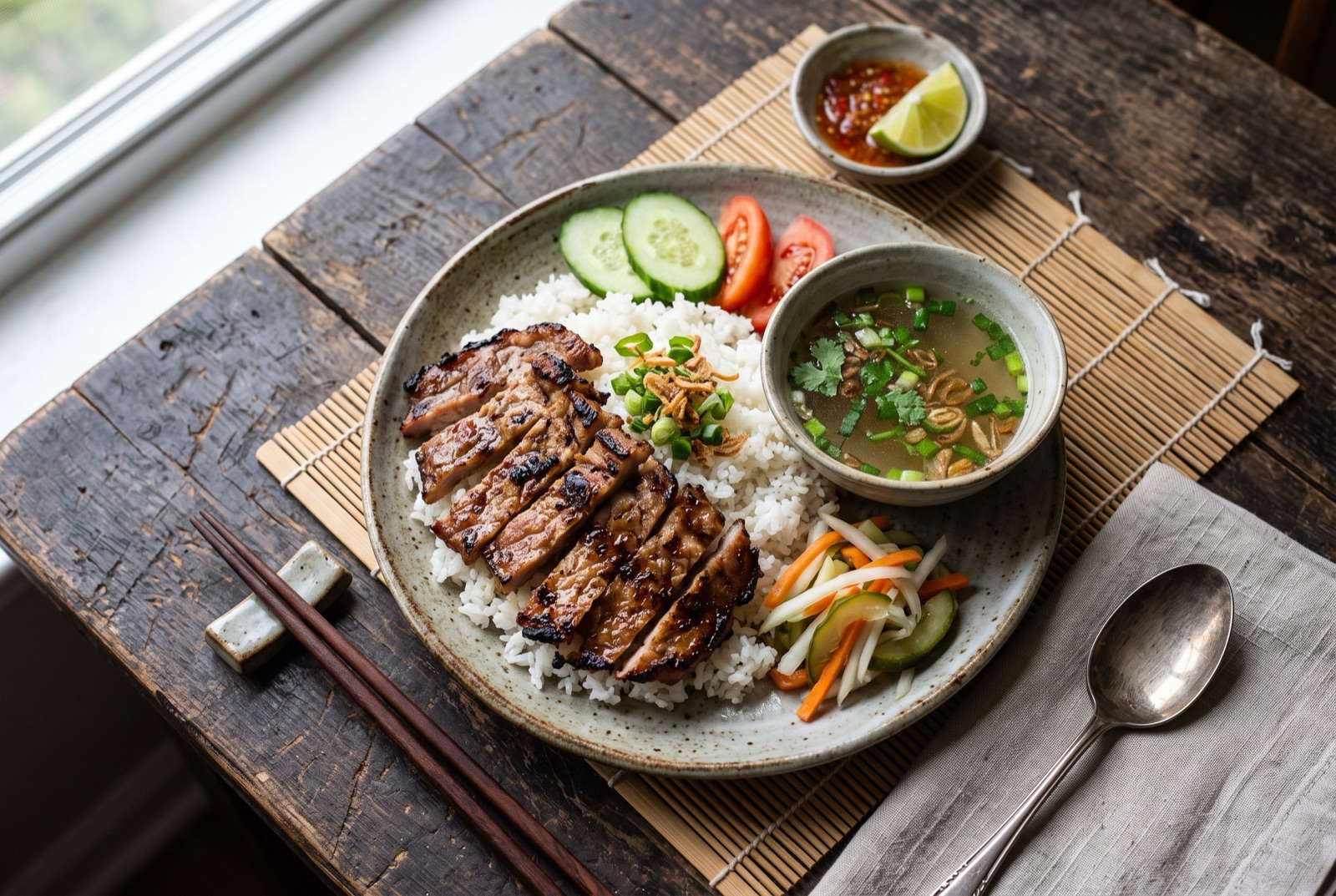
Cambodia has 9 more dishes in the atlas — Amok Trey and Bai Sach Chrouk, and 7 more.
All Cambodia recipes Sticky rice recipes Coconut recipes dessertsnackvegetarianvegangluten freedairy freenut freeRecipe by The DishRoute Kitchen · published August 20, 2026 · updated August 20, 2026