Keema Aloo.
Minced Beef and Potato Masala
قیمہ آلو · Keema aloo · say it: KEE-mah AA-loo
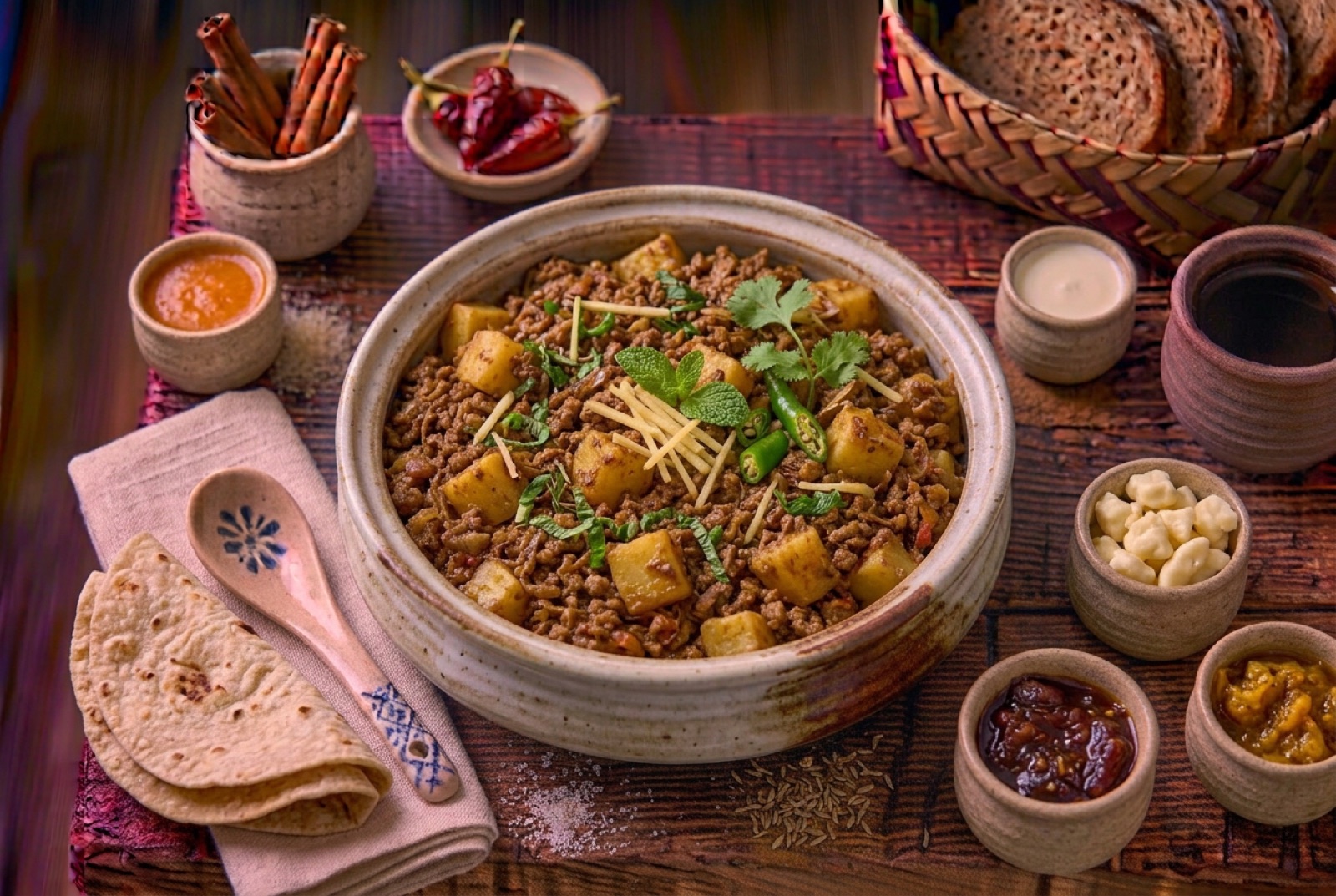
Keema aloo is minced beef fried down into a browned onion and tomato masala with cubed potatoes cooked in the same pan until they are soft at the edges and holding at the centre. It is deliberately dry — not a curry with gravy but a pot you scoop into a folded piece of roti, which is why the liquid gets cooked off at the end rather than left in. The flavour is straightforward and savoury: browned meat, sweet onion, sour tomato, warm cumin and coriander, with green chile and cilantro thrown in at the last moment for freshness. In Pakistani homes it turns up on the table more often than any famous dish, and it is on the table in under an hour.

- Gate
- PakistanPunjab
- Prep
- 15 min
- Cook
- 40 min
- Total time
- 55 min
- Serves
- 4
- Status
- Easy
- Nutrition / serving · estimated
- Calories 480 kcal
- Protein 28 g
- Carbs 28 g
- Fat 29 g
- Fiber 4 g
- Sodium 820 mg
Why this recipe works.
- Gets the mince properly browned rather than boiled grey, which is the whole difference in a dish this simple.
- Cooks the potatoes in the masala so they absorb it, with a note on when to fry them separately instead.
- Finishes dry on purpose, so it works as roti food rather than sitting in a thin pool of liquid.
- Weeknight timing that is honest — under an hour start to finish with no marinating step.
Ingredients.
16 itemsMain
Spices
To finish
Equipment
- Wide heavy pan or karahi with a lid
- Wooden spoon
Instructions.
Brown the onions
Heat the oil in a wide pan and fry the chopped onions over medium-high heat for 10 to 12 minutes, stirring, until they are properly golden brown at the edges rather than merely soft. Add the cumin seeds for the last 30 seconds.
Tip Pale onions are the most common reason home keema tastes thin. Take them further than feels necessary.
Fry the aromatics
Stir in the ginger and garlic paste and fry for a minute, until it stops smelling raw and starts smelling toasted. Add the ground coriander, turmeric, chile powder and salt and stir for 20 seconds so the spices hit the hot oil directly.
Brown the mince
Add the beef mince and break it up immediately with the back of a spoon so no lumps survive. Fry over medium-high heat for 10 minutes, stirring often — first the meat will release liquid and go pale, then the liquid boils off and the mince begins to catch and brown on the base of the pan. That browning is what you are waiting for.
Cook down the tomatoes
Add the chopped tomatoes and cook for 8 minutes, pressing them against the side of the pan until they collapse completely and the mixture darkens. Keep going until oil separates and pools clearly at the edges.
Add the potatoes
Stir in the potato cubes and 150 ml of hot water, cover, and cook on medium-low for 15 minutes until a knife slides into a cube with no resistance. Shake the pan rather than stirring hard, so the potatoes stay whole.
Dry it out
Uncover, raise the heat and cook off any remaining liquid, stirring gently, until a spoon dragged across the base leaves a track that does not fill in. Stir through the garam masala, green chiles, cilantro and ginger matchsticks and take it off the heat after one minute.
Tip If the potatoes are not tender yet but the pan is dry, add hot water two tablespoons at a time rather than a big splash.
Serve with bread
Tip into a bowl, scatter over a little more cilantro and serve straight away with hot roti, yogurt and lemon wedges. Fold the bread around a scoop rather than reaching for a spoon.
Tips from our kitchen.
- Use beef mince with real fat in it, around 15 to 20 percent. Extra-lean mince goes dry and grainy and there is no fat to carry the spice.
- Break the mince up with the back of a spoon as it hits the pan and keep it moving, or it clumps into pellets that stay pink inside while the outside overcooks.
- Wait for the water to cook off before you judge the browning. Mince releases a lot of liquid and nothing browns until that has gone.
- Cut the potatoes into 2 cm cubes, no smaller. Fine dice disintegrates into the masala and you lose the contrast that makes the dish work.
- Add the garam masala only in the last two minutes off direct heat. Cooked hard, its aroma is the first thing to disappear.
- If the pan looks dry but the potatoes are not done, add hot water two tablespoons at a time. A big splash of cold water stalls the browning and dulls the flavour.
Substitutions.
- Beef mince → Lamb, goat or chicken mince
- Lamb keema is richer and needs less added fat. Chicken mince cooks in about half the time and benefits from an extra tablespoon of oil, since it brings almost none of its own.
- Fresh tomatoes → 400 g tinned chopped tomatoes, drained of most of their juice
- Perfectly good out of season. Drain them well, because the extra liquid means a much longer fry to get back to a dry pan.
- Potatoes → Green peas, added in the last 5 minutes
- Keema matar is the other half of this dish's family and just as common on Pakistani tables. Frozen peas work fine and need no thawing.
Variations.
- Keema matar
- The same masala built with green peas instead of potato, cooked slightly wetter. The standard alternative in Punjabi homes and the usual filling for keema samosas.
- Keema paratha
- Yesterday's keema, cooled and mashed slightly, stuffed into flatbread dough and griddled in ghee. Breakfast in half the country.
- Anda keema
- Eggs cracked into wells made in the finished keema, covered and cooked until the whites set. Turns the leftovers into a full meal in five minutes.
Storage & reheating.
Keema keeps four days refrigerated and reheats better than most meat dishes, since it is already dry and cannot split. Warm it in a pan with a splash of water rather than in a microwave, which dries the surface and leaves the middle cold. It freezes very well for three months, though the potatoes come back slightly grainier than they went in — if you know a batch is destined for the freezer, make it as keema matar with peas instead. Leftovers are actively wanted in Pakistani homes, because paratha filling is the second life of this dish.
Serve with
Hot roti or paratha, a bowl of plain yogurt, and sliced onion with lemon and green chile on the side.
The story behind Keema Aloo.
Every cuisine has a dish that exists because it is Tuesday, and in Pakistan a large share of Tuesdays are keema. Minced meat is cheaper than a good cut, it cooks in a fraction of the time, and it stretches easily with a potato or two, which is why keema aloo occupies the space that mince and vegetables occupy in kitchens everywhere. It is home food rather than restaurant food. You will find it in the tiffin boxes of office workers, in the filling of samosas and keema paratha, and reheated for breakfast the next morning with a fried egg cracked into the pan.
The potato is doing two jobs. It makes an expensive ingredient go further, and it absorbs the masala in a way meat cannot, giving each bite a soft, spice-soaked counterpoint to the grainy texture of the mince. Cooks disagree about whether the potatoes should be fried separately first, for firmness and colour, or cooked in with the meat, which gives softer potatoes and a better-tasting pan. This version does the second, with a note on the first.
The technique that decides whether keema tastes homemade or dull is bhunai — the hard, active frying of the masala. The mince must be broken up and fried until the water it releases has boiled away and the meat starts to catch and brown on the base of the pan, and the tomato and spice must be cooked until oil separates and pools at the edge. Cooks who add water at the wrong moment, or who cover the pan too early, end up boiling the mince grey. The single most common fix for bland keema is not more spice but ten more minutes of frying with the lid off.
Questions, answered.
Why is my keema grey and watery instead of browned?
The pan was too crowded or too cool, so the mince stewed in the water it released instead of frying. Use a wide pan, get it properly hot before the meat goes in, and then be patient: the liquid has to boil away entirely before any browning can start. Resist adding water or covering the pan during this stage. If it has already gone grey, keep frying uncovered on medium-high and it will usually recover.
Should I fry the potatoes separately?
Both methods are used. Frying them separately in hot oil until golden, then folding them in near the end, gives firmer cubes with a defined edge and a prettier dish. Cooking them in with the masala from the start, as here, gives softer potatoes that have soaked up the spice and a better-tasting pan overall. Choose firmness or flavour; you cannot have both at once.
How dry should keema aloo be when it is finished?
Dry enough to sit in a heap without a puddle forming around it, but not so dry that it looks dusty. The test is to drag a spoon across the base of the pan: it should leave a clear track that does not immediately fill with liquid, and you should see a little oil glistening at the edges of the meat. That consistency is what makes it scoopable with roti.
Can I make keema aloo ahead of time?
Yes, and it tastes better the next day once the spices have settled into the meat. Cook it fully, cool it quickly and refrigerate. Reheat in a pan with a couple of tablespoons of water over medium heat, stirring, and add fresh cilantro and green chile at that point rather than reheating the old garnish, which turns dark and loses its bite.
What is the difference between keema and other minced meat curries?
Keema simply means minced meat in Urdu, so it covers a family rather than a single dish. What marks the Pakistani home style is that it is cooked dry, built on a hard-fried onion and tomato masala, and eaten with bread rather than rice. That distinguishes it from wetter minced-meat preparations designed to be spooned over rice or eaten as a gravy.
You might also like.
All recipes →
Keep exploring Pakistan.
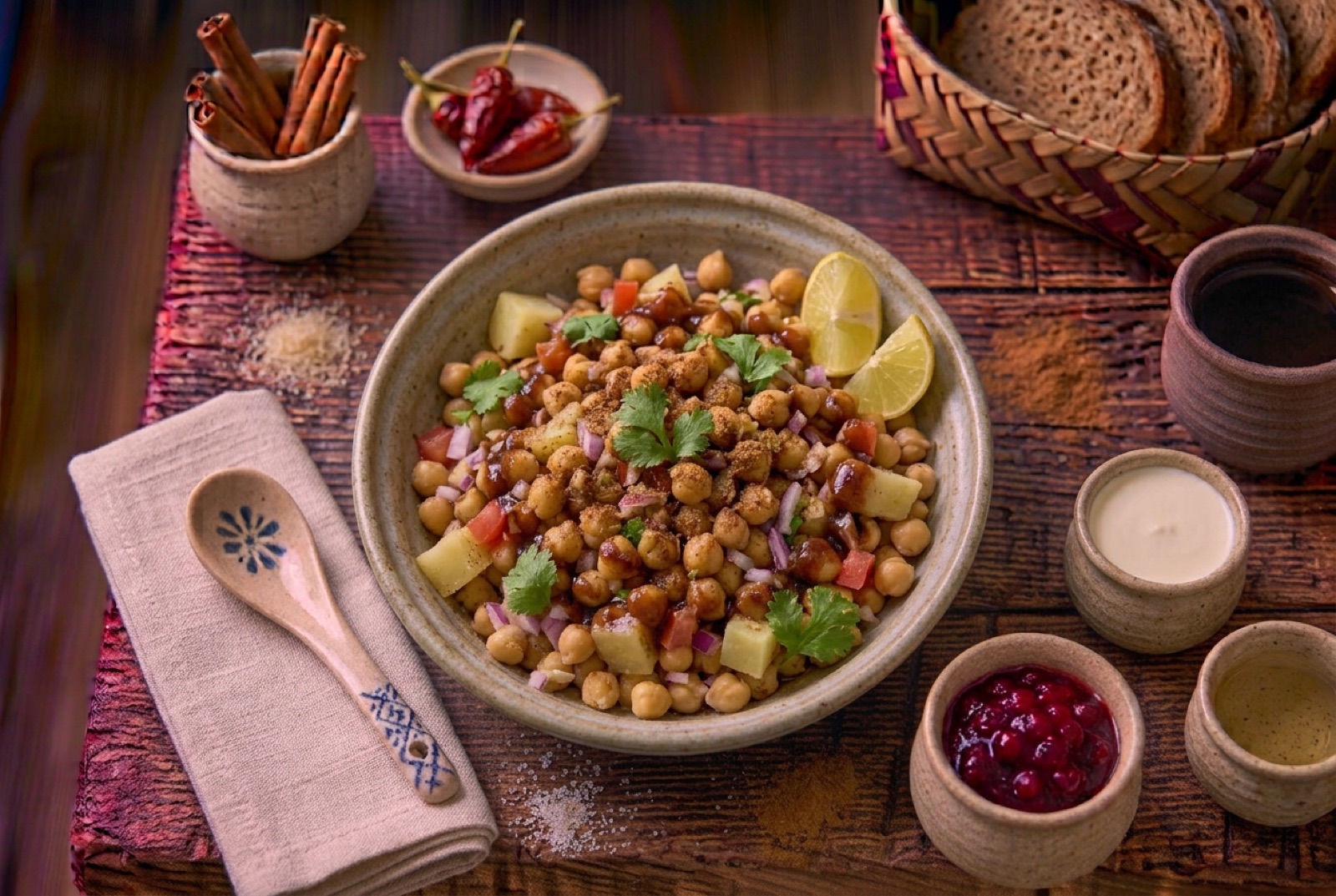
Pakistan has 9 more dishes in the atlas — Balochi Sajji and Chana Chaat, and 7 more.
All Pakistan recipes Ground beef recipes Potato recipes Onion recipes mainhalal friendlydairy freegluten freeRecipe by The DishRoute Kitchen · published August 20, 2026 · updated August 20, 2026