Kheer.
Slow-Reduced Milk and Rice Pudding with Cardamom
کھیر · Kheer · say it: KHEER
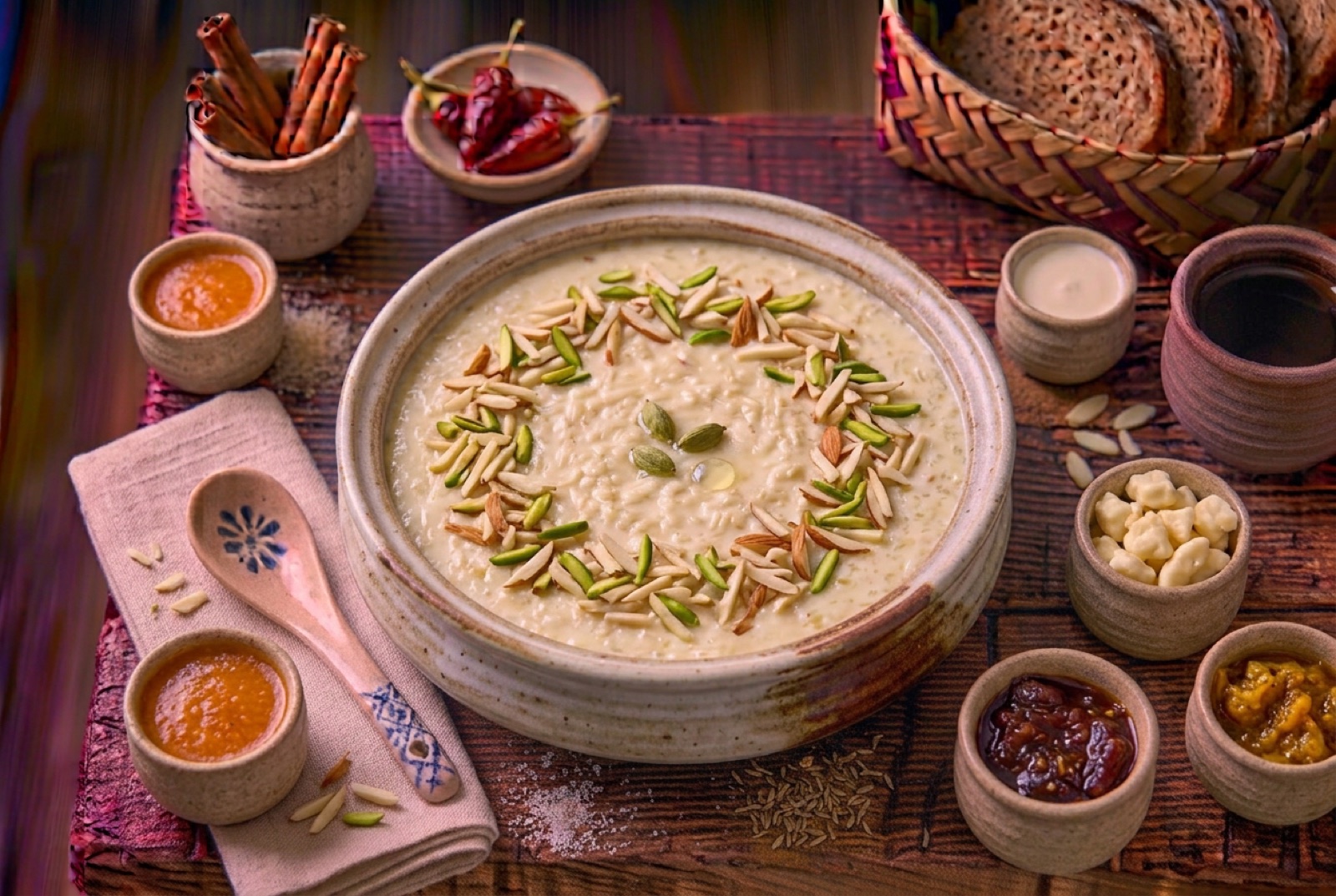
Kheer is rice cooked slowly in a large quantity of whole milk until the milk halves in volume and turns thick, faintly caramel-coloured and sweet before any sugar goes in. There is no cream, no cornflour and no thickener of any kind — the body comes entirely from evaporation and from the starch the broken rice grains give up. Eaten cold, which is how Pakistan prefers it, the texture is loose and spoonable rather than set, perfumed with green cardamom and a few drops of kewra, and topped with almonds and pistachio for something to bite against. It demands almost no skill and about seventy minutes of unhurried attention, most of it just stirring past the pan every few minutes.

- Gate
- PakistanPunjab and Sindh
- Prep
- 15 min
- Cook
- 1 hr 15 min
- Total time
- 4 hr 30 min incl. 3 hr rest
- Serves
- 6
- Status
- Easy
- Nutrition / serving · estimated
- Calories 330 kcal
- Protein 12 g
- Carbs 44 g
- Fat 12 g
- Fiber 1 g
- Sugar 38 g
- Sodium 150 mg
Why this recipe works.
- Reduces real milk instead of leaning on condensed milk or cornflour, which is what gives the pudding its colour and its depth.
- Adds the sugar only after the rice has collapsed, so the grains soften properly rather than staying firm and chalky.
- Uses broken basmati and explains why, plus how to break it yourself in thirty seconds.
- Tells you how much thinner than final consistency to stop at, since kheer sets considerably as it cools.
Ingredients.
10 itemsBase
Aromatics
To finish
Equipment
- Wide heavy-based pan
- Flat-edged wooden spoon
- Mortar and pestle for the cardamom
Instructions.
Break the rice
Rinse the rice until the water runs almost clear, drain it well, then pulse it briefly in a grinder or crush it under a rolling pin until roughly half the grains are broken into two or three pieces. You want fragments, not flour.
Tip Broken grains release their starch far faster, which is why kheer thickens in an hour instead of two.
Bring the milk up slowly
Pour the milk into a wide heavy pan and bring it to a bare simmer over medium heat, stirring occasionally so it does not stick. Let it bubble gently for 10 minutes before the rice goes in, so it has already begun to reduce.
Cook the rice down
Add the drained rice and the pinch of salt and simmer for 45 to 50 minutes, scraping the base and sides with a flat-edged wooden spoon every three or four minutes. The milk will drop to around half its volume, turn from white to pale beige, and coat the back of the spoon.
Tip Push the skin that forms on top back into the pot each time you stir. Those solids are the thickener.
Check the grain, then sweeten
Crush a grain between your fingers — it should collapse into paste with no firm centre at all. Only then stir in the sugar and the saffron milk, and cook for a further 12 to 15 minutes until the pudding thickens again and just holds a trail when you drag the spoon through it.
Tip Adding sugar before the rice is fully soft will leave the grains chalky no matter how long you cook them afterwards.
Perfume and stop early
Take the pan off the heat, stir in the crushed cardamom seeds and the kewra water, and taste. It should still look distinctly looser than you want the finished dessert — it will thicken by a third as it cools.
Chill thoroughly
Cool to room temperature, then refrigerate for at least 3 hours or overnight. Stir once before serving, loosen with a splash of cold milk if it has set firmer than you like, and top each bowl with the almonds, pistachios and raisins at the last moment.
Tips from our kitchen.
- Use the widest heavy pan you own rather than a tall pot. Reduction depends on surface area, and a wide pan cuts a good twenty minutes off the cooking time.
- Rinse the rice but do not soak it for long. You want the surface starch in the pot doing its job, which is the opposite of what you want in a biryani.
- Scrape the pan properly every few minutes with a flat-edged wooden spoon, corners included. Kheer catches at the base long before you can smell it, and once it has, the scorch flavours the whole pot.
- Push the skin that forms on the surface back in rather than lifting it off. Those milk solids are exactly what thickens the pudding and give it the pale beige colour.
- Take it off the heat while it still looks too thin — it thickens dramatically as it cools, and a pudding that looks right in a hot pan will be stiff and pasty out of the fridge.
- Crush the cardamom seeds fresh, discarding the husks. Pre-ground cardamom loses most of its aroma within weeks and is the main reason home kheer tastes flat.
Substitutions.
- Whole milk → 1.2 l whole milk plus 200 g evaporated milk, added in the last 15 minutes
- A common shortcut in Pakistani homes when time is short. It gets you to a thick, rich pudding in about forty minutes, though the flavour is slightly flatter and sweeter than a full reduction.
- Basmati rice → Short-grain pudding rice, or coarse vermicelli for seviyan kheer
- Short-grain releases starch readily and needs about ten minutes less. Vermicelli turns the dish into seviyan, the standard Eid version, and cooks in under fifteen minutes once the milk has already reduced.
- Kewra water → Rose water, or omit and add a little extra cardamom
- Use half as much rose water as kewra — it is far more assertive and easily makes a dessert taste like soap. Neither is essential, but one of them is what makes kheer smell like kheer.
Variations.
- Firni
- The same milk and sugar with the rice ground to a paste first, cooked thicker and set in shallow clay bowls whose porous walls draw out moisture as it chills.
- Seviyan
- Roasted vermicelli in place of rice, cooked in the reduced milk for the last ten minutes. The dessert most Pakistani households make on Eid morning.
- Zarda-style kheer
- Coloured a strong yellow with saffron and loaded with more dried fruit and nuts, the way it is often made for weddings and large gatherings.
Storage & reheating.
Kheer keeps four days refrigerated and is arguably better on the second day, once the cardamom has spread through it. Cover the surface directly with cling film if you dislike a skin forming, and expect it to keep thickening in the cold — loosen it with a few tablespoons of cold milk and a quick whisk before serving. Add the nuts fresh at the table rather than storing them in the pudding, where they go soft within hours. It does not freeze usefully: the milk separates on thawing and the rice turns grainy, and no amount of stirring brings the texture back.
Serve with
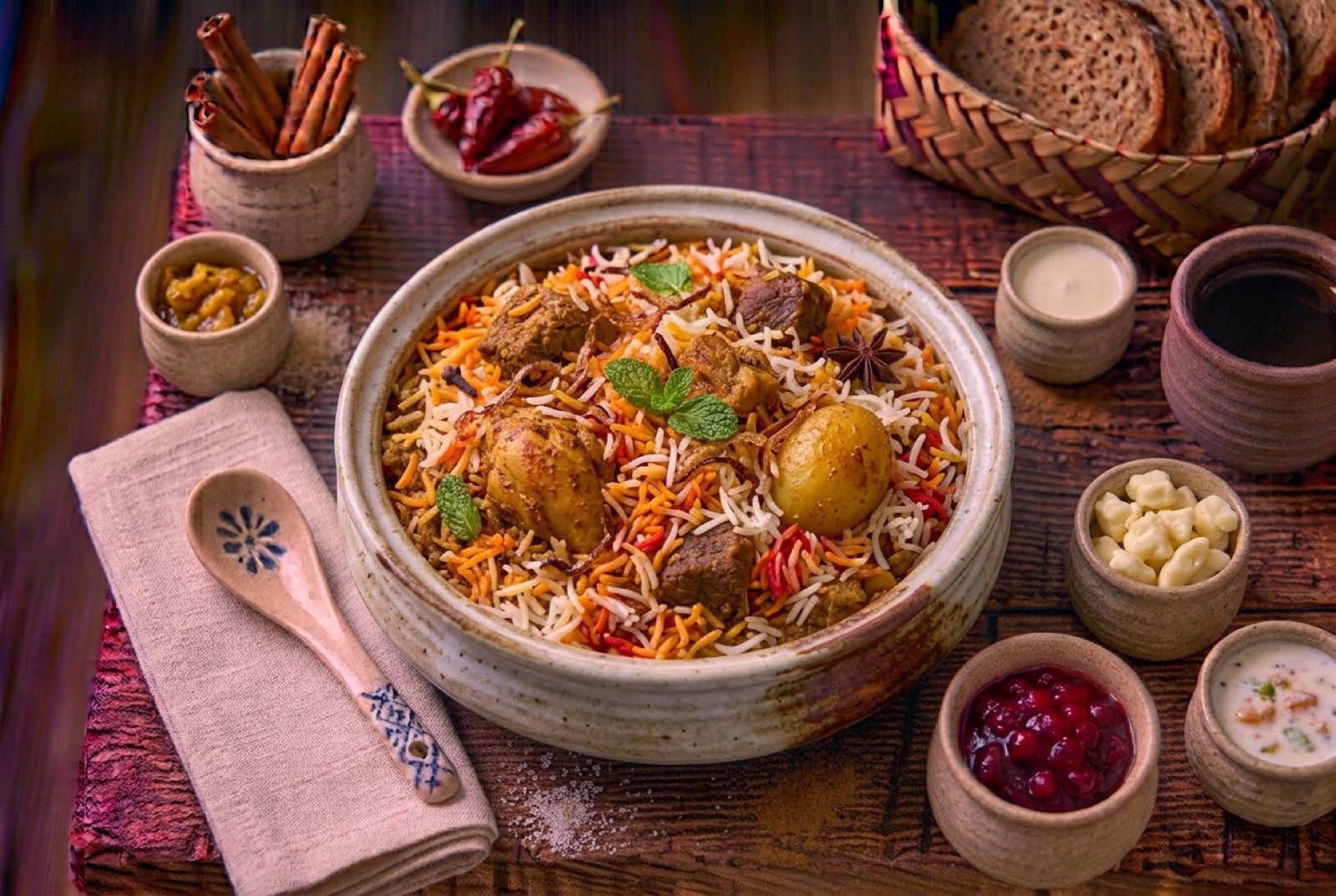
Small steel or clay bowls straight from the fridge, after something heavy and spiced — a biryani or a chile-hot karahi.
The story behind Kheer.
Kheer sits at almost every point in a Pakistani life where sweetness is required. It is what gets made when a child passes an exam, cooked in huge degs and distributed at shrines and mosques as niyaz, spooned into small steel bowls at weddings after the biryani, and set out to chill overnight before Eid. Part of the reason is practical: milk, rice and sugar are in every kitchen, the recipe scales from one pot to a hundred litres without changing, and it keeps well in the cold. Part of it is that a dish made by reducing a large amount of milk for a long time reads as generous — you can see the effort in the volume that disappeared.
Rice-and-milk puddings of this kind are ancient and widespread across the subcontinent, and Pakistan's version belongs to that shared lineage rather than standing apart from it. What distinguishes the everyday Pakistani style is a few consistent habits: broken or coarsely crushed basmati rather than whole grains, so the starch releases faster and the body builds earlier; a preference for eating it thoroughly chilled instead of warm; and kewra, distilled from pandanus flowers, used in place of or alongside rose water, giving the particular sweet-floral smell that most people associate with a wedding dessert table.
It has close relatives that are worth not confusing it with. Firni is made with rice ground to a paste rather than left in grains, cooked thicker, and set in shallow earthenware dishes whose porous clay draws out moisture as it chills. Rice kheer's cousins run through the same technique with different starches — vermicelli, tapioca, sweetcorn, even grated carrot — all built on the same principle of milk reduced until it no longer tastes like milk. The classic dispute is over sugar timing rather than any of the ingredients: add it early and the grains stay stubbornly firm no matter how long you cook, so it goes in only once the rice has fully surrendered.
Questions, answered.
Why did my kheer catch and burn on the bottom of the pan?
Milk sugars and rice starch both settle and scorch on a hot base, and by the time you can smell it the flavour has already spread through the whole pot. Use a heavy-based pan, keep the heat at a lazy simmer rather than a boil, and drag a flat-edged wooden spoon across the entire base including the corners every three or four minutes. If it does catch, tip the unburnt pudding into a clean pan immediately without scraping the bottom — you may save it.
My kheer is too thin. How do I fix it?
First, chill a spoonful and check, because hot kheer always looks thinner than the finished dish and most panicking happens here. If it really is thin after cooling, put it back on low heat and reduce it further, stirring, until the volume drops noticeably. Do not add cornflour: it gives a slick, gluey texture that tastes of nothing and is instantly recognisable. A handful of extra crushed rice simmered in for fifteen minutes thickens it honestly.
Why is my rice still hard after an hour of cooking?
Sugar was almost certainly added too early. Sugar competes with the rice for the available water and firms up the starch, so grains added to an already-sweetened pot can stay chalky for a very long time. Cook the rice in plain milk until a grain crushes to nothing between your fingers, then add the sugar and cook for only ten to fifteen minutes more. Hard water and very old rice can also slow things down, but the sugar is the usual culprit.
What is the difference between kheer and firni?
Kheer keeps the rice in recognisable grains, is looser, and is cooked in a pot and served in bowls. Firni uses rice that has been soaked and ground to a paste, so the finished dessert is smooth and pudding-like rather than grainy, is cooked to a thicker consistency, and is traditionally set in shallow unglazed clay dishes that pull moisture out as it chills. They share nearly all their ingredients and taste noticeably different because of texture alone.
Should kheer be served warm or cold?
Cold is the Pakistani norm — made in the morning or the night before, chilled thoroughly, and brought out in small bowls after a heavy meal. Warm kheer is not wrong and is common in winter, but it tastes sweeter and reads as looser, because chilling both firms the texture and mutes the sugar slightly. If you plan to serve it warm, stop the cooking a little earlier than you otherwise would.
You might also like.
All recipes →
Keep exploring Pakistan.
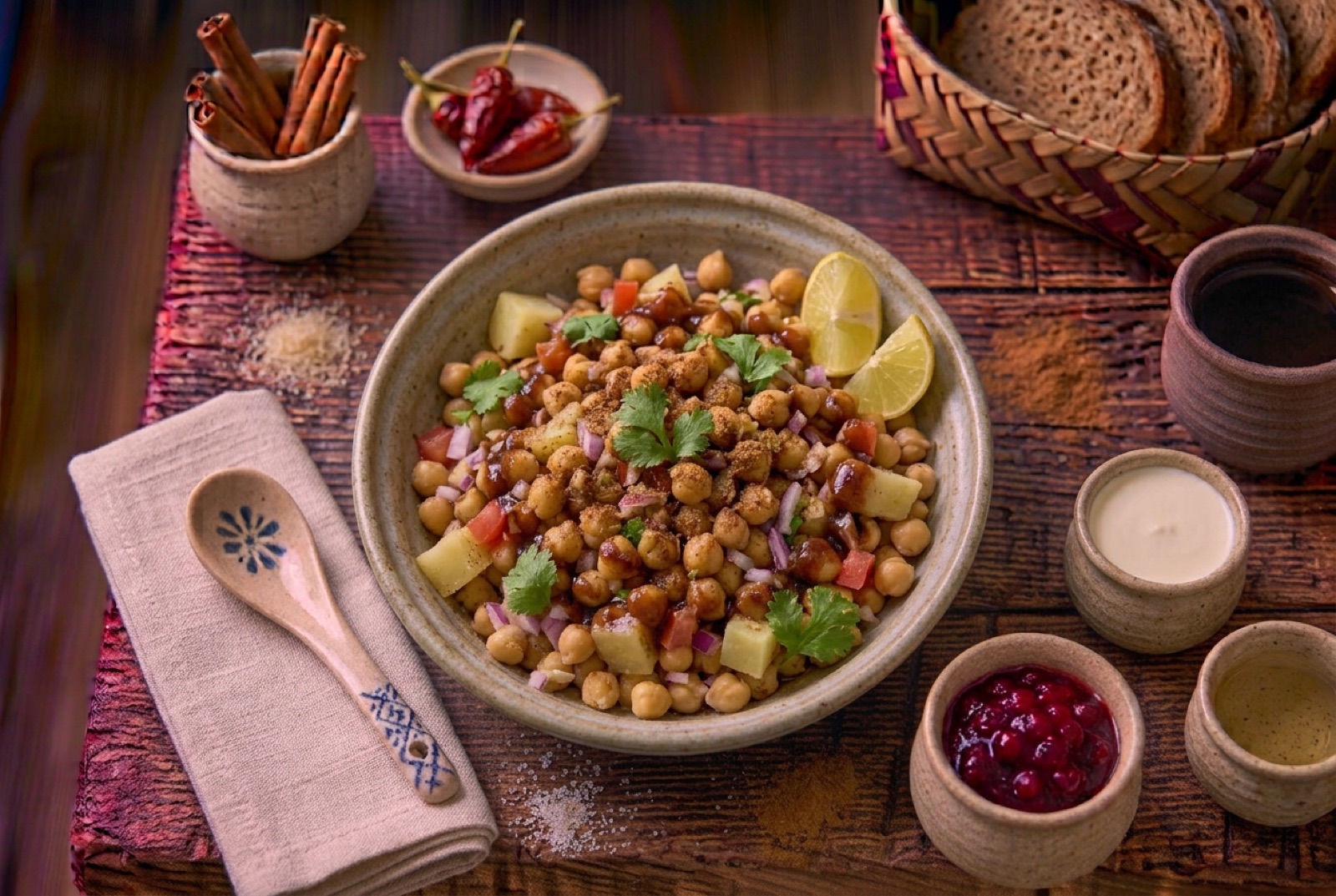
Pakistan has 9 more dishes in the atlas — Balochi Sajji and Chana Chaat, and 7 more.
All Pakistan recipes Milk recipes Basmati rice recipes Cardamom recipes dessertvegetariangluten freeRecipe by The DishRoute Kitchen · published August 20, 2026 · updated August 20, 2026