Hojaldras.
Panamanian Fried Breakfast Dough
Hojaldras · say it: oh-HAHL-drahs
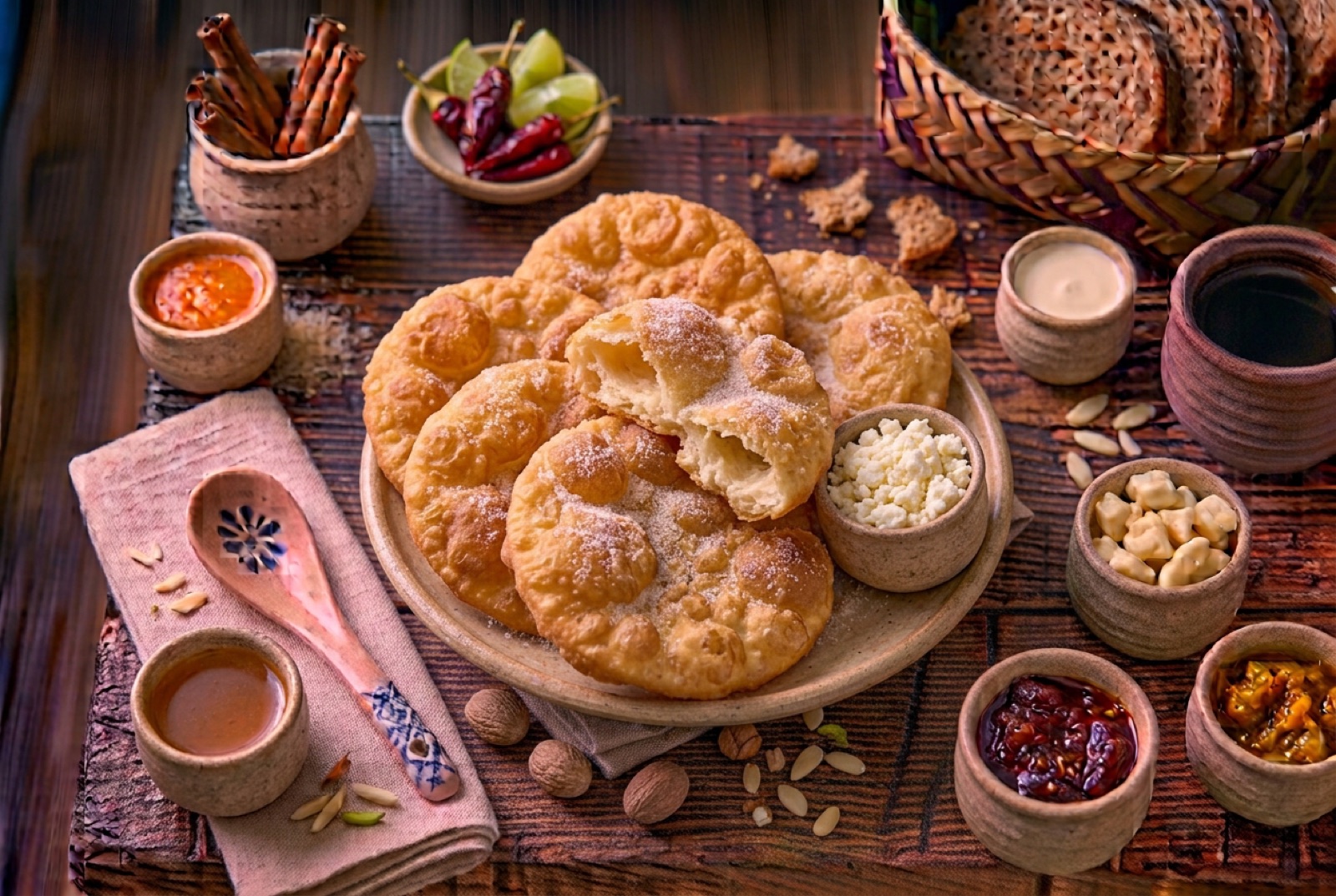
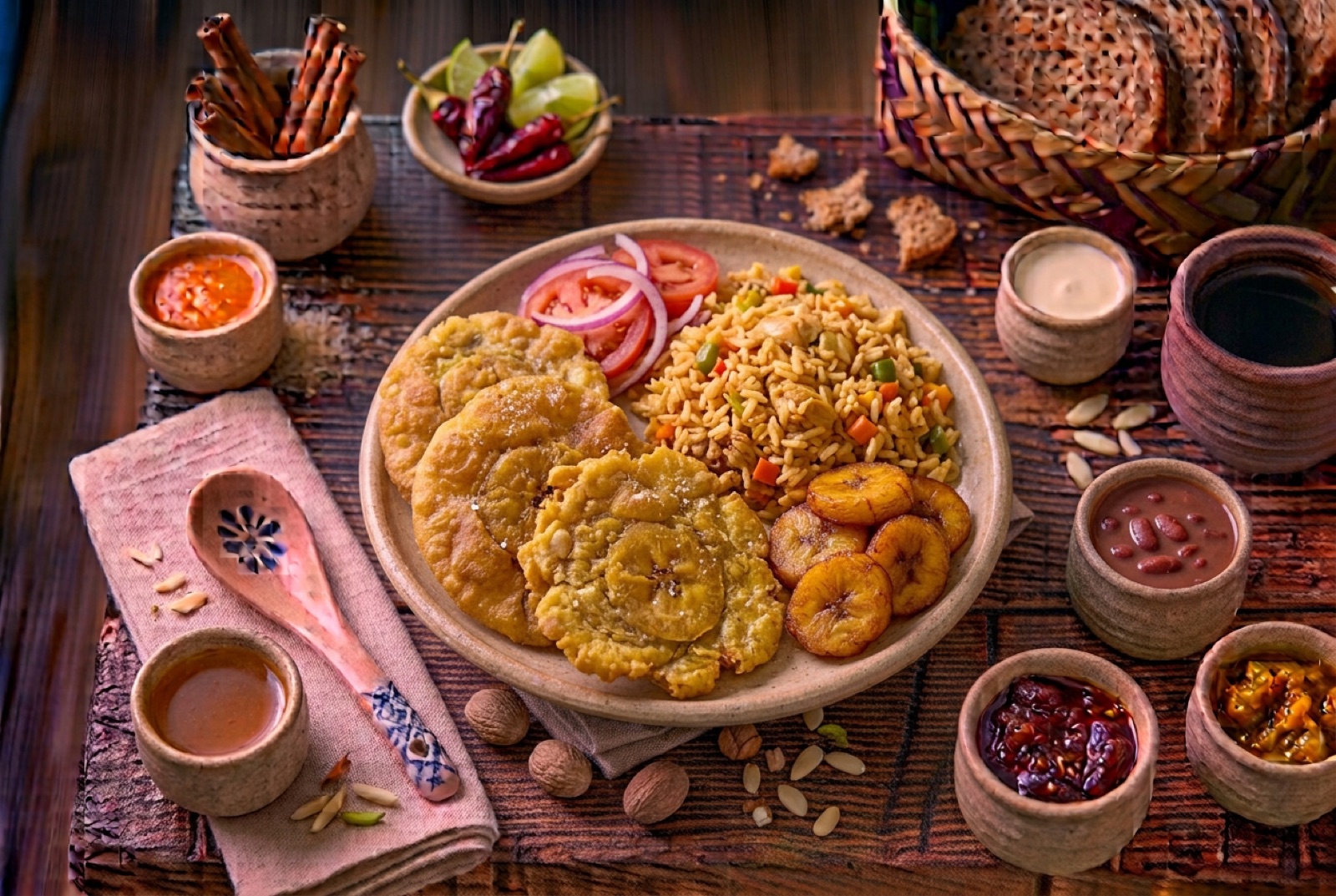
Hojaldras are flat rounds of enriched wheat dough dropped into hot oil, where they balloon within seconds, blister across the surface and turn deep gold. Fresh from the pan they are crisp at the edge, soft and slightly chewy in the middle, and barely sweet — the sugar in the dough is there for browning, not flavour. Panamanians eat them for breakfast with a slab of salty white cheese, with fried eggs and sausage, or simply dredged in sugar for children. They cost almost nothing to make, need no special equipment, and take under an hour including the rise. The one thing that separates a good hojaldra from a heavy one is how thin you stretch it before it hits the oil.

- Gate
- PanamaNationwide
- Prep
- 20 min
- Cook
- 20 min
- Total time
- 1 hr 20 min incl. 40 min rest
- Serves
- 4
- Status
- Easy
- Nutrition / serving · estimated
- Calories 390 kcal
- Protein 12 g
- Carbs 48 g
- Fat 17 g
- Fiber 2 g
- Sugar 7 g
- Sodium 560 mg
Why this recipe works.
- A short, forgiving dough that rises in half an hour and still puffs reliably in the pan.
- Uses both yeast and baking powder, which is how Panamanian cooks insure against a rushed rise.
- Clear stretching instructions, since thickness is what actually decides whether they balloon.
- Works equally as the savoury breakfast plate with cheese or the sugared version children get.
Ingredients.
11 itemsFor the dough
For frying
To serve
Equipment
- Mixing bowl
- Deep heavy pan or fryer
- Slotted spoon
- Cooling rack
Instructions.
Mix the dough
Whisk 400 g of flour with the yeast, baking powder, sugar and salt in a bowl. Pour in the warm milk, beaten egg and melted butter and stir with a wooden spoon until the mixture pulls together into a shaggy mass with no dry flour at the bottom.
Knead until smooth
Turn out onto a lightly floured surface and knead 6–8 minutes until the dough is smooth, soft and slightly tacky but no longer sticking to your hands. It should spring back slowly when pressed with a fingertip.
Let it rise
Return the dough to an oiled bowl, cover and leave in a warm spot for 40 minutes, until visibly puffed and roughly doubled. It does not need a full bread rise; you are after softness rather than structure.
Shape thin rounds
Divide the dough into 8 pieces and roll each into a ball. Flatten and stretch each one with your fingers or a rolling pin into a round about 15 cm across and 5 mm thick — thin enough that you can see the shape of your hand behind it. Rest the shaped rounds 5 minutes.
Tip Thickness is everything. A thick round fries into a heavy bun instead of ballooning.
Fry until blistered
Heat the oil to 180°C, testing with a scrap of dough that should rise and sizzle within three seconds. Fry the rounds one or two at a time for about 1 minute per side, spooning hot oil over the top, until they balloon, blister and turn deep gold.
Drain and serve
Lift onto a rack — not paper, which traps steam and softens them. Serve immediately with thick slices of white cheese, or toss in granulated sugar while the surface is still tacky enough to hold it.
Tips from our kitchen.
- Stretch each round to about 5 mm — thin enough to see the shape of your hand behind it when held up.
- Let the shaped rounds sit five minutes before frying. Dough that is fought into shape and fried immediately springs back and stays thick.
- Test the oil with a scrap of dough: it should rise and sizzle within three seconds. If it sits on the bottom, wait.
- Press the centre gently with a slotted spoon as it fries — that pushes hot oil over the top and encourages an even puff.
- Sugar them the moment they leave the oil, while the surface is still tacky enough to hold it.
- Fry in small batches. Two hojaldras at a time in a 26 cm pan keeps the oil temperature stable.
Substitutions.
- Fresh or instant yeast → Baking powder only, doubled to 2 teaspoons
- A quicker, more biscuit-like hojaldra with no rise needed. It puffs less dramatically and tastes flatter, but it is on the table in twenty minutes.
- Milk → Warm water, or any plant milk
- Water gives a slightly crisper, less tender result, and makes the dough dairy-free if you also swap the butter for oil.
- Queso blanco to serve → Feta rinsed of excess brine, or halloumi, fried
- Panamanian white cheese is mild, salty and squeaky. Rinsed feta comes closest in salt level; halloumi matches the texture better.
Variations.
- Sugared hojaldras
- Tossed in granulated sugar straight out of the pan, sometimes with a little cinnamon. The children's version, and the one sold at fairs.
- Desayuno típico
- Served as the full Panamanian breakfast plate: hojaldra with scrambled eggs, fried white cheese and stewed beef or sausage.
- Filled hojaldra
- Split while hot and stuffed with white cheese, ham or stewed beef, which turns it into a sandwich you can carry.
Storage & reheating.
Hojaldras are at their best in the first ten minutes and there is no honest way around that — they soften and toughen as they cool. The dough, however, keeps well: refrigerate it up to 24 hours after the first rise, then bring it to room temperature for 30 minutes before shaping. Cooked ones can be reheated in a 190°C oven for 5 minutes to restore some crispness, and shaped raw rounds can be frozen between sheets of baking paper and fried from frozen at a slightly lower temperature.
Serve with
A thick slice of salty white cheese and black coffee, or a bowl of sugar for dredging.
The story behind Hojaldras.
Fried dough is universal, and Panama's version sits in a family that includes Colombian arepas de huevo territory, Dominican yaniqueques, Mexican buñuelos and the fry bread of many other cultures. The name hojaldra comes from hojaldre, the Spanish word for puff pastry, which is misleading — there are no laminated layers here, just a single soft dough that puffs from steam. The word most likely stuck because of what the fried result looks like rather than how it is made.
In Panama the hojaldra is inseparable from the breakfast fonda. Alongside carimañolas, empanadas and tortillas de maíz, they sit in a glass case by the door, and the standard order is one hojaldra with queso blanco, or two with fried eggs and a cup of coffee. They also anchor the desayuno típico that hotels and roadside restaurants serve to travellers: hojaldra, scrambled eggs, fried white cheese and sometimes carne guisada or salchicha.
Recipes vary between households in small ways that people defend firmly. Some use only water; some enrich the dough with egg and milk for a softer crumb. Some add a spoon of sugar, some none. Baking powder is nearly universal as an insurance policy alongside the yeast, ensuring a puff even when the rise has been rushed. Everyone agrees on two points: the dough must rest before shaping so the gluten relaxes and the round can be stretched thin, and the oil must be genuinely hot, because a hojaldra that sinks and sits absorbs oil and comes out heavy rather than puffed.
Questions, answered.
Why did my hojaldras not puff up?
Two likely reasons: the dough was rolled too thick, or the oil was not hot enough. The round needs to be thin — around 5 mm — so steam can inflate it instantly, and the oil should be at about 180°C, hot enough that a scrap of dough rises and bubbles within three seconds. Dough that sinks and sits absorbs oil instead of puffing.
Are hojaldras sweet or savoury?
The dough itself is barely sweet, and it works both ways. The default Panamanian breakfast pairs a plain hojaldra with salty white cheese or eggs, while the sweet version is simply dredged in sugar while still hot. Same dough, same frying, entirely up to the eater.
Can I make the dough the night before?
Yes. Let it complete its first rise, then cover and refrigerate for up to 24 hours — the slow cold fermentation actually improves the flavour. Take it out about half an hour before you want to shape it, since cold dough resists stretching and will spring back on you.
What oil should I fry them in?
Any neutral oil with a high smoke point: sunflower, canola, corn or a plain vegetable blend. Panamanian cooks often use whatever is in the kitchen, including lard for a richer flavour. Avoid olive oil, which smokes at frying temperature and gives a taste that fights the dough.
How is a hojaldra different from a Mexican buñuelo?
They are close relatives. A hojaldra is a soft, yeasted or chemically leavened round eaten mostly as savoury breakfast bread, while a Mexican buñuelo is typically rolled paper-thin, fried crisp and served as a sweet with syrup or cinnamon sugar. Texture is the main divide: chewy and puffed versus shattering and flat.
You might also like.
All recipes →
Keep exploring Panama.
Panama has 9 more dishes in the atlas — Arroz con Guandú y Coco and Carimañolas, and 7 more.
All Panama recipes Flour recipes Yeast recipes Milk recipes breakfastbreadstreet foodvegetariannut freeRecipe by The DishRoute Kitchen · published August 20, 2026 · updated August 20, 2026