Carimañolas.
Panamanian Stuffed Cassava Fritters
Carimañolas · say it: kah-ree-mah-NYOH-lahs
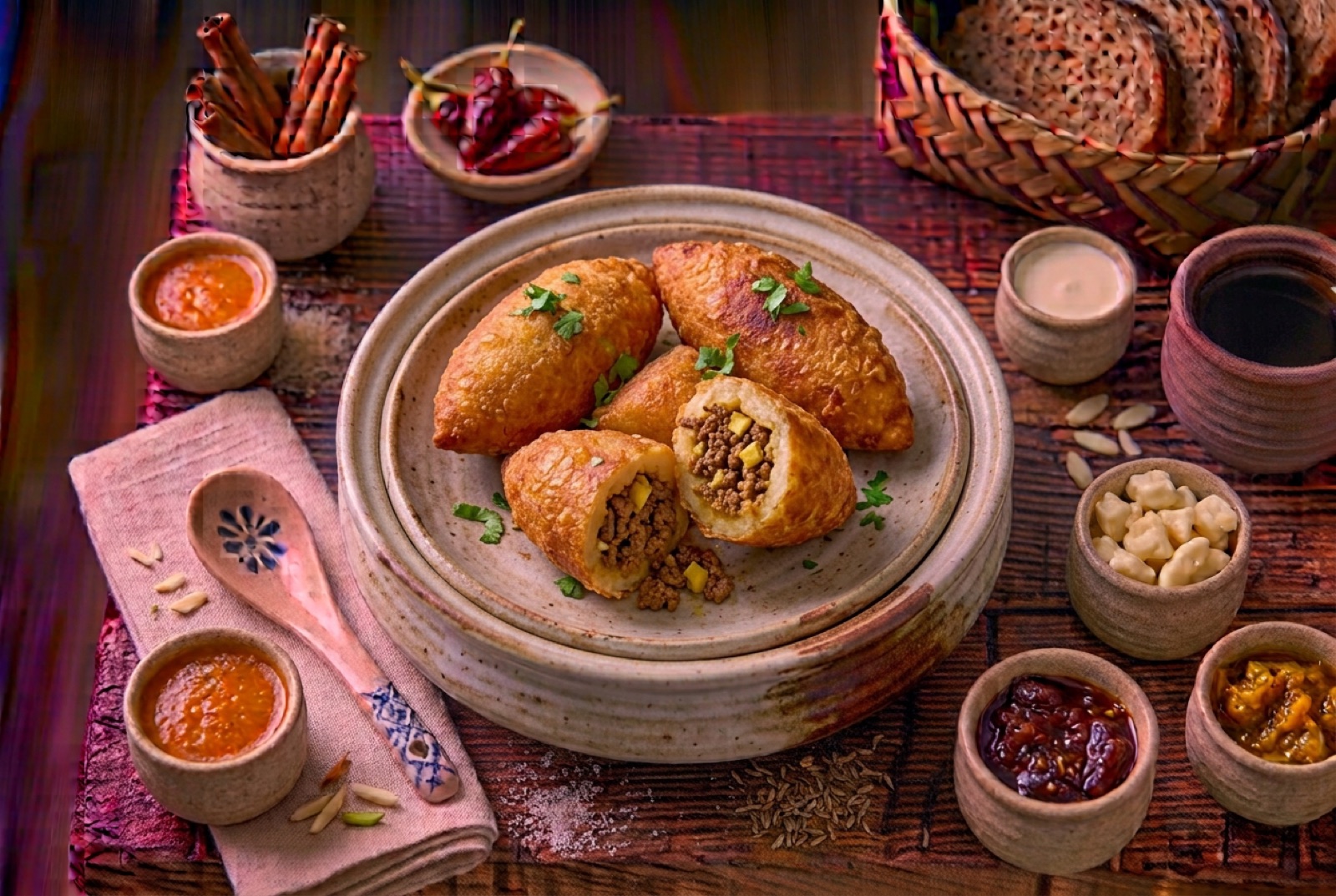
A carimañola is a torpedo of boiled cassava wrapped around spiced ground beef and fried. The shell fries into something no wheat dough can do: a thin crackling crust over a dense, slightly sweet, faintly chewy interior that pulls apart in strands rather than crumbs. Inside, the filling is a tight sofrito-based picadillo — beef browned with onion, pepper and tomato, with chopped hard-boiled egg for softness. They are breakfast food and street food in Panama, sold from glass cases at fondas alongside empanadas and hojaldras, eaten standing up with hot sauce. The shaping takes practice, but nothing about the technique is difficult; the two things that decide success are how dry your cassava is and how hot your oil is.

- Gate
- PanamaPanama City and the Caribbean coast
- Prep
- 40 min
- Cook
- 45 min
- Total time
- 1 hr 25 min
- Serves
- 4
- Status
- Medium
- Nutrition / serving · estimated
- Calories 540 kcal
- Protein 22 g
- Carbs 58 g
- Fat 25 g
- Fiber 4 g
- Sodium 680 mg
Why this recipe works.
- Explains how to judge cassava dough by feel, which is the whole difficulty of the dish.
- The filling is cooked down deliberately dry so it does not steam the shell open in the fryer.
- Includes the chopped hard-boiled egg that Panamanian cooks use to keep the picadillo tender.
- Freezes raw and fries from frozen, which is how most households actually manage them.
Ingredients.
14 itemsFor the dough
For the filling
For frying
Equipment
- Large pot for boiling cassava
- Potato masher
- Deep pan or fryer
- Slotted spoon and rack
Instructions.
Boil the cassava
Cover 1000 g of cassava chunks with cold salted water, bring to a boil and cook 25–30 minutes until a knife slides in with no resistance at all. Drain immediately and pull the woody central fibre out of each piece while they are hot.
Make the dough
Mash the hot cassava with the salt and the butter, if using, until completely smooth with no lumps, then knead in the bowl for a minute until it comes together as one mass. Press a ball flat in your palm — it should hold its edges without cracking. If it cracks, work in hot water a spoonful at a time.
Tip This must be done hot. Cold cassava will not bind and the dough turns to gravel.
Cook the filling
Heat the oil and brown the ground beef hard, breaking it up, until the bottom of the pan develops brown crust rather than grey liquid. Add the onion, pepper and garlic and cook 6 minutes until soft, then the tomato, tomato paste and oregano.
Dry the filling out
Simmer the filling 10 minutes until the pan is almost dry and a spoon dragged across the base leaves a clear track. Stir in the culantro and chopped hard-boiled egg, season, and cool completely — any moisture left here will burst the fritters in the fryer.
Shape the carimañolas
With damp hands, flatten a golf-ball-sized piece of dough into a disc about 1 cm thick, place a heaped tablespoon of filling in the centre, and fold the dough up around it. Pinch the seam shut, then roll between your palms into a torpedo with tapered ends. Repeat for 10 to 12 fritters.
Fry until blistered
Heat the frying oil to 175°C and fry three or four at a time for 6–7 minutes, turning once, until deep golden and covered in fine blisters that crackle when tapped with a spoon. Drain on a rack, salt lightly and eat hot.
Tip Drain on a rack, never on paper — paper traps steam and softens the shell you just built.
Tips from our kitchen.
- Mash the cassava while it is hot. Cold cassava turns crumbly and refuses to come together into a dough.
- Pull out the woody central fibre from each piece of cassava before mashing — it never softens and ruins the texture.
- The dough is ready when a ball pressed flat in your palm holds its edges without cracking. If it cracks, knead in a spoon of hot water.
- Cook the filling until the pan is almost dry. Wet filling turns to steam and blows the fritter open in the oil.
- Seal by wetting your fingers and pinching the seam closed, then rolling the whole thing to smooth it — an unsealed seam leaks and the oil spits.
- Fry at 175°C. Hotter and the shell burns before the inside heats; cooler and they absorb oil and go heavy.
Substitutions.
- Fresh cassava → Frozen cassava chunks, boiled from frozen
- Frozen is genuinely reliable — it is peeled, cored and often better than tired fresh roots. Boil it a few minutes longer than the package suggests.
- Ground beef → Shredded chicken, or grated white cheese for a vegetarian version
- A cheese carimañola is common in Panama and much faster. Use a firm, low-moisture white cheese so it does not run out of the seam.
- Culantro → Chopped cilantro, doubled in volume
- Added off the heat at the end, cilantro gives a fresher but shorter-lived aroma in the filling.
Variations.
- Carimañola de queso
- Filled with firm white cheese instead of meat — vegetarian, quicker, and a common breakfast option in Panamanian bakeries.
- With olives and capers
- The picadillo built with green olives, capers and raisins, borrowing the seasoning of the Panamanian tamal filling.
- Baked version
- Brushed with oil and baked at 200°C for 30 minutes. Not the same — the shell dries rather than crackles — but honest and much lighter.
Storage & reheating.
Fried carimañolas are best within twenty minutes and go leathery in the fridge, so shape and freeze them raw instead: open-freeze on a tray, bag them once solid, and keep up to 3 months. Fry from frozen at 170°C for about 10 minutes, adding a couple of minutes to the usual time. Already-fried ones can be revived in a 190°C oven for 8 minutes, which restores most of the crackle but not the interior softness.
Serve with
Panamanian chile sauce or ají, and strong black coffee if you are eating them for breakfast as intended.
The story behind Carimañolas.
Carimañolas belong to the broader Caribbean coast of Panama and Colombia, where cassava — yuca, manioc, the same root that becomes tapioca — has been a staple since long before Europeans arrived. Indigenous peoples across tropical South America domesticated it thousands of years ago, and the technique of boiling and mashing it into a workable dough is old and widespread. The stuffed, fried form with a Spanish-style meat picadillo inside is the colonial-era layer on top of that.
The name is a puzzle nobody has resolved. It is usually said to derive from Cartagena or from an older word for a shaped fritter, but the etymologies offered are speculation rather than documented fact, and it is more honest to say the origin of the word is unknown. What is clear is that Panama and Colombia both claim the dish as their own everyday food, and versions barely differ across the border. In Panama it sits in the same category as the empanada and the hojaldra: something you buy hot in the morning, wrapped in a napkin, from a place that has been making them the same way for decades.
Home cooks make them in batches and freeze them raw, which is genuinely the best way to keep them, since a fried carimañola is at its peak for perhaps twenty minutes. The filling varies — ground beef is standard, but shredded chicken, cheese, or beef with olives all appear — and the addition of chopped hard-boiled egg to the meat is a common Panamanian touch that keeps the filling from feeling dry inside the dense cassava shell.
Questions, answered.
Why is my cassava dough falling apart?
Either the cassava was undercooked, or it cooled before you mashed it. It must be soft enough that a knife slides through with no resistance, and it has to be mashed hot, when the starch is still sticky enough to bind. If it is still crumbly, knead in a tablespoon of hot water at a time until a flattened ball holds its edges without cracking.
Can I use frozen cassava?
Yes, and it is often better than fresh. Frozen cassava is already peeled and cored, and it is frozen at peak quality rather than sitting in a shop for weeks. Boil it straight from frozen in salted water, allowing a few extra minutes over what the package suggests.
Why do my carimañolas burst in the oil?
Almost always a wet filling or an open seam. The filling should be cooked until the pan is nearly dry, so there is no liquid to turn to steam, and the seam must be pinched properly with damp fingers and then smoothed by rolling. Overcrowding the pan drops the oil temperature and prolongs the fry, which also increases the chance of a blowout.
Can I make carimañolas ahead?
Shape them and freeze them raw — that is the standard approach in Panamanian households. They go from freezer to fryer with no thawing, needing about two extra minutes. Fried ones do not hold well; the shell softens within half an hour and never fully recovers.
What is the difference between a carimañola and an empanada?
An empanada uses a wheat or corn dough, rolled and folded into a half-moon. A carimañola uses boiled mashed cassava as the shell and is shaped into a pointed torpedo. The cassava shell is denser and slightly sweet, with a crackling rather than flaky crust, and it is naturally gluten-free.
You might also like.
All recipes →
Keep exploring Panama.
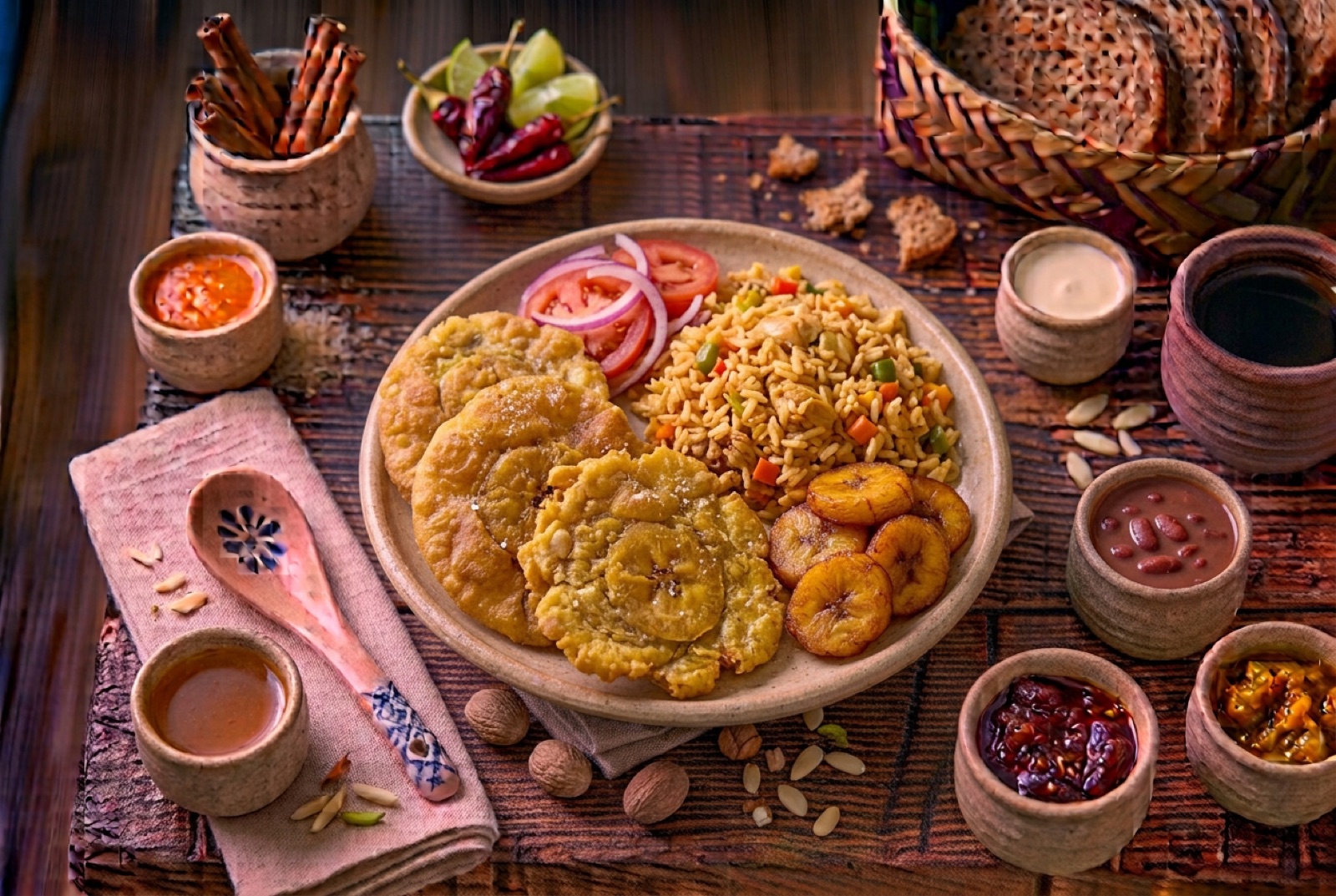
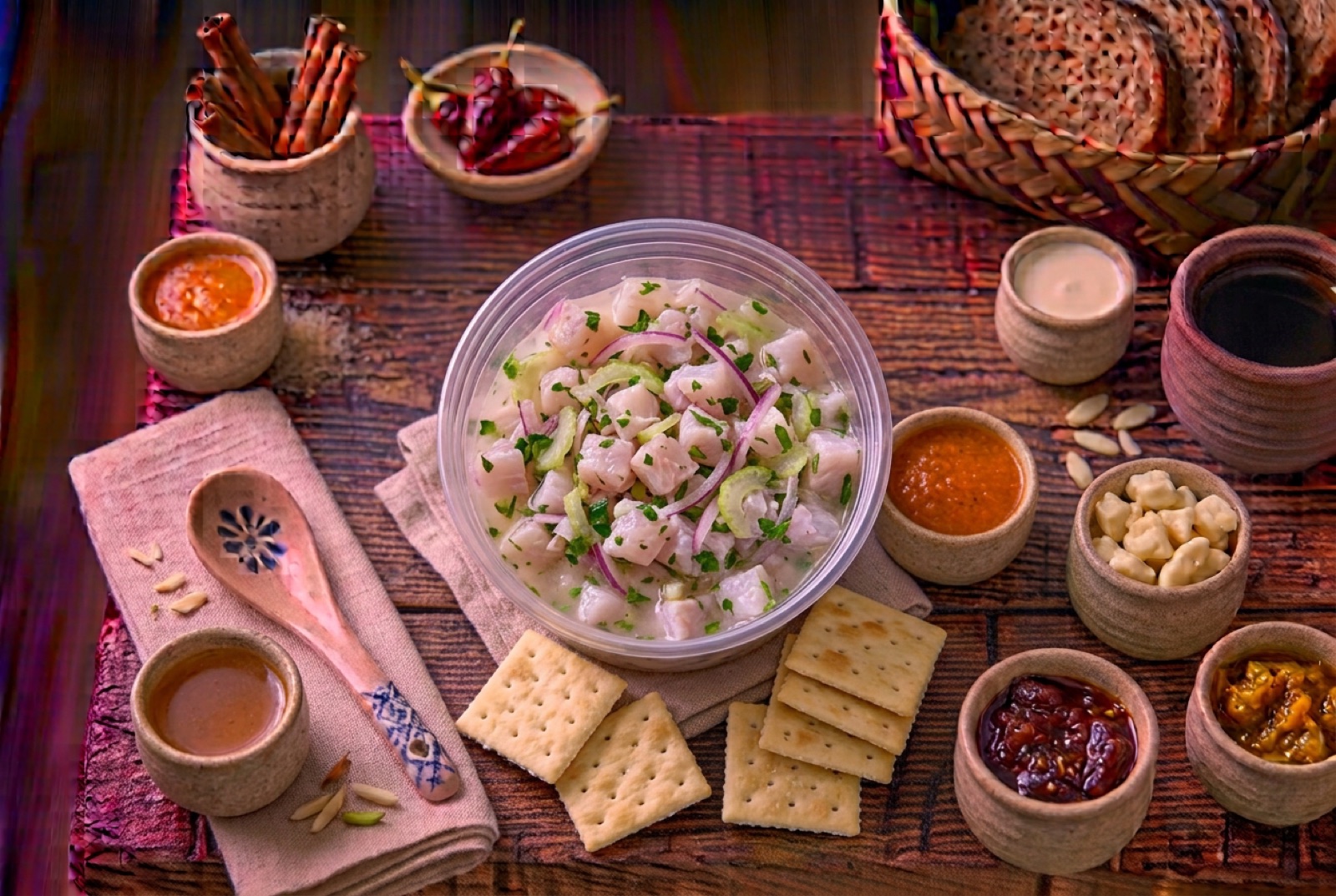
Panama has 9 more dishes in the atlas — Arroz con Guandú y Coco and Ceviche de Corvina, and 7 more.
All Panama recipes Cassava recipes Ground beef recipes Eggs recipes street foodsnackbreakfastgluten freedairy freeRecipe by The DishRoute Kitchen · published August 20, 2026 · updated August 20, 2026