Papa a la Huancaína.
Potatoes in Ají Cheese Sauce
Papa a la huancaína · say it: PAH-pah ah lah wan-kah-EE-nah
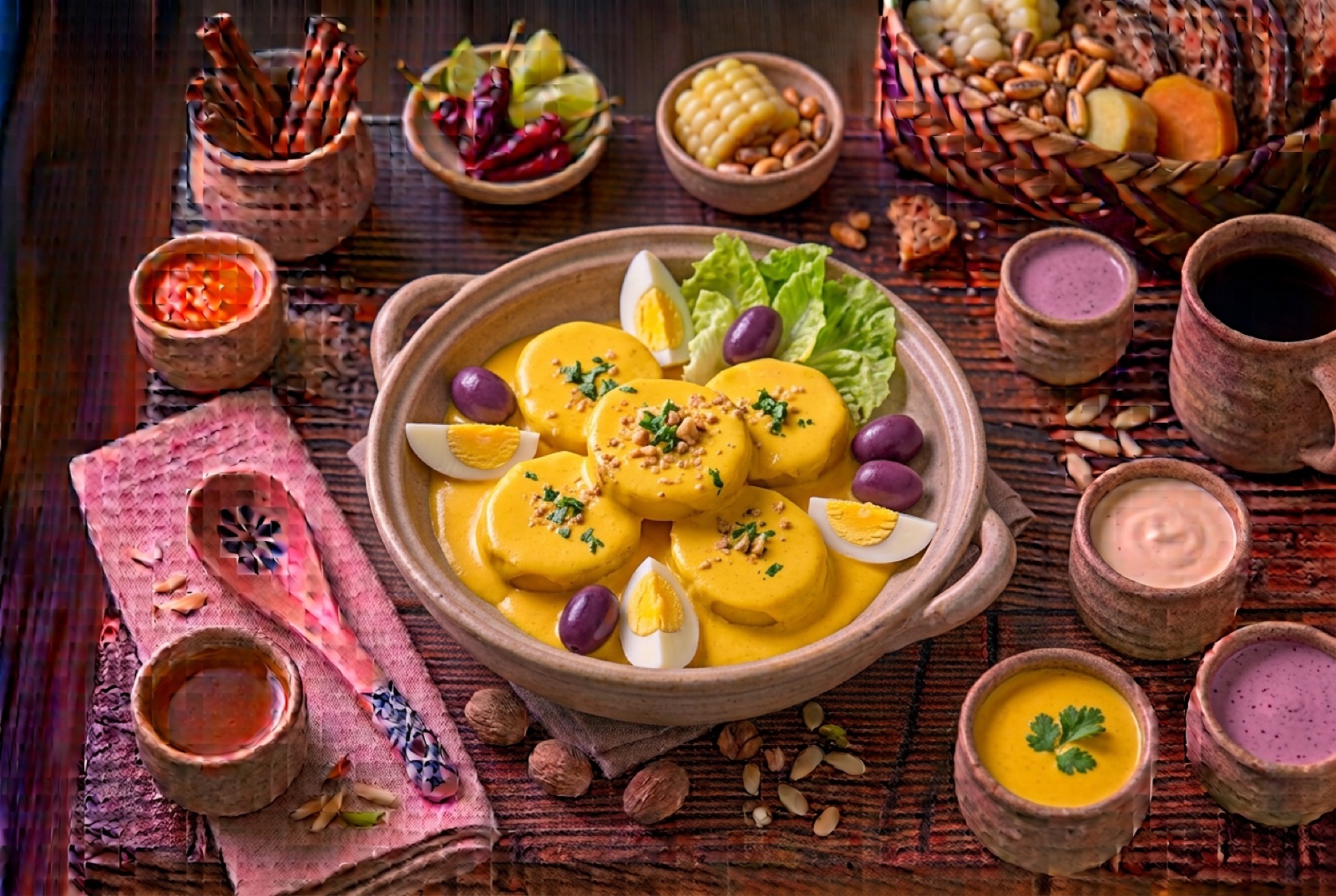
Papa a la huancaína is sliced boiled potato served cool under a thick, golden, gently spicy sauce — ají amarillo chiles blended with fresh cheese, evaporated milk and crackers until completely smooth. The sauce is the whole event: creamy like a good dressing, fruity-warm from the chile rather than hot, salty from the cheese, and vivid yellow. Hard-boiled egg and black olives finish the plate. It is one of the easiest Peruvian classics to make anywhere, because everything happens in a pot and a blender, and it is served at room temperature or cold, so it waits patiently for the rest of the meal.

- Gate
- PeruCentral highlands / Lima
- Prep
- 20 min
- Cook
- 30 min
- Total time
- 50 min
- Serves
- 4
- Status
- Easy
- Nutrition / serving · estimated
- Calories 420 kcal
- Protein 15 g
- Carbs 42 g
- Fat 22 g
- Fiber 4 g
Why this recipe works.
- A five-minute blender sauce with the classic queso fresco and evaporated milk base.
- The ají is briefly sautéed first, which deepens its color and tames any raw sharpness.
- Honest about texture: crackers are the traditional thickener, and the sauce is judged by its cling.
- Make-ahead friendly — both potatoes and sauce are meant to be served cold.
Ingredients.
12 itemsFor the plate
For the sauce
Equipment
- Blender
- Medium pot for the potatoes
- Small skillet
- Small pot for the eggs
Instructions.
Boil the potatoes and eggs
Boil 800 g of potatoes whole, in their skins, in well-salted water until a knife slides to the center without resistance, 20–25 minutes. Boil the eggs 10 minutes in the same window, then cool both; peel the potatoes and eggs once they can be handled.
Soften the ají
Warm the oil in a small skillet over medium heat and cook the ají strips, onion and garlic until the onion turns translucent and the ají smells sweet rather than sharp, 4–5 minutes. Nothing should brown — pull the pan early if edges start to color.
Tip Using jarred ají amarillo paste? Skip this step entirely and blend the paste in raw with just a quick sauté of the onion and garlic.
Blend the sauce
Tip the skillet's contents into a blender with the queso fresco, evaporated milk and crackers. Blend on high until completely smooth and glossy, a full 1–2 minutes — it should be a vivid yellow sauce that coats a spoon thickly and slides off slowly.
Tip Too thick to pour? Add evaporated milk a spoonful at a time. Too thin? Blend in another cracker.
Season and chill
Taste the sauce and add salt only if the cheese has not already done the job. Refrigerate it at least 20 minutes, until cool and slightly thickened — huancaína is served cold, and chilling settles the flavors together.
Plate the classic way
Slice the cooled potatoes into thick rounds and arrange them over lettuce leaves. Spoon the sauce generously over so each slice is fully blanketed, then finish with quartered hard-boiled eggs and the olives. Serve cool or at room temperature.
Tips from our kitchen.
- Use yellow, waxy-to-medium potatoes and boil them whole in their skins so they stay dense and do not waterlog.
- Blend the sauce longer than feels necessary — a full minute or two. Grainy huancaína means the cheese never fully broke down.
- The sauce should coat a spoon thickly and slide off slowly; adjust with more crackers to thicken or a splash of evaporated milk to loosen.
- Taste before salting. Queso fresco varies a lot in saltiness, and many batches need no extra salt at all.
- Make the sauce a few hours ahead and refrigerate it — the flavors settle together and it thickens to the ideal cling.
- If your only chiles are fiery, seed them thoroughly and blanch once in boiling water; huancaína should warm, not burn.
Substitutions.
- Ají amarillo (fresh) → Jarred ají amarillo paste, about 3 tbsp
- Sold in Latin groceries and online; honestly the more reliable option outside Peru. Skip the sauté step and blend it straight in.
- Queso fresco → Mild feta soaked 10 minutes in water, or ricotta salata
- Feta is saltier and tangier — rinse it and hold back added salt. Ordinary ricotta is too wet and bland.
- Evaporated milk → Whole milk simmered down by a third, or half milk and half cream
- Evaporated milk's slight cooked-milk sweetness is part of the classic flavor, so reduce rather than just substitute.
Variations.
- Ocopa arequipeña
- The cousin from Arequipa: a similar sauce built on huacatay (black mint) and peanuts, greener and earthier, served the same way.
- Fideos a la huancaína
- The sauce tossed with spaghetti instead of potatoes — a hugely popular Peruvian weeknight dinner, often topped with a grilled steak.
- Huancaína dip
- Made a little thicker and served with fried yuca, cancha or crudités — how it appears at Peruvian parties.
Storage & reheating.
The sauce keeps 3–4 days refrigerated in a sealed jar; stir before using, and loosen with a spoonful of evaporated milk if it thickens. Boiled potatoes keep 3 days refrigerated — store them unsauced and assemble just before serving. Do not freeze the sauce: the cheese and milk separate and it turns grainy on thawing.
Serve with
As the starter before lomo saltado or grilled meats, on lettuce with extra olives and cold chicha morada.
The story behind Papa a la Huancaína.
The dish's name points to Huancayo, a city high in Peru's central Andes, and the most repeated origin stories are set during the construction of the central railway from Lima into the mountains in the late nineteenth century. In the popular telling, women from the Huancayo region sold workers boiled potatoes dressed in a sauce of fresh cheese and ají — quick, cheap, filling food that could be made ahead and served cold at altitude. It is a good story, and it may hold a kernel of truth, but it should be labeled honestly: it is a legend, repeated in many versions, and food historians have not settled where or exactly when the dish was born. Some argue it took its modern form in Lima, named for the huancaína style rather than invented in Huancayo itself.
What is not in dispute is what the dish is made of and what it became. It joins the two pillars of the Peruvian pantry — the potato, domesticated in the Andes thousands of years ago and grown there in astonishing variety, and ají amarillo, the fruity yellow chile that seasons half of Peruvian cooking — with the fresh cheese of the highlands. Today papa a la huancaína is everywhere in Peru: the standard opener at Sunday family lunches, a fixture of criollo restaurants, and obligatory on Fiestas Patrias tables in July.
The sauce has also outgrown the potato. Peruvians spoon salsa huancaína over pasta, rice, fried yuca and grilled chicken, and a jar of it in the refrigerator is considered basic preparedness. Once you have made it in a blender in five minutes, you will understand why.
Questions, answered.
What does papa a la huancaína taste like?
The sauce is creamy, salty and gently fruity-spicy — closer to a warm-flavored cheese dressing than to a hot salsa. Ají amarillo brings color and a mild, apricot-like heat, the queso fresco brings salt and body, and evaporated milk rounds it out. Over cool dense potato with egg and olives, the effect is rich but fresh.
Is papa a la huancaína spicy?
Mildly. Ají amarillo is a fruity chile of moderate strength, and in this sauce it is seeded, blended and diluted with cheese and milk, which pulls the heat down to a warm glow. Children eat it across Peru. If you are heat-shy, seed the chiles thoroughly or start with less paste and add to taste.
Did papa a la huancaína really come from Huancayo?
Nobody knows for certain. The famous story ties it to women selling potatoes in ají-cheese sauce to workers building Peru's central railway toward Huancayo in the late 1800s, but that is a legend with many variants, and some historians argue the dish took shape in Lima. The name honestly records a style — "huancaína" means in the manner of Huancayo — not a verified birthplace.
Is papa a la huancaína vegetarian and gluten-free?
It is vegetarian — the sauce is chile, cheese, milk and crackers, and the plate is potato, egg and olives. It is not gluten-free as traditionally made, because soda crackers thicken the sauce. For a gluten-free version, swap in gluten-free crackers or a small piece of boiled potato as the thickener; the texture stays very close.
What else can I use huancaína sauce for?
Almost anything, by Peruvian precedent: tossed with spaghetti (fideos a la huancaína), spooned over rice, fried yuca or grilled chicken, or thickened slightly and served as a party dip. It keeps several days refrigerated, which is exactly why many Peruvian cooks make a double batch of sauce whenever the blender is out.
You might also like.
All recipes →
Keep exploring Peru.
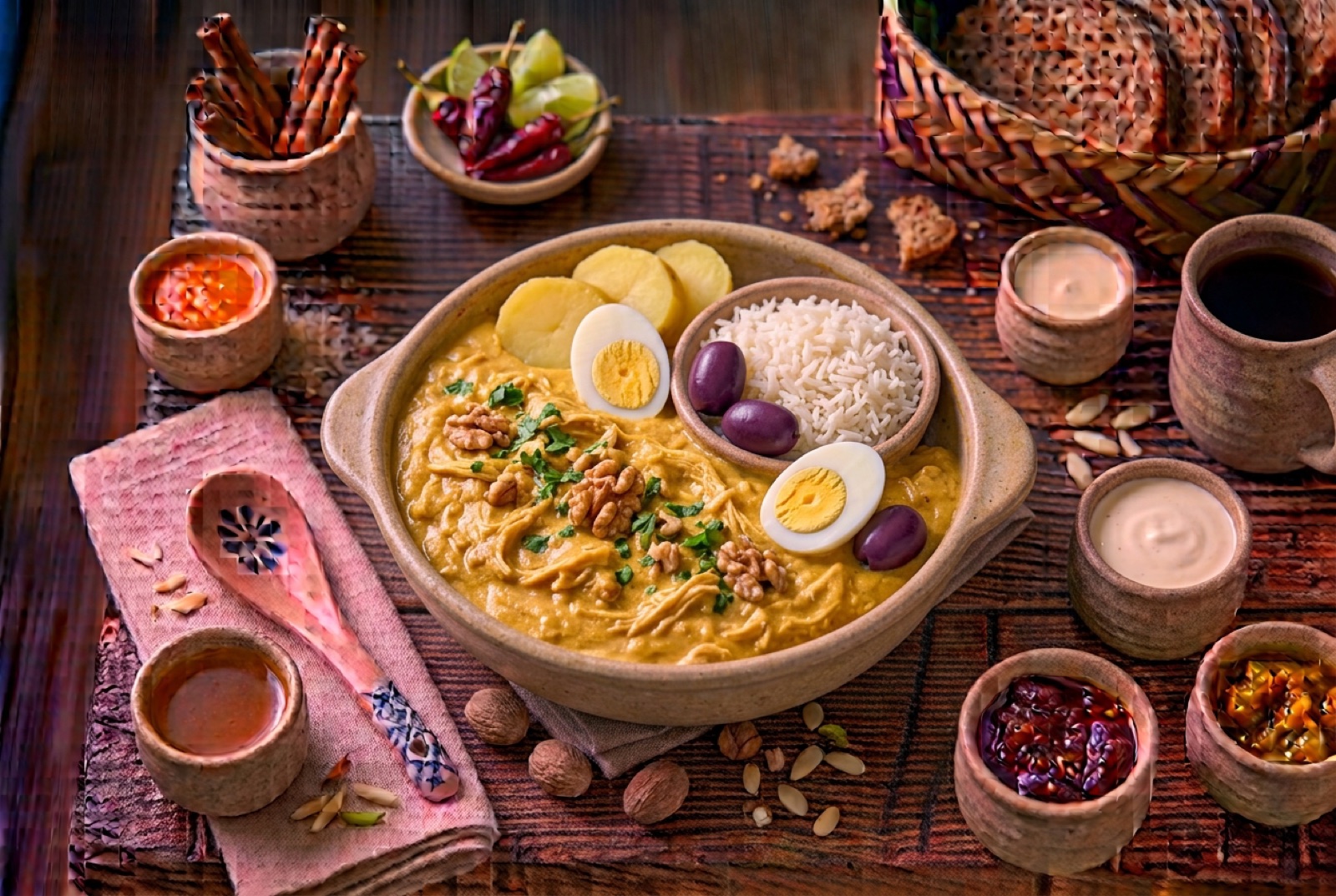
Peru has 9 more dishes in the atlas — Ají de Gallina and Anticuchos de Corazón, and 7 more.
Recipe by The DishRoute Kitchen · published August 18, 2026 · updated August 18, 2026