Peru.
Perú
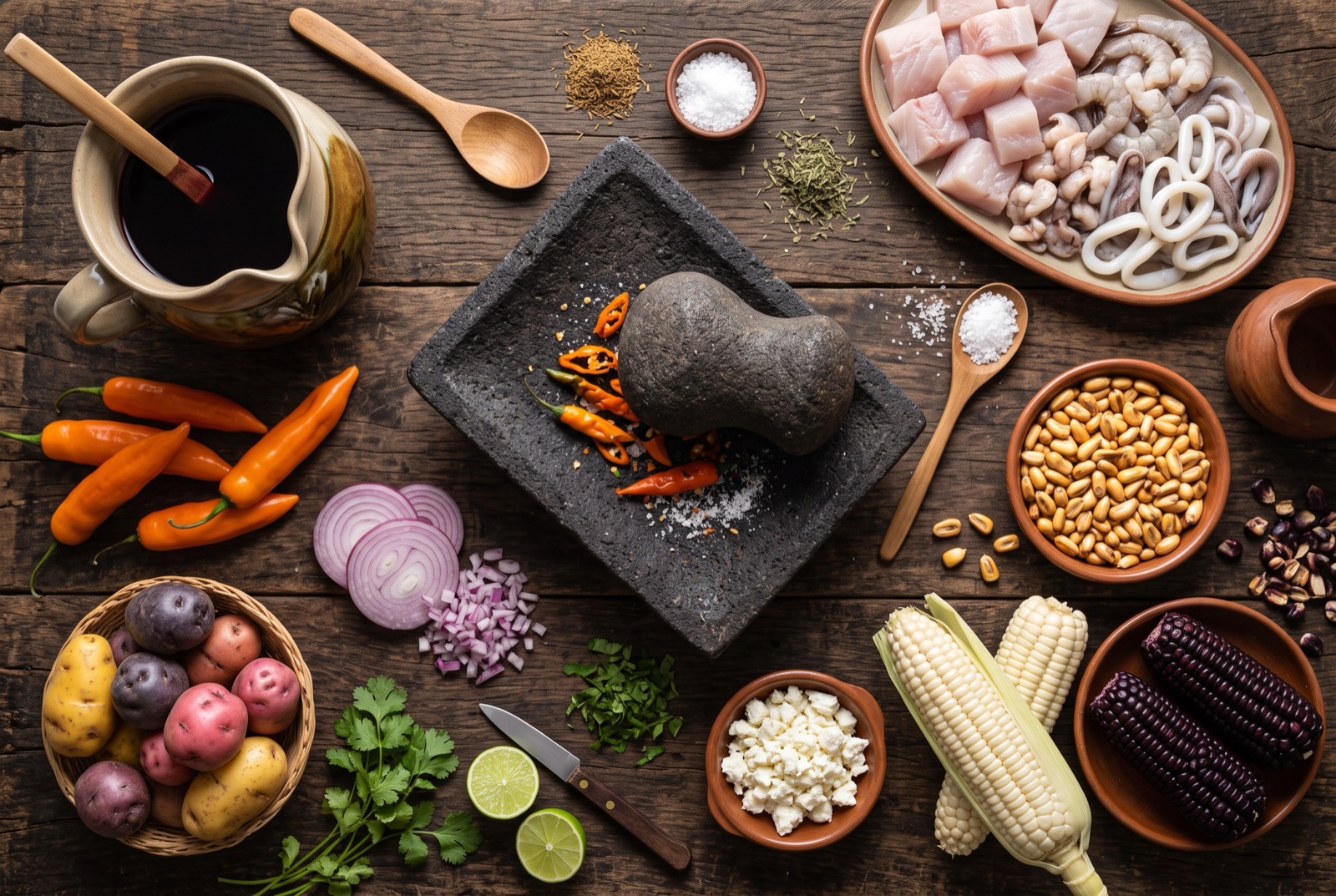
Peruvian food starts with an unfair advantage: the Andes are where the potato was domesticated, and Peru still grows thousands of native varieties, alongside dozens of kinds of corn in colors from ivory to deep purple. Onto that ancient mountain pantry, history kept adding cooks — Spanish, West African, Italian, Cantonese, Japanese — and instead of a muddle, the collisions produced whole schools of cooking: Chifa, the Chinese-Peruvian kitchen that gave the country lomo saltado, and Nikkei, the Japanese-Peruvian style that helped sharpen ceviche into its modern, briefly-cured form. The flavor signature running through it all is the ají pepper — amarillo, panca, rocoto — fruity heat rather than raw fire, from street-corner anticuchos to the creamy huancaína sauce poured over potatoes. Add one of the world's richest cold-water fisheries just offshore, and you get the cuisine that the rest of South America currently looks to first.

- Continent
- South AmericaAndes / Pacific coast
- Recipes in atlas
- 10
- Must-try dishes
- 3
- Pantry staples
- 8
Start with the classics.
Must tryThe dishes that explain the Peru kitchen fastest — if you cook only a few things from this page, cook these.
Inside the Peru kitchen.
The ají peppers are the cuisine's backbone and its color wheel. Ají amarillo — actually orange — brings fruity, medium heat and goes into more Peruvian dishes than any other single seasoning; ají panca, dried and deep red, gives smoky sweetness to marinades and stews; rocoto, apple-shaped and genuinely hot, is stuffed and baked in Arequipa. Most home cooking begins the same way: onion, garlic and ají paste sweated slowly into an aderezo, the sofrito-like base that everything else is built on.
Then there are the tubers and grains that Peru gave the world. Potatoes were domesticated near Lake Titicaca thousands of years ago, and Andean markets still sell varieties in purple, pink, black and gold; freeze-dried chuño, made by exposing potatoes to alternating night frost and daytime sun, is a preservation technique older than the Inca empire. Corn is just as varied — giant-kerneled choclo boiled alongside ceviche, cancha toasted into the crunchy bar snack that replaces bread, and purple maíz morado simmered into chicha morada, the sweet, spiced national drink. Quinoa and kiwicha, the high-altitude seed crops, round out the Andean pantry.
The coast cooks a different book entirely. The cold Humboldt Current makes Peruvian waters extraordinarily rich, and the cevichería — traditionally open only until the afternoon, because the fish came in that morning — is a national institution. Ceviche, tiradito, arroz con mariscos and chupe de camarones all belong to this shoreline kitchen, where lime, red onion and ají do the seasoning.
Migration wrote the next chapters. Some hundred thousand Cantonese laborers arrived in the mid-1800s, and their descendants opened the restaurants Peruvians call chifas; wok technique and soy sauce — sillao — fused with local ingredients to create dishes like lomo saltado and arroz chaufa that Peruvians consider entirely their own. Japanese immigrants arriving from the 1890s onward produced Nikkei cooking, which treated Peruvian fish with Japanese precision — shorter cures, cleaner cuts — and reshaped how the whole country eats ceviche.
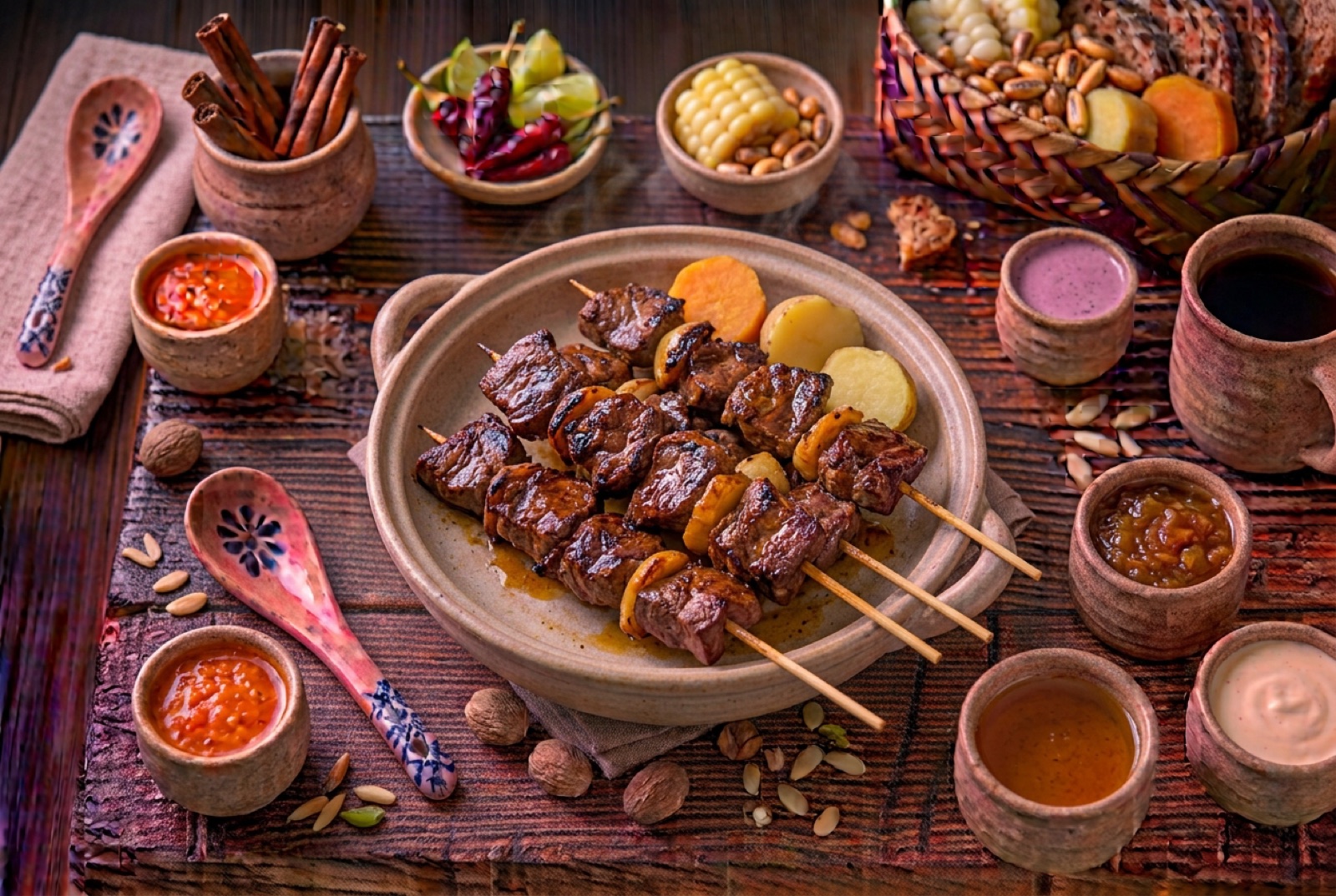
Meals are anchored by the midday almuerzo, often a set menú of soup, a main and a drink. Anticuchos — skewers of ají panca-marinated beef heart — rule the evening streets, causa and papa a la huancaína open celebratory tables, and the pisco sour, shaken from grape brandy, lime and egg white, is the toast that starts them.
Signature pantry.
8 staplesThe ingredients this cuisine cannot function without.
- ají amarillo
- native potatoes (papa amarilla)
- lime
- corn (choclo, cancha, maíz morado)
- red onion
- fresh fish and seafood
- cilantro
- queso fresco
How people eat in Peru.
Ceviche is a daytime food: the traditional cevichería opens for lunch and winds down by late afternoon, on the logic that raw fish should be eaten the day it lands — Peruvians rarely order it at night. The midday almuerzo is the main meal, and the set menú del día (soup, main, drink) is how much of the country actually eats. A small dish of ají sauce sits on nearly every table; you spoon it on yourself, calibrated to taste. Cancha or bread arrives while you wait, lomo saltado is eaten with both fries and rice without anyone finding that excessive, and June 28 is celebrated nationally as Ceviche Day.
Regional kitchens.
Peru cooks 4 distinctly different ways depending on where you stand — here is what changes between them.
- R1Lima & the Coast
- The gastronomic capital of South America and the home of the cevichería, the chifa and the Nikkei kitchen — where the Humboldt Current's cold, fish-rich waters meet every immigrant tradition the country has absorbed.
- R2The Andes
- The original Peruvian pantry: thousands of native potato varieties, choclo corn, quinoa and freeze-dried chuño, cooked into hearty soups, pachamanca earth-oven feasts and the huancaína sauce named for Huancayo.
- R3The Amazon
- A rainforest kitchen little known outside Peru — river fish like paiche grilled in bijao leaves (patarashca), juane rice bundles, and fruits such as camu camu and aguaje that appear nowhere else.
- R4Arequipa
- The proud southern city of the picantería, where lunch spots serve fiery rocoto relleno (stuffed hot peppers), chupe de camarones shrimp chowder, and adobo arequipeño simmered in chicha.
All Peru recipes.
10 recipes and counting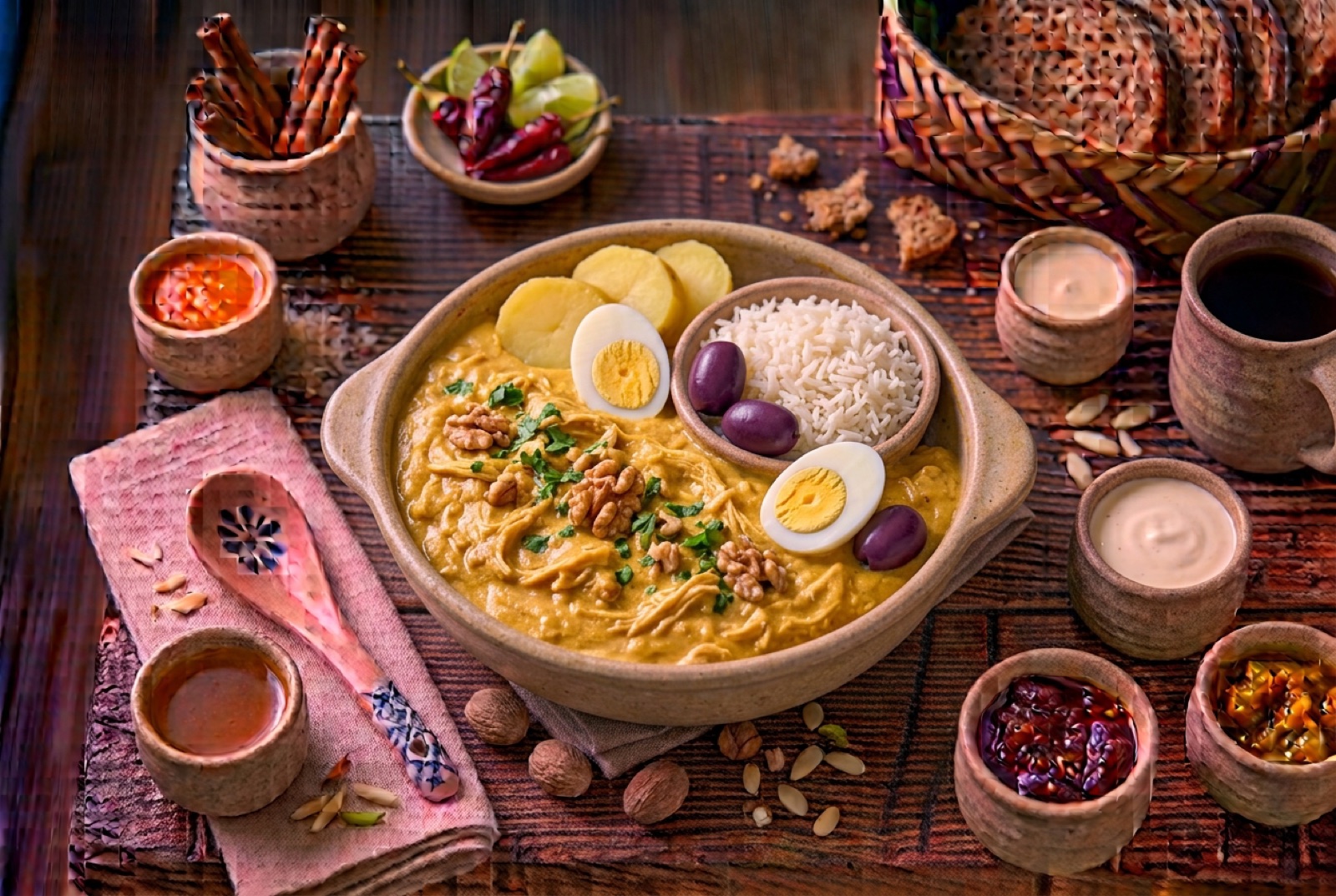
Peru1 hr 5 min
Ají de Gallina
Creamy Yellow Chili Chicken
Peru12 hr 45 min
Anticuchos de Corazón
Grilled Beef Heart Skewers
Peru3 hr
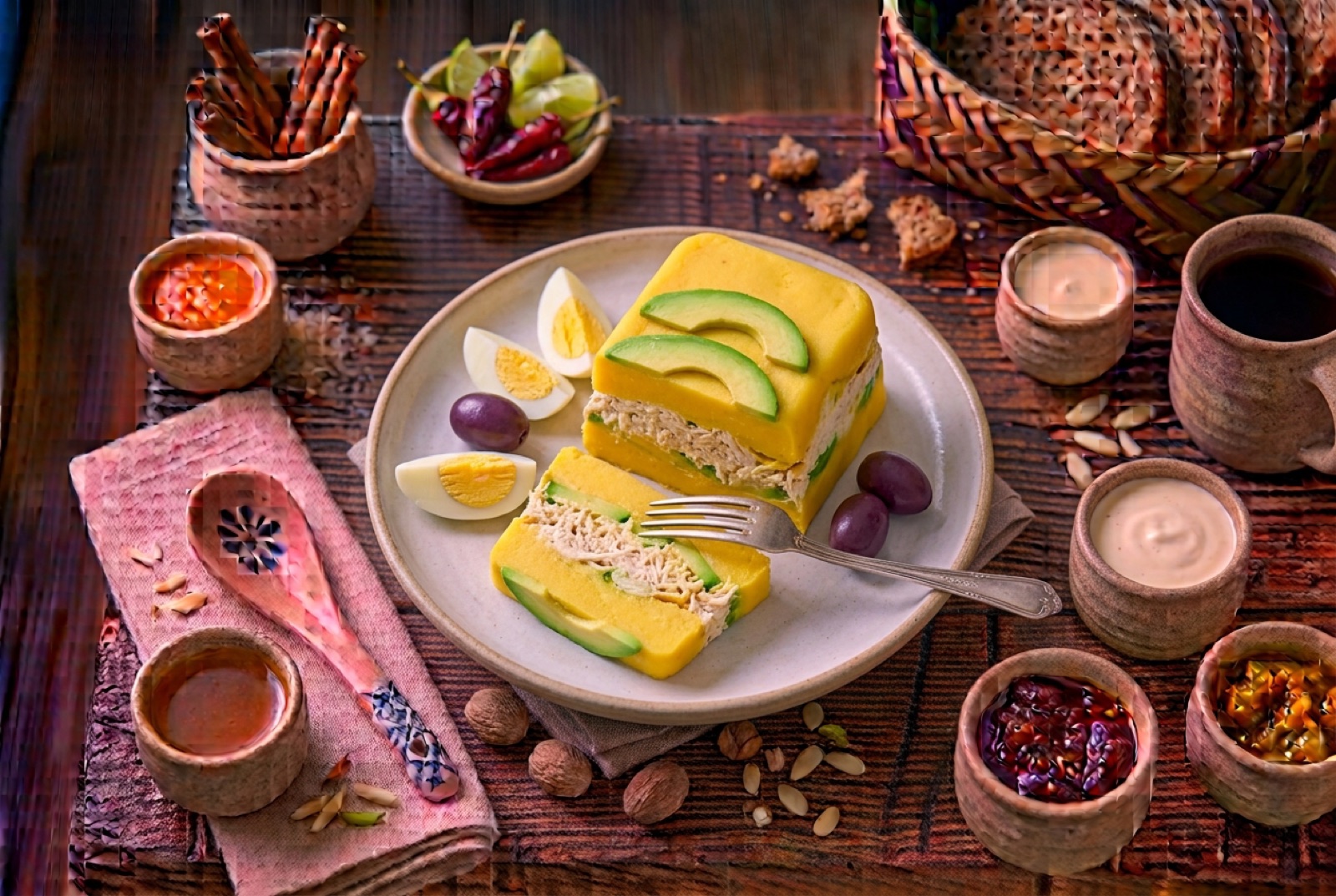
Causa Limeña
Chilled Layered Potato Terrine
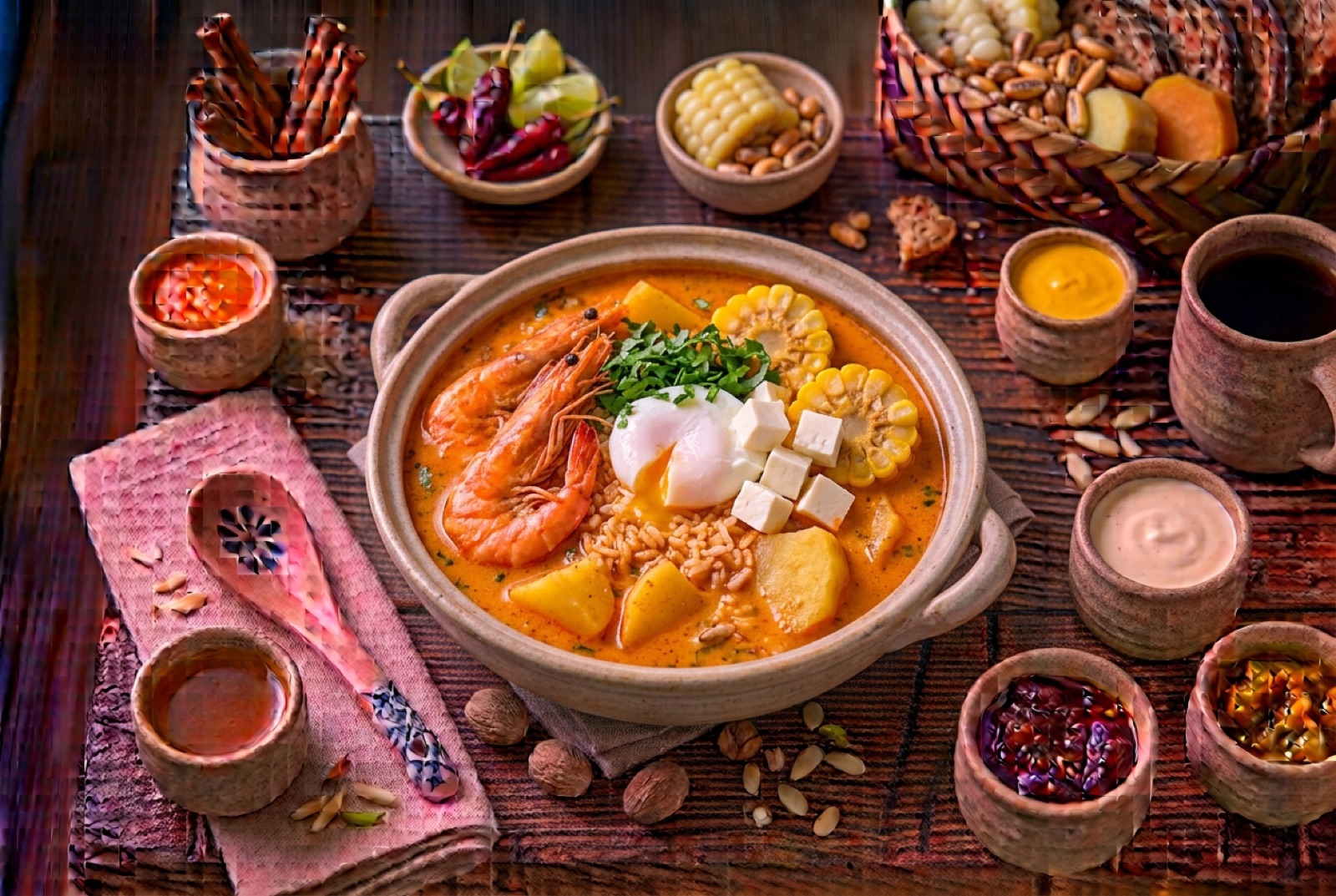
Peru1 hr 15 min
Chupe de Camarones
Arequipa River Prawn Chowder
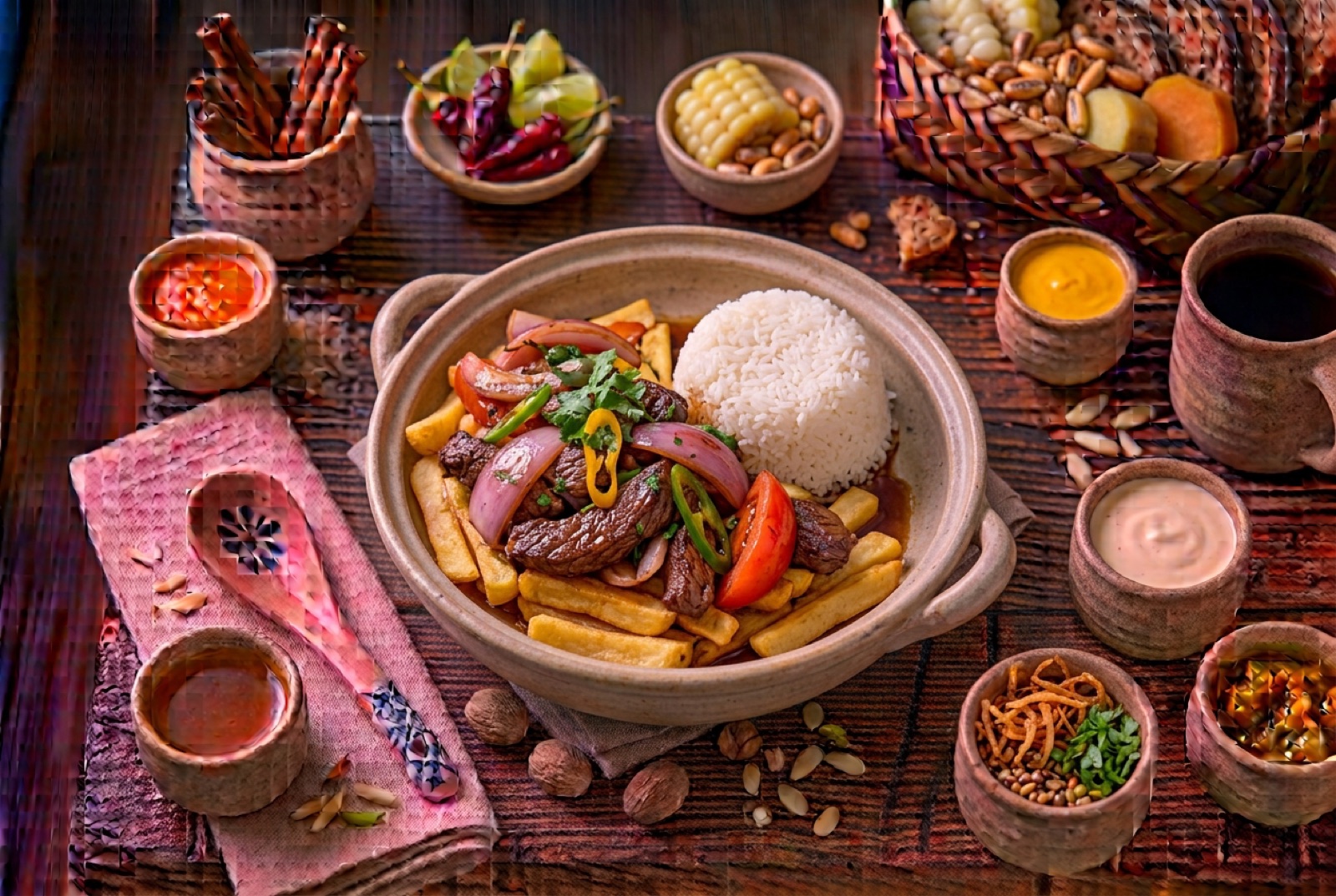
Peru50 min
Lomo Saltado
Peruvian Beef Stir-Fry
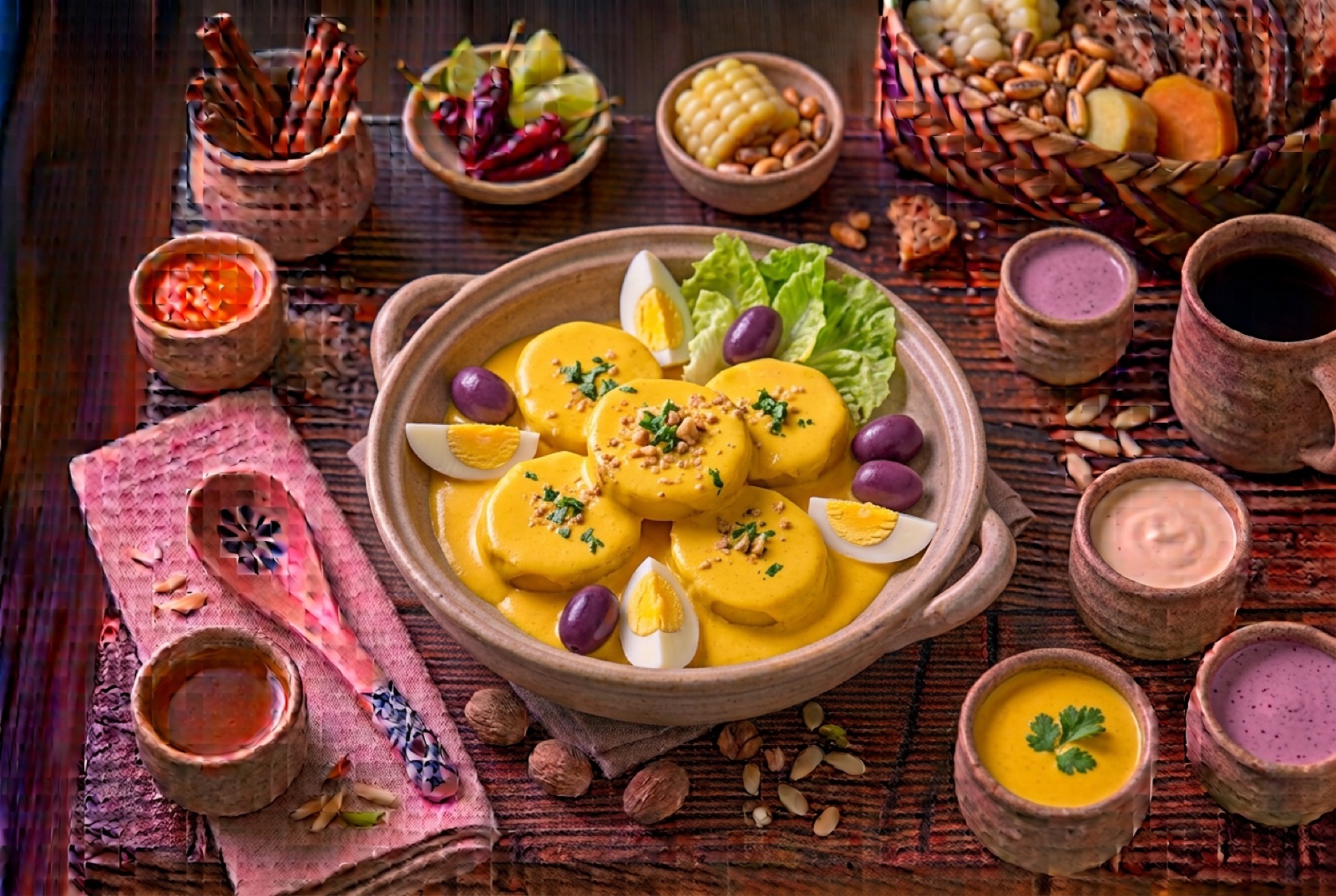
Peru50 min
Papa a la Huancaína
Potatoes in Ají Cheese Sauce
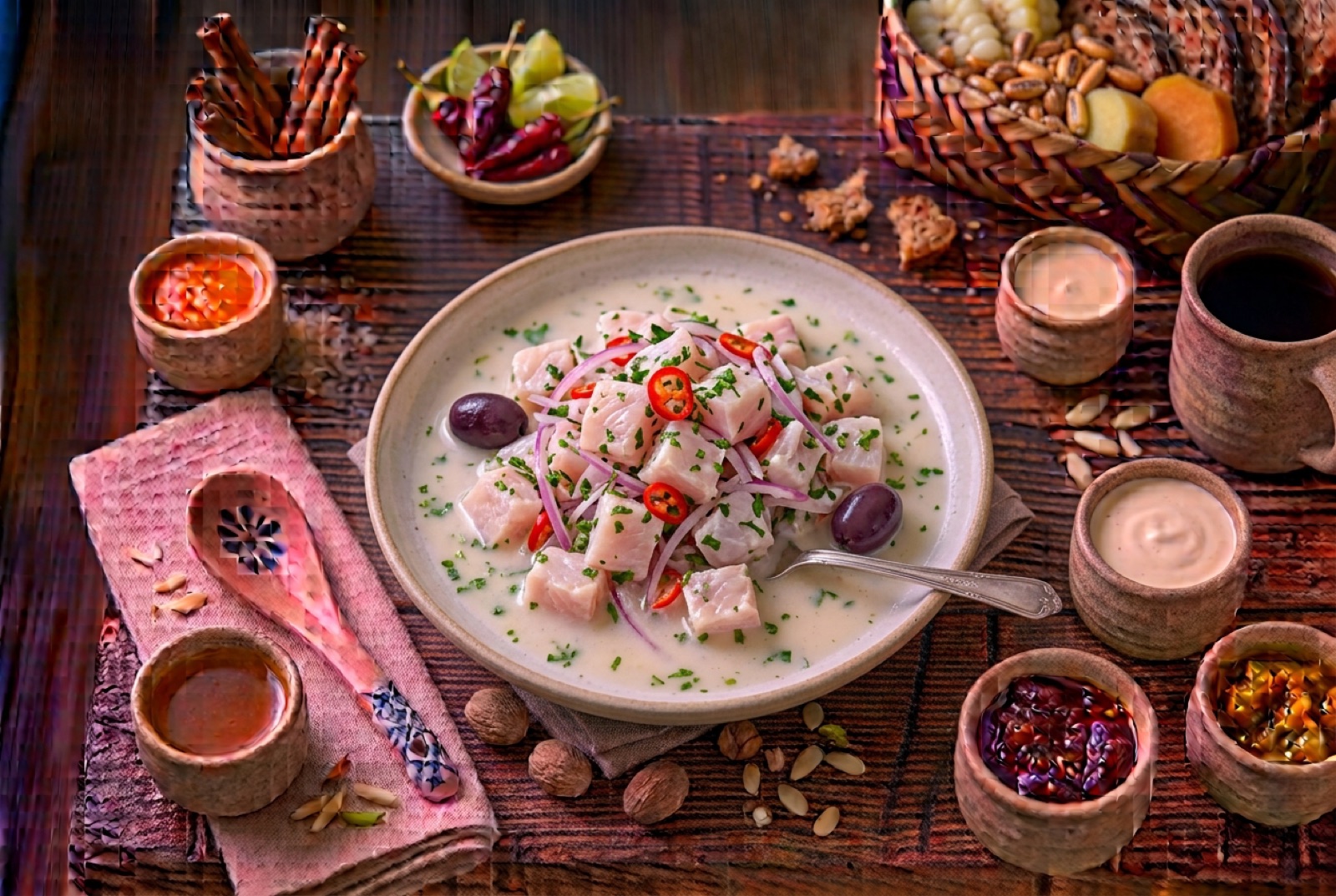
Peru1 hr
Peruvian Ceviche
Classic Fish Ceviche
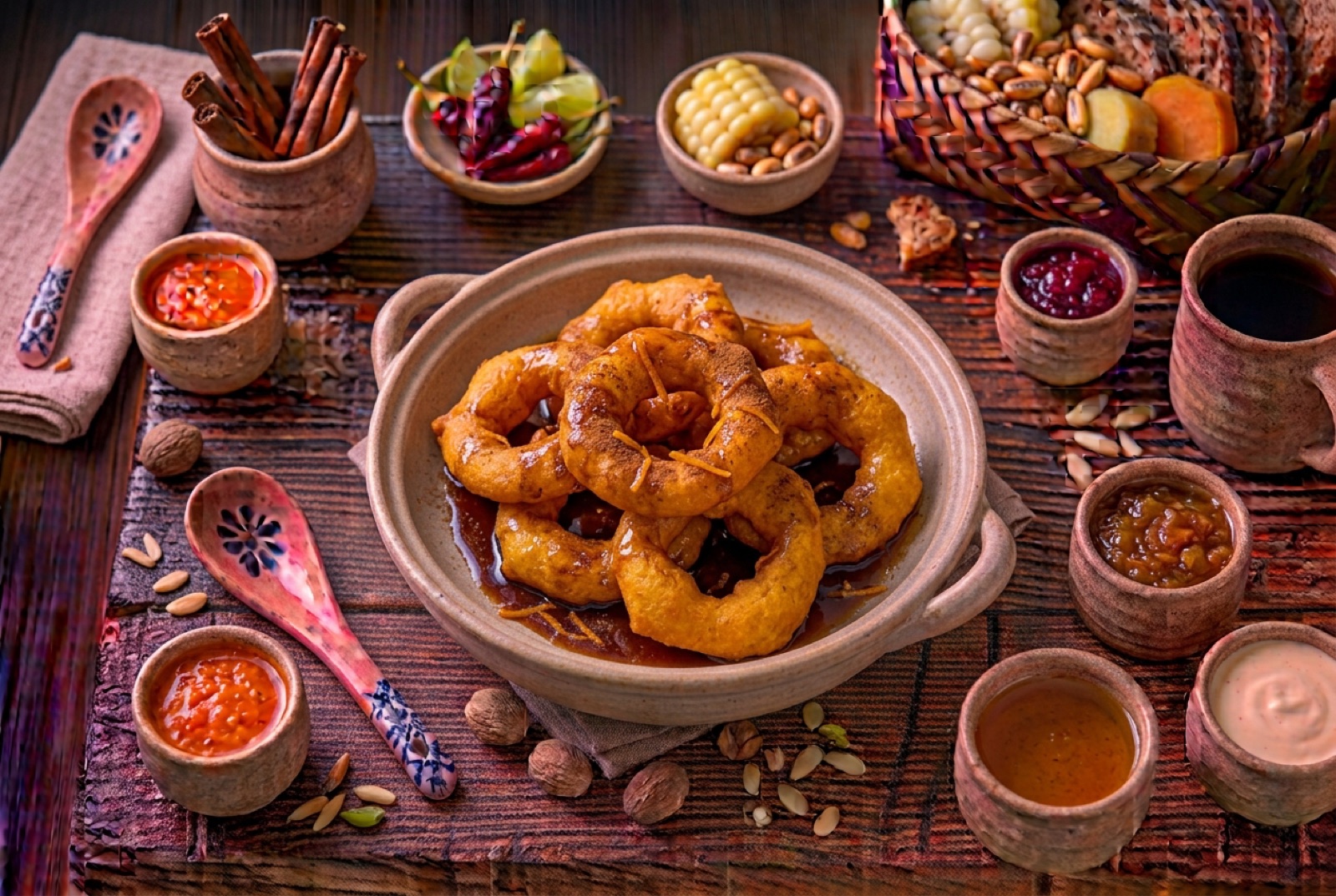
Peru2 hr 35 min
Picarones
Peruvian Squash and Sweet Potato Doughnuts
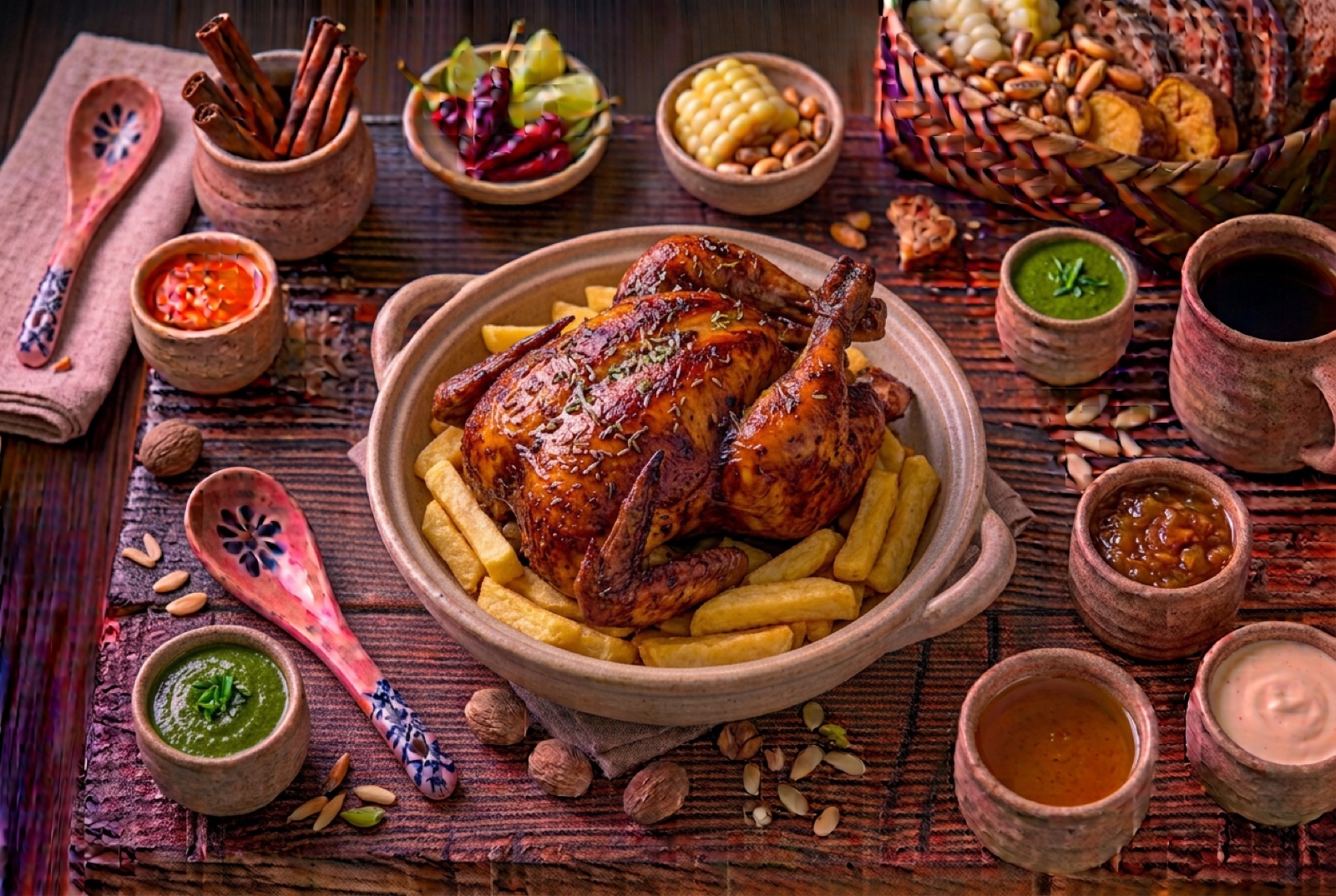
Peru13 hr 25 min
Pollo a la Brasa
Peruvian Charcoal-Style Roast Chicken
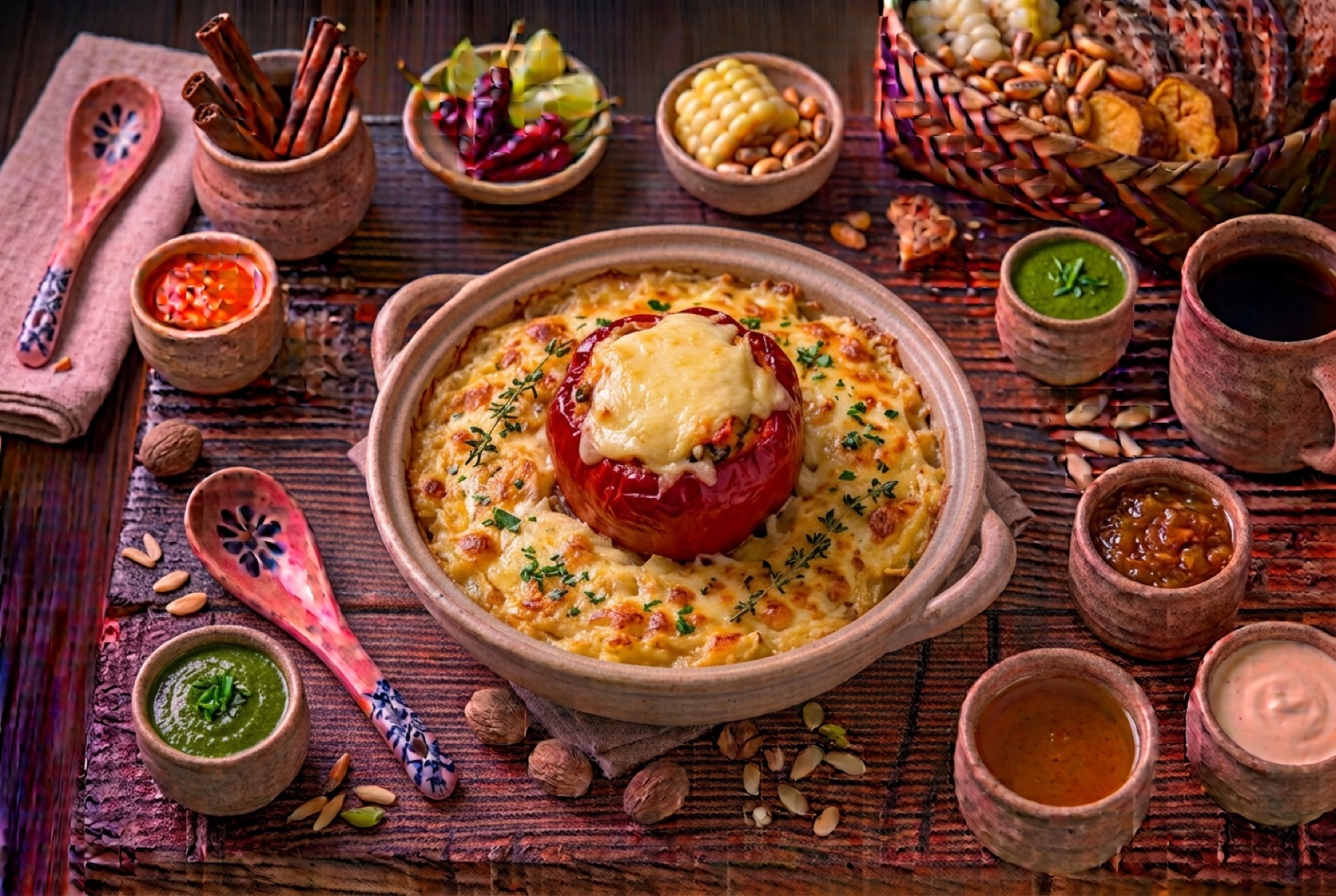
Peru1 hr 45 min
Rocoto Relleno
Arequipa Stuffed Hot Peppers
Keep traveling.
Peru sits in Andes / Pacific coast, and its kitchen shares borders as well as ingredients with Argentina and Bolivia.
 Argentina
 Bolivia