Peruvian Ceviche.
Classic Fish Ceviche
Ceviche · say it: seh-VEE-cheh
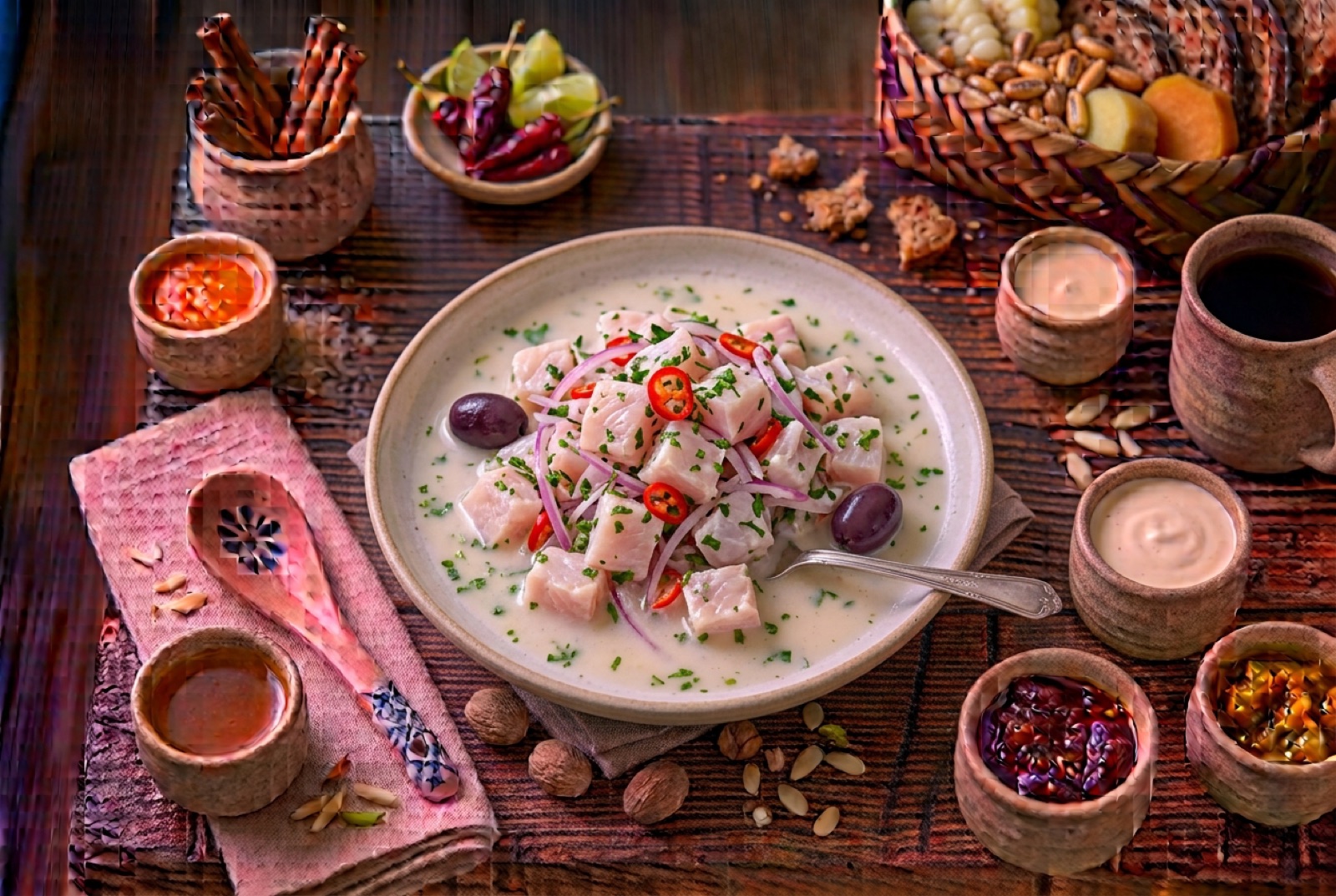
Ceviche is raw white fish cut into cubes and tossed with enough fresh lime juice, salt and chile that it firms up and turns opaque in minutes — bright, cold, clean-tasting, with sharp red onion and cilantro against the sweetness of the fish. The milky, chile-flecked juice left in the bowl is leche de tigre, "tiger's milk," and Peruvians drink it straight. This version is the modern Lima style: a short cure so the fish stays silky at the center, balanced by boiled sweet potato and chewy corn on the side. It needs no special equipment, just genuinely fresh fish and more limes than feels reasonable.

- Gate
- PeruLima and the Pacific coast
- Prep
- 30 min
- Cook
- 20 min
- Total time
- 1 hr incl. 10 min rest
- Serves
- 4
- Status
- Medium
- Nutrition / serving · estimated
- Calories 320 kcal
- Protein 30 g
- Carbs 38 g
- Fat 4 g
- Fiber 5 g
Why this recipe works.
- The short, modern Lima-style cure keeps the fish silky instead of chalky.
- A real leche de tigre — lime, fish, chile, ginger and garlic — not just squeezed limes.
- Honest food-safety guidance on buying and handling fish for raw preparations.
- The full coastal plate: sweet potato and corn to balance the acid, the way cevicherías serve it.
Ingredients.
11 itemsFor the ceviche
For serving
Equipment
- Sharp knife
- Citrus squeezer
- Large non-reactive (glass or ceramic) bowl
- Small saucepan for the sides
Instructions.
Boil the sides
Boil the sweet potatoes whole in salted water until a knife slides in without resistance, about 20 minutes, adding the corn for the last 5. Drain, and once cool enough to handle, peel and slice the sweet potatoes into thick rounds.
Tame the onion
Soak the sliced red onion in a bowl of ice water while you prepare everything else, at least 10 minutes, then drain well. It should taste crisp and gently sweet, with the raw sting washed away.
Cut the fish
With a sharp knife, cut the fish into even 2 cm cubes, trimming away any dark flesh, skin or stray bones. Keep the cubes in a bowl set over ice — the fish should stay cold enough to sting your fingertips.
Tip Cold fish cuts cleanly and cures evenly; fish at room temperature turns mushy in the lime.
Season, then cure
Toss 600 g of cubed fish with the salt, garlic, ginger and half the chile, and let it sit for 1 minute — salting first seasons the fish through. Pour over the lime juice so the cubes are mostly submerged and stir gently.
Watch the cure
Let the fish cure for 3–10 minutes, stirring once, until the outside of each cube is opaque white while the very center stays faintly translucent. The liquid will turn milky and pale — that is the leche de tigre forming.
Tip Cut a cube in half to check: pearly outside, barely glassy at the core is perfect for the modern Lima style.
Finish and serve cold
Fold in the drained onion, remaining chile and cilantro, taste the liquid and correct the salt — it should be bright enough to make you blink. Spoon the ceviche and plenty of leche de tigre into chilled bowls, and set sweet potato and corn alongside. Serve immediately.
Tips from our kitchen.
- Buy the fish the day you make ceviche and keep it very cold until the moment you cut it. Freshness is not a preference here — it is the recipe.
- Squeeze limes gently and stop before the white pith: pressing too hard releases bitter oils that will dominate the leche de tigre.
- Soak the sliced red onion in ice water for 10 minutes to mellow its bite and keep it crisp.
- Cut the fish into even 2 cm cubes so every piece cures at the same rate — ragged, uneven pieces give you some raw and some overdone.
- Serve in chilled bowls. Ceviche is a cold dish, and warm crockery flattens it within minutes.
- Taste the leche de tigre before serving and correct with salt — it should make you blink slightly, then reach for more.
Substitutions.
- Ají limo chile → Habanero (use half) or a red Fresno chile
- Habanero has the closest fruity heat but is stronger. Fresno is milder and easier to find. Either works; the ceviche just loses a little of its Peruvian accent.
- Sole, corvina or sea bass → Any very fresh, firm, lean white fish — flounder, snapper, halibut
- Freshness matters far more than the species. Avoid oily fish like mackerel or salmon for the classic style.
- Choclo (Peruvian giant corn) → Regular sweet corn, boiled
- Choclo is starchier and chewier; sweet corn is sweeter but perfectly good. Latin groceries sell frozen choclo.
Variations.
- Ceviche mixto
- The same cure over a mix of fish, shrimp and squid — briefly blanch the shellfish first, since lime alone does little for them.
- Leche de tigre shot
- Blend the finished curing liquid with a few fish trimmings and strain; served in a small glass as a bracing starter or a fabled hangover cure.
- Ceviche al ají amarillo
- Blend a spoonful of ají amarillo paste into the leche de tigre for a golden, gently fruity version popular in Lima.
Storage & reheating.
Ceviche does not keep — the acid keeps working and turns the fish mealy within hours, and raw-fish dishes should not be held over. Make only what will be eaten at that sitting, straight away. Leftover leche de tigre (without fish) can be refrigerated overnight and used to dress avocado or boiled potatoes. Do not freeze.
Serve with
Boiled sweet potato, choclo corn and cancha (toasted corn nuts), with an ice-cold Peruvian lager or chicha morada.
The story behind Peruvian Ceviche.
Peruvians have been curing fish in something acidic for a very long time — coastal peoples ate fresh fish with salt, chile and the juice of local fruits well before the Spanish arrived. The lime came with colonization, along with the onion, and over centuries the elements settled into the dish Peru now treats as a national symbol: the country celebrates an official Día del Ceviche every June 28, and cevicherías — restaurants built around the dish — anchor lunch culture in every coastal city.
The biggest change is recent. For most of the twentieth century, fish sat in lime juice for hours until it was fully firm and chalk-white throughout. From the 1970s onward, Lima's cooks — influenced in part by the city's large Japanese-Peruvian community and its sashimi sensibility — shortened the cure to minutes, so the fish stays tender and tastes of itself. That quick style is now the standard, and it is what this recipe makes.
One honest note on what the lime actually does: acid denatures the proteins in fish, which is why it turns opaque and firm as if cooked — but nothing is heated, and acid does not reliably kill bacteria or parasites the way heat does. That is not a reason to skip ceviche; it is the reason cevicherías buy fish the morning they serve it. Use the freshest fish you can find from a fishmonger you trust, tell them it is for ceviche, or use fish that has been commercially frozen first, which handles the parasite question. Peruvians eat ceviche at lunch, when the fish is hours old, and consider evening ceviche a tourist's mistake — a piece of food wisdom worth keeping.
Questions, answered.
Does the lime juice in ceviche actually cook the fish?
Not in the way heat does. The citric acid denatures the fish's proteins, which makes the flesh turn opaque and firm exactly as it does in a pan — but nothing is heated, so bacteria and parasites are not reliably killed. Ceviche is best understood as a cured raw-fish dish, which is why impeccably fresh (or previously frozen) fish is non-negotiable.
What fish is safest and best for ceviche?
A firm, lean white fish bought very fresh from a trusted fishmonger — sole, corvina, sea bass, snapper or flounder all work. Tell the fishmonger you are eating it raw. Fish that has been commercially frozen and thawed is also a sound choice, since deep freezing kills parasites; texture-wise it is nearly indistinguishable after the lime cure.
How long should fish sit in lime juice for ceviche?
For the modern Peruvian style, only 3 to 10 minutes — until the outside of each cube turns opaque while the center stays slightly translucent and tender. The old-fashioned method cured fish for hours until firm throughout, but most Peruvian cooks abandoned that decades ago because it makes the fish dry and chalky.
What is leche de tigre?
Leche de tigre ("tiger's milk") is the milky, pale liquid created when lime juice mingles with the juices, salt and chile released by the curing fish. In Peru it is prized in its own right — spooned over the ceviche, drunk from the bowl, or blended, strained and served as a shot reputed to cure hangovers and restore courage.
Why is ceviche served with sweet potato and corn?
Balance. The lime cure is aggressively sharp and salty, and coastal Peruvian tradition pairs it with boiled sweet potato and choclo — large-kernel Andean corn — whose starchy sweetness cools the acid between bites. A proper cevichería plate almost always carries both, plus crunchy toasted corn called cancha.
You might also like.
All recipes →
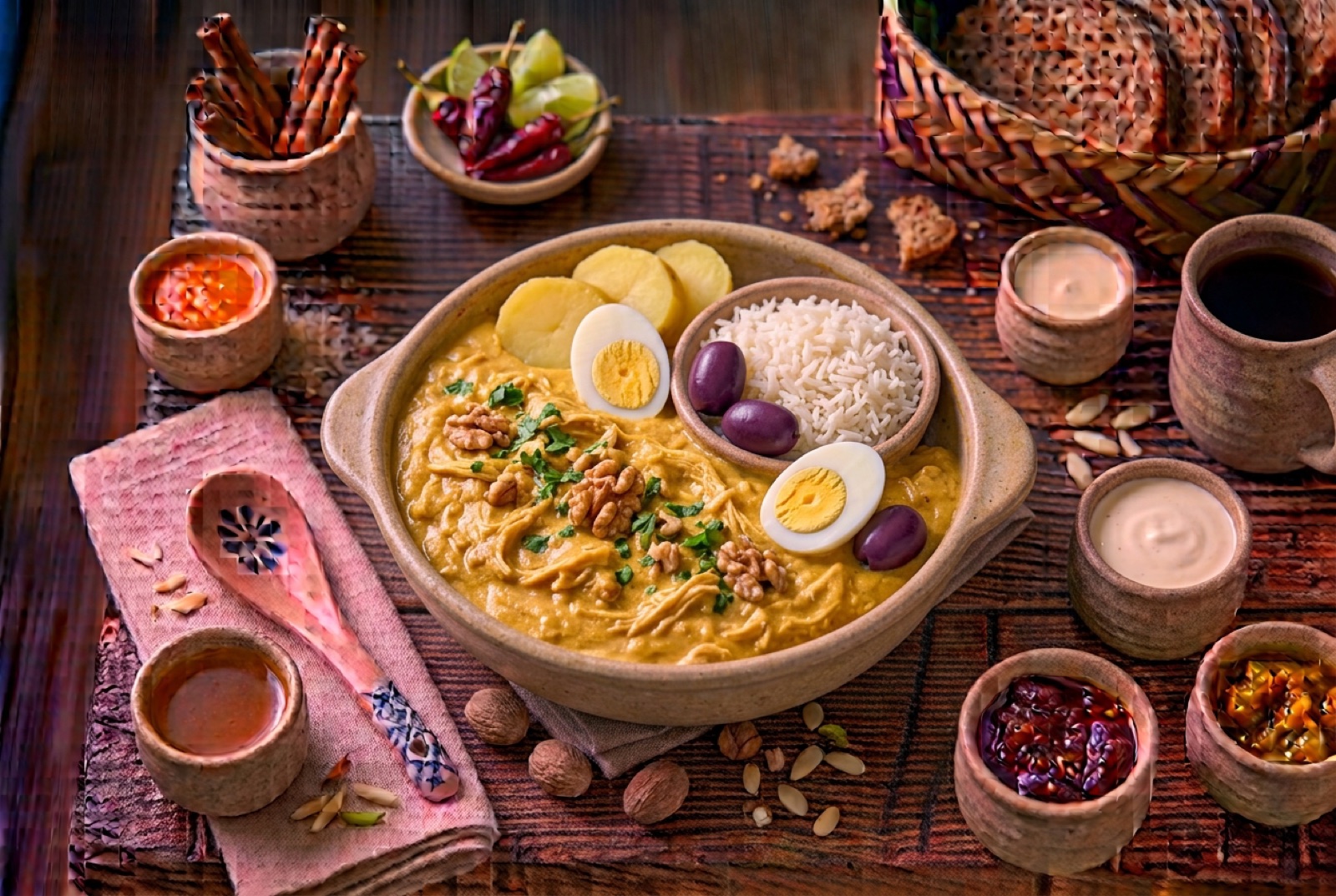
Keep exploring Peru.
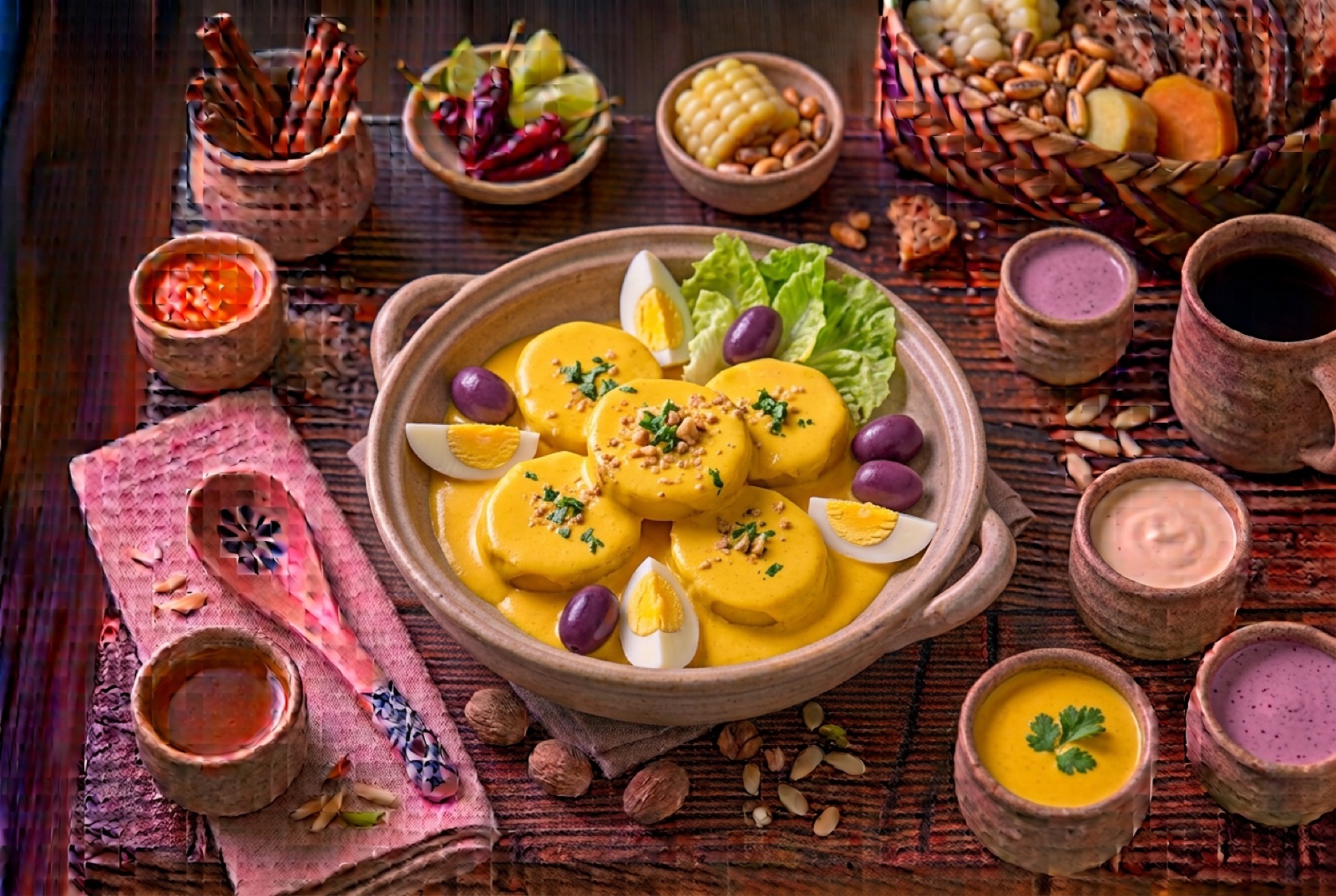
Peru has 9 more dishes in the atlas — Ají de Gallina and Anticuchos de Corazón, and 7 more.
All Peru recipes White fish recipes Lime recipes Onion recipes appetizermainpescatariangluten freedairy freeRecipe by The DishRoute Kitchen · published August 18, 2026 · updated August 18, 2026