Picarones.
Peruvian Squash and Sweet Potato Doughnuts
Picarones · say it: pee-kah-ROH-ness
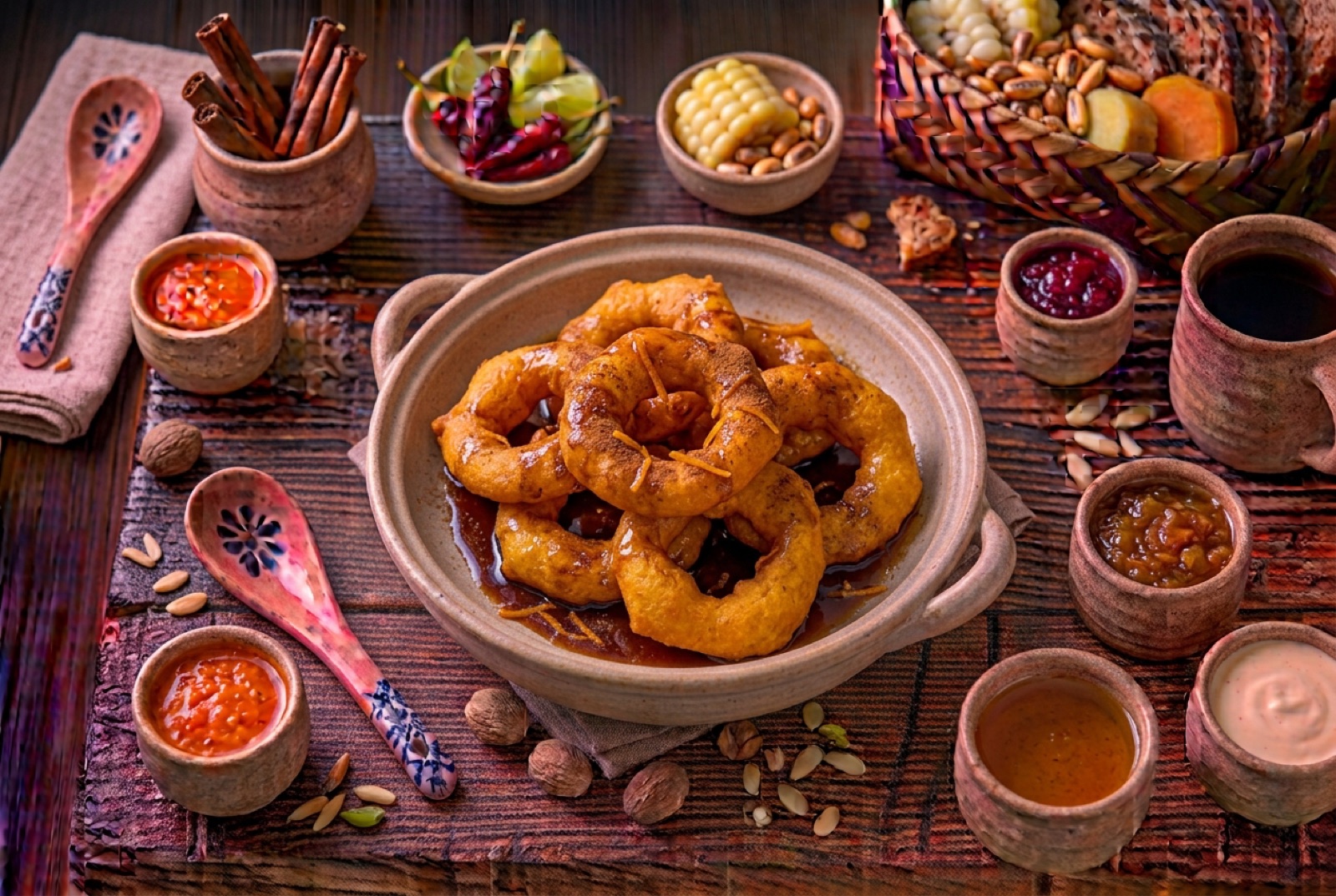
Picarones are Peru's street doughnut, and they are nothing like a bakery ring. The batter is a wet, sticky, yeasted purée of squash and sweet potato with just enough flour to hold together, shaped by hand straight into hot oil, so each one comes out irregular, blistered and full of holes. Bite through the crisp shell and the interior is soft and almost custardy, with a mild vegetal sweetness that the chancaca syrup — dark unrefined cane sugar boiled with orange peel, cinnamon, cloves and anise — turns into dessert. They are made to order at street stalls, eaten hot with fingers and a paper plate, and they are genuinely difficult to stop eating.

- Gate
- PeruLima
- Prep
- 35 min
- Cook
- 30 min
- Total time
- 2 hr 35 min incl. 1 hr 30 min rest
- Serves
- 6
- Status
- Medium
- Nutrition / serving · estimated
- Calories 480 kcal
- Protein 7 g
- Carbs 92 g
- Fat 10 g
- Fiber 5 g
- Sugar 46 g
- Sodium 320 mg
Why this recipe works.
- Squash and sweet potato are steamed rather than boiled, so the purée is not waterlogged and the batter needs less flour to hold.
- The batter is beaten by hand until it stretches, which develops just enough gluten for the ring to survive the drop into the oil.
- A wet-hands shaping method that actually works, with a description of what the batter should feel like at each stage.
- A chancaca syrup taken to the right consistency — pourable when hot, lightly syrupy when warm, never a hard glaze.
Ingredients.
16 itemsFor the batter
For frying
For the chancaca syrup
Equipment
- Steamer or steamer basket
- Blender or potato masher
- Large mixing bowl
- Deep heavy pan for frying
- Slotted spoon
- Thermometer
Instructions.
Steam the squash and sweet potato
Cut both into large chunks and steam for about 20 minutes, until a knife goes through with no resistance and the pieces look dry at the surface rather than glassy. Steaming rather than boiling is what keeps water out of the batter.
Purée and cool
Mash or blend the hot vegetables to a completely smooth purée with no fibrous strands, then spread it in a wide bowl and leave until it is only just warm to the back of your hand — around body temperature.
Tip Too hot and the yeast dies on contact; too cold and the rise takes twice as long.
Activate the yeast
Stir the yeast and the teaspoon of sugar into the warm water and leave for 10 minutes, until the surface is domed with foam and smells distinctly of bread. If nothing happens, start again with fresh yeast rather than proceeding.
Beat the batter
Add the yeast mixture, anise seed and salt to the purée, then work in the flour a third at a time. Beat hard with your hand or a wooden spoon for 5 minutes until the batter is glossy, elastic and stretches into strands when you lift a handful and let it fall back.
Tip It should be uncomfortably sticky. That stickiness is what becomes the soft interior.
Rise until bubbly
Cover the bowl and leave somewhere warm for 90 minutes, until the batter has visibly puffed, the surface is pocked with bubbles, and a spoon dragged through it reveals an airy, honeycombed structure underneath.
Make the chancaca syrup
Simmer the chopped chancaca with the water, orange peel, cinnamon, cloves, anise and the fig leaf if using for 25–30 minutes, until reduced by roughly half and thick enough to coat a spoon while still running off it freely. Strain and keep warm.
Fry the rings
Heat the oil to 175°C. Wet one hand, scoop up a small handful of batter, poke a hole through the middle with your thumb and lower the ring into the oil. Fry three or four at a time for about 3 minutes, turning once, until deep golden with blistered, crackled surfaces.
Tip Re-wet your hand for every picarón. The batter releases cleanly from wet skin and welds itself to dry skin.
Drain and drown
Lift the picarones onto a rack — not paper, which steams the undersides — and let them drain for a moment while you fry the next batch. Pile three or four per plate and ladle the warm chancaca syrup generously over the top, then eat them immediately with your fingers.
Tips from our kitchen.
- Steam the squash and sweet potato instead of boiling them. Boiled flesh carries water into the batter and forces you to add flour, which makes the picarones bready.
- Purée the vegetables while hot and let the mixture cool to blood temperature before adding the yeast, or you will kill it outright.
- The finished batter should be slack enough to slide slowly off a spoon but elastic enough to stretch when you pull a spoonful up. If it holds its shape stiffly, it is too thick.
- Keep a bowl of water beside the fryer and wet your hands before every single picarón. Dry hands and this batter are an unwinnable fight.
- Fry at 175–180°C. Cooler and they soak up oil and turn heavy; hotter and the outside browns while the middle stays raw batter.
- Serve them within a few minutes of frying. The crisp shell softens fast, and a picarón that has been sitting for half an hour is a different, sadder food.
Substitutions.
- Chancaca → Piloncillo, panela, or 250 g dark brown sugar plus 1 tbsp molasses
- The brown sugar version is a genuinely close approximation. Avoid using white sugar plus caramel colouring — the mineral, slightly smoky note is the whole point of the syrup.
- Zapallo macre (Peruvian squash) → Butternut squash, kabocha, or any dense orange pumpkin
- Avoid watery carving pumpkins. Kabocha is drier and closest in texture to zapallo macre, which is the large green-skinned squash sold in wedges across Peru.
- Fresh yeast or active dry yeast → Instant yeast, added directly to the flour
- With instant yeast you skip the activation step, though the batter still needs its full rise. The rise is where the airy interior comes from, so do not shortcut it.
- Fig leaf in the syrup → A strip of lime zest, or simply leave it out
- The fig leaf adds a coconut-vanilla aroma that is lovely and completely optional. The syrup is excellent without it.
Variations.
- Picarones de camote
- Made with sweet potato alone, which gives a sweeter, denser, more orange fritter. Common where good squash is out of season.
- Chancaca con higo
- Dried figs simmered in the syrup until they plump, then served alongside the picarones. A richer, more autumnal version of the sauce.
- Picarones with anise-heavy batter
- Some picaroneras steep the anise seed in the cooking water and use that liquid in the batter, giving a much more aromatic fritter and a milder syrup.
Storage & reheating.
Picarones are a made-to-order food and do not keep; within an hour the shell has gone soft and by the next day they are dense and oily. The batter, however, can be made and left in the refrigerator overnight after its rise — bring it back to room temperature and beat it briefly before frying. The chancaca syrup keeps 3 weeks refrigerated in a jar and thickens as it cools, so warm it gently with a spoonful of water before serving.
Serve with
Nothing but the syrup and a strong coffee — or, in October in Lima, a slab of turrón de Doña Pepa alongside.
The story behind Picarones.
Picarones descend from Spanish buñuelos, which arrived in the viceroyalty of Peru with colonisation and were, in the Iberian tradition, wheat fritters soaked in honey or syrup. Wheat was expensive and imported in early colonial Lima while the coastal valleys grew squash and sweet potato in quantity, so cooks did what cooks do and replaced most of the flour with what was cheap and abundant. The substitution changed the thing entirely: squash and camote hold water, which is why the batter is a slack purée rather than a dough, and why the interior stays moist instead of drying out like a European fritter.
The people who made them mattered as much as the ingredients. Picarones were sold in the streets of colonial and republican Lima by women of African and mixed descent — the picaroneras — working portable braziers, part of the same street-vending culture that produced anticuchos and turrón. The dish stayed street food and never migrated into fine dining, which is largely why the technique survived intact: it is still shaped by hand, still fried to order, and still served under a ladle of syrup rather than dusted with sugar. Its strongest association is with October in Lima, when the processions of the Señor de los Milagros fill the streets and the stalls selling picarones and turrón de Doña Pepa work without pause.
The syrup is the other half and deserves its own attention. Chancaca — the same unrefined evaporated cane juice known as panela in Colombia, piloncillo in Mexico and rapadura in Brazil — is boiled down with citrus peel, cinnamon and cloves into a thin, dark, faintly smoky syrup that is nothing like maple or golden syrup. Traditional recipes also throw in a fig leaf, which contributes a green, coconut-like aroma; it is not essential, but if you know anyone with a fig tree it is worth the ask. The syrup should stay pourable, because picarones are meant to sit in a shallow pool of it, not wear a glaze.
Questions, answered.
What is chancaca?
Chancaca is unrefined whole cane sugar, sold in hard blocks or cones and made by evaporating sugarcane juice without separating out the molasses. It is the same product as panela in Colombia, piloncillo in Mexico and jaggery in India, and it tastes mineral and slightly smoky rather than simply sweet. Dark brown sugar with a spoonful of molasses is the best kitchen substitute.
How do I shape picarones without a deep fryer or special tool?
Wet your hand thoroughly, scoop up a small handful of batter, let the excess drip back into the bowl, then push your thumb through the middle to open a hole and lower it into the oil in one motion. Street vendors do this at speed with bare hands; at home, keep the water bowl close and accept that the first two will be ugly.
Why is my batter too runny to shape?
Usually the squash or sweet potato was boiled rather than steamed, or was a watery variety. Beat in flour a tablespoon at a time until the batter stretches when lifted rather than pouring off the spoon — but stop as soon as it does, since every extra spoonful of flour trades the custardy interior for a bready one.
Can picarones be made ahead for a party?
Not fried ahead, no — they lose their texture within the hour. What you can do is make the batter the day before and refrigerate it after its rise, and make the syrup up to three weeks in advance. Then fry to order in front of your guests, which is how they are served in Peru anyway.
Are picarones the same as buñuelos?
They share an ancestor. Spanish buñuelos are wheat-flour fritters brought to Peru during the colonial period, and picarones are the local adaptation in which squash and sweet potato replace most of the flour. The result is wetter inside, less bready, and served in syrup rather than dusted with sugar, so they read as a distinct dish rather than a variant.
You might also like.
All recipes →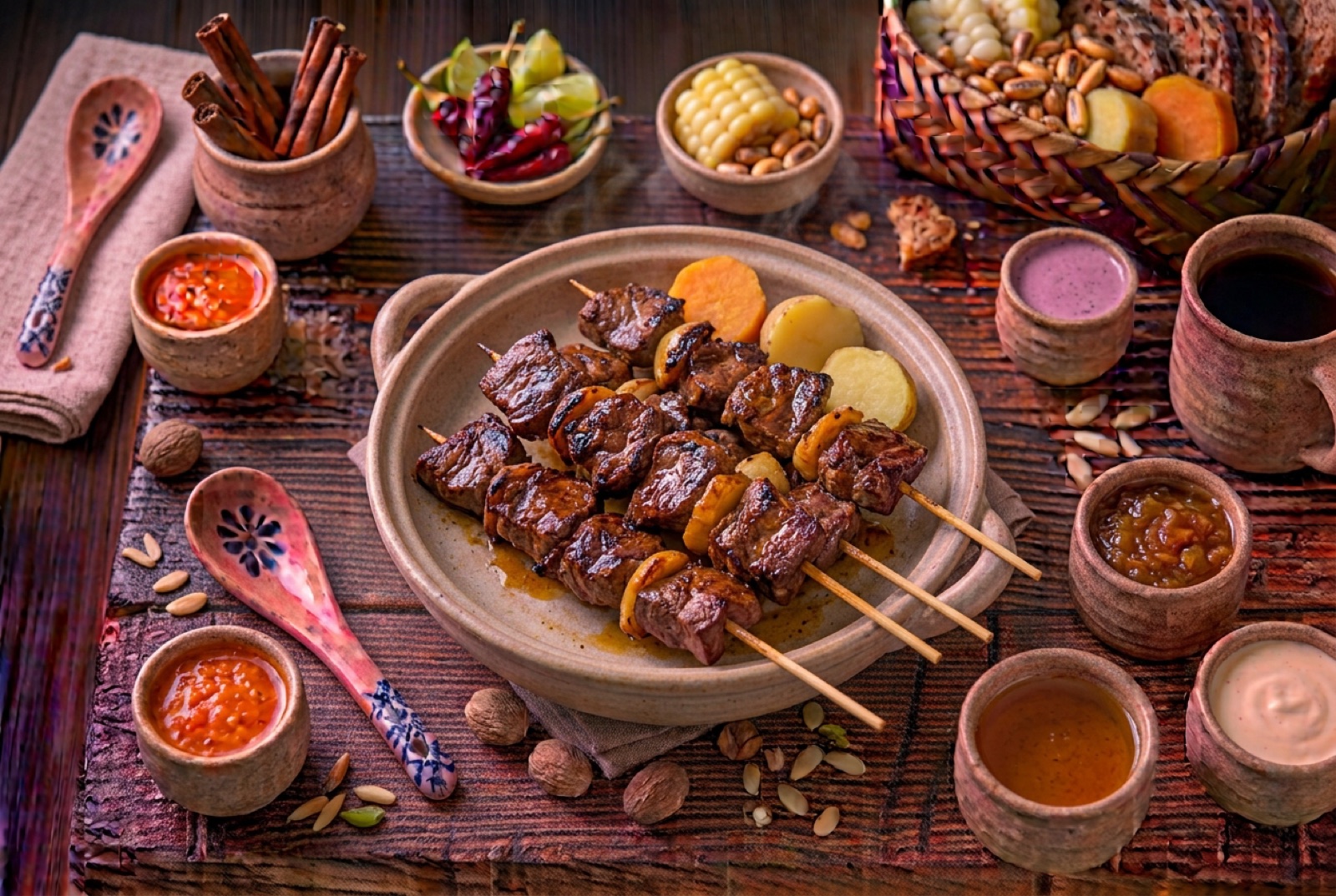
Keep exploring Peru.
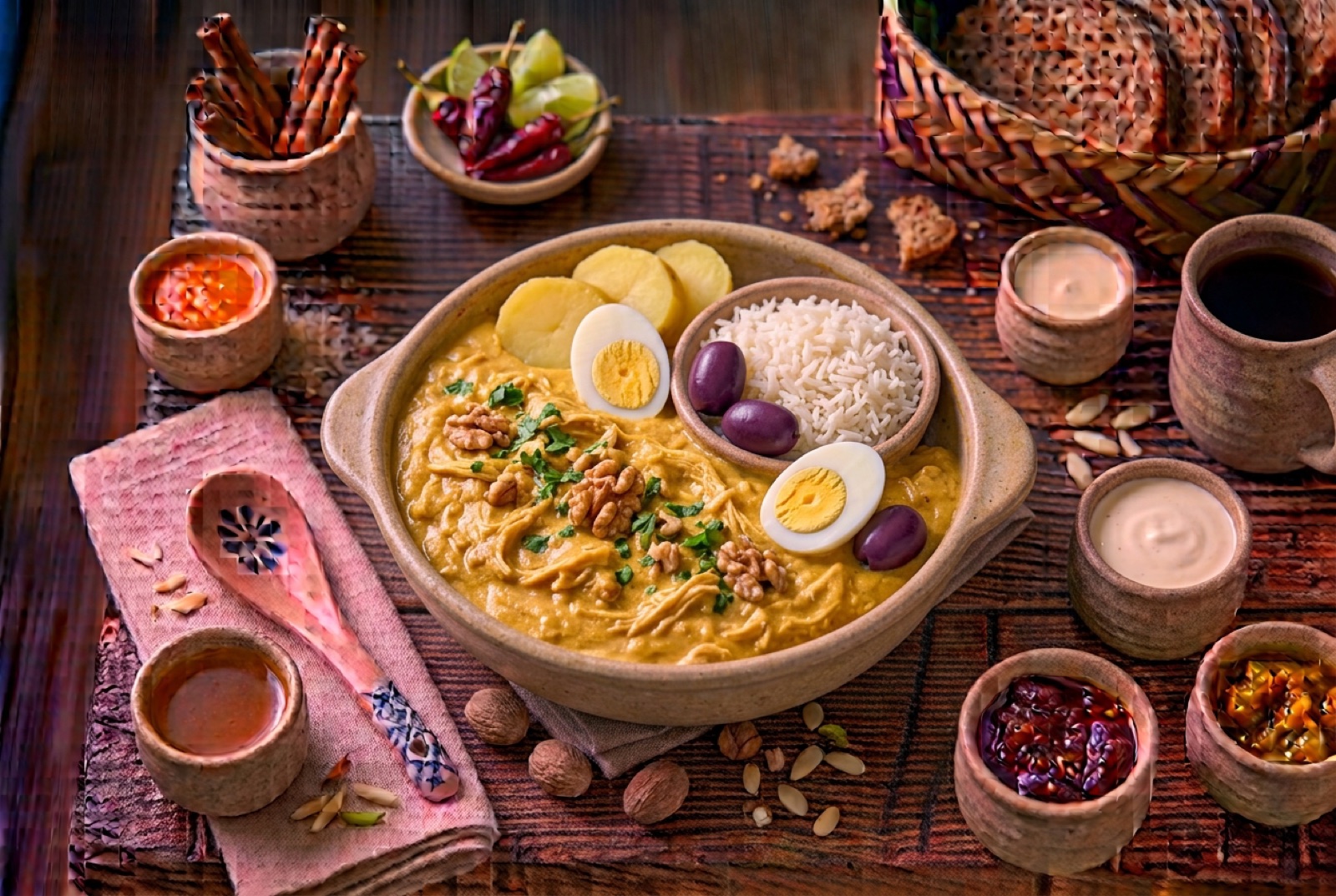
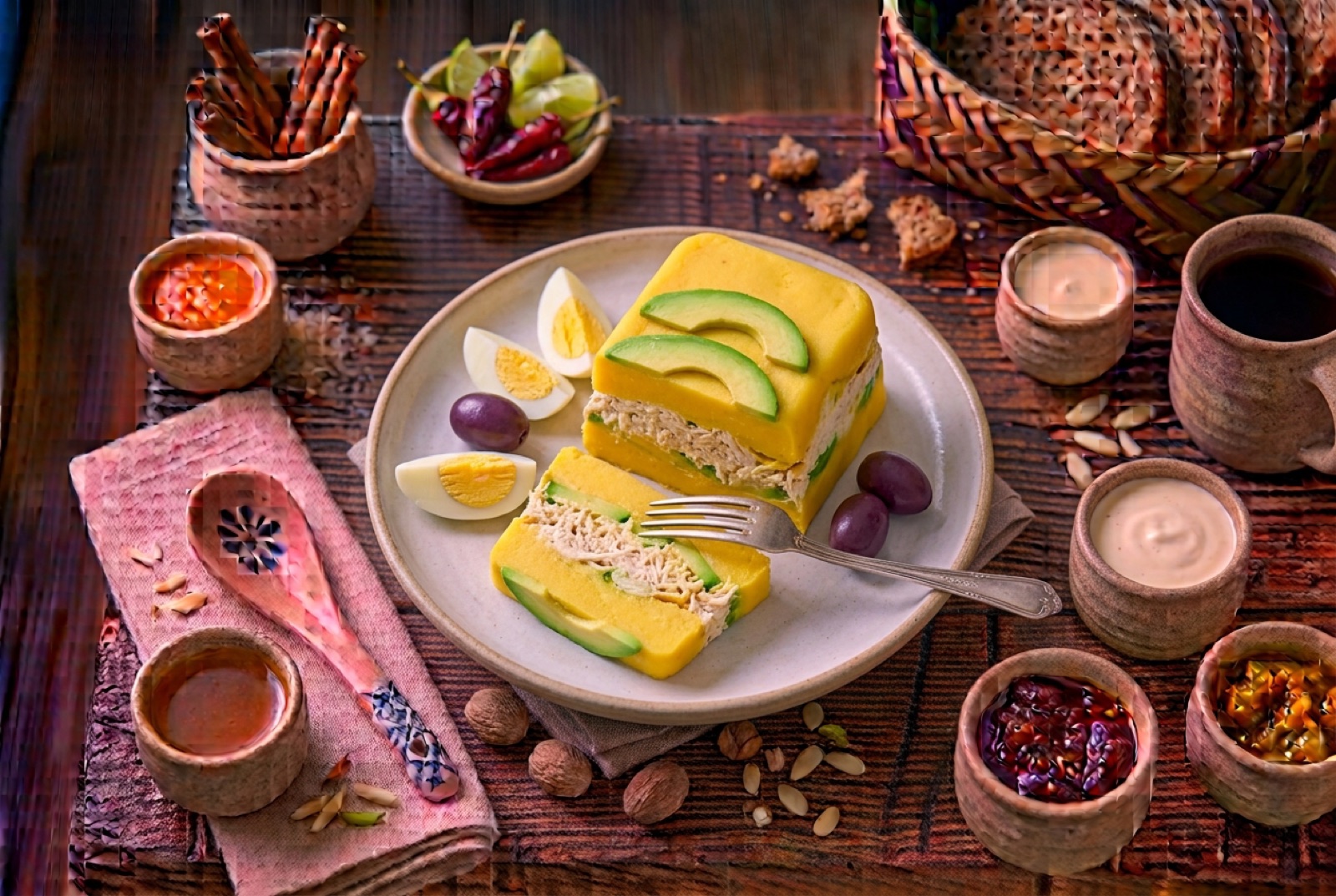
Peru has 9 more dishes in the atlas — Ají de Gallina and Anticuchos de Corazón, and 7 more.
All Peru recipes Pumpkin recipes Sweet potato recipes Flour recipes dessertstreet foodvegetarianvegandairy freeRecipe by The DishRoute Kitchen · published August 19, 2026 · updated August 19, 2026