Pastitsio.
Greek Baked Pasta with Béchamel
Παστίτσιο · Pastitsio · say it: pah-STEE-tsee-oh
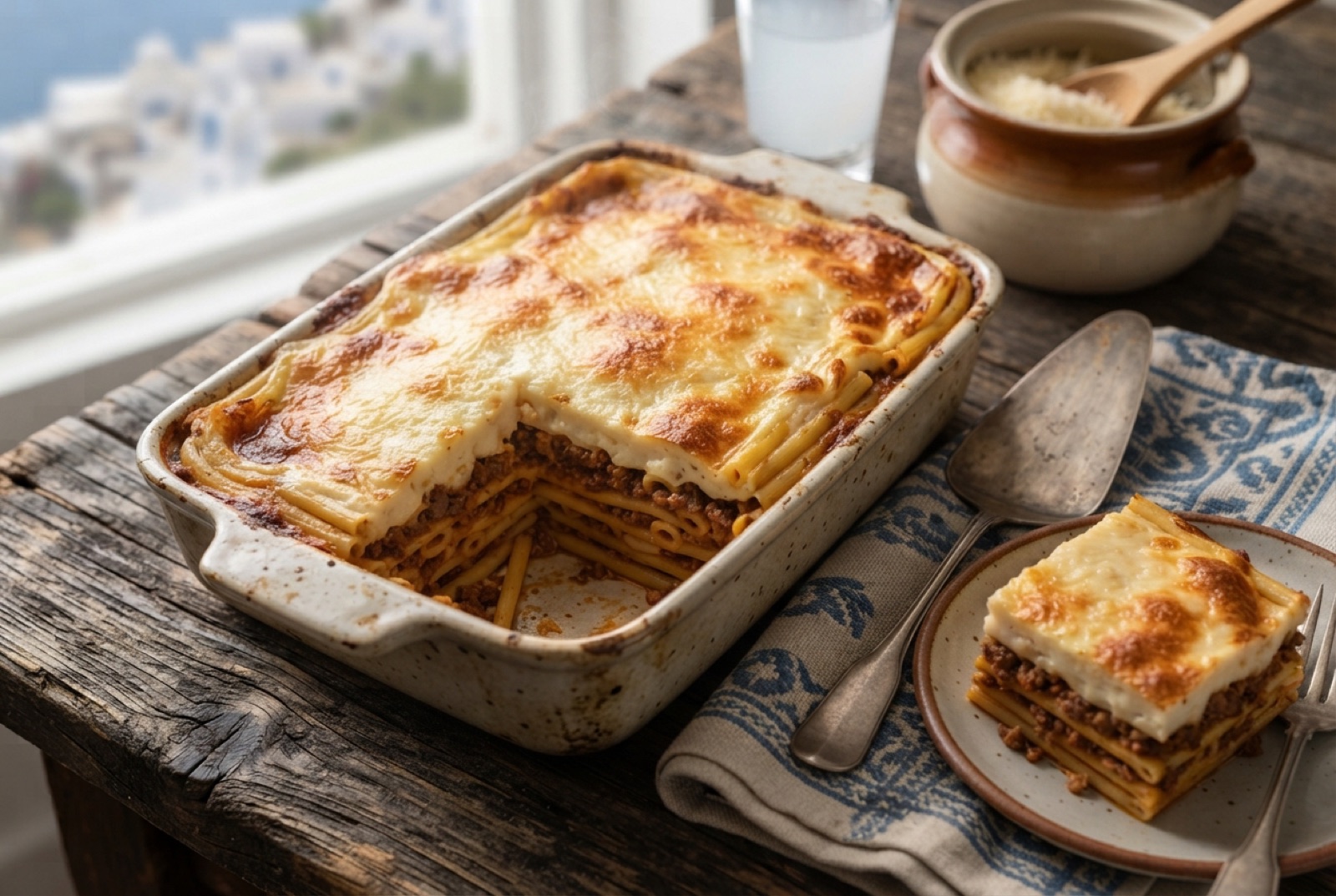
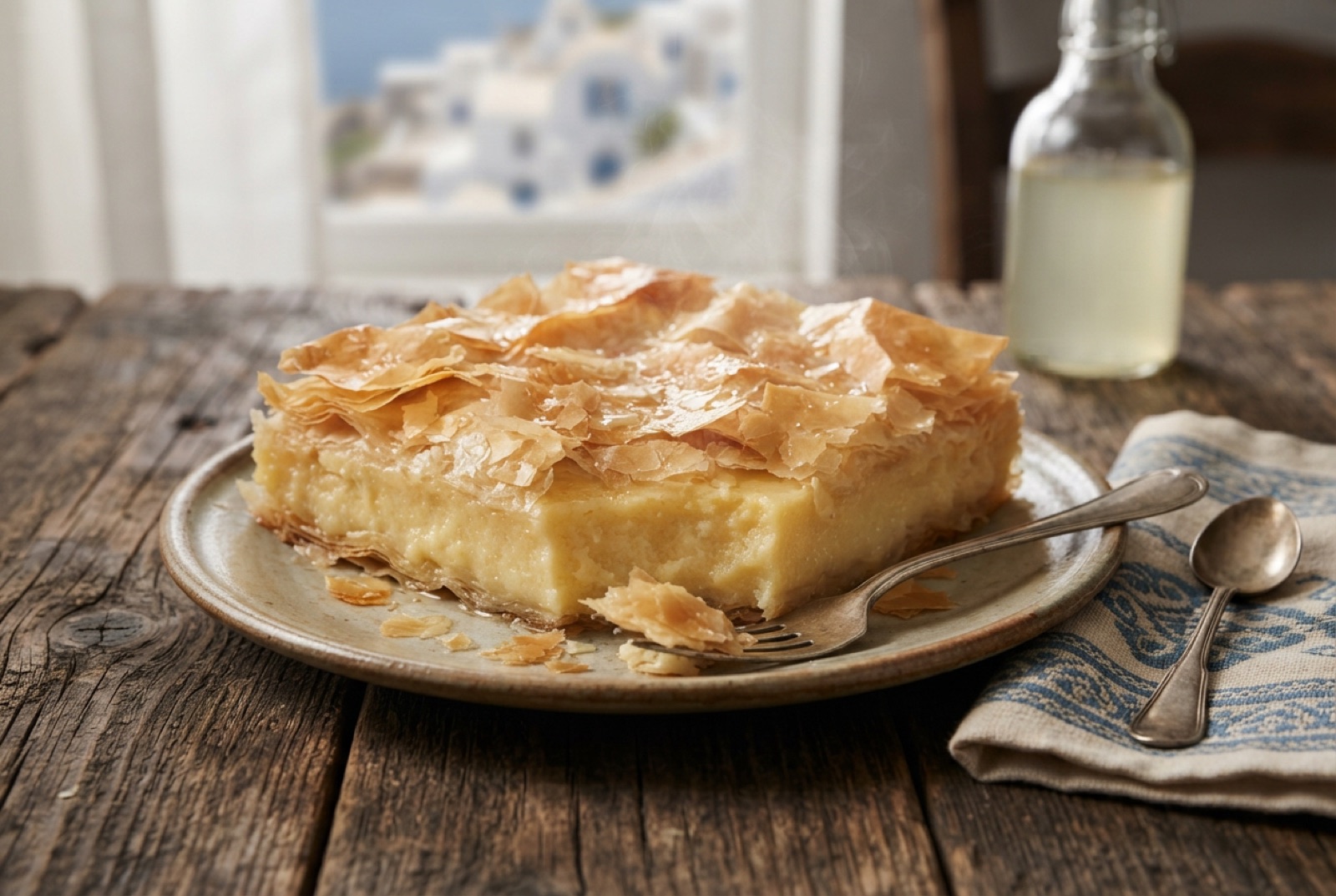
Pastitsio is a three-layer baked pasta: fat hollow tubes on the bottom, a spiced beef sauce through the middle, and a béchamel so thick it is closer to a custard than a sauce over the top. The meat is scented with cinnamon, allspice and a little tomato — warm rather than sweet — and the béchamel is loaded with grated kefalotyri and egg yolk so it sets firmly enough to cut into clean squares. It is Greek Sunday food and Greek celebration food, made in a large tray because it is not worth making small. Done properly, a slice holds its shape on the plate with three distinct bands visible from the side.

- Gate
- Greece
- Prep
- 40 min
- Cook
- 1 hr 30 min
- Total time
- 2 hr 40 min incl. 30 min rest
- Serves
- 8
- Status
- Medium
- Nutrition / serving · estimated
- Calories 690 kcal
- Protein 34 g
- Carbs 56 g
- Fat 35 g
- Fiber 3 g
- Sodium 720 mg
Why this recipe works.
- The ragù is cooked down until the fat separates and the tray liquid runs low, which is the only reliable way to stop a soggy middle layer.
- Béchamel is enriched with egg yolks and cheese off the heat, so it sets into sliceable layers instead of running out of the cut.
- Pasta is deliberately undercooked and laid lengthwise, so it absorbs sauce in the oven and shows clean tubes in cross-section.
- Honest about spicing: enough cinnamon to be recognisably Greek, not so much that the dish tastes like dessert.
Ingredients.
21 itemsFor the meat sauce
For the pasta layer
For the béchamel
Equipment
- Deep 30 x 22 cm baking tray
- Large pot for pasta
- Wide sauté pan for the ragù
- Heavy saucepan and a balloon whisk
Instructions.
Build the meat sauce
Soften the onions in olive oil over medium heat for 8 minutes, add the garlic for a minute, then raise the heat and add the beef. Break it up and fry until the liquid it releases has boiled away entirely and the meat starts to sizzle and brown rather than steam.
Tip Wait for the sound to change from a wet bubbling to a dry crackle — that is browning starting, and it is where the depth comes from.
Spice and reduce
Pour in the wine and let it bubble away until the pan smells of wine rather than alcohol, then add the tomatoes, tomato paste, cinnamon, allspice, bay leaves, sugar, salt and pepper. Simmer uncovered for 35–40 minutes, until fat pools at the edges and a spoon drawn across the base leaves a lane that fills slowly.
Tip The sauce should look almost too dry. Any looser and the middle layer will leak into the pasta.
Boil the pasta short
Cook the tubes in well-salted water for 2 minutes less than the packet says, until they still have a firm chalky core. Drain, do not rinse, and toss immediately with the butter so they stay separate. Let them cool for a few minutes, then stir through the beaten egg whites.
Tip Egg white coats the tubes and sets in the oven, sealing the base against the meat juices.
Make a thick béchamel
Melt the butter in a heavy pan, whisk in the flour and cook for 2 minutes until it smells of toasted biscuit rather than raw flour. Add the warm milk a ladle at a time, whisking constantly, and cook until the sauce is thick enough to fall from the whisk in heavy ribbons that sit on the surface.
Enrich the béchamel
Off the heat, season with salt, pepper and nutmeg, then stir in two-thirds of the grated cheese. Whisk a few spoonfuls of the hot sauce into the egg yolks to warm them, then pour that mixture back into the pan and beat until glossy and pale.
Tip Tempering the yolks is not optional — dropped straight into hot sauce they set into visible threads.
Layer the tray
Butter the tray and spread half the pasta across the bottom, laying the tubes lengthwise in the same direction. Spoon over all the meat sauce in an even layer, cover with the remaining pasta, then pour the béchamel over the top and level it with a spatula so it reaches every corner.
Bake until set and golden
Scatter the last of the cheese over the top and bake at 180°C (fan 165°C) for 45–50 minutes, until the surface is deep golden, firm to a light press in the centre, and just starting to pull away from the sides of the tray.
Rest before cutting
Leave the tray on a rack for at least 30 minutes. The béchamel firms as it cools, and only then will a knife give you square slices with three visible layers instead of a landslide.
Tips from our kitchen.
- Boil the pasta 2 minutes short of al dente. It keeps cooking in the oven, and fully cooked tubes collapse into mush by the time the top browns.
- Toss the drained pasta with a little butter or oil at once, otherwise the tubes glue into a single slab you cannot spread evenly.
- Cook the meat sauce until you see fat pooling at the edges and the spoon leaves a clear trail. Wet ragù is the number one cause of a sloppy pastitsio.
- Whisk the milk into the roux hot, in stages, and keep whisking until it plops rather than pours — béchamel for pastitsio should be far thicker than pouring sauce.
- Temper the egg yolks with a few spoonfuls of hot béchamel before stirring them in, or you will find threads of scrambled egg in the topping.
- Rest the tray at least 30 minutes before cutting. Straight out of the oven the layers slide apart no matter how carefully you slice.
Substitutions.
- Pastitsio pasta no. 2 → Bucatini, ziti, or penne rigate
- Bucatini is the closest and works beautifully. Penne loses the cross-section look but tastes the same. Avoid thin spaghetti, which packs too densely and turns the base pasty.
- Kefalotyri cheese → Pecorino Romano, or a mix of Parmesan and a mild hard cheese
- Kefalotyri is sharp, salty and firm. Pecorino is the nearest widely available match; straight Parmesan is a little nuttier and less salty, so season the béchamel more carefully.
- Ground beef → Half beef and half lamb, or all lamb
- A lamb blend is common in Greece and gives a richer, more assertive sauce. All lamb can overpower the cinnamon, so lean toward a mix if you are unsure.
Variations.
- Pastitsio with mizithra
- Grated dry mizithra folded through the pasta layer as well as the topping — saltier and more crumbly, and common in Crete and the Peloponnese.
- Nistisimo pastitsio
- A fasting version with a mushroom-and-lentil ragù and a béchamel made with olive oil and plant milk instead of butter and dairy. Not the classic, but a real part of the Greek fasting repertoire.
- Individual pastitsio
- Built in ramekins or a muffin tray with the pasta stood upright — much faster to bake, and every portion gets crisp edges instead of only the corners.
Storage & reheating.
Pastitsio keeps 4 days refrigerated and slices far more cleanly cold than hot; Greeks eat it straight from the fridge without apology. Reheat portions covered with foil at 170°C for 20 minutes, or uncovered for the last 5 if you want the top to firm up again. The assembled unbaked tray can be refrigerated for a day and baked with an extra 15 minutes. It freezes well baked or unbaked for up to 3 months — thaw overnight in the fridge before reheating so the béchamel does not split.
Serve with
A sharp green salad or horiatiki, bread for the tray corners, and a glass of red — the meal wants acidity next to all that dairy.
The story behind Pastitsio.
The name comes from the Italian pasticcio, a catch-all for a baked pie of pasta and meat, and the Venetian and Genoese presence across the Ionian islands and the Aegean over several centuries makes the route of that word fairly easy to trace. What arrived was an idea; what Greece did with it was more specific. The spicing turned east — cinnamon, allspice, sometimes clove — and the cheese became kefalotyri or mizithra rather than Parmesan, giving the dish a sharper, saltier edge than any Italian relative.
The béchamel is the part people argue about. It is often credited to Nikolaos Tselementes, the chef whose cookbooks dominated Greek kitchens from the 1910s onward and whose name became the ordinary Greek word for a cookbook. Tselementes trained in French kitchens and deliberately pushed Greek cooking toward what he saw as a more refined register, and thick white sauce on baked dishes spread widely in his wake. Whether he invented the practice or codified something already drifting in from Italy and France is genuinely disputed among food historians, and it is worth being honest that the confident version of this story is repeated more often than it is proven.
What is not disputed is the pasta. Greek shops sell numbered tubes specifically for this dish — pastitsio no. 2 is the usual — long, straight, hollow and thicker-walled than bucatini, designed to hold their form through boiling and then baking. Cooks lay them lengthwise in the tray so that a cut slice shows the tubes in cross-section, and some brush the first layer with egg white to seal it against the meat juices. Pastitsio appears at name-day tables, at Sunday lunch, in the trays that ovens across a village bake on the same afternoon, and — like most tray dishes — it is quietly considered better the next day, cold, straight from the fridge.
Questions, answered.
What is the difference between pastitsio and moussaka?
Both are Greek baked tray dishes with spiced meat sauce and a béchamel top, but the base is different: pastitsio is built on long tubular pasta, while moussaka is built on layers of fried or roasted aubergine, often with potato. Pastitsio is also usually spiced a little more warmly, with cinnamon and allspice more prominent.
Why is my pastitsio watery?
The meat sauce was not reduced enough, or the pasta was overcooked and released starch and water into the tray. Cook the ragù until fat separates and a spoon dragged across the pan leaves a lane that does not immediately fill. Also drain the pasta thoroughly and boil it 2 minutes shy of al dente so it absorbs liquid in the oven rather than adding it.
What pasta should I use for pastitsio?
Greek shops sell tubes labelled specifically for pastitsio, usually number 2 — long, straight and hollow with thick walls. Outside Greece, bucatini is the closest substitute, and ziti or penne rigate both work. The key is a hollow shape sturdy enough to survive boiling and 45 minutes of baking without collapsing.
Can I make pastitsio ahead of time?
Yes, and it is one of the best make-ahead dishes there is. Assemble the whole tray, cover and refrigerate up to 24 hours, then bake straight from cold with about 15 extra minutes. You can also bake it completely a day early and reheat covered at 170°C — the layers set firmly overnight and cut more neatly than they ever do on the day.
Why did my béchamel turn out runny or lumpy?
Runny usually means too little flour for the volume of milk or not enough cooking time — pastitsio béchamel should be thick enough to hold a spoon upright briefly. Lumps come from adding cold milk too fast to hot roux; add it in stages, whisking constantly, and any lumps that do form will disappear if you keep whisking as it thickens.
You might also like.
All recipes →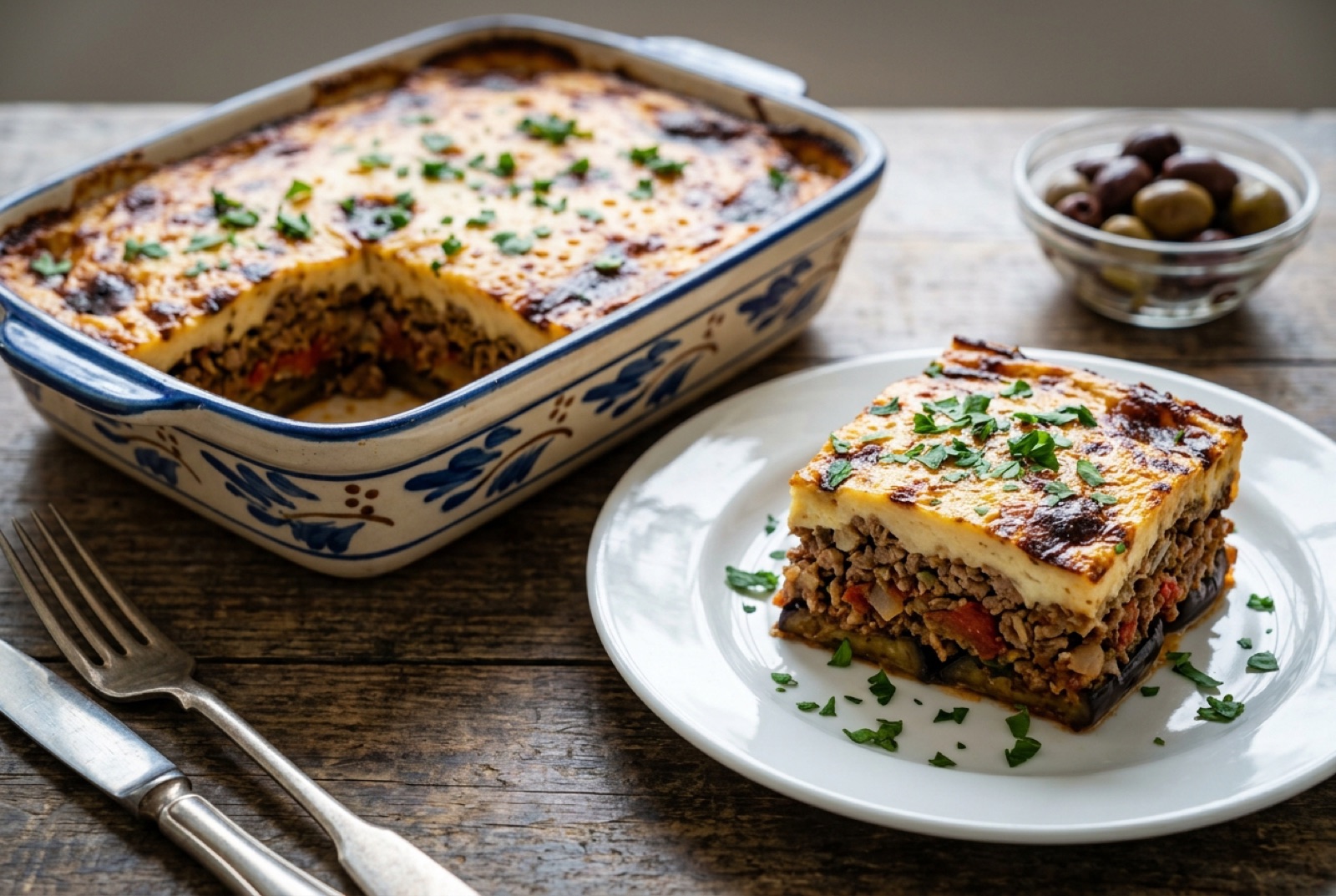
Keep exploring Greece.
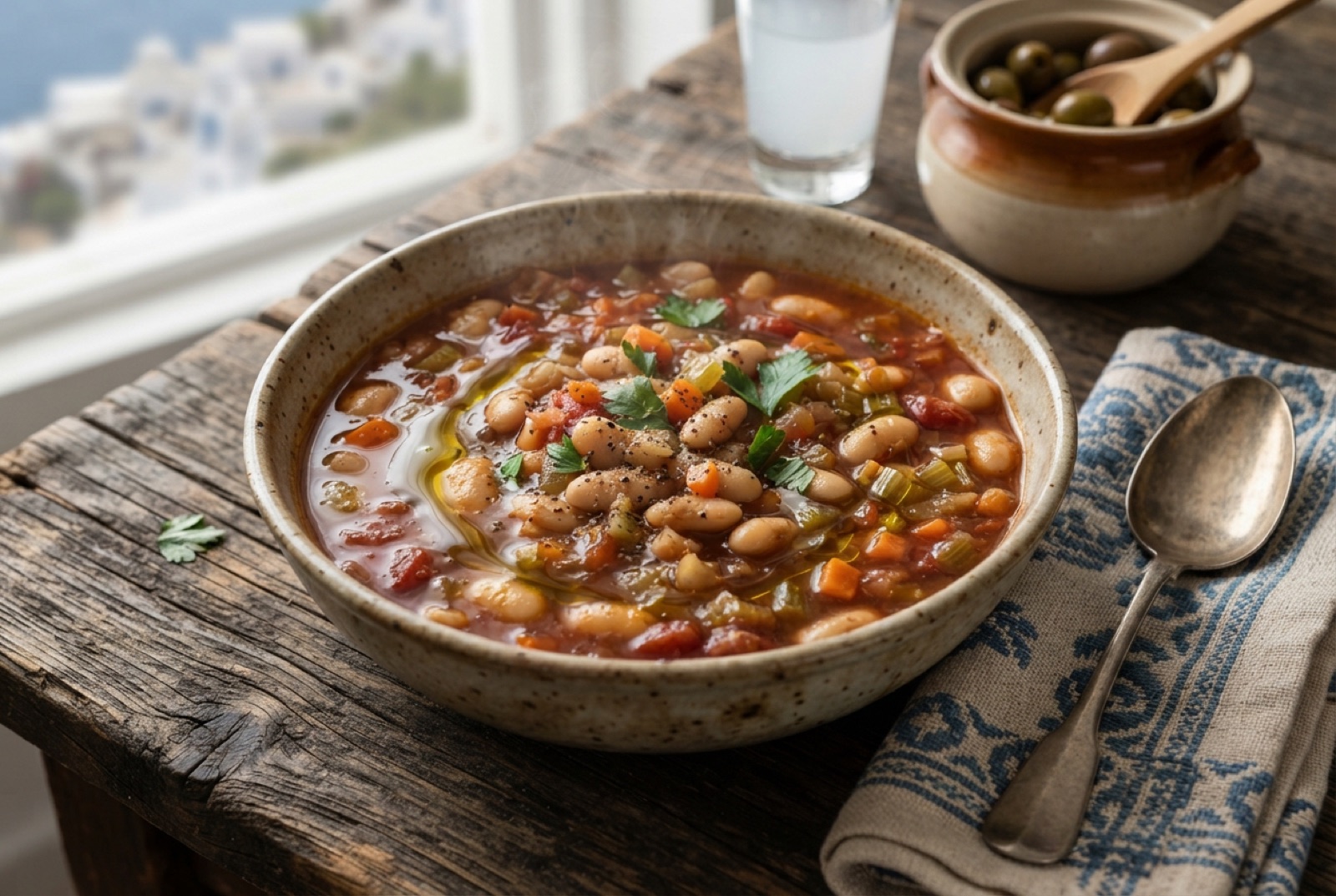
Greece has 9 more dishes in the atlas — Fasolada and Galaktoboureko, and 7 more.
Recipe by The DishRoute Kitchen · published August 19, 2026 · updated August 19, 2026