Pastrmajlija.
Macedonian Boat-Shaped Meat Flatbread
Пастрмајлија · say it: pas-tr-MY-lee-yah
Pastrmajlija is a long oval of yeasted dough with its rim pinched up into low walls, filled with cubes of salted, air-dried pork and their rendered fat, and baked in a very hot oven until the base is crisp underneath and the meat edges have blackened. In the last few minutes an egg is broken into the centre so the white sets while the yolk stays runny. It is often described as Macedonian pizza, which gets the shape right and the flavour wrong: there is no tomato and no cheese, and the taste is salt-cured pork, bread and pork fat, sharpened at the table with a bite of pickled pepper.
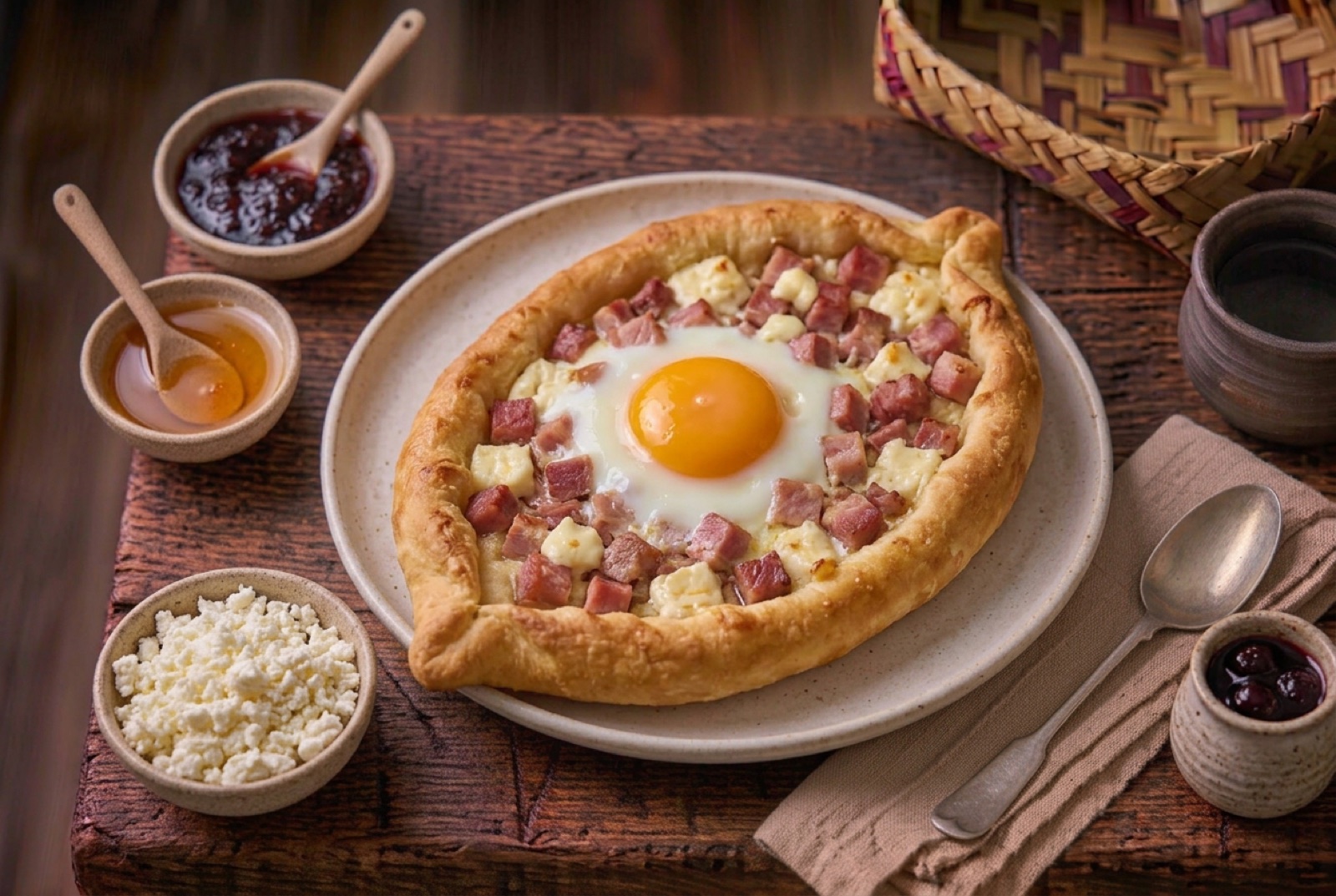

- Gate
- North MacedoniaŠtip and the Bregalnica valley
- Prep
- 35 min
- Cook
- 20 min
- Total time
- 2 hr 55 min incl. 2 hr rest
- Serves
- 4
- Status
- Medium
- Nutrition / serving · estimated
- Calories 690 kcal
- Protein 38 g
- Carbs 68 g
- Fat 29 g
- Fiber 3 g
- Sodium 1450 mg
Why this recipe works.
- A slow, wet dough that bakes into a base with a genuinely crisp bottom and a soft, chewy rim rather than a cracker.
- Explains how to approximate pastrma at home with a quick salt cure, since the real thing is hard to buy outside the Balkans.
- Gets the egg timing right — added late, so the white sets and the yolk is still liquid when the bread reaches the table.
- Honest about the pizza comparison instead of leaning on it: no tomato, no cheese, and a rather different point.
Ingredients.
11 itemsFor the dough
For the topping
Equipment
- Baking stone or heavy baking tray
- Mixing bowl
- Rolling pin (optional)
Instructions.
Cure the pork
Toss the pork cubes with the coarse salt, black pepper and paprika, cover and refrigerate overnight or for at least 4 hours. The meat will firm up, darken slightly and give off a little liquid — pour that off and pat the cubes dry before using.
Tip This is a fast stand-in for pastrma, not a real cure, so keep it refrigerated and use it within two days.
Mix and knead the dough
Stir the flour and yeast together, add the water and mix to a shaggy mass. Rest 15 minutes, then add the salt and oil and knead for 8 to 10 minutes until the dough is smooth, slightly tacky, and stretches thin without tearing straight away.
First rise
Cover the bowl and leave the dough at room temperature for about 90 minutes, until roughly doubled and full of bubbles under the surface. For better flavour, refrigerate it overnight instead and bring it back to room temperature before shaping.
Heat the oven hard
Put a baking stone or a heavy upturned tray on the middle shelf and heat the oven to its maximum, at least 250°C, for a full 40 minutes. The stone needs to be genuinely saturated with heat or the base will never crisp.
Shape the ovals
Divide the dough into four, and on a floured surface stretch each piece into a long oval about 25 cm by 12 cm. Pinch the edges up into a low rim all the way round, slightly thicker than the centre, so it can hold the fat and the egg.
Top and bake
Scatter the cured pork evenly over each oval and press the cubes lightly into the dough. Lay a dried chilli across if using. Slide onto the hot stone and bake for 12 to 14 minutes, until the rim is deep gold and the meat edges are dark and sizzling in their own fat.
Add the egg
Pull the tray out, crack an egg into the middle of each bread and slide it straight back in for 4 to 5 minutes, until the white is opaque and just set but the yolk still trembles when you nudge the tray.
Serve immediately
Grind over more black pepper and serve at once, while the base is still crisp underneath, with pickled peppers on the side. Eat it by tearing off strips of the rim and dragging them through the yolk.
Tips from our kitchen.
- Bake as hot as your oven goes, with a preheated stone or heavy tray. A lukewarm oven gives you pale, bready pastrmajlija with steamed meat on top.
- Cut the pork into small cubes, no more than 1.5 cm, and include some fat with each piece. Lean-only meat dries into hard pellets.
- Press the meat down into the dough rather than piling it on the surface, so the fat renders into the base instead of running off the edge.
- Pinch the rim firmly and make it slightly thicker than the middle — it needs to hold the fat and the egg without leaking.
- Crack the egg in only for the last 4 to 5 minutes. Any earlier and you get a fully hard yolk, which most people in Štip would consider a mistake.
- Let the dough have a long, cool rise. Slower fermentation gives the base actual bread flavour to stand up against all that salt.
Substitutions.
- Pastrma (salt-cured dried pork) → Pork shoulder cubed and salt-cured overnight, or diced pancetta
- The overnight cure given below gets close. Pancetta is saltier and smokier so use about a third less, and skip the extra salt on the dough.
- Pork → Lamb shoulder, cured the same way
- Lamb is the older, original version of the dish and is still made in some bakeries. It is stronger and slightly gamier.
- Strong white bread flour → Plain flour with an extra 20 minutes of kneading
- The base will be a little softer and less chewy but perfectly good. Do not use cake or self-raising flour.
Variations.
- Јагнешка пастрмајлија
- Made with cured lamb rather than pork — the historically older version, and the one you are most likely to find during Orthodox holidays.
- With chilli
- A whole dried red chilli laid across the meat before baking, standard in many Štip bakeries and eaten as part of the bread.
- Double-egg
- Two eggs cracked in side by side on a larger oval, which turns one portion into a shared plate.
Storage & reheating.
Pastrmajlija is at its best within twenty minutes of leaving the oven and does not keep gracefully. If you have leftovers, refrigerate for up to 2 days and reheat in a hot oven or a dry frying pan to bring back the crisp base — never in a microwave, which turns the bread to leather. The egg does not survive reheating, so cut it away first. Unbaked dough can be refrigerated for up to 48 hours and actually improves in flavour, which is the better way to work ahead.
Serve with
Pickled hot peppers or a bowl of turšija, raw onion wedges, and cold beer or a glass of rakija.
The story behind Pastrmajlija.
The dish belongs to Štip, a town in eastern North Macedonia on the Bregalnica river, and the town has built a genuine identity around it. Every autumn Štip holds Pastrmalijada, a festival dedicated entirely to the bread, and bakeries there make it all year for people who drive in specifically to eat it. The name comes from pastrma — salted, air-dried meat — which is the same root as Turkish pastırma and, at a distance, the New York pastrami. Originally that meant dried mutton or lamb, cured to survive the months when there was no refrigeration; the pork version that dominates today is more recent, and lamb pastrmajlija still exists for anyone who wants the older flavour.
The logic of the dish is the logic of a working bakery. Bread ovens ran hot for the morning bake, and once the loaves were out there was residual fierce heat that was too good to waste. A flat oval of leftover dough, some cured meat that needed using, and ten minutes near the oven floor produced a portable, salty, extremely filling thing that a labourer could hold in one hand. It is still eaten that way — folded, from paper, standing up.
Calling it pizza causes arguments in Štip, and the objection is fair. There is no sauce, the dough is thicker and breadier than a Neapolitan base, the shape is a deliberate boat rather than a circle, and the seasoning is nothing but salt, pepper, pork fat and sometimes a whole dried chilli. If it resembles anything outside the Balkans it is closer to a Georgian khachapuri or a Turkish pide — flatbreads shaped to hold a filling and finished with an egg — which is probably no coincidence given the shared Ottoman and Black Sea kitchen history.
Questions, answered.
Is pastrmajlija the same thing as pizza?
No, though the shape invites the comparison. There is no tomato sauce and no cheese; the topping is only cured pork, its fat, salt and pepper, and an egg. The dough is thicker and breadier than pizza dough and shaped into a long oval with a pinched rim. It is closer in spirit to Turkish pide or Georgian khachapuri than to anything Italian.
What is pastrma and where can I buy it?
Pastrma is meat that has been salted, seasoned and air-dried, historically mutton or lamb and now usually pork. Balkan and Turkish delicatessens sometimes stock it, but outside the region it is hard to find. Curing your own cubed pork shoulder in salt and pepper overnight, as this recipe does, gets you most of the way there.
Why is my base soggy in the middle?
Either the oven was not hot enough or the meat was piled too thickly in the centre. Bake on a preheated stone or upturned heavy tray at maximum temperature, spread the meat in a single layer, and press the pieces into the dough so their fat renders down into the base rather than sitting in a pool on top.
Do I have to add the egg?
It is not compulsory. Plenty of bakeries in Štip sell pastrmajlija both with and without, and ordering it plain is entirely normal. The egg adds richness and a soft yolk to break into the meat; without it the bread is drier and saltier, which some people prefer with beer.
Can I make the dough ahead?
Yes, and it is the recommended approach. After the first rise, refrigerate the dough for up to 48 hours; the slow cold fermentation develops far more flavour than a same-day rise. Bring it back to room temperature for about an hour before shaping, or it will fight you and spring back.
You might also like.
All recipes →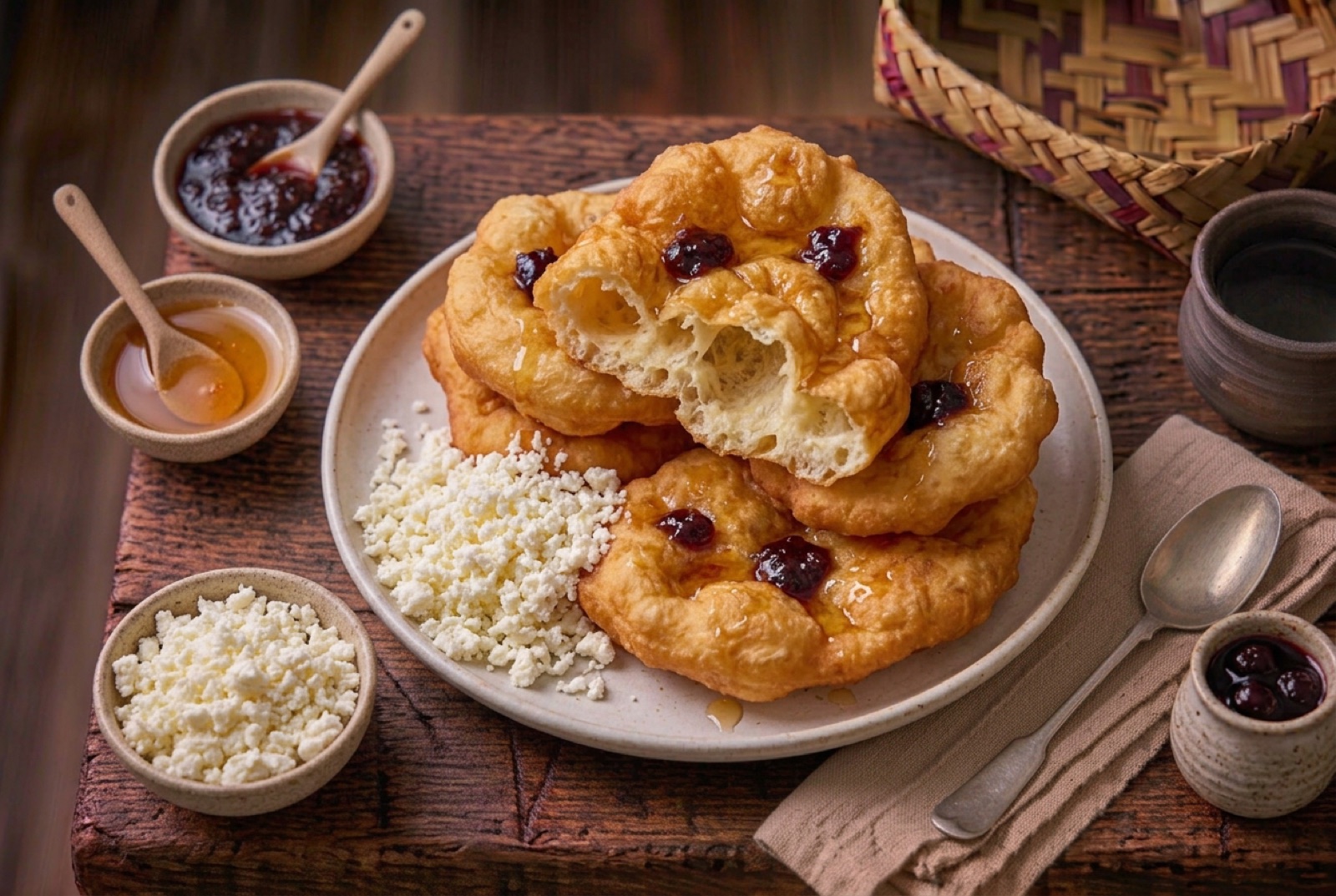
North Macedonia1 hr 35 min
Mekici
Macedonian Fried Breakfast Dough
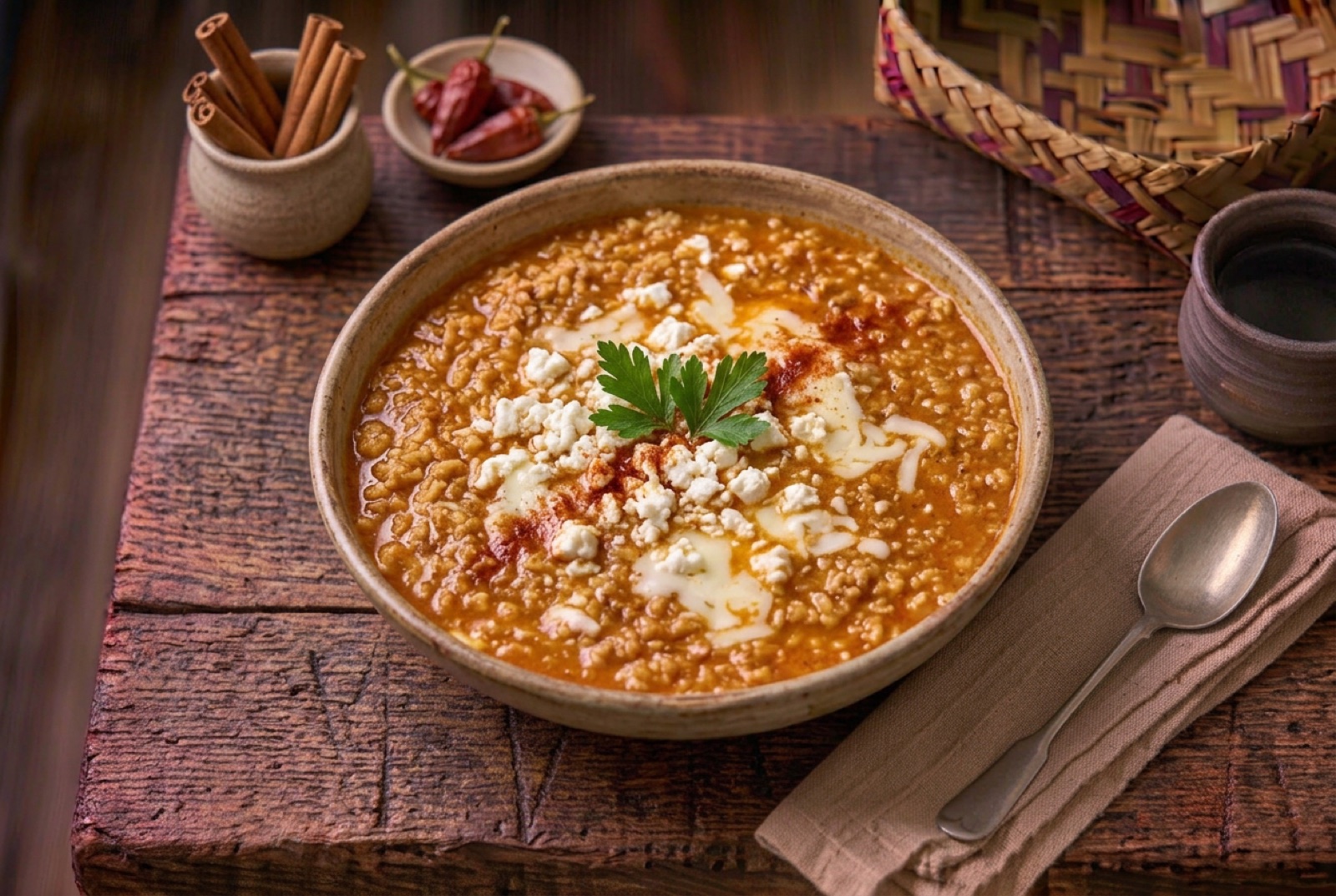
North Macedonia35 min
Tarana Čorba
Macedonian Toasted Crumb Pasta Soup
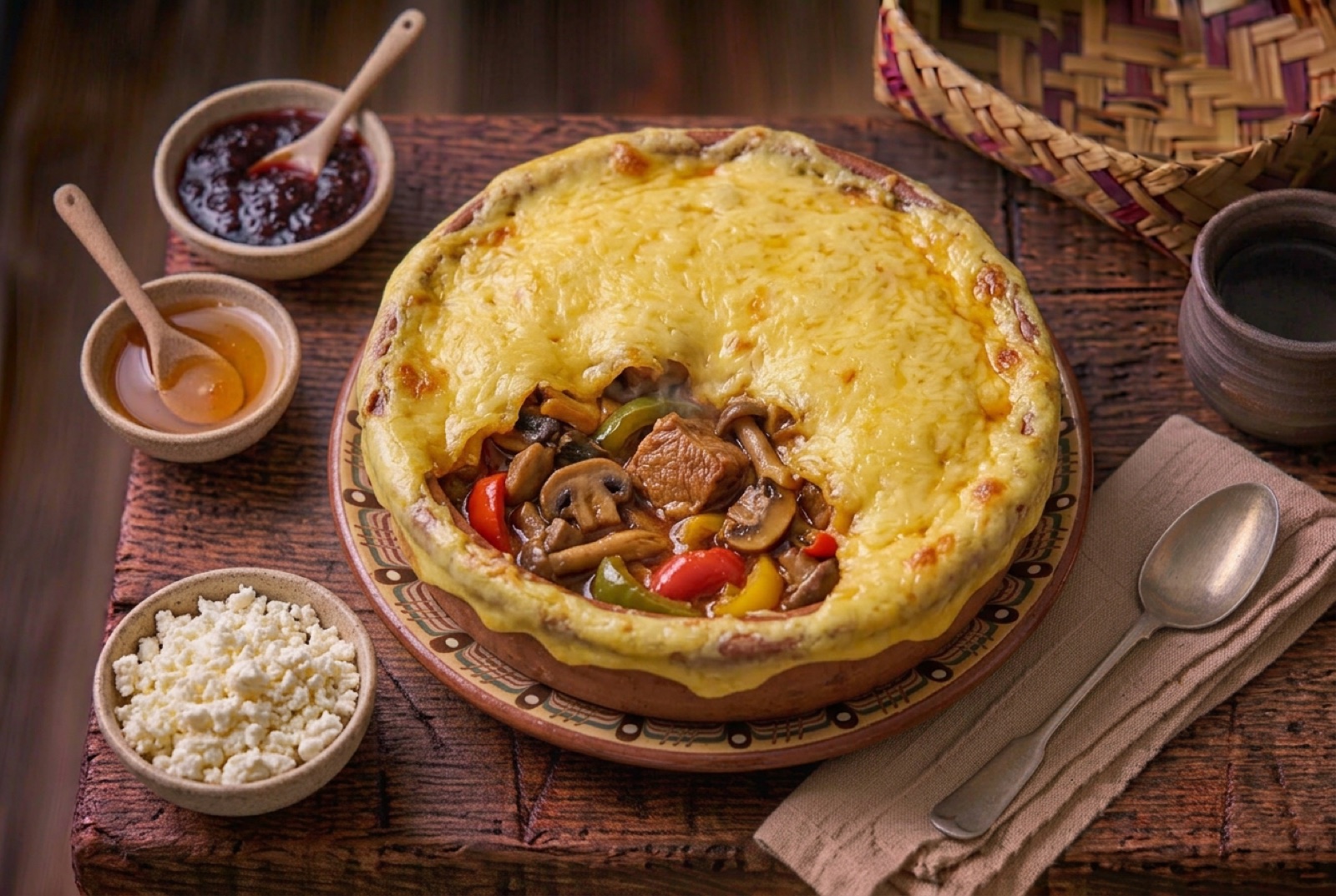
North Macedonia1 hr 55 min
Selsko Meso
Macedonian Village Pork and Mushroom Pot
North Macedonia2 hr 5 min
Zelnik
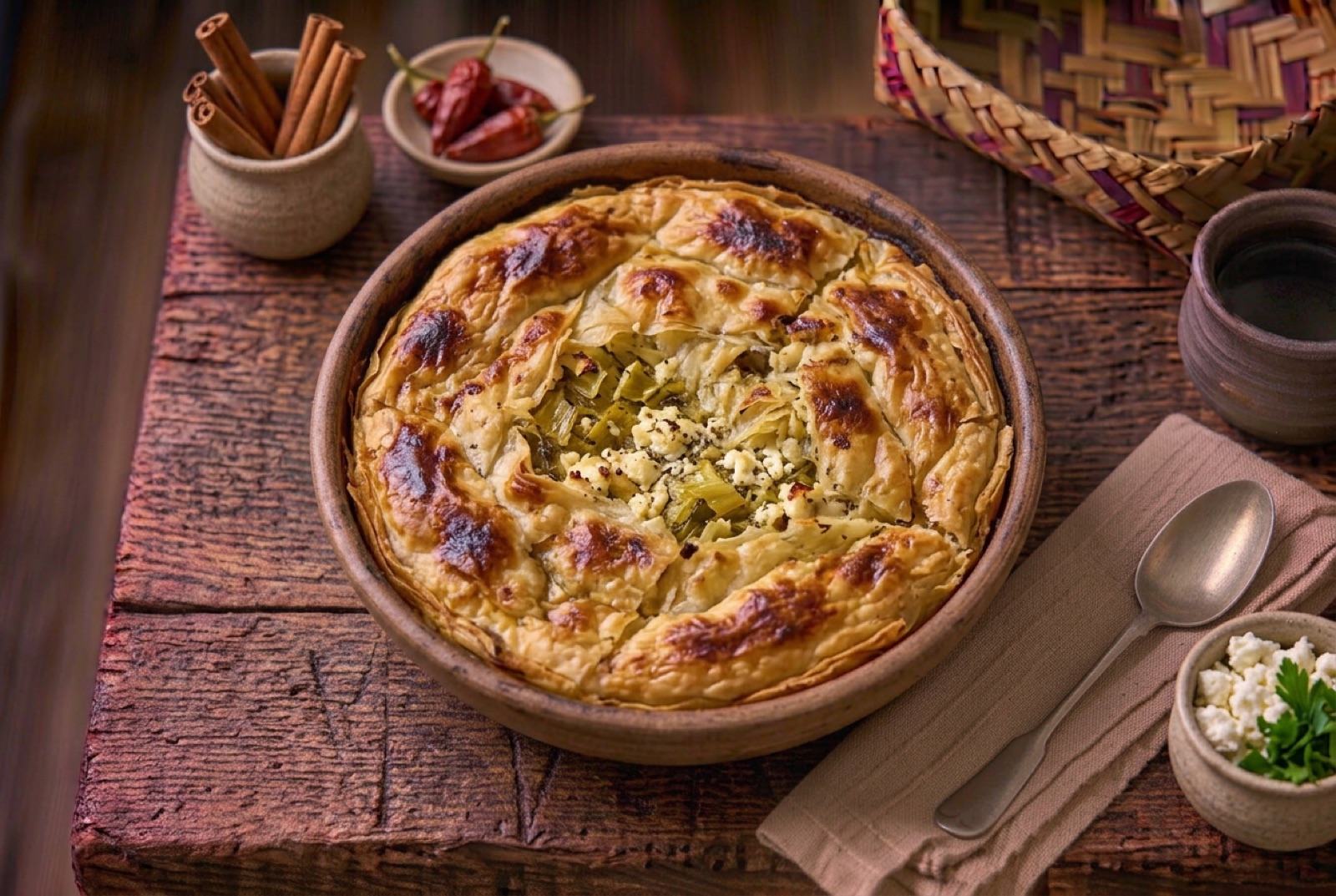
Macedonian Leek and White Cheese Pie
Keep exploring North Macedonia.
North Macedonia has 9 more dishes in the atlas — Macedonian Ajvar and Mekici, and 7 more.
All North Macedonia recipes Flour recipes Pork shoulder recipes Eggs recipes breadmainstreet fooddairy freenut freeRecipe by The DishRoute Kitchen · published August 20, 2026 · updated August 20, 2026