Picanha.
Brazilian Churrasco Rump Cap
Picanha na churrasqueira · say it: pee-KAHN-yah
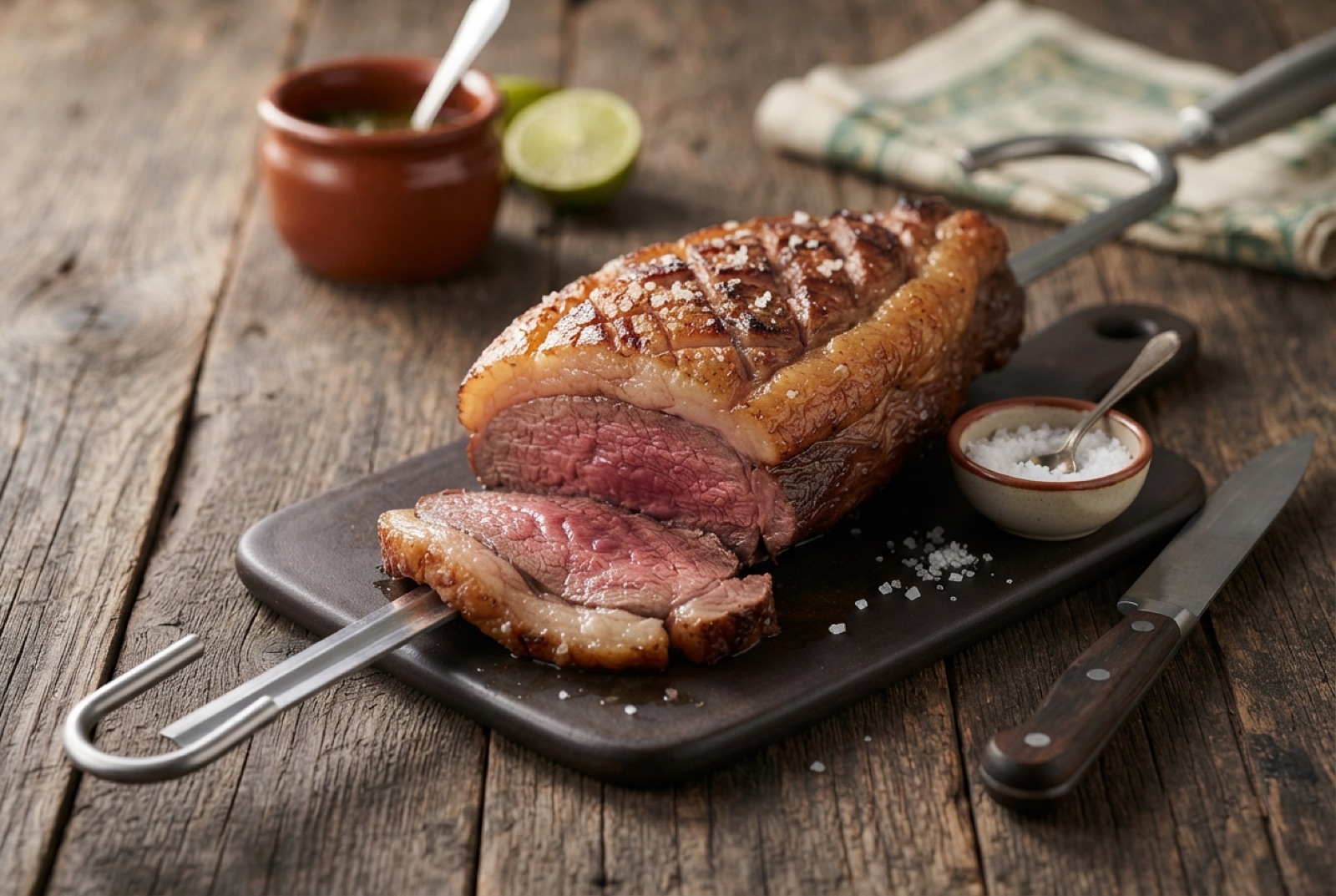
Picanha is a single triangular muscle from the top of the rump, sold with its thick fat cap still attached, and in Brazil it is treated as the best thing you can put over charcoal. Cooked properly the fat renders down through the meat, so each slice tastes buttery and beefy with a salt-crusted crust and a rosy center — no marinade, no rub, no sauce. The whole method is about geometry and heat: cut the piece into thick steaks, fold each one over a skewer with the fat facing out, and let the flames do the seasoning. It is the least complicated great steak there is, provided you buy the right cut.

- Gate
- BrazilRio Grande do Sul
- Prep
- 25 min
- Cook
- 30 min
- Total time
- 1 hr 5 min incl. 10 min rest
- Serves
- 4
- Status
- Medium
- Nutrition / serving · estimated
- Calories 640 kcal
- Protein 47 g
- Carbs 7 g
- Fat 47 g
- Fiber 2 g
- Sodium 1100 mg
Why this recipe works.
- Explains how to identify and trim a real picanha, which is where most attempts outside Brazil go wrong.
- Uses the authentic C-shaped skewer method that keeps the fat cap over the meat and self-bastes it.
- Gives a genuine indoor route — cast-iron skillet and oven — for cooks without a charcoal grill, and says what you lose.
- Includes the vinagrete that always sits beside picanha in Brazil, not a generic steak sauce.
Ingredients.
10 itemsFor the meat
For the vinagrete
Equipment
- Charcoal grill (or heavy cast-iron skillet and oven)
- Long metal skewer
- Sharp boning or carving knife
- Instant-read thermometer
Instructions.
Check and trim the cut
Lay the picanha fat-side up and feel the thickness of the cap — you want a full centimetre. Pare back anything over about 1.5 cm, and trim off the silver skin and any ragged meat on the underside. Do not touch the fat otherwise.
Tip If the piece weighs much more than 1.5 kg, part of the tougher rump is still attached; cut it away and use it for another dish.
Score the fat
Cut a shallow diamond pattern into the fat cap at roughly 2 cm intervals, angling the knife so you slice through the fat and stop the instant you see red meat. The scores open as the fat renders and let the salt reach deeper.
Cut and skewer
Slice the picanha with the grain into three thick steaks, each about 4 cm wide. Bend each steak into a C with the fat cap on the outer curve and drive the skewer through both ends, leaving a finger of space between steaks so heat circulates.
Tip Cutting with the grain here is deliberate — you slice against it later, once it comes off the fire.
Salt heavily
Press the coarse rock salt over the entire skewer, concentrating on the fat, and add the cracked pepper if using. Do this immediately before grilling — salted too early, the surface goes wet and will steam instead of crusting.
Render over indirect heat
Bank the coals to one side and set the skewer over the cooler zone with the fat cap facing down toward the fire. Cook for 12 to 15 minutes, turning occasionally, until the fat has gone translucent and softened and the outside of the meat is dry to the touch.
Tip Move the skewer away the moment flames lick up. Rendering fat plus direct flame equals soot, not crust.
Finish over the coals
Move the skewer directly over the hot coals and turn every couple of minutes for 8 to 12 minutes, until the fat is crisp and bubbling and a thermometer pushed into the thickest steak reads 54°C for medium-rare. Pull it off before it looks done — carryover heat adds several degrees.
Rest, then slice
Stand the skewer somewhere warm for 10 minutes and brush off the loose surface salt. Slide the steaks off, then carve each one across the grain into finger-thick slices, cutting through the fat cap so every slice carries a strip of it.
Mix the vinagrete and serve
Stir the diced tomato, onion, pepper and parsley with the olive oil, vinegar and a good pinch of salt, and let it sit for at least 5 minutes so the onion softens. Spoon it over the sliced picanha at the table, or keep it in a bowl alongside.
Tips from our kitchen.
- Buy the whole piece with the fat cap intact and at least 1 cm thick. A trimmed picanha is just a rump steak and will not baste itself.
- Never score into the meat — cut a shallow diamond pattern through the fat only, stopping the moment your knife touches red.
- Salt with coarse rock salt right before grilling and use more than feels sensible; most of it falls off, and you brush the excess away before slicing.
- Fat cap down first, over indirect heat, so it renders slowly instead of dripping and flaring. Flare-ups scorch the outside before the middle is warm.
- Rest the whole skewer for 10 minutes before you slice anything. Cut immediately and the juices run out onto the board instead of staying in the meat.
- Slice against the grain, which runs lengthwise along the muscle — so you cut across the steak, not along it. Get this wrong and even perfect picanha eats chewy.
Substitutions.
- Whole picanha → Sirloin cap, rump cap, culotte or coulotte — the same muscle under a different name
- Ask the butcher to leave the fat cap on. If only a trimmed piece is available, lay strips of beef fat or thick pancetta over the top while it grills.
- Coarse rock salt (sal grosso) → Flaky sea salt, used a little more sparingly
- Fine table salt is the one to avoid — it dissolves straight into the surface and oversalts the crust rather than forming one.
- Charcoal grill → Heavy cast-iron skillet plus a 200°C oven
- You get an excellent crust and correct interior, but not the smoke. This is a real difference, not a small one — say so at the table rather than pretending otherwise.
Variations.
- Picanha fatiada
- The everyday home version: slice the raw cap into 2 cm steaks, salt them, and grill each one flat and fast. Faster and easier to control than the whole skewer, with less drama.
- Picanha na chapa
- Bar-style picanha, sliced thin and finished on a screaming-hot iron plate that keeps sizzling at the table, usually with garlic and rounds of grilled onion.
- Picanha com alho
- A southern habit of pressing sliced garlic into the scored fat before grilling, so the garlic toasts as the fat renders. Purists object; it tastes very good anyway.
Storage & reheating.
Grilled picanha is at its best within minutes of slicing, but leftovers keep 3 days refrigerated. Store the meat in one uncut piece so it does not dry out, and reheat it briefly in a hot dry skillet rather than a microwave, which turns rendered beef fat greasy and dull. Cold sliced picanha is genuinely good in a sandwich with vinagrete. Do not freeze cooked picanha — freeze the raw cut instead, and thaw it fully in the fridge before it goes near heat.
Serve with
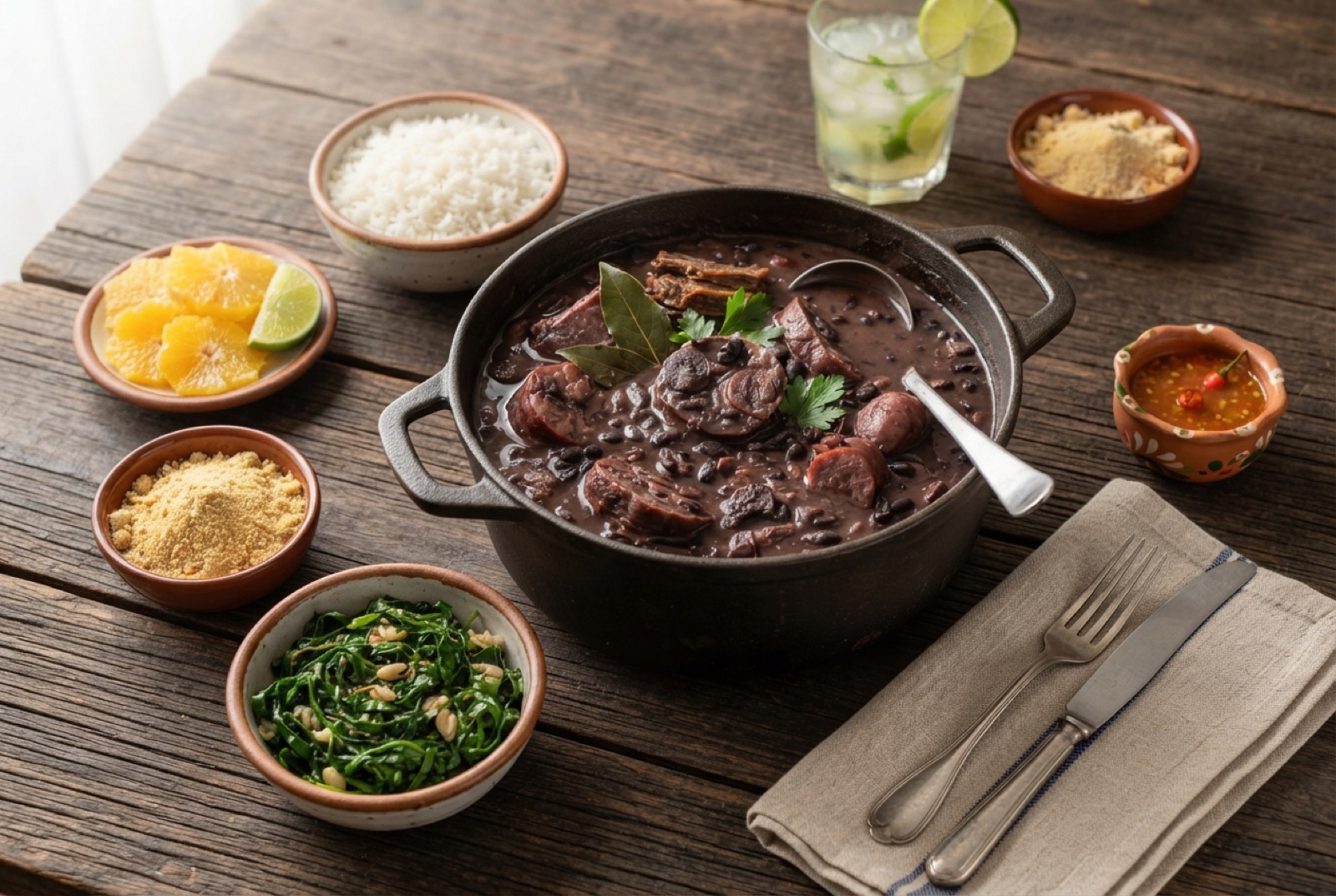
Vinagrete, farofa, white rice, grilled garlic bread and a bowl of black beans — the standard Brazilian churrasco table.
The story behind Picanha.
Churrasco as Brazilians practise it comes out of the far south, the cattle country of Rio Grande do Sul, where gaúchos cooked beef on iron spits driven into the ground beside a fire and seasoned it with nothing but coarse salt. That approach — huge cuts, live fire, salt, patience — travelled north through the twentieth century into the churrascaria, the rodízio restaurant where waiters circle the room with skewers and carve directly onto your plate. Picanha became the star of that circuit because it is the one cut whose fat cap makes it self-basting, and because a whole picanha bent into a C on a long skewer is genuinely theatrical when it arrives at the table.
The cut itself is a matter of some frustration outside Brazil. Butchers in the United States and much of Europe traditionally break the rump differently, folding picanha into sirloin cap, rump cap, culotte or coulotte, and often trimming the fat cap away entirely — which removes the entire point. Australians call it rump cap and generally leave the fat on. A whole picanha should weigh roughly 1 to 1.5 kg; anything much heavier has almost certainly had part of the neighbouring rump left attached, and that section is tougher and needs different handling. Brazilian butchers argue about this constantly, and it is worth asking your butcher directly rather than trusting the label.
At a Brazilian churrasco the meat is not the whole event. It comes with vinagrete, a sharp chopped tomato and onion relish that functions like a salsa; with farofa to catch the juices; with pão de alho, garlic bread grilled on the skewer alongside; and with beer that arrives before the fire is lit. The cooking is unhurried on purpose. Nobody at a churrasco is waiting for dinner — the eating starts with the first slices off the skewer and continues, in stages, for as long as the coals hold.
Questions, answered.
What cut of beef is picanha in English?
Picanha is the rump cap, also sold as sirloin cap, culotte or coulotte depending on the country. It is the triangular muscle sitting on top of the rump with a thick layer of fat over it. Australian butchers usually call it rump cap and leave the fat on; American and European butchers often trim the fat or fold the muscle into other cuts, so you may need to order it specially.
Should I remove the fat cap from picanha?
No. The fat cap is the entire reason the cut is prized — it melts during grilling and bastes the meat continuously, which is what gives picanha its flavor and keeps it juicy. Score the fat in a shallow diamond pattern so it renders evenly, but leave it in place. Diners can trim it on the plate if they prefer.
Why does picanha go on the skewer in a C shape?
Bending each thick steak so the fat cap faces outward means the fat sits above the meat as the skewer turns, and the rendering fat runs down through the muscle instead of dripping straight into the fire. It also exposes more surface to the heat, giving you crust on the outside while the center stays pink.
Can I cook picanha without a charcoal grill?
Yes. Sear the whole cap fat-side down in a cold cast-iron skillet brought slowly up to medium heat so the fat renders, then turn and sear the meat side, and finish in a 200°C oven until the center reaches your target temperature. You will get a proper crust and a correctly cooked interior, but not the charcoal smoke that defines churrasco.
How do I know when picanha is done?
Use a thermometer in the thickest part: about 50 to 52°C for rare, 54 to 57°C for medium-rare, 60°C for medium, then rest 10 minutes while the temperature climbs a few degrees more. Brazilians typically serve it at the rarer end of that range, carving off the cooked outer slices first and returning the rest to the fire.
You might also like.
All recipes →
Keep exploring Brazil.
Brazil has 9 more dishes in the atlas — Acarajé and Bolo de Fubá, and 7 more.
All Brazil recipes Tomato recipes Onion recipes Bell pepper recipes maingluten freedairy freenut freeRecipe by The DishRoute Kitchen · published August 19, 2026 · updated August 19, 2026