Pispili.
Albanian Cornbread with Leeks and Cheese
Pispili · say it: PEES-pee-lee
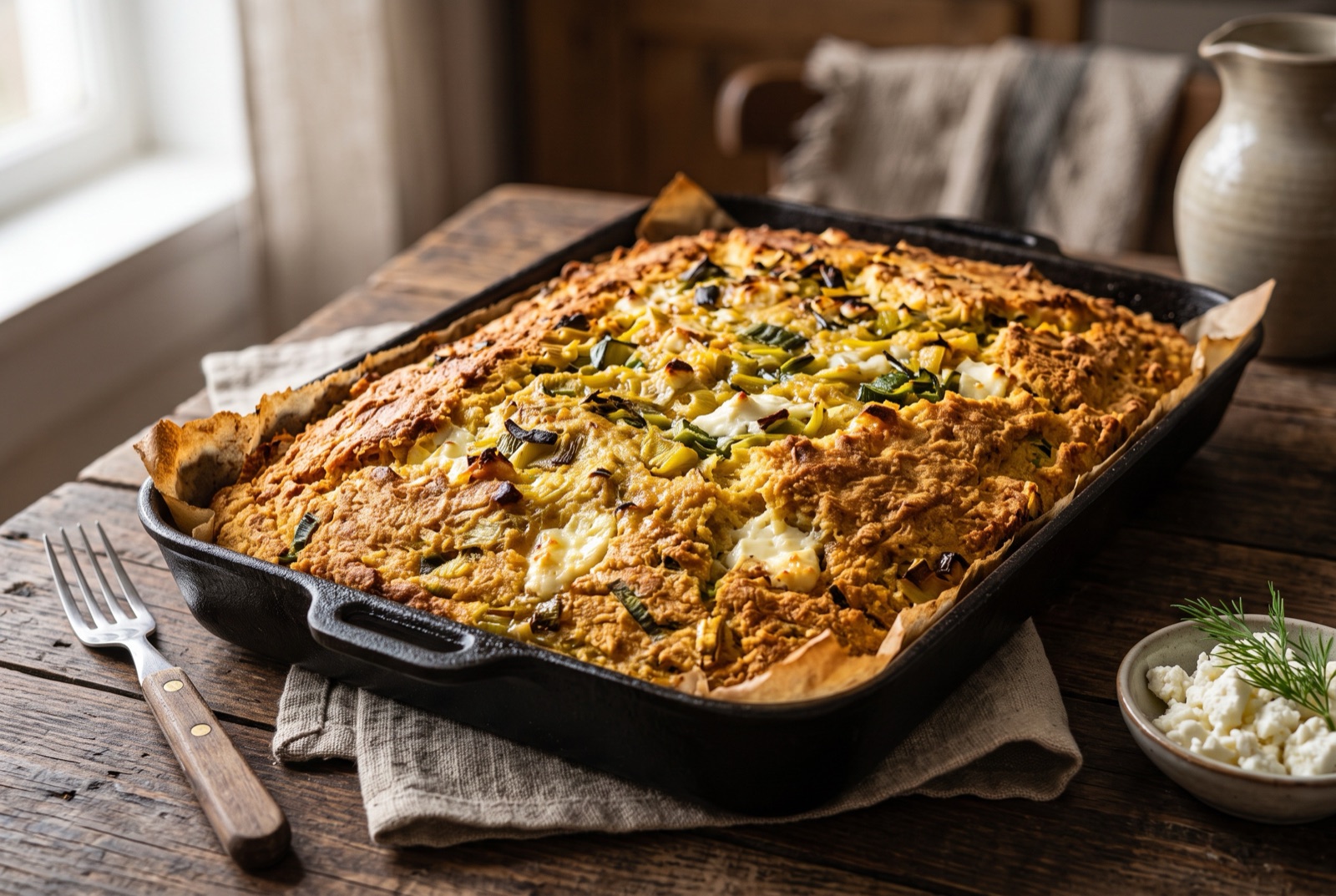
Pispili is a flat cornmeal bread from southern Albania, closer to a savoury cake than a loaf: coarse cornmeal beaten with yoghurt and eggs, folded through with leeks softened until sweet and a good handful of crumbled brined cheese, then spread thin in an oiled tray and baked hard. The crust is what people cook it for — the oil in the base fries the underside into a crackling golden sheet, while the top dries into something between crumb and crisp. Inside it stays moist and dense with an unmistakable corn sweetness against the salt of the cheese. It is eaten warm with yoghurt for breakfast, cut cold into the lunch box, or brought to the table instead of bread.

- Gate
- AlbaniaSouthern Albania
- Prep
- 25 min
- Cook
- 45 min
- Total time
- 1 hr 25 min incl. 15 min rest
- Serves
- 8
- Status
- Easy
- Nutrition / serving · estimated
- Calories 400 kcal
- Protein 14 g
- Carbs 45 g
- Fat 18 g
- Fiber 4 g
- Sugar 5 g
- Sodium 640 mg
Why this recipe works.
- Sweats the leeks properly first, so the bread tastes sweet and mellow rather than sharp and oniony.
- Uses yoghurt as well as eggs, which gives the tender, slightly tangy crumb that plain cornbread never has.
- Preheats the oiled tray so the base fries on contact — that is where the famous crust comes from.
- A one-bowl bake with no yeast and no proving, ready from cupboard staples in just over an hour.
Ingredients.
11 itemsFor the leeks
For the batter
For the tray
Equipment
- Wide shallow metal baking tray or cast-iron pan, about 28 cm
- Frying pan
- Large mixing bowl
Instructions.
Sweat the leeks
Warm the olive oil in a frying pan over medium-low heat, add the sliced leeks and the salt, and cook for 12–15 minutes, stirring occasionally, until they are completely limp, glossy and sweet with no raw bite left. Set aside to cool.
Tip Keep the heat low. Browned leeks taste bitter in the finished bread.
Heat the oven and the tray
Heat the oven to 200°C. Pour the tray oil into a wide shallow metal tray, tilt to coat the base and sides, and slide it into the oven to heat while you mix the batter.
Mix the batter
Whisk the yoghurt, milk and eggs together in a large bowl, then beat in the cornmeal and baking powder until smooth. It should be a thick, pourable batter, looser than cake mix — add a splash more milk if it holds its shape on the spoon.
Fold in leeks and cheese
Fold the cooled leeks with all their oil into the batter, followed by the crumbled cheese and black pepper. Taste a little of the batter and add salt only if the cheese has not already taken care of it.
Pour into the hot tray
Take the hot tray out of the oven and pour in the batter — it should hiss on contact — then level the top quickly with a spatula so the layer is even and no more than 3 cm deep.
Tip Work fast and do not press down; the point is to let the hot oil seize the base immediately.
Bake until deep gold
Bake for 40–45 minutes, until the surface is a solid dark gold, the edges have pulled away from the sides and crackle when tapped, and a skewer in the centre comes out with a few moist crumbs.
Cool and cut
Let the pispili cool in the tray for 15 minutes before cutting it into squares with a serrated knife. Lift the pieces out with a spatula, keeping the fried base intact, and serve warm with cold yoghurt.
Tips from our kitchen.
- Use medium or coarse cornmeal, not fine cornflour. Fine grind gives a pasty, tight crumb without the characteristic grit.
- Cook the leeks until they are genuinely soft and sweet, at least 12 minutes. Half-cooked leeks stay squeaky in the finished bread.
- Heat the oiled tray in the oven before the batter goes in — you should hear it sizzle when you pour, and that sizzle is the crust.
- Spread the batter no more than 3 cm thick. Any deeper and the middle stays wet while the outside overbakes.
- Let it cool at least 15 minutes before cutting. Hot pispili crumbles apart; warm pispili cuts into clean squares.
- If the top is browning too fast at 20 minutes, drop the oven by 15°C rather than covering it, since foil steams the crust soft.
Substitutions.
- Leeks → Spinach, chard, nettles, or a mix of spring onions and greens
- All are traditional. Leafy greens must be wilted and squeezed dry first, or the batter will be too wet to set.
- White brined cheese → Feta, or half feta and half crumbled dry ricotta
- Adding curd cheese softens the crumb and mellows the salt, which is closer to how some Përmet households make it.
- Yoghurt → Buttermilk, or milk soured with a tablespoon of lemon juice
- You need the acidity as well as the liquid — plain milk gives a flatter, denser bread.
Variations.
- Pispili me hithra
- Made with young nettles instead of leeks, gathered in early spring. Deeper green, slightly mineral, and considered the best version by many southerners.
- Harapash
- The related cornmeal bake from Gjirokastër, made as a thick porridge enriched with butter and cheese and baked rather than mixed as a batter.
- Saç-baked
- Cooked under a metal dome buried in embers rather than in an oven, giving a smokier, more evenly browned top crust.
Storage & reheating.
Pispili keeps 3 days wrapped in a cloth at room temperature and 5 days refrigerated, and southern Albanians eat it cold as often as warm. Refresh slices in a dry frying pan or a 180°C oven for 8 minutes to bring the crust back. It freezes well in cut squares for 2 months — reheat from frozen in a hot oven for about 15 minutes.
Serve with
A bowl of cold thick yoghurt for spooning over each slice, plus olives and spring onions.
The story behind Pispili.
Maize arrived in the Balkans from the Americas and became, within a couple of centuries, the bread grain of the poorer and higher parts of the peninsula, where wheat was harder to grow and more expensive to buy. Southern Albania — the Toskëri, around Përmet, Gjirokastër and Korçë — built a whole family of cornmeal breads out of it: misërnik, plain and dense; harapash, a corn porridge baked with butter and cheese; and pispili, the version enriched with greens. The greens vary with the season and the household, but leeks are the classic winter choice and the one the dish is best known for.
What makes pispili distinct from the plain cornbreads of neighbouring countries is the wet, enriched batter. Yoghurt and eggs go in, so the crumb is softer and tangier than a simple cornmeal-and-water bread, and the vegetables are sweated in oil beforehand rather than added raw, which means their moisture and sweetness end up inside the loaf. The tray is oiled heavily — this is not a greased tin, it is a shallow pool — because the underside is supposed to fry rather than merely bake.
In the villages it was baked under a saç, a heavy metal dome covered with hot embers, which gave an evenly browned top without an oven. Households that still cook this way argue that a modern oven cannot match it, and they have a point about the top crust, but a hot domestic oven with the tray on a low shelf gets remarkably close. Pispili also travels well and holds for days, which is why it turns up wrapped in a cloth on long journeys, and it belongs to the same practical logic as most southern Albanian baking: cheap grain, whatever is growing, plenty of oil, and heat.
Questions, answered.
What kind of cornmeal should I use?
Medium or coarse yellow cornmeal, the kind sold for polenta. Fine cornflour or masa harina will not work properly: fine grinds absorb liquid differently and give a pasty, cake-like texture without the slight grit that defines pispili. If you can only find fine cornmeal, use about 30 g less liquid and expect a softer crumb.
Why is my pispili dry and crumbly?
Either it was overbaked or the batter was too stiff. Cornmeal has no gluten, so there is nothing holding it together apart from egg and moisture, and every extra five minutes in the oven costs you. Pull it when a skewer comes out with a few moist crumbs rather than perfectly clean, and make sure the batter pours thickly rather than needing to be scraped out.
Can I make pispili without eggs?
It becomes a different, denser bread but it does work. Replace the eggs with an extra 100 ml of yoghurt and a teaspoon of baking powder, and expect a crumb that is closer to traditional plain misërnik cornbread. The leeks and cheese still carry it, though the slices will be more fragile and harder to lift cleanly out of the tray.
Is pispili gluten-free?
As written here, yes, provided your cornmeal and baking powder are certified gluten-free — the recipe contains no wheat at all. Note that some Albanian households add a spoon or two of flour to help the crumb hold together, so a version you are served elsewhere may not be. Cornmeal is also frequently milled alongside wheat, so check the packet if it matters.
Do I need a special pan?
No, but shape matters. Use a wide, shallow metal tray or a cast-iron pan of about 28 centimetres, so the batter sits no deeper than three centimetres. Metal conducts better than glass or ceramic and gives a far better base crust. Preheating the oiled tray before pouring in the batter matters more than what the tray is made of.
You might also like.
All recipes →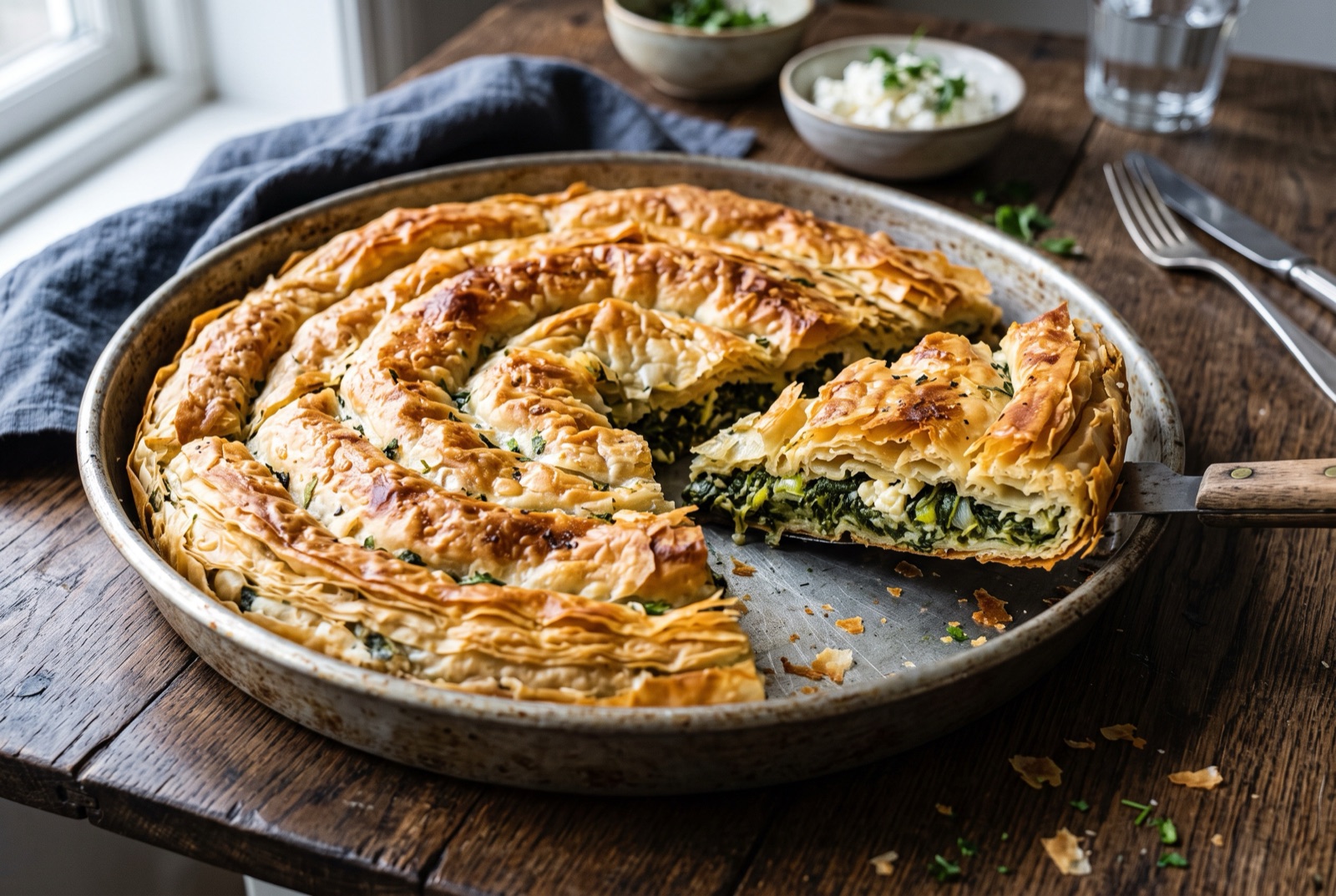
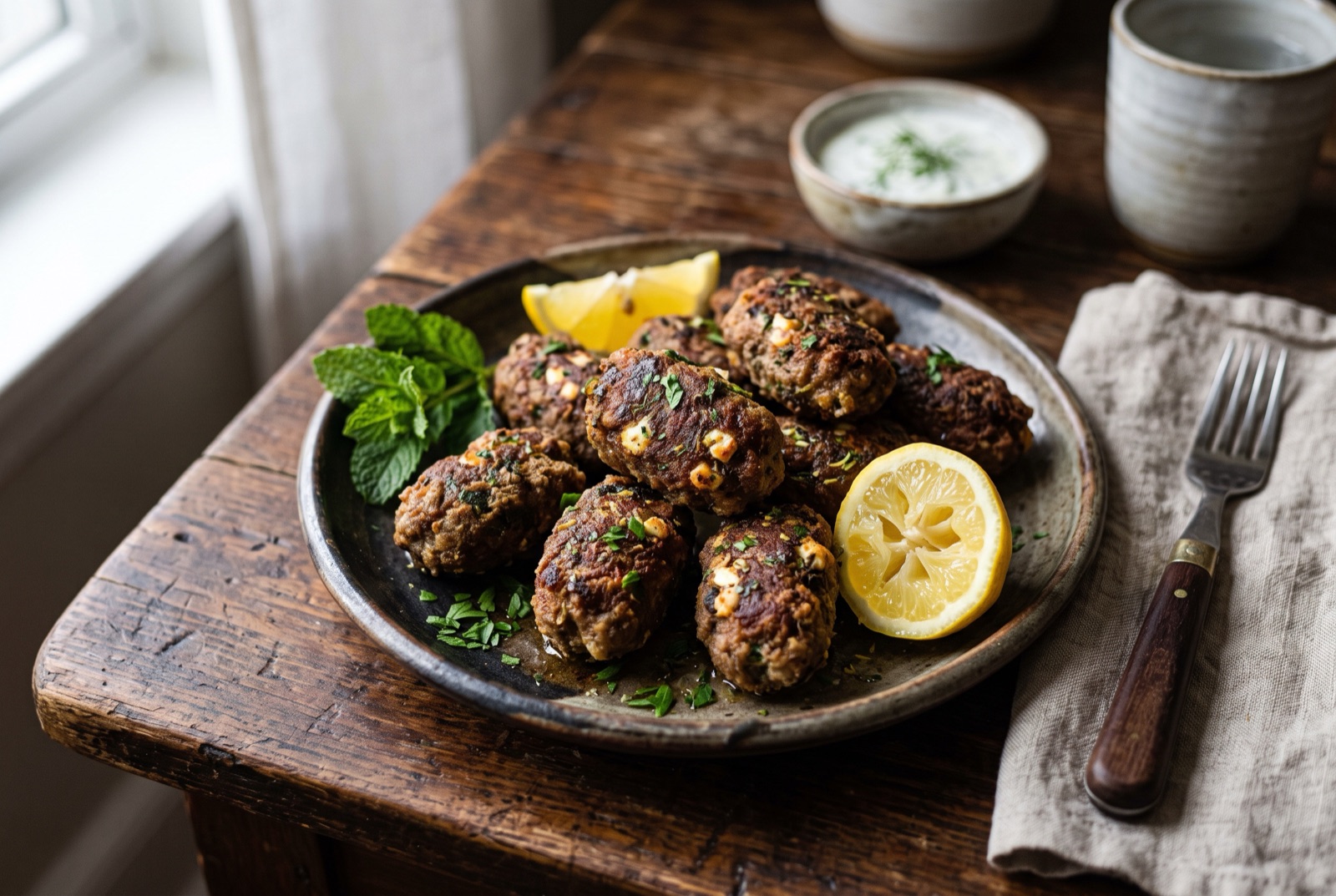
Keep exploring Albania.
Albania has 9 more dishes in the atlas — Byrek me Spinaq and Fërgesë Tirane, and 7 more.
Recipe by The DishRoute Kitchen · published August 20, 2026 · updated August 20, 2026