Qofte të Fërguara.
Albanian Fried Herb and Cheese Meatballs
Qofte të fërguara · say it: CHOF-teh tuh fur-GWAH-rah
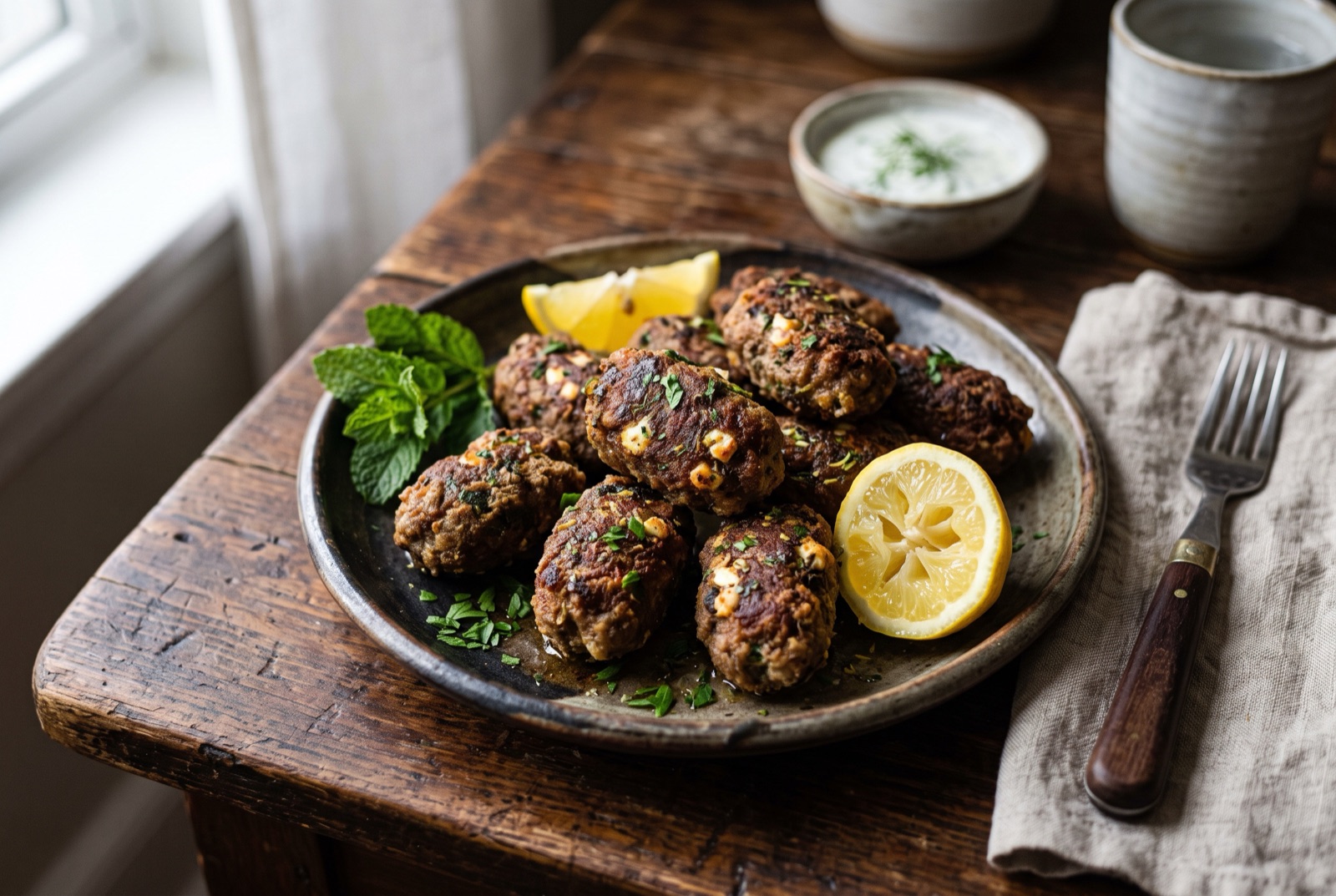
Qofte të fërguara are the fried meatballs Albanians eat standing at a counter, sitting in a bar with a beer, or picking off a shared plate before dinner. Minced beef is worked with bread soaked in milk, grated onion, chopped mint and oregano and a handful of crumbled salty cheese, shaped into short flattened cylinders, rolled in flour and fried in shallow oil until the outside is properly dark. The result is soft and juicy in the middle — the soaked bread does that — with a crisp, floured crust and a strong hit of mint that distinguishes them immediately from an Italian or Swedish meatball. A squeeze of lemon at the table is not a garnish; it is what finishes them.

- Gate
- AlbaniaNationwide
- Prep
- 25 min
- Cook
- 20 min
- Total time
- 1 hr 15 min incl. 30 min rest
- Serves
- 4
- Status
- Easy
- Nutrition / serving · estimated
- Calories 520 kcal
- Protein 34 g
- Carbs 24 g
- Fat 32 g
- Fiber 2 g
- Sodium 980 mg
Why this recipe works.
- Uses milk-soaked bread rather than dry crumbs, which is what keeps fried qofte soft instead of dense.
- Grates the onion and squeezes it dry, so you get onion flavour without the water that makes meatballs fall apart.
- Rests the mixture before shaping, which improves both the seasoning and the way they hold together in the oil.
- Explains the flour coating properly — a thin dust, not a batter — and how to tell when the oil is right.
Ingredients.
14 itemsFor the qofte
To fry
To serve
Equipment
- Wide heavy frying pan
- Box grater
- Mixing bowl
- Slotted spoon and paper towels
Instructions.
Soak the bread
Tear the stale bread into a bowl, pour over the milk and leave for 5 minutes until it swells. Squeeze it firmly between your hands and discard the milk that runs out, keeping the damp bread.
Mix the meat
Combine 600 g of minced beef with the squeezed bread, grated onion, garlic, crumbled cheese, mint, oregano, egg, salt and black pepper. Work it with your hands for a full minute, until the mixture turns slightly sticky and holds its shape when pressed.
Tip That tackiness means the proteins have bound. Under-mixed qofte crumble in the oil.
Rest the mixture
Cover the bowl and refrigerate for at least 30 minutes so the mince firms up and the mint and oregano spread through the meat. An hour or overnight is better.
Shape and flour
With wet hands, roll the mixture into balls the size of a walnut, then flatten each into a short oblong about 2 cm thick. Roll them in the flour and tap off every bit of excess so only a thin dry film remains.
Fry until dark
Heat 1 cm of oil in a wide pan until a pinch of the mixture sizzles instantly. Fry the qofte in batches for 3–4 minutes a side, without crowding, until the crust is deep brown and crackled and they feel firm when pressed.
Tip Leave them alone until the first side has set — moving them early tears the crust off.
Drain and serve hot
Lift the qofte onto paper towels for a minute, then pile them onto a plate with lemon wedges, raw onion and bread. Squeeze lemon over them while they are still hot enough to steam.
Tips from our kitchen.
- Squeeze the grated onion hard over the sink before it goes into the meat. Onion water is the main reason qofte break apart while frying.
- Let the mixture rest in the fridge for at least half an hour; it firms up and the mint and oregano spread through the meat.
- Fry one test qofte first, taste it, and adjust the salt in the rest of the batch. Raw mince always tastes underseasoned.
- Shape them short and flattened, not round. Flat qofte cook through before the crust burns and give more crusted surface.
- Dust off the excess flour. A thick coat goes pasty in the oil instead of forming a dry, crackled crust.
- Keep the oil at a steady medium-high — if it stops sizzling loudly when a qofte goes in, the crust will absorb oil and turn greasy.
Substitutions.
- Minced beef → Half beef and half lamb, or all lamb
- A lamb-heavy mix is common in the south and stands up well to the mint. All-lamb qofte need slightly less salt.
- Stale bread soaked in milk → One small boiled potato, mashed, or 60 g fresh breadcrumbs
- The potato version is a real household variant and makes especially soft qofte. Dry packaged crumbs give the firmest result.
- White brined cheese → Feta, or leave it out and add half a teaspoon more salt
- The cheese seasons from within, so if you skip it, compensate with salt or the qofte taste flat.
Variations.
- Qofte të skarës
- The grilled version, shaped the same way but cooked bare over charcoal without flour. Smokier, drier, and closer to Balkan ćevapi.
- Qofte me salcë kosi
- Fried qofte served under cold garlic yoghurt, which is how they are often eaten in the summer heat.
- Qofte Korçe
- A Korçë tradition of simmering the fried qofte briefly in a light tomato sauce, turning the snack into a main course with bread or rice.
Storage & reheating.
Qofte keep 3 days in the fridge and are genuinely good cold, straight from the container. To reheat, use a dry frying pan over medium heat for a couple of minutes a side so the crust firms again; a microwave leaves them soft and steamy. Cooked qofte freeze well for 2 months — thaw fully, then crisp in a hot dry pan.
Serve with
Lemon wedges, raw onion rings, a plate of pickled peppers and bread — and cold beer or ayran.
The story behind Qofte të Fërguara.
Qofte belong to a family that stretches from the Balkans through Turkey to Central Asia — kofta, köfte, kufta, ćufte — and no country in that range invented it alone. Albania's version is defined by two habits: the herbs and the frying. Mint in particular is used with a confidence that surprises visitors, and the flour coating followed by shallow frying gives a crust quite different from the grilled qebapa and ćevapi of neighbouring Bosnia and Serbia, which are cooked bare over charcoal. Both traditions exist in Albania and both are called qofte, so context matters: qofte të fërguara are fried, qofte të skarës are grilled.
The cheese is the more Albanian touch. Crumbled djathë i bardhë worked into the mix seasons the meat from the inside and keeps the texture loose, which matters because Albanian mince tends to be leaner than the fatty grind used for grilled sausages elsewhere. Households also differ on the bread question — some use stale bread soaked in milk, some use breadcrumbs, some use a boiled potato — and the argument over which gives the softest qofte is the kind of thing families genuinely disagree about across generations.
Where you eat them says as much as how they are made. They come out of the fryer at neighbourhood bars all afternoon, sold with a slice of bread and nothing else. They appear on the meze table alongside fërgesë and pickles. They get made in enormous batches for family gatherings, because they are as good at room temperature as hot, and they are packed cold into lunch boxes and travel bags all over the country. In Korçë the same idea is served in a tomato sauce; on the coast they are cooked smaller and eaten by the dozen with beer.
Questions, answered.
Why do my meatballs fall apart in the pan?
Usually too much moisture in the mix, most often from onion that was not squeezed dry or bread that was still dripping with milk. Wring both out properly. The other causes are skipping the chilling step, which lets the mixture firm up, and turning them too early — leave each qofte alone until a solid crust has formed before you move it.
Can I bake qofte instead of frying them?
You can, at 200°C for about 20 minutes on an oiled tray, turning once. They will be lighter but will not have the crackled floured crust that gives fried qofte their character, since baking cannot replicate what hot oil does to a flour coating. If you want to avoid deep frying, shallow frying in a couple of tablespoons of oil is a good middle ground.
What is the difference between qofte and ćevapi?
Qofte të fërguara are shaped short and flat, floured, and fried in oil, with cheese and mint worked into the meat. Ćevapi and Albanian qebapa are fingers of unfloured minced meat grilled bare over charcoal, seasoned mainly with salt, pepper and garlic. Both belong to the same Ottoman-era family of minced-meat dishes, and Albania cooks both.
Can I prepare the mixture in advance?
Yes, and it improves. Mix the meat, cover it and refrigerate for up to 24 hours before shaping — the herbs and salt distribute through the mince and the texture becomes easier to work with. You can also shape the qofte a day ahead and keep them on a tray under cling film, flouring them only just before they go into the oil.
How do I know the oil is hot enough?
Drop in a pinch of the meat mixture: it should sizzle immediately and steadily, rising to the surface within a second or two, without violent spitting. If you have a thermometer, aim for around 175°C. Oil that is too cool soaks into the flour coating and makes the qofte greasy; oil that is too hot burns the crust before the middle is cooked.
You might also like.
All recipes →
Keep exploring Albania.
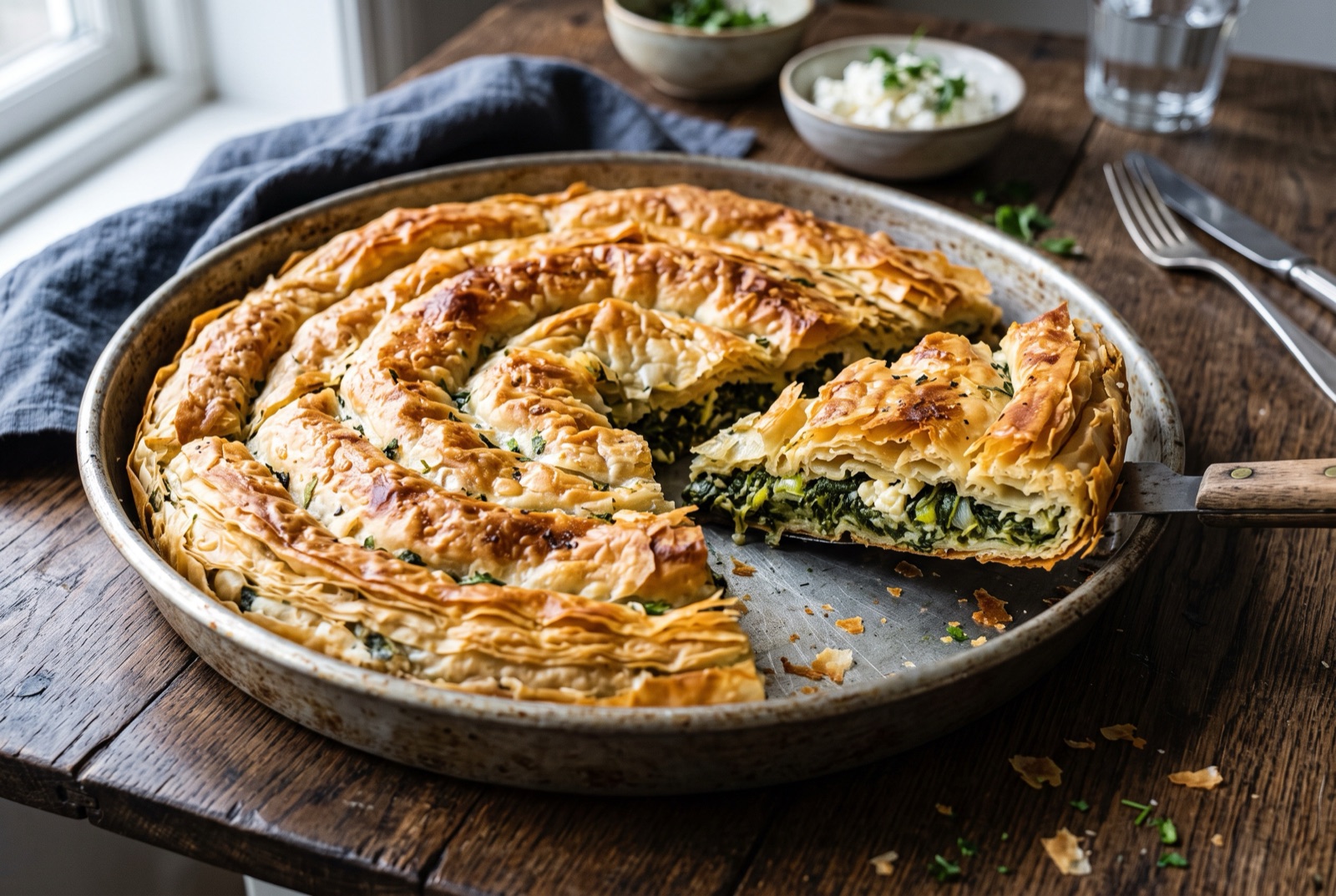
Albania has 9 more dishes in the atlas — Byrek me Spinaq and Fërgesë Tirane, and 7 more.
Recipe by The DishRoute Kitchen · published August 20, 2026 · updated August 20, 2026