Polneti Piperki.
Macedonian Stuffed Peppers in Tomato
Полнети пиперки · say it: POL-neh-tee PEE-per-kee
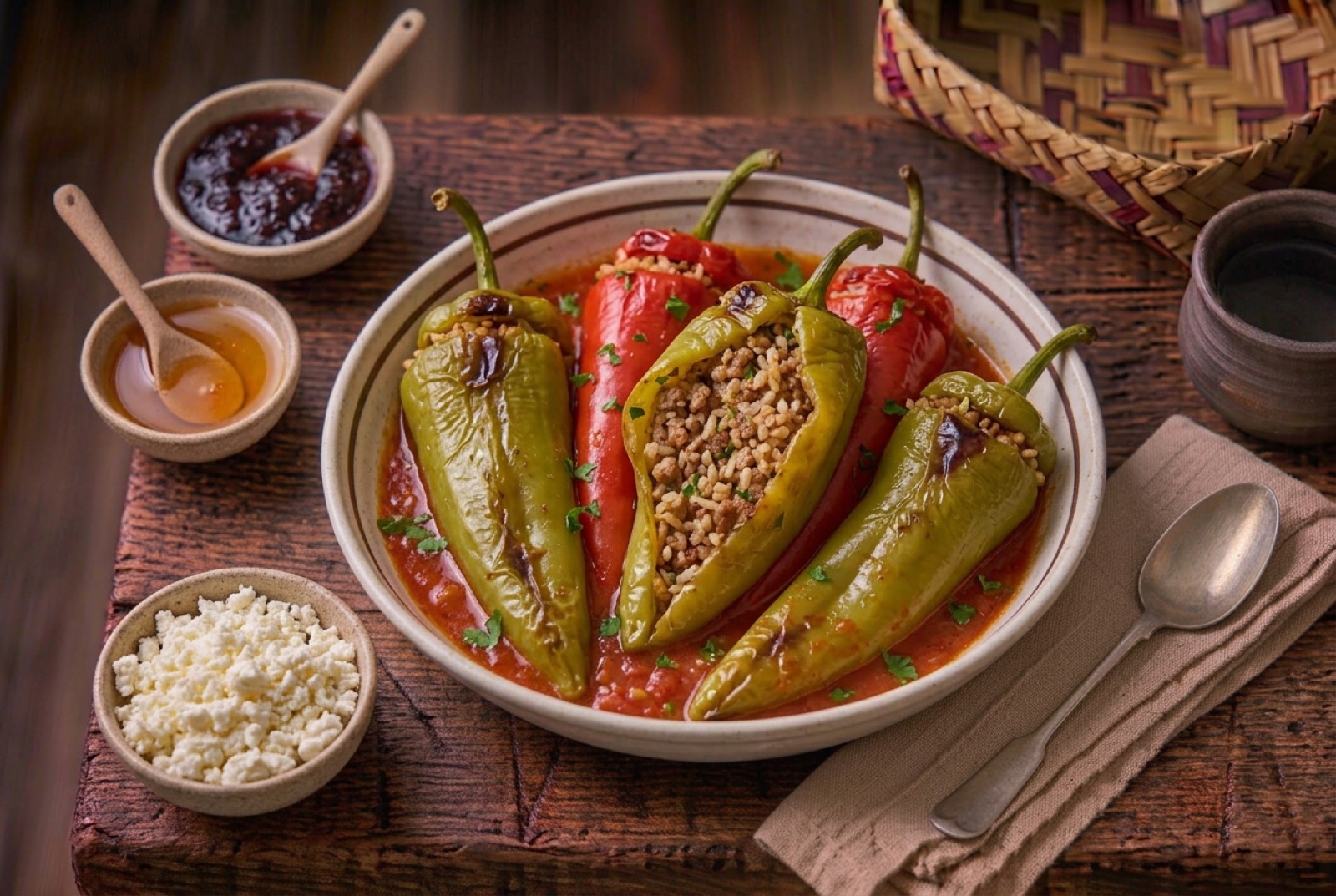
Polneti piperki are the weeknight dinner most Macedonians grew up on: pale-green horn peppers hollowed out, filled with a soft mixture of rice, minced meat, onion and parsley, then stood shoulder to shoulder in a pot and cooked slowly in a light tomato sauce. Because the rice goes in raw, it swells inside the pepper as it absorbs the sauce, so the filling ends up fused to the walls instead of falling out in a lump. The taste is mild and comforting rather than sharp — sweet pepper, savoury meat, a background of paprika — and the pot is always served with a spoonful of thick yogurt melting over the top.

- Gate
- North MacedoniaNationwide
- Prep
- 30 min
- Cook
- 1 hr
- Total time
- 1 hr 30 min
- Serves
- 4
- Status
- Easy
- Nutrition / serving · estimated
- Calories 520 kcal
- Protein 30 g
- Carbs 45 g
- Fat 24 g
- Fiber 6 g
- Sugar 12 g
- Sodium 820 mg
Why this recipe works.
- Raw rice goes into the filling so it swells against the pepper walls, which is what stops the stuffing sliding out when you cut in.
- The peppers stand upright in a snug pot rather than lying in a tray, so they cook evenly and hold their shape.
- Includes the proper meat-free fasting version, which is a real Macedonian dish rather than a diet substitution.
- Sauce quantity is calibrated so the rice finishes cooked but the pot does not turn into soup.
Ingredients.
17 itemsFor the peppers
For the filling
For the sauce
To serve
Equipment
- Deep pot that fits the peppers snugly upright
- Mixing bowl
- Small paring knife
Instructions.
Hollow the peppers
Cut a neat circle around each stem and pull it out with the seed core attached. Tap each pepper upside down to shake loose the remaining seeds, and check inside for the pale ribs, which are bitter — scrape any large ones out with the tip of the knife.
Soften the onion
Cook the onion and grated carrot in 2 tablespoons of oil over medium heat for 8 minutes, until soft and translucent with no crunch left. Stir in the garlic and paprika off the heat, then let the mixture cool for 5 minutes before it meets the raw meat.
Mix the filling
Combine the minced meats, rinsed rice, cooled onion mixture, parsley, black pepper and salt. Work it with your hands for about a minute until it looks uniform and slightly sticky. Fry a teaspoon of it in a pan, taste, and adjust the salt before you fill anything.
Fill the peppers
Spoon the filling into each pepper, pushing it down with the handle of a small spoon but stopping about three-quarters of the way up. The pepper should still feel slightly slack, not hard-packed — the rice needs room to swell.
Build the pot
Stand the peppers upright and tightly against each other in a deep pot. Whisk the passata, tomato paste, stock, remaining oil, bay leaf and a teaspoon of salt together and pour it around them until the liquid reaches about three-quarters up the peppers.
Simmer gently
Bring to a bare simmer, cover and cook over low heat for 50 to 60 minutes. They are done when the pepper skins have wrinkled and loosened, the filling has swelled flush with the opening, and a grain of rice tested from the top is soft with no chalky centre.
Tip Do not stir. Shake the pot gently by the handles if you need to move the sauce around.
Rest and serve
Take the pot off the heat and leave it covered for 10 minutes so the peppers firm up enough to lift out whole. Serve two or three per person with plenty of the sauce spooned over and a large spoonful of cold yogurt on top.
Tips from our kitchen.
- Choose long, straight, pale-green sweet peppers of similar size. Curved ones will not stand upright and cook unevenly.
- Fill the peppers only three-quarters full. Rice roughly doubles, and an overpacked pepper splits along its seam.
- Rinse the rice until the water runs clear so the sauce stays glossy rather than turning starchy and cloudy.
- Pack the peppers tightly and stand them upright — if they can tip over, they will empty themselves into the sauce.
- Keep the simmer very gentle. A vigorous boil tears the softening pepper skins apart before the rice is done.
- Taste the raw filling by frying a teaspoon of it in a pan. It is the only way to check the salt before everything is sealed inside.
Substitutions.
- Long pale-green sweet peppers → Small bell peppers or Romano peppers
- Bell peppers are thicker-walled and need about 10 extra minutes. Romano peppers are the closest match in shape and sweetness.
- Mixed minced pork and beef → All beef, minced lamb, or omit for the fasting version
- For the meat-free version, double the rice, add a grated carrot and a teaspoon of dried mint, and expect a slightly shorter cooking time.
- Fresh tomatoes for the sauce → Passata or tinned chopped tomatoes
- Passata is what most Macedonian households actually use outside tomato season, often from jars they bottled themselves in September.
Variations.
- Posni polneti piperki
- The fasting version with no meat or dairy: rice, onion, carrot, parsley and dried mint, cooked in the same tomato sauce and served without yogurt.
- Baked rather than simmered
- The stuffed peppers stood in a roasting dish with the sauce poured around and baked at 180°C, which gives blistered, slightly charred tops.
- With white cheese
- Crumbled brined white cheese folded through the rice filling, which melts into it and makes the stuffing richer and saltier.
Storage & reheating.
Refrigerate for up to 4 days in the sauce; the flavour deepens noticeably overnight as the rice finishes absorbing it. Reheat gently, covered, on the stove over low heat or in a 170°C oven, adding a splash of water because the rice keeps drinking sauce as it sits. They freeze well for 3 months — freeze them submerged in sauce so the peppers do not dry out — and are best thawed overnight in the fridge before reheating rather than defrosted from frozen.
Serve with
Thick yogurt spooned over each pepper, white bread for the sauce, and a sliced tomato and onion salad.
The story behind Polneti Piperki.
Stuffed vegetables are the Ottoman inheritance shared across the entire eastern Mediterranean, from Turkish dolma through Greek gemista to the Levantine mahshi, and every Balkan kitchen has its own version with its own rules. The Macedonian one is distinguished mostly by the pepper: not the thick-walled bell peppers used further west, but the long, tapering, pale-green sweet peppers grown across the country and sold by the crate in late summer. They are thinner-walled and sweeter, they cook faster, and they collapse slightly around the filling rather than standing rigid.
The fasting calendar shapes this dish as much as it shapes tavče gravče. During Orthodox fasting weeks the meat comes out and the filling is built on rice with plenty of onion, dried mint and parsley — a version that has its own name, posni polneti piperki, and its own defenders who insist it is the better of the two. Outside those periods the mixture is usually a blend of pork and beef, sometimes with a little grated carrot or a spoonful of rice-cooking water to keep it loose.
There is also a preserved version worth knowing about. Peppers are stuffed with cabbage or with a rice mixture and packed into jars in autumn, so that stuffed peppers are available deep into winter — the same logic that fills Macedonian pantries with ajvar and pickled vegetables. What almost never changes is how they reach the table: in the pot, in their own sauce, with bread for the sauce and yogurt on the side. Adding yogurt is not a garnish choice; leaving it off is what people notice.
Questions, answered.
Should the rice be cooked before stuffing?
No. Raw or briefly rinsed rice is correct, because it needs to absorb sauce from inside the pepper as it swells. That absorption is what binds the filling to the pepper walls. Pre-cooked rice produces a loose, mushy stuffing that falls out the moment you cut the pepper open.
Why did my peppers split open during cooking?
Either they were packed too full or the pot was boiling too hard. Rice doubles in volume, so fill peppers only about three-quarters of the way, and keep the liquid at a lazy simmer where bubbles break the surface slowly rather than churning.
What kind of peppers work best?
Long, thin-walled, pale-green sweet peppers of the kind sold as horn or Hungarian wax peppers are traditional and cook in about 45 minutes. Bell peppers work but are thicker and blander and need more time. Whatever you use, pick peppers of similar size so they finish together.
Can I make these vegetarian?
Yes, and the meat-free version is standard in North Macedonia during Orthodox fasting periods rather than being an adaptation. Replace the meat with extra rice, a grated carrot and a little dried mint, use vegetable stock, and skip the yogurt to keep it fully plant-based.
Can I prepare them a day ahead?
You can stuff the peppers a day in advance and keep them raw and covered in the fridge, then cook them fresh. You can also cook them completely and reheat, which many cooks prefer since the flavour improves. What you should not do is leave raw stuffed peppers at room temperature, as the raw meat filling is enclosed and slow to chill.
You might also like.
All recipes →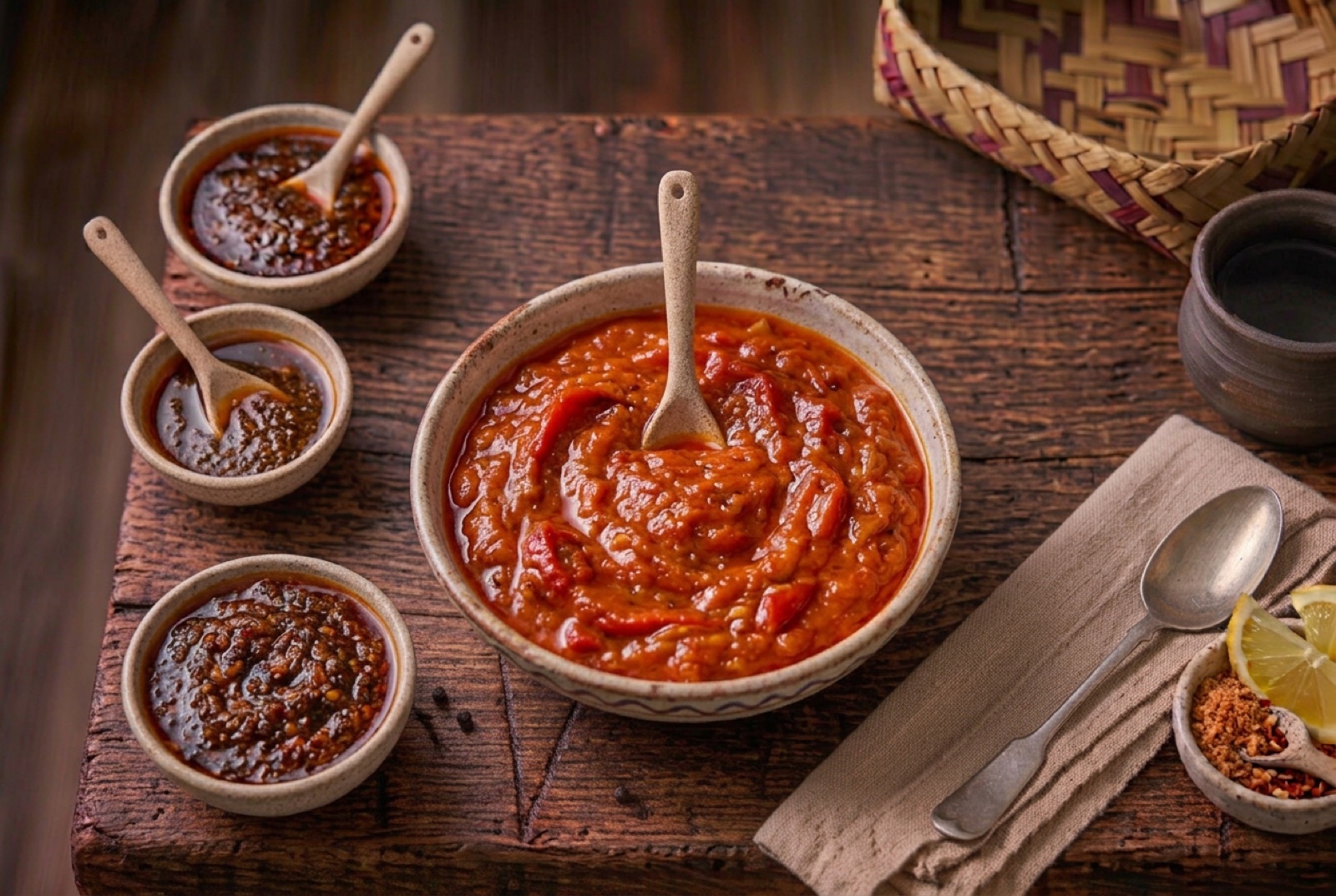
North Macedonia3 hr 45 min
Macedonian Ajvar
Roasted Red Pepper Relish
North Macedonia2 hr 55 min
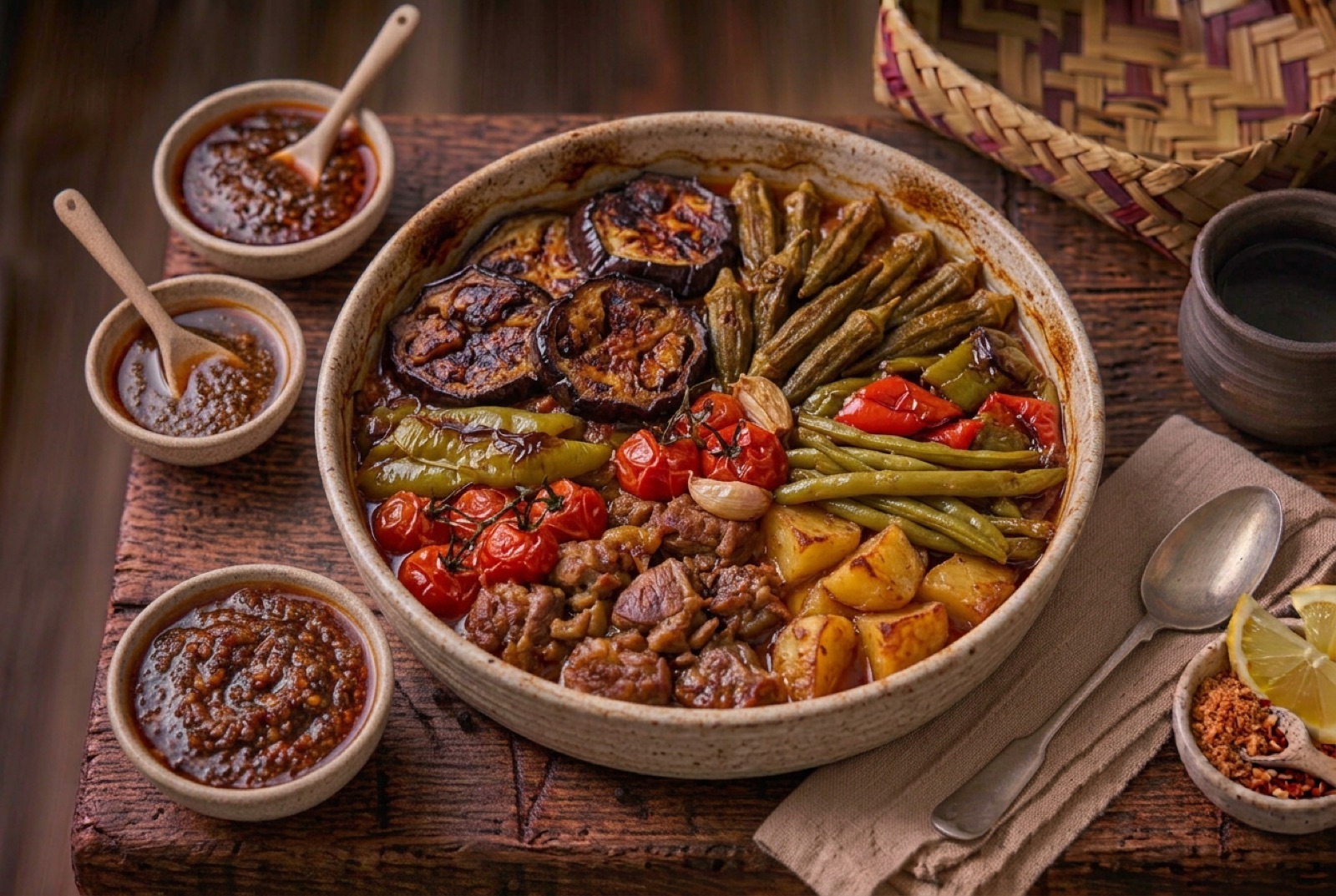
Turli Tava
Macedonian Mixed Vegetable and Meat Bake
North Macedonia1 hr 55 min
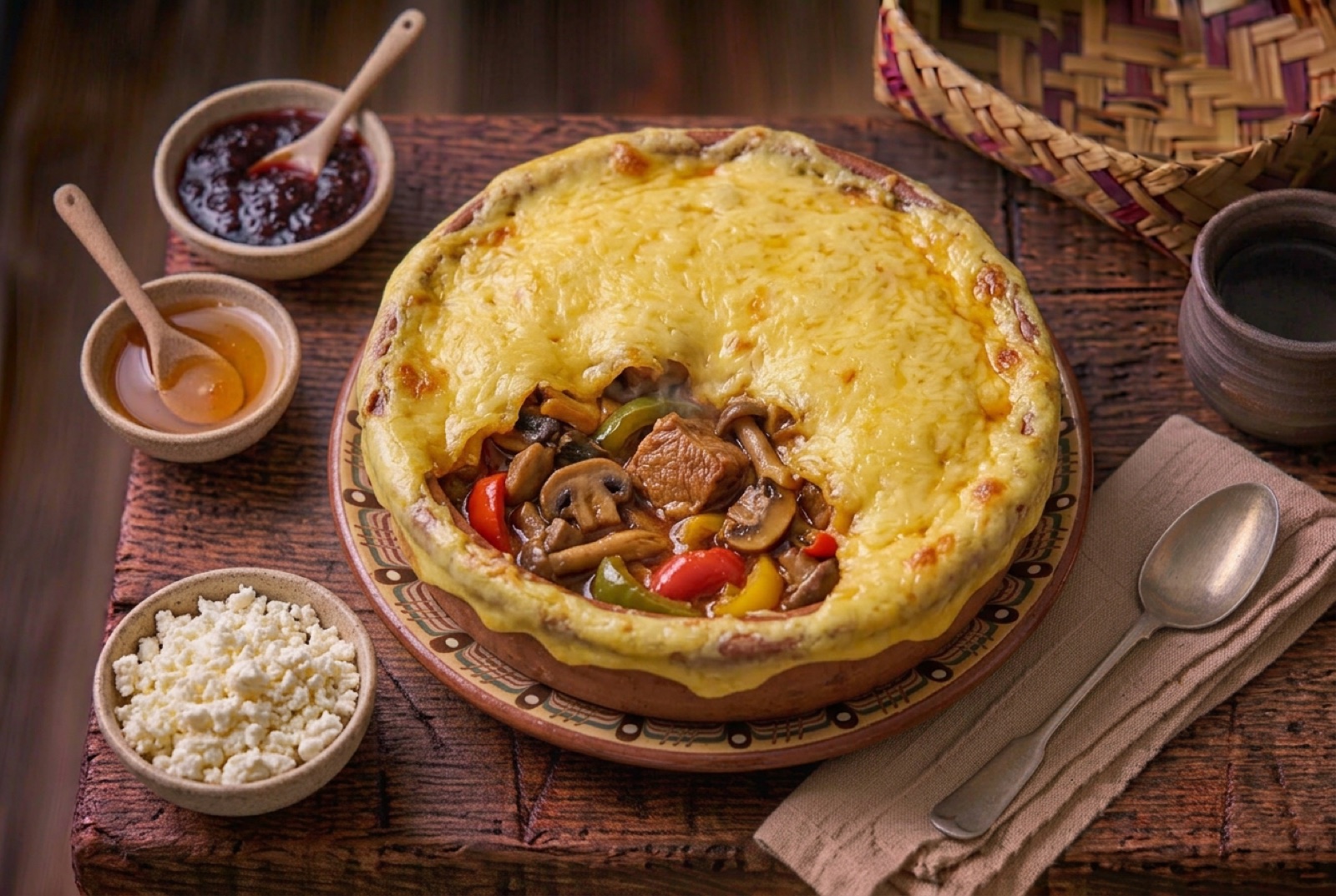
Selsko Meso
Macedonian Village Pork and Mushroom Pot
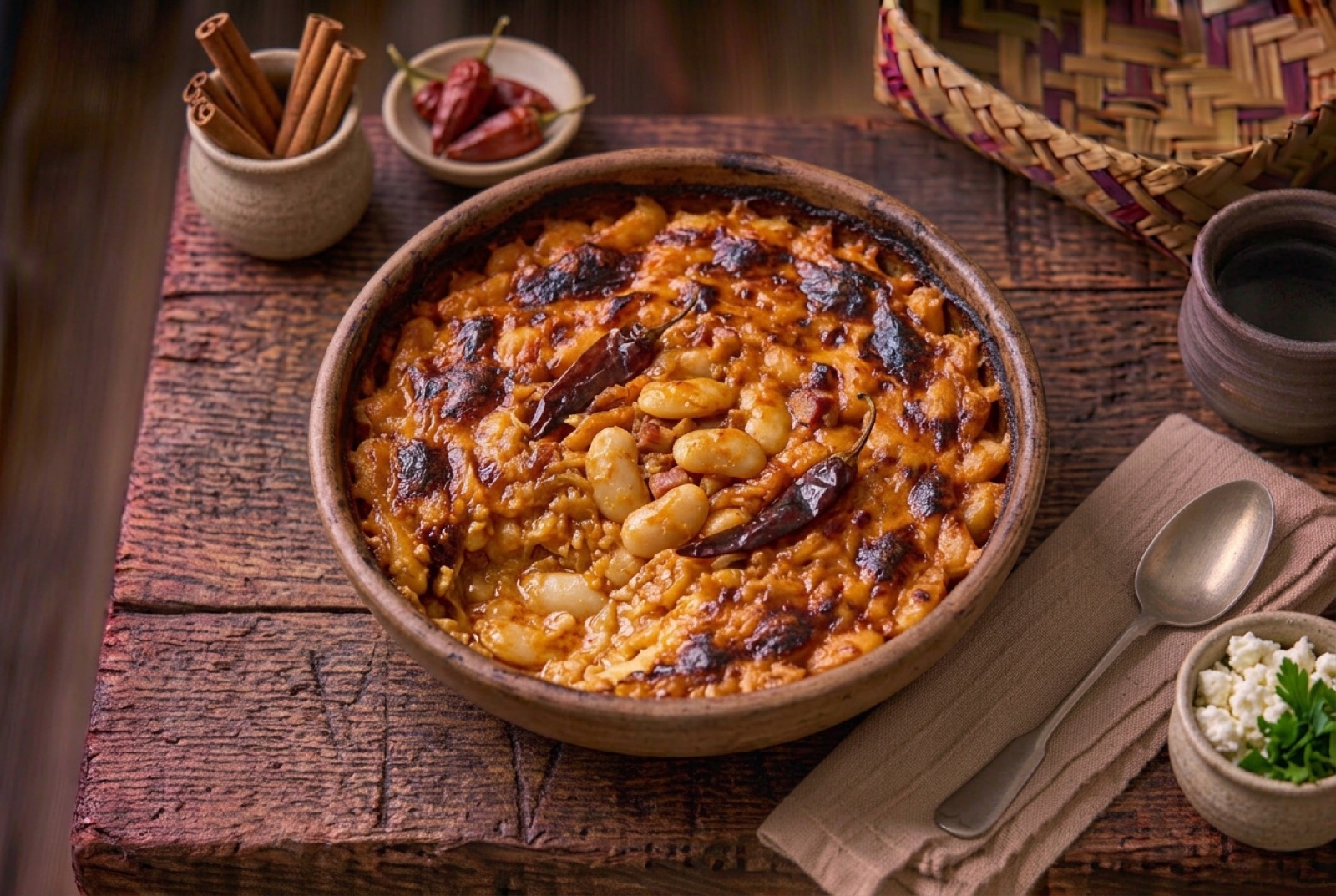
North Macedonia10 hr 20 min
Tavče Gravče
Macedonian Clay-Pot Baked Beans
Keep exploring North Macedonia.
North Macedonia has 9 more dishes in the atlas — Macedonian Ajvar and Mekici, and 7 more.
All North Macedonia recipes Bell pepper recipes Rice recipes Ground beef recipes maingluten freenut freeRecipe by The DishRoute Kitchen · published August 20, 2026 · updated August 20, 2026