Proja.
Serbian Cornbread with White Cheese
Проја · say it: PRO-yah
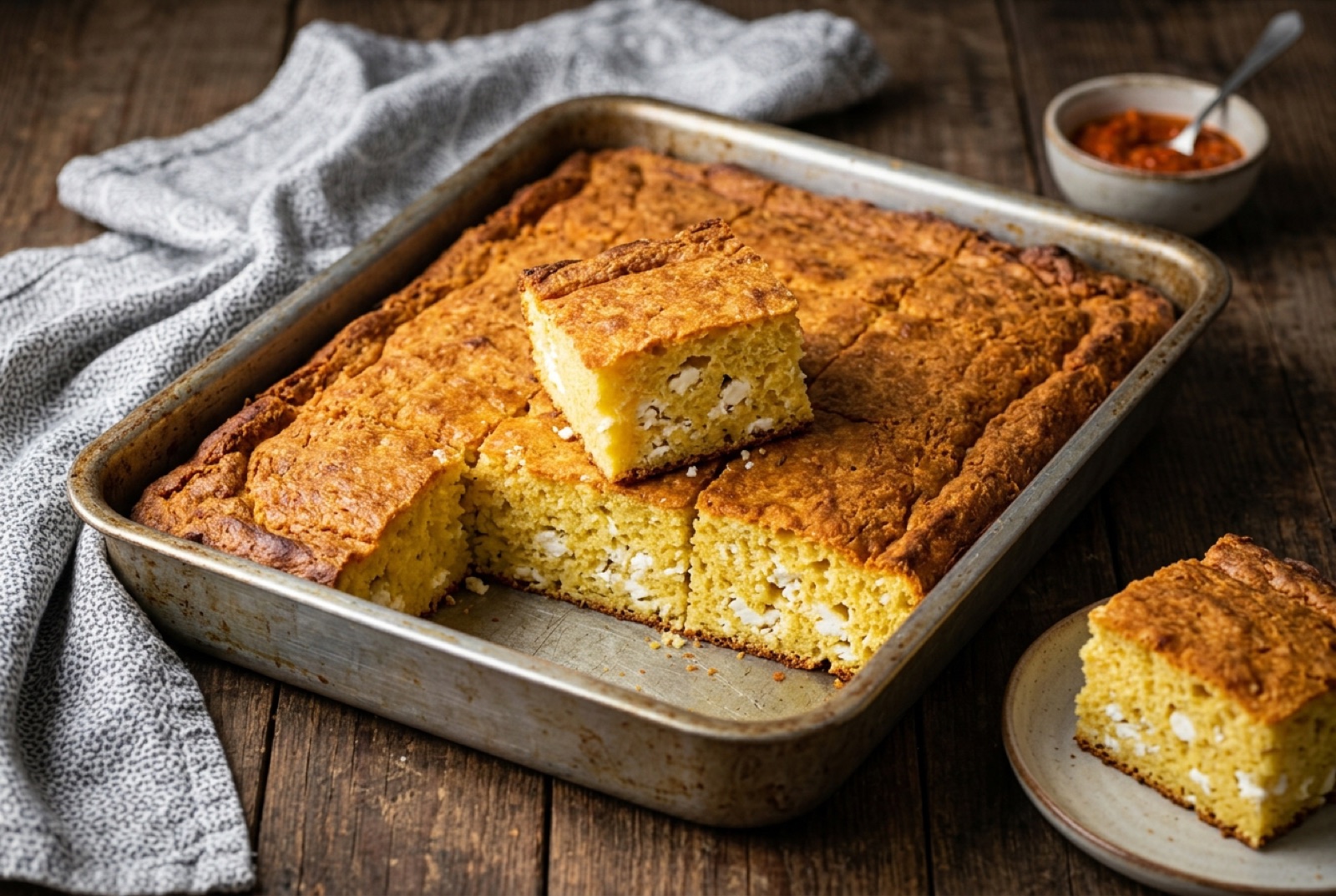
Proja is a cornbread made without yeast and without kneading — you stir it in one bowl and pour it into a tray. Fine cornmeal, thick soured yoghurt, sunflower oil and eggs form the batter; crumbled beli sir, the fresh salty white cheese sold in wet slabs at every Serbian market, is folded through so it stays in soft pockets rather than melting away. It bakes deep yellow with a crisp browned edge and a moist, slightly crumbly middle that smells of hot corn and cheese. The taste is savoury and mildly sour from the yoghurt, salty in bursts from the cheese, and completely unsweet — this is bread, not a sweet American-style cornbread, and it goes on the table next to beans, roast meat or a bowl of pickled peppers. It takes about twenty minutes to put together and is meant to be torn apart hot.

- Gate
- Serbia
- Prep
- 20 min
- Cook
- 40 min
- Total time
- 1 hr 10 min incl. 10 min rest
- Serves
- 8
- Status
- Easy
- Nutrition / serving · estimated
- Calories 400 kcal
- Protein 14 g
- Carbs 38 g
- Fat 21 g
- Fiber 3 g
- Sodium 620 mg
Why this recipe works.
- Uses proper thick soured yoghurt and fine cornmeal in a ratio that bakes moist rather than sandy.
- The batter rests ten minutes so the cornmeal drinks the liquid — the single step most recipes leave out.
- A preheated oiled tray gives the crisp browned base that makes proja worth eating warm.
- Clear substitutions for beli sir and for anyone shopping outside the Balkans, including the fasting version.
Ingredients.
10 itemsDry
Wet
To fold in
Equipment
- Large mixing bowl
- Baking tray or dish about 28 × 20 cm
- Whisk and a spatula
Instructions.
Heat the oven and oil the tray
Heat the oven to 210 °C. Brush a 28 × 20 cm tray generously with sunflower oil, right up the sides, and slide it into the oven to heat for 5 minutes while you mix.
Tip A hot oiled tray is what gives proja its crisp browned base. A cold tray gives you a pale, slightly damp bottom.
Whisk the wet ingredients
Beat the eggs in a large bowl until loose and pale, then whisk in 300 ml of yoghurt and the 100 ml of oil until the mixture is smooth and evenly coloured, with no streaks of egg white left.
Fold in the dry
Tip in the cornmeal, wheat flour, baking powder and salt and stir with a spatula only until the dry patches disappear. The batter should fall heavily off the spoon in thick ribbons; if it holds its shape, loosen it with the mineral water.
Tip Stop stirring the moment it comes together. Overworking the wheat flour makes proja tough and rubbery.
Add the cheese
Crumble in 250 g of white cheese in irregular pieces the size of a hazelnut, and fold it through in three or four turns along with the kajmak if using. Leave the lumps visible — they should stay as pockets, not disappear into the batter.
Rest the batter
Let the bowl stand for 10 minutes. The cornmeal drinks the yoghurt and the batter visibly thickens — this is what keeps the finished bread moist instead of sandy.
Pour into the hot tray
Take the tray from the oven and pour the batter straight in — it should hiss as it touches the metal. Level the top roughly with the spatula and leave it slightly uneven; the peaks brown and crisp.
Bake until deep gold
Bake for 35–40 minutes, until the top is deep golden with darker crisp edges, the bread has pulled slightly away from the sides of the tray, and a skewer pushed into the middle comes out with a few moist crumbs clinging to it.
Tip A completely clean skewer means it has gone five minutes too far. Pull it while there are still crumbs.
Rest briefly, then tear
Let it sit in the tray for 10 minutes so it firms enough to lift, then cut into large squares or tear it apart by hand. Serve warm, while the cheese pockets are still soft.
Tips from our kitchen.
- Use finely ground yellow or white cornmeal — maize flour, the kind sold for baking. Coarse polenta grain stays gritty, and cornflour in the British sense means cornstarch, which will not work at all.
- Let the mixed batter stand for 10 minutes before it goes into the tray. The cornmeal swells and absorbs the yoghurt, and the difference between a rested and an unrested batter is the difference between moist and sandy.
- Salt carefully. Beli sir and feta are both salty enough that half a teaspoon in the batter is usually plenty; taste a pinch of your cheese first and adjust.
- Oil the tray heavily and put it in the oven to heat for five minutes before the batter goes in. The batter should hiss slightly as it hits the metal — that is where the crisp bottom comes from.
- Do not overmix once the cornmeal is in. Stir until the dry patches vanish and stop; beating develops the wheat flour and makes proja tough.
- Take it out while the centre is just set. Proja dries out faster than any wheat bread, and five extra minutes in the oven costs you the moist crumb entirely.
Substitutions.
- Beli sir (Serbian young white cheese) → Feta, rinsed briefly under cold water and patted dry
- Feta is firmer and saltier than beli sir, so rinse it and cut the added salt. Dry cottage cheese or farmer cheese with an extra pinch of salt is a milder but closer match in texture.
- Thick soured yoghurt (kiselo mleko) → Greek yoghurt loosened with milk to a thick pouring consistency, or buttermilk
- Balkan drinking yoghurt is thinner and sharper than Greek. If yours is very thick, slacken it — the batter should fall heavily off a spoon, not sit on it.
- Eggs, cheese and yoghurt (for fasting) → Replace with 400 ml sparkling mineral water and 120 ml oil for posna proja
- The traditional fasting version, made through Orthodox post. It is drier and plainer, and usually gets spinach, chopped leek or nettles stirred in to carry it.
Variations.
- Proja sa čvarcima
- Fold 150 g of coarsely chopped pork crackling into the batter. Autumn and winter food, especially around pig-slaughter season, and richer than it sounds.
- Proja sa spanaćem
- Wilt 300 g of spinach, squeeze it bone dry, chop and stir it through with a little extra cheese. Green, softer and one of the standard fasting-season versions when made without eggs.
- Proja sa kajmakom
- Stir two heaped spoonfuls of kajmak into the batter and dot a little more over the surface before baking. It melts into rich patches and browns beautifully.
Storage & reheating.
Proja is a same-day bread and everybody in Serbia knows it — it is at its best in the first hour and noticeably drier the next morning. Keep leftovers covered at room temperature for up to two days, not in the fridge, which dries the crumb faster. To bring it back, cut into squares, sprinkle a few drops of water over them and reheat in a covered dish at 180 °C for 8–10 minutes; the steam restores most of the moisture. It also freezes acceptably in portions for a month, though the texture loosens. Day-old proja crumbled into a bowl and drowned in cold yoghurt is a genuine Serbian breakfast, not a rescue measure.
Serve with
Prebranac, a bowl of drinking yoghurt, pickled peppers, or simply a slab of kajmak and a spring onion.
The story behind Proja.
Maize came into the Balkans from the Americas by way of the Ottoman world and spread quickly, because it grew where wheat struggled and yielded more from a small plot. By the nineteenth century corn had become the everyday grain of the Serbian village, and proja was the daily bread of households that could not spare wheat. White wheat bread was for Sundays, for guests, for church; corn bread was what you actually ate. That history is worth stating plainly, because it explains the dish better than any romantic version: proja was cheap food that people were often glad to stop eating.
What happened afterwards is the interesting part. Once wheat flour became universal and nobody had to eat corn, proja did not disappear — it moved. It turned up in kafanas as the thing you order alongside prebranac or a plate of grilled meat, in home kitchens as the quick bread you make when guests arrive and there is no time for anything else, and on tables at Christmas and slava as a deliberate choice rather than a necessity. Along the way it got richer. The old austerity version was cornmeal, water, oil and salt. The one most Serbian households make now has eggs, yoghurt and a generous amount of white cheese in it, and many people draw a distinction between proja for the plain one and projara for the enriched one — though the two names get used interchangeably depending on the region and the family, and nobody will correct you for it.
The fasting version survives alongside both. Serbian Orthodox households keep long periods of post, and posna proja — no eggs, no dairy, just cornmeal, oil, water or mineral water and salt — is still made through those weeks, sometimes with spinach, nettles or leek worked into the batter. In autumn and winter you also meet proja sa čvarcima, studded with pork crackling, and versions where a spoonful of kajmak is stirred through the batter or dabbed over the top. Every household has a fixed ratio and a fixed tray, and the argument, when there is one, is only ever about how much cheese is enough.
Questions, answered.
What cheese should I use if I cannot find Serbian beli sir?
Feta is the most available substitute and the closest in flavour, though it is saltier and firmer — rinse it under cold water, pat it dry, and reduce the salt in the batter. Dry cottage cheese, farmer cheese or drained ricotta with an added pinch of salt give a milder result but the right soft, crumbly pockets. Avoid hard cheeses and anything that melts smoothly like mozzarella or cheddar; they turn to strings instead of staying in curds.
Can I use polenta or cornflour instead of cornmeal?
Not interchangeably. You want finely ground maize flour, the texture of fine semolina or finer. Coarse polenta grains stay hard and gritty because there is no long simmering to soften them, though medium-grind polenta will work if you let the batter rest twenty minutes instead of ten. Cornflour in the British sense means cornstarch, which is a thickener and will produce a gluey mess.
What is the difference between proja and projara?
In most Serbian households proja means the plainer cornbread — cornmeal, oil, water or yoghurt and salt — while projara means the enriched one with eggs and white cheese in it. The distinction is not universal, and plenty of families and regions use the two names for the same thing. This recipe is the enriched version, which is what most people bake today whichever name they call it by.
Can I make proja without eggs or dairy?
Yes, and this is the traditional fasting version made during Orthodox post. Leave out the eggs, yoghurt and cheese and use around 400 ml of sparkling mineral water and 120 ml of oil instead, keeping the cornmeal, flour, baking powder and salt the same. It bakes drier and plainer, so it is usually made with something folded through — wilted spinach, chopped leek, or nettles in spring.
Why did my proja come out dry and crumbly?
Three usual causes. The batter went into the tray too thick, meaning the cornmeal had not absorbed enough liquid — it should fall heavily off the spoon, not hold its shape. Or it was baked too long; take it out as soon as a skewer comes out with a few moist crumbs, not bone dry. Or the cornmeal was too coarse and never softened. Resting the batter for ten minutes before baking fixes most of it.
Is proja gluten-free?
Not as written, because it contains a small amount of wheat flour that gives the crumb some structure. You can make it gluten-free by replacing the 100 g of wheat flour with the same weight of extra fine cornmeal, or with a gluten-free blend. Expect a more fragile, crumblier bread that needs to cool a little longer in the tray before you cut it.
You might also like.
All recipes →
Keep exploring Serbia.
Serbia has 9 more dishes in the atlas — Ćevapi and Gibanica, and 7 more.
Recipe by The DishRoute Kitchen · published August 19, 2026 · updated August 19, 2026