Seapraad Hapukapsaga.
Roast Pork with Braised Sauerkraut
Seapraad hapukapsaga · say it: SEH-ah-prahd HAH-poo-kap-sah-gah
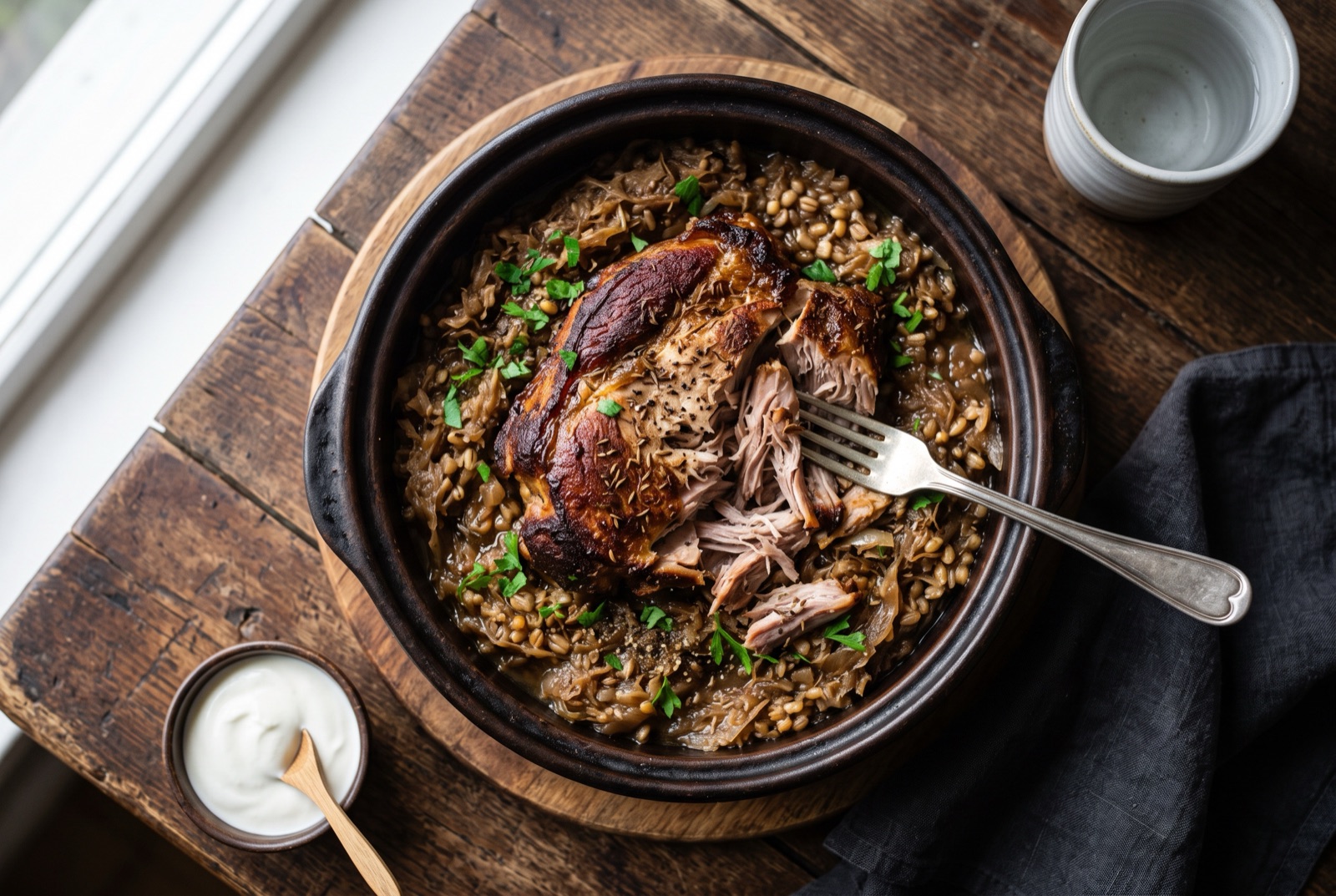
This is the centrepiece of the Estonian Christmas table: a whole pork shoulder rubbed with salt and caraway and roasted low over a bed of sauerkraut, until the meat is soft enough to pull and the cabbage underneath has turned deep amber from three hours of dripping fat. Pearl barley cooked into the kraut absorbs the juices and thickens everything into something between a side dish and a sauce. The flavour balance is the whole point — sharp fermented cabbage, mellowed with a little sugar, cutting straight through fatty pork. Serve it with boiled potatoes and lingonberry jam and there is nothing else the plate needs.

- Gate
- Estonia
- Prep
- 20 min
- Cook
- 3 hr 15 min
- Total time
- 3 hr 55 min incl. 20 min rest
- Serves
- 6
- Status
- Medium
- Nutrition / serving · estimated
- Calories 620 kcal
- Protein 44 g
- Carbs 28 g
- Fat 36 g
- Fiber 7 g
- Sodium 1350 mg
Why this recipe works.
- Low and slow over the kraut, so the cabbage braises in pork fat rather than in water and the meat bastes itself.
- Barley stirred into the sauerkraut, the detail that makes this Estonian rather than generic Central European.
- Tells you to taste your sauerkraut before seasoning, because jarred kraut varies enormously in sharpness.
- One roasting tin, three hours mostly unattended, and it feeds a table without last-minute work.
Ingredients.
12 itemsFor the pork
For the sauerkraut
Equipment
- Large deep roasting tin
- Aluminium foil or a tight-fitting lid
- Meat thermometer
Instructions.
Season the pork ahead
Pat the shoulder dry and rub it all over with the salt, crushed caraway, pepper and garlic, working the mixture into any scored skin. Leave uncovered in the fridge for at least 4 hours and ideally overnight, so the surface dries and the seasoning penetrates.
Build the kraut bed
Spread the drained sauerkraut, onions, 120 g of pearl barley, sugar, bay leaves and allspice across the base of a deep roasting tin and toss together. Pour in the stock — the liquid should just cover the barley, or it will scorch on the tin.
Roast covered
Sit the pork directly on the kraut, fat side up, cover the tin tightly with foil and roast at 150°C for 2 hours. The kraut should be gently bubbling and smelling sweet-sour rather than sharp when you check it.
Uncover and brown
Remove the foil, stir the kraut around the meat and add a splash more stock if it looks dry, then roast uncovered for a further hour. The pork is ready when a fork twists easily in the thickest part and the internal temperature reads about 90°C.
Tip If the kraut is browning faster than the meat, spoon some of it over the pork to shield it.
Crisp the top, then rest
Turn the oven up to 220°C for a final 15 minutes to blister the skin and darken the surface of the kraut. Lift the pork onto a board, tent loosely with foil and rest for 20 minutes while the barley finishes swelling in the tin.
Pull, taste and serve
Pull the pork into thick chunks with two forks, or carve it into slabs if the shoulder held together. Taste the kraut and correct it with salt or a pinch more sugar, then serve the meat piled onto the barley kraut with boiled potatoes and lingonberry jam.
Tips from our kitchen.
- Rub the salt and caraway on at least a few hours ahead, or overnight if you can. Dry-brining seasons the shoulder through and dries the surface for better browning.
- Do not rinse the sauerkraut unless it tastes aggressively sour raw. Rinsing washes out the flavour you are cooking with, and a spoonful of sugar handles most of the sharpness.
- Roast covered for the first two hours and uncovered for the last, so the meat stays moist and still finishes with a browned crust.
- If there is a skin, score it in a diamond pattern and finish the roast at high heat for the last fifteen minutes for crackling.
- Add the barley to the kraut with enough liquid to cover it — dry barley in a sealed roasting tin will scorch against the metal.
- Rest the meat at least twenty minutes before pulling it apart, otherwise the juices run out into the tray instead of staying in the pork.
Substitutions.
- Pork shoulder → Pork neck, or a boned and rolled pork belly for a fattier result
- Any cut with real intramuscular fat works. Avoid loin — it dries out badly over three hours.
- Pearl barley → Coarse bulgur, added in the last 40 minutes only
- Cooks much faster than barley, so add it late or it turns to porridge.
- Barrel sauerkraut → Jarred or bagged sauerkraut, drained but not rinsed
- Milder and often vinegar-brined rather than fermented. Cut the sugar and taste before serving — you may want a splash of the brine back.
Variations.
- Mulgikapsad
- The southern Estonian relative: pork and sauerkraut cooked together in one pot with barley from the start, served as a stew rather than a carved roast.
- Smoked bone kraut
- Braise the sauerkraut separately with a smoked pork hock or rib bone for a deeper, smokier side that stands up on its own without the roast.
- Apple and juniper
- Add a grated apple and a few crushed juniper berries to the kraut. Common in western Estonia and the islands, and it makes the cabbage noticeably fruitier.
Storage & reheating.
Leftovers keep 4 days refrigerated, and the sauerkraut genuinely improves overnight as it absorbs the last of the fat. Store meat and kraut together so the pork stays moist. Reheat covered at 150°C until steaming through, about 25 minutes, rather than microwaving, which dries the shoulder. Both freeze well for 3 months; freeze in portions with plenty of kraut and juices around the meat, and thaw fully in the fridge before reheating.
Serve with
Boiled potatoes tossed in butter and dill. Lingonberry jam and a spoonful of hot mustard on the side of the plate.
The story behind Seapraad Hapukapsaga.
Roast pork with sauerkraut is the sort of dish that belongs to the entire Baltic and Central European belt — Germans, Poles, Czechs, Latvians and Lithuanians all have a close cousin — and Estonians make no claim of invention. What they do have is a specific version, hapukapsad cooked with pearl barley, that reads as unmistakably local. Barley is the grain that runs through Estonian cooking the way rice runs through East Asian cooking, and stirring it into braising sauerkraut turns a sharp side dish into something substantial that soaks up the roast's fat instead of letting it pool.
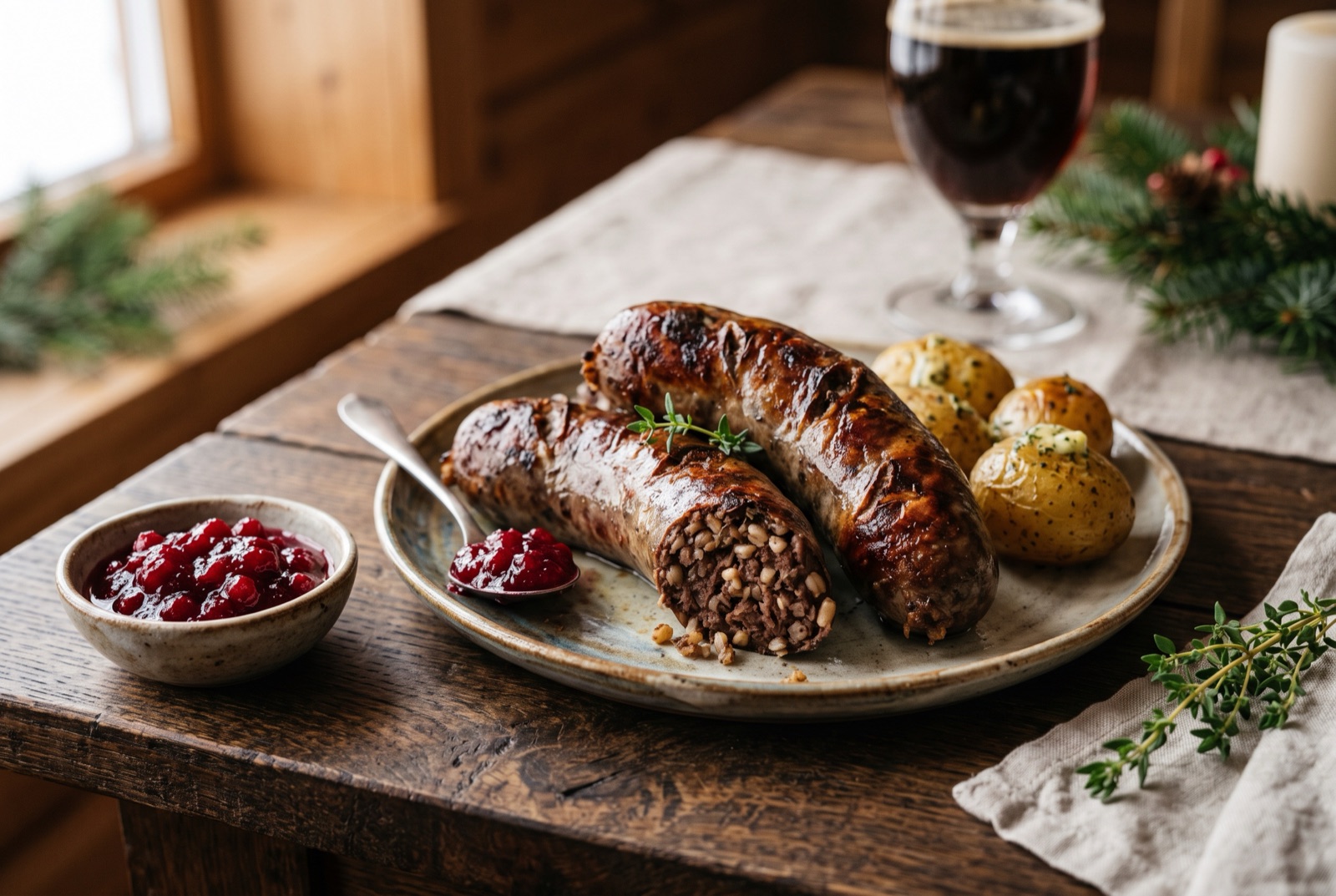
The dish is bound to Christmas. Estonians eat their main holiday meal on the evening of 24 December, and the standard jõululaud has looked much the same for generations: roast pork, blood sausage, baked sauerkraut, boiled potatoes, jellied meat and lingonberry jam. Households divide over whether the pork should be shoulder or a whole leg, whether the skin gets scored for crackling, and whether the kraut goes under the meat from the start or is braised separately in its own pot with a piece of smoked bone. Almost everyone agrees on caraway, and almost everyone agrees that a little sugar in the sauerkraut is not cheating — long fermentation in Estonian barrels produces a genuinely sharp kraut, and the sugar rounds it rather than sweetening it.
Outside December it survives as ordinary Sunday cooking, which is the honest way to approach it at home. Nothing about the technique is festive: it is a cheap cut, a jar of sauerkraut, a handful of grain and three unattended hours in a low oven. The main adjustment for cooks outside Estonia is the kraut itself. Supermarket sauerkraut in vinegar brine is milder and flatter than barrel-fermented Baltic cabbage, so taste it raw first and adjust the sugar and cooking time accordingly rather than following the numbers blindly.
Questions, answered.
Should I rinse sauerkraut before cooking it?
Only if it tastes harshly sour or salty straight from the jar. Rinsing removes acidity but also flavour, and in this dish the sharpness is what balances three hours of pork fat. Drain it well, taste a strand raw, and if it is too aggressive rinse briefly in cold water and squeeze — otherwise leave it as it is and rely on the sugar.
What cut of pork should I use?
Bone-in or boneless pork shoulder, also sold as pork butt or Boston butt, is ideal because its fat and connective tissue melt over a long roast and keep the meat succulent. Pork neck works equally well. Lean cuts such as loin or tenderloin are the wrong choice entirely — they dry out well before the sauerkraut underneath has cooked down.
Why is there sugar in the sauerkraut?
To round off the acidity, not to sweeten it. Traditionally fermented Baltic sauerkraut is sharply sour, and a spoonful or two of sugar over a whole tray makes the sourness pleasant rather than puckering. This is standard practice in Estonian home kitchens, not a shortcut. Taste at the end and add more only if the kraut still bites.
Can I make this the day before?
Yes, and it is arguably better for it. Roast everything a day ahead, cool, and refrigerate the meat sitting in the kraut and juices. Reheat covered in a low oven for about half an hour. The sauerkraut mellows overnight and the barley finishes absorbing the pork fat, so the flavours are more settled on day two.
How do I get crackling on the pork?
Buy a piece with the skin on, score the skin in a diamond pattern down to the fat without cutting the meat, and rub salt into the cuts. Roast covered as normal, then uncover for the final stretch and raise the oven to 220°C for the last 15 minutes until the skin puffs and blisters. Keep the skin above the liquid line the whole time or it steams instead of crisping.
You might also like.
All recipes →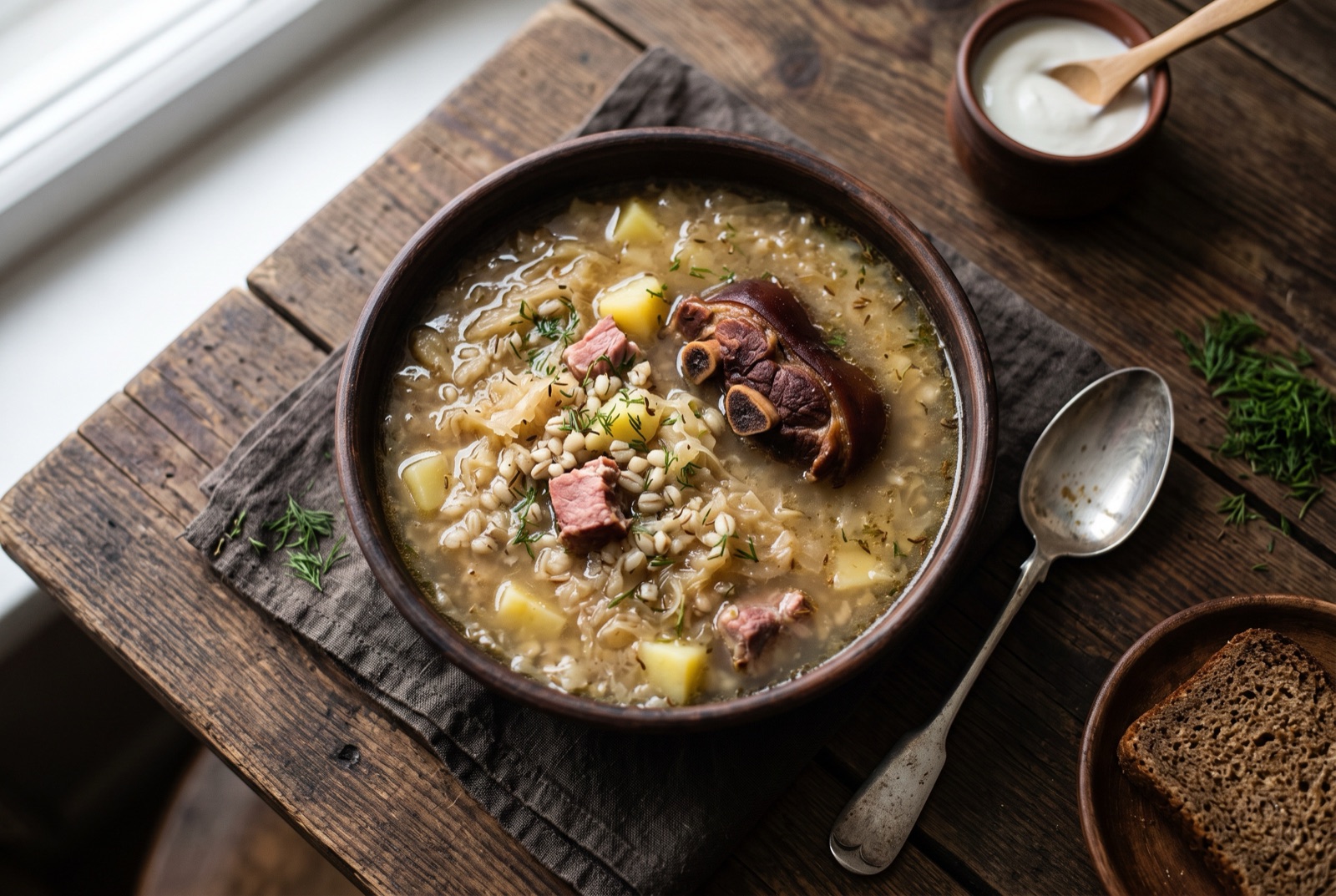
Keep exploring Estonia.
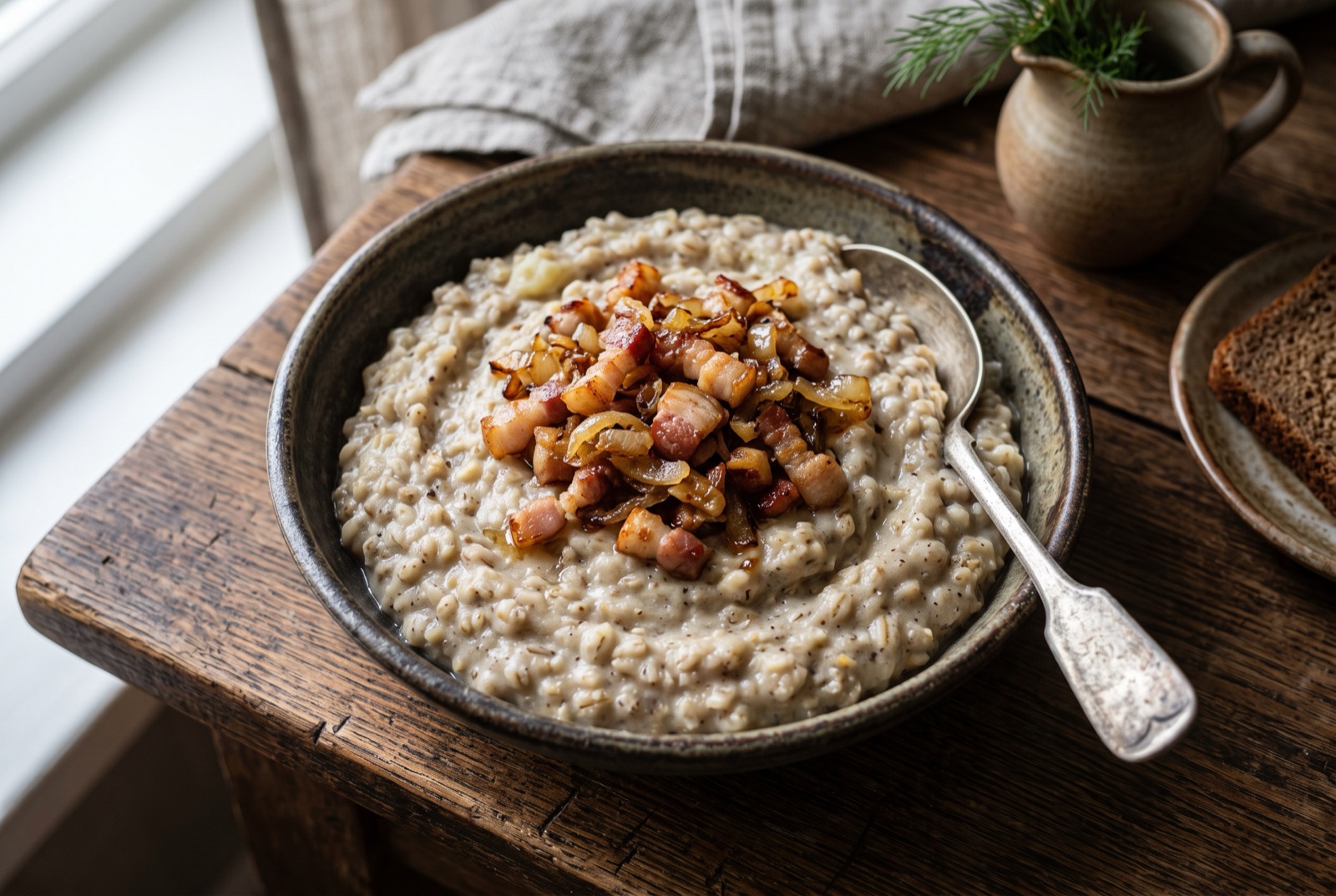
Estonia has 9 more dishes in the atlas — Hapukapsasupp and Kama, and 7 more.
Recipe by The DishRoute Kitchen · published August 20, 2026 · updated August 20, 2026