Kama.
Estonian Toasted Grain Flour with Kefir
Kamajahu · say it: KAH-mah
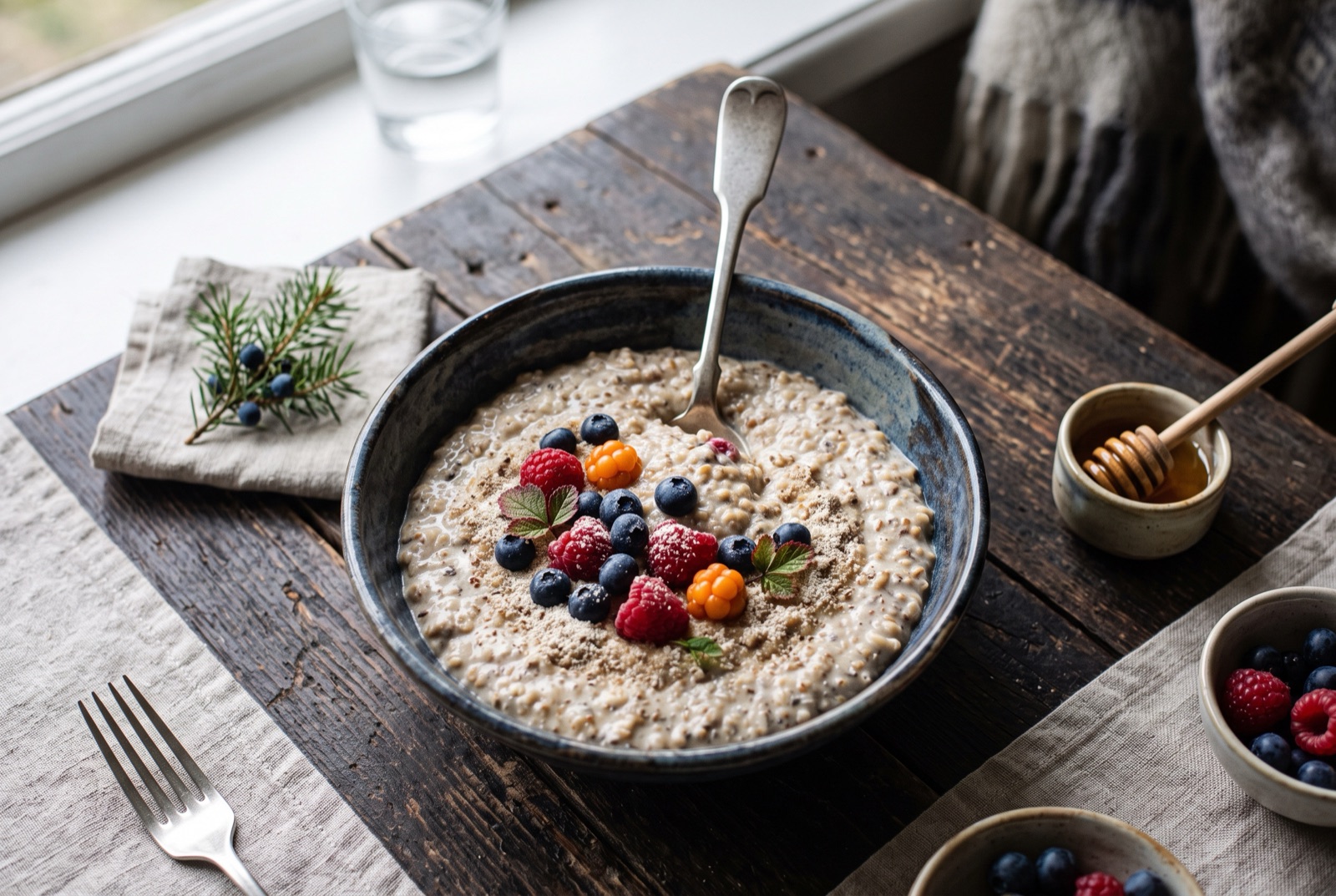
Kama is a flour of four roasted grains — rye, barley, oat and dried pea — stirred into cold kefir or buttermilk with a little sugar or honey until it thickens into a spoonable, mousse-like porridge. The taste is toasty and nutty, faintly sweet, with the clean sourness of the cultured milk behind it; the texture sits somewhere between thick yogurt and cold semolina pudding. Estonians eat it for breakfast, as a light supper on a hot day, and as the base for cakes and truffles. Making it takes four minutes if you buy the flour, and about half an hour if you toast and grind the grains yourself.

- Gate
- Estonia
- Prep
- 5 min
- Cook
- 1 min
- Total time
- 16 min incl. 10 min rest
- Serves
- 4
- Status
- Easy
- Nutrition / serving · estimated
- Calories 260 kcal
- Protein 12 g
- Carbs 41 g
- Fat 5 g
- Fiber 6 g
- Sugar 18 g
Why this recipe works.
- Gives the home-roasting method in full, so the dish is possible without a packet of Estonian kamajahu.
- Adds the flour gradually to cold kefir, which is the only reliable way to avoid lumps in something this fine.
- Names the pea flour explicitly rather than hiding it — it is the ingredient that makes kama taste like kama.
- Ready in minutes, with a resting step that actually improves the texture rather than just delaying breakfast.
Ingredients.
9 itemsFor the bowls
To finish
Home-roasted kama flour
Equipment
- Whisk
- Mixing bowl
- Spice grinder or blender (only if making the flour yourself)
Instructions.
Roast the grains (only if making your own flour)
Spread the rye, barley, oats and dried peas on separate baking trays and roast at 180°C until each smells strongly of toasted bread and has darkened a shade — 10 to 18 minutes depending on the grain. Cool completely before grinding.
Tip Pull each tray the moment it smells nutty. Roasted past that point the flour turns bitter and no amount of honey hides it.
Grind and sieve
Grind the cooled grains in batches in a spice grinder or powerful blender until they are as fine as flour, then push everything through a fine sieve and re-grind whatever stays behind. The finished flour should feel silky, not sandy.
Whisk the flour into cold kefir
Pour the cold kefir into a bowl and whisk in the kama flour a spoonful at a time, letting each addition vanish before adding the next. Keep going until the mixture is completely smooth and coats the whisk thickly.
Tip It will look too thin at this stage. It is not — the flour keeps drinking liquid as it stands.
Sweeten and rest
Stir in the honey and the pinch of salt, then leave the bowl in the fridge for 10 minutes. The mixture thickens visibly as it rests and the raw, powdery edge disappears entirely.
Adjust and serve cold
Taste and loosen with a splash more kefir if it has set thicker than a soft yogurt, or add a little more honey if it needs it. Spoon into bowls, top with the berries and eat cold.
Tips from our kitchen.
- Roast each grain separately if you are making the flour yourself. They colour at different rates, and a single tray gives you burnt oats and pale barley.
- Grind the roasted grains in batches and sieve the result. Anything too coarse to pass through will stay gritty in the finished bowl.
- Whisk the flour into the kefir a spoonful at a time. Dumping it all in at once gives dry pockets that never break down.
- Let the mixture rest at least ten minutes before eating. The flour keeps absorbing liquid, and the texture changes completely from powdery to smooth.
- Use cold kefir straight from the fridge. Warm cultured milk makes the kama taste flat and slightly cloying.
- If it sets too thick, loosen with a splash more kefir rather than water, which dilutes the sourness that makes the dish work.
Substitutions.
- Kefir → Buttermilk, thin natural yogurt, or soured milk
- Any cultured milk works. Buttermilk is closest in consistency; yogurt needs thinning with a little milk or the result is too stiff to stir.
- Ready-made kama flour → Equal parts rye, barley and oats plus half a part dried yellow peas, roasted and ground at home
- Genuinely worth doing — home-roasted kama is far more aromatic than packet flour, which is often months old.
- Honey → Granulated sugar, maple syrup, or nothing at all
- Traditional versions were often unsweetened and eaten as a savoury-leaning breakfast. Sweeten to taste rather than by the spoon.
Variations.
- Kamakreem
- The dessert version: fold the kefir mixture into softly whipped cream with sugar and berries for a light, mousse-like pudding served in glasses.
- Kama truffles
- Work the flour into softened butter and condensed milk, roll into balls and coat in more kama. A standard Estonian home sweet and a good use for leftover flour.
- Kama smoothie
- Blend the flour with kefir, banana and frozen berries for a drinkable version — how many younger Estonians actually eat it now.
Storage & reheating.
Kama flour keeps 6 months in an airtight jar in a cool cupboard, and longer in the freezer, though the roasted aroma fades after a few months. Mixed kama in kefir is best eaten within a day: it thickens steadily in the fridge and by the second day sets almost solid, at which point stir in more kefir to loosen it. Do not freeze the mixed version — the cultured milk separates on thawing and the texture never recovers.
Serve with
Fresh berries — lingonberries, blueberries, redcurrants or whatever is in season. A drizzle of honey and a slice of black rye bread on the side for a fuller breakfast.
The story behind Kama.
Kama is genuinely old. Roasted grain flours of this kind belong to a Finno-Ugric food tradition shared with Finland (talkkuna) and parts of the Baltic and Russia, and the logic behind them is portable food: grains roasted until dry and nutty can be ground and carried, will not spoil, and need no cooking — just liquid. Estonian farm workers and fishermen took kama flour to the fields and mixed it with whatever sour milk was to hand. There was no recipe, only a ratio adjusted by eye.
The standard modern Estonian blend is a specific one: rye, barley, oat and dried pea, roasted separately and milled together. The pea is what surprises outsiders, and it is not a filler — it gives kama its distinctive savoury undertone and a hint of the flavour of roasted chickpea flour. Estonians can and do argue about the exact ratios between the four, but the four themselves are fixed, and packets of kamajahu in any Estonian supermarket list them in that order.
What is striking is that kama never became a museum food. It moved into the twentieth-century Estonian kitchen and stayed there: as breakfast in kefir, as kamakreem folded with whipped cream and berries for dessert, as a coating for chocolate truffles, and more recently as a flavour of ice cream, chocolate bars and even beer. Estonians abroad ask visiting relatives to bring kama flour, and Estonian food companies sell it as a national product. The one honest limitation for cooks elsewhere is availability — outside Estonia and Finland it is a specialist or online purchase, and there is no true substitute, though toasting and grinding the four grains at home is entirely doable and gives a fresher, more aromatic result than any packet.
Questions, answered.
What is kama flour made of?
The standard Estonian blend is four roasted grains ground together: rye, barley, oats and dried yellow peas. Each is roasted until nutty and dry before milling. The pea is the ingredient that gives kama its particular savoury depth and distinguishes it from a simple toasted cereal flour.
Can I make kama flour at home?
Yes. Roast rye, barley, oat groats and dried yellow peas separately on baking trays at around 180°C until each is fragrant and lightly coloured, cool them completely, then grind in a spice grinder or high-powered blender and sieve out the coarse bits. Home-made kama is noticeably more aromatic than shop-bought, which is often several months old.
What can I use instead of kefir?
Buttermilk is the closest match in both consistency and sourness. Thin natural yogurt works if you slacken it with a splash of milk first, and traditional soured milk is what rural Estonian households would have used. Sweet milk is not a substitute — the acidity is what balances the toasted grain.
Why is my kama lumpy?
Because the flour went in too fast. Kama is very fine and clumps instantly on contact with liquid if it is added in one go. Whisk it in a spoonful at a time, letting each addition disappear before the next, and if lumps still form, push the mixture through a sieve or give it a short blitz with a stick blender.
Is kama sweet or savoury?
It sits in between, and the cook decides. Traditionally it was eaten barely sweetened, or not at all, as plain breakfast food. Modern Estonian versions usually take honey or sugar and berries, and the dessert form, kamakreem, is properly sweet. Start with a small amount of honey and adjust after the mixture has rested.
You might also like.
All recipes →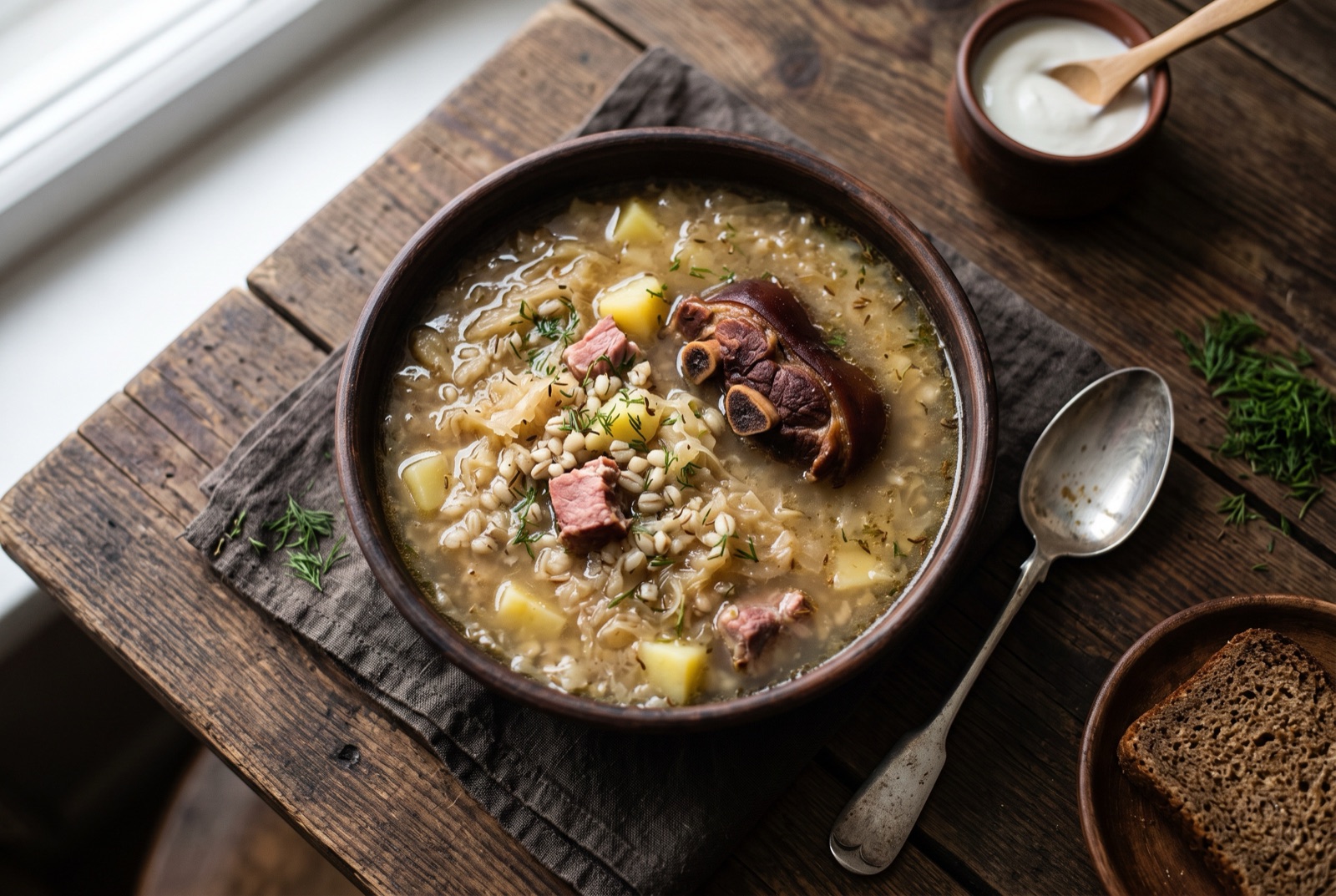
Keep exploring Estonia.
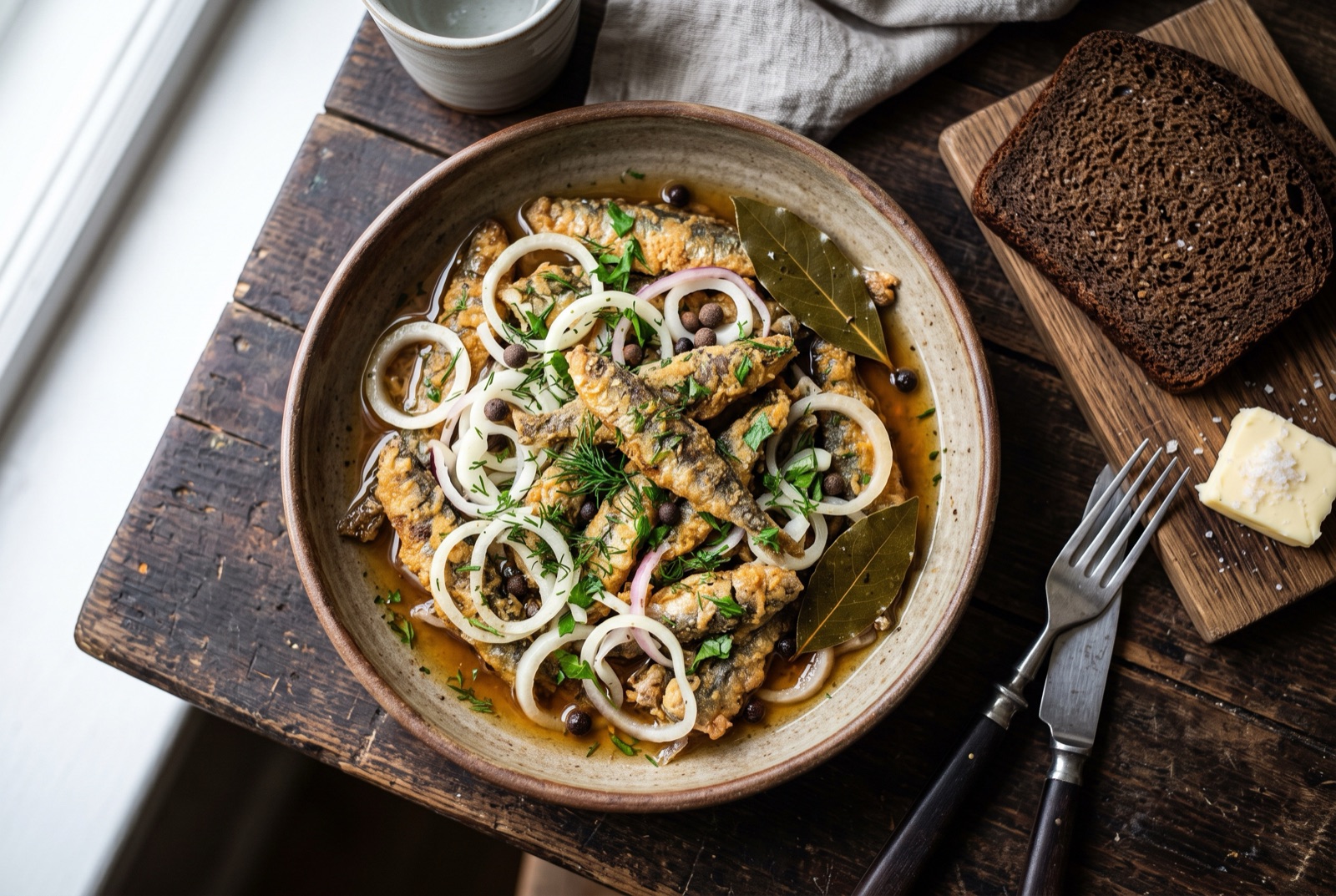
Estonia has 9 more dishes in the atlas — Hapukapsasupp and Kiluvõileib, and 7 more.
All Estonia recipes Rye flour recipes Pearl barley recipes Buttermilk recipes breakfastdessertvegetariannut freeRecipe by The DishRoute Kitchen · published August 20, 2026 · updated August 20, 2026