Seco de Chivo.
Ecuadorian Goat Stewed in Naranjilla and Beer
Seco de chivo · say it: SEH-koh deh CHEE-voh
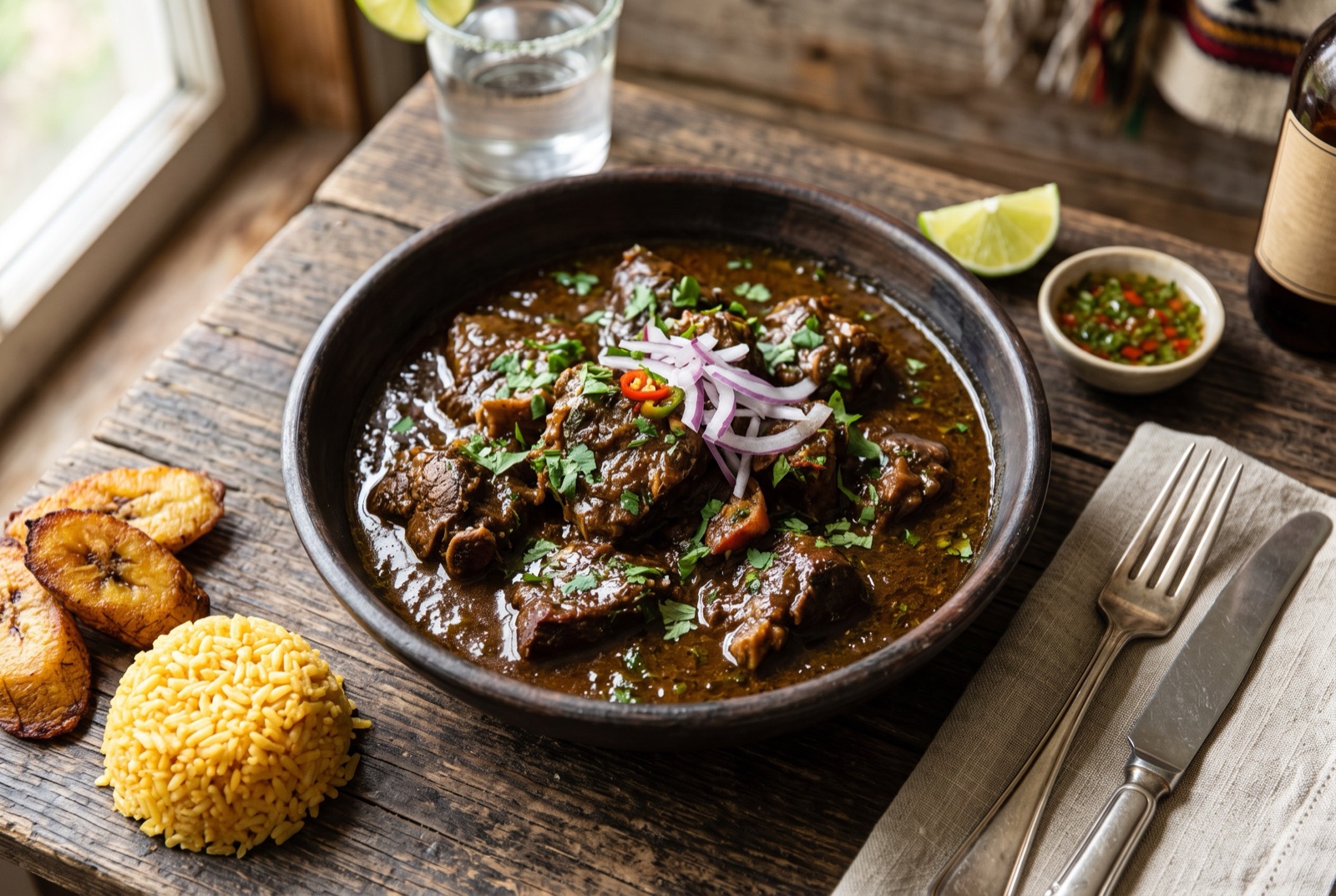
Seco de chivo is goat cooked slowly in an acidic, herb-heavy braise until the meat slides off the bone and the sauce reduces to something dark, thick and faintly sweet-sour. The acidity comes from naranjilla, a small orange Andean fruit with green pulp that tastes somewhere between an unripe pineapple and a very sharp tomato, and it does two jobs at once: it tenderizes the goat and keeps a rich stew from tasting heavy. Beer or fermented corn chicha adds depth, achiote gives the color, and a whole bunch of cilantro goes into the pot blended rather than chopped, which is what makes the gravy taste green rather than merely herby. It is served over rice with fried sweet plantain on the side.

- Gate
- EcuadorLoja and the southern highlands
- Prep
- 25 min
- Cook
- 2 hr
- Total time
- 2 hr 55 min incl. 30 min rest
- Serves
- 6
- Status
- Medium
- Nutrition / serving · estimated
- Calories 560 kcal
- Protein 48 g
- Carbs 28 g
- Fat 26 g
- Fiber 5 g
- Sugar 13 g
- Sodium 860 mg
Why this recipe works.
- Uses naranjilla as both the tenderizer and the acid, which is what separates a seco from a generic braised goat.
- Blends the cilantro into the braising liquid the way Ecuadorian cooks do, so it flavors the whole sauce instead of decorating it.
- Waits for the refrito to break its oil before the liquid goes in, the point at which the base stops tasting raw.
- Gives a workable substitute for naranjilla, with an honest note on what changes when you use it.
Ingredients.
18 itemsFor the meat
For the sauce
To serve
Equipment
- Heavy casserole or Dutch oven with a lid
- Blender
- Tongs
Instructions.
Marinate the goat
Toss 1.5 kg of goat with the blended naranjilla, crushed garlic, cumin and salt, and leave it at room temperature for 30 minutes. The surface of the meat will lighten slightly as the acid takes hold.
Brown the meat
Lift the goat out of the marinade, keeping every drop of the liquid, and pat the pieces dry. Sear them in 2 tablespoons of the achiote oil in batches over high heat until each side has a firm brown crust, then set them aside on a plate.
Tip Dry meat browns, wet meat steams. The pieces should hiss on contact, not sizzle quietly.
Cook the refrito down
Lower the heat, add the rest of the achiote oil, and sweat the onion and peppers for 10 minutes until completely soft and sweet. Stir in the tomato with the oregano and cook for another 10 to 12 minutes, until the mixture darkens, pulls away from the base of the pan and orange oil pools at the edges.
Blend the green liquid
Blend the cilantro with the beer until the liquid is uniformly green and no leaf fragments remain. Pour it into the pot with the reserved marinade and let it bubble hard for 2 minutes so the alcohol cooks off and the raw edge disappears.
Braise until it gives
Return the goat and any juices, add the stock, panela and bay leaves, and bring to a bare simmer. Cover and cook for 1 hour 45 minutes to 2 hours, stirring occasionally, until a fork pushed into a piece meets no resistance and the meat separates from the bone with a nudge.
Reduce, season and serve
Fish out the bay leaves. If the sauce is thin, lift out the meat and boil the liquid down until it coats a spoon thickly and tastes concentrated, then return the goat. Correct the salt and acidity, fry the plantain slices until dark gold, and serve over rice with avocado alongside.
Tips from our kitchen.
- Choose bone-in goat shoulder or leg. Bones and connective tissue are what give the sauce its body over two hours, and lean boneless cubes turn stringy.
- Brown the meat in batches with room around each piece. Crowding drops the pan temperature and the goat steams grey instead of building a crust.
- Give the tomato time. When you can see orange oil pooling at the edges of the refrito, the base is ready; before that it will taste sharp and thin.
- Frozen naranjilla pulp is sold in Latin American shops and works perfectly — do not hold out for the fresh fruit, which is rare outside the Andes.
- Season the sauce at the end, not the start. It reduces by roughly a third and salt added early ends up concentrated.
- If the meat is tender but the sauce is loose, lift out the goat and boil the liquid hard for a few minutes. Reducing with the meat in the pot dries it out.
Substitutions.
- Naranjilla (lulo) → 4 passion fruits plus the juice of 2 oranges, or 200 ml pineapple juice with the juice of 2 limes
- Passion fruit is the closest match for the aroma; pineapple and lime hit the acidity but miss the perfume. Either way the sauce works, it just tastes a little less Andean.
- Goat → Lamb shoulder, or bone-in beef shin
- Lamb is the usual stand-in and cooks in about the same time. Beef shin needs an extra 30 to 45 minutes and gives a heavier, less gamy result.
- Beer → Chicha de jora, or 250 ml orange juice with 2 tbsp apple cider vinegar
- The non-alcoholic route keeps the acidity but loses the malt depth, so add an extra teaspoon of panela to balance it.
Variations.
- Seco de pollo
- The weeknight version with bone-in chicken thighs, which need only 35 to 40 minutes in the same sauce. Easily the most commonly cooked seco in Ecuadorian homes.
- Seco de carne
- Made with beef shin or chuck and usually a heavier hand on the beer, giving a darker, maltier gravy and a longer cook.
- Coastal-style with panela and raisins
- Some coastal cooks push the sweetness further with extra panela and a handful of raisins, which turns the dish noticeably sweet-sour.
Storage & reheating.
This is one of the dishes that genuinely improves overnight — the sauce settles and the acidity mellows. Refrigerate up to 4 days and freeze up to 3 months. Reheat covered over low heat with a splash of water, since the sauce tightens considerably when cold. Fry the plantain fresh; reheated plantain goes leathery.
Serve with
White rice, fried ripe plantain, sliced avocado and a bowl of ají criollo.
The story behind Seco de Chivo.
The word seco means dry, which is an odd name for a dish swimming in sauce, and Ecuadorians know it. The most common explanation is structural: in the traditional almuerzo, the soup comes first and the seco is the plate that follows it — the dry course as opposed to the wet one — rather than a description of the food itself. Other explanations circulate, none of them settled, and the debate is friendly enough that nobody expects an answer.
Goat is the version that carries the most prestige, and Loja in the far south is the province most associated with it, but a seco is really a method rather than one animal. Seco de pollo, seco de carne and seco de borrego all use the same braise, and in coastal kitchens the naranjilla is often supplemented or replaced by orange and lime. What stays constant is the sequence: a long refrito of onion, pepper and garlic, tomato cooked until it collapses and the oil breaks back out, then the acidic liquid, then the meat and time.
The cilantro deserves a note of its own. Ecuadorian cooks blend a large amount of it with the beer or juice before it goes in, so it dissolves into the sauce and colors it rather than sitting on top as a garnish. Cooked this long the herb loses its soapy edge entirely and turns into something rounder and slightly grassy, which is why the quantity looks alarming written down and tastes right in the pot. Alongside it comes the standard highland plate: white rice, sliced avocado, fried ripe plantain and a bowl of ají for anyone who wants heat.
Questions, answered.
What is naranjilla and where do I find it?
Naranjilla, also sold as lulo, is a small orange Andean fruit with green, seedy, intensely sour pulp that tastes roughly like a cross between an unripe pineapple and a sharp tomato. Fresh fruit is rare outside South America, but frozen pulp is a standard item in Latin American grocery shops and freezer aisles, and it works just as well here.
Why is it called seco when it is clearly a sauce?
The usual explanation is that in the traditional Ecuadorian lunch the soup is the wet course and the seco is the plate that comes after it, so the name describes its position in the meal rather than its texture. Other theories circulate and none has been settled, so treat any confident single answer with suspicion.
Does goat need to be soaked or marinated first?
A short marinade in the naranjilla and garlic — 30 minutes is enough — seasons the surface and starts softening it, but goat does not need soaking or brining. Long, gentle braising is what handles the toughness. If the smell of goat bothers you, trim the hard external fat, which carries most of the gaminess.
Can I make this in a pressure cooker?
Yes. Build the refrito and brown the meat as written, then pressure cook for 30 to 35 minutes at high pressure instead of the two-hour simmer. Release the pressure, check that the meat pulls apart easily, then reduce the sauce uncovered for five to ten minutes, since pressure cooking leaves it thinner than the stovetop version.
My sauce tastes bitter — what went wrong?
Two likely causes: the achiote was scorched, or the cilantro stems were blended in with too much of the tough lower stalk. Achiote oil should be warmed gently and strained before it ever hits high heat, and only the tender upper stems belong in the blender. A teaspoon of panela at the end will mask mild bitterness but cannot fix burnt achiote.
You might also like.
All recipes →
Keep exploring Ecuador.
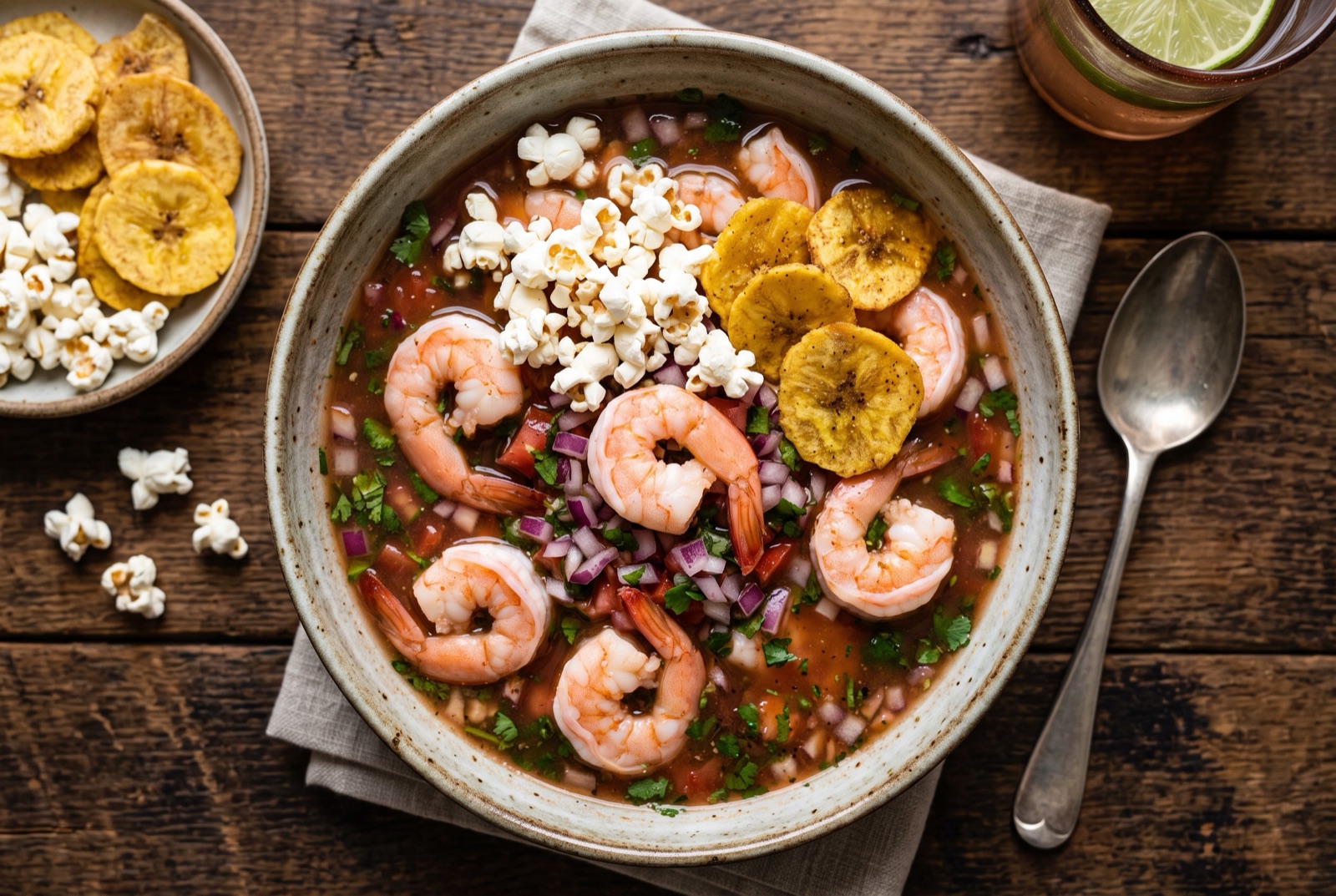
Ecuador has 9 more dishes in the atlas — Bolón de Verde and Ceviche de Camarón, and 7 more.
Recipe by The DishRoute Kitchen · published August 20, 2026 · updated August 20, 2026