Encocado de Pescado.
Esmeraldas Fish in Coconut Sauce
Encocado de pescado · say it: en-koh-KAH-doh deh pes-KAH-doh
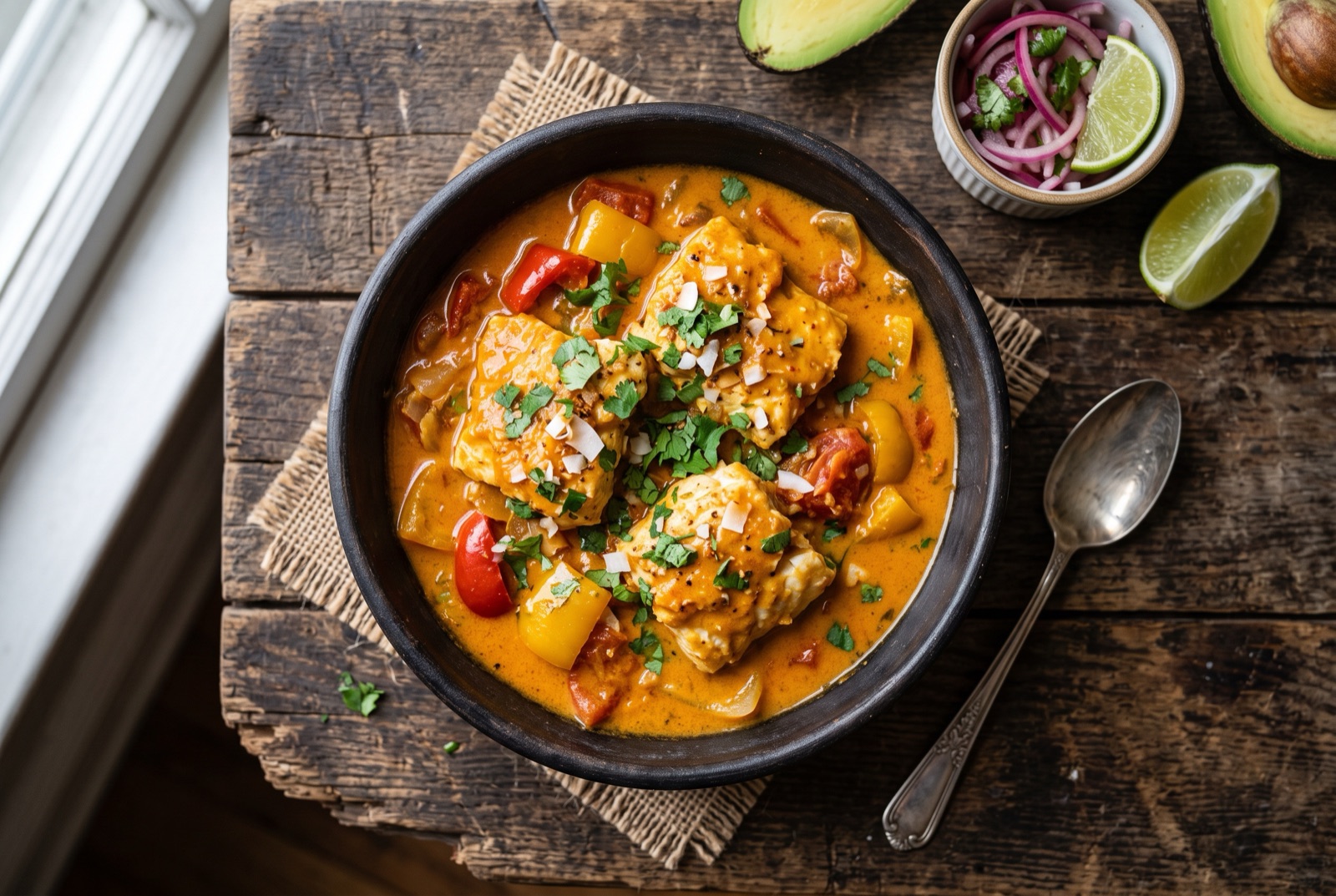
Encocado is the signature dish of Esmeraldas, the Afro-Ecuadorian province on the northern Pacific coast, and it is built on one idea: coconut milk as the cooking liquid instead of stock or water. Firm white fish is rubbed with lime, garlic and cumin, then lowered into a sauce of coconut milk cooked down with achiote-tinted onion, sweet pepper and tomato until it thickens enough to cling to a spoon. The taste is round and gently sweet from the coconut, sharpened by lime and lifted by a great deal of cilantro added off the heat. It cooks in half an hour and is eaten with white rice and patacones, the flattened twice-fried plantain rounds that belong to this coastline.

- Gate
- EcuadorEsmeraldas
- Prep
- 20 min
- Cook
- 30 min
- Total time
- 1 hr 10 min incl. 20 min rest
- Serves
- 4
- Status
- Medium
- Nutrition / serving · estimated
- Calories 520 kcal
- Protein 39 g
- Carbs 22 g
- Fat 31 g
- Fiber 4 g
- Sugar 9 g
- Sodium 820 mg
Why this recipe works.
- Reduces the coconut milk with the refrito before the fish arrives, which is what gives the sauce its cling instead of leaving it milky.
- Keeps the lime cure short and specific, so the fish is seasoned through without going chalky at the surface.
- Cooks the fish without stirring once, so the chunks arrive whole rather than shredded into the sauce.
- Uses achiote for color the way coastal cooks do, so the sauce turns apricot-orange rather than beige.
Ingredients.
16 itemsFor the fish
For the sauce
To finish
To serve
Equipment
- Wide sauté pan with a lid
- Sharp knife
- Citrus juicer
Instructions.
Season the fish
Rub the fish chunks with the lime juice, grated garlic, cumin and salt, cover, and refrigerate for 20 minutes. The surface will firm up and turn faintly opaque at the edges; anything longer and it starts to cure through.
Sweat the refrito
Warm the achiote oil in a wide pan over medium-low heat and cook the onion and peppers for 8 minutes, stirring, until they are limp and glossy and have taken on the orange of the oil. They should not colour or catch at any point.
Cook out the tomato
Add the chopped tomato and cook for 5 to 6 minutes until it collapses into the vegetables and the mixture looks jammy rather than watery. Drag a spoon across the base — it should leave a track that closes slowly.
Reduce the coconut milk
Pour in the coconut milk and orange juice, drop in the whole habanero if using, and simmer gently for 8 to 10 minutes. The sauce is ready when it has gone from flat white to warm apricot, thickened enough to coat the back of a spoon, and shows a faint slick of oil on the surface. Season with salt now.
Tip Bubbles should break lazily at the edge. A hard boil splits coconut milk into oil and grain.
Poach the fish
Slide the fish in with its marinade in a single layer, spoon a little sauce over each piece, cover, and cook on the lowest heat for 8 to 10 minutes without stirring. It is done when a chunk flakes cleanly under gentle pressure but still holds its square shape.
Finish off the heat
Take the pan off the stove, remove the habanero, and scatter in the cilantro and culantro so they wilt in the residual heat instead of boiling. Taste for salt and lime, then serve over white rice with patacones and extra lime on the side.
Tips from our kitchen.
- Full-fat tinned coconut milk only. Light versions carry too much water and reduce into something thin and slightly chalky.
- Cut the fish in generous 4 cm chunks. Small pieces overcook while the sauce is still reducing and end up as fibres in the pan.
- Watch for the moment the coconut sauce goes from flat white to warm apricot with a faint slick of oil at the surface — that is the signal it has reduced far enough.
- Add cilantro after the heat is off. Boiled cilantro turns grey and loses precisely the fresh top note the dish depends on.
- Taste for salt before the fish goes in. Once the fish is in you cannot stir vigorously enough to distribute seasoning without breaking it up.
- Save two tablespoons of the thickest coconut milk from the top of the tin and swirl it in at the very end for gloss.
Substitutions.
- Corvina or sea bass → Cod loin, halibut, snapper, hake or monkfish
- Any firm white fish cut thick will hold. Avoid thin fillets such as plaice or basa, which fall apart in the eight minutes they spend in the sauce.
- Fresh coconut milk → Tinned full-fat coconut milk
- This is what most Ecuadorian home cooks use now too. Choose a brand with coconut and water in the ingredients and nothing else if you can.
- Culantro (recao) → Extra cilantro, with the stems included
- Culantro is stronger and more savory than cilantro, so use about a third more cilantro than feels right and include the tender stems for depth.
Variations.
- Encocado de camarón
- The same sauce with peeled shrimp, which need only three minutes at the very end. The most common version in Esmeraldas restaurants.
- Encocado de cangrejo
- Made with whole mangrove crabs cracked into the sauce and eaten with your hands. Messy, slow and considered the best of the family by many locals.
- Tapao
- A related Esmeraldas dish where fish, green plantain and coconut milk are layered in a covered pot and steamed together rather than simmered in a sauce.
Storage & reheating.
Keeps 2 days refrigerated. Warm it slowly in a covered pan — coconut sauce splits into oil and solids over high heat, and the fish toughens on reheating, so stop as soon as it steams. Freezing is not recommended: the sauce separates permanently and the fish turns fibrous. If you want a head start, make the coconut sauce base up to 2 days ahead and poach fresh fish in it on the day.
Serve with
White rice, patacones (twice-fried green plantain), lime wedges and ají.
The story behind Encocado de Pescado.
Esmeraldas sits where the mangroves, the rivers and the Pacific meet, and its kitchen came out of the Afro-descendant communities that have lived there for centuries. Coconut palms grow along that coast in quantity, and coconut milk is used the way stock is used elsewhere — as the base liquid for fish, crab, shrimp, langostinos and even chicken. The suffix says it plainly: encocado means, roughly, "in coconut."
The technique is the interesting part. Rather than adding coconut milk at the end as a finishing enrichment, cooks in Esmeraldas cook it down first with the refrito, letting it reduce and separate slightly so the sauce is already concentrated before the fish goes in. That is why a good encocado has a sauce that clings rather than a thin milky broth, and why the fish poaches in flavor from its first minute in the pan. Traditionally the milk is squeezed from grated fresh coconut, sometimes in two extractions — a thick first press and a thinner second one used to start the sauce.
Esmeraldas is also the home of Ecuadorian marimba music, and the province tends to be described from outside as a cultural region first and a culinary one second. That undersells it. The coconut-based repertoire here — encocado, tapao, cocadas — is the most distinctive regional cooking in the country, and it uses ingredients the highlands barely touch. Anyone who eats their way from Quito to the northern coast notices the change within a single day.
Questions, answered.
What does encocado mean?
It means cooked in coconut. The word describes a whole family of dishes from Esmeraldas province on Ecuador's northern Pacific coast, where coconut milk replaces stock as the standard cooking liquid — encocado de pescado with fish, de camarón with shrimp, de cangrejo with crab.
Why did my coconut sauce split?
Coconut milk breaks into oil and curds when it boils hard or cooks too long over high heat. Keep it at a lazy simmer where bubbles rise slowly at the edges, and once the fish is in, never let it reach a rolling boil. A split sauce can sometimes be pulled back together by taking the pan off the heat and whisking in a splash of cold coconut milk.
How long should the fish sit in lime?
Fifteen to twenty minutes is right. That is long enough for the lime, garlic and cumin to season the flesh but not long enough to cure it. Leave white fish in citrus for an hour and the outer layer turns opaque and chalky before it ever reaches the pan, and it will be dry once cooked.
Is encocado spicy?
Not usually. The heat is optional and normally comes from ají served on the side rather than chile cooked into the sauce. If you want warmth in the pot itself, half a habanero added whole to the refrito and removed before serving gives aroma and a low background heat without dominating the coconut.
How is this different from a Brazilian or Thai coconut fish dish?
The building blocks differ. Encocado uses achiote, cumin and a Spanish-style refrito of onion, pepper and tomato, with lime as the only acid and cilantro as the only fresh herb. Thai versions rely on chile pastes, lemongrass, galangal and fish sauce, while Bahian moqueca adds dendê palm oil. All three poach fish in coconut milk and taste nothing alike.
You might also like.
All recipes →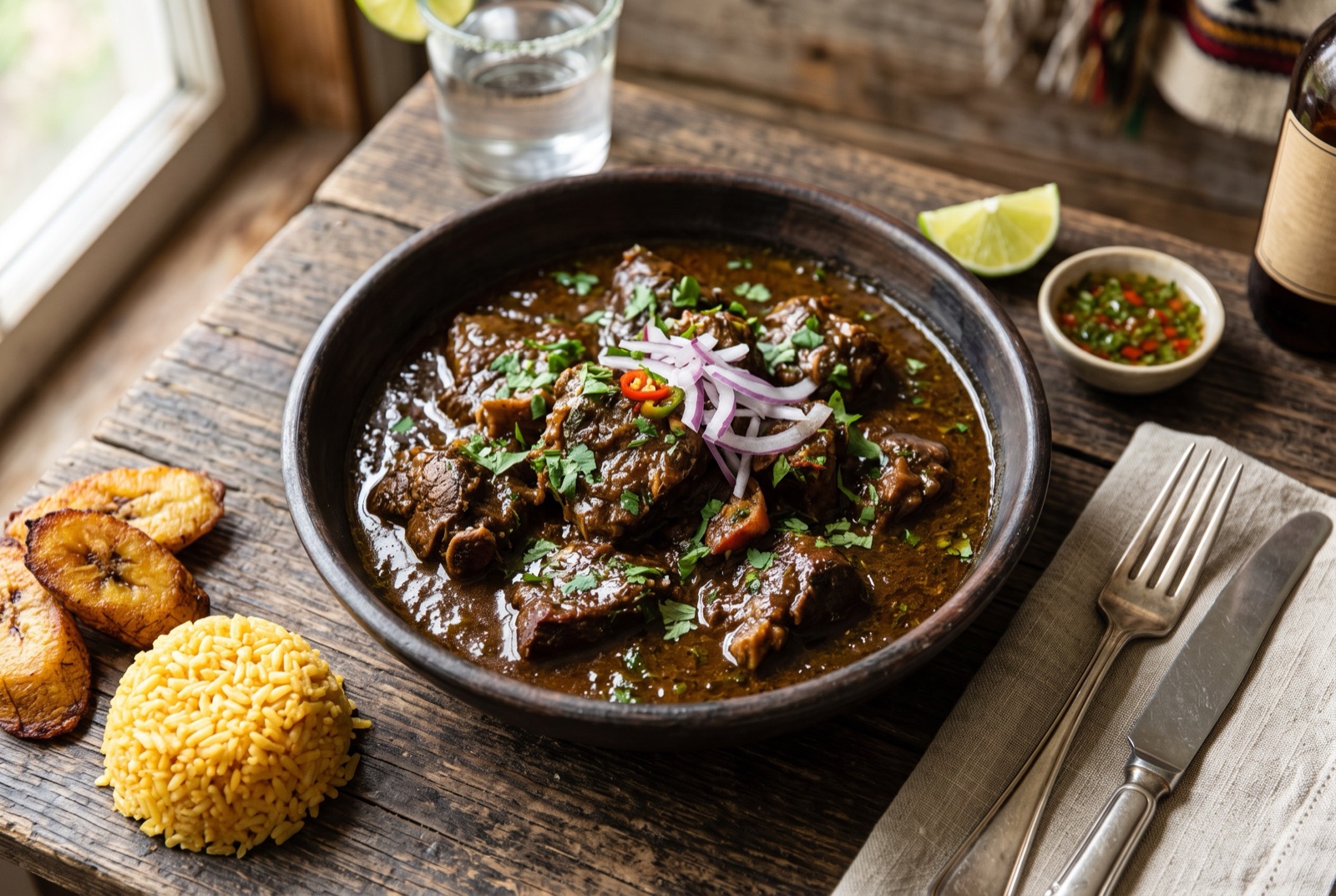
Ecuador2 hr 55 min
Seco de Chivo
Ecuadorian Goat Stewed in Naranjilla and Beer
Ecuador1 hr 35 min
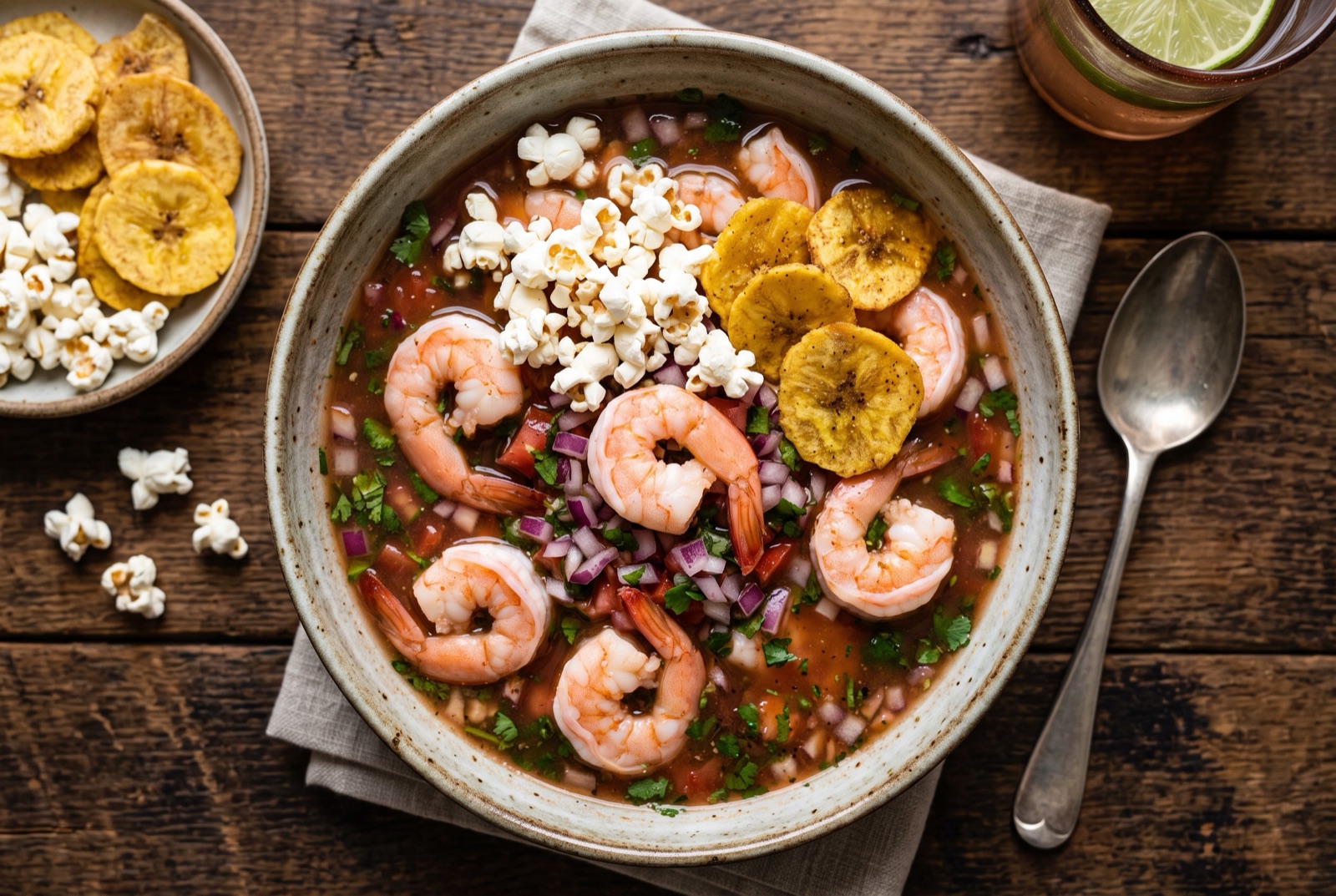
Ceviche de Camarón
Ecuadorian Shrimp Ceviche in Tomato Broth
Ecuador1 hr 15 min
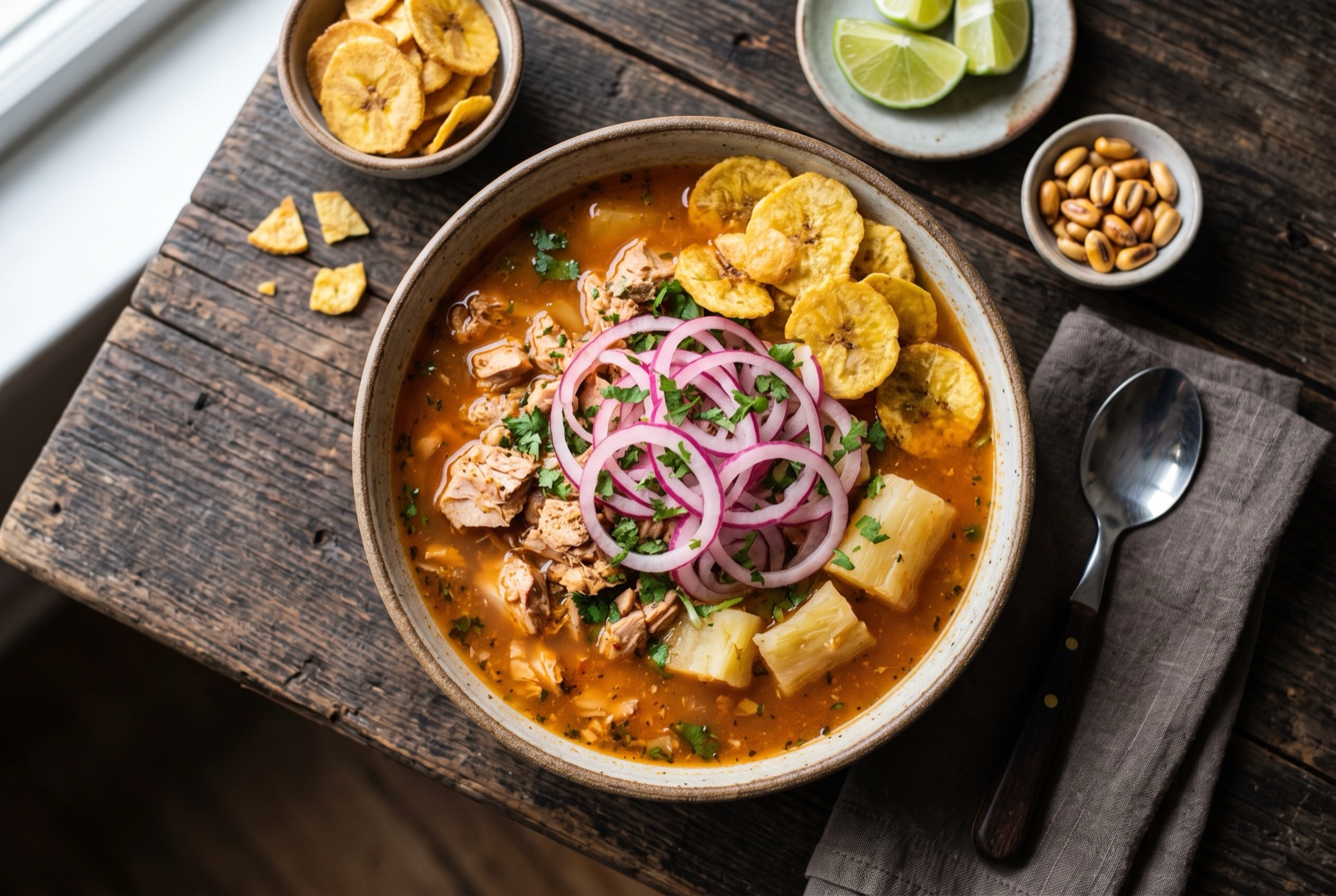
Encebollado
Ecuadorian Tuna and Cassava Soup
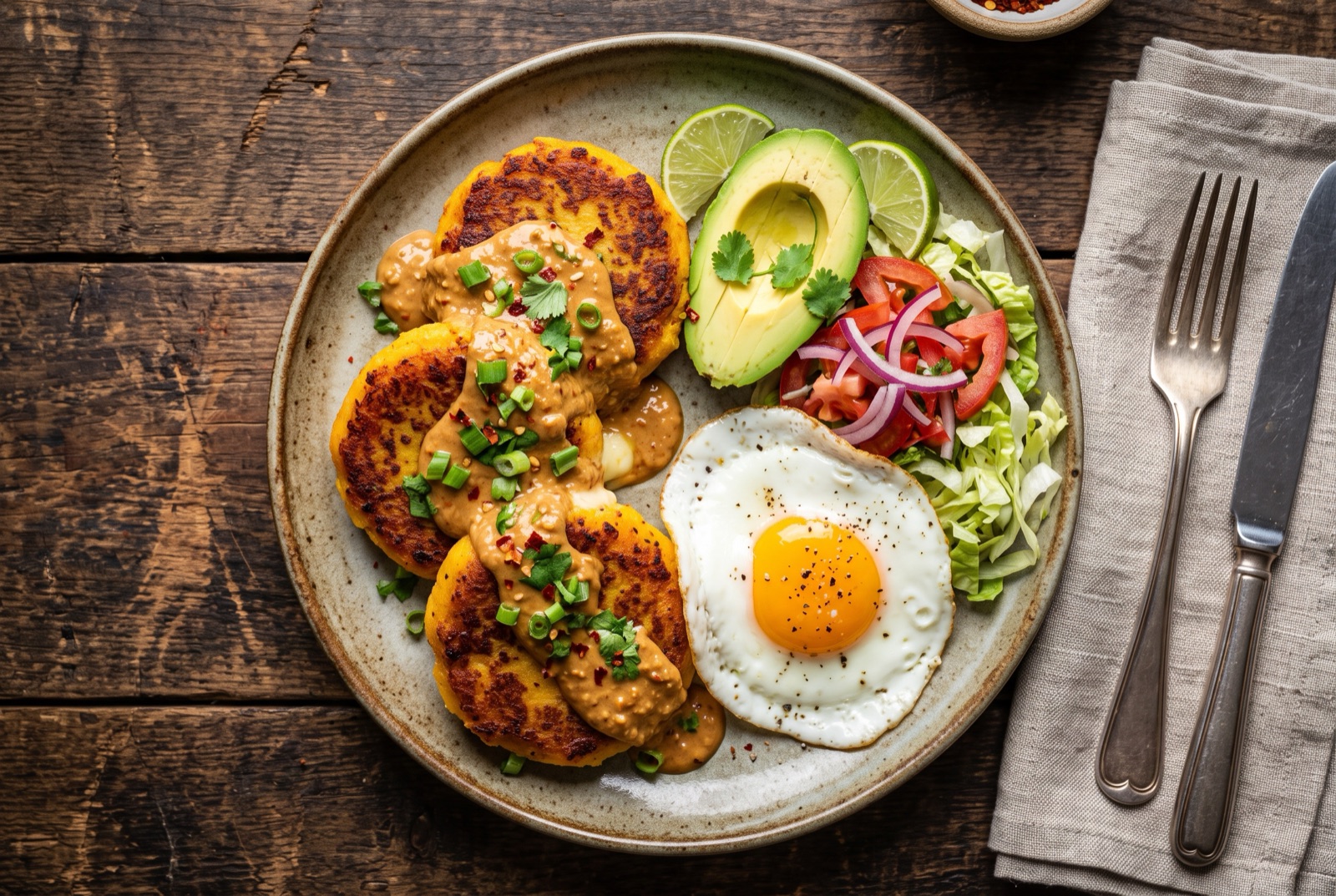
Ecuador1 hr 25 min
Llapingachos
Ecuadorian Cheese-Stuffed Potato Patties
Keep exploring Ecuador.
Ecuador has 9 more dishes in the atlas — Bolón de Verde and Ceviche de Camarón, and 7 more.
All Ecuador recipes White fish recipes Coconut milk recipes Lime recipes mainpescatariandairy freegluten freeRecipe by The DishRoute Kitchen · published August 20, 2026 · updated August 20, 2026