Ceviche de Camarón.
Ecuadorian Shrimp Ceviche in Tomato Broth
Ceviche de camarón · say it: seh-VEE-cheh deh kah-mah-RON
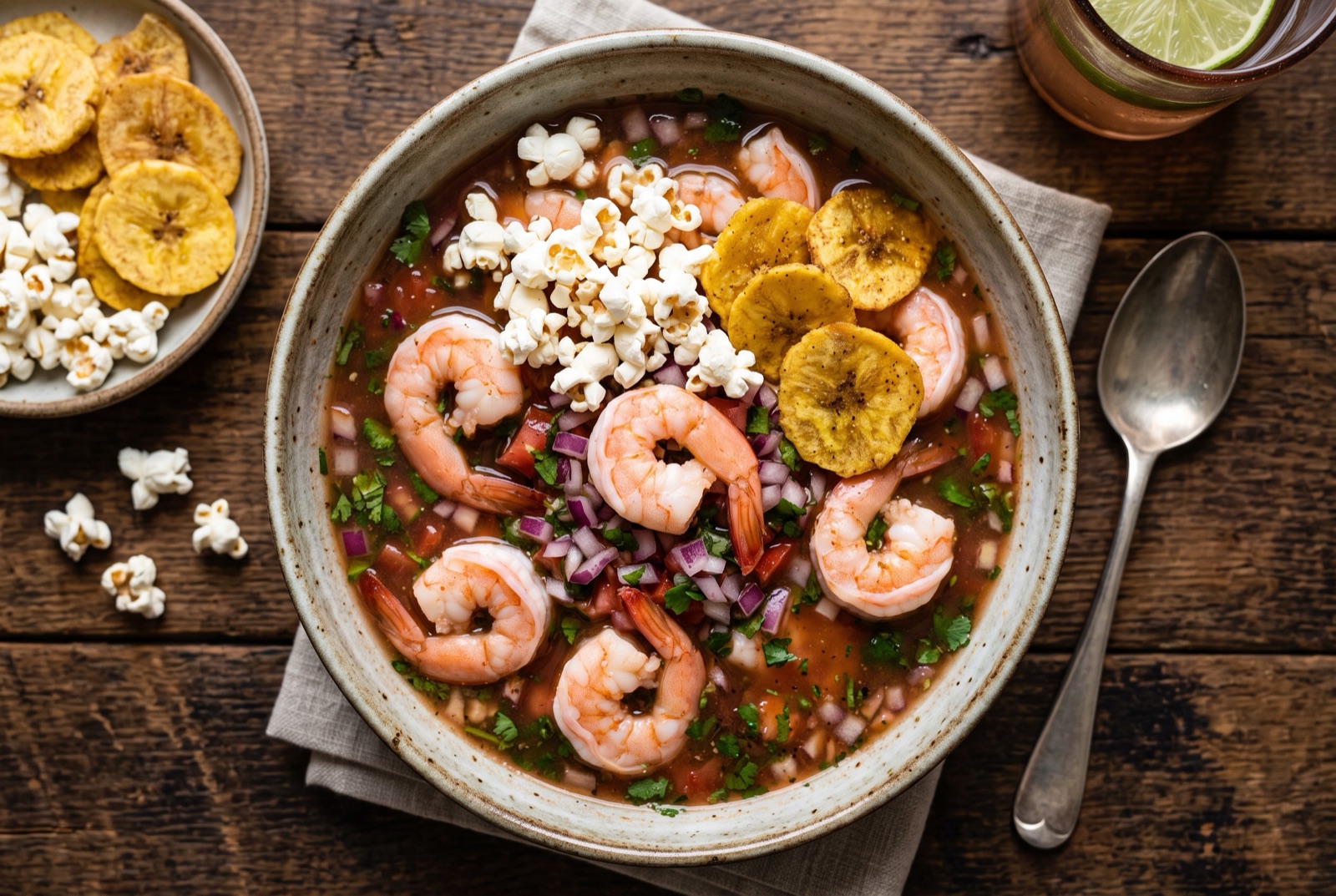
Ceviche de camarón is a cold shrimp soup that you eat with a spoon. The shrimp are poached briefly in salted water rather than left raw, the cooking liquid is saved and chilled, and it becomes the backbone of a loose marinade built from strained tomato, orange juice, lime and slivers of salt-rubbed red onion. The result is sweet-sour and lightly savory rather than sharp, closer to a chilled broth than to a salad, and it is served with a bowl of popcorn and a plate of thin fried plantain chips so every mouthful gets something crunchy. Guayaquil eats it in the late morning, cold enough to fog the glass, and nobody waits for a special occasion.

- Gate
- EcuadorGuayas and the Pacific coast
- Prep
- 25 min
- Cook
- 10 min
- Total time
- 1 hr 35 min incl. 1 hr rest
- Serves
- 4
- Status
- Easy
- Nutrition / serving · estimated
- Calories 285 kcal
- Protein 30 g
- Carbs 24 g
- Fat 8 g
- Fiber 4 g
- Sugar 12 g
- Sodium 980 mg
Why this recipe works.
- Uses the shrimp poaching liquid as the base of the marinade, which is where the dish gets its savory depth instead of tasting like sweet tomato juice.
- Times the shrimp by shape rather than the clock, so they stay snappy instead of turning rubbery.
- Salt-rubs and rinses the onion the way coastal cooks do, killing the raw bite without cooking it.
- Gives the real garnish system — popcorn and chifles added in stages, not scattered once and left to go soft.
Ingredients.
16 itemsFor the shrimp
For the marinade
To finish
To serve
Equipment
- Saucepan
- Slotted spoon
- Blender
- Fine sieve
- Large glass or ceramic bowl
Instructions.
Poach the shrimp
Bring the water, halved onion, shrimp shells and salt to a gentle boil and let it bubble for 5 minutes so the shells give up their sweetness. Fish out the shells, slide in 600 g of peeled shrimp, and pull them out the moment they turn opaque and curl into a loose C — 2 to 3 minutes, no longer.
Tip A shrimp curved into a tight, closed O is overcooked. Aim for the letter C.
Chill everything fast
Drop the shrimp straight into a bowl of iced water so they stop cooking, then drain and refrigerate. Strain 300 ml of the poaching liquid into a jug and chill that too — it is the savory backbone of the marinade and must be cold before it meets the citrus.
Cure the onion
Rub the sliced red onion with a teaspoon of salt and leave it for 10 minutes, until it weeps and loses its stiffness. Rinse under cold water, squeeze dry in your hands, and cover with the juice of two limes — the slices should go from purple to bright pink within a few minutes.
Build the broth
Blend three tomatoes until smooth and push the purée through a fine sieve, discarding the seeds and skin left behind. Whisk the strained tomato with the chilled shrimp broth, the orange juice, the remaining lime juice, the ketchup, mustard and olive oil until it looks like a thin, glossy soup.
Combine and chill
Stir the shrimp, the cured onion with its lime, and the diced tomato into the broth. Season hard with salt — it should taste slightly too sharp and slightly too salty while warm-handed, because chilling mutes both. Refrigerate for at least an hour.
Serve cold, crunch on top
Ladle into wide bowls with plenty of liquid, scatter the cilantro over, and bring the popcorn, chifles and ají to the table in separate dishes. Add the crunch a handful at a time as you eat so it never has a chance to soften.
Tips from our kitchen.
- Buy shell-on shrimp if you can. The shells simmered in the poaching water give the broth a sweetness that plain salted water never will.
- Watch the shape: a shrimp curled into a loose C is done, a shrimp curled into a tight O has gone one minute too far and will squeak against your teeth.
- Drop the poached shrimp straight into iced water. Carry-over heat keeps cooking them in a warm colander and undoes the timing you just got right.
- Strain the blended tomato through a sieve. Unstrained pulp makes the broth cloudy and slightly grainy, which is the difference between homemade and cevichería.
- Season the finished broth colder than tastes right at room temperature — chilling flattens both salt and acid, so it needs to be a touch aggressive going into the fridge.
- Keep the popcorn and plantain chips in separate bowls on the table. Anything stirred in ten minutes early turns to paste.
Substitutions.
- Chifles (fried green plantain chips) → Salted tortilla chips, or thick-cut salted potato crisps
- Neither is traditional, but the role is textural — you need something rigid and salty that survives contact with liquid for a few seconds.
- Fresh orange juice → Equal parts orange and grapefruit juice, or bottled orange juice plus an extra squeeze of lime
- Ecuadorian oranges are sharper than most supermarket varieties, so bottled juice usually needs help to stop the broth tasting like breakfast.
- Ají criollo → A little finely chopped habanero or serrano stirred into a few spoons of lime juice
- Ecuadorian ají is a thin fresh sauce, not a paste. Keep it separate so the ceviche itself stays mild for anyone who wants it that way.
Variations.
- Ceviche mixto
- The same broth carrying shrimp, poached squid rings and mussels or a little white fish. Cook each one separately to its own timing, then chill them together.
- Ceviche de concha
- The Esmeraldas version made with black ark clams pulled from the mangroves, served raw in their own dark juice with lime and onion. Much stronger and genuinely an acquired taste.
- Ceviche volquetero
- A street version from the highlands that turns leftover ceviche into a full meal with tuna, chochos (lupini beans), tostado and plantain chips piled into one bowl.
Storage & reheating.
Best within a few hours, and genuinely good for up to 24 hours refrigerated in a covered container. After that the onion goes limp and the shrimp lose their snap. Do not freeze — thawed shrimp turn spongy and the tomato broth separates into water and pulp. If you want to prepare ahead, poach the shrimp and make the broth a day early but keep them apart, and combine 30 minutes before serving.
Serve with
Freshly popped popcorn, chifles, and a small jug of ají criollo — plus cold beer or a tamarind juice.
The story behind Ceviche de Camarón.
Ecuadorian ceviche and Peruvian ceviche are different dishes that share a name, and the comparison usually goes wrong because people treat one as a corruption of the other. In Peru the fish is raw and the lime does the work in minutes; the marinade, leche de tigre, is thick and assertive. In Ecuador the shrimp are cooked first, the marinade is thin and generous enough to drink, and tomato and orange soften the acidity into something rounder. Neither is a bad copy of the other — coastal Ecuador simply built its version around shrimp, which are farmed and fished on an industrial scale along the Guayas estuary and behave badly when cured raw for long, going soft and chalky instead of firm.
The garnishes are not decoration. Canguil, the small popped Andean corn, and chifles, plantain sliced paper-thin and fried, come alongside in separate bowls, and you add them by the handful as you eat so the last spoonful is as crisp as the first. In much of the country a plate of ceviche is unthinkable without them, and street vendors in Guayaquil hand over the bowl with the popcorn balanced on top and the chips in a paper cone.
The other thing worth knowing is the clock. Ceviche in Ecuador is a late-morning and lunchtime food, sold from cevicherías that open early and close in the afternoon, on the practical logic that the boats land in the morning and shellfish should not sit around in heat. Ordering it after dark is not forbidden, but it does mark you out as a visitor, and coastal cooks will usually tell you so.
Questions, answered.
Is Ecuadorian ceviche raw?
The shrimp version is not. Shrimp are poached in salted water for two to three minutes and then chilled before they go into the marinade, so the citrus is there for flavor rather than to cure the protein. Some other Ecuadorian ceviches, such as the black clam version from Esmeraldas, are served raw, and fish ceviche sits somewhere in between.
How is it different from Peruvian ceviche?
Peruvian ceviche uses raw fish cured in lime for a short time and served with a thick, punchy marinade called leche de tigre. The Ecuadorian shrimp version cooks the shellfish first and serves it in a much larger volume of thin, slightly sweet liquid built on tomato and orange as well as lime, eaten with a spoon. They are separate dishes rather than two attempts at the same one.
Why is there popcorn on my ceviche?
Canguil, small-kernel Andean popcorn, is the standard crunchy partner for cold seafood dishes across Ecuador, along with thin fried plantain chips called chifles. They add texture and starch to a dish that is otherwise all liquid and protein, and they are added by hand as you eat so they stay crisp rather than dissolving into the broth.
Can I use pre-cooked frozen shrimp?
You can, but you lose the poaching liquid that gives the broth its body, and pre-cooked shrimp are usually overcooked already. If it is your only option, thaw them in the fridge, skip the poaching step entirely, and make up for the missing broth with a light fish or vegetable stock, well chilled.
Is ketchup really an authentic ingredient?
Yes, in the modern coastal version it is standard, and Ecuadorian cooks are not shy about it. It contributes sweetness, a little acid and the glossy red color that the dish is expected to have. If you would rather avoid it, use two tablespoons of tomato paste loosened with a teaspoon of sugar and a splash of vinegar.
You might also like.
All recipes →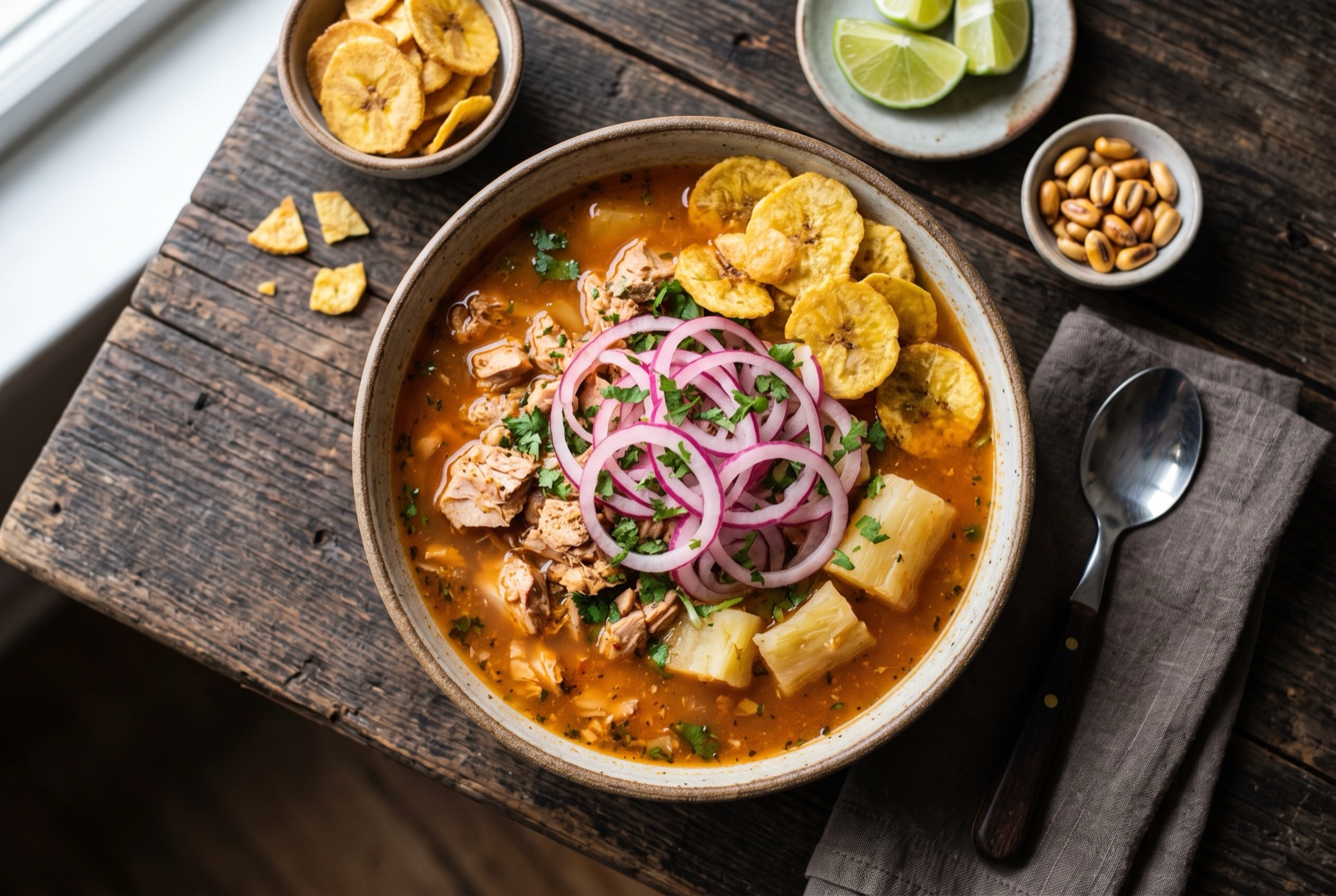
Keep exploring Ecuador.
Ecuador has 9 more dishes in the atlas — Bolón de Verde and Colada Morada, and 7 more.
All Ecuador recipes Shrimp recipes Lime recipes Tomato recipes appetizerpescatariandairy freegluten freeRecipe by The DishRoute Kitchen · published August 20, 2026 · updated August 20, 2026