Pljeskavica.
Serbian Grilled Meat Patty in Lepinja
Пљескавица · Pljeskavica · say it: plyes-KAH-vee-tsah
Pljeskavica is a large, thin patty of minced beef and pork — the same seasoned mixture that becomes ćevapi, only slapped flat by hand to the width of a spread palm and grilled fast over a hot fire. It eats nothing like a burger: there is no binder, no crumb, no pink middle, just a thin sheet of meat lacquered dark on both faces with a springy, juicy chew that comes from hard kneading and a long rest in the fridge. In Serbia it lands inside lepinja, the soft flatbread, with kajmak melting into the hot surface, raw chopped onion for bite and ajvar for sweetness. Cutlery is beside the point.

- Gate
- SerbiaLeskovac
- Prep
- 25 min
- Cook
- 12 min
- Total time
- 12 hr 37 min incl. 12 hr rest
- Serves
- 4
- Status
- Easy
- Nutrition / serving · estimated
- Calories 780 kcal
- Protein 45 g
- Carbs 47 g
- Fat 44 g
- Fiber 4 g
- Sodium 1350 mg
Why this recipe works.
- Uses the grill-house build — salt, a touch of soda, hard kneading, overnight rest — so the patty holds together without egg or breadcrumb.
- Gives the leskovačka seasoning as the default and the stuffed gurmanska version as a proper method, not an afterthought.
- Shaping instructions that actually work: thickness, diameter and the wet-hands trick that stops the meat tearing.
- Honest about charcoal versus a pan indoors, including what you lose and how to claw some of it back.
Ingredients.
13 itemsFor the patties
To serve
Equipment
- Charcoal grill or heavy cast-iron pan
- Large mixing bowl
- Baking paper
- Wide metal spatula
Instructions.
Knead the meat
Put the beef and pork in a wide bowl with the salt, bicarbonate, garlic, pepper and paprika. Knead with one hand for a full five minutes, splashing in the sparkling water a little at a time, until the mixture turns smooth, tacky and pale, and lifts as one mass when you pull your hand away.
Tip It should feel closer to a thick paste than to loose mince. That stickiness is the only thing holding the patty together on the grill.
Rest overnight
Press the meat into a flat block, cover the surface directly with cling film so no air reaches it, and refrigerate overnight — 12 hours is ideal, 4 the minimum. The colour will deepen and the block will firm up considerably.
Shape the patties
Divide the rested meat into four equal balls. With wet hands, slap each one flat on a sheet of baking paper into a disc about 16 cm across and 1 cm thick, with an even, unbroken edge. Keep them on the paper until they hit the grill.
Tip Re-wet your palms between patties. Dry hands drag at the surface and tear the edges, which is where they split later.
Get the fire properly hot
Burn charcoal down to glowing embers with a light coating of grey ash — you should only manage two or three seconds with your palm held above the grate. Indoors, heat a dry cast-iron pan over high heat until the first wisp of smoke rises. Do not oil either one.
Grill hard, flip once
Lay the patties down and leave them alone for 4 minutes, until the underside releases from the bars on its own and shows dark crossed marks. Flip once and grill 3–4 minutes more, until the meat is firm to a fingertip and springs back rather than dents.
Tip If a patty sticks when you try to lift it, it is not ready. Give it another 30 seconds and it will let go by itself.
Warm the bread and build
Split the lepinja and lay the cut faces on the cooler edge of the grill for a minute, letting them soak up any drippings. Spread kajmak inside so it starts melting, slide in the hot pljeskavica, then pile on chopped onion and a heavy spoonful of ajvar. Close and eat immediately, while the kajmak is still running.
Tips from our kitchen.
- Ask the butcher for coarse-ground meat with real fat in it — around 20 percent. Lean mince gives you a dry, grey patty no matter how well you grill it.
- Knead the salted meat for a solid five minutes, until it turns tacky and clings to your hand when you turn it over. That stickiness is the only binder in the recipe.
- Shape with wet hands on a sheet of baking paper: 1 cm thick and about 16 cm across. Thicker than that and the middle stays raw while the outside burns.
- The patty shrinks and puffs on the grill, so make it noticeably wider than the lepinja you plan to serve it in.
- Flip once. Every extra flip presses out juice and stops the crust from setting properly.
- Salt the raw onion lightly and let it sit ten minutes before serving — it softens the harshness without cooking away the crunch.
Substitutions.
- Kajmak → Clotted cream mixed with a little crumbled feta, or thick crème fraîche with a pinch of salt
- Neither is kajmak, which is ripened milk skin and tastes faintly cheesy and lactic. Balkan and Turkish shops sell the real thing; it keeps well refrigerated.
- Lepinja → Turkish pide bread, Greek pita with a pocket, or a soft focaccia square split open
- You want soft and absorbent, not chewy. A crusty roll fights the meat instead of soaking up its juices.
- Beef and pork mix → All beef, or beef and lamb
- All-beef is standard in Bosnia and in halal grill houses. Lamb is not traditional in Serbia but grills beautifully and needs slightly less salt.
Variations.
- Leskovačka pljeskavica
- The southern original: work 1 finely chopped onion and 1–2 teaspoons of hot ground paprika into the meat before resting. Wetter mixture, deeper red colour, noticeably more aggressive.
- Gurmanska (stuffed) pljeskavica
- Flatten two thinner patties, spoon kajmak and chopped smoked pork or bacon onto one, cover with the second and pinch the edges shut. Grill more gently so the filling heats before the outside burns.
- Šarska pljeskavica
- Stuffed with smoked kashkaval instead of kajmak, so the cheese pulls in strings when you cut it. Named after the Šar mountains in the south.
Storage & reheating.
Raw shaped patties keep 2 days in the fridge, layered between baking paper, and freeze well for 2 months — freeze them flat on a tray first so they do not fuse. Grilled pljeskavica is best eaten within minutes; leftovers dry out quickly, so reheat them briefly in a covered pan with a splash of water rather than in the oven, and expect the texture to be firmer than fresh.
Serve with
Lepinja, a bowl of raw chopped onion, ajvar, kajmak and — if you want the Leskovac table — urnebes, the hot cheese-and-paprika mash.
The story behind Pljeskavica.
The name is the recipe. Pljeskati means to slap or clap, and a pljeskavica is meat slapped flat between wet palms — the shaping and the word grew up together. The mixture itself belongs to the Ottoman family of grilled minced meats that spread across the Balkans over centuries of Ottoman rule and were then rebuilt locally into something the region considers entirely its own. Southern Serbia, and Leskovac above all, treats grilling as a civic identity: the town holds an annual grill festival, its grill masters compete over char and seasoning, and leskovačka pljeskavica — worked through with finely chopped onion and hot ground paprika — is the version most Serbians picture when they hear the word.
What happened next is a small arms race. Punjena pljeskavica, the stuffed kind, folds a filling inside before the patty is sealed: kajmak and smoked pork for the gurmanska, smoked kashkaval-style cheese for the šarska, hot peppers and cheese for the ljuta versions on every grill-house board. Some places compete on size, sending out patties that overhang the plate on both sides — a bit of theatre, but the technique underneath does not change. The seasoning stays deliberately plain, because the entire point is meat and fire.
At home it is roštilj food: the backyard charcoal grill lit on a Sunday afternoon, lepinja warmed over the dying coals and dragged through the drippings, a bowl of raw onion on the table and a jar of last autumn's ajvar opened for the occasion. In Leskovac the third condiment is urnebes, a fierce mash of white cheese with hot paprika and garlic. Nobody plates any of it. You build the sandwich in your hands and eat standing up if the grill is still going.
Questions, answered.
What is the difference between pljeskavica and ćevapi?
The meat mixture is essentially the same seasoned minced beef and pork; the shape is the difference. Ćevapi are small skinless sausages grilled in bunches and served ten to a portion, while pljeskavica is that mixture flattened into one wide patty. Pljeskavica also gets stuffed versions with kajmak or cheese, which ćevapi never do.
Why does my pljeskavica fall apart on the grill?
Almost always under-kneading. Salt has to be worked into the meat until the proteins turn sticky and the mass clings to itself — five minutes of real effort, not thirty seconds of mixing. The overnight rest finishes the job. A second common cause is a grill that is not hot enough, so the patty sticks to the bars and tears when you try to lift it.
Can I make pljeskavica without a charcoal grill?
Yes. A cast-iron pan or ridged grill pan heated until it just begins to smoke gives an excellent crust — dry, with no added oil, since the meat has plenty. What you lose is the smoke, and nothing in a home kitchen replaces it honestly. A pinch of smoked paprika in the mix gets you a little of the way there without pretending to be embers.
Do I really need to rest the meat overnight?
You can grill it after two hours and it will be good. Overnight is better: the salt and the small amount of bicarbonate have time to change the protein structure, which is what produces the springy, juicy bite rather than a crumbly one. If you are short on time, rest it for at least four hours in the coldest part of the fridge.
What is kajmak and can I skip it?
Kajmak is the skin that forms on slowly boiled milk, salted and left to ripen in layers until it sits somewhere between clotted cream and a very young cheese. It melts over the hot patty and is a big part of why the sandwich tastes Serbian rather than generic. You can skip it, but replace it with something rich — crème fraîche with salt, or clotted cream mashed with feta — or the bread will taste dry.
You might also like.
All recipes →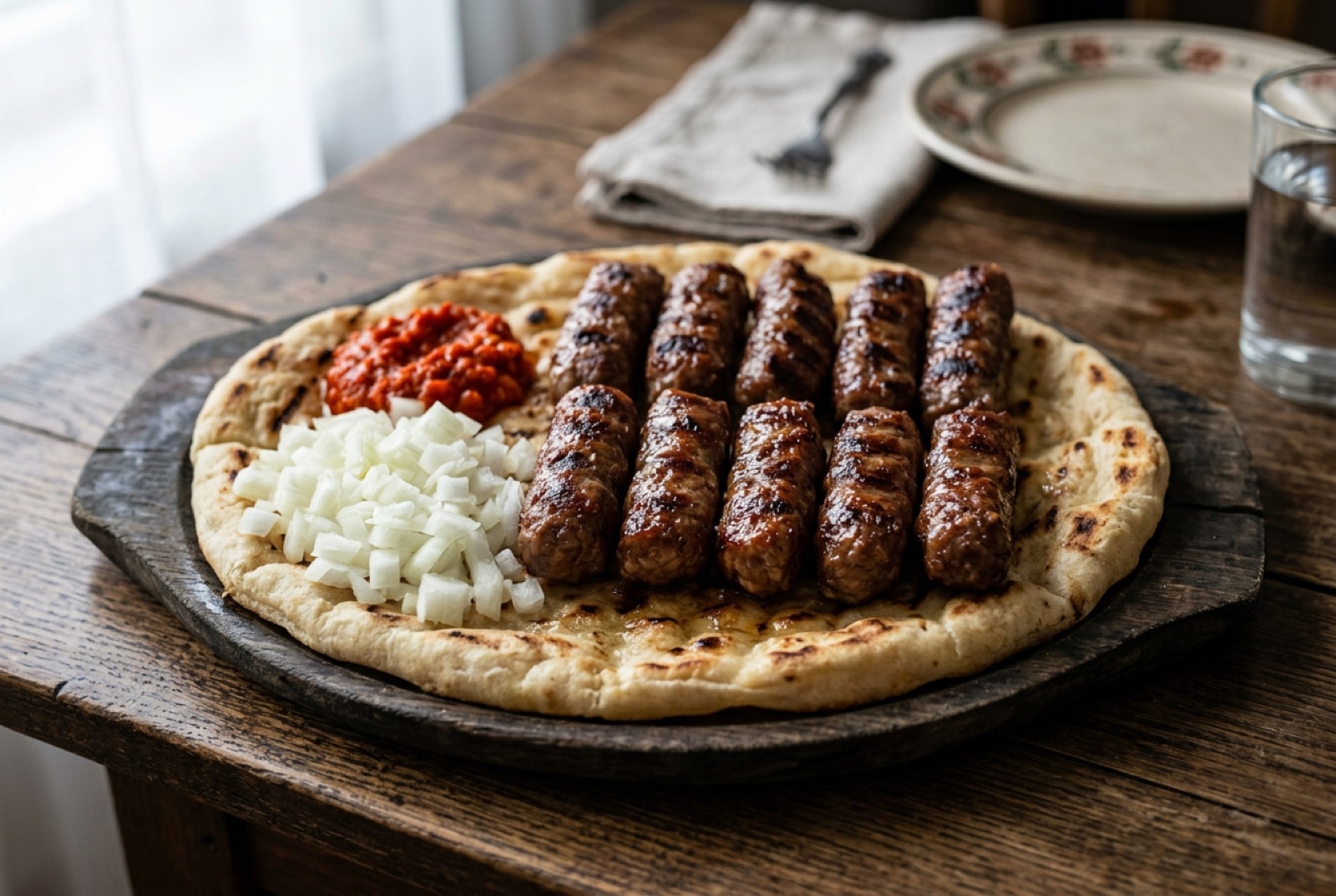

Keep exploring Serbia.
Serbia has 9 more dishes in the atlas — Ćevapi and Gibanica, and 7 more.
Recipe by The DishRoute Kitchen · published August 19, 2026 · updated August 19, 2026