France.
French cooking earned its reputation not through rare ingredients but through method: a shared grammar of techniques — the slow sweat, the deglaze, the reduction, the emulsion — that turns onions, butter, eggs and stale bread into food people cross oceans for. The restaurant itself is a French invention, and the professional kitchen brigade still runs on French vocabulary. But the cuisine that matters day to day is regional and frugal: Provençal vegetables stewed in olive oil, buckwheat galettes flipped on Breton griddles, onion soup built from beef stock and patience. Butter rules the north, olive oil the south, and wine cooks in the pot as often as it fills the glass. The unifying idea is respect for time — French dishes are rarely complicated, but they refuse to be rushed, and that refusal is where the flavor lives.

- Continent
- EuropeWestern Europe
- Recipes in atlas
- 10
- Must-try dishes
- 3
- Pantry staples
- 8
Start with the classics.
Must tryThe dishes that explain the France kitchen fastest — if you cook only a few things from this page, cook these.
Inside the France kitchen.
The foundation of French cooking is the fond — the base. Stocks simmered from bones and aromatics, the browned glaze left in a pan after searing, the trio of onion, carrot and celery sweated in fat: nearly every classic sauce and soup is built by layering these, then concentrating them through reduction. This is why French food tastes deep rather than loud. Seasoning is restrained — salt, pepper, fresh thyme, bay leaf, parsley — because the depth is meant to come from technique applied to good raw materials, not from a heavy spice cabinet.
Fat marks the map. North of a rough line through the middle of the country, butter and cream dominate — Normandy and Brittany produce some of the best dairy in Europe, and it shows in everything from sauces to pastry. The south cooks in olive oil, with garlic, tomatoes and wild herbs; Provençal food shares more DNA with Italy and Spain than with Paris. The southwest runs on duck fat and preserves — confit, cassoulet, foie gras — a sturdy rural kitchen shaped by long winters. Lyon, sitting between the butter and oil zones, historically called itself the gastronomic capital, and its bouchon taverns still serve the unglamorous, excellent cooking of tripe, sausage and potato that chefs privately love most.
Bread and cheese are structural, not incidental. A meal without bread is barely a meal, and the baguette is bought fresh daily, often twice. Cheese arrives as its own course, after the main and before dessert, usually with the last of the wine. France protects hundreds of named cheeses, wines and regional products through the appellation system — the legal idea that food belongs to a place — and that idea shapes how the French shop, favoring the weekly market and the specialist shop over the supermarket where they can.
Technique also explains the famous economy of the cuisine. Onion soup gratinée exists to use up stale bread and cheap onions. Crêpes stretch flour, eggs and milk into a meal or a celebration. Ratatouille was a farmer's way through a summer glut of vegetables. The luxury dishes get the press, but the genius of French cooking is what it does with almost nothing — as long as you give it the time it asks for.
Signature pantry.
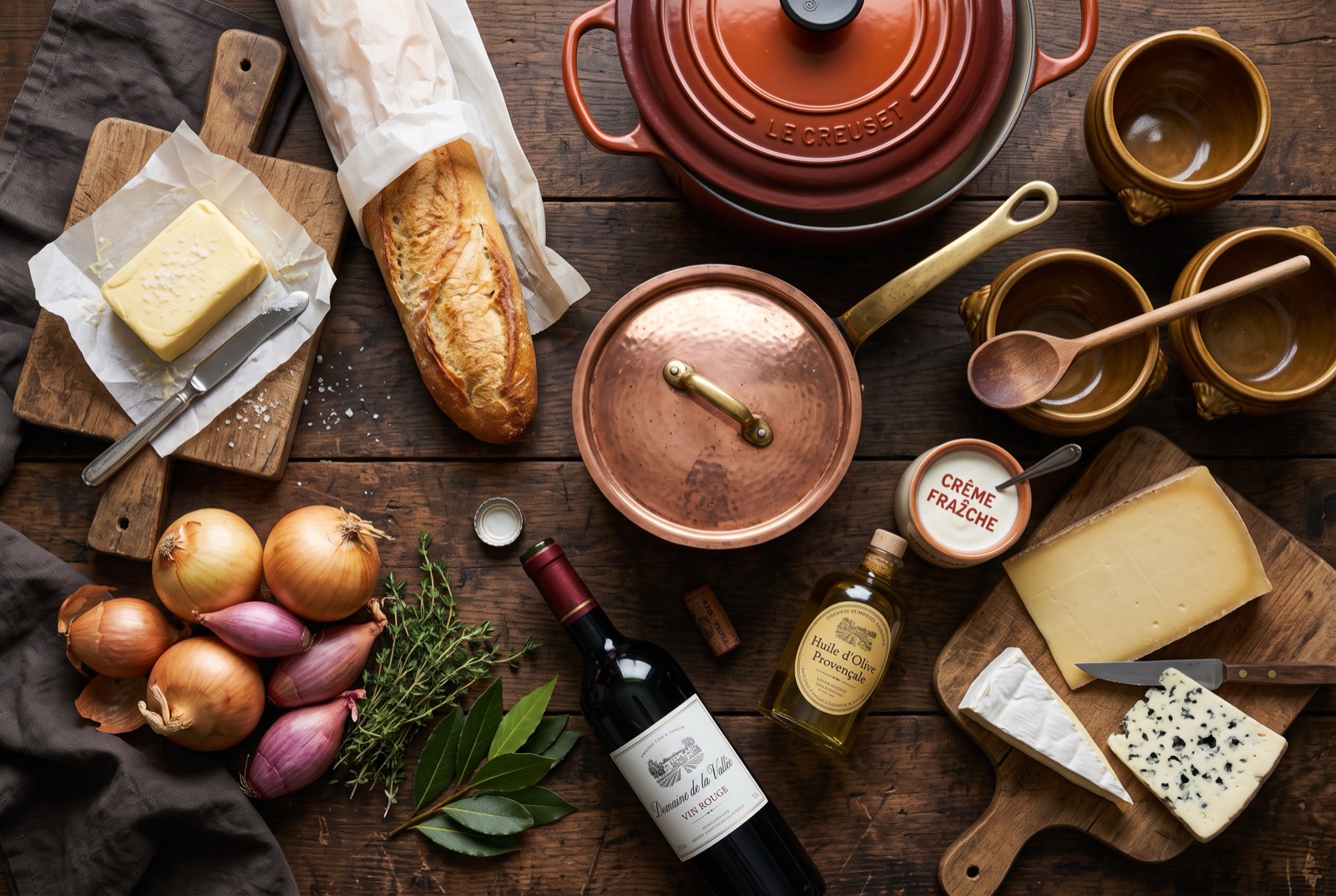
8 staplesThe ingredients this cuisine cannot function without.
- butter
- onions and shallots
- thyme and bay leaf
- wine (for the pot)
- baguette
- gruyère and other cheeses
- olive oil (in the south)
- crème fraîche
How people eat in France.
Meals keep their structure: starter, main, cheese, dessert, in that order, even when each course is small — and lunch is still a real sit-down affair in much of the country, with many shops closing for it. Bread sits directly on the tablecloth beside the plate, torn rather than bitten from, and is used to push food onto the fork and to wipe the sauce at the end (an honest compliment to the cook). Coffee comes after dessert, never with it, and asking for a cappuccino after dinner marks you as a visitor. The apéritif before dinner — a drink, olives, time to talk — is a ritual in its own right, and Sunday lunch with family can honorably run three hours.
Regional kitchens.
France cooks 4 distinctly different ways depending on where you stand — here is what changes between them.
- R1Provence
- The olive-oil south: tomatoes, eggplant, zucchini, garlic and wild herbs, cooked in the Mediterranean manner. Home of ratatouille, tapenade, bouillabaisse and the herb blends the rest of the world calls herbes de Provence.
- R2Burgundy & Lyon
- Wine country and its self-declared gastronomic capital. Beef braised in red wine, coq au vin, and the Lyonnais bouchon tradition of hearty offal and onion cookery — the spiritual home of onion soup done properly.
- R3Brittany & Normandy
- The Atlantic northwest: superb butter, cream and apples, cider instead of wine, and the crêperie tradition — buckwheat galettes for savory fillings, thin wheat crêpes for sweet, born of Brittany's poor, wheat-shy soil.
- R4The Southwest
- Duck-fat country between Bordeaux and the Pyrenees: confit, cassoulet, prunes and Armagnac. A rural, generous kitchen built on preserving — the slowest and most stubborn of the French regional styles.
All France recipes.
10 recipes and counting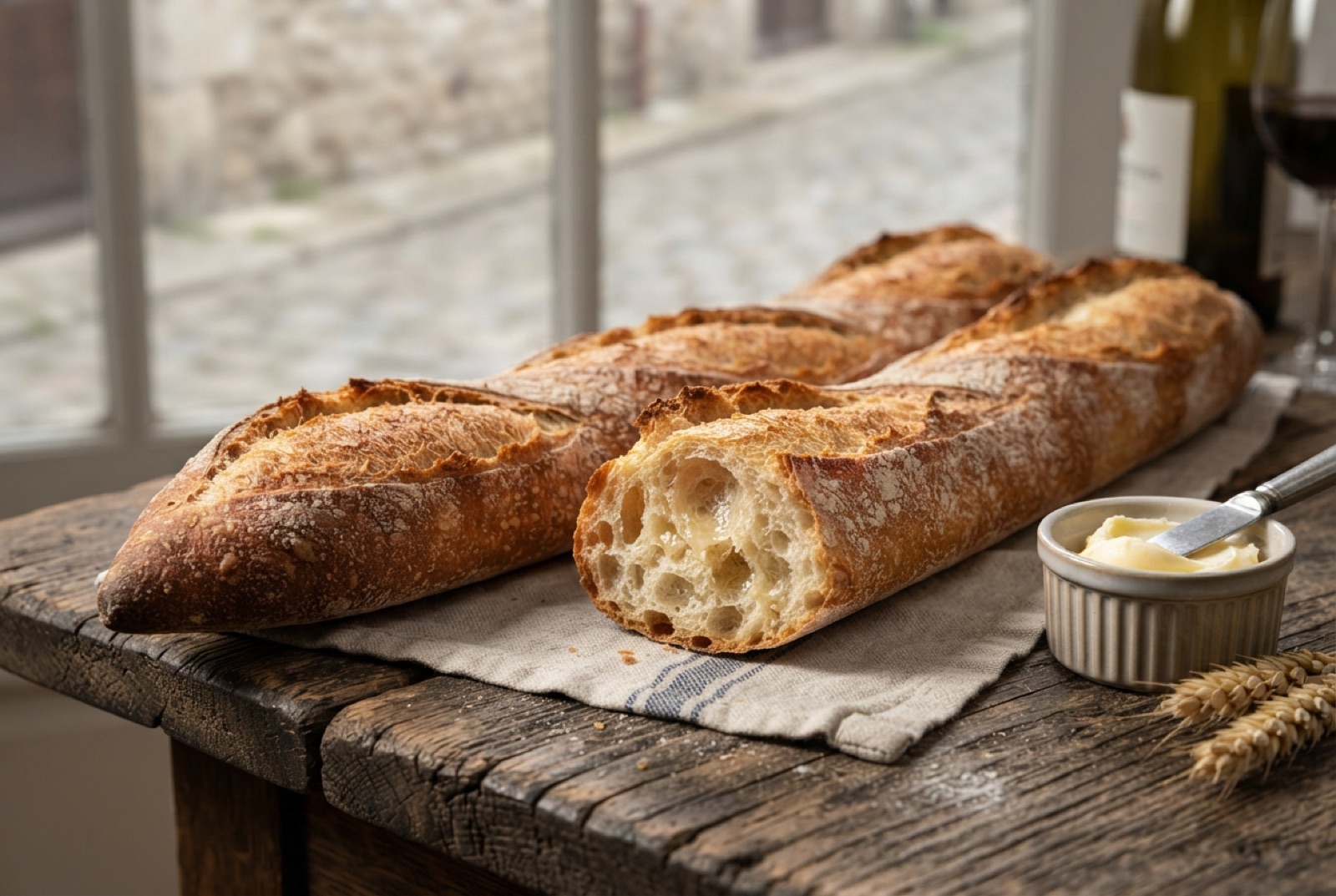
France18 hr 10 min
Baguette
French Crusty Loaf with an Overnight Poolish
France4 hr
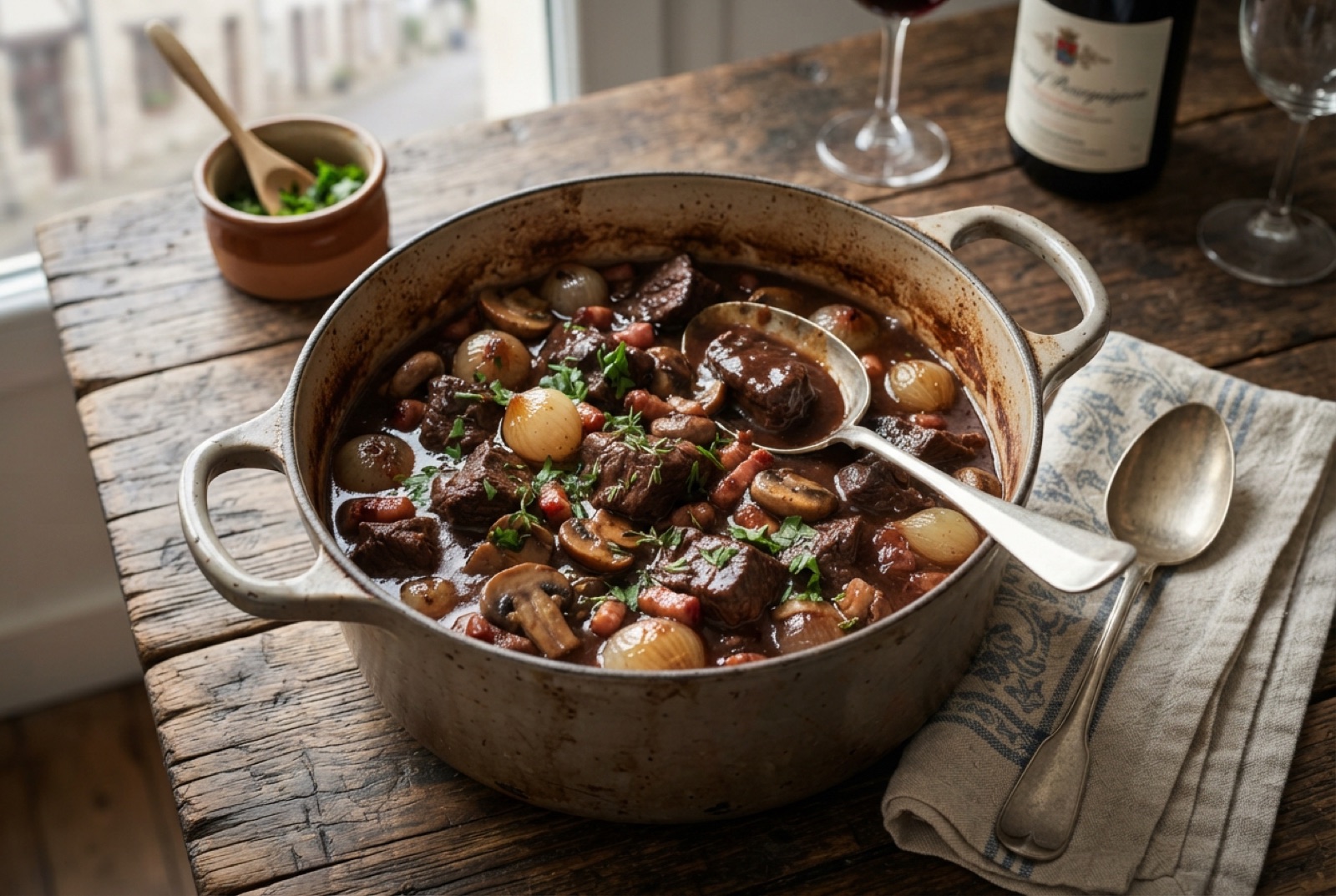
Bœuf Bourguignon
Burgundy Beef Braised in Red Wine
France1 hr 50 min
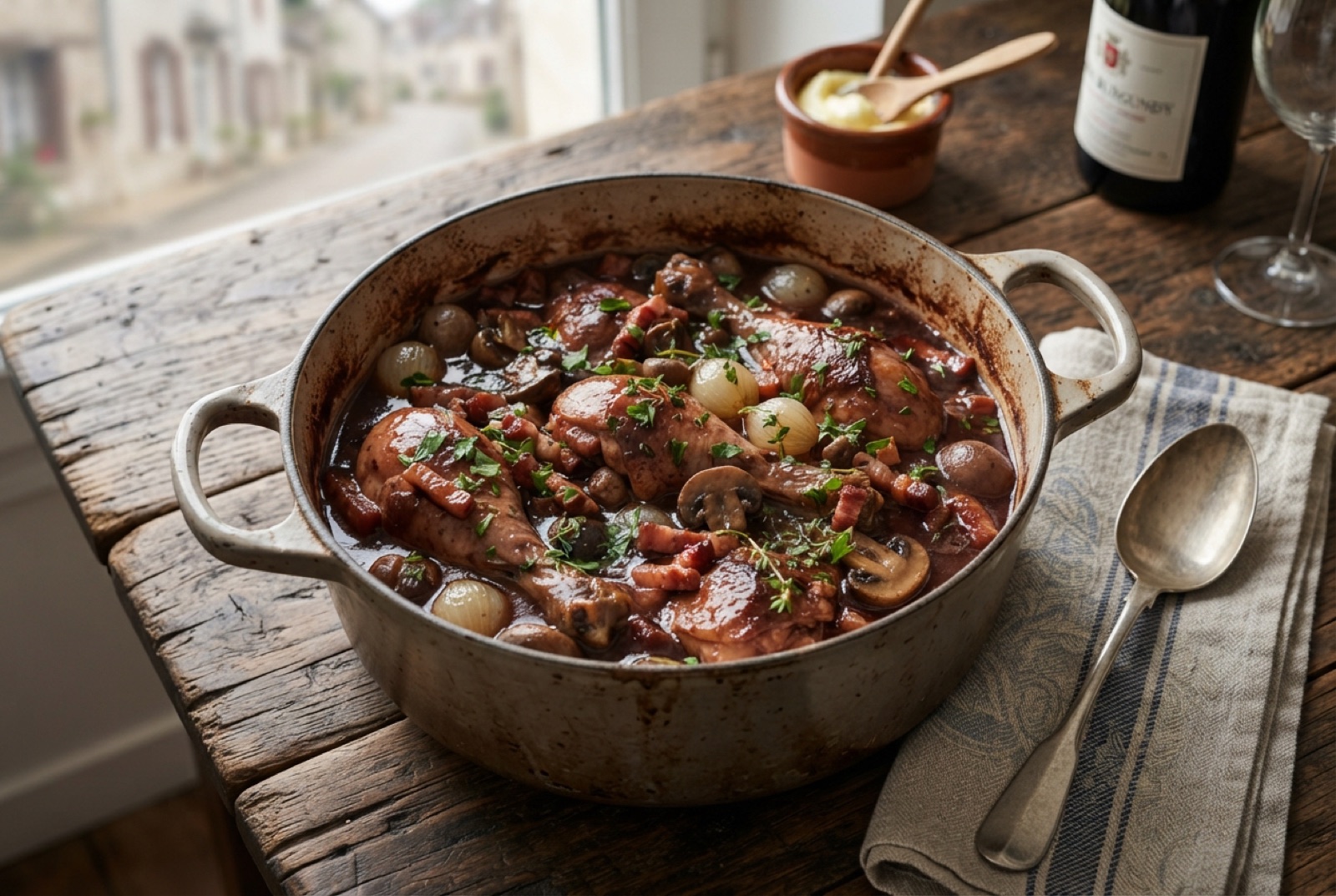
Coq au Vin
French Chicken Braised in Red Wine
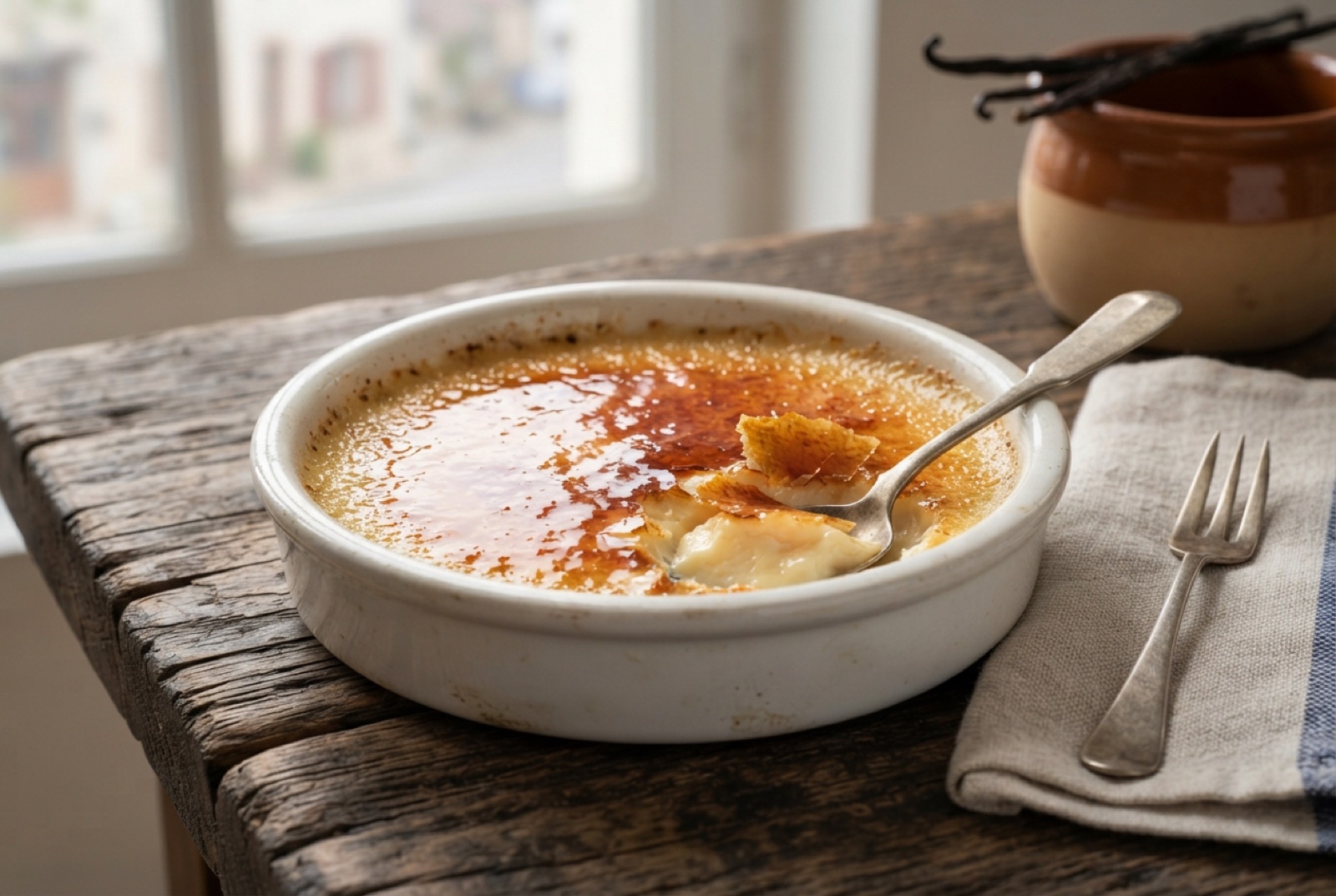
France5 hr
Crème Brûlée
Vanilla Custard Under Burnt Sugar
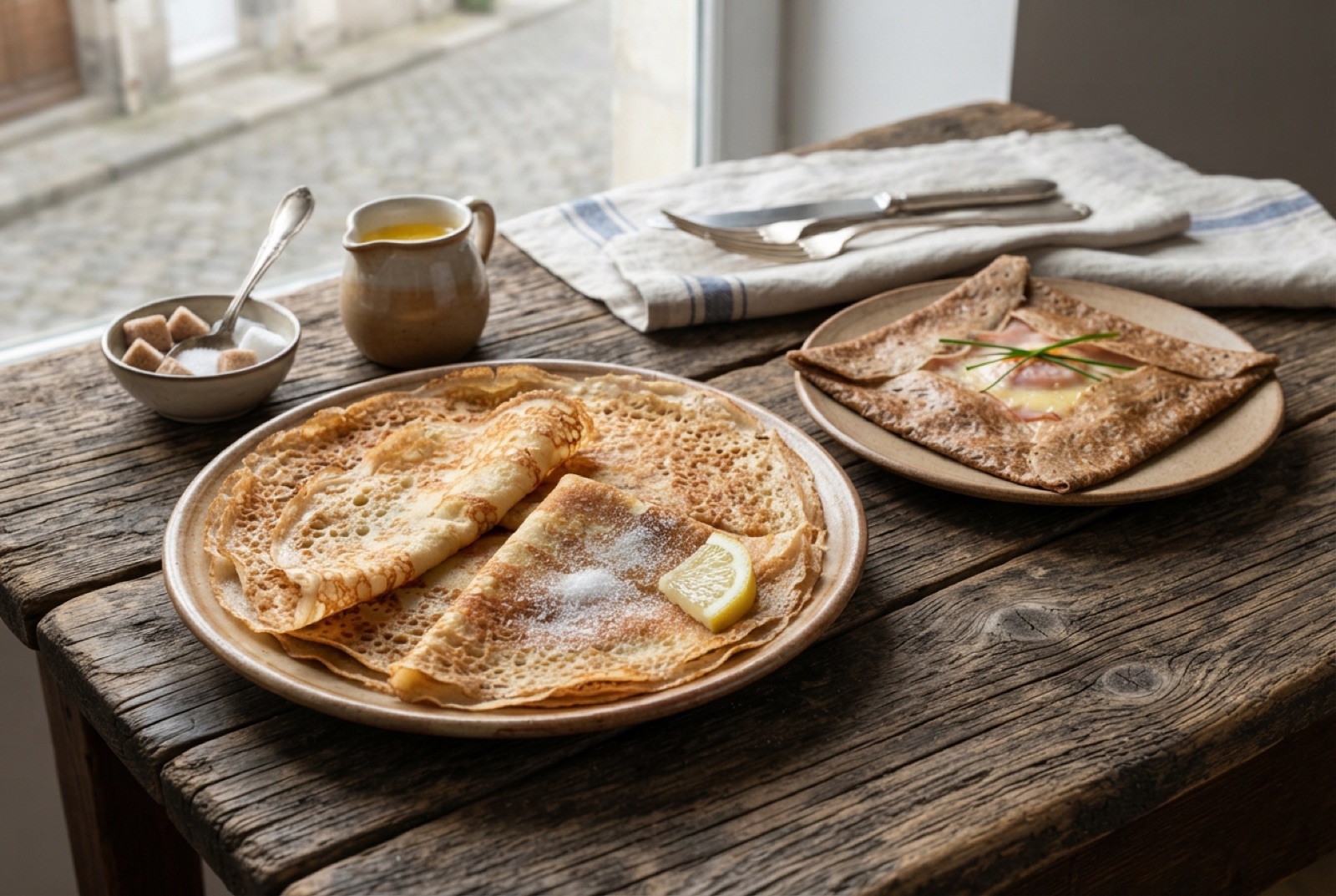
France1 hr 5 min
French Crêpes
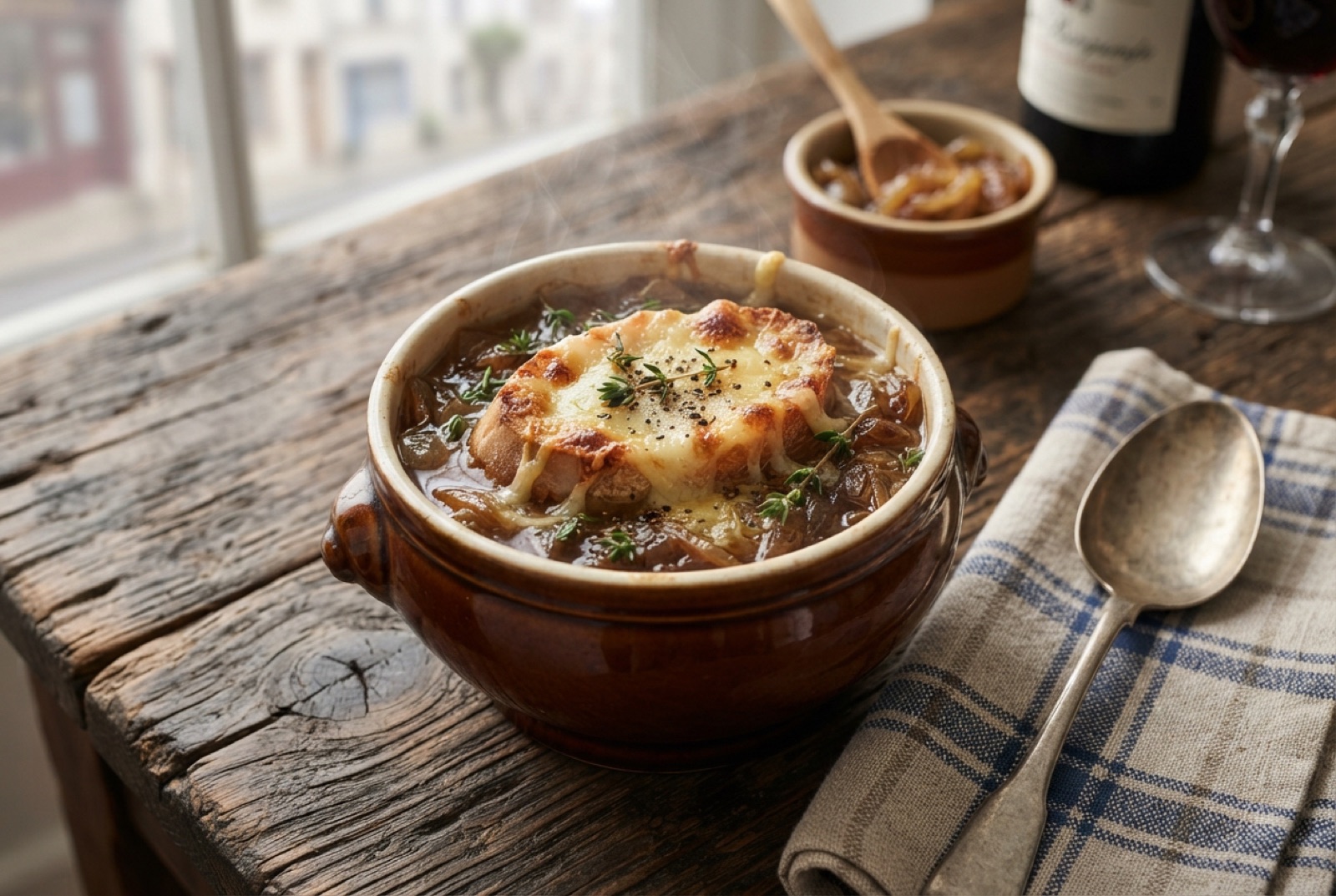
France1 hr 45 min
French Onion Soup Gratinée
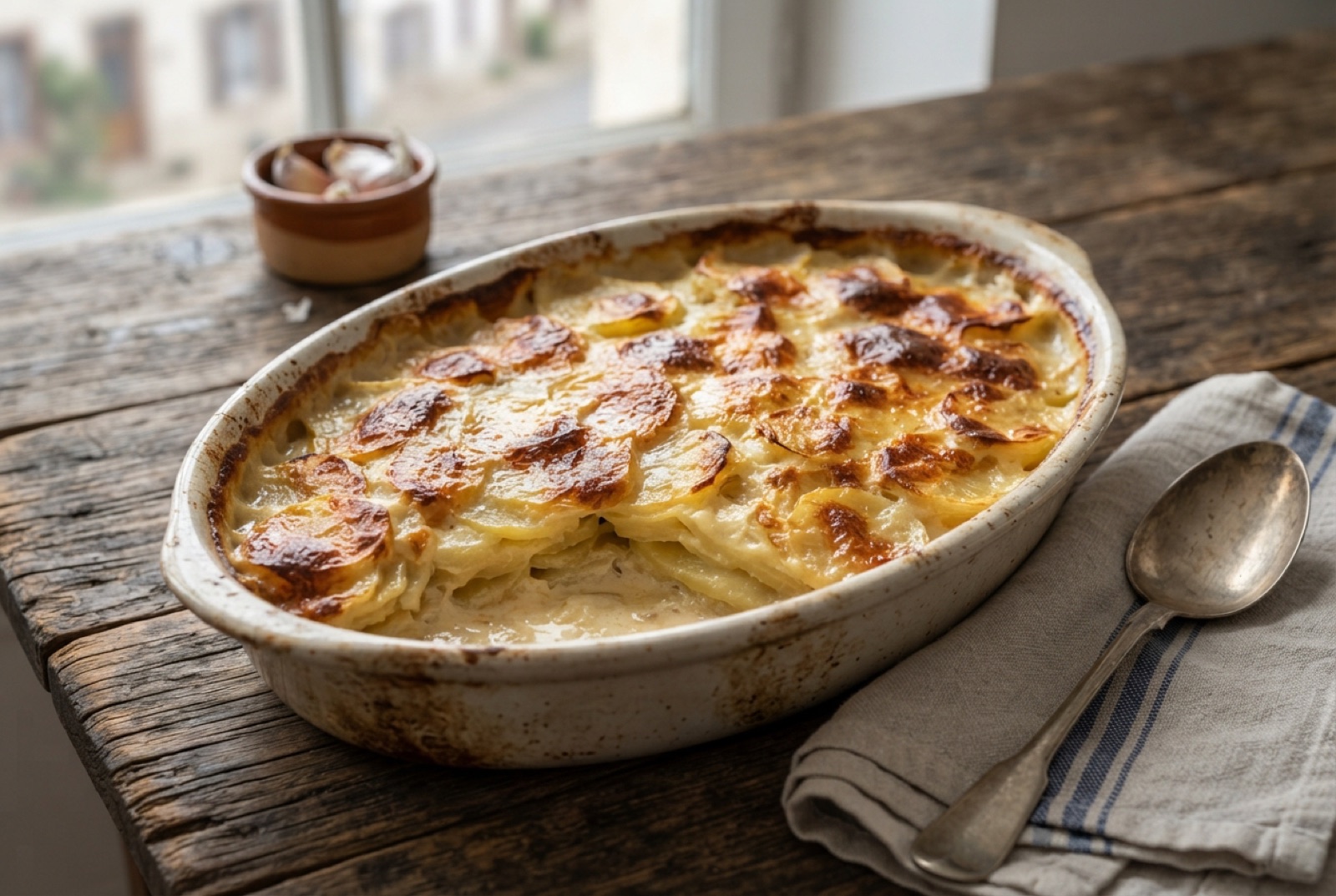
France2 hr 5 min
Gratin Dauphinois
Creamy Baked Potato Gratin
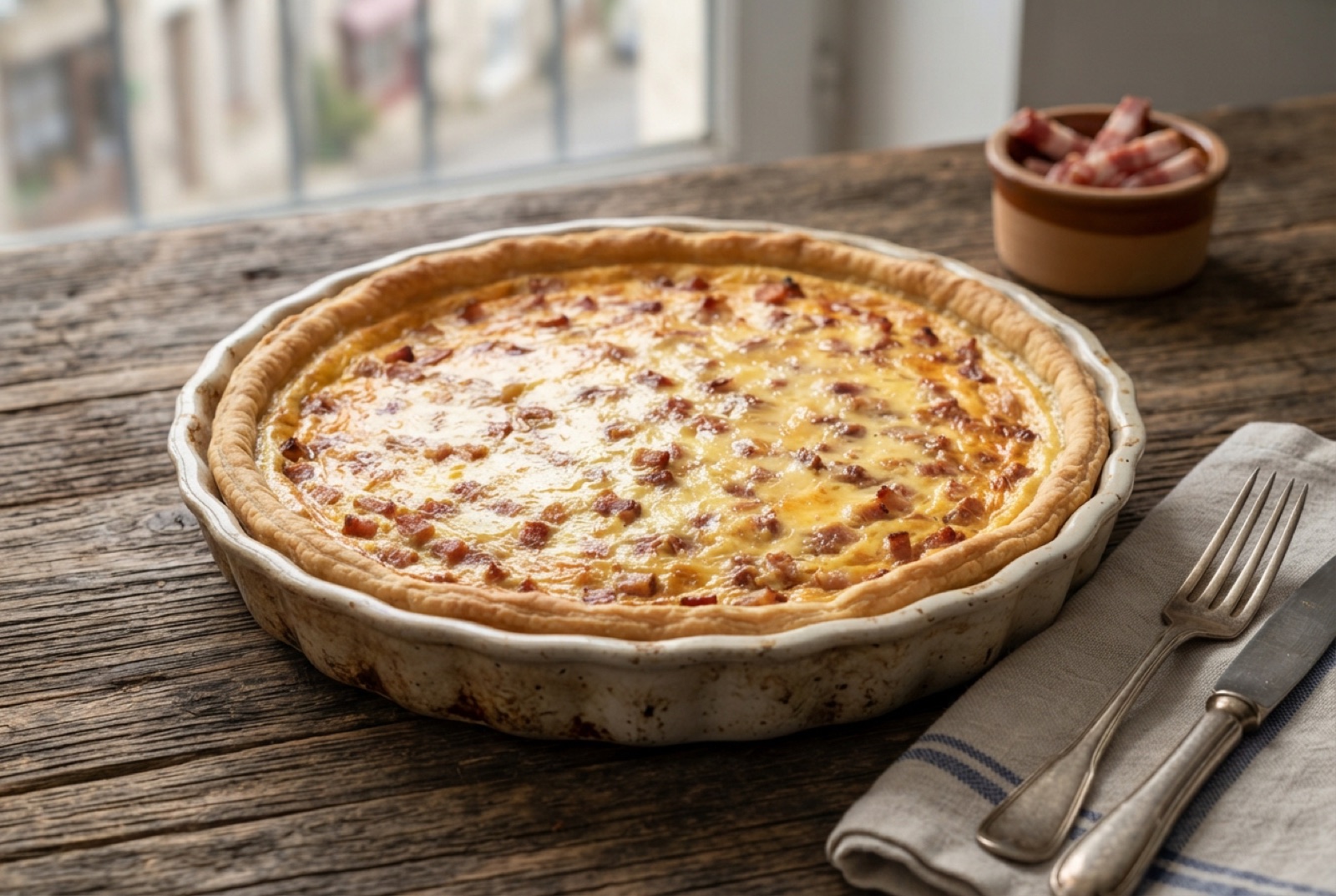
France2 hr 45 min
Quiche Lorraine
Smoked Bacon and Cream Tart
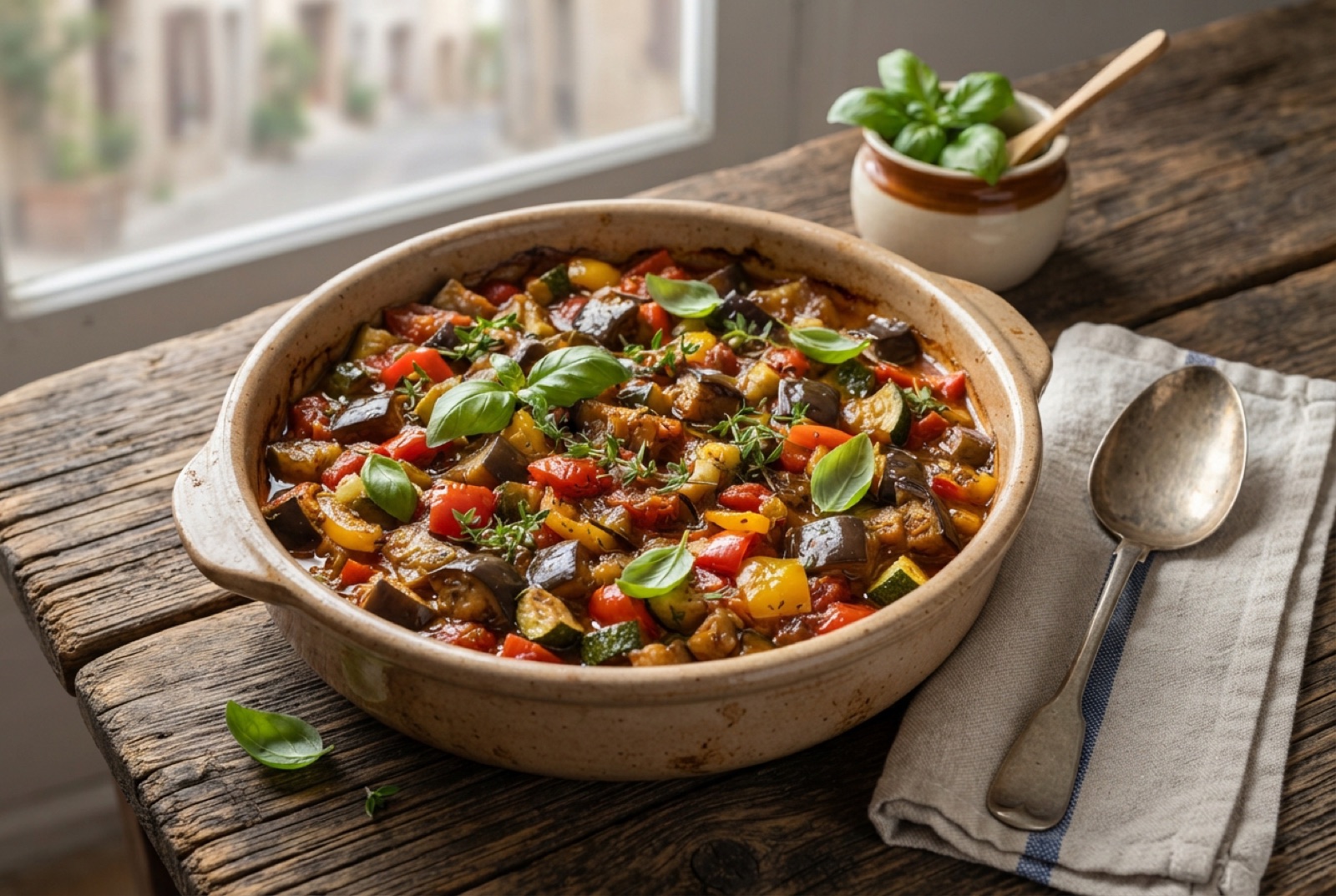
France1 hr 30 min
Ratatouille
Provençal Vegetable Stew
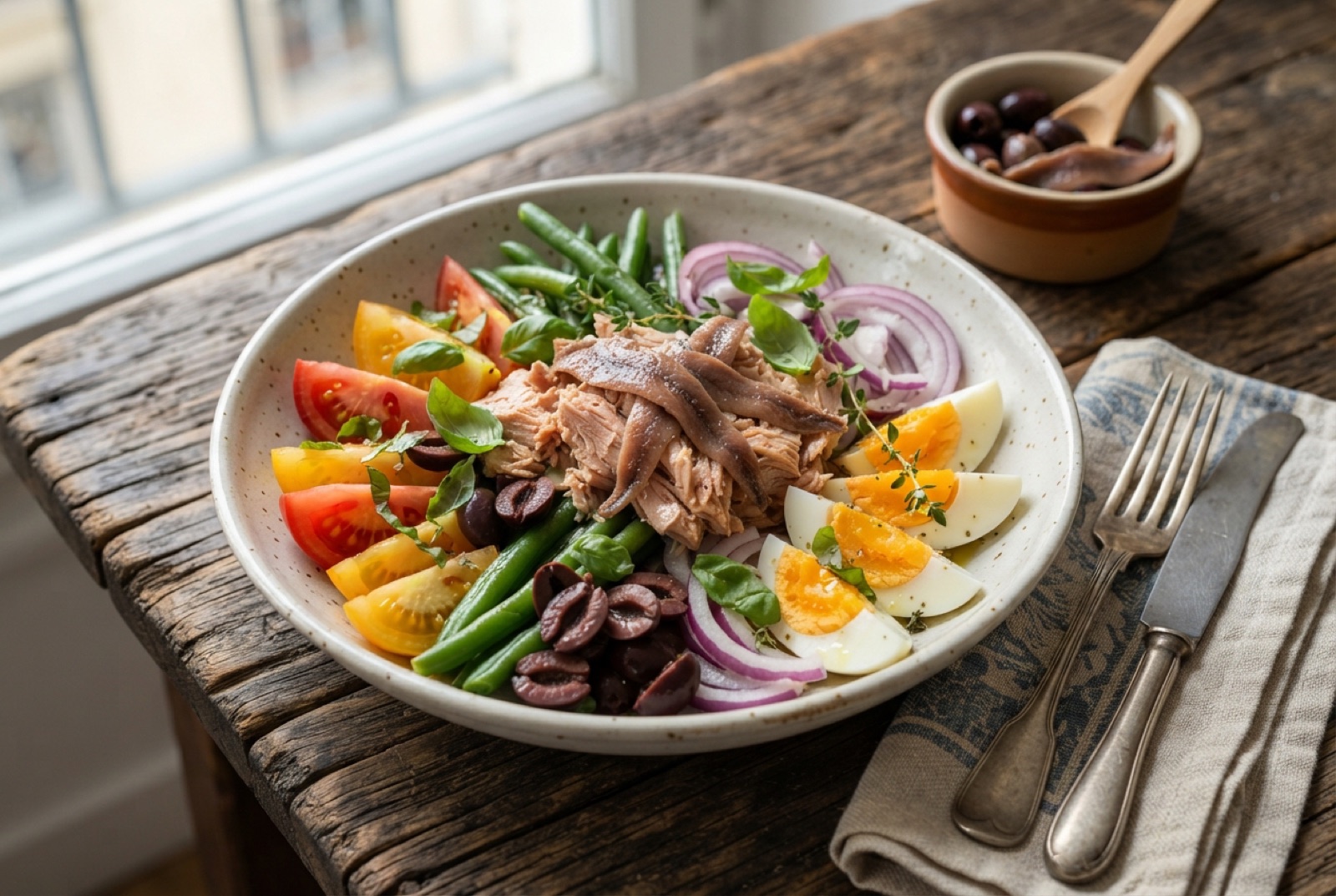
France35 min
Salade Niçoise
Tuna, Egg and Olive Salad from Nice
Keep traveling.
France sits in Western Europe, and its kitchen shares borders as well as ingredients with Albania and Austria.
 Albania
 Austria