Hungary.
Magyarország
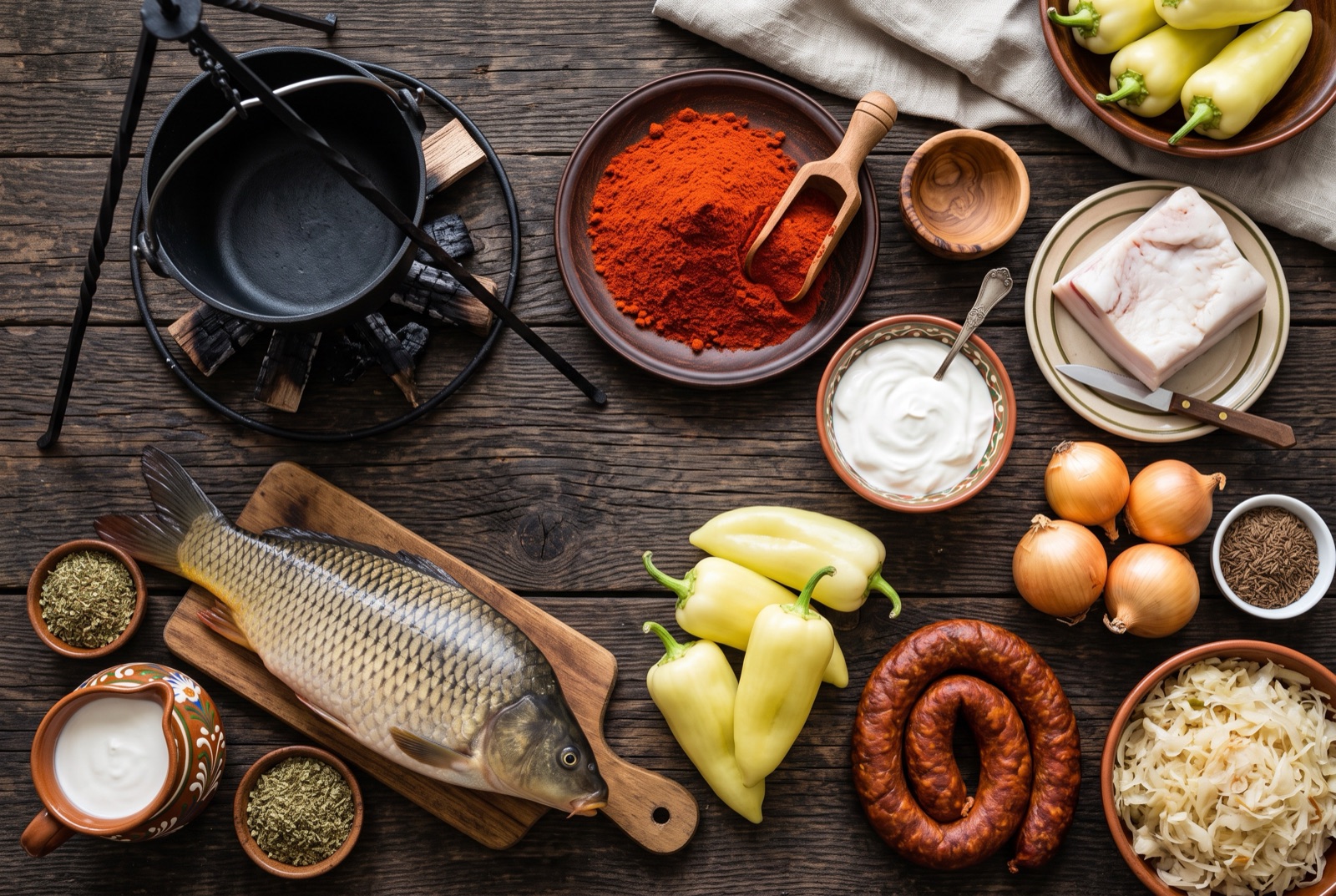
Hungarian cooking rests on a sequence rather than a spice rack. Onions are sweated in fat until soft, sweet and pale gold; the pan comes off the heat; ground paprika is stirred in so it perfumes the fat without scorching; then liquid goes in immediately to lock the colour. Gulyás, pörkölt, paprikás and halászlé all begin exactly there and only diverge afterwards, which is why one technique explains half the national menu. Paprika itself is a relative newcomer that Hungarians adopted completely, building around it a grading vocabulary — édesnemes for sweet noble red, csípős for hot, füstölt for smoked — that home cooks actually use. Around that core sits a Central European larder: pork and pork fat, sour cream stirred in off the heat, sour brined cabbage, freshwater carp and catfish from the Danube and Tisza, caraway, and dumplings pinched or grated straight into the pot. The food reads as rich, but more often it is simply deep — long-cooked, savoury and unashamedly built on onions.

- Continent
- EuropeCentral Europe
- Recipes in atlas
- 10
- Must-try dishes
- 3
- Pantry staples
- 10
Start with the classics.
Must tryThe dishes that explain the Hungary kitchen fastest — if you cook only a few things from this page, cook these.
Inside the Hungary kitchen.
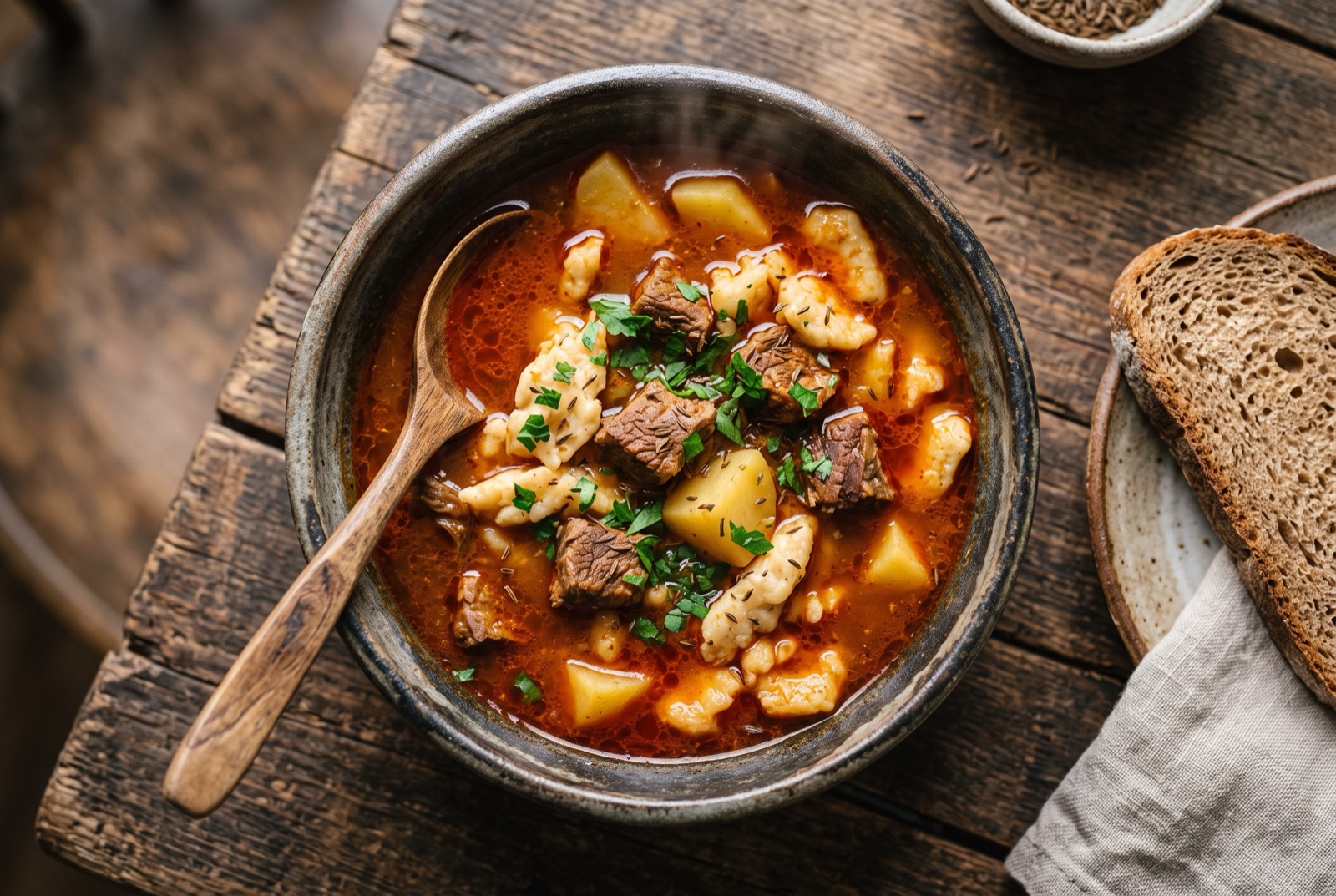
The red dishes are a family with strict rules, and Hungarians will correct you on them. Gulyás is a soup — beef, onion, paprika, potato and root vegetables in plenty of liquid, thin enough to eat with a spoon, and never thickened with flour. Pörkölt is the stew: the same base, far less liquid, meat cut in cubes and cooked down until the sauce clings. Paprikás is a pörkölt finished with sour cream, which is why it is usually made with chicken, veal, lamb or fish rather than beef. Tokány cuts the meat into strips and leans on black pepper, marjoram and often mushrooms or bacon instead of a heavy paprika hand. What English menus flatten into "goulash" is really four different dishes.
Paprika is treated as a perishable ingredient, not a shelf spice. Good Hungarian paprika from Szeged or Kalocsa is bright brick-red, smells sweet and faintly fruity, and loses that within a year of opening — a dull brown tin will make a dull brown stew, no matter how much you add. It also burns at a lower temperature than most spices, turning acrid in seconds, which is why every classic recipe insists on pulling the pot off the flame before the powder goes in and adding liquid straight after.
Fat and dairy do the enriching. Lard is the traditional cooking medium and still gives the most authentic flavour in lecsó, lángos dough and pörkölt, though sunflower oil has largely replaced it in everyday kitchens. Tejföl — thick, tangy sour cream — is the national finisher, spooned over soups, stirred into paprikás, layered through casseroles. Hungarian cooks thicken with two named methods: rántás, a flour-and-fat roux, and habarás, sour cream or milk slackened with flour and tempered before it meets the hot pot. Learning habarás is the difference between silky paprikás and a curdled one.
Starch usually arrives as dumplings rather than bread. Nokedli, also called galuska, are soft egg dough dumplings scraped or pressed into boiling water and served under anything with sauce. Csipetke are smaller pieces of the same idea, pinched off by hand into gulyás. Tarhonya, dried egg barley toasted in fat before cooking, is the Great Plain answer to rice. Potatoes appear everywhere, and dense sour rye and wheat breads are on every table for mopping.
Meals are structured and soup is not optional: a proper Hungarian lunch opens with soup — meat broth with thin noodles, sour cherry soup cold in summer, bean soup soured with vinegar — before the main course, and closes with something sweet. The pastry tradition is separate and serious, inherited from the Austro-Hungarian coffeehouse: strudel stretched paper-thin, layered tortes, sponge and buttercream. Regionally, the Great Plain gave the country its cauldron cooking and its paprika fields, the Tisza and Danube towns their fish soups, the north its wines and game, and Budapest a café and restaurant culture that codified much of what is now called Hungarian food.
Signature pantry.
10 staplesThe ingredients this cuisine cannot function without.
- sweet paprika
- lard
- sour cream (tejföl)
- onion
- caraway seed
- sour cabbage
- smoked pork and paprika sausage
- freshwater carp
- marjoram
- yellow TV paprika peppers
How people eat in Hungary.
Lunch is the real meal of the day and it starts with soup — skipping straight to the main course still reads as slightly incomplete. Bread sits on the table by default and is used to wipe the plate, which is a compliment rather than bad manners. Sour cream, a shaker of hot paprika and pickled peppers are set out so each person adjusts their own bowl. Toasts are made with pálinka or wine, but clinking beer glasses is widely avoided for historical reasons, and older hosts will notice. Guests are pressed to take seconds and refusing once is expected before accepting. Coffee and cake are a separate ritual entirely, taken in the afternoon rather than at the end of dinner.
Regional kitchens.
Hungary cooks 4 distinctly different ways depending on where you stand — here is what changes between them.
- R1The Great Plain (Alföld)
- Cattle country and the home of the bogrács cauldron, where gulyás was herdsman food cooked over an open fire. The paprika fields of Szeged and Kalocsa sit here, and so does the sweetest, most sharply defined use of it.
- R2The Tisza and Danube river towns
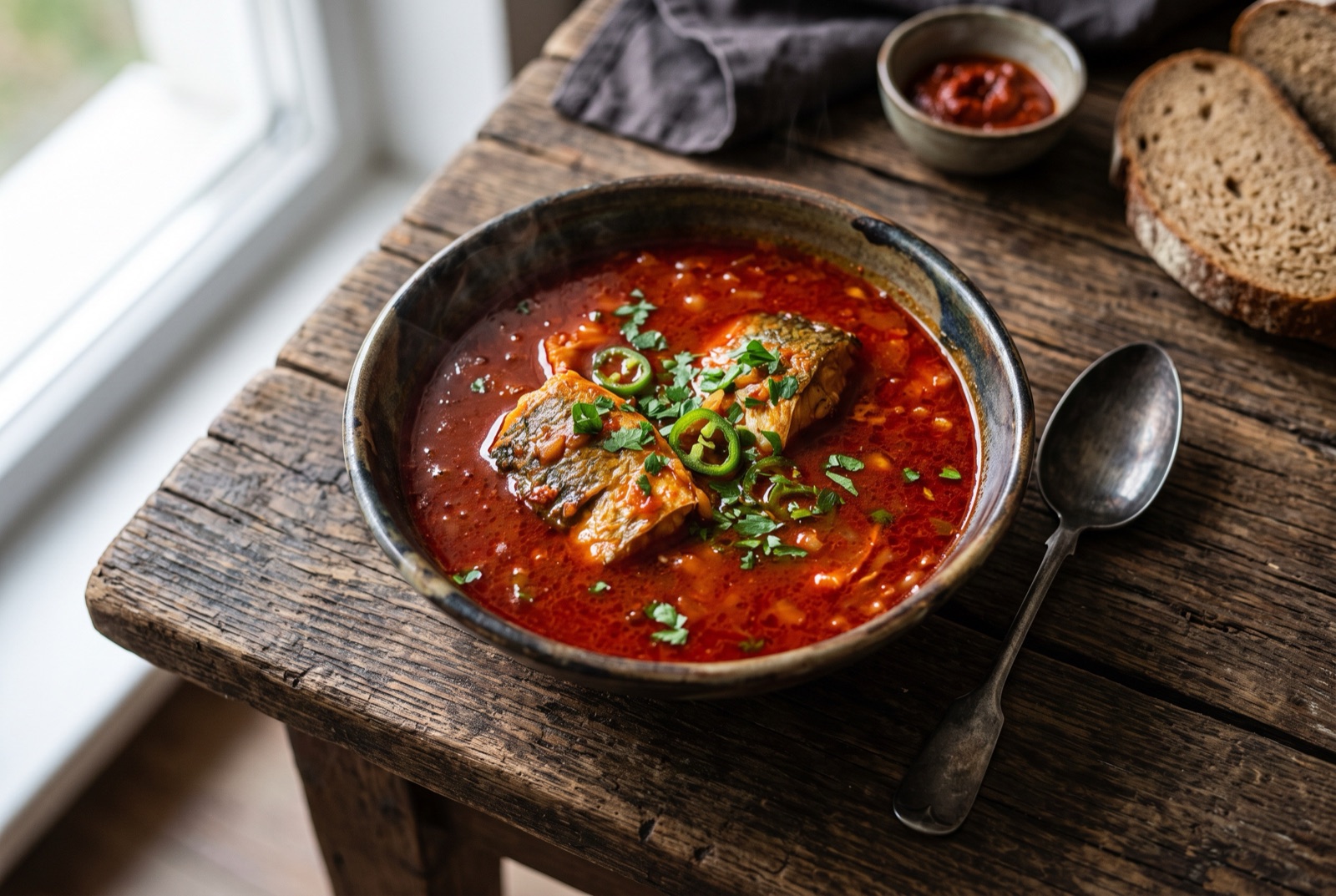
- Fish country: Szeged, Baja and the Danube bend live on carp, catfish and pike-perch. Halászlé is the local argument — Szeged strains its broth, Baja serves it over noodles, and neither side concedes.
- R3Northern Hungary
- Wine and hill food around Eger and Tokaj, with game, mushrooms, bean dishes and lamb. Tokaji Aszú, a botrytised sweet wine, is the region's most famous export and turns up in cooking as well as in the glass.
- R4Transdanubia and Lake Balaton
- Softer, more Austrian-leaning cooking west of the Danube: pork roasts, dumplings, strudel and freshwater fish from Balaton, plus the lakeside lángos stands that feed the entire summer season.
All Hungary recipes.
10 recipes and counting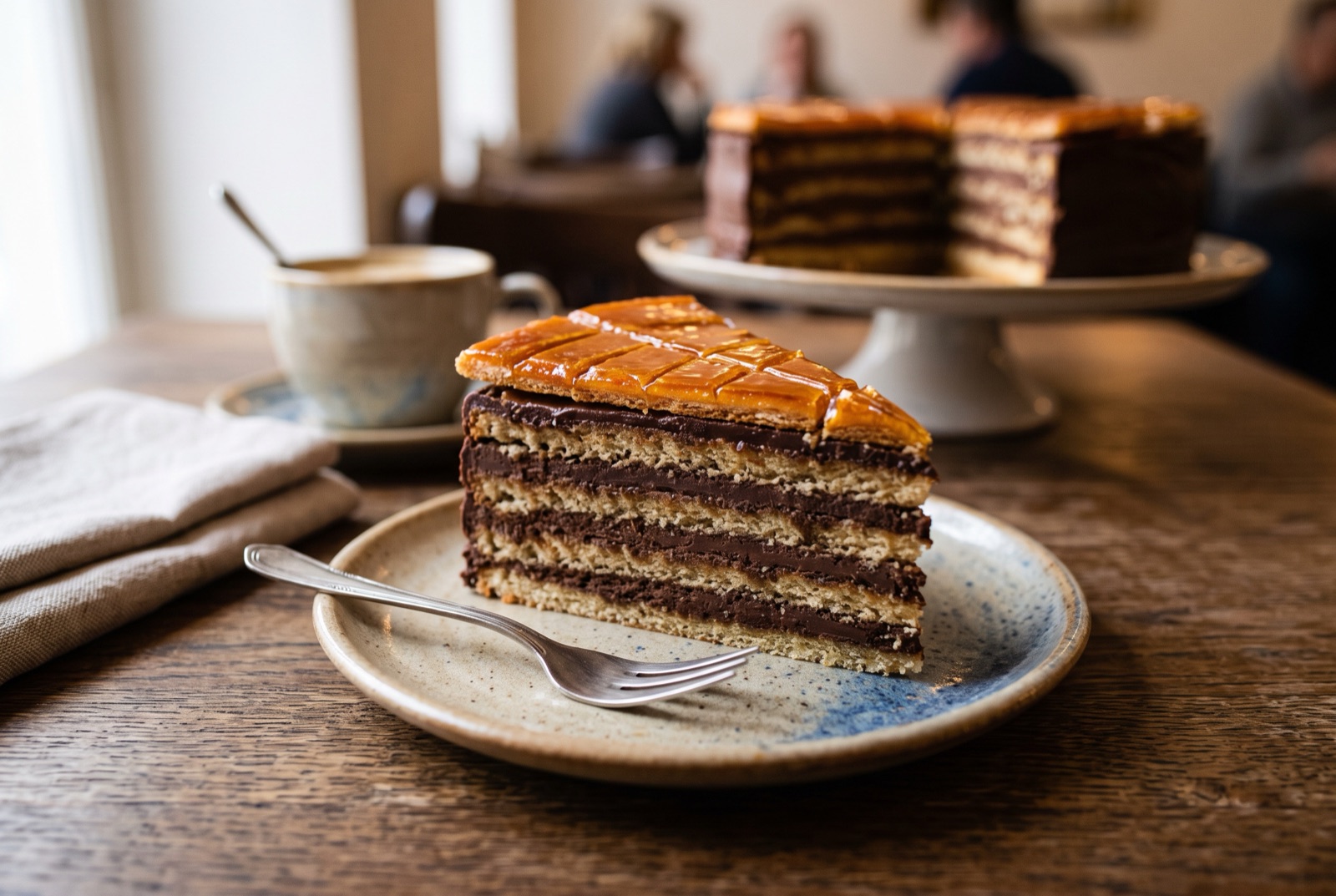
Hungary4 hr 45 min
Dobos Torta
Hungarian Caramel-Topped Sponge Cake
Hungary3 hr 15 min
Gulyás
Hungarian Beef and Paprika Soup
Hungary1 hr 40 min
Halászlé
Hungarian Fisherman's Paprika Fish Soup
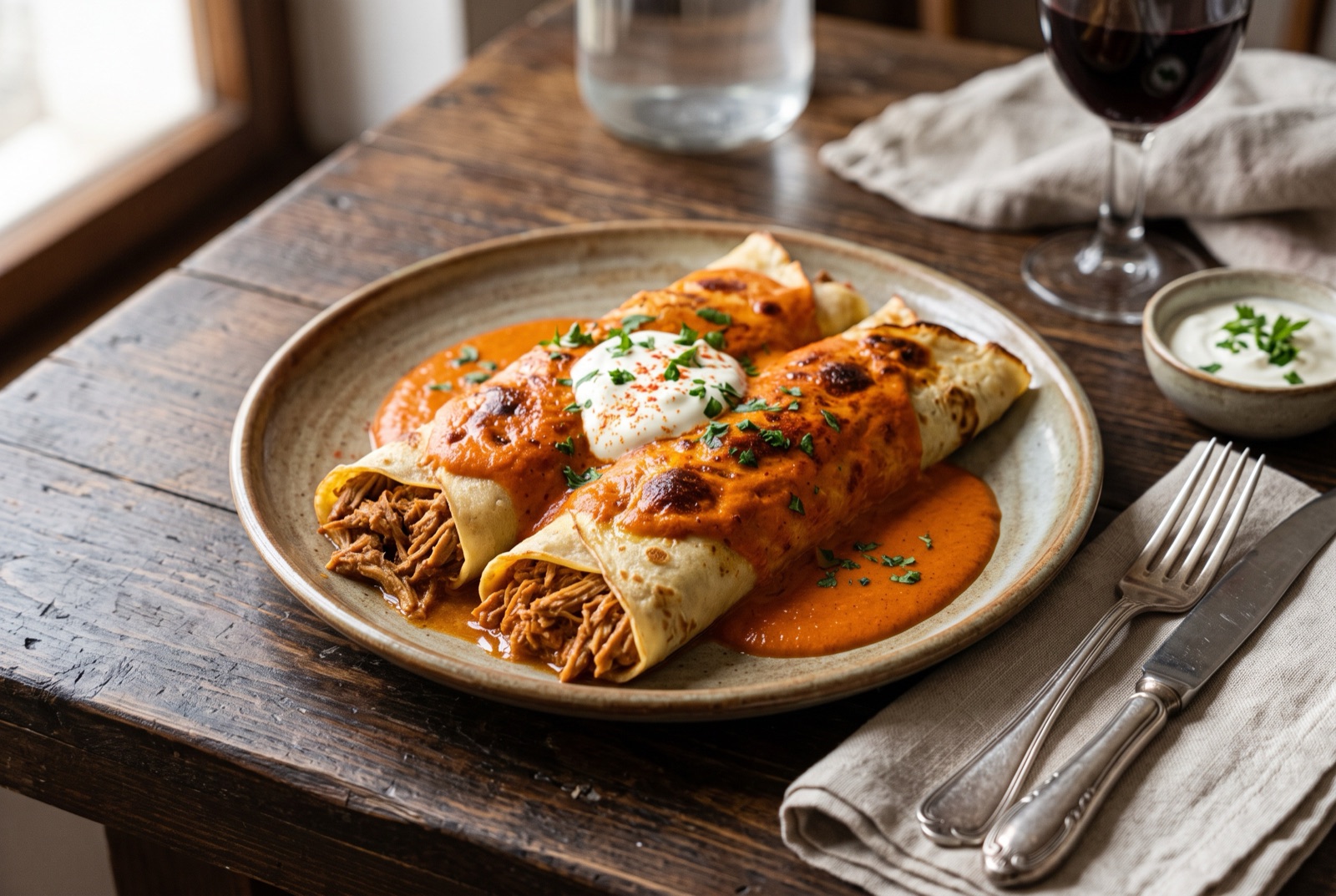
Hungary2 hr 40 min
Hortobágyi Palacsinta
Meat-Filled Pancakes
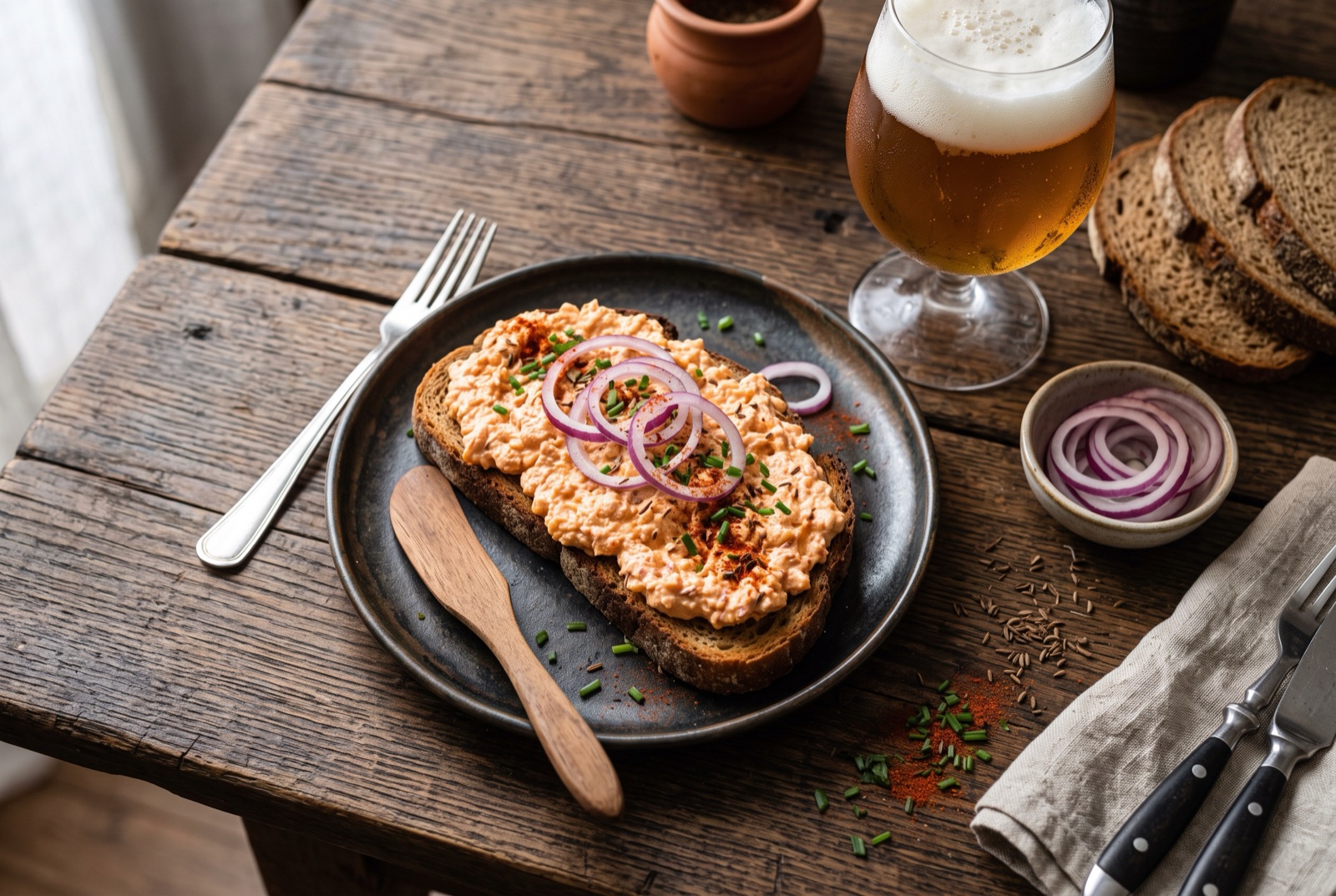
Hungary4 hr 15 min
Körözött
Hungarian Paprika Sheep Cheese Spread
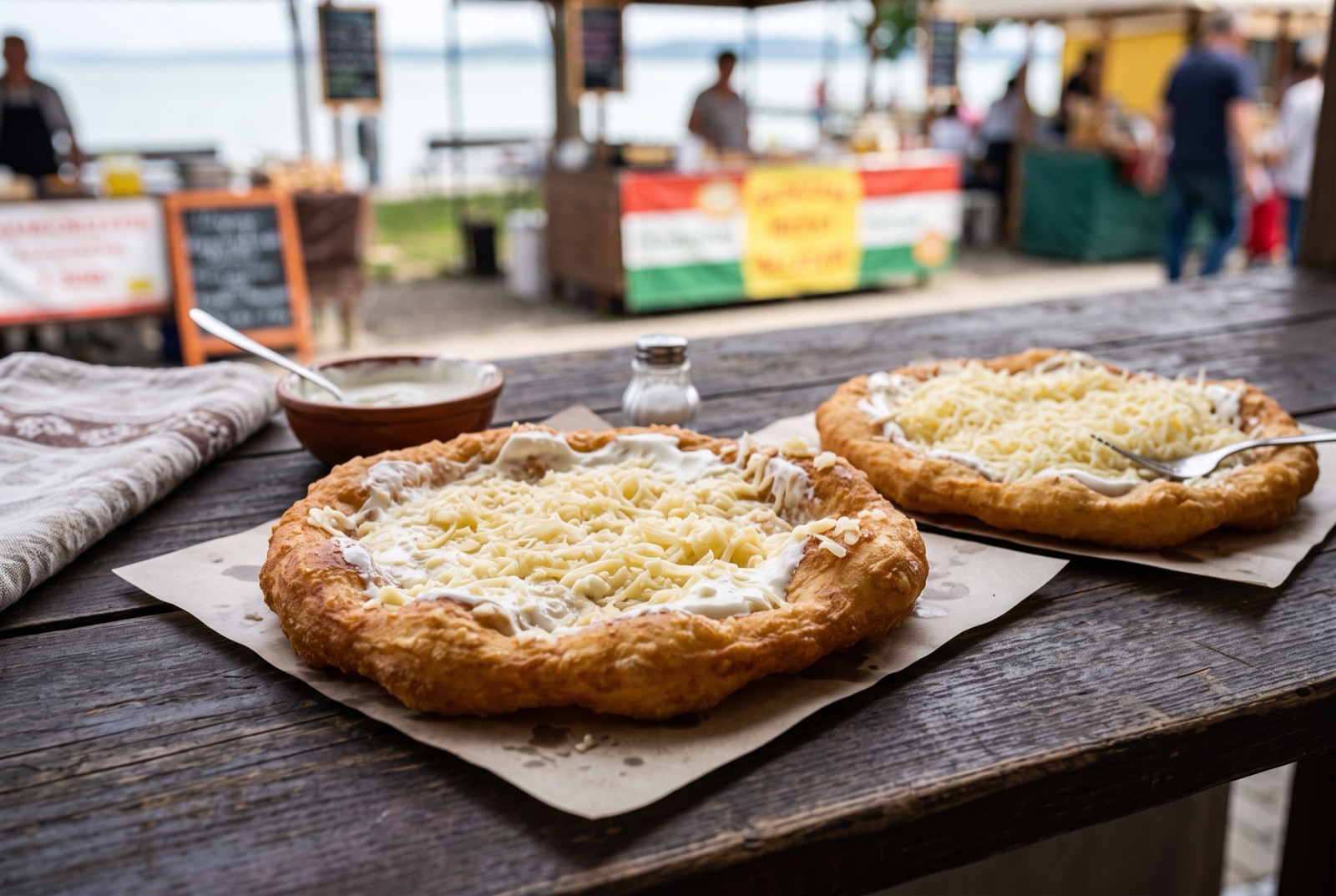
Hungary2 hr 20 min
Lángos
Hungarian Deep-Fried Garlic Flatbread
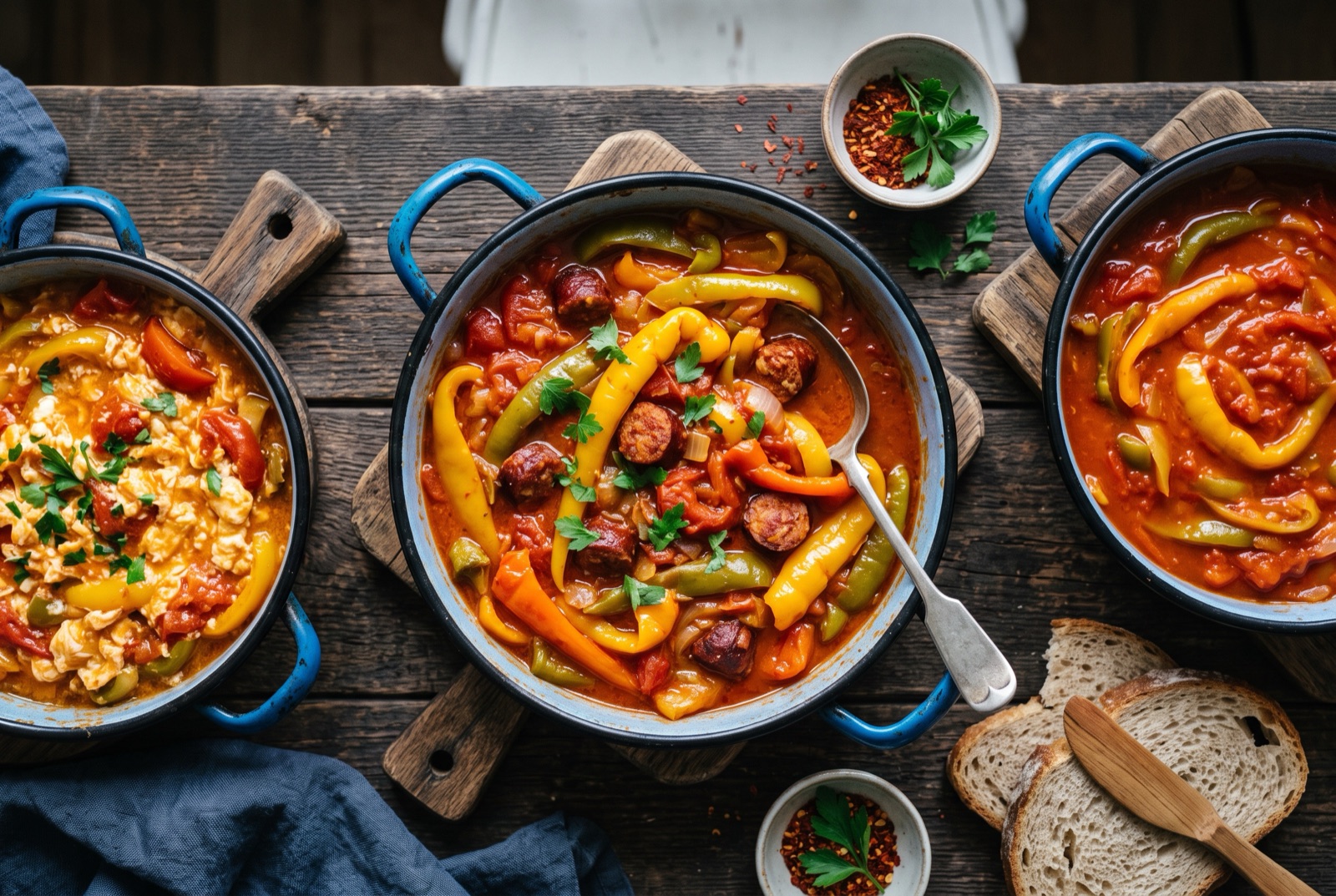
Hungary50 min
Lecsó
Hungarian Pepper and Tomato Stew
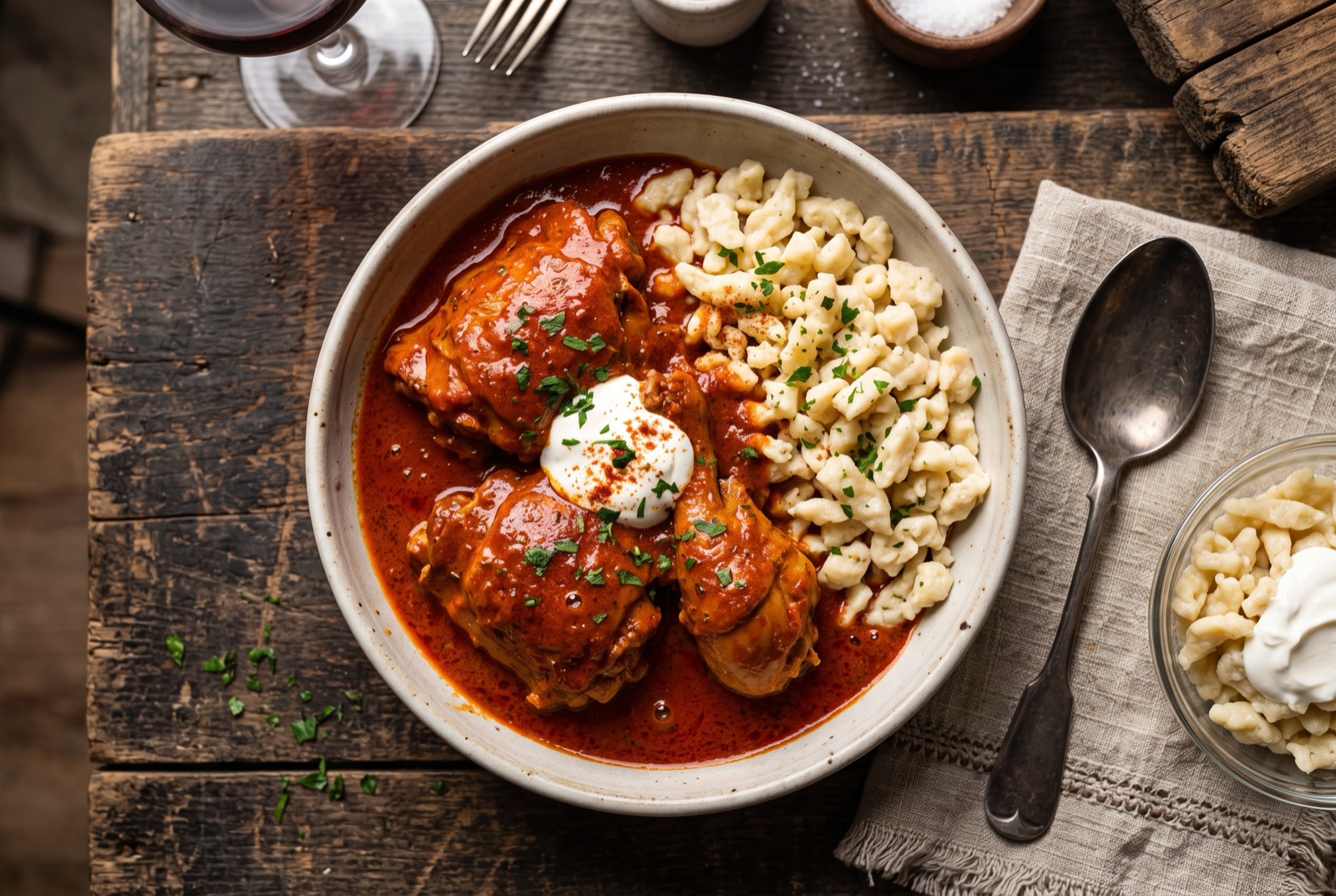
Hungary1 hr 10 min
Paprikás Csirke
Hungarian Chicken Paprikash
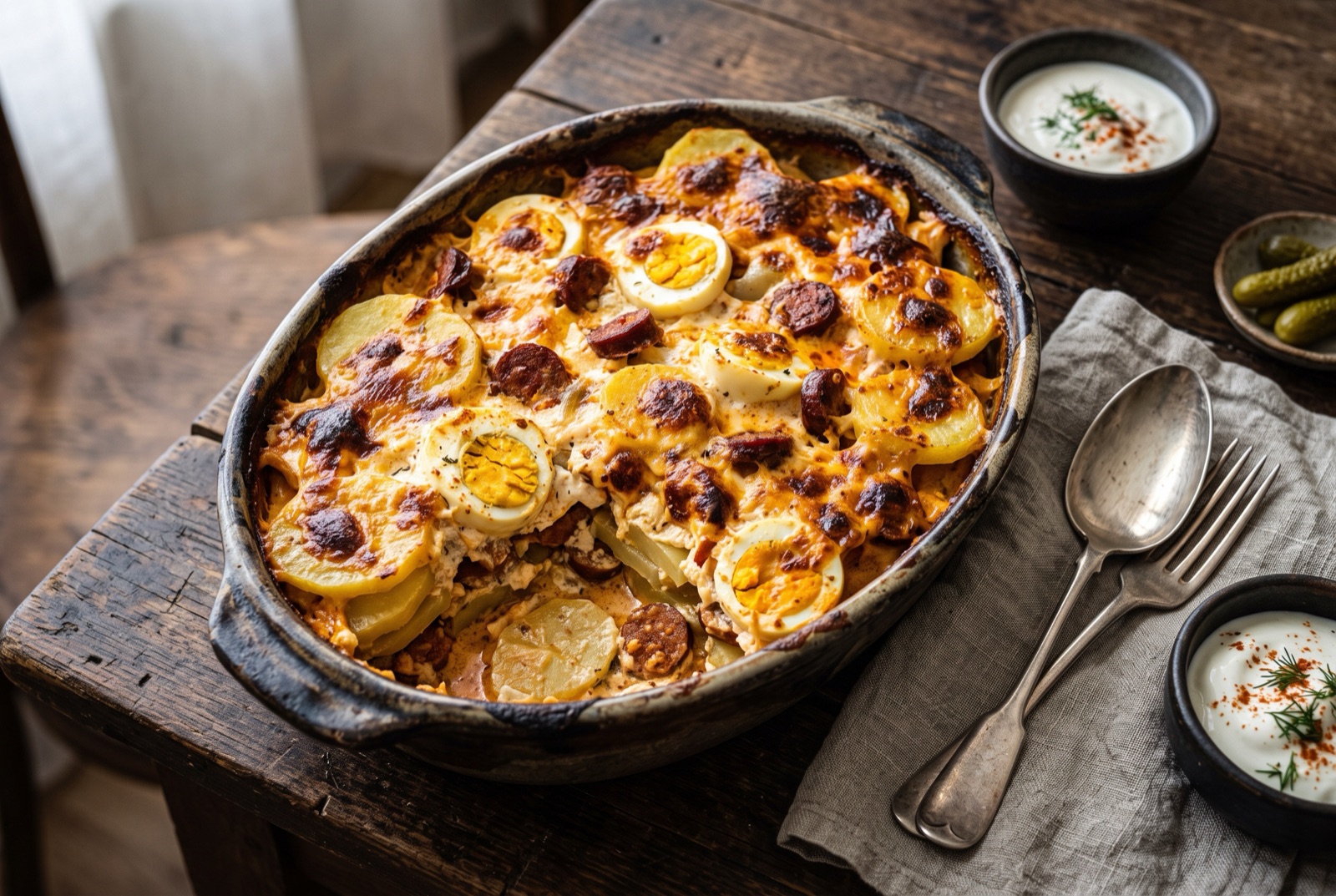
Hungary1 hr 35 min
Rakott Krumpli
Layered Potato and Egg Bake
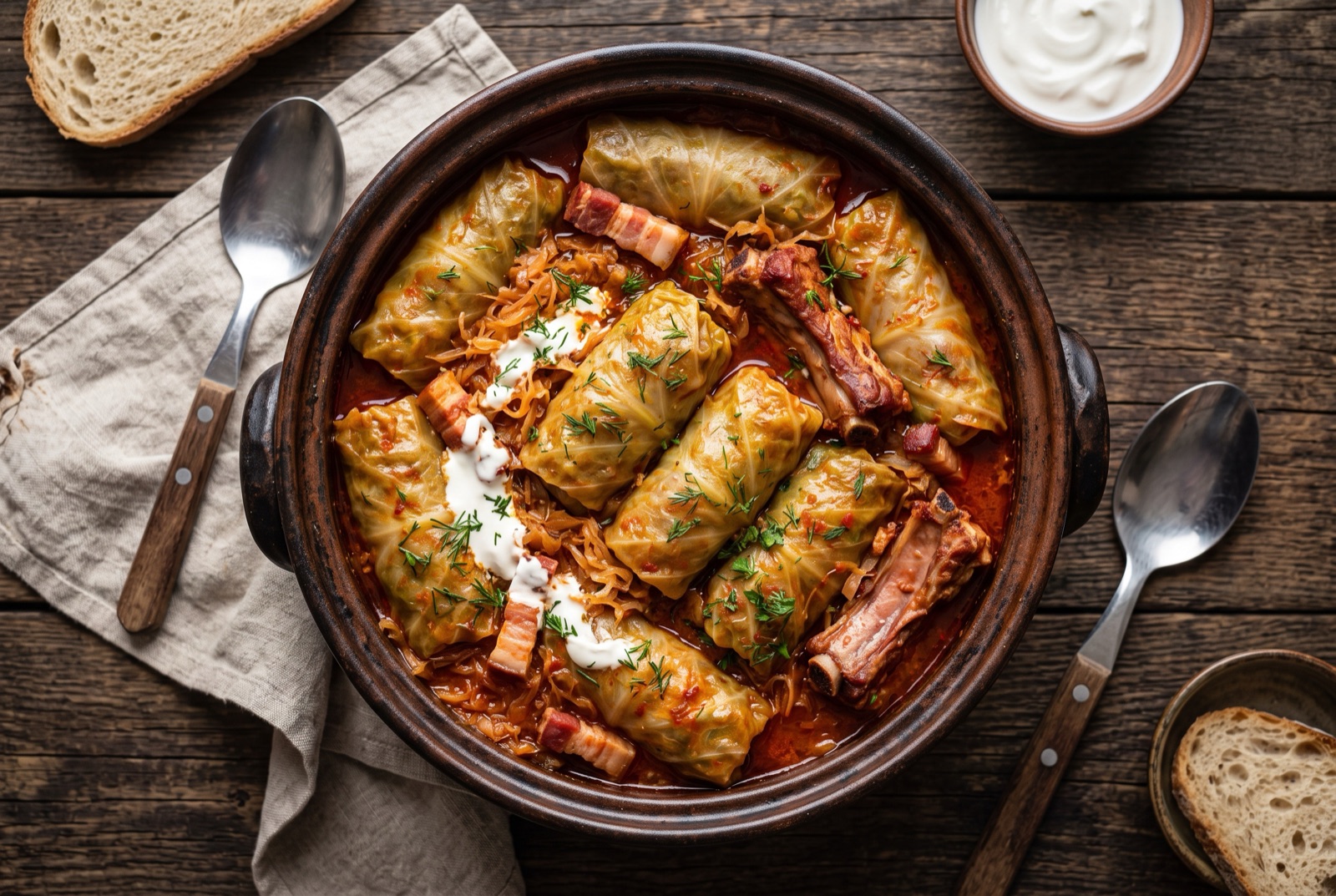
Hungary3 hr 35 min
Töltött Káposzta
Hungarian Sour Cabbage Rolls
Keep traveling.
Hungary sits in Central Europe, and its kitchen shares borders as well as ingredients with Albania and Austria.
 Albania
 Austria