Iceland.
Ísland
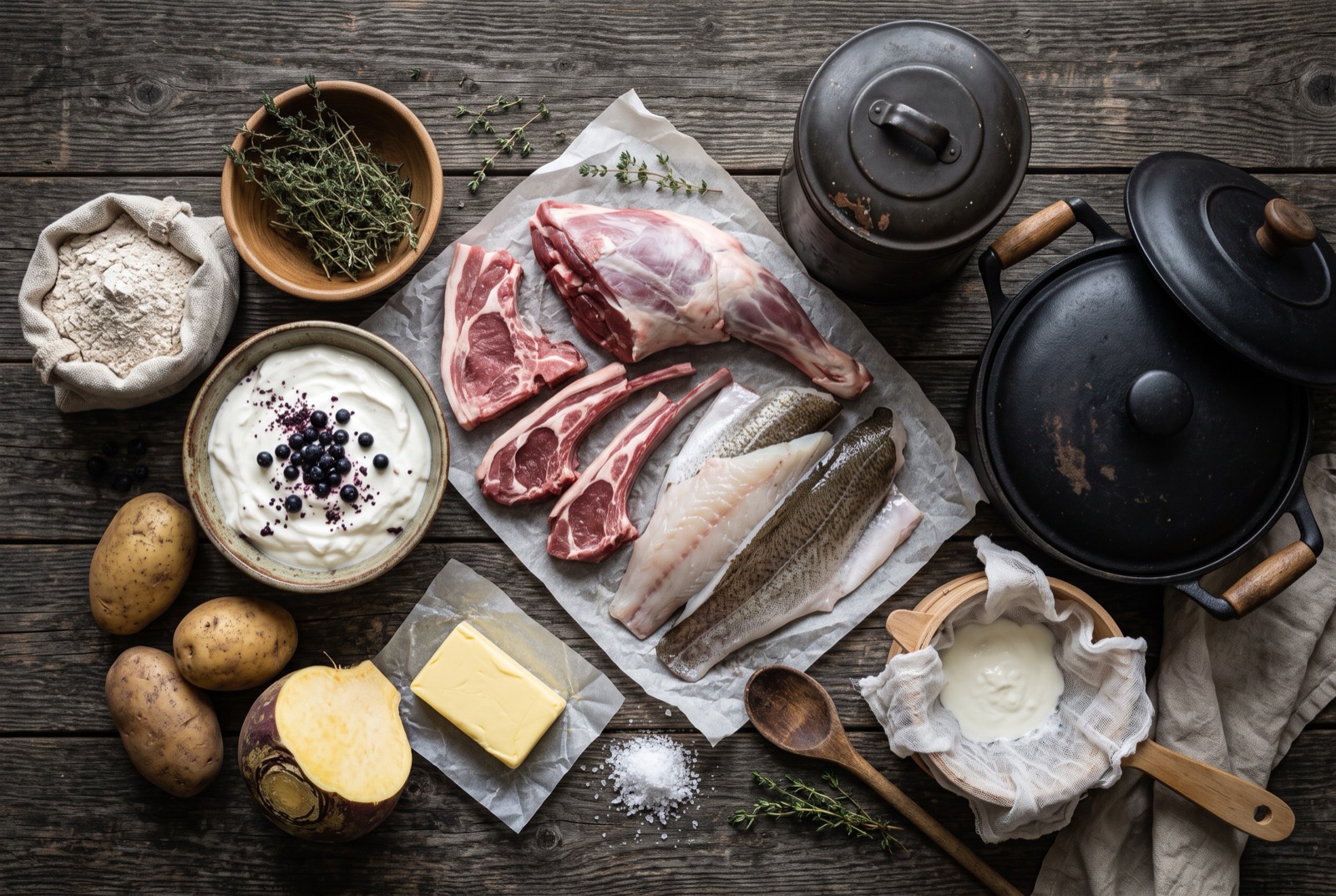
Icelandic cooking is what an island does when the raw material is superb and the growing season is short. For most of its thousand-year history the country produced almost no grain, few vegetables and no fruit worth counting — what it had was sheep, cold clean seawater full of cod and haddock, and milk. Everything else was imported, rationed or done without. So the kitchen organised itself around preservation rather than seasoning: fish dried in the wind until it snapped, lamb hung in smoke, meat and offal soured in whey through the winter, milk strained into skyr. Flavour came from the ingredient and the method, not from a spice shelf. That habit survives even now that Reykjavík supermarkets carry everything. Modern Icelandic home food is still salt-forward and plain in the best sense — boiled, poached, flaked, mashed, buttered — and the seasoning that Icelanders actually reach for is butter, black pepper, dried thyme, and a slice of dark rye.

- Continent
- EuropeNordics
- Recipes in atlas
- 10
- Must-try dishes
- 3
- Pantry staples
- 9
Start with the classics.
Must tryThe dishes that explain the Iceland kitchen fastest — if you cook only a few things from this page, cook these.
Inside the Iceland kitchen.
Lamb is the backbone. The Icelandic sheep is a single, closely guarded breed that has been on the island since the settlement, and the lambs spend their whole summer loose in the highlands eating wild grasses, thyme, moss campion and berries before the autumn round-up brings them down. That diet gives the meat a mild, faintly herbal taste with none of the heavy muttony edge people expect from sheep, which is why Icelanders roast a leg of it with almost nothing on it and let the gravy do the talking. Nothing is wasted either: the shanks and neck go into kjötsúpa, the legs are smoked into hangikjöt, and the parts most kitchens discard turn up at midwinter feasts as singed sheep's head, blood pudding and liver sausage.
Fish is the other half of the table, and Icelanders eat it the way inland countries eat chicken — casually, often, and without ceremony. Cod, haddock, wolffish, ocean perch and Arctic char dominate, and the standard home treatment is gentle poaching in salted water rather than frying or saucing. Two of the country's most-loved dishes, plokkfiskur and fiskibollur, exist specifically because a household ended up with more poached fish than it could eat at one sitting.
Preservation techniques still define the flavour vocabulary. Drying is the oldest: split fish hung in open slatted sheds where the cold Atlantic wind does the work, producing harðfiskur, a brittle protein snack eaten with butter. Smoking came next, and because Iceland has almost no forest, the traditional smoke came from birch scrub, driftwood and — genuinely, not as a novelty — dried sheep dung, which burns slow and cool and gives hangikjöt its particular sharp perfume. Souring in whey left over from skyr-making kept meat edible through winters without refrigeration; that sour food, þorramatur, is now eaten mostly at Þorri midwinter parties, more as heritage than as dinner.
Dairy runs through everything, and skyr is its centrepiece: skimmed milk cultured and set with rennet, then strained until it is thick enough to hold a spoon. It is technically a fresh cheese, not a yoghurt, and it has been made here since the settlement era. Butter is used with a heavy hand — on rye bread, on dried fish, melted over potatoes — and the plain white béchamel called uppstúfur is the standard sauce for boiled and smoked meat.
Bread is a late and slightly foreign arrival. Rye was imported grain, so it was treated as precious, sweetened with syrup and baked slowly into the dense dark rúgbrauð, sometimes steamed in the ground beside a hot spring where the geothermal heat holds a steady near-boiling temperature for a full day. Alongside that sits flatkaka, a thin rye flatbread scorched on a hot plate, eaten with butter and slices of smoked lamb. Geothermal heat now does daytime work too: greenhouses at Hveragerði and Flúðir grow tomatoes, cucumbers and herbs year-round, which is the main reason a modern Icelandic salad exists at all.
Signature pantry.
9 staplesThe ingredients this cuisine cannot function without.
- Icelandic lamb
- cod and haddock
- skyr
- rye flour
- butter
- potatoes
- swede (rutabaga)
- dried thyme
- wild crowberries and bilberries
How people eat in Iceland.
Icelanders eat early and without fuss — a light lunch around noon, dinner often before seven. Coffee is the social engine: it is offered the moment anyone crosses a threshold, and refusing the first cup is stranger than accepting the third. Afternoon coffee traditionally comes with something baked, kleinur or pancakes, and turning up at someone's house empty-handed is fine as long as you stay for the coffee. Sunday and holiday meals mean lamb, and Christmas Eve dinner at six o'clock is the most fixed appointment in the calendar. Tap water is the drink at the table — it comes straight from cold springs and Icelanders are quietly smug about it, so asking for bottled water in a home reads as an insult to the plumbing. Alcohol belongs to the weekend rather than to the meal.
Regional kitchens.
Iceland cooks 4 distinctly different ways depending on where you stand — here is what changes between them.
- R1Reykjavík and the Southwest
- Where the modern Icelandic table was invented: hot dog stands, harbour fish restaurants and bakeries, fed by geothermal greenhouses an hour inland at Hveragerði and Flúðir.
- R2The Westfjords
- The old drying country. Cold, wind-scoured fjords produce the country's most respected harðfiskur, and fermented Greenland shark is still prepared here in the traditional way.
- R3North Iceland and Mývatn
- Sheep-farming heartland around Eyjafjörður, and the place most associated with hverabrauð — rye bread buried in geothermal ground by the lake and dug up a day later.
- R4The South Coast and the Westman Islands
- Rich fishing grounds and seabird cliffs. Puffin and guillemot are still eaten here in season, and the islands keep some of the oldest preserving habits alive.
All Iceland recipes.
10 recipes and counting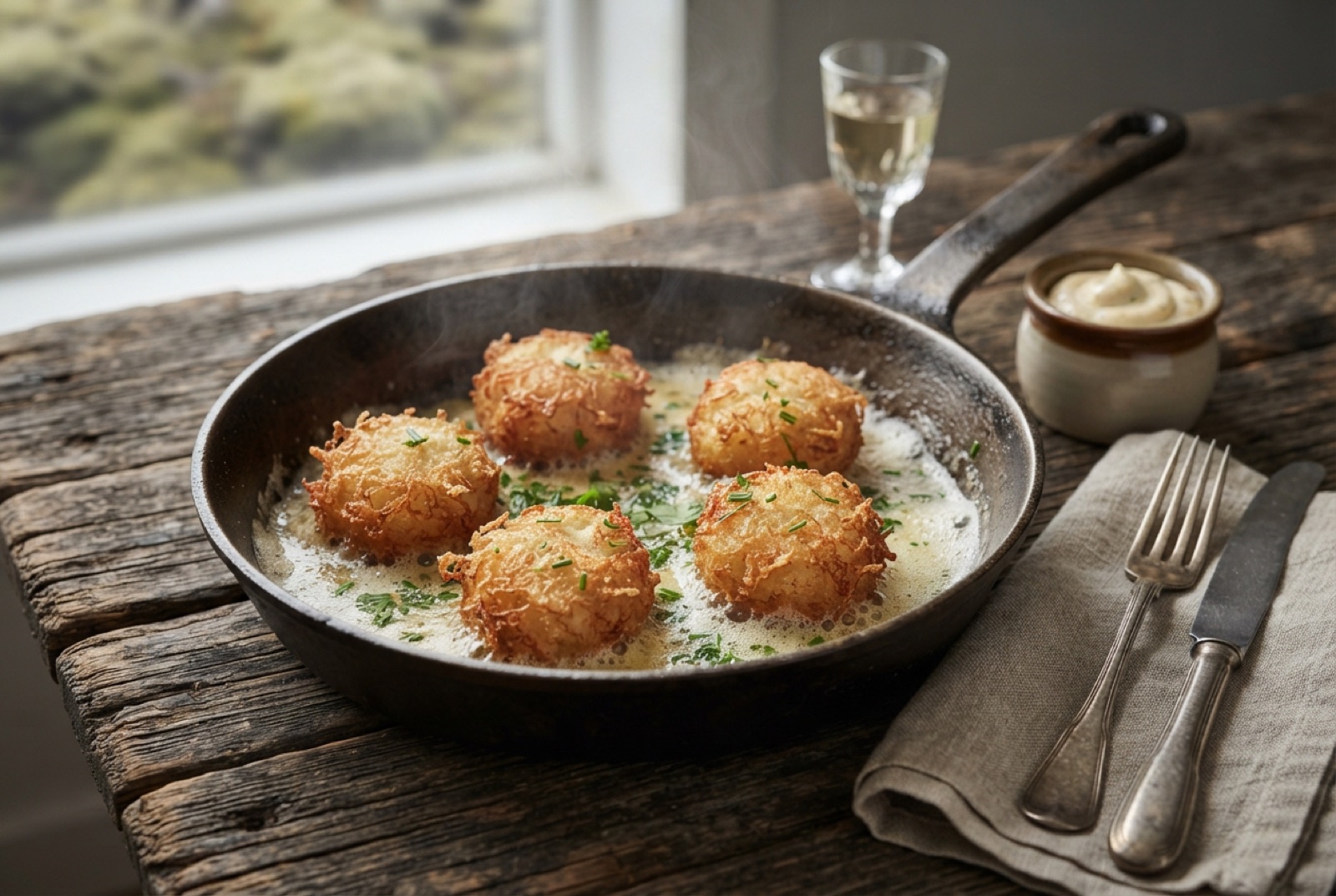
Iceland1 hr 15 min
Fiskibollur
Icelandic Fish Balls in Butter
Iceland2 hr 20 min
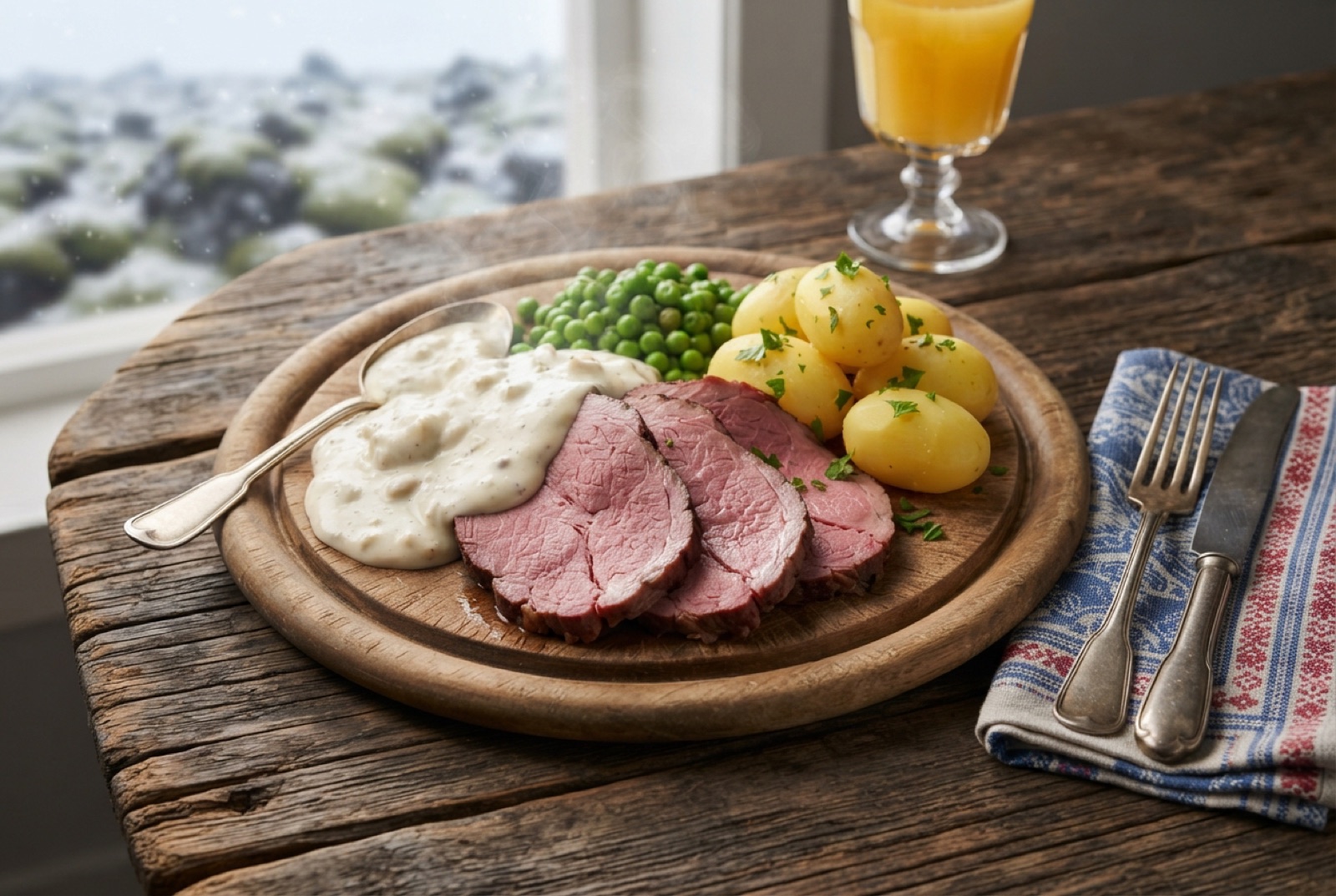
Hangikjöt
Icelandic Smoked Lamb with White Sauce
Iceland72 hr 40 min
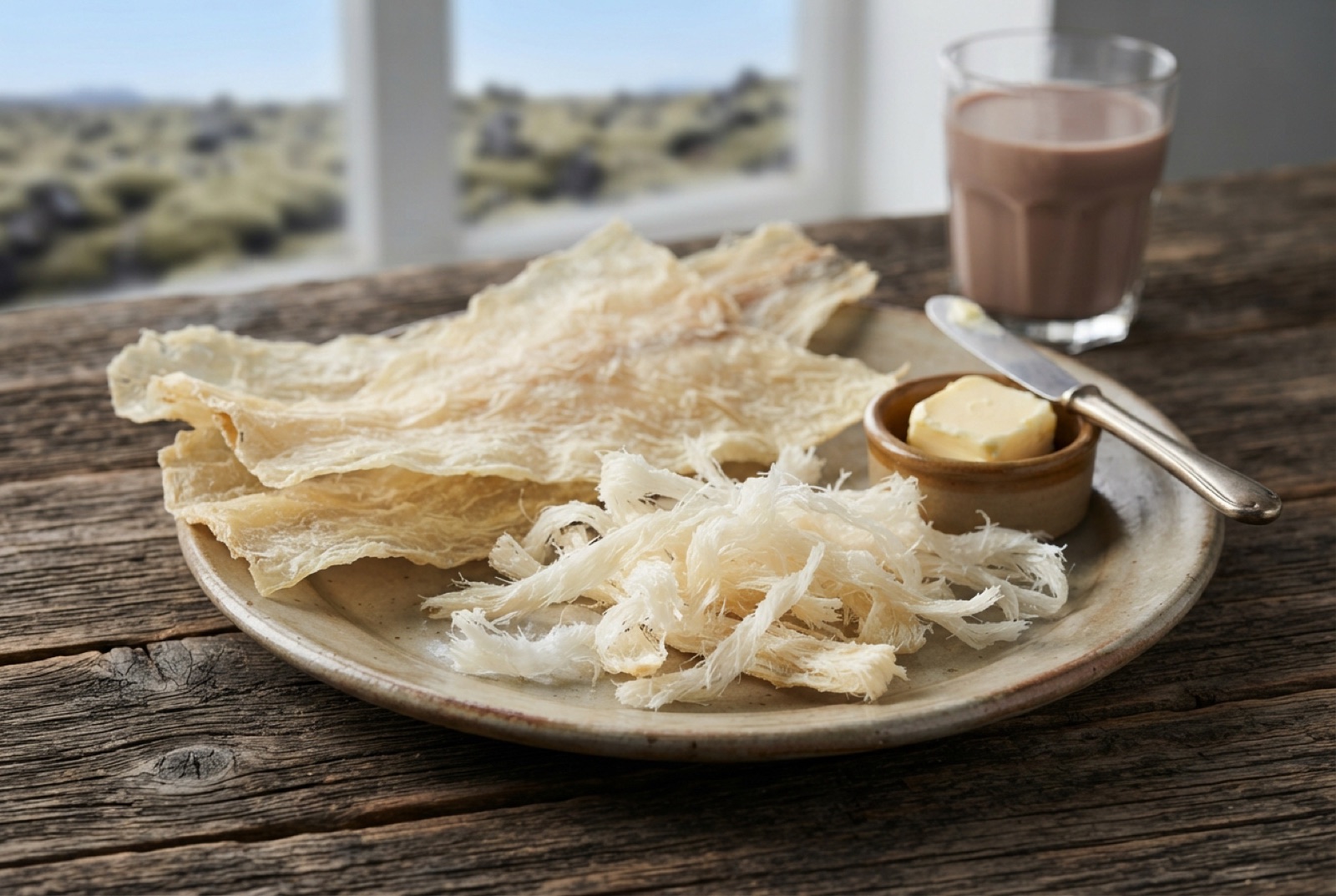
Harðfiskur
Icelandic Wind-Dried Fish Snack
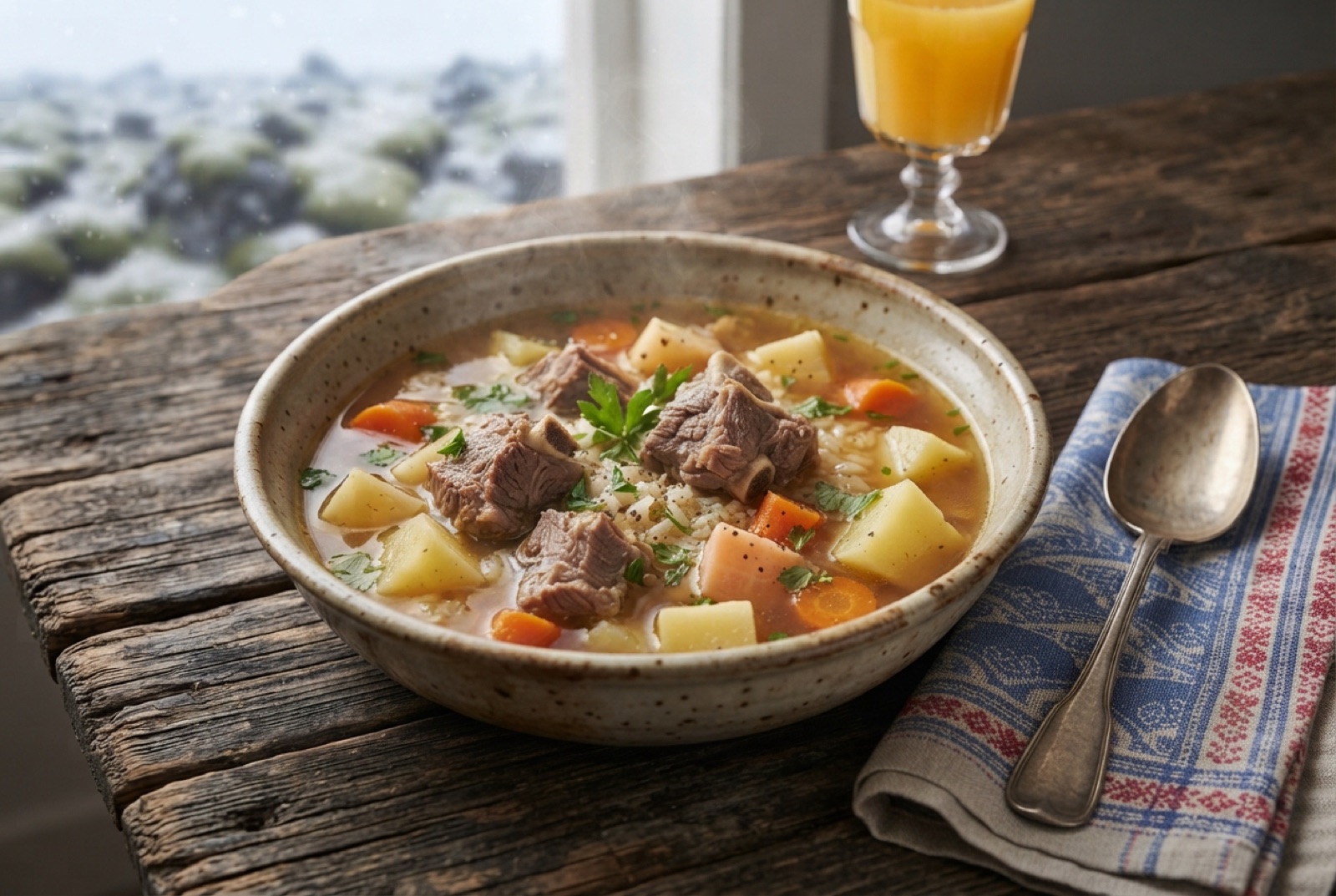
Iceland1 hr 55 min
Kjötsúpa
Icelandic Lamb and Root Vegetable Soup
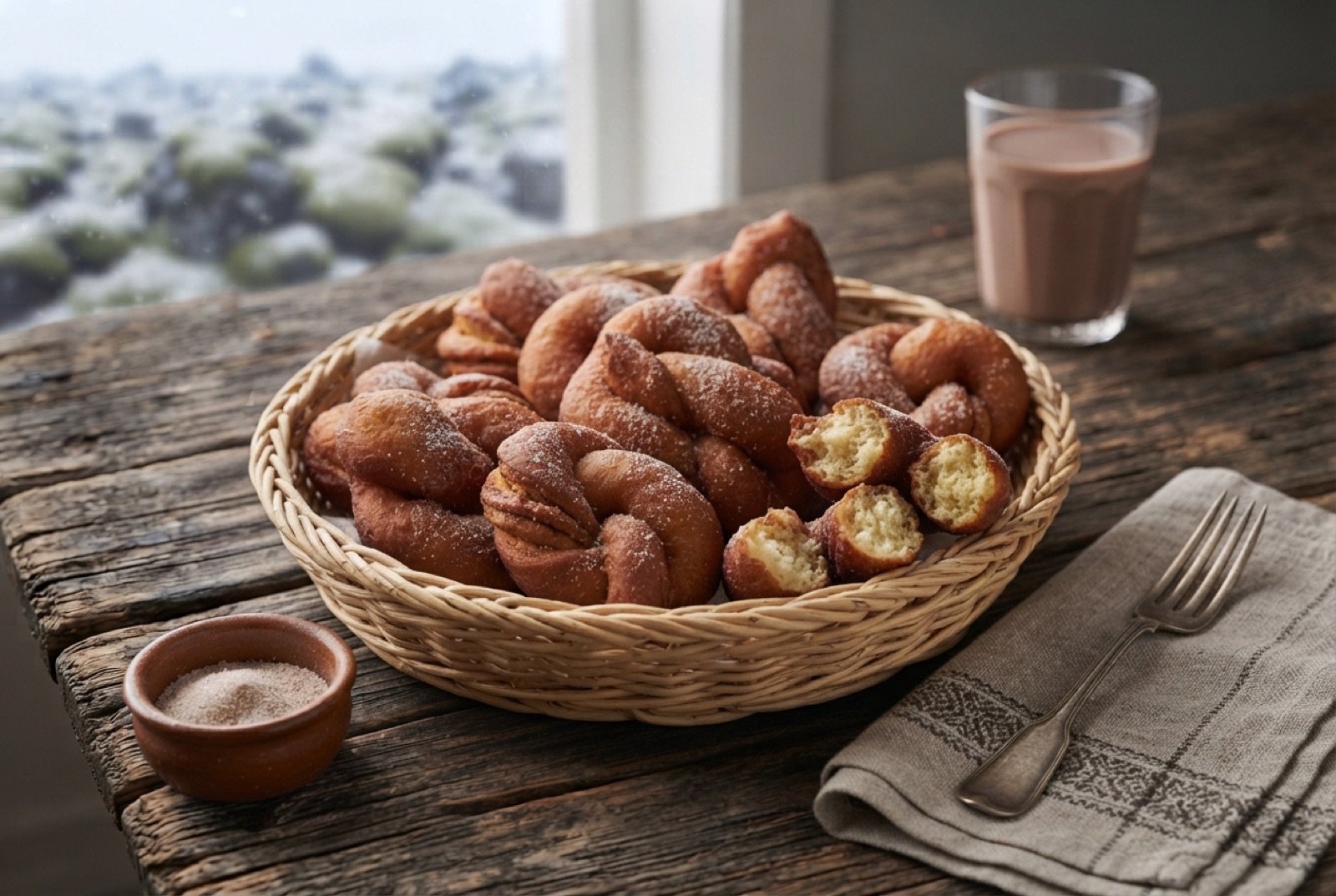
Iceland1 hr 20 min
Kleinur
Icelandic Twisted Cardamom Doughnuts
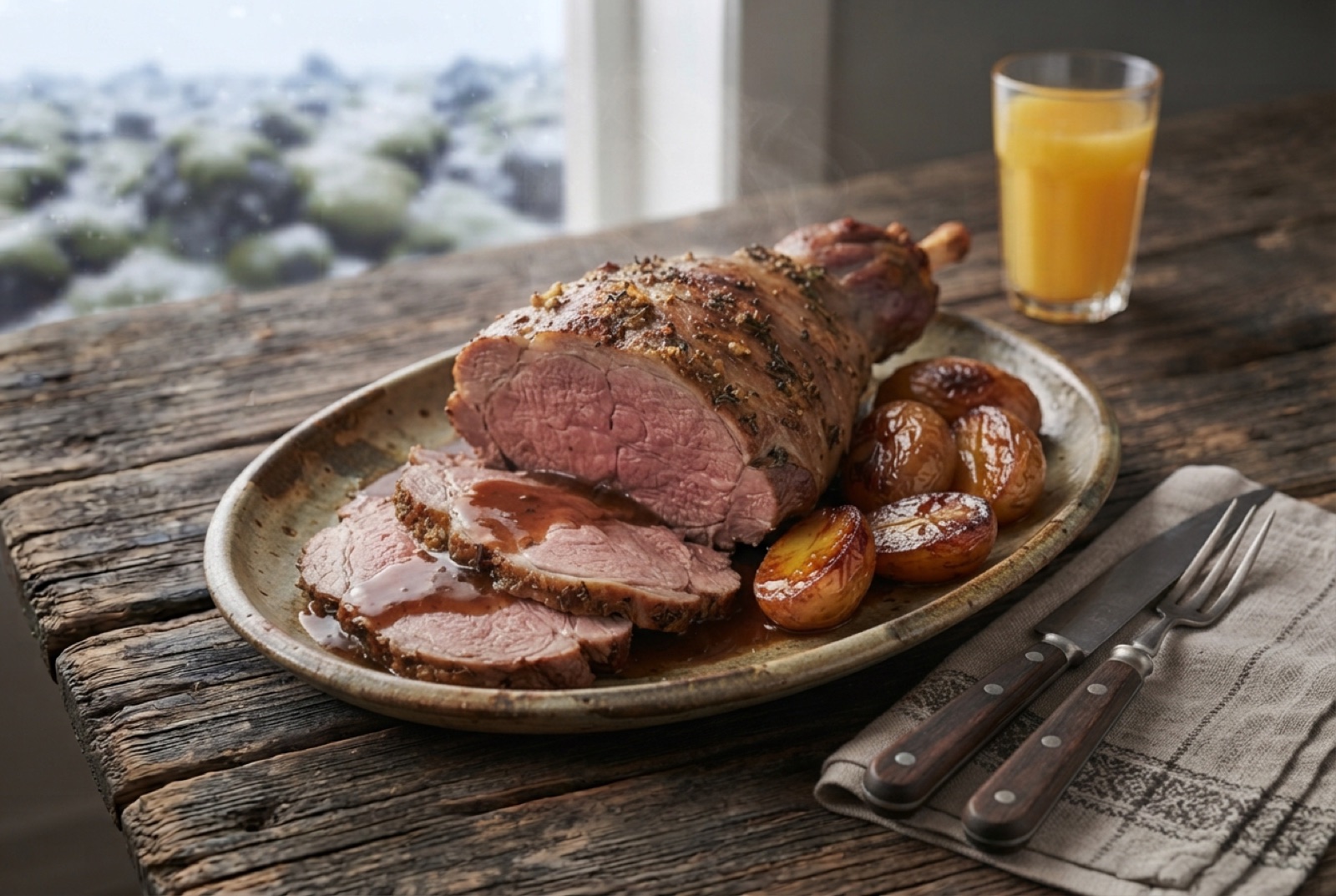
Iceland2 hr 20 min
Lambalæri
Icelandic Roast Leg of Lamb
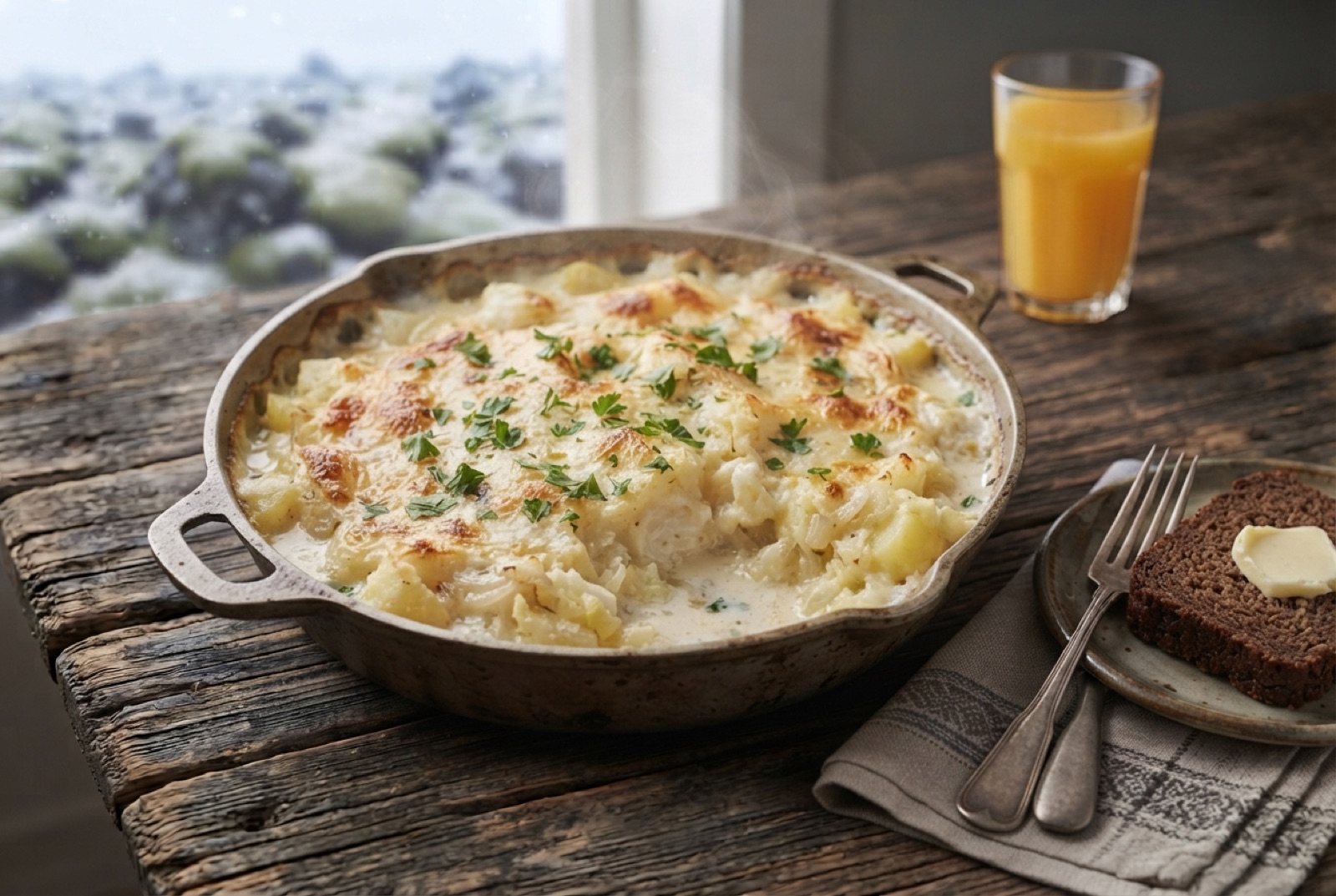
Iceland45 min
Plokkfiskur
Icelandic Fish and Potato Mash
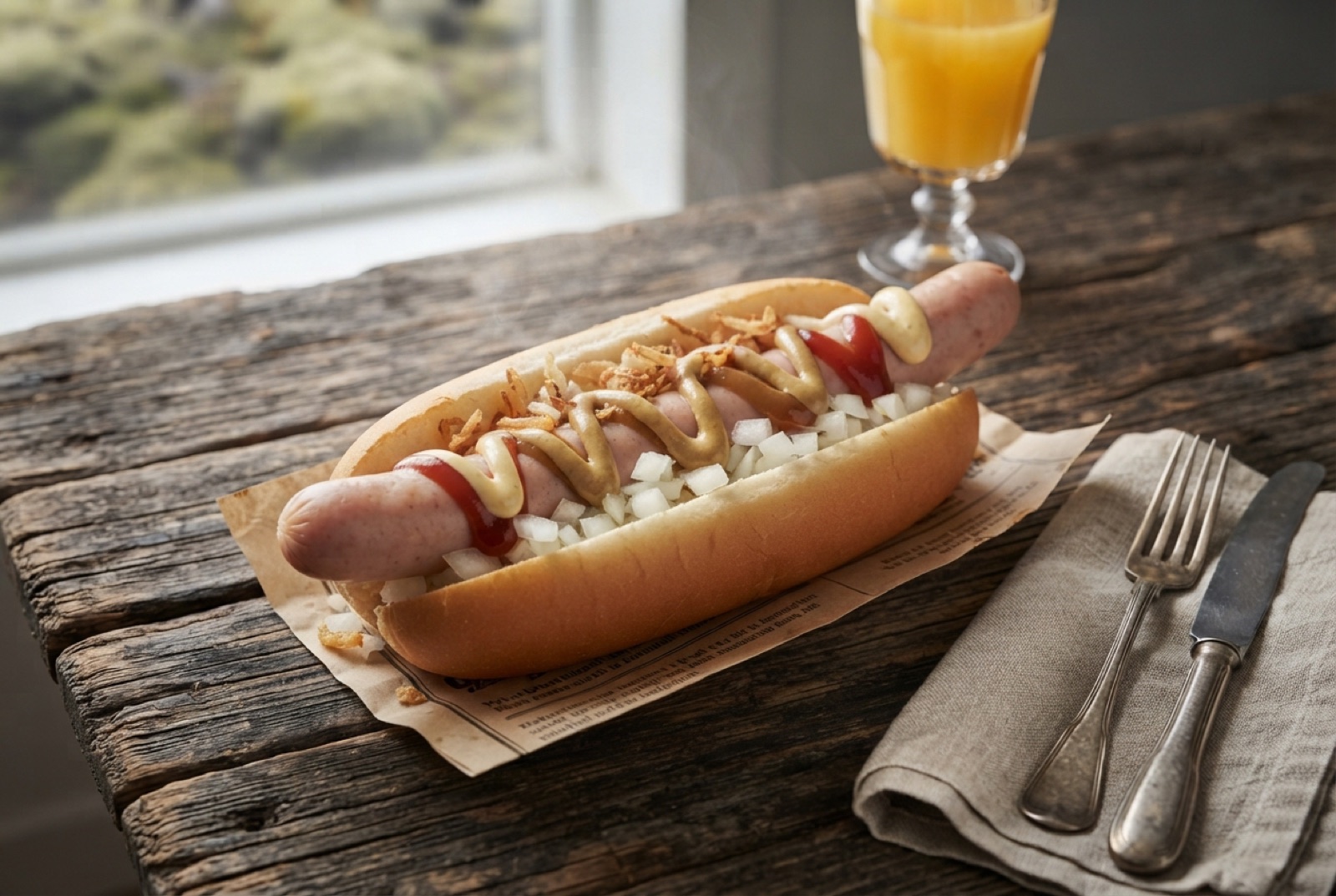
Iceland35 min
Pylsur
Icelandic Lamb Hot Dog with Everything
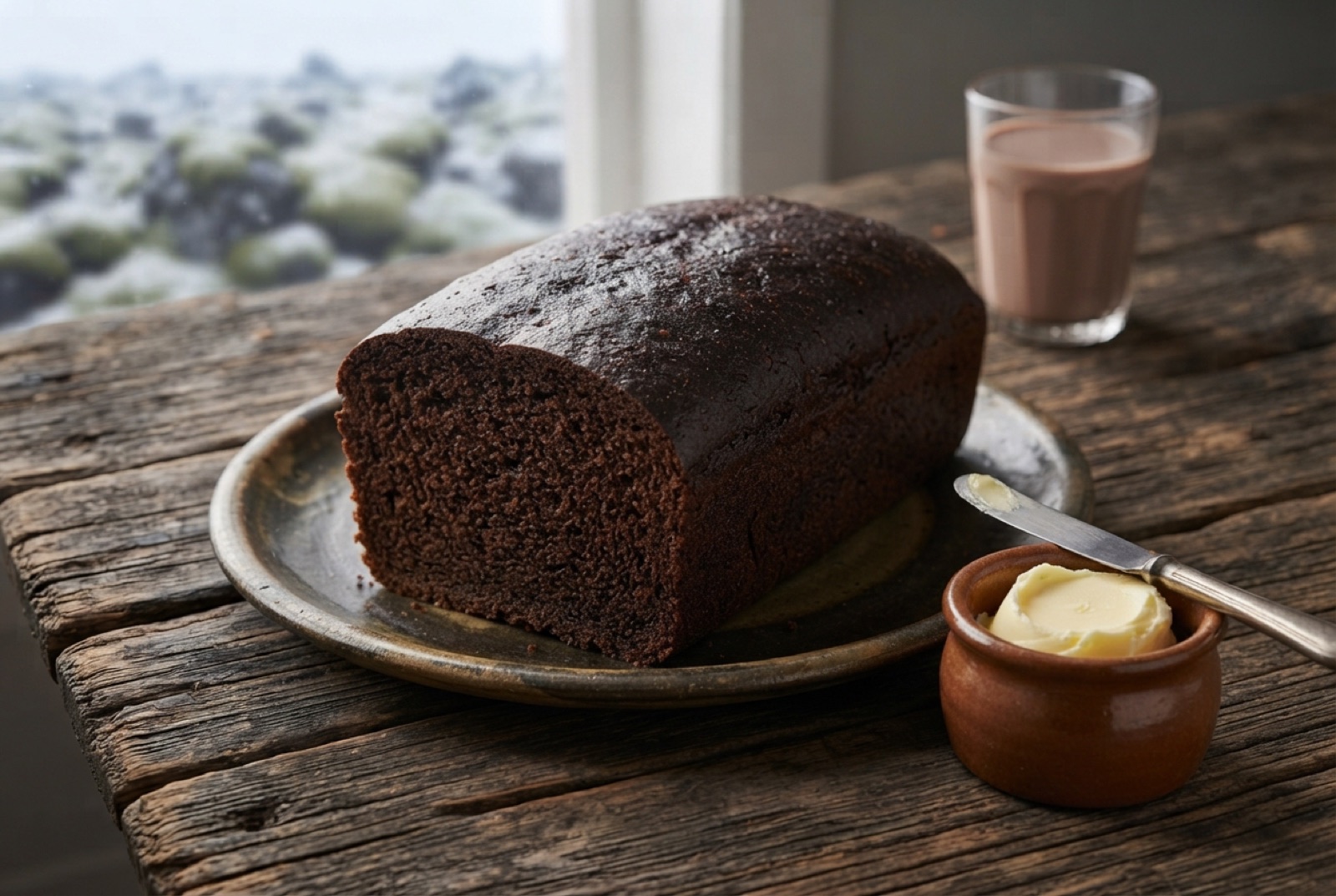
Iceland20 hr 15 min
Rúgbrauð
Icelandic Steamed Dark Rye Bread
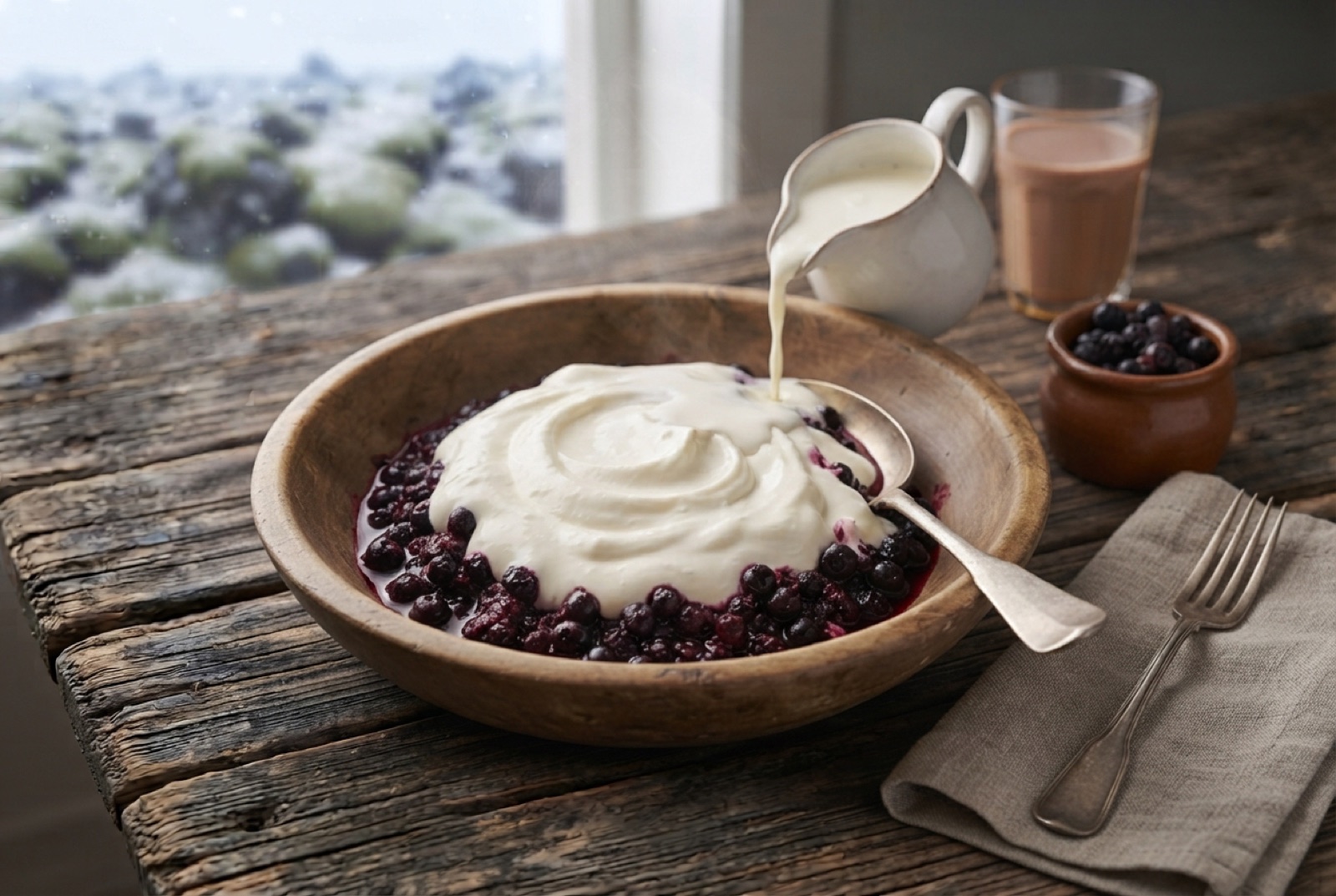
Iceland30 min
Skyr með berjum
Icelandic Skyr with Wild Berries
Keep traveling.
Iceland sits in Nordics, and its kitchen shares borders as well as ingredients with Albania and Austria.
 Albania
 Austria