Kleinur.
Icelandic Twisted Cardamom Doughnuts
Kleinur · say it: KLAY-nur
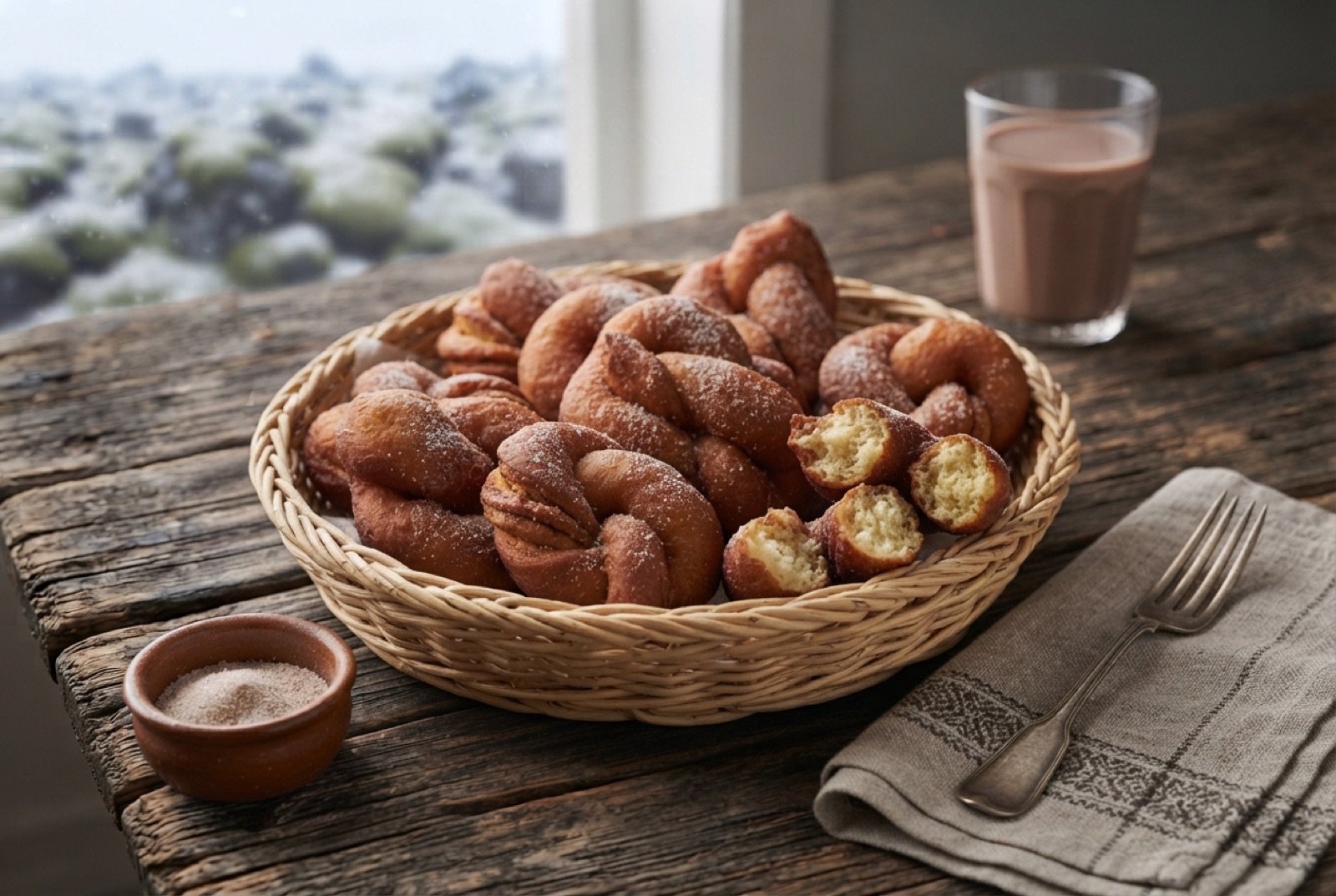
Kleinur are Iceland's everyday fried pastry: a firm, lightly sweetened dough flavoured with cardamom, rolled thin, cut into diamonds and pulled through a slit so each one twists into a loose knot. They are not doughnuts in the American sense — there is no yeast, no glaze and very little sugar in the dough itself. The texture sits between a scone and a cake doughnut, dense enough to tear rather than pull apart, with crisp edges from the fat and a warm cardamom smell that fills the kitchen for hours. They are made for coffee, eaten by the handful, and honest about their shelf life: kleinur are best the day they are fried and noticeably tired by the second.

- Gate
- Iceland
- Prep
- 30 min
- Cook
- 20 min
- Total time
- 1 hr 20 min incl. 30 min rest
- Serves
- 6
- Status
- Medium
- Nutrition / serving · estimated
- Calories 340 kcal
- Protein 6 g
- Carbs 48 g
- Fat 14 g
- Fiber 2 g
- Sugar 14 g
Why this recipe works.
- The dough is chilled before rolling, which is the difference between clean-cut diamonds and stretched, misshapen knots.
- Frying temperature is given with a visual test, not just a number — the single biggest cause of greasy kleinur is oil that is too cool.
- Cardamom is ground fresh from pods, where most of the aroma actually lives.
- Honest about storage: what these taste like on day two, and what to do about it.
Ingredients.
9 itemsEquipment
- Heavy pot or deep fryer
- Cooking thermometer
- Rolling pin
- Slotted spoon
- Cooling rack
Instructions.
Mix the dry ingredients
Whisk 500 g, the sugar, baking powder, 2 tsp and salt together in a large bowl until the spice is evenly distributed and you can smell it clearly.
Cut in the butter
Rub 60 g into the dry mixture with your fingertips until it disappears and the flour feels faintly sandy, like coarse breadcrumbs with no visible lumps of fat left.
Bring the dough together
Beat 2 with 180 ml and pour into the bowl. Mix just until a firm, slightly tacky dough forms — stop as soon as there is no dry flour left, since kneading makes kleinur tough.
Tip The dough should feel stiffer than a scone dough. If it sticks to your palm, work in flour a tablespoon at a time.
Chill
Wrap the dough and refrigerate for at least 30 minutes. Cold dough cuts cleanly and holds its knot in the oil instead of pulling open.
Roll and cut
Roll the dough out on a floured surface to about 5 mm thick. Cut into diamonds roughly 8 cm long, then make a 3 cm slit through the centre of each one.
Twist the knots
Take one pointed end of each diamond, pull it through the slit and let it fall back so the pastry twists into a loose knot. Lay them on a floured tray as you go.
Heat the oil
Heat the oil to 175 °C in a heavy pot. Test it with a scrap of dough: it should sizzle steadily and float up within about two seconds, without browning instantly.
Fry in batches
Fry four or five at a time for 1–2 minutes, until the underside is deep gold, then turn once and fry the second side. Lift onto a rack and let the oil recover before the next batch.
Tip Deep gold, not pale — undercoloured kleinur taste raw and doughy in the middle.
Cool briefly and serve
Let them cool for a few minutes on the rack so the insides finish setting, then serve warm with strong black coffee.
Tips from our kitchen.
- Grind cardamom from whole pods if you can. Pre-ground loses most of its aroma within weeks, and this dough has nowhere to hide a weak spice.
- Chill the dough at least 30 minutes. Warm dough drags under the knife, and the knots pull open in the oil instead of holding their shape.
- Keep the oil at 175 °C. Too cool and they drink fat; too hot and the outside colours before the middle sets — a scrap of dough should sizzle and rise within two seconds.
- Fry in small batches. Crowding drops the oil temperature fast and every pastry after the third suffers for it.
- Turn them once, when the underside is deep gold. Repeated flipping breaks the crust that keeps the fat out.
- Drain on a rack rather than paper. Paper traps steam and softens the crisp edge you just fried into them.
Substitutions.
- Cardamom → Ground cinnamon, or a mix of cinnamon and a pinch of nutmeg
- Not traditional, but it works. Do not simply omit the spice — plain fried dough at this sugar level tastes flat.
- Buttermilk → Plain yogurt thinned with milk, or milk with a teaspoon of vinegar left to stand 10 minutes
- The acid is doing real work with the baking powder; sweet milk alone gives a denser, heavier pastry.
- Neutral frying oil → Rendered beef or mutton tallow
- The traditional fat. It browns faster and leaves a faintly savoury note that older recipes assume — worth trying once if you can get it.
Variations.
- Ástarpungar
- Literally "love balls" — a related Icelandic fried sweet made from a softer, spoonable batter with raisins, dropped straight into the oil instead of rolled and cut.
- Sugar-dusted kleinur
- Some households toss them in cinnamon sugar while still warm. Purists leave them plain, since the dough is meant to be barely sweet.
Storage & reheating.
Kleinur are at their best within hours of frying. Kept in a sealed tin at room temperature they stay acceptable for two days, though the crisp edge goes soft; a few minutes in a 160 °C oven revives them better than a microwave, which turns them chewy. They freeze well once cooled — bag them flat, then reheat from frozen in a moderate oven for about eight minutes.
Serve with
Strong filter coffee, black — the standard Icelandic pairing, and the reason the dough is not sweeter.
The story behind Kleinur.
Fried dough travelled to Iceland from Denmark during the centuries of Danish rule, and kleinur belong to the same Nordic family as Danish klejner, Norwegian fattigmann and Swedish klenäter. What separates them is proportion and occasion. The Scandinavian versions lean thin, brittle and Christmas-bound; the Icelandic one is thicker, softer, and made all year, which turned it from a holiday sweet into ordinary coffee-table food.
That shift says something about how Icelandic baking worked. For most of the island's history, fuel and wheat were both imported and expensive, and ovens were rare in rural homes well into the nineteenth century. Cooking happened on a hearth or a stovetop, which is exactly what fried dough needs and baked cake does not. Kleinur, along with pönnukökur and flatbread cooked on a griddle, belong to that stovetop tradition — sweets a household could make without an oven, using flour that arrived by ship and fat that did not.
The cardamom is the Nordic signature and the part people notice. It arrived through Danish trade routes and settled permanently into the region's baking, where it does the work that vanilla or cinnamon does elsewhere. Icelandic recipes are usually restrained with it: enough to scent the dough, not enough to announce itself.
The traditional frying fat was rendered mutton or beef tallow, and older Icelanders will tell you kleinur have never tasted quite the same since neutral vegetable oil took over — a claim worth taking seriously, since tallow browns differently and leaves a distinctly savoury edge. Most home cooks today use oil and accept the trade, which is the usual honest ending to these stories: the recipe survived, one ingredient quietly did not.
Questions, answered.
Why did my kleinur turn out greasy?
The oil was too cool. Below about 165 °C the dough absorbs fat before the surface sets and seals. Use a thermometer, fry in small batches, and let the oil come back up to temperature between them.
Do I need yeast for kleinur?
No. Kleinur are leavened with baking powder, sometimes with a little baker's ammonia in older recipes. They are a quick dough — there is no rising time, and the texture is meant to be cakey rather than airy like a yeast doughnut.
How do I make the twist?
Cut the rolled dough into diamonds, make a short slit through the centre of each, then pull one pointed end through that slit and let it fall back. It takes one or two attempts to get the feel, and slightly imperfect knots are completely normal.
Can I bake them instead of frying?
You can, but the result is a different pastry — drier, paler and closer to a plain biscuit. The fried crust is most of what makes a kleina taste like a kleina, so baking is a compromise rather than a substitution.
How are kleinur different from Danish klejner?
They share an origin and a shape, but Icelandic kleinur are usually thicker and softer, made year-round as everyday coffee food. Danish klejner tend to be thinner and crisper and belong mainly to Christmas baking.
You might also like.
All recipes →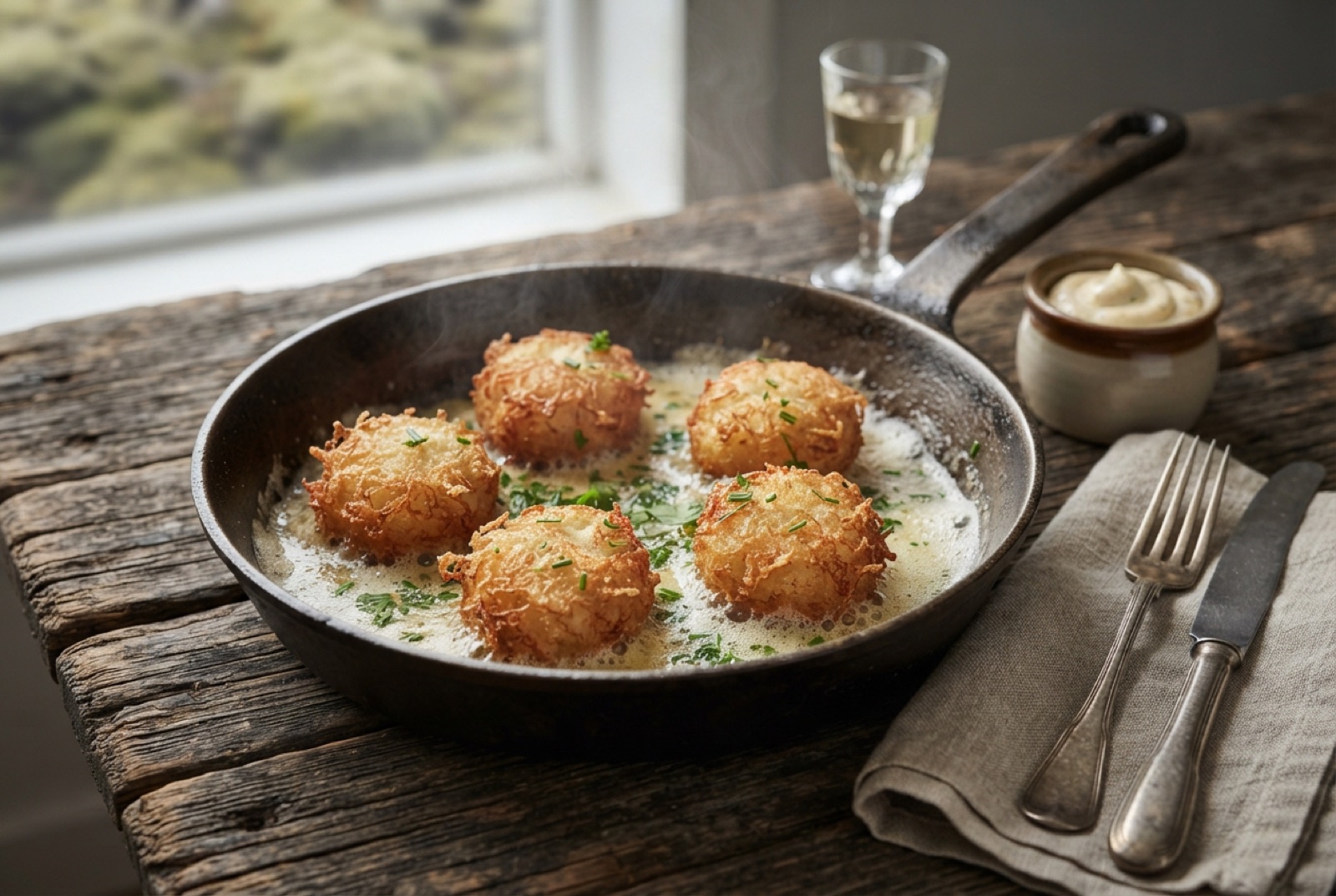
Keep exploring Iceland.
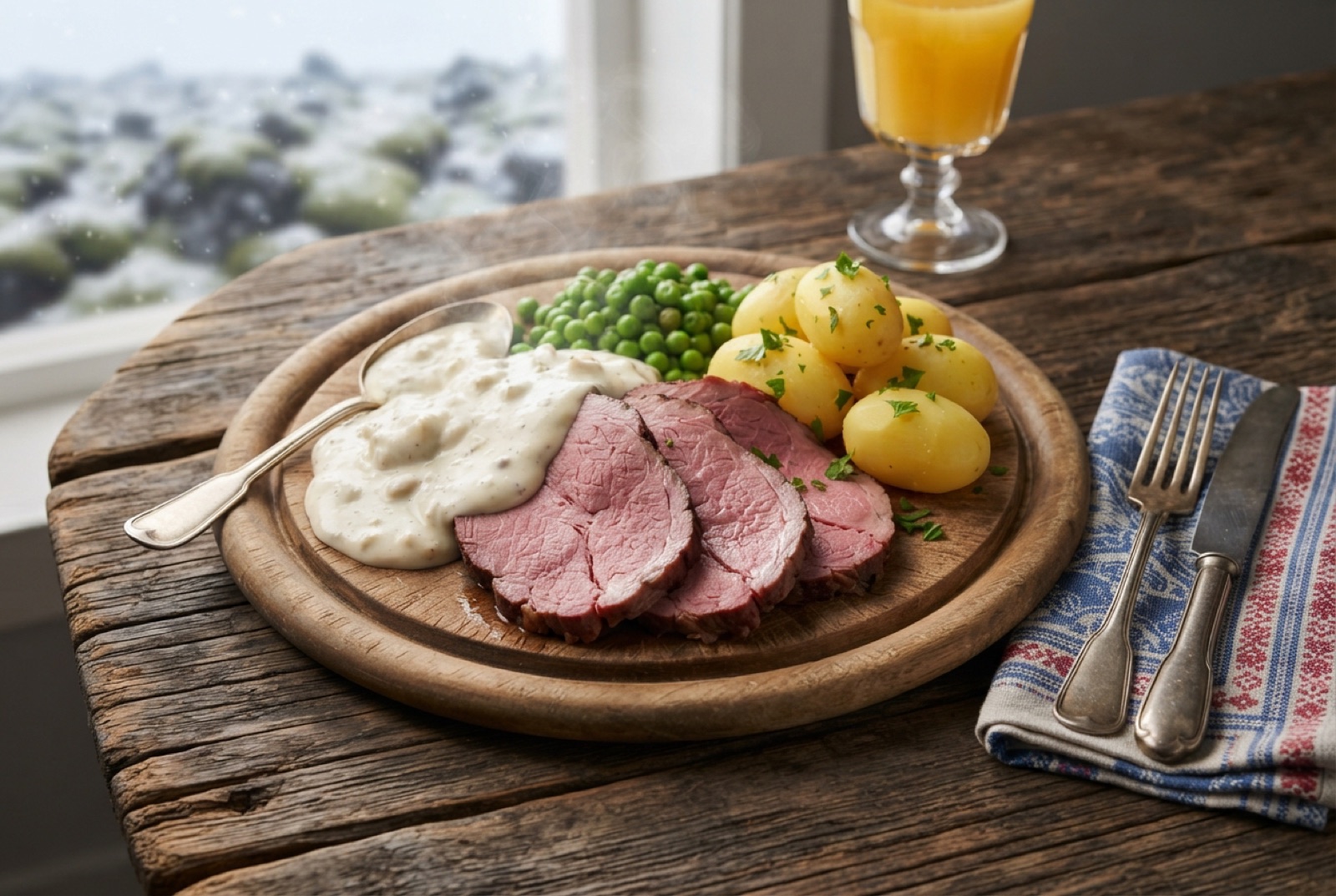
Iceland has 9 more dishes in the atlas — Fiskibollur and Hangikjöt, and 7 more.
Recipe by The DishRoute Kitchen · published August 19, 2026 · updated August 19, 2026