Iran.
ایران
Persian cooking is built on balance rather than heat: sweet against sour, rich against sharp, with almost no chile anywhere in the classic repertoire. The defining flavours are fruit and acid — pomegranate molasses, dried limes, barberries, sour cherries, unripe grapes, tamarind down on the Gulf coast — used the way other cuisines use vinegar, to cut the fat of slow-cooked lamb. Saffron is the signature perfume, always ground with a pinch of sugar and bloomed in a splash of hot water so it colours evenly instead of clumping, while turmeric does the quiet background work in almost every pot. Herbs are treated as a bulk ingredient rather than a garnish: a single stew can swallow half a kilo of parsley, coriander and fenugreek, fried down until they darken and turn nutty. Rice is not a side dish but the centre of the table, parboiled and then steamed grain by separate grain, with the crisp golden crust at the bottom of the pot — tahdig — treated as the best part of the meal and portioned out like treasure.

- Continent
- AsiaMiddle East
- Recipes in atlas
- 10
- Must-try dishes
- 3
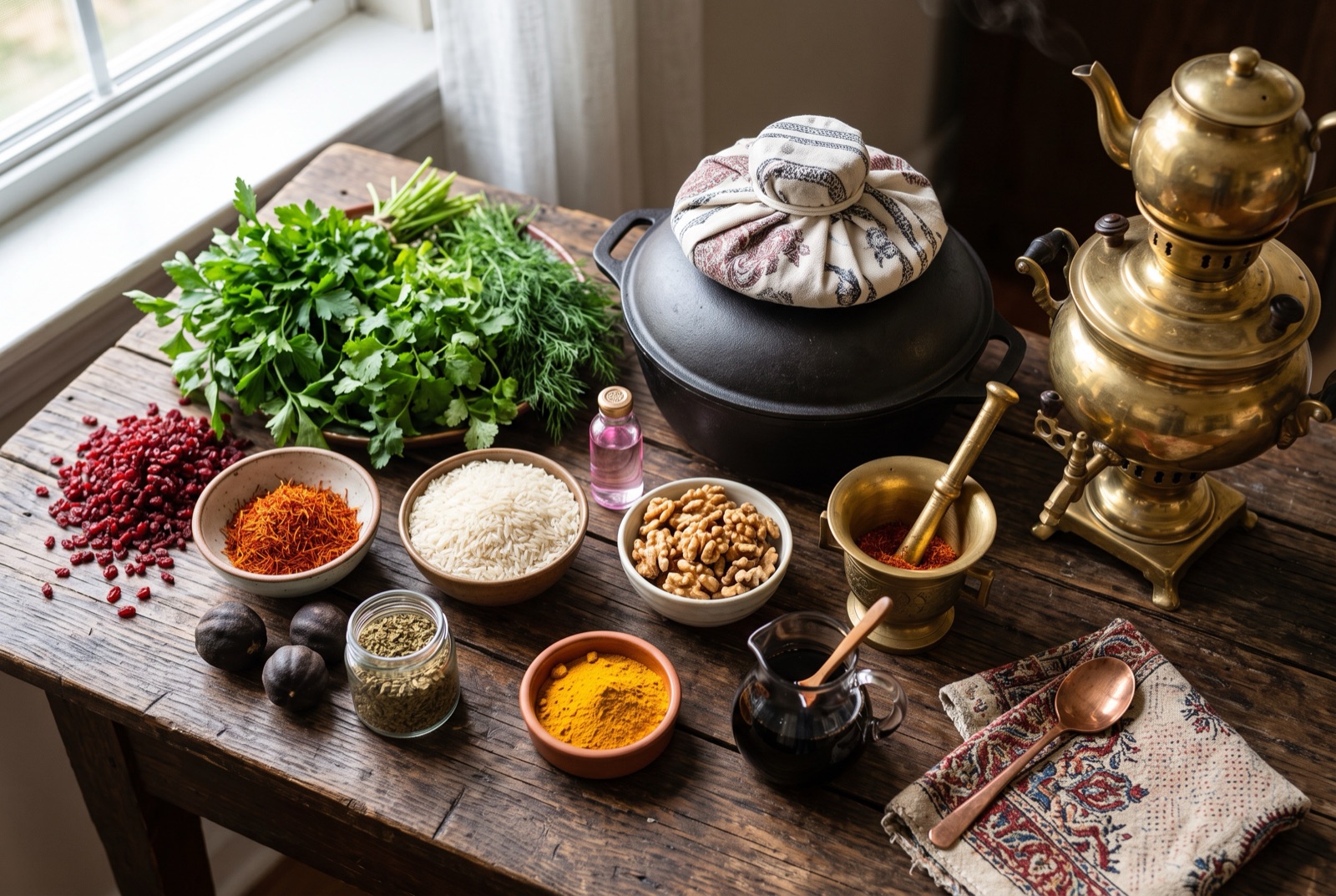
- Pantry staples
- 10
Start with the classics.
Must tryThe dishes that explain the Iran kitchen fastest — if you cook only a few things from this page, cook these.
Inside the Iran kitchen.
The backbone of the Iranian table is the khoresh, a slow stew ladled over rice rather than served as a bowl of its own. The method barely changes from dish to dish: onions chopped fine and fried in oil with turmeric until they are properly golden, meat turned in that same pan until it loses its raw colour, then water, a lid, and hours of low heat. What makes each khoresh different is the souring agent added along the way — dried limes for ghormeh sabzi, pomegranate molasses for fesenjan, split peas and lime for gheimeh, unripe grapes or verjuice for others. The stew is judged finished not by a timer but by the layer of coloured oil that rises to the surface, which cooks call the sign that the ingredients have stopped being separate things.
Rice deserves its own paragraph because Iranians treat it as a craft. Long-grain rice is rinsed until the water runs clear, often soaked in salted water for hours, then boiled hard in plenty of water for only a few minutes and drained the moment the grains bend but still snap in the middle. The pot is then rebuilt: fat in the bottom, a crust layer of plain rice, potato slices or flatbread, the parboiled rice mounded over it in a pyramid, holes poked through for steam, and a cloth-wrapped lid clamped on for forty minutes of gentle steaming. Plain steamed rice is chelo; rice layered or cooked with something else — lentils, sour cherries, dill and broad beans, herbs — is polow. The crust that forms underneath is tahdig, and its quality is how a cook is quietly judged.
The herb habit runs through everything. Sabzi means both greens and the enormous bunches of parsley, coriander, dill, chives, tarragon and mint sold in every market, and Persian recipes use them in quantities that alarm cooks from other traditions. They go into stews, into kuku frittatas where herbs outnumber egg several times over, into aash soups thick enough to stand a spoon in, and onto the table raw as sabzi khordan, the plate of herbs, radish, walnut and feta that sits beside almost every meal.
The other half of the cuisine is fire. Kababs — minced koobideh, lamb fillet barg, saffron-yogurt chicken joojeh — are grilled over charcoal on flat swords and served with saffron-buttered rice and a blistered tomato, usually from a kababi rather than made at home. Bread does the same job in the morning: sangak baked on hot pebbles, barbari, lavash, torn and eaten with feta, walnuts and hot sweet tea.
Regional cooking splits sharply. The Caspian provinces of Gilan and Mazandaran are the garlic-and-sour belt, with smoked fish, walnut sauces, sour orange and charred aubergine. Azerbaijan in the northwest leans towards meatballs, dried fruit and dense soups. The Gulf south cooks with tamarind, fresh chile, fenugreek and fish, and tastes closer to the Indian Ocean than to Tehran. Meals themselves are structured around rice and a stew with everything else — yogurt, pickles, herbs, bread, salad — arriving at once, and dessert is usually fruit, tea and something small and rosewater-scented rather than a course.
Signature pantry.
10 staplesThe ingredients this cuisine cannot function without.
- saffron
- dried limes (limoo amani)
- pomegranate molasses
- barberries (zereshk)
- fresh parsley, coriander and dill
- dried fenugreek leaves
- long-grain rice
- walnuts
- rosewater
- turmeric
How people eat in Iran.
Meals are laid out on a sofreh — a cloth spread on the table or on the floor — with everything arriving together rather than in courses. Rice sits in the middle, the stew is ladled over each plate, and yogurt, pickles, bread, salad and a plate of raw herbs with feta stay within reach for the whole meal. Portions are pressed on guests repeatedly, and refusing food once or twice before accepting is normal politeness rather than reluctance. Doogh, a salted fizzy yogurt drink, is the usual accompaniment. Afterwards comes fruit, then black tea poured very hot into small glasses and drunk through a sugar cube held between the teeth, often stretching on far longer than the meal itself did.
Regional kitchens.
Iran cooks 4 distinctly different ways depending on where you stand — here is what changes between them.
- R1Tehran and the central plateau
- The kababi-and-khoresh heartland, where the standard national repertoire was fixed: ghormeh sabzi, gheimeh, saffron rice with barberries, and charcoal kabab shops on every other corner.
- R2Gilan and Mazandaran (the Caspian)
- Green, wet and rice-growing, with a kitchen built on garlic, walnuts, sour orange and smoked fish. Mirza ghasemi and fesenjan both come from this coast, and the food here is noticeably sourer and more garlicky than in Tehran.
- R3Iranian Azerbaijan and Tabriz
- Northwestern cooking of giant stuffed meatballs, dried fruit and sour plums, hearty aash soups and Tabriz-style kababs, with clear culinary overlap across the border into the Caucasus and eastern Turkey.
- R4Shiraz, Fars and the Gulf south
- Shiraz gives the country its rosewater ices and shirazi salad; further south the food turns hot and tamarind-sour, built on fish, fenugreek and fresh chile, with clear Indian Ocean influence.
All Iran recipes.
10 recipes and counting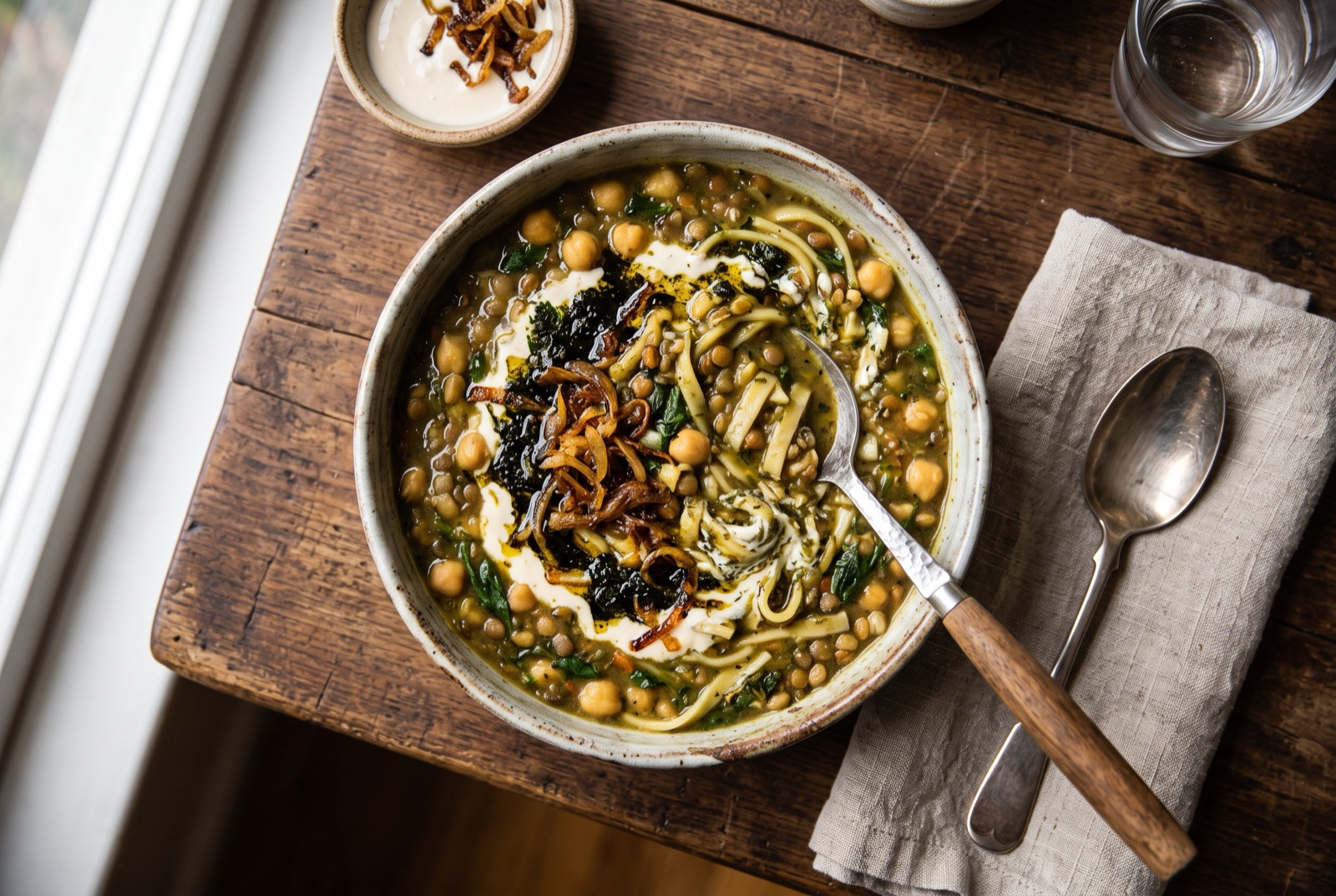
Iran1 hr 45 min
Ash-e Reshteh
Persian Noodle, Bean and Herb Soup
Iran5 hr 50 min
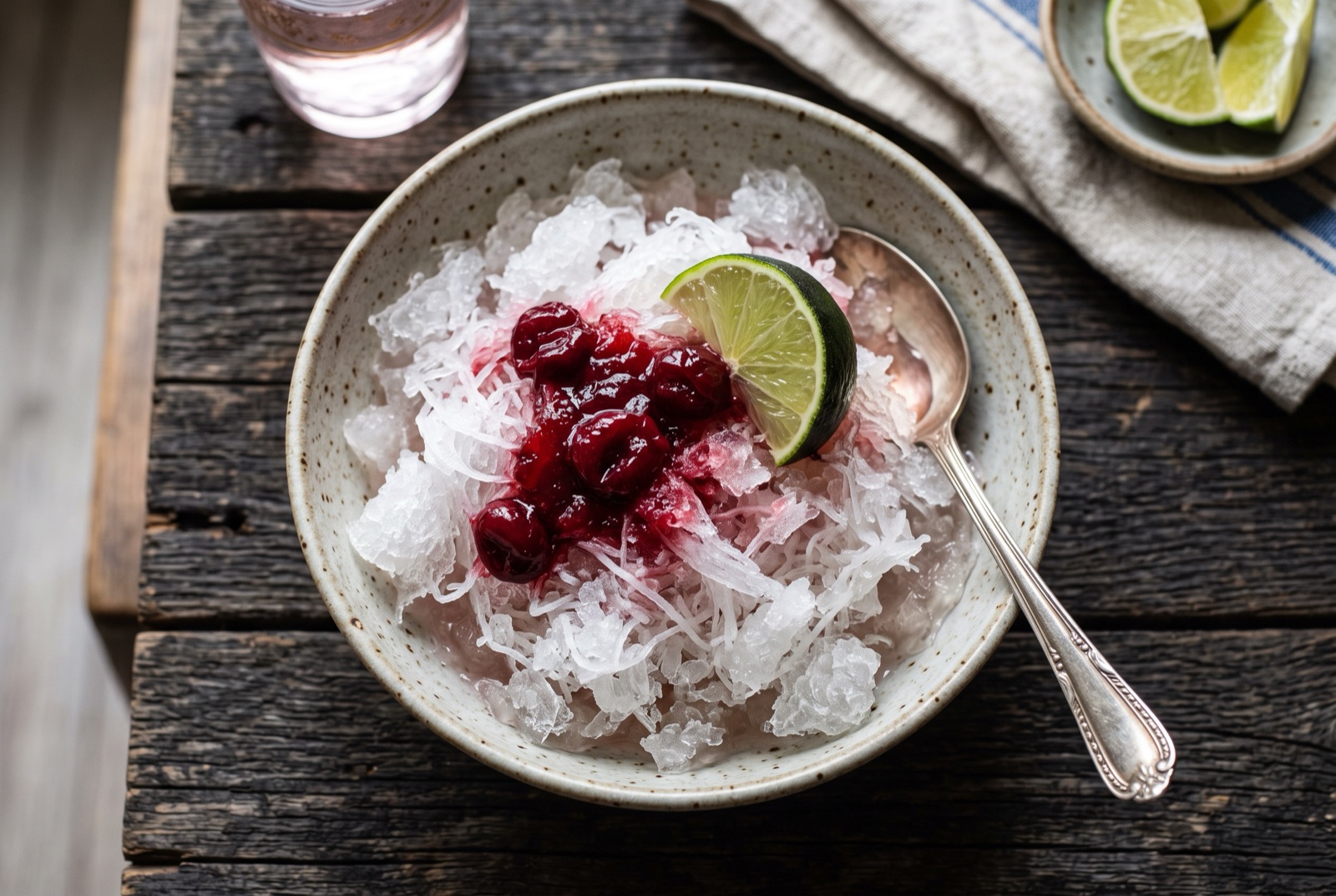
Faloodeh
Shirazi Frozen Rose and Noodle Sorbet
Iran2 hr 50 min
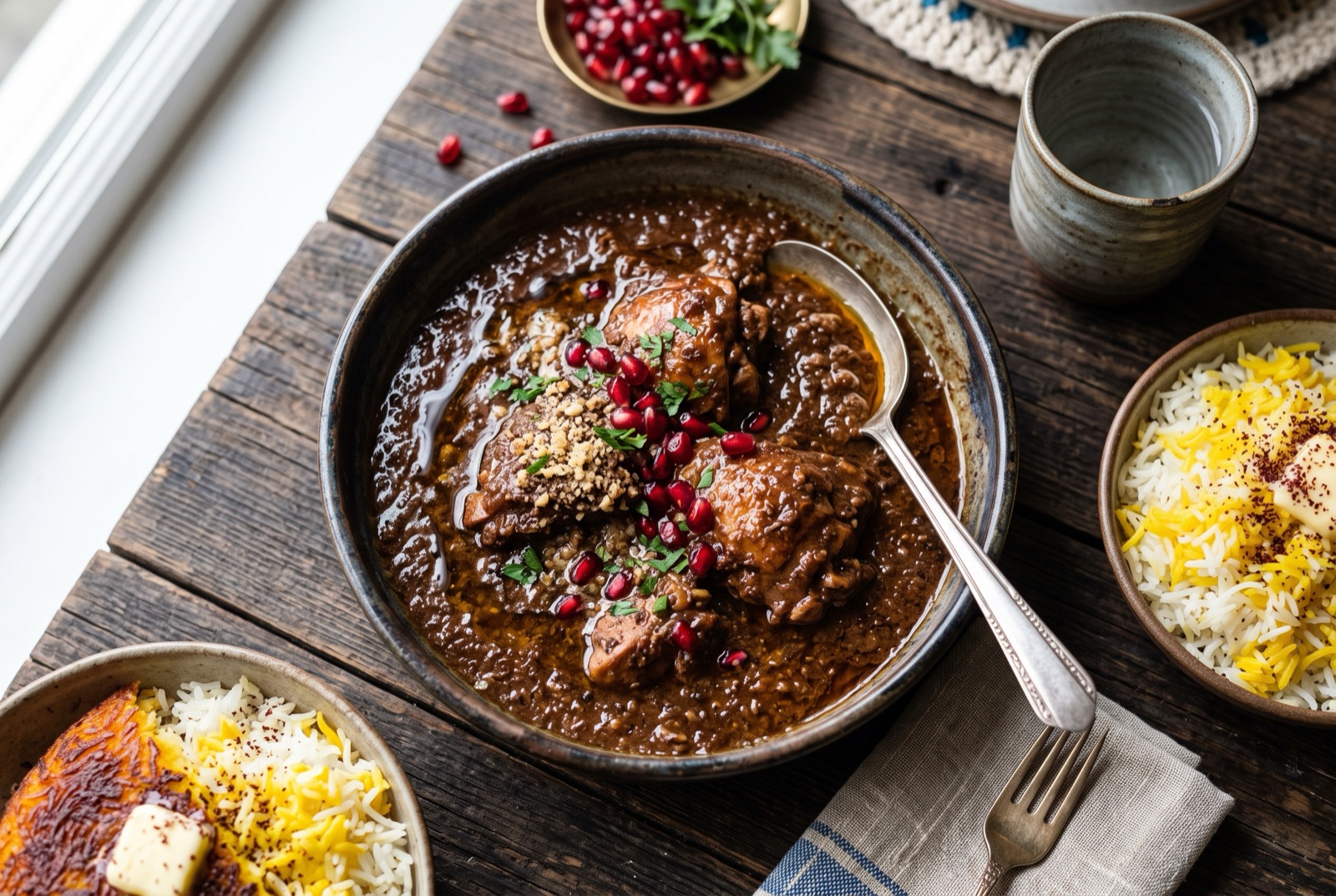
Fesenjan
Persian Walnut and Pomegranate Stew
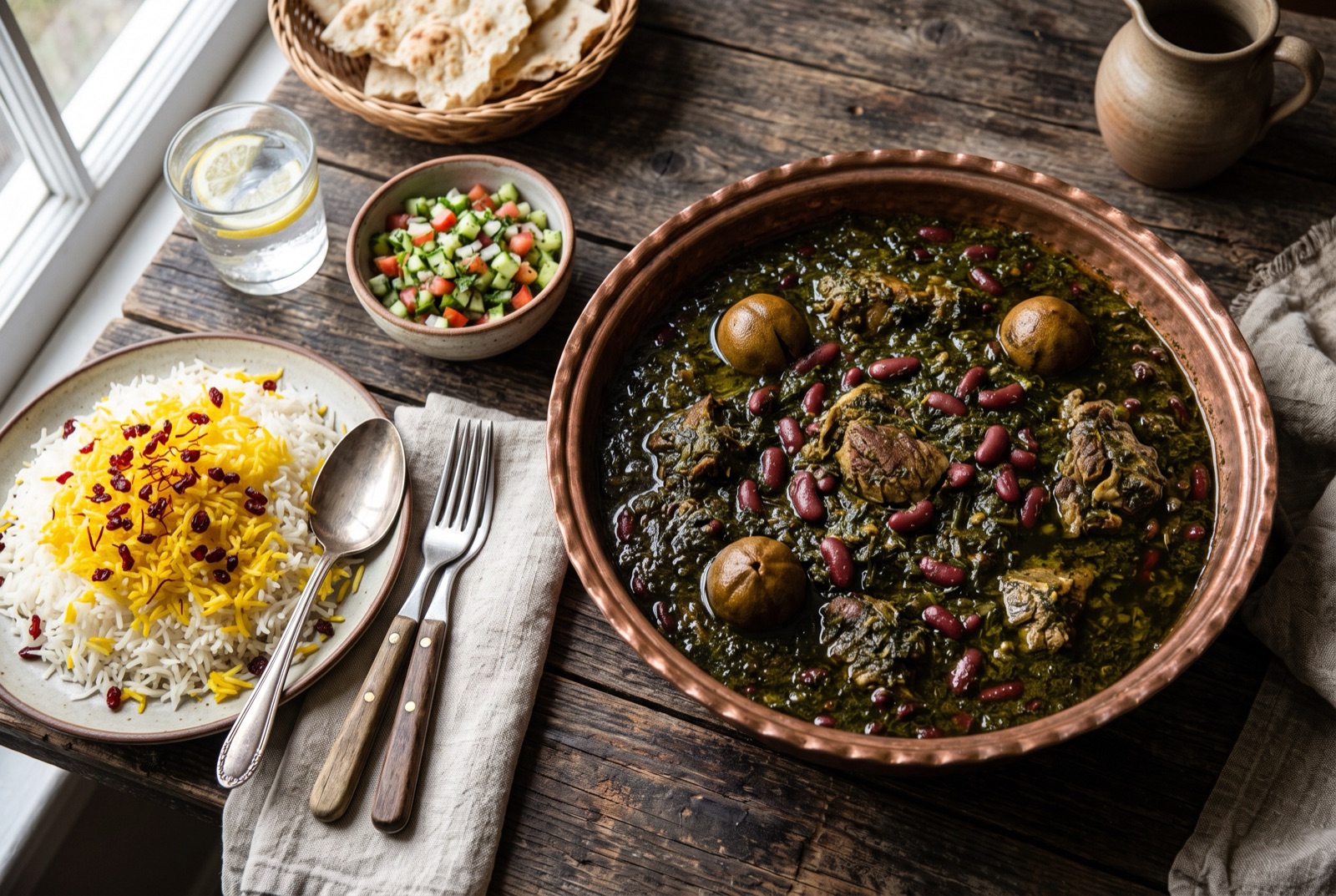
Iran3 hr 15 min
Ghormeh Sabzi
Persian Herb and Dried Lime Stew
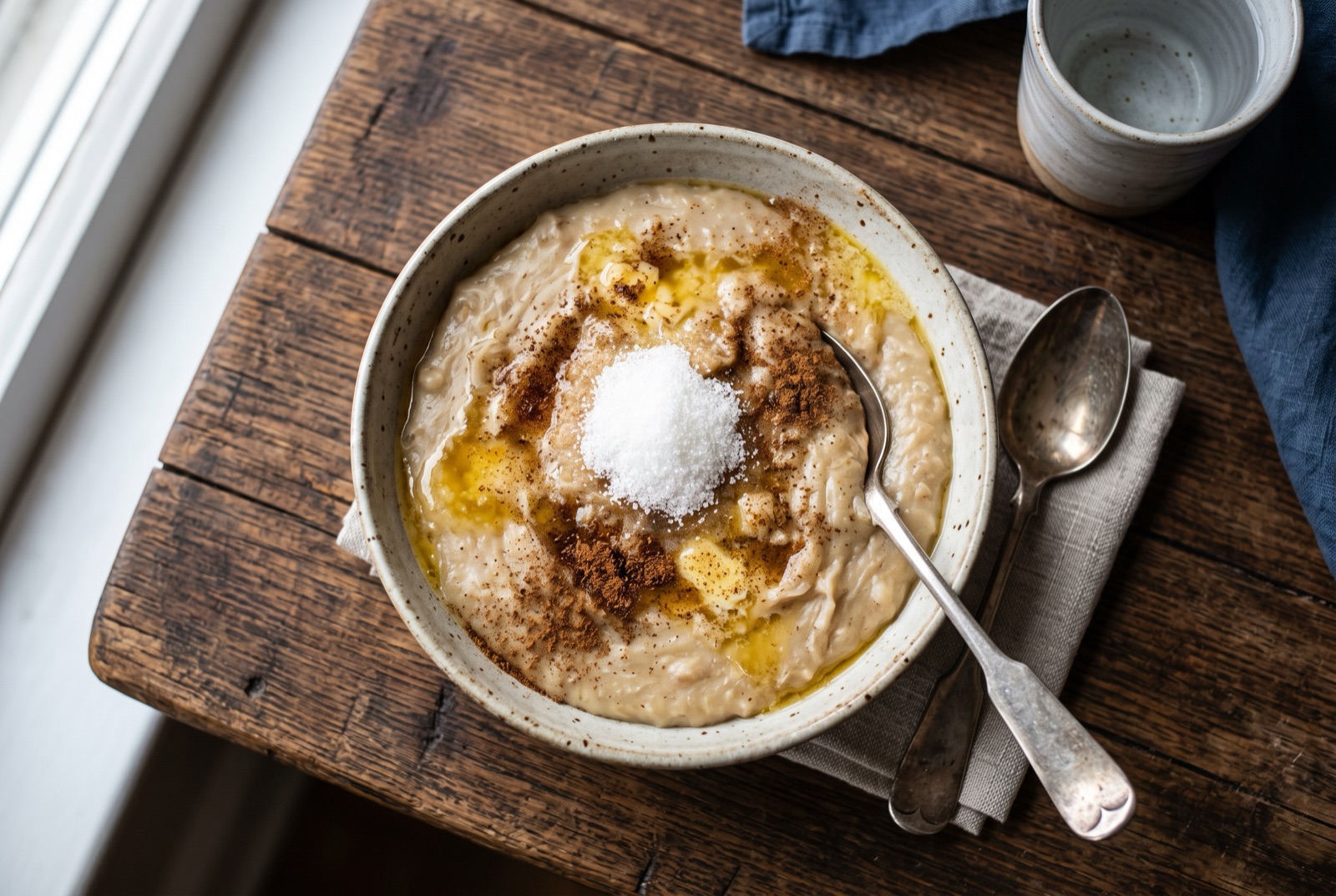
Iran16 hr 25 min
Halim
Persian Wheat and Lamb Breakfast Porridge
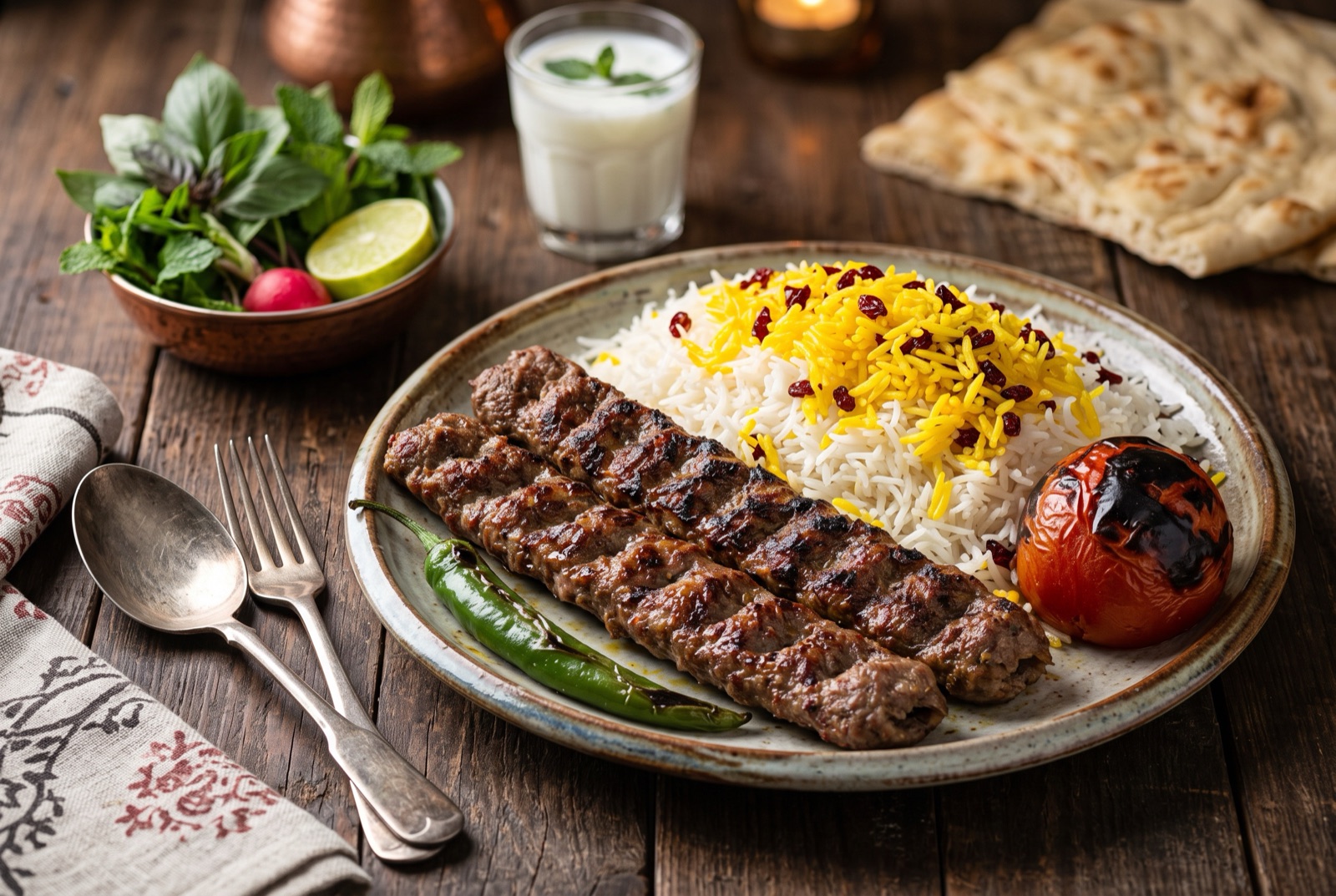
Iran1 hr 45 min
Kabab Koobideh
Persian Minced Lamb Skewers
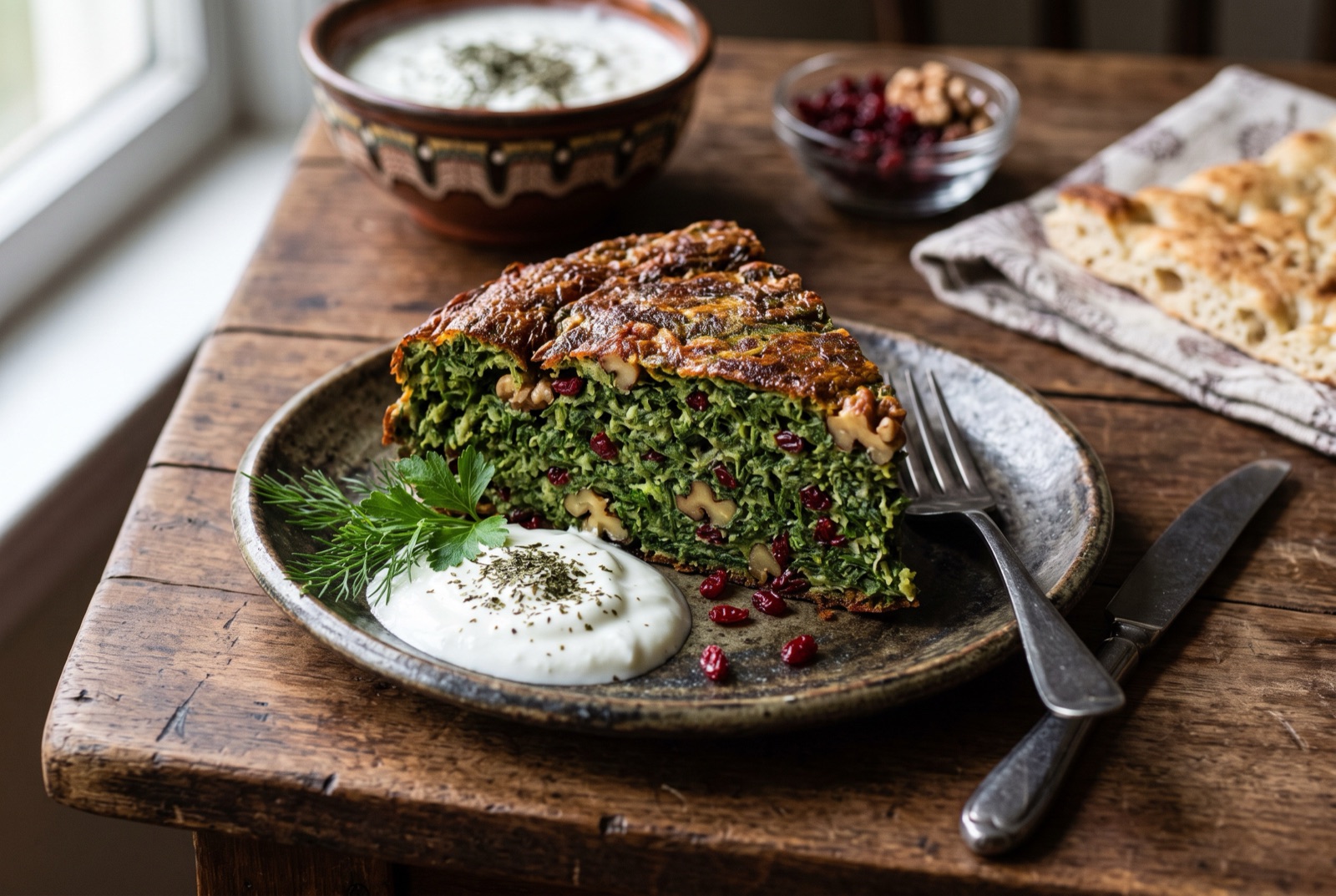
Iran1 hr 5 min
Kuku Sabzi
Persian Herb Frittata
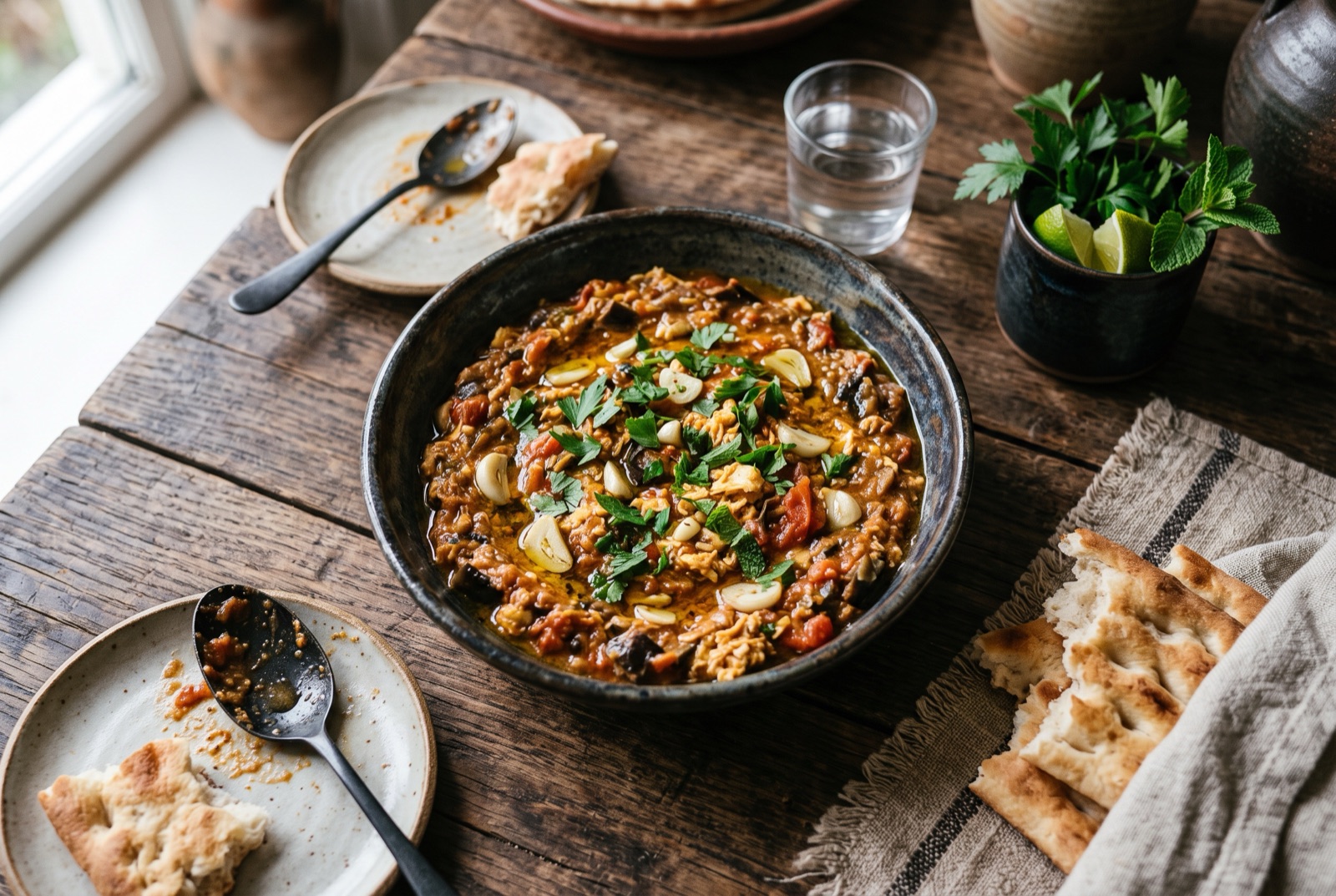
Iran55 min
Mirza Ghasemi
Persian Smoked Eggplant and Egg
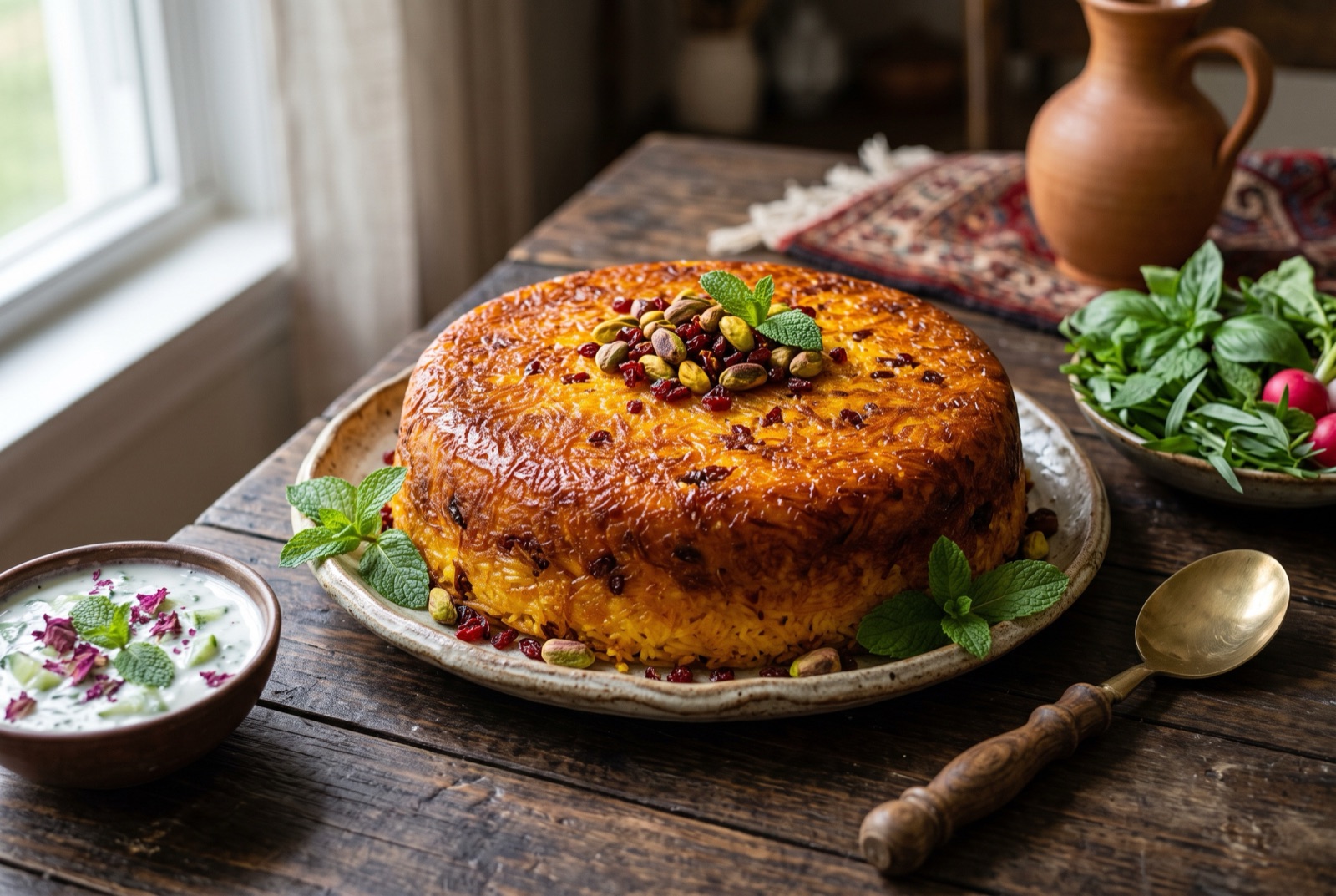
Iran2 hr 25 min
Tahchin
Persian Saffron Yogurt Rice Cake
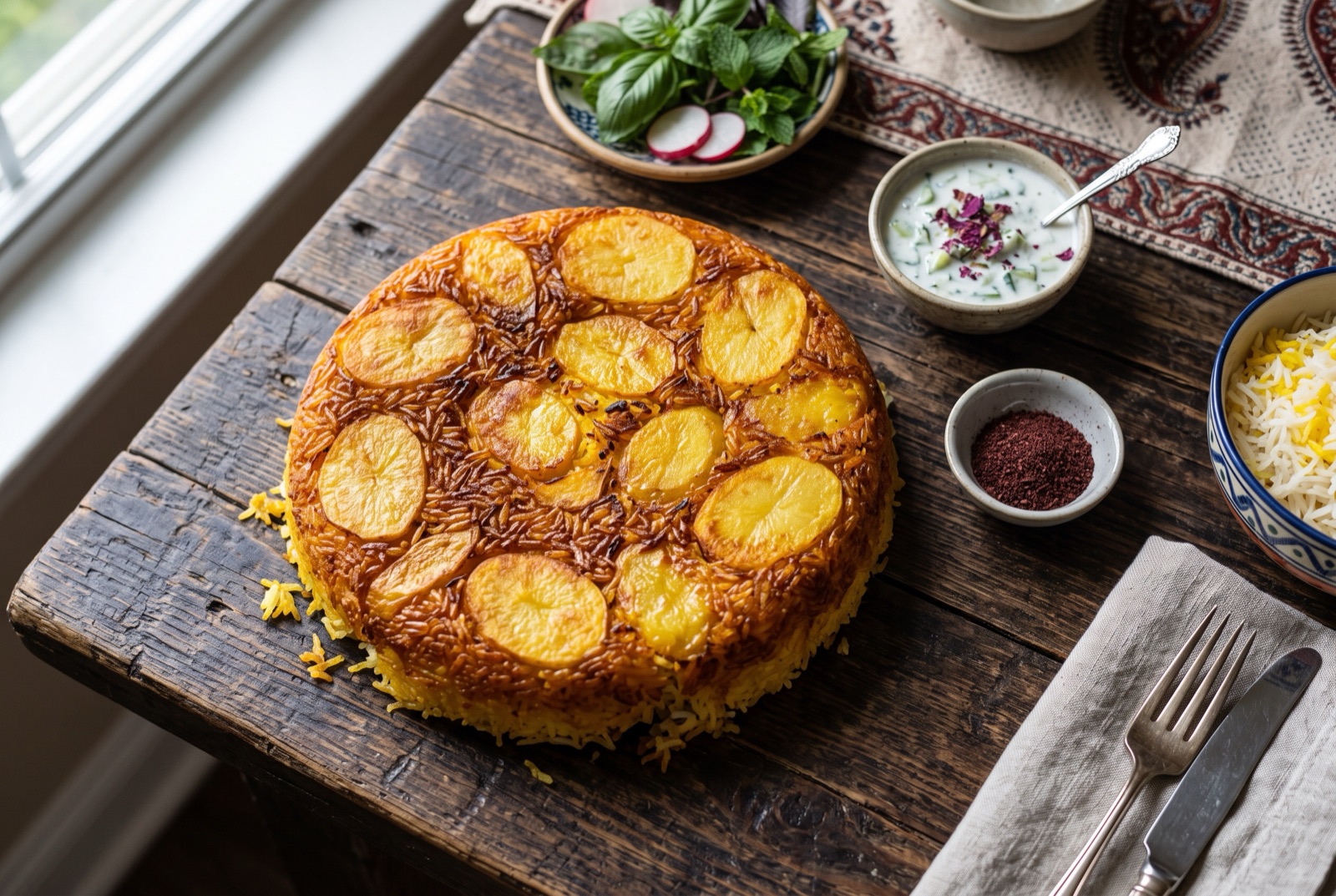
Iran3 hr 30 min
Tahdig
Persian Crisp Saffron Rice Crust
Keep traveling.
Iran sits in Middle East, and its kitchen shares borders as well as ingredients with Armenia and Bangladesh.
 Armenia
 Bangladesh