Asado.
Argentine Wood-Fired Beef Barbecue
Asado criollo · say it: ah-SAH-doh
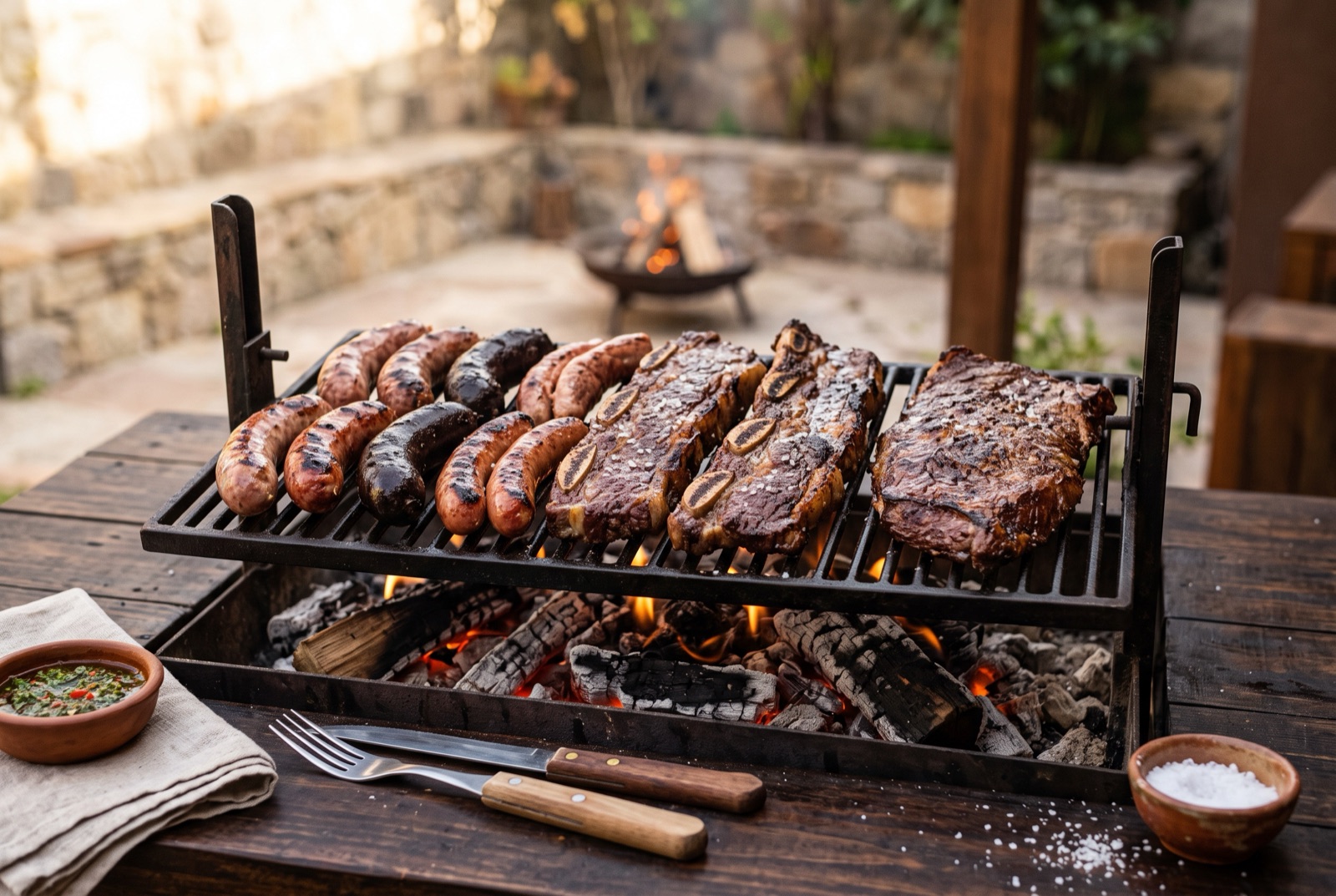
Asado is beef cooked slowly over the embers of a wood fire, salted and left alone. There is no marinade, no rub and no sauce during cooking; the flavour comes from the fat rendering into the coals, the smoke drifting back up, and a fire that is deliberately kept weak enough to hold your hand above. It runs in a set order — sausages and offal early while people are still arriving, then the ribs and flank that have been over the low end of the grill the whole time. Expect three to four hours from lighting the wood to the last slice, most of it spent standing near the fire doing very little. That waiting is not a flaw in the method; it is the method.

- Gate
- ArgentinaPampas
- Prep
- 30 min
- Cook
- 3 hr 30 min
- Total time
- 4 hr 15 min incl. 15 min rest
- Serves
- 6
- Status
- Medium
- Nutrition / serving · estimated
- Calories 790 kcal
- Protein 56 g
- Carbs 2 g
- Fat 62 g
- Sodium 1450 mg
Why this recipe works.
- Written as a timeline for the whole grill, not a single cut, so the sequence actually works.
- Uses the hand test for fire temperature instead of a number no charcoal grill can hold.
- States plainly what a gas grill or an oven can and cannot reproduce here.
- Covers the cuts by what they are called at a Western butcher, not only by Argentine names.
Ingredients.
9 itemsThe meat
Seasoning and fire
Equipment
- Charcoal or wood grill with an adjustable grate
- Long tongs
- Wooden carving board
- Heavy knife
Instructions.
Build the fire
Light the wood or charcoal at one side of the grill and let it burn 30–45 minutes, until the flames have died and the coals glow orange under a coat of pale grey ash. Rake a thin, even layer of embers under the grate and keep the rest banked to one side as a reserve.
Tip You want a low bed of embers under the meat and a working fire beside it that you feed every 30 minutes.
Set the height and test the heat
Position the grate about 15 cm above the coals and hold your palm at grate level: you should manage 6–8 seconds before pulling away. If you cannot hold three, raise the grate or spread the embers thinner before any meat goes on.
Start the short ribs
Salt 1.5 kg of short ribs generously on the bone side and lay them bone-down over the coolest part of the coals. Leave them for about 90 minutes without turning, until fat has rendered out along the bones and beads of juice sit on the upward face.
Grill the sausages and serve them first
Put the chorizos on a moderate patch of the grate and cook 18–20 minutes, turning once, until the skins are taut, deep brown and no longer glossy. Add morcilla for the last 8 minutes only, just to heat through and crisp the casing, then split them into bread and hand them round.
Tip Never pierce a chorizo. The escaping fat flares and puts soot on everything above it.
Add the flank
Lay the vacío fat-side down and cook 30–35 minutes, until the fat cap has rendered to a crackling brown sheet, then salt the cut face, flip it and give it another 20–25 minutes. It should feel springy rather than soft, medium rather than rare — this cut is unpleasant underdone.
Turn the ribs and finish
Flip the short ribs onto the meat side for a final 25–30 minutes, until the surface is deeply browned and the meat has shrunk back from the bone ends by roughly a centimetre. If you added peppers, sit them whole on the cool edge of the grate until the skins blacken and collapse.
Rest, carve and eat in waves
Move everything to a wooden board and let it rest 10–15 minutes while the juices settle. Carve the flank across the grain into finger-thick slices, cut the rib strips between the bones, and take it to the table as it comes rather than plating everything at once.
Tips from our kitchen.
- Build the fire at the side or in a separate chimney and rake embers under the grate. Meat should never sit over live flame.
- Use the hand test: at grate height you should be able to hold your palm still for 6–8 seconds. If you flinch in three, the fire is too hot.
- Salt with coarse salt just before the meat goes on, and salt the bone side of short ribs more heavily than the meat side.
- Turn each cut once. Constant flipping cools the surface and prevents the crust you are waiting three hours for.
- Prick sausages nowhere and never press them. The fat that escapes flares up and blackens everything nearby.
- Rest the boards, not just the meat: carve on wood, let the juices pool, and spoon them back over the slices.
Substitutions.
- Wood fire and hardwood charcoal → Lump charcoal alone, or a gas grill run on its lowest setting with the lid up
- Lump charcoal is close. Gas gives you slow-roasted beef with a decent crust but no smoke and no radiant coal heat, which is most of what asado tastes like — worth doing, worth calling by another name.
- Asado de tira (flanken-cut short ribs) → Ask a butcher to cut short ribs across the bones, 2 cm thick
- This is the defining cut and no supermarket package substitutes for it. English-cut short ribs cut along the bone are far thicker and need a very different, much longer cooking time.
- Vacío (flank) → Bavette, skirt or a thick flap steak
- Vacío is a whole thin muscle with a fat membrane that crisps. Skirt and bavette behave similarly on the grill; both should be cooked to medium rather than rare, which is unusual advice for these cuts but correct here.
Variations.
- Cordero patagónico al asador
- A whole lamb splayed on an iron cross planted at an angle beside a wood fire and cooked by radiant heat for five hours or more. The Patagonian version of the same idea, and a completely different job to run.
- Achuras first
- The traditional opening act: mollejas (sweetbreads) squeezed with lemon, chinchulines braided and crisped, riñón and morcilla. Cooked fast and eaten standing up before the beef is ready.
- Asado a la parrilla con verduras
- Whole peppers, onions in their skins, sweet potatoes and slabs of provolone set on the cool end of the grate. Standard in modern asados and the reason vegetarians are not left with bread.
Storage & reheating.
Grilled beef keeps 3 days refrigerated. Slice it cold rather than reheating hard — leftover asado is traditionally eaten as sandwiches with chimichurri, or chopped into a salad. If you must warm it, wrap in foil with a spoonful of juices and use a 140°C oven for 10 minutes, which loosens the fat without cooking the meat further. Sausages reheat well split and seared cut-side down.
Serve with
Chimichurri and salsa criolla in bowls, crusty bread, a simple lettuce-tomato-onion salad, and Malbec.
The story behind Asado.
Cooking beef over open fire on the Pampas is older than the modern country. Cattle brought by the Spanish went feral across the grasslands and multiplied into enormous free-roaming herds, and the gauchos who worked them ate what was in front of them: an animal butchered on the spot and roasted on iron stakes leaning into a fire, cut by cut, over hours. That asado al asador, a whole carcass or a side of ribs splayed on a cross, still happens in the countryside and in Patagonia with lamb.
What urban Argentina inherited from it is the parrilla — a grate whose height above the coals can be cranked up and down — and a set of unwritten rules. Coals are made in a separate brasero or at one end of the grill and raked underneath as needed, so the fire is never directly under the meat. Salt goes on and nothing else. The asador, the person running the fire, is a single named individual, and advice from bystanders is tolerated rather than welcomed. Chimichurri exists, but it lives on the table for those who want it, not on the meat during cooking.
The sequence matters as much as the technique. Achuras — sweetbreads, chitterlings, kidneys — go on first because they cook fast and give the early arrivals something to eat. Chorizo and morcilla follow, often split into bread as choripán while the main event is still an hour away. Then the ribs come off in the order they are ready, carried to the table on a wooden board and carved there, and everyone eats in waves rather than sitting down to a plated meal. An asado is a Sunday, a birthday, a farewell and a national holiday all handled by the same institution, and it is fair to say that it does more social work in Argentina than any single dish anywhere.
Questions, answered.
Can I make a real asado without a wood fire?
Not entirely, and it is better to be honest about it. Wood embers supply gentle radiant heat plus smoke from dripping fat, and neither gas nor an oven reproduces both. Hardwood lump charcoal gets you about ninety percent of the way; a gas grill on low with the lid open gives good slow-roasted beef without the smoke, which is still a fine dinner.
What cuts should I buy for an asado?
The core three are asado de tira (short ribs cut across the bone, about 2 cm thick), vacío (flank, or bavette and skirt as substitutes) and chorizo criollo. Morcilla, entraña (outside skirt) and sweetbreads are common additions. Ask the butcher for the flanken cut specifically — it is the one that makes the plate look Argentine.
How long does an asado take?
Plan three to four hours total. The fire needs 30–45 minutes to burn down to grey-ashed embers, short ribs take roughly 90 minutes bone-side down and another 30 on the meat side, and flank needs 45–60 minutes. Sausages are done in about 20 minutes and are served early rather than held.
Should I marinate the meat?
No. Argentine asado is seasoned with coarse salt only, added shortly before grilling, and any sauce is served alongside at the table. Marinades mask grass-fed beef flavour and their sugars burn over embers. Chimichurri belongs in a bowl, not on the raw meat.
Why is my grilled beef tough even after hours?
Usually the fire was too hot rather than the meat being wrong. Short ribs and flank need low, steady heat that renders connective tissue slowly; over a fierce fire the outside seizes and dries long before the inside softens. Raise the grate, spread the embers thinner, and accept that the cut takes the time it takes.
You might also like.
All recipes →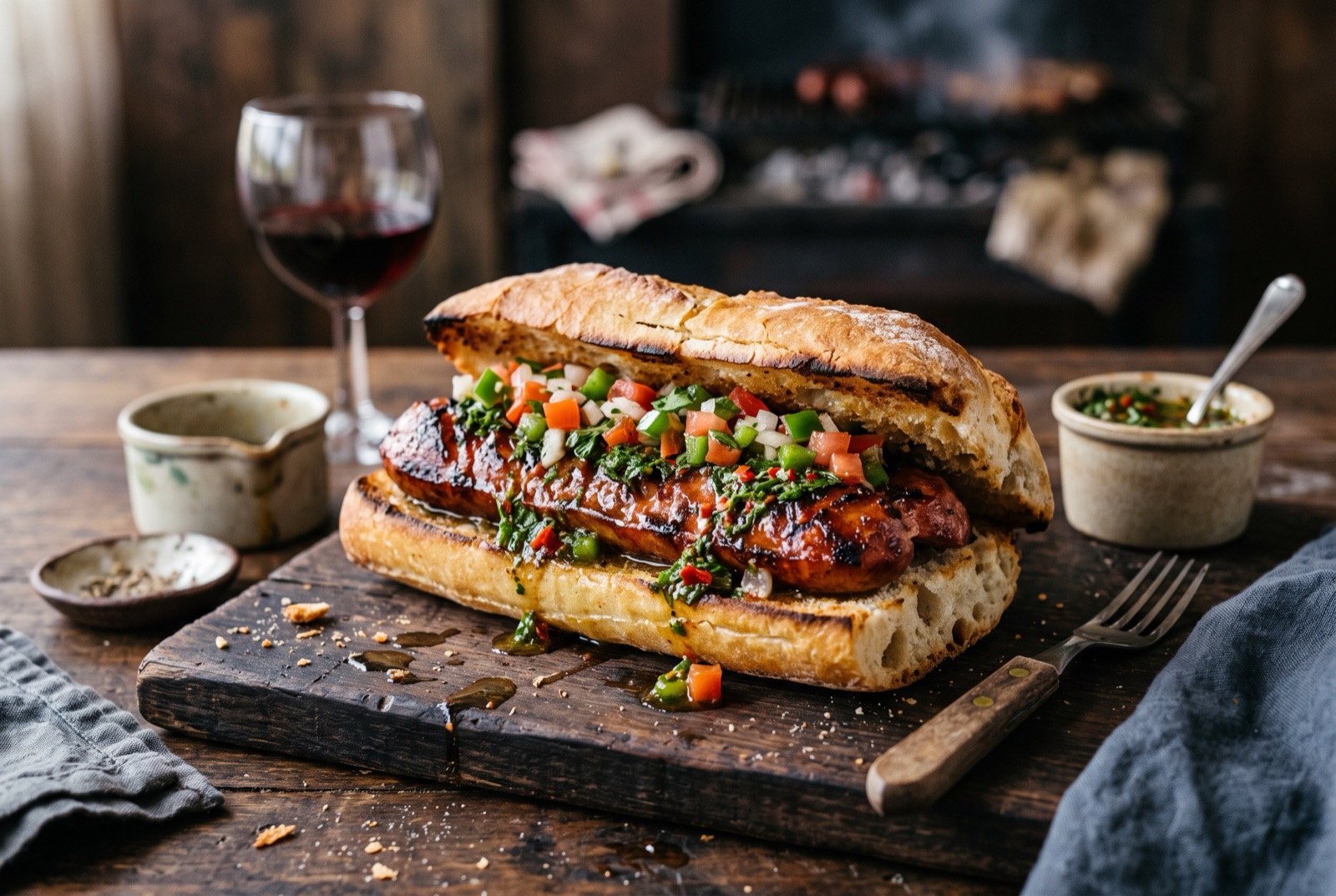
Argentina40 min
Choripán
Argentine Grilled Chorizo Sandwich
Argentina16 hr
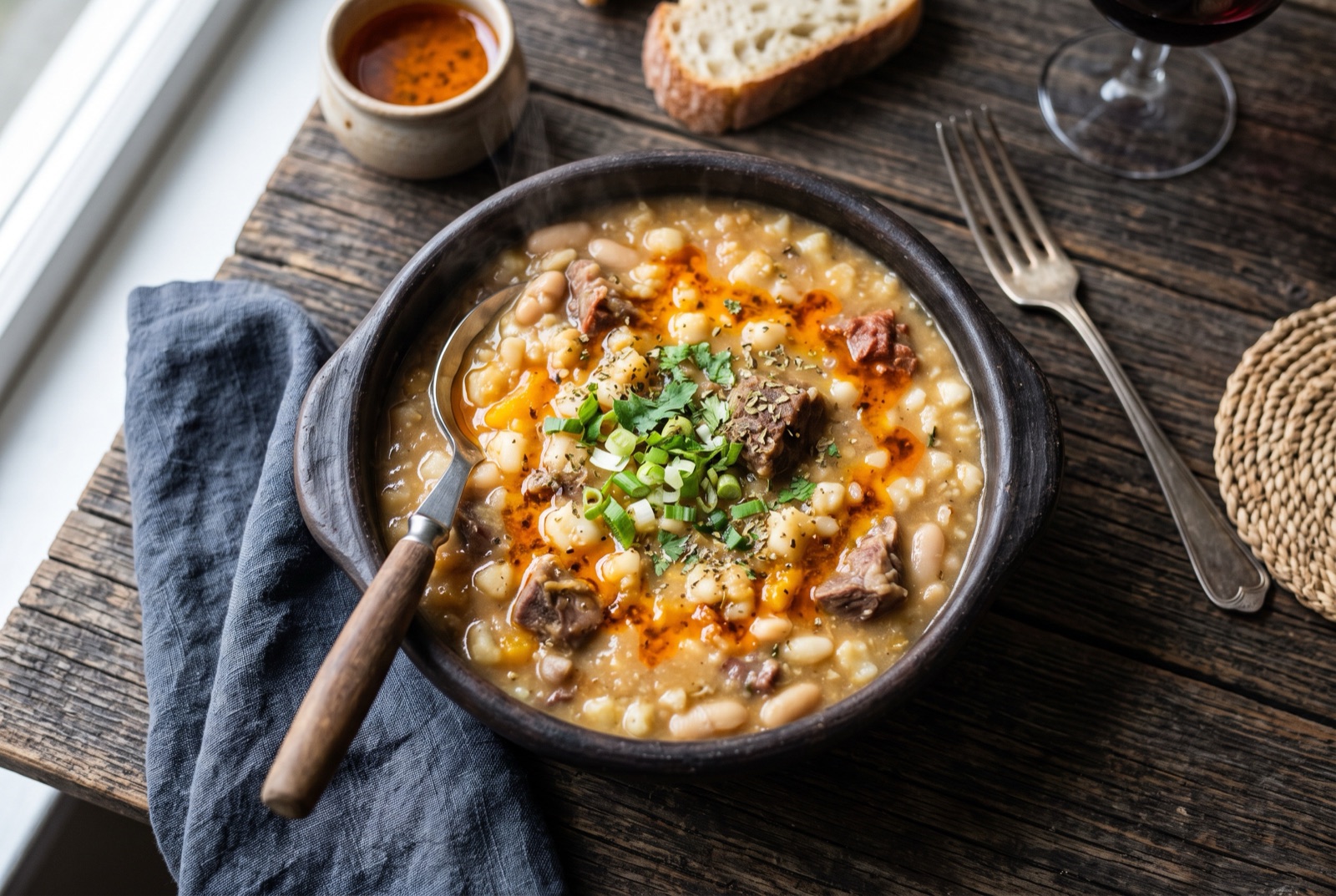
Locro
Argentine Hominy, Squash and Meat Stew
Argentina14 hr 15 min
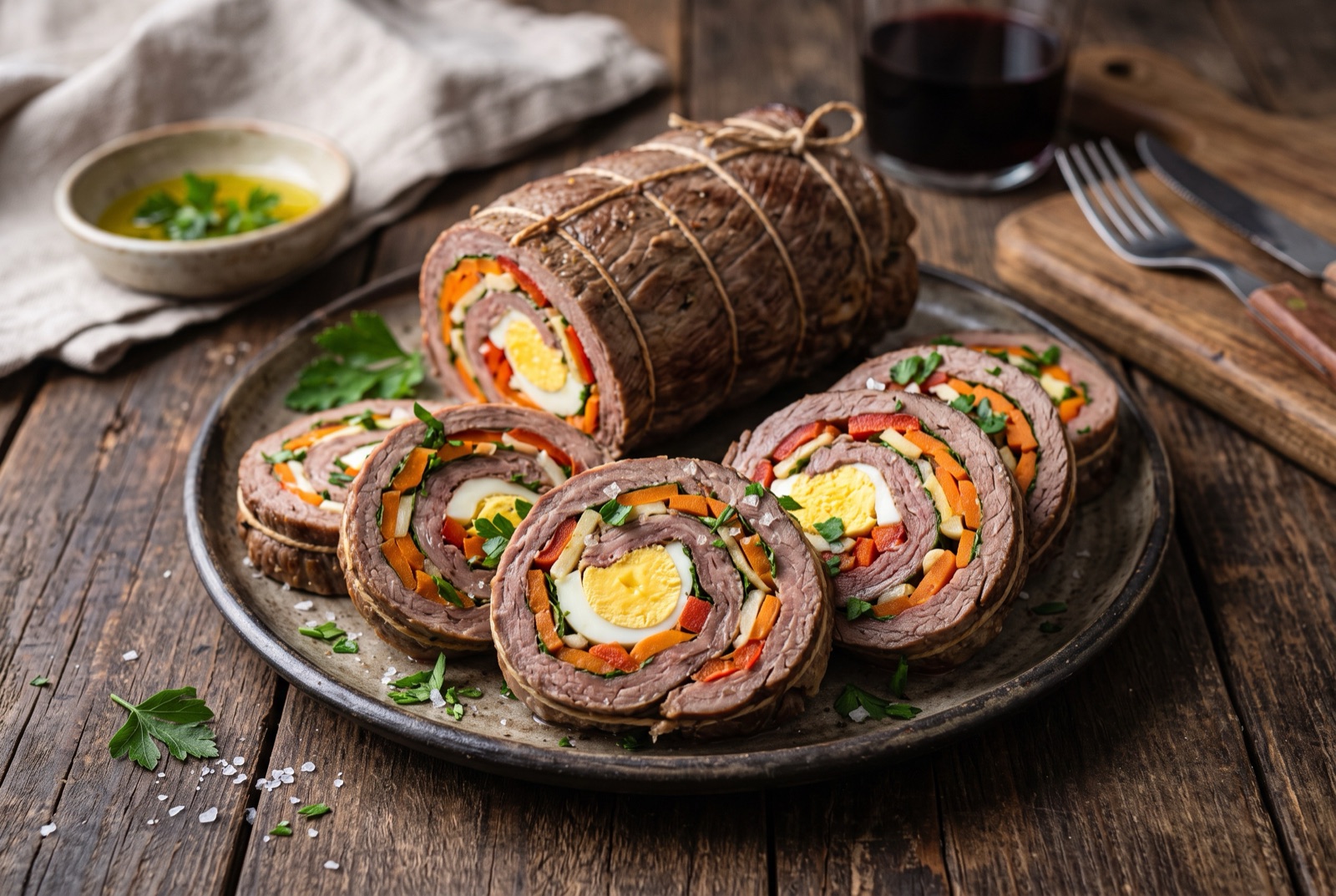
Matambre Arrollado
Argentine Rolled Stuffed Flank Steak
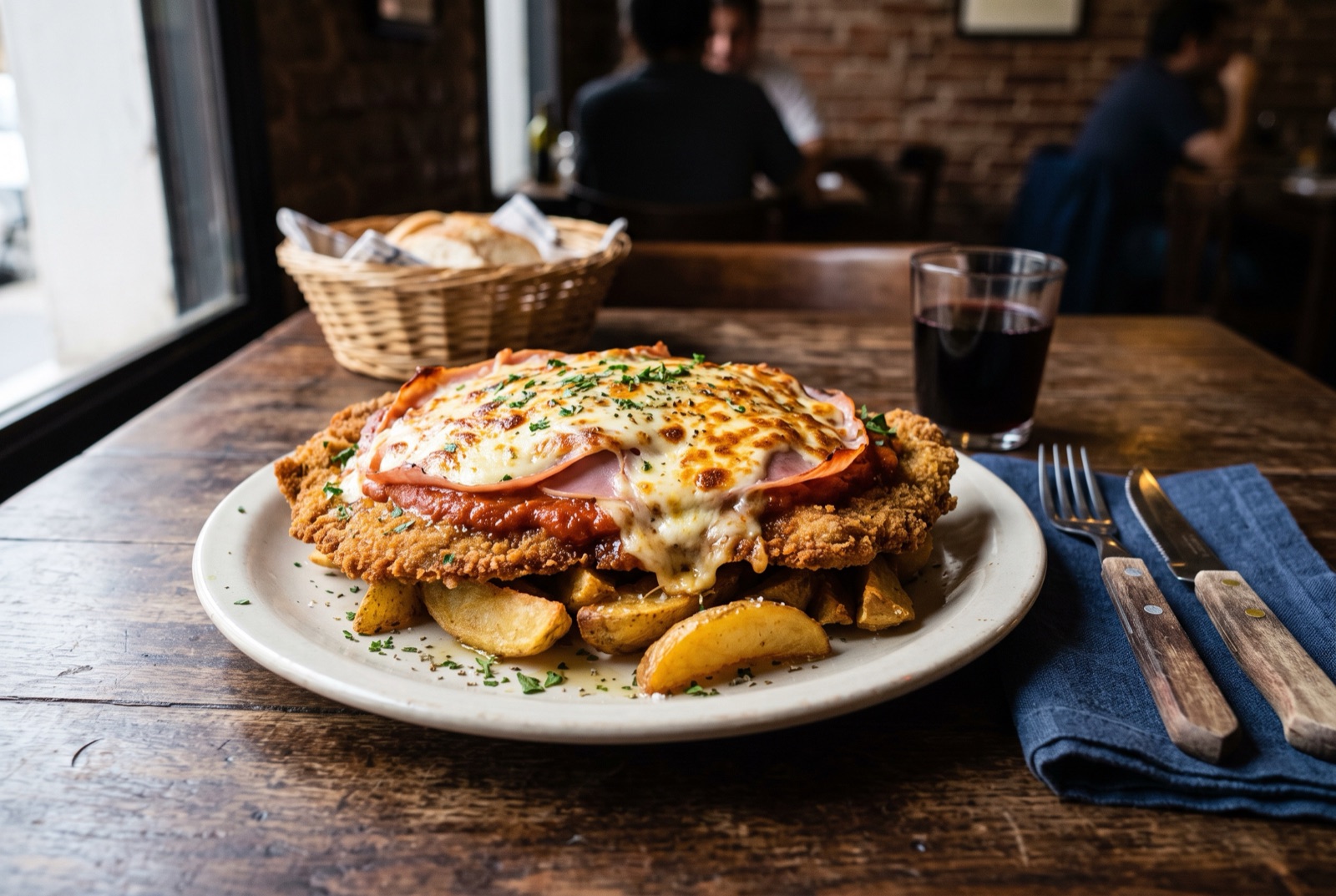
Argentina1 hr 20 min
Milanesa a la Napolitana
Breaded Beef Cutlet with Ham and Cheese
Keep exploring Argentina.
Argentina has 9 more dishes in the atlas — Alfajores de Maicena and Chimichurri, and 7 more.
Recipe by The DishRoute Kitchen · published August 20, 2026 · updated August 20, 2026