Matambre Arrollado.
Argentine Rolled Stuffed Flank Steak
Matambre arrollado · say it: mah-TAHM-breh ah-roh-YAH-doh
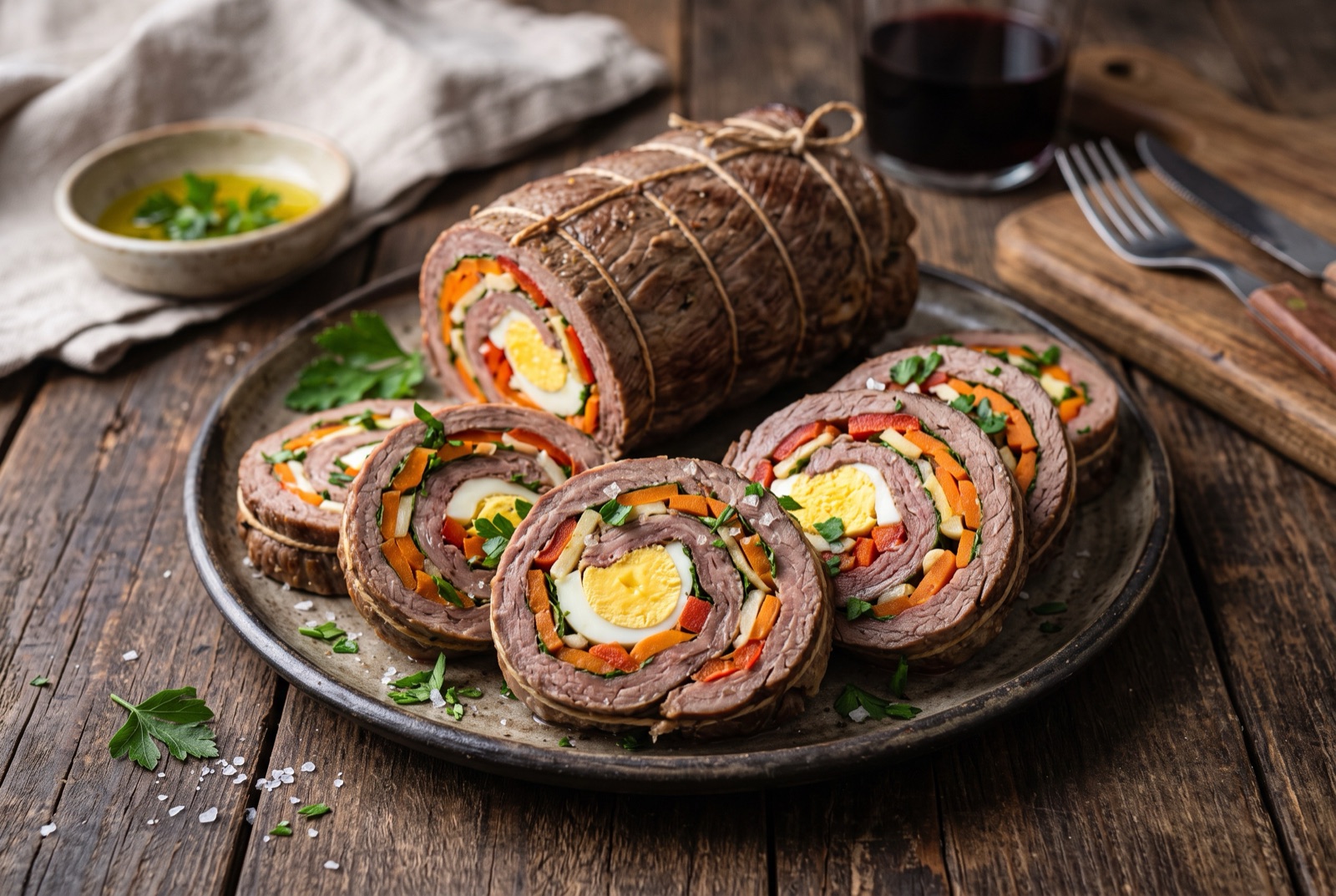
Matambre arrollado is a cold cut you make yourself. A wide, thin sheet of beef — the muscle that lies between the hide and the ribs — is marinated overnight in vinegar, garlic and parsley, spread with strips of carrot, red pepper and whole hard-boiled eggs, rolled up tight, tied and simmered for an hour and a half. It then chills under a weight until it slices into firm spirals with the egg sitting like a bullseye in the middle. The taste is beefy and clean with a sharp vinegar note running through it, and it is eaten cold, in thin slices, usually before anyone touches the hot food.

- Gate
- ArgentinaBuenos Aires
- Prep
- 45 min
- Cook
- 1 hr 30 min
- Total time
- 14 hr 15 min incl. 12 hr rest
- Serves
- 8
- Status
- Takes skill
- Nutrition / serving · estimated
- Calories 430 kcal
- Protein 40 g
- Carbs 6 g
- Fat 27 g
- Fiber 2 g
- Sodium 760 mg
Why this recipe works.
- A vinegar-garlic marinade overnight, which both seasons the sheet and softens the tough membrane.
- Clear guidance on how tightly to roll and tie so the pinwheel holds instead of unravelling.
- Poached rather than roasted, which is far more forgiving with an unfamiliar cut.
- The pressing step is treated as part of the recipe, not an afterthought — it is what makes the slices clean.
Ingredients.
14 itemsFor the beef
For the marinade
For the filling
For poaching
Equipment
- Butcher's twine
- Large deep pot
- Sharp boning knife
- Tray and weights for pressing
Instructions.
Trim and marinate overnight
Lay the beef flat and cut away the silverskin and any hard lumps of fat, leaving an even sheet. Rub it all over with the vinegar, garlic, parsley, oregano and chile flakes, cover and refrigerate for at least 8 hours — the surface will turn pale grey-brown where the acid has worked.
Prepare the fillings
Blanch the carrot batons for 4 minutes until they bend slightly but still snap, then cool them in cold water. Boil the eggs for 9 minutes, peel them, and cut the peppers into strips as long as the roll will be wide. Pat everything thoroughly dry.
Tip Wet fillings create steam pockets inside the roll and push the layers apart. Dry is not optional here.
Layer the sheet
Spread the beef out with the grain running left to right and scrape off any excess marinade. Season with salt and pepper, cover with the spinach if using, then lay the carrot batons and pepper strips in stripes running the length of the sheet and set the whole eggs in a single line down the centre.
Roll and tie
Roll the sheet up tightly from the long edge nearest you, keeping constant pressure with both hands so no air gaps form around the eggs. Tie with twine at 3 cm intervals plus one long tie down the length, tight enough to dimple the surface, and tuck any loose filling back in at the ends.
Poach gently
Lower the roll into the stock with the onion and bay leaves, adding water if it is not covered, and bring it to the point where a bubble breaks every few seconds. Hold it there for 90 minutes, until a skewer slides through the centre with no resistance and the roll feels firm when pressed.
Tip If the pot starts to boil properly, the beef contracts and squeezes filling out the ends. Keep the heat low enough that the surface only trembles.
Press overnight
Lift the roll out, let it stand 20 minutes, then wrap it in foil, sit it on a tray and lay a second tray on top with two or three tins as weights. Refrigerate overnight so it compacts and the juices set to a light jelly around the meat.
Slice and serve cold
Cut off the twine and slice the roll with a sharp knife into rounds about 8 mm thick, showing the egg and carrot in cross-section. Arrange them overlapping on a board and serve cold or at room temperature, never reheated.
Tips from our kitchen.
- Ask the butcher for matambre; if they do not carry it, buy flank steak and have them butterfly it into one wide, even sheet.
- Trim the silverskin and any thick fat pockets from the outside, but leave the thin membrane holding the sheet together.
- Lay the fillings in lines running the length of the roll, so every slice shows the same pattern rather than a random mosaic.
- Tie at 3 cm intervals with butcher's twine, firmly enough to dent the meat slightly but not so tight the filling squeezes out the ends.
- Keep the poaching liquid at a bare shiver, around 85°C. A rolling boil shrinks the beef and pushes the filling loose.
- Press the cooled roll under a weighted tray overnight — this is what turns a loose bundle into a sliceable cold cut.
Substitutions.
- Matambre → Flank steak butterflied into a sheet, or skirt steak opened flat
- You need a large, thin, rectangular piece rather than a specific muscle. Two smaller pieces overlapped by 2 cm and pressed together also work; the seam disappears once it is rolled and tied.
- Red wine vinegar in the marinade → White wine vinegar, or the juice of three lemons
- The acid is doing real work on the membrane, so do not reduce the quantity. Balsamic is too sweet and stains the meat.
- Beef stock for poaching → Water with an onion, a carrot, bay leaf and a generous spoon of salt
- The roll releases plenty of its own flavour into the pot. What matters is that the liquid is properly salted, or the outside of the meat leaches out flat.
Variations.
- Matambre a la pizza
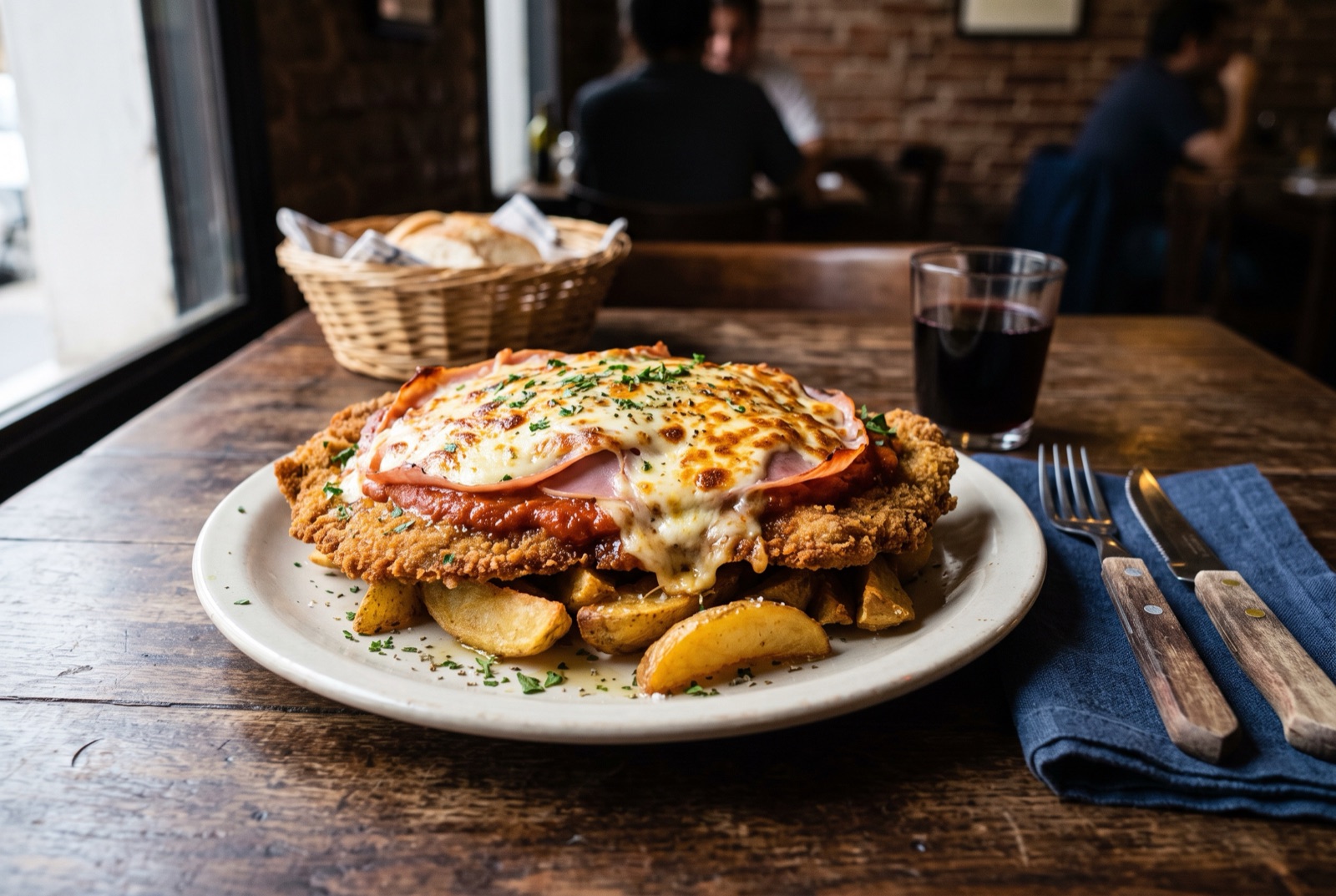
- The unrolled version: a whole matambre grilled flat over embers until tender, then topped with tomato sauce, mozzarella and oregano and left on the grill until the cheese melts. A parrilla favourite in its own right.
- Matambre relleno con espinaca
- Blanched spinach and grated cheese spread across the sheet before the vegetables go on, giving a green layer between the beef and the carrots and a softer texture.
- Matambre al horno
- Roasted at 160°C in a covered dish with stock and white wine for two hours instead of poached, then browned uncovered. Deeper flavour, slightly drier slices, and it can be served warm.
Storage & reheating.
Wrapped tightly and refrigerated, the cooked roll keeps 4 days and is better on day two than on day one. Keep it whole and slice to order — cut faces dry out fast. It freezes acceptably for a month wrapped in cling film then foil, though the egg turns slightly rubbery on thawing. Do not reheat it; this dish is meant to be eaten cold or at room temperature.
Serve with
Sliced cold on a board with olives, pickled vegetables and bread, or in sandwiches with chimichurri.
The story behind Matambre Arrollado.
Matambre is a cut and a name that only makes sense on a whole carcass. It is the flat sheet of meat and connective tissue pulled off the outside of the ribcage, thin enough to see light through in places, tough if you treat it like a steak, and excellent if you either grill it flat over embers or roll and cook it slowly. Argentine and Uruguayan butchers both sell it as a standard item; elsewhere you have to ask, and the closest widely available equivalent is a butterflied flank steak.
The name is usually read as a contraction of mata hambre, roughly "hunger killer", on the reasoning that the matambre comes off the animal early and cooks fast enough to feed the people doing the butchering before the rest is ready. That reading is repeated so often it functions as fact, but it is folk etymology rather than anything documented, and it is worth saying so.
Rolled and stuffed, the cut becomes a fiambre — part of the Argentine and Uruguayan cold-cuts tradition that also gives the table pickled tongue, head cheese and cured hams. It belongs to the first stretch of a long meal: laid out sliced on a board with olives and cheese while the parrilla is still heating, or packed for a picnic, or eaten in a sandwich the next day. Because it is served cold and improves after a night in the fridge, it is one of the very few Argentine meat dishes designed to be made entirely in advance, which is exactly why it survives at Christmas and New Year tables where everything else demands attention at the last minute.
The two schools are poaching and roasting. Poaching in seasoned broth keeps it moist and gives the cleanest slices; roasting gives a browned exterior and a firmer bite. Poaching is the safer choice at home and the version below.
Questions, answered.
What is matambre and what can I use instead?
Matambre is the thin sheet of meat lying between the hide and the ribs of a steer, a standard cut in Argentina and Uruguay and rarely labelled elsewhere. Outside South America, a butterflied flank steak is the closest substitute, and a large opened skirt steak also works. You are looking for a wide, thin, roughly rectangular piece.
Why did my roll fall apart when I sliced it?
Either it was not tied tightly enough, or it was sliced before being pressed and fully chilled. The roll needs to cool completely under a weight for at least eight hours so the gelatin sets and glues the layers together. Slicing it warm will always give you a collapsed spiral.
Can I make matambre arrollado ahead of time?
It is designed for it. The whole point of a fiambre is that it is cooked, pressed and chilled a day or two before it is eaten, which is why it appears on Argentine holiday tables. Make it up to three days ahead, keep it whole and wrapped in the fridge, and slice just before serving.
Should I poach or roast it?
Poaching in seasoned stock keeps the meat moist and gives the tidiest slices, which is why it is the more common home method. Roasting produces a browned exterior and a firmer, more concentrated bite but risks drying the thin sheet of beef. If you roast, cover the dish and add liquid.
How do I know when it is cooked?
A skewer pushed through the thickest part of the roll should meet no resistance from the beef and slide out cleanly, and the roll should feel firm rather than squashy when pressed. At a bare simmer this takes about 90 minutes for a roll made from 1.5 kg of meat.
You might also like.
All recipes →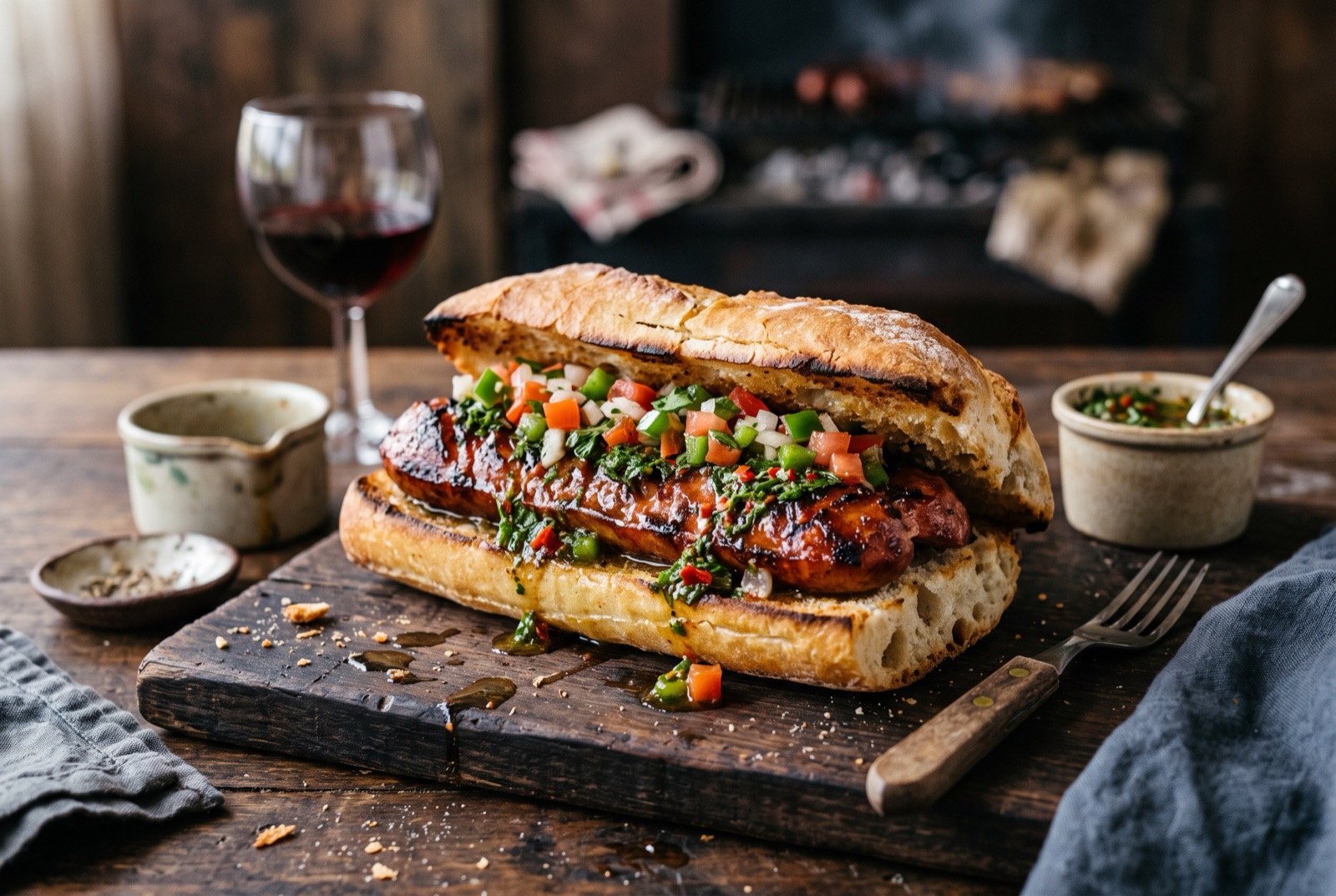
Keep exploring Argentina.
Argentina has 9 more dishes in the atlas — Alfajores de Maicena and Asado, and 7 more.
All Argentina recipes Carrot recipes Eggs recipes Bell pepper recipes mainappetizerdairy freegluten freeRecipe by The DishRoute Kitchen · published August 20, 2026 · updated August 20, 2026