Choripán.
Argentine Grilled Chorizo Sandwich
Choripán · say it: choh-ree-PAHN
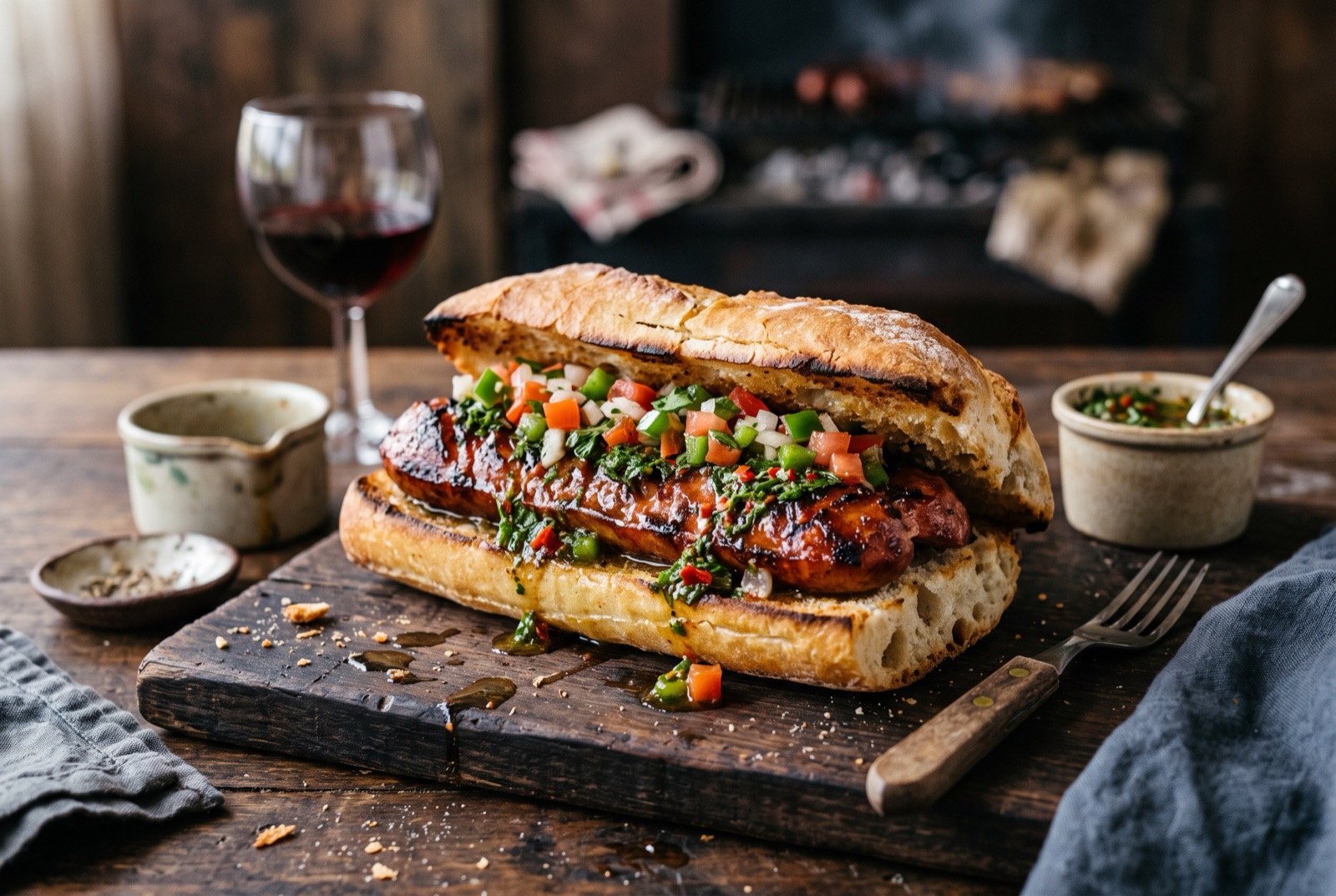
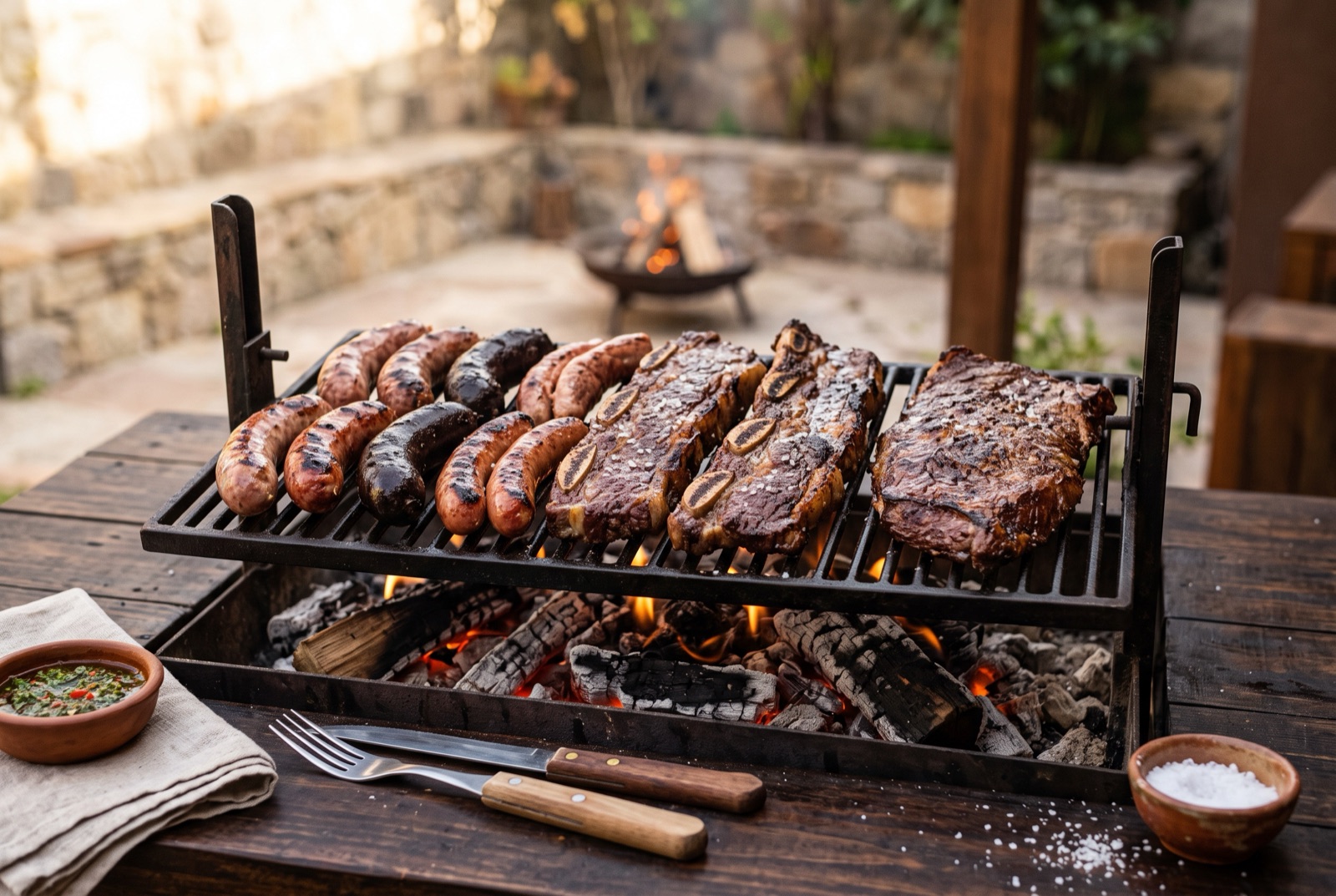
Choripán is a fresh pork-and-beef chorizo, split open down its length so it lies flat, grilled cut-side down over embers until the edges char and the surface turns glossy, then folded into a length of crusty white bread with chimichurri spooned over it. The name is simply chorizo plus pan. It is fatty, garlicky, sharp with vinegar from the sauce, and structurally very simple — which is why the two variables that matter are the sausage and how you handle the fire. Nothing else in Argentine street eating is this widespread: roadside stalls, football grounds, protest marches and the first hour of every asado.

- Gate
- ArgentinaBuenos Aires
- Prep
- 15 min
- Cook
- 25 min
- Total time
- 40 min
- Serves
- 4
- Status
- Easy
- Nutrition / serving · estimated
- Calories 700 kcal
- Protein 27 g
- Carbs 44 g
- Fat 46 g
- Fiber 3 g
- Sodium 1550 mg
Why this recipe works.
- Butterflied and grilled cut-side down, which is what gives you two crisp faces instead of a split casing.
- A quick salsa criolla built while the fire heats, so both sauces are ready before the sausage is.
- Explains how to keep flare-ups from sooting the sausage without pricking it.
- Toasting the bread on the grill is treated as a step, not a garnish.
Ingredients.
12 itemsFor the sandwiches
For the salsa criolla
For the chimichurri
Equipment
- Charcoal grill or heavy pan
- Sharp knife
- Tongs
Instructions.
Mix the salsa criolla
Combine the diced onion, tomato and red pepper in a bowl with the vinegar, half the olive oil and a good pinch of salt. Leave it at room temperature for at least 30 minutes, until the onion has lost its harsh bite and the vegetables sit in a pink, sharp liquid.
Mix the chimichurri
Stir the parsley, garlic, oregano and chile flakes together with the remaining olive oil, a tablespoon of the vinegar from the salsa bowl, salt and pepper. Let it stand while you cook so the garlic mellows and the dried oregano rehydrates.
Butterfly the sausages
Lay each chorizo flat and cut along its length with a sharp knife, going nearly but not quite through, then open it out like a book so it lies flat with the cut faces up. Press it gently with your palm to keep it from curling on the fire.
Grill cut-side down
Set the sausages cut-side down over moderate embers and leave them 8–10 minutes without moving. They are ready to turn when the cut face has browned deeply, tightened and taken a glossy lacquered look, and the meat has shrunk slightly from the casing.
Tip If fat starts flaring, slide the sausage to a cooler part of the grate rather than dousing the coals.
Finish on the casing side
Flip the sausages and cook another 8–10 minutes, until the casing is taut and lightly blistered and the juices running out are clear rather than pink. Move them to the edge of the grill to hold while you deal with the bread.
Toast the bread
Split the rolls, open them out and lay them cut-side down over the coals for 30–45 seconds, until the surface is dry and marked with brown but the crumb underneath is still soft.
Assemble and eat immediately
Sit a butterflied chorizo in each roll, spoon over a generous amount of chimichurri and add salsa criolla with a slotted spoon so it does not flood the bread. Fold, press once and eat standing up before the crust softens.
Tips from our kitchen.
- Buy fresh chorizo criollo, not cured Spanish chorizo — the cured kind will not cook through and turns hard and dry over fire.
- Butterfly by cutting almost through the length of the sausage and opening it flat like a book, leaving the casing hinge intact.
- Grill at moderate heat with the coals raked thin. Fierce heat splits the casing and the fat floods the fire.
- Never prick the sausage. Escaping fat causes flare-ups that coat everything above them in soot and bitterness.
- Toast the cut faces of the bread over the coals for 30 seconds so the crumb seals and the sauce sits on top instead of soaking straight through.
- Make the chimichurri at least two hours ahead. Freshly mixed, it tastes raw and the garlic is aggressive.
Substitutions.
- Chorizo criollo → Any coarse fresh pork sausage with garlic — Italian salsiccia, Mexican longaniza fresca or a plain butcher's sausage
- Look for fresh, coarsely ground and about 100 g each. If the sausage is very mild, add a pinch of sweet paprika to the chimichurri to compensate.
- Pan francés (Argentine crusty roll) → A section of baguette, a ciabatta roll or a Portuguese roll
- Crust matters more than shape. Anything soft and enriched — brioche, burger buns — turns to mush under the fat and the vinegar within a minute.
- Salsa criolla → Sliced raw onion and tomato with a splash of vinegar
- The purpose is acidity and crunch against the fat. Even a spoonful of pickled onions does the job if you have no time to make the proper version.
Variations.
- Choripán con morcilla
- Blood sausage grilled alongside and added to the same roll, or served as its own sandwich called morcipán. Softer, richer and darker in flavour, and often the preferred version among regulars.
- Choripán al horno
- Butterflied sausages roasted cut-side up at 220°C for about 20 minutes, then flashed under the grill. No smoke, but the crisp face survives, which makes this the honest indoor version.
- Choripán con salsa criolla y queso
- A slice of mild cheese laid on the hot sausage inside the roll so it melts on the way to the table. Common at stadium carts, and a matter of taste rather than tradition.
Storage & reheating.
Choripán is assembled to be eaten within a minute, not stored — the bread goes soggy fast under the sauce. Grilled sausages on their own keep 3 days refrigerated and are good chopped cold into salads or reheated cut-side down in a dry pan for 3 minutes. Salsa criolla keeps 2 days in the fridge and gets sharper; chimichurri keeps a week and improves. Raw fresh chorizo should be cooked within 2 days of buying or frozen.
Serve with
Chimichurri, salsa criolla and cold beer, standing up, an hour before the rest of the asado is ready.
The story behind Choripán.
The sausage came first. Chorizo criollo is a fresh sausage, not a cured Spanish one — coarsely ground pork and beef, garlic, salt, pepper and often a little paprika and wine, sold raw and cooked the day it is bought. It descends from Spanish butchery brought to the Río de la Plata, but the Argentine and Uruguayan version drifted away from the smoked, pimentón-heavy Iberian chorizo into something milder and juicier that suits grilling over wood.
As a sandwich, choripán sits at the intersection of the asado and the street. At a family grill it is the opening act, cooked in the first twenty minutes and handed round so people have something in hand while the beef cooks for another two hours. Outside, it is sold from carts and roadside parrillas — along the highways, outside stadiums on match days, on the coastal road in Buenos Aires — where it functions as the cheapest hot meal available and comes with a table of sauces you help yourself to. Uruguay makes the same sandwich under the same name, and neither country spends much energy claiming ownership.
The technique is a small argument in itself. Butterflying the sausage, called cooking it a la mariposa, doubles the surface exposed to the fire and gives you two crisp faces instead of a rounded case, and it also lets fat drip away rather than pooling inside. Purists grill it whole and slit it afterwards, arguing the case keeps it juicier. Both are normal. What everyone agrees on is that the bread must be crusty enough to survive the grease and the sauce — a soft bun collapses into paste within a minute, and the sandwich stops being choripán and becomes a hot dog.
Questions, answered.
Can I use Spanish cured chorizo?
No, they are different products. Argentine chorizo criollo is a raw sausage sold to be cooked, while Spanish chorizo is dry-cured and ready to eat. Grilling the cured kind makes it tough and greasy rather than juicy. Look for fresh sausage at a butcher, or use any coarse fresh pork sausage instead.
Should the sausage be butterflied or grilled whole?
Both are done in Argentina. Butterflying — cutting it open lengthways and flattening it, called a la mariposa — gives two crisp faces and lets fat escape, which is the common street version. Grilling whole and splitting afterwards keeps more juice inside. The result is genuinely a matter of preference.
How do I stop the sausages splitting and flaring up?
Keep the heat moderate and the embers spread thin rather than piled, and never pierce the casing. Splitting is caused by cooking too fast, which turns the fat inside to steam faster than it can render out. If a flare-up starts, move the sausage aside rather than spraying water into the coals.
Can I make choripán without a grill?
Yes. Butterfly the sausages and roast them cut-side up at 220°C for around 20 minutes, then give them two minutes under a hot grill to crisp the surface, or cook them cut-side down in a heavy dry pan for about 5 minutes. You lose the smoke but keep the texture that matters.
What goes on a choripán besides chimichurri?
Salsa criolla — finely diced onion, tomato and pepper steeped in vinegar and oil — is the other standard, and most stalls set out both plus mustard. Some people add a slice of cheese or a spoon of ají. What is not traditional is ketchup, though nobody at a football ground will stop you.
You might also like.
All recipes →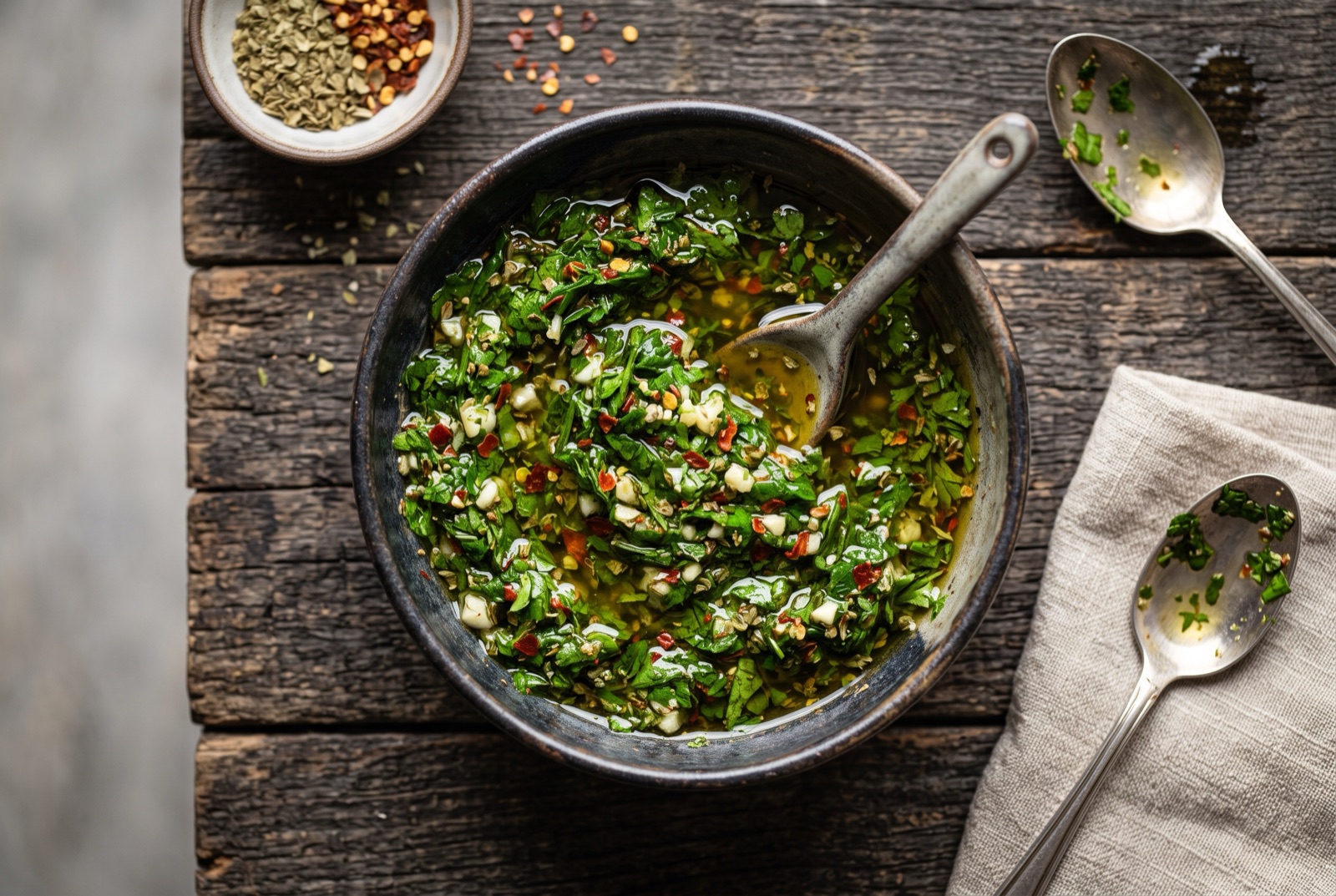
Keep exploring Argentina.
Argentina has 9 more dishes in the atlas — Alfajores de Maicena and Asado, and 7 more.
Recipe by The DishRoute Kitchen · published August 20, 2026 · updated August 20, 2026