Char Siu.
Cantonese Barbecue Pork
叉燒 · Chāshāo · say it: chah-SIU
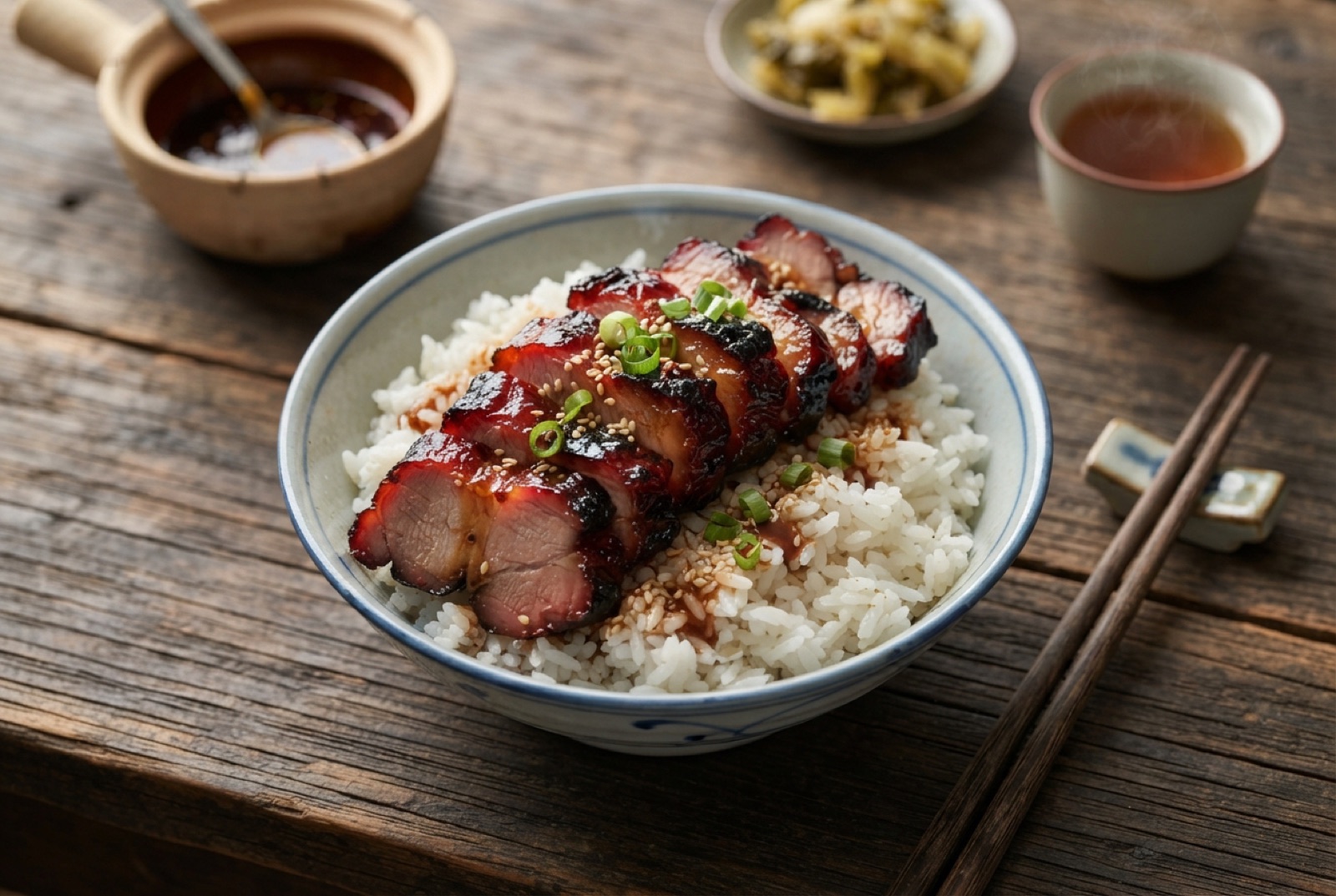
Char siu is strips of well-marbled pork marinated in a sweet-savory paste of hoisin, fermented red bean curd, soy, Shaoxing wine and five-spice, then roasted hot and brushed with maltose syrup until the surface goes sticky, mahogany and charred at the edges. The taste is honeyed and deeply savory at once, with the faint funk of fermented bean curd underneath that makes it read as char siu rather than generic sweet pork. It is a roast-shop staple across Guangdong and Hong Kong, hung on hooks in the window and hacked to order over rice, and it is also one of the few classic restaurant meats a home oven handles genuinely well.

- Gate
- ChinaGuangdong
- Prep
- 20 min
- Cook
- 40 min
- Total time
- 13 hr incl. 12 hr rest
- Serves
- 4
- Status
- Medium
- Nutrition / serving · estimated
- Calories 520 kcal
- Protein 45 g
- Carbs 24 g
- Fat 27 g
- Sugar 20 g
- Sodium 1100 mg
Why this recipe works.
- Uses pork shoulder cut into long strips, which stays juicy through a hot roast far better than the loin most shortcut recipes reach for.
- Glazes in stages near the end rather than all at once, so you get lacquer and char instead of a burned, bitter crust.
- Explains what fermented red bean curd contributes and how to cope if you cannot find it.
- Roasts on a rack over a water tray, which mimics the drip-and-steam of a hanging roast oven closely enough to matter.
Ingredients.
14 itemsFor the pork
For the marinade
For the glaze
Equipment
- Roasting tray with a wire rack
- Pastry brush
- Large bowl or zip bag for marinating
Instructions.
Cut and score the pork
Trim 1 kg of pork into strips about 5 cm thick and a hand long, leaving the fat on. Prick each strip all over with a fork so the marinade travels past the surface rather than sitting on it.
Mix the marinade
Mash the fermented bean curd with its brine until smooth, then whisk in the hoisin, both soy sauces, Shaoxing wine, sugar, garlic, ginger, five-spice, sesame oil and white pepper. Reserve 4 tablespoons in a jar for the gravy later.
Marinate overnight
Rub the rest of the marinade into the pork strips, massaging it into the cuts, then cover and refrigerate at least 12 hours and up to 24, turning once. The meat will darken visibly and firm up as it cures.
Roast on a rack
Heat the oven to 220°C. Set the strips on a wire rack over a tray with 1 cm of water in it, and roast for 20 minutes, until the surface is dry-looking and the edges have started to color.
Tip The water tray is doing real work — it catches the sugary drips before they smoke and keeps the oven from stripping the pork dry.
Turn and glaze
Stir the maltose with the hot water until pourable. Flip the strips, brush with glaze, and roast 10 minutes more; then flip, glaze again, and give them a final 8–10 minutes until the surface is glossy, deep mahogany and blackening at the thin edges.
Char the edges
If the tips are still pale, slide the tray under a hot grill for 2–3 minutes, watching constantly — the sugar goes from caramel to carbon in under a minute. You want scattered dark patches, not an even black crust.
Make the gravy and rest
Tip the reserved marinade into a small pan with 100 ml water and boil hard for 2 minutes until slightly syrupy. Rest the pork 10 minutes, then slice across the grain in finger-thick pieces and serve over rice with the gravy spooned across.
Tips from our kitchen.
- Cut the pork into strips no thicker than 5 cm. Thick blocks give you a beautifully glazed outside wrapped around dry, under-seasoned meat.
- Marinate at least overnight. Twenty-four hours is better; the fermented bean curd and soy need time to work past the surface.
- Warm the maltose with a spoonful of hot water before glazing, or it will not spread — cold maltose has the consistency of setting cement.
- Keep a tray of water on the shelf below the meat. It catches drips, stops the sugar smoking out your kitchen, and keeps the oven from drying the pork.
- Char under a hot grill for the last 2–3 minutes if the edges are still pale. Those blackened tips are the best part and nobody in Guangdong trims them off.
- Rest 10 minutes before slicing, then cut across the grain in finger-thick pieces so each slice keeps its dark edge.
Substitutions.
- Fermented red bean curd (nam yu) → 1 extra tbsp hoisin plus 2 tsp white miso and a few drops of red wine vinegar
- It gets you a similar salty depth, though not the exact perfume. Chinese grocers sell nam yu in jars for very little and it keeps for months in the fridge.
- Maltose → Honey, or golden syrup
- Both glaze well but are sweeter and scorch faster, so brush them on later and watch the oven. Maltose sets to a firmer, glassier finish.
- Pork shoulder → Pork collar (neck), or pork belly cut into strips
- Collar is the roast-shop favorite for its fat marbling. Belly gives a richer, fattier char siu and needs 10 minutes longer at a slightly lower heat.
Variations.
- Char siu fan
- The lunch-counter classic: sliced char siu over rice with blanched choy sum, a spoonful of the reduced marinade as gravy, and often a soy-braised egg alongside.
- Honey-glazed shoulder end
- Use the fattiest strip and double the final glaze, roasting until almost half the surface is blackened. Sold as the prized "fatty" cut in Hong Kong shops and gone first every time.
- Char siu chicken thighs
- Boneless thighs in the same marinade, roasted 25 minutes total. Not traditional siu mei, but it works and is the fastest way to use up leftover marinade.
Storage & reheating.
Refrigerate up to 4 days, wrapped tightly — the glaze firms up cold and slices cleanly straight from the fridge. Reheat slices briefly in a hot dry pan or under a grill to bring the lacquer back; a microwave softens it into steamed pork. It freezes well in portions for 3 months, and frozen char siu is the ideal starting point for fried rice or noodle soup since it is chopped small anyway. Boil any leftover marinade for a full minute before using it as sauce.
Serve with
Steamed rice, blanched choy sum or gai lan with oyster sauce, and a small bowl of the strained, reduced marinade as gravy.
The story behind Char Siu.
The name means "fork burn" or "fork roast": long strips of pork skewered on forks and hung to roast over fire, which is still how roast shops in Guangzhou and Hong Kong do it, in tall barrel ovens where the meat cooks suspended in radiant heat with the drips hissing below. Char siu belongs to the siu mei family — the whole cabinet of Cantonese roast meats, including crisp-skinned pork belly, soy chicken and roast goose — sold by the catty from shops that specialize in nothing else, weighed, chopped, and packed with a scoop of rice and a ladle of gravy for lunch.
Its sweetness sets Cantonese roasting apart from most Chinese meat cookery, and it is engineered rather than incidental. Maltose, a thick, only mildly sweet syrup, is the traditional glaze because it sets to a lacquer instead of running off; honey behaves similarly but burns faster. Fermented red bean curd, sold in jars in brick-red brine, adds a salty, almost cheesy depth and a natural rosy tint. The startling neon-red ring you see on shop-window char siu comes from added food coloring, not from any traditional ingredient, and plenty of good shops skip it — a home version will look darker and browner, which is the honest color of caramelized sugar and soy.
Once made, char siu is a building block more than a dish. It goes over rice with blanched greens as char siu fan, into the fluffy steamed buns called char siu bao, chopped through fried rice and noodle soups, and folded into the flaky baked buns of a dim sum trolley. In Cantonese diaspora kitchens from Vancouver to Kuala Lumpur, a Sunday tray of char siu quietly supplies half the week's lunches, and the trimmed ends never make it out of the kitchen.
Questions, answered.
Why is restaurant char siu bright red and mine is brown?
The vivid red ring comes from added food coloring, used by roast shops for the window display. Nothing in the traditional marinade produces that shade — fermented red bean curd tints the meat only faintly rosy. Home char siu comes out mahogany brown, which is what caramelized maltose, soy and roasted pork actually look like.
What cut of pork should I use for char siu?
Pork shoulder or pork collar (neck), cut into long strips about 5 cm thick. Both have enough intramuscular fat to survive a hot roast. Pork loin and tenderloin are lean and turn dry and stringy, which is why char siu made with them tastes like glazed sawdust however good the marinade is.
Can I make char siu without maltose?
Yes. Honey or golden syrup glaze perfectly well, they just burn sooner because they are sweeter, so brush them on in the last 10 minutes and check often. Maltose is worth buying if you make this regularly: it sets to a firmer, glassier lacquer that does not run off warm meat.
Do I need a special oven or a barbecue?
No. Roast shops hang the strips in tall barrel ovens, but a domestic oven with the meat on a rack over a tray of water gets very close, because the water tray reproduces the drip-and-steam environment. A grill or barbecue also works if you keep the meat over indirect heat and glaze only at the end, since dripping sugar flares badly over direct flame.
How do I know when char siu is done?
Go by look and feel rather than a strict time: the surface should be glossy and dark with blackened edges, and a skewer through the thickest strip should meet no resistance and come out with clear juices. On a thermometer, aim for about 70°C in the center — shoulder stays juicy well past that thanks to its fat.
You might also like.
All recipes →
Keep exploring China.
China has 9 more dishes in the atlas — Cong You Bing and Dan Dan Mian, and 7 more.
Recipe by The DishRoute Kitchen · published August 19, 2026 · updated August 19, 2026