Dan Dan Mian.
Sichuan Sesame Chili Noodles
担担面 · Dàndàn miàn · say it: dahn-dahn MYEN
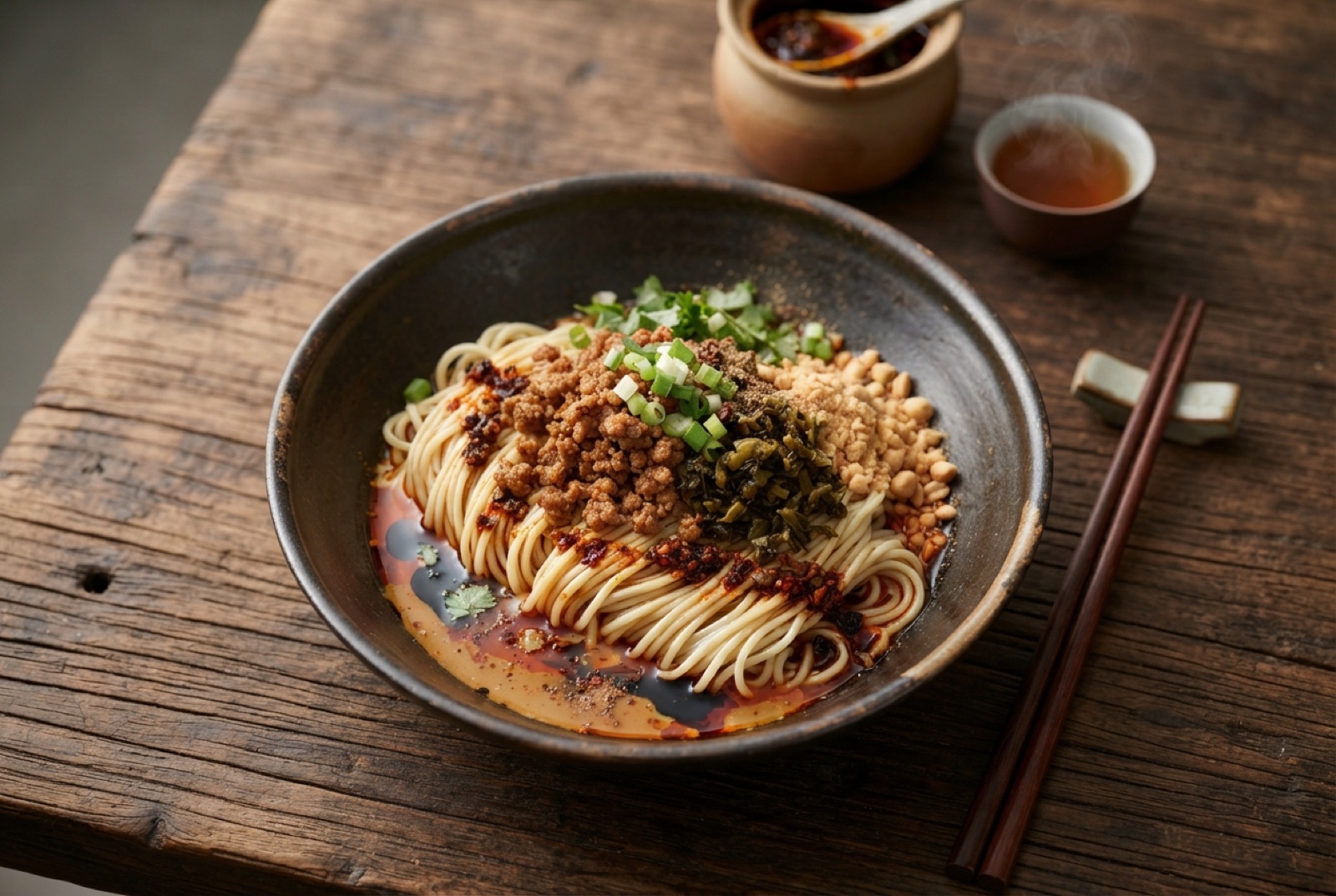
Dan dan mian is a small bowl of wheat noodles tossed at the table into a sauce that was waiting underneath them: sesame paste and chili oil, sharpened with black vinegar and soy, lifted by ground Sichuan peppercorn, and crowned with dark, crisp crumbles of pork fried with ya cai preserved mustard greens. The first mouthful is nutty and rich, the second brings chili warmth, and by the third your lips are quietly buzzing from the peppercorn — the málà effect that Sichuan treats as a flavor in its own right. It is fast food in the literal sense: fifteen minutes from pantry to bowl, once the chili oil is in your fridge.

- Gate
- ChinaSichuan (Chengdu)
- Prep
- 15 min
- Cook
- 20 min
- Total time
- 35 min
- Serves
- 4
- Status
- Medium
- Nutrition / serving · estimated
- Calories 690 kcal
- Protein 26 g
- Carbs 78 g
- Fat 30 g
- Fiber 5 g
- Sodium 1500 mg
Why this recipe works.
- Follows the Chengdu logic of building the sauce in the bowl, so the noodles arrive hot and get coated in seconds rather than sitting in cooling liquid.
- The pork is fried past the point most recipes stop, until it is genuinely crisp and crumbly — that texture against soft noodles is the whole dish.
- Toasts and grinds the Sichuan peppercorn at the end, when its citrus aroma and tingle are at full strength instead of cooked away.
- Gives honest guidance on the dry Chengdu bowl versus the soupier restaurant version, so you can build the one you actually want.
Ingredients.
16 itemsFor the topping
For the sauce
To assemble
Equipment
- Wok or heavy frying pan
- Large pot for noodles
- Small dry pan and grinder for the peppercorns
Instructions.
Fry the pork until crumbly
Heat the oil in a wok over medium-high and add 250 g of pork, breaking it apart with a spatula. Keep frying past the point it turns gray — 6–8 minutes — until it stops releasing steam, starts crackling, and the crumbles are dark brown and separate.
Tip Crowding is the enemy here. If your pan is small, fry in two batches or the pork will simmer in its own juices and stay soft.
Add the preserved greens
Splash in the Shaoxing wine and let it hiss away, then stir in the ya cai and dark soy sauce. Fry 2 minutes more, until the mixture smells savory and toasted and looks almost dry in the pan. Scrape into a bowl and set aside.
Toast and grind the peppercorns
Wipe out the wok and toast the Sichuan peppercorns over low heat for about a minute, shaking the pan, until they smell sharply citrusy and start to darken. Grind them to a powder and sift out the woody husks.
Mix the sauce base
Whisk the sesame paste with the light soy sauce, black vinegar, garlic, sugar and sesame oil, adding the liquids gradually so the paste loosens instead of seizing. Stir in the chili oil last; the sauce should be glossy, pourable and noticeably intense on its own.
Cook the noodles
Boil the noodles in plenty of unsalted water until just tender with a slight bite, then lift them out with tongs, saving a mug of the starchy cooking water. Do not rinse — the surface starch is what helps the sauce grip.
Build the bowls
Spoon the sauce into the bottom of four warmed bowls and slacken each with 2–3 tablespoons of hot noodle water until it flows. Pile the hot noodles on top, add the blanched greens if using, and crown with the crisp pork.
Finish and toss at the table
Scatter over the ground Sichuan pepper and sliced scallions, then serve immediately with the instruction to stir hard from the bottom until every strand is coated in dark sauce. Eat while the noodles are still hot enough to steam.
Tips from our kitchen.
- Stir the sesame paste jar from the bottom before measuring. The solids settle like concrete and the top layer of oil alone will not emulsify.
- Use starchy noodle cooking water, not plain hot water, to loosen the sauce — the starch is what makes it cling to the strands instead of pooling.
- Toast Sichuan peppercorns in a dry pan for 60 seconds until fragrant, then grind and sieve out the gritty husks. Pre-ground powder is usually stale and merely bitter.
- Fry the pork over medium-high heat without crowding until it stops steaming and starts crackling; if it stews it will never turn crumbly.
- Taste the sauce before you build the bowls. It should be a little too salty and too sharp on its own — the noodles dilute it substantially.
- Serve immediately and tell everyone to stir hard from the bottom. Dan dan mian that sits unstirred is a bowl of plain noodles with sauce underneath.
Substitutions.
- Chinese sesame paste → Tahini plus 1 tsp toasted sesame oil
- Chinese sesame paste is made from fully toasted seeds, so it is darker and much more aromatic. Tahini plus sesame oil closes most of the gap; unsweetened natural peanut butter is a rougher but usable stand-in.
- Ya cai (Sichuan preserved mustard greens) → Tianjin preserved vegetable (dong cai), or chopped zha cai
- All are salt-preserved and give similar savory depth. Rinse zha cai first, as it is saltier and spicier. Without any of them, add a teaspoon of soy sauce and accept a simpler topping.
- Zhenjiang black vinegar → Balsamic vinegar cut with a little rice vinegar
- Black vinegar is malty and low in sharpness; plain white vinegar is far too aggressive here and will overwhelm the sesame.
Variations.
- Chengdu dry style
- Use only 2 tablespoons of noodle water in total so the sauce clings as a thick paste, and serve in small bowls. This is the original street format — intense, and eaten in a few minutes.
- Soupy restaurant style
- Loosen each bowl with 150 ml of hot unsalted stock instead of noodle water. Milder, more filling, and the version most people outside China first encounter.
- Vegetarian dan dan
- Replace the pork with finely chopped shiitake mushrooms and crumbled firm tofu, fried hard until dark and dry. Keep the ya cai and the dish holds up completely.
Storage & reheating.
The pork topping keeps 4 days refrigerated and reheats to crispness in a dry pan; it also freezes well. The sauce base can be mixed and refrigerated for a week, though it will stiffen — loosen with hot water and stir before using. Assembled bowls do not keep at all: the noodles absorb the sauce, swell, and go pasty within an hour, so cook the noodles only when you are ready to eat.
Serve with
A plain cucumber salad smashed with garlic and vinegar, or a bowl of clear soup — Sichuan tables answer a numbing-hot dish with something cooling rather than more chili.
The story behind Dan Dan Mian.
The name refers to the dan, the shoulder pole a hawker carried through Chengdu with a basket of noodles at one end and a pot of sauce and toppings at the other. Sold by the small bowl to people standing in the street, it was cheap, portable food, and the portion size reflects that: a proper dan dan mian is a snack, not the trough of noodles the name usually gets attached to abroad. The pork topping is measured in spoonfuls, seasoning meat rather than a meat course.
The biggest thing to know before cooking is that there are two very different dishes under one name. In Chengdu, dan dan mian is essentially dry: a spoonful of intensely seasoned sauce in the bottom of the bowl, noodles piled on top, and you stir vigorously until every strand is coated, with no broth at all. The soupy, heavily sesame-thickened version most people meet outside China developed largely through Taiwanese and overseas Chinese restaurants, where a mellower, richer bowl sold better. Neither is fake — the recipe below sits close to the Chengdu style with just enough noodle water to loosen the sauce, and it tells you how to push it either way.
Two ingredients carry the identity. Ya cai, the salt-preserved mustard stem from Yibin, is fried with the pork until both go dark and almost dry, giving a savory, faintly funky crunch that no fresh vegetable imitates. And Sichuan peppercorn, toasted and ground just before serving, supplies the tingling numbness locals call má, which is not heat and does not come from chili. Skip either and you have a decent sesame noodle; include both and it tastes like Chengdu.
Questions, answered.
Are dan dan noodles supposed to have soup?
Traditionally no. In Chengdu the sauce sits at the bottom of a small bowl and the noodles are tossed through it dry, with no broth. The soupy version widespread in restaurants abroad, especially Taiwanese-influenced ones, is a genuine adaptation rather than an error — this recipe leans dry but tells you how to loosen it into a soup bowl.
What does Sichuan peppercorn taste like, and can I leave it out?
It is not chili and it is not really hot. It has a bright citrus-pine aroma and produces a tingling, slightly numbing buzz on the lips and tongue called má. You can leave it out and the noodles will still be good, but the numbing-hot málà balance that defines Sichuan cooking will be missing.
Why did my sesame sauce turn into a stiff clump?
Sesame paste seizes when liquid is added too fast, the same way tahini does. Add the soy, vinegar and hot noodle water a spoonful at a time, stirring hard after each addition, and it will loosen into a smooth, pourable sauce. If it has already clumped, keep whisking with more hot water — it recovers.
What noodles should I use?
Fresh thin wheat noodles are traditional, about the thickness of spaghetti. Dried Chinese wheat noodles work well and so does spaghetti at a pinch. Avoid rice noodles and egg noodles: rice noodles do not hold this sauce, and egg noodles bring a richness that fights the sesame.
How spicy is this and can I tone it down?
It is moderately hot as written, since most of the heat comes from chili oil you control directly. Use less oil and more of the sediment for color and flavor with less burn, or reduce both and add an extra spoonful of sesame paste to keep the sauce rich. The dish stays recognizable at almost any heat level.
You might also like.
All recipes →
Keep exploring China.
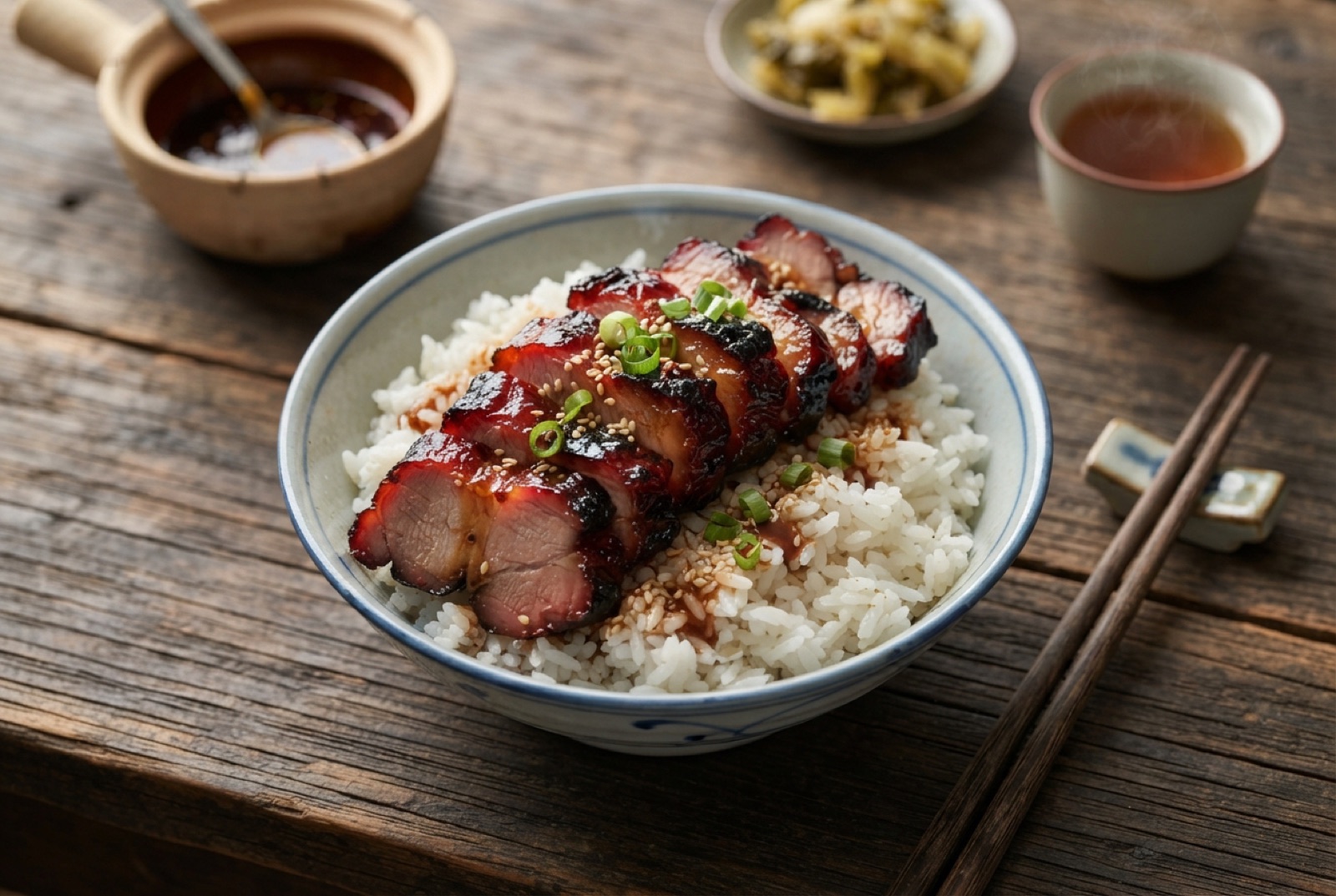
China has 9 more dishes in the atlas — Char Siu and Cong You Bing, and 7 more.
Recipe by The DishRoute Kitchen · published August 19, 2026 · updated August 19, 2026