Mapo Tofu.
Sichuan Tofu in Chili-Bean Sauce
麻婆豆腐 · Mapo doufu · say it: MAH-poh DOH-foo
Mapo tofu is cubes of soft tofu simmered in a fiery, glossy, brick-red sauce built on doubanjiang — Sichuan's fermented chili-bean paste — with a scatter of ground pork and a final dusting of toasted, ground Sichuan peppercorn. The flavor is málà, "numbing-hot": deep fermented savoriness and chili heat from the paste, and a citrusy, lip-buzzing tingle from the peppercorns that makes you reach for more rice rather than water. It sounds like restaurant food but is genuinely a twenty-five-minute home dish; the only real work is finding two Sichuan pantry staples, and this recipe tells you honestly what happens if you cannot.
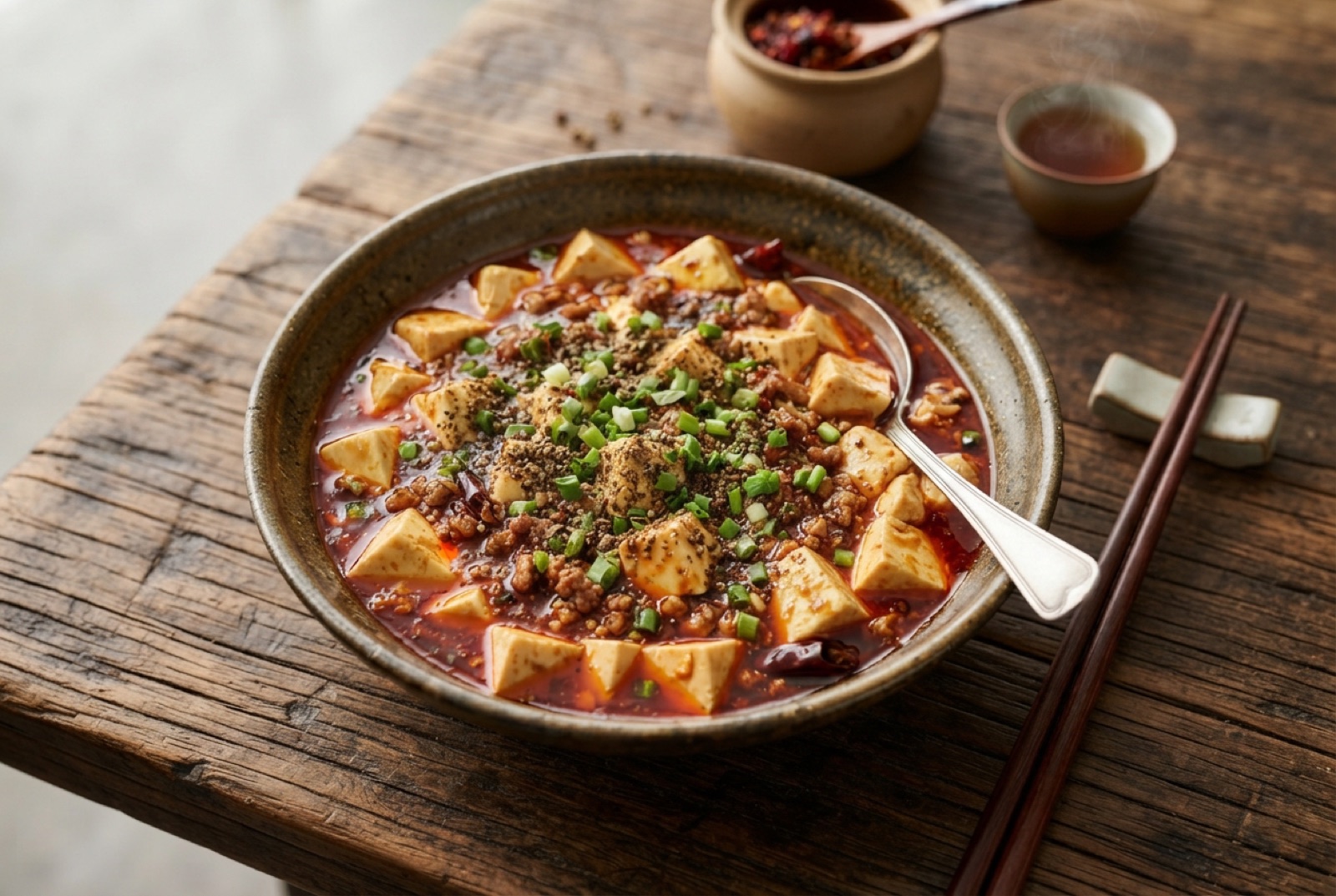

- Gate
- ChinaSichuan
- Prep
- 15 min
- Cook
- 15 min
- Total time
- 30 min
- Serves
- 4
- Status
- Easy
- Nutrition / serving · estimated
- Calories 320 kcal
- Protein 20 g
- Carbs 10 g
- Fat 23 g
- Fiber 2 g
- Sodium 950 mg
Why this recipe works.
- Built on real doubanjiang and Sichuan peppercorn — the two ingredients that actually make the dish, with honest substitutes if you lack them.
- The tofu is salted and blanched first, an old Sichuan step that seasons it and keeps the cubes intact through simmering.
- The pork is fried until genuinely crisp, so it seasons the sauce instead of sitting in it as gray mince.
- Twenty-five minutes end to end, and every step has a visual cue instead of blind timing.
Ingredients.
14 itemsFor the sauce
Equipment
- Wok or deep skillet
- Small saucepan for blanching the tofu
- Spice grinder or mortar for the peppercorns
Instructions.
Blanch the tofu
Bring a saucepan of water to a bare simmer with the teaspoon of salt. Slide in the tofu cubes and hold them at a gentle simmer for 2–3 minutes, until they float and feel slightly firmed at the edges, then drain carefully and set aside.
Tip This old Sichuan step seasons the tofu from within and firms its surface so the cubes survive the sauce intact.
Crisp the pork
Heat the oil in a wok over high heat until shimmering. Add 150 g of ground pork, breaking it into small bits, and fry until the water has cooked off and the pieces are browned and audibly sizzling-crisp at the edges, 3–4 minutes.
Fry the doubanjiang
Lower the heat to medium, push the pork aside and add the doubanjiang to the oil. Fry, stirring, until the oil stains deep red and the paste smells toasty rather than raw, about 1 minute, then stir in the black beans, garlic and ginger until fragrant, 30 seconds more.
Tip This frying step, not the simmer, is where mapo tofu gets its color and depth — do not rush it, and do not let it scorch.
Build the sauce and simmer the tofu
Pour in the stock with the soy sauce and sugar and bring to a simmer. Slide in the blanched tofu and simmer gently for 4–5 minutes, spooning sauce over the cubes and nudging them with the back of the spatula, until the tofu is heated through and stained red at the edges.
Thicken in stages
Stir the cornstarch slurry, then add a third of it and swirl the pan; repeat until the sauce turns glossy and coats the tofu like thin gravy — it should slide, not slump. Taste and add a little more soy sauce only if it needs salt; doubanjiang is already salty.
Finish with má
Kill the heat and scatter over the ground Sichuan peppercorn and scallions. Serve immediately over plenty of steamed rice, while the surface still shines and the peppercorn aroma is at its citrusy peak.
Tips from our kitchen.
- Buy doubanjiang labeled Pixian (or Pidu) if you can — it is darker, deeper and less purely salty than generic chili-bean sauces. It keeps for a year refrigerated, so the jar is a good investment.
- Chop the doubanjiang finely before frying; the paste often contains whole bean and chili pieces that season unevenly if left coarse.
- Fry the doubanjiang in the oil until the oil itself turns red and the paste smells toasty — this step, not the simmer, creates the color and depth of the sauce.
- Use soft or medium-firm tofu, not silken (it disintegrates) and not extra-firm (it stays bouncy and bland). Slide it into the sauce and nudge it with the back of the spatula rather than stirring.
- Toast the Sichuan peppercorns in a dry pan until fragrant before grinding, and add them at the end — long cooking dulls the numbing aroma to dust.
- Add the cornstarch slurry in two or three additions. Tofu keeps releasing water, and it is far easier to thicken a loose sauce than to rescue glue.
Substitutions.
- Doubanjiang (Sichuan chili-bean paste) → Any Chinese chili-bean or broad-bean chili sauce, plus 1 tsp miso for depth
- Gets you a very good spicy tofu, though without Pixian doubanjiang's fermented depth it is honestly a cousin of mapo tofu rather than the real thing.
- Sichuan peppercorns → Omit, and add a little extra black pepper
- There is no true substitute for the numbing citrus buzz — the dish becomes "spicy tofu" rather than málà. Still delicious; just different.
- Ground pork → Ground beef, or shiitake mushrooms chopped fine
- Beef is the older Chengdu tradition. Finely chopped shiitake, fried until browned, makes a genuinely good vegetarian version.
Variations.
- Vegetarian mapo tofu
- Skip the pork and fry 150 g finely chopped shiitake or cremini mushrooms until deeply browned; check that your doubanjiang is meat-free (most are). The fermented paste carries enough savor that little is lost.
- Japanese-style mabo dofu
- The milder adaptation beloved in Japan: less chili, a spoon of miso and a touch of sugar, often no Sichuan peppercorn. Gentler, rounder, and very much a weeknight rice dish.
- Extra-má Chengdu style
- Double the ground Sichuan peppercorn and finish with a spoonful of chili oil for the full Chengdu experience — the version where your lips hum for ten minutes afterward.
Storage & reheating.
Keeps 3 days refrigerated in a sealed container; the flavor deepens overnight and many people prefer it on day two. Reheat gently in a pan with a splash of water, nudging rather than stirring so the tofu stays whole. Freezing is not recommended — tofu turns spongy once frozen and thawed.
Serve with
A big bowl of plain steamed rice is non-negotiable — mapo tofu is a sauce dish, and rice is its other half. A simple stir-fried green cools things down.
The story behind Mapo Tofu.
Mapo tofu is one of the few great dishes with a documented birthplace. It comes from Chengdu, the capital of Sichuan, where in the late Qing era — the second half of the nineteenth century — a small restaurant near the Wanfu bridge served braised tofu to porters and laborers passing through. The proprietress, surnamed Chen, had a pockmarked face, and the dish that made her famous took her nickname: mapo doufu, "pockmarked grandmother's tofu." The name sounds unkind to modern ears, but in Chengdu it became a badge of honor — the restaurant took the name Chen Mapo Doufu, and a restaurant trading under that name operates in the city to this day.
The dish is a compact lesson in the Sichuan pantry. Doubanjiang, a paste of fermented broad beans and chilies aged in earthenware vats — the best of it from the town of Pidu (Pixian) — supplies heat, salt and a deep, almost meaty fermented backbone; Sichuan cooks call it the soul of their cuisine. Sichuan peppercorn, the dried husk of the prickly ash berry, adds no real heat at all but a distinctive citrus aroma and a gentle numbing buzz on the lips. Together they produce málà, the numbing-hot sensation that defines Chengdu food. Ground meat — traditionally beef in older Chengdu accounts, ground pork in most kitchens today — is a seasoning rather than a main event: a modest scatter of crisp, savory bits, not a meat sauce.
Mapo tofu traveled well. It spread across China with Sichuan restaurants, and in Japan a milder, sweeter adaptation called mabo dofu became such a weeknight fixture that it is sold as an instant sauce in every supermarket. But its heart is unchanged: cheap tofu, a fierce pantry, and rice — food invented for working people, which is exactly why it still tastes like it belongs on a kitchen table.
Questions, answered.
What does "mapo" mean in mapo tofu?
Mapo (麻婆) means "pockmarked old woman." The dish is named for its inventor, a woman surnamed Chen who ran a small restaurant in Chengdu in the late 1800s and had a pockmarked face. Her tofu became so famous that the nickname turned into a brand — a restaurant called Chen Mapo Doufu still operates in Chengdu.
How spicy is mapo tofu really?
Solidly spicy but not punishing — the heat comes from fermented chili-bean paste, which is deeper and rounder than raw chili heat, plus the numbing tingle of Sichuan peppercorn, which is an aroma and sensation rather than fire. You control the level entirely through the amount of doubanjiang and peppercorn, and served over rice it mellows further.
What is doubanjiang and where do I buy it?
Doubanjiang is a Sichuan paste of fermented broad beans, chilies and salt, aged until brick-red and deeply savory — it is the backbone of mapo tofu and much of Sichuan cooking. Any Chinese grocery stocks it (look for "Pixian" or "Pidu" on the label for the best kind), and it is widely available online. Refrigerated, a jar keeps about a year.
Which tofu should I use for mapo tofu?
Soft or medium-firm block tofu is ideal: tender enough to be silky in the sauce, sturdy enough to survive simmering in cubes. Silken tofu is traditional in some Chengdu kitchens but falls apart easily for beginners, and extra-firm tofu stays rubbery and never absorbs the sauce. A brief salted blanch keeps whichever you use intact.
Can I make mapo tofu vegetarian?
Yes, and it works unusually well, because the deep savoriness of mapo tofu comes mostly from the fermented doubanjiang rather than the meat. Replace the pork with finely chopped shiitake mushrooms fried until well browned, use vegetable stock, and confirm your chili-bean paste contains no meat — most brands are naturally vegan.
You might also like.
All recipes →
Keep exploring China.
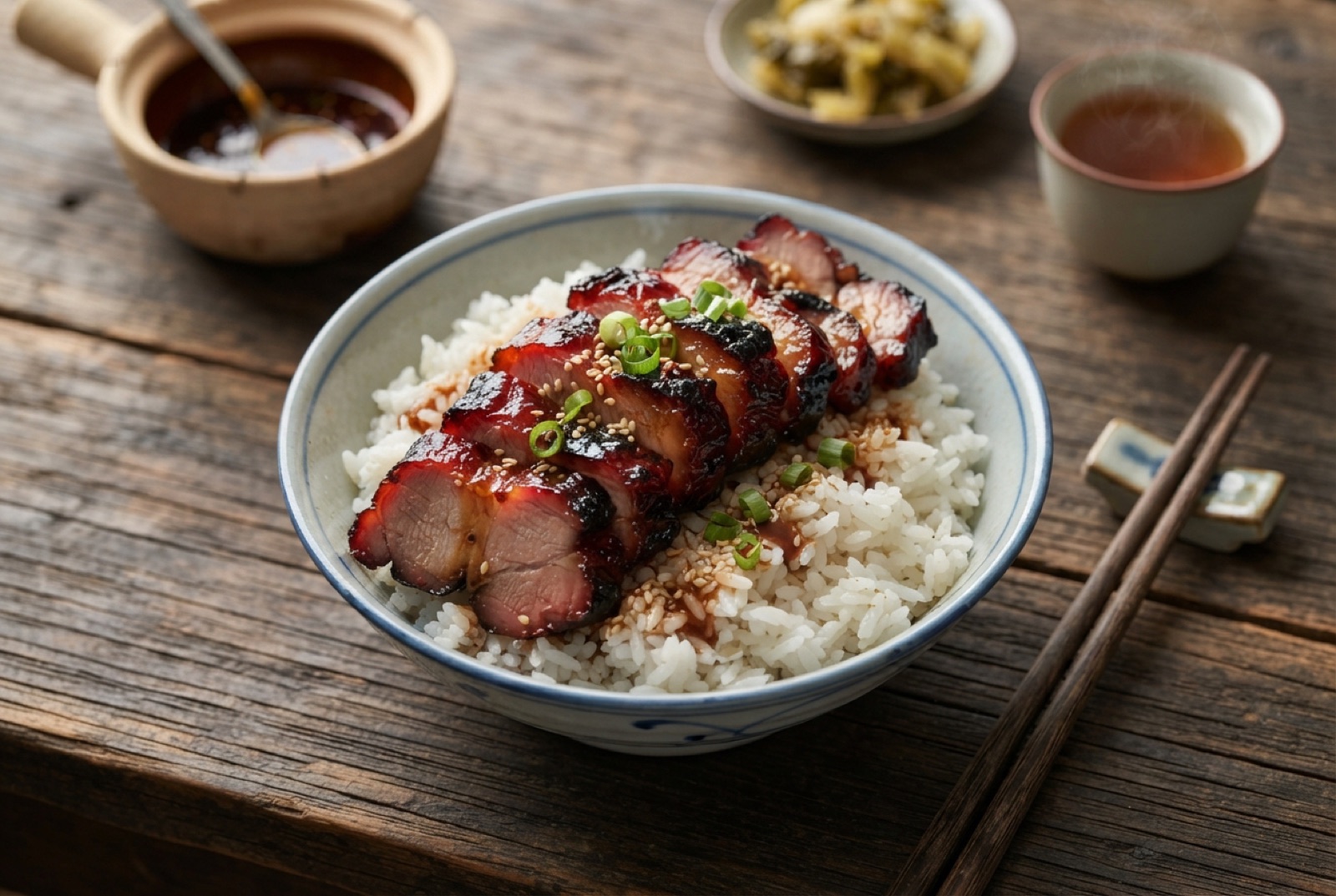
China has 9 more dishes in the atlas — Char Siu and Cong You Bing, and 7 more.
Recipe by The DishRoute Kitchen · published August 18, 2026 · updated August 18, 2026