Olla de Carne.
Costa Rican Beef and Root Pot
Olla de carne · say it: OH-yah deh KAR-neh
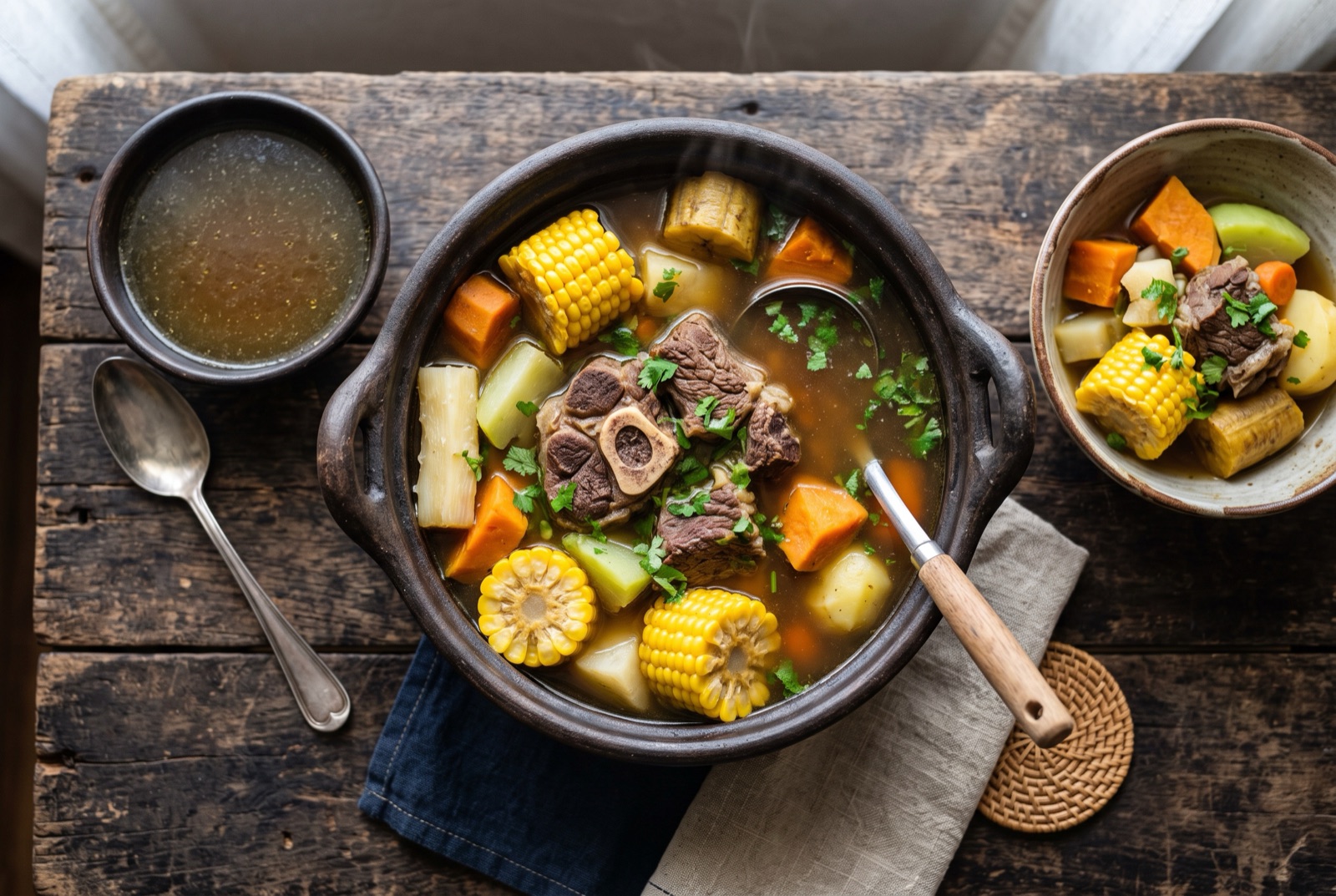
Olla de carne is a long-simmered beef and root vegetable pot, and it is served in two acts: the broth in a cup or bowl first, then the meat and vegetables on a plate with rice. The beef is shin or short rib, cooked until the connective tissue melts and the broth turns glossy and slightly sticky on the lips. Into that broth go the roots of Costa Rican cooking — yuca, chayote, sweet potato, green plantain, corn on the cob, potato — each added at its own moment so the softest ones do not disintegrate before the hardest are ready. There is almost no seasoning beyond onion, coriander, garlic and salt, which is the point: three hours of beef and vegetables is the flavour. It is the definitive Costa Rican Sunday lunch.

- Gate
- Costa RicaCentral Valley
- Prep
- 30 min
- Cook
- 3 hr
- Total time
- 3 hr 30 min
- Serves
- 6
- Status
- Medium
- Nutrition / serving · estimated
- Calories 590 kcal
- Protein 42 g
- Carbs 62 g
- Fat 17 g
- Fiber 9 g
- Sodium 640 mg
Why this recipe works.
- Staged vegetable additions across the final hour, so nothing collapses and nothing stays raw in the middle.
- Broth is skimmed properly in the first twenty minutes, which is what keeps it clear rather than cloudy and greasy.
- Written around beef shin on the bone, because the marrow and connective tissue are what give the broth its body.
- Serves as two courses the way Costa Ricans actually eat it, with a plan for the leftovers.
Ingredients.
17 itemsFor the broth
For the vegetables
To finish
Equipment
- Very large stockpot
- Skimming spoon or ladle
- Sturdy peeler and a heavy knife for the yuca
Instructions.
Start the beef in cold water
Put the beef shin in a very large pot with the cold water and bring it slowly to a simmer over medium heat. As grey foam rises, lift it off with a ladle and discard — keep at it for the first 20 minutes until the surface stays clear.
Tip Do not stir during this stage. Stirring breaks the foam back into the liquid.
Add the aromatics and simmer long
Add the onion, garlic, celery, sweet pepper and the tied bunch of coriander. Simmer uncovered at a lazy bubble for 2 hours, until the beef gives easily to a fork and the broth tastes distinctly of meat rather than water.
Strain out the spent aromatics
Fish out and discard the onion, celery, pepper and the coriander bunch, which have given everything they have. Leave the beef in the pot and top the liquid back up with hot water if it has dropped below the meat.
Add the hard roots
Drop in the yuca chunks and the corn rounds and simmer 20 minutes. The yuca is ready when a knife enters with slight resistance and the edges have turned faintly translucent.
Add plantain, sweet potato and carrot
Add the green plantain rounds, sweet potato and carrots and cook another 15 minutes. The plantain will darken and soften but should still hold its round shape.
Add potato and chayote
Add the potatoes and chayote and simmer 15 minutes more, until a knife slides through the potato cleanly and the chayote is tender but not falling apart. Season the broth properly with salt and pepper now.
Finish with cabbage
Lay the cabbage wedges on top, cover and cook 6 to 8 minutes until they are just wilted through and still pale green. Taste the broth one last time — it should be savoury and lightly saline, not thin.
Serve in two courses
Ladle the clear broth into bowls and serve it first with a lime wedge and a spoon of rice. Then plate the beef and vegetables together, spooning a little broth over, with more rice and Salsa Lizano alongside.
Tips from our kitchen.
- Start the beef in cold water and skim the grey foam patiently for the first twenty minutes. Everything you leave in there ends up as cloudiness in the finished broth.
- Keep the pot at a lazy simmer with bubbles breaking one at a time. A rolling boil emulsifies the fat and turns the broth murky.
- Add the vegetables hardest first: yuca and corn, then plantain and sweet potato, then potato and chayote, then cabbage right at the end.
- Cut the yuca into large chunks and pull out the woody central fibre — it never softens no matter how long you cook it.
- Salt late. Three hours of reduction concentrates whatever you added at the start, so season properly only in the last fifteen minutes.
- If you want the broth degreased, chill the pot and lift the set fat off the top. It is also perfectly traditional to leave it.
Substitutions.
- Yuca (cassava) → Frozen yuca chunks, or extra potato
- Frozen yuca is sold peeled and cut at most Latin and African grocers and is honestly easier than fresh. Potato is a weaker substitute — it lacks the slightly waxy, translucent quality yuca brings.
- Chayote → Courgette or a firm summer squash
- Add it even later than you would chayote, since courgette goes to mush in about eight minutes.
- Beef shin → Short ribs, oxtail, or a mix of shin and brisket
- Any cut with bone and connective tissue works. Avoid lean steak cuts entirely — they turn stringy and give the broth no body.
Variations.
- Olla de carne with tiquisque and ñampí
- The full Costa Rican version including the two local tubers, which give the broth a thicker, slightly slippery body. Worth seeking out at a Latin grocer.
- Sopa negra from the leftovers
- Monday's dish: leftover broth simmered with black beans and coriander, served with a poached egg and a spoon of rice.
- Olla de carne with pasta
- Some households drop a handful of short pasta into the broth for the last ten minutes, which turns the first course into something more filling.
Storage & reheating.
Keeps 4 days refrigerated with the broth and solids stored together. Reheat gently on the hob — a hard boil breaks up the softest vegetables. The broth alone freezes very well for 3 months and is the best possible base for sopa negra or a rice soup; the cooked root vegetables do not freeze well and turn grainy.
Serve with
White rice, lime wedges, Salsa Lizano and pickled chile, with the broth served first in a separate bowl.
The story behind Olla de Carne.
Every cattle-raising culture with a big pot arrives at some version of this: Spain has cocido, Colombia has sancocho, Argentina puchero, France pot-au-feu. Costa Rica's version is defined less by its meat than by the specific roots that go into it, several of which barely exist outside the region. Tiquisque and ñampí are tubers with dense, slightly slippery flesh; chayote is a pale green squash that stays firm and faintly sweet; yuca goes translucent at the edges and floury in the middle. Put them all in one pot and the broth picks up a starchy body no stock cube reproduces.
The dish is Sunday food in the most literal sense. It takes three hours, it needs a very large pot, and it produces far more than one meal, which suits a family lunch where relatives arrive at different times and eat in shifts. In many households the broth is served first, on its own, sometimes with a squeeze of lime and a spoon of rice stirred in — a course in itself, and the part people actually queue for. The solids follow: a piece of beef, a scoop of each vegetable, white rice on the side, and Salsa Lizano and pickled chile on the table.
There is also a practical afterlife. Leftover olla de carne broth becomes the base for sopa negra or for a rice soup during the week, and leftover vegetables get mashed into picadillos. Costa Rican home cooking is generally thrifty in this way — a Sunday pot is expected to keep working until Wednesday. The one rule that cooks are firm about is the order of addition. Everything going in at once produces a pot of grey mush with a few hard corners, which is why the recipe below stages the vegetables across the last hour rather than treating them as a single ingredient.
Questions, answered.
Why is my broth cloudy?
Two causes, usually together: the beef was started in hot water instead of cold, and the pot was allowed to boil hard. Starting cold lets the proteins rise slowly as skimmable foam rather than dispersing through the liquid, and a gentle simmer keeps the fat from emulsifying into the broth. Skim thoroughly for the first twenty minutes and keep the surface barely trembling after that.
In what order should the vegetables go in?
Hardest and densest first. Yuca and corn on the cob need around 40 minutes, green plantain and sweet potato about 30, potato and chayote about 20, and leafy things like cabbage only 5 to 10. Adding everything at once guarantees that either the yuca is raw or the chayote has dissolved. Stage them across the final hour of cooking and each one arrives at the table intact.
What is chayote and can I substitute it?
Chayote is a pale green, pear-shaped squash from Mesoamerica with firm, mildly sweet flesh and a single soft seed. It holds its shape in long cooking better than courgette, which is why it belongs in this pot. If you cannot find it, courgette or a firm summer squash will do, but add it in the last eight minutes because it softens far faster.
How is olla de carne served in Costa Rica?
As two courses from one pot. The broth is ladled out first, often into a cup or a bowl with a spoon of rice and a squeeze of lime, and drunk before anything else. The beef and vegetables then come to the table on a platter or plated with white rice on the side. Salsa Lizano and pickled chile sit on the table so each person can adjust their own.
Can I use a pressure cooker?
For the beef stage, yes — about 45 minutes at pressure gets the shin as tender as three hours of simmering. Release the pressure, then cook the vegetables in stages with the lid off as normal, since they need only minutes each and would turn to purée under pressure. The broth will be slightly less clear than a slow-simmered one but the difference is minor.
You might also like.
All recipes →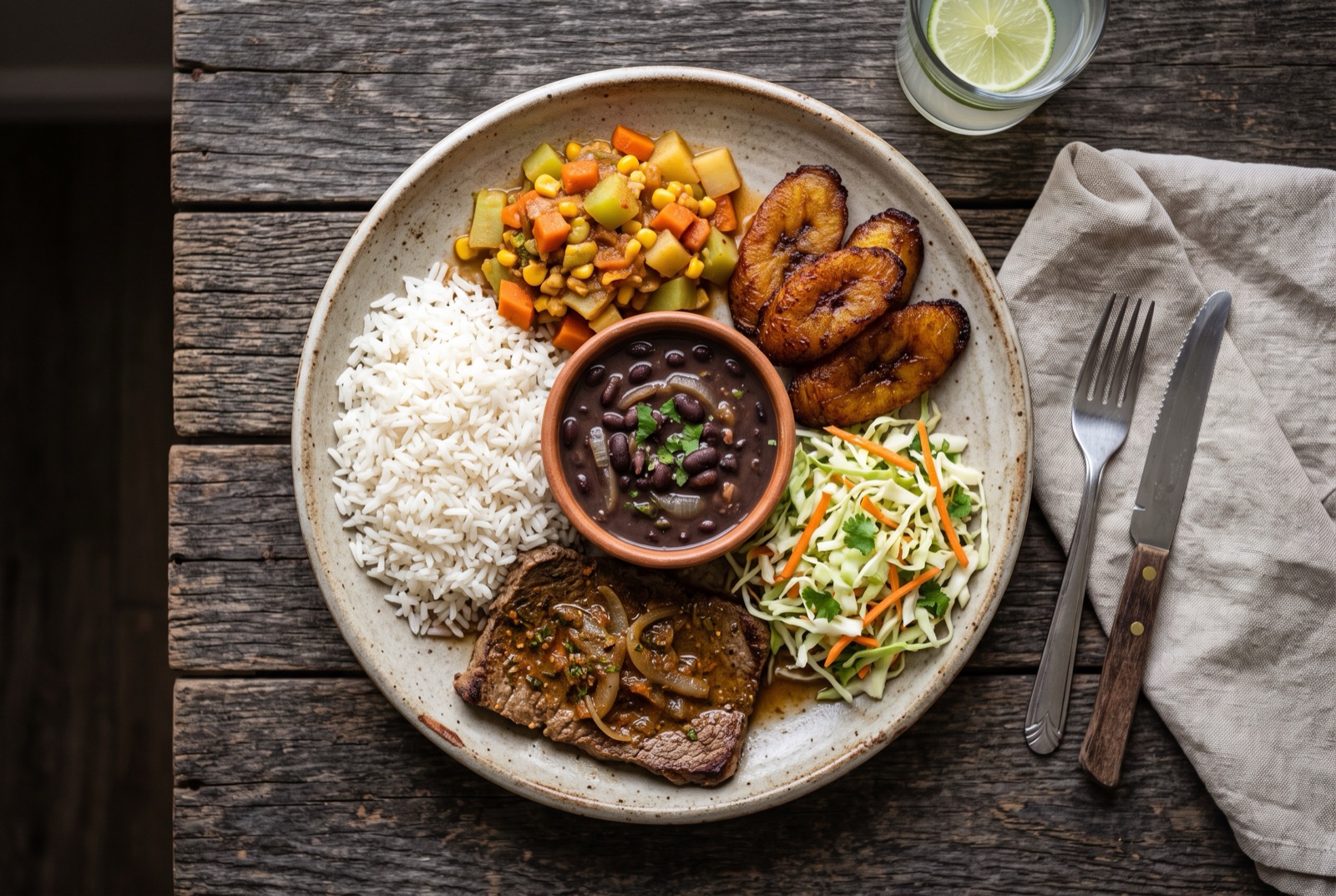
Keep exploring Costa Rica.
Costa Rica has 9 more dishes in the atlas — Agua Dulce and Casado, and 7 more.
All Costa Rica recipes Beef shank recipes Cassava recipes Plantain recipes soupmaingluten freedairy freenut freeRecipe by The DishRoute Kitchen · published August 20, 2026 · updated August 20, 2026