Picadillo de Chayote.
Costa Rican Chayote Hash
Picadillo de chayote · say it: pee-kah-DEE-yo deh chah-YOH-teh
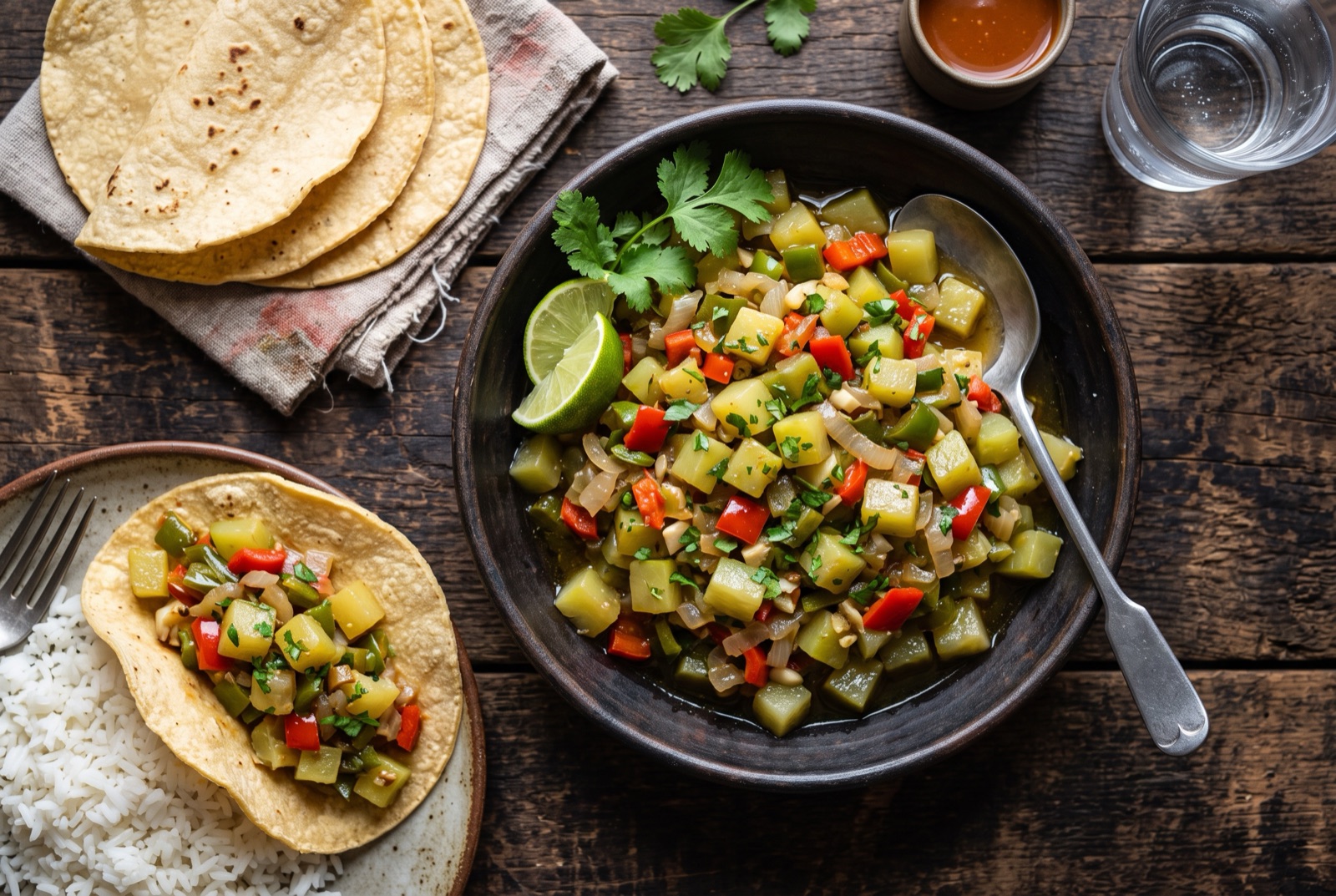
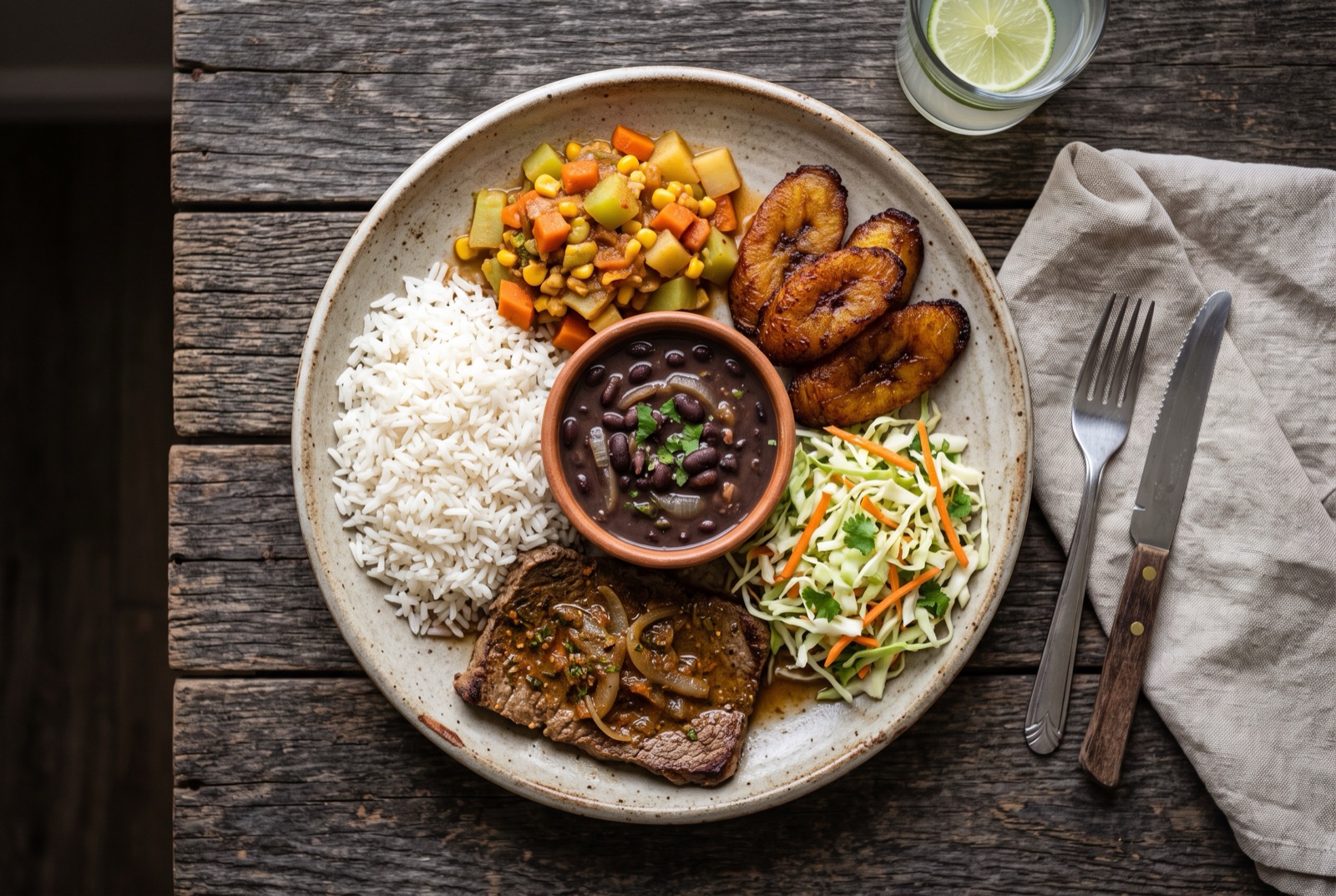
Picadillo in Costa Rica does not mean minced meat — it means a vegetable chopped so finely that the pieces are barely bigger than rice grains, then stewed with the standard onion, garlic and sweet pepper base until soft. Chayote is the most common version. Cut small and cooked in its own moisture with a splash of water, it turns from squeaky and watery to tender, faintly sweet and slightly glossy, holding its cubes without collapsing. It tastes gentle and green, a bit like a cross between courgette and cucumber but denser, and the coriander at the end gives it lift. Ticos eat it as one compartment of a casado, or scoop it into a warm corn tortilla as a snack. It is cheap, quick and entirely vegetarian.

- Gate
- Costa RicaCentral Valley
- Prep
- 15 min
- Cook
- 20 min
- Total time
- 35 min
- Serves
- 4
- Status
- Easy
- Nutrition / serving · estimated
- Calories 140 kcal
- Protein 3 g
- Carbs 14 g
- Fat 8 g
- Fiber 5 g
- Sodium 320 mg
Why this recipe works.
- Cuts the chayote small enough that the seasoning actually reaches it, which is the entire point of a picadillo.
- Cooks it covered in a little water, so the cubes steam tender before the pan dries and starts to glaze them.
- Uses the full Tico olor base rather than just onion, which is what keeps it from tasting like plain boiled squash.
- Ready in half an hour, works as a side, a filling or a light meal, and costs almost nothing.
Ingredients.
11 itemsEquipment
- Sharp knife
- Wide pan with a lid
- Vegetable peeler
Instructions.
Prepare the chayote
Peel the chayote under running water, halve it, chop the soft central seed and keep it, then cut the flesh into 5 mm dice. Aim for even cubes — this is most of the work in the dish.
Build the olor base
Warm the oil in a wide pan over medium heat and cook the onion, sweet pepper, garlic and celery for 6 minutes, stirring, until the onion is translucent and the mixture smells sweet and softened rather than sharp.
Steam the chayote tender
Tip in the diced chayote, stir to coat, add 80 ml of water and the Salsa Lizano, then cover and cook 12 minutes. The cubes should turn from opaque white to slightly translucent and crush easily against the side of the pan.
Tip If the pan runs dry before the chayote softens, add water two tablespoons at a time.
Cook off the liquid
Uncover and raise the heat, stirring, until the remaining water has gone and the cubes look glossy with oil instead of sitting in a puddle. This takes about 4 minutes and is what concentrates the flavour.
Season and finish
Take the pan off the heat, season well with salt and black pepper, then fold through the coriander and spring onions and squeeze over the lime. Taste again — chayote soaks up salt, so it usually needs more than you expect.
Serve
Spoon it beside rice and beans as part of a casado, or pile it into warm corn tortillas and fold them over as gallitos to eat by hand.
Tips from our kitchen.
- Cut the dice small and even, about 5 mm. Large chunks stay bland in the middle no matter how long you cook them.
- Chayote sap can leave a sticky film on your hands; peel it under running water or wear gloves if you are sensitive to it.
- The soft seed in the middle is edible and slightly nutty. Chop it in with the rest instead of throwing it out.
- Cook covered until tender, then uncover and let the last of the liquid go so the cubes turn glossy rather than sitting in water.
- Season at the end. Chayote releases water as it cooks, so salt added early gets diluted.
- A squeeze of lime just before serving wakes the whole pan up if it tastes flat.
Substitutions.
- Chayote → Courgette, green papaya or green beans, all diced small
- Courgette needs about half the cooking time and less water. Green papaya picadillo is the other Costa Rican classic and behaves almost identically to chayote.
- Salsa Lizano → A splash of Worcestershire sauce with a pinch of cumin
- Not every household uses Lizano in picadillo, but a teaspoon rounds out the flavour noticeably.
- Fresh coriander → Flat-leaf parsley with a little extra spring onion
- An honest fallback for people who taste soap in coriander. It will read less Costa Rican but still tastes good.
Variations.
- Picadillo de chayote con carne
- The main-course version: 200 g of minced beef browned before the vegetables go in, which turns the side dish into a full meal.
- Picadillo de papaya verde
- Made with unripe green papaya cut the same way, common in Guanacaste and slightly sweeter than the chayote version.
- Gallitos de picadillo
- Warm corn tortillas filled with the picadillo and folded, eaten by hand — the most common way Costa Ricans eat leftovers of this dish.
Storage & reheating.
Keeps 4 days refrigerated and is arguably better on day two, once the seasoning has settled into the cubes. Reheat in a pan rather than a microwave so any liquid it has released cooks off again. It freezes for up to 2 months but the chayote softens noticeably on thawing, so use frozen batches as a tortilla filling rather than a side dish.
Serve with
Warm corn tortillas, white rice and black beans, or as one compartment of a full casado.
The story behind Picadillo de Chayote.
Chayote is a Mesoamerican plant that has been cultivated for a very long time and spread from there to almost every warm climate on earth — it is chow chow in India, choko in Australia, mirliton in Louisiana, christophine in the French Caribbean. In Costa Rica it is a staple rather than a curiosity. It grows readily on a vine in a home garden, produces prolifically, and is cheap year-round, which is exactly the kind of vegetable a domestic cuisine builds habits around. Ujarrás, in the Cartago valley, is closely associated with chayote growing, and Costa Rica exports the squash in real volume.
The picadillo technique is what makes the vegetable interesting. Chayote on its own is bland and slightly wet; nobody eats it plain. Chopping it fine multiplies its surface area, so the aromatic base and the salt reach every piece, and the small cubes hold together instead of turning into purée. Costa Rican cooks apply the same treatment to green papaya, green beans, potato, arracache and, at Christmas, to a mixture with minced beef. The vegetable changes; the method does not.
Its role at the table is fixed. On a casado, the picadillo occupies the small compartment that ensures a plate of rice, beans and meat also delivers vegetables. Wrapped in a warm tortilla it becomes a gallito — a small hand-held snack that is one of the most common informal foods in the country, and a reminder that Costa Rican street food is closer to a tortilla with something soft inside than to anything fried and elaborate. Many households add a little minced beef to stretch it into a main course, but the plain version below is what appears in sodas every day, and it is the better argument for the vegetable.
Questions, answered.
What is chayote and what does it taste like?
Chayote is a pale green, pear-shaped squash native to Mesoamerica, with firm white flesh and one soft edible seed. Raw it is crisp and watery like a mild cucumber; cooked it turns tender and faintly sweet, somewhere between courgette and a very mild potato. It has almost no flavour of its own, which is why it is nearly always cooked with a strongly seasoned base rather than served plain.
Why is it called picadillo if there is no meat?
In Costa Rica picadillo refers to the cut, not the ingredient. It comes from picar, to chop finely, and describes any vegetable diced very small and stewed with onion, sweet pepper and garlic. Meat versions exist and are popular, but the word itself carries no implication of meat, which is why chayote, green papaya, potato and green bean picadillos are all completely standard.
Do I have to peel chayote?
For picadillo, yes. The skin is thin but tough enough to stay noticeably chewy in small cubes, and it can be slightly bitter on older fruit. Peel with a normal vegetable peeler under running water, since the cut surface releases a sap that dries into a sticky film on your hands. Young, very smooth chayotes can be left unpeeled if you are cooking them in large pieces instead.
How do I stop the picadillo turning watery?
Cook it in two phases. Add only a small amount of water, cover the pan so the chayote steams in its own moisture until tender, then take the lid off and keep cooking until the liquid has evaporated and the cubes look glossy. Salting at the end rather than the beginning also helps, since salt pulls water out of the squash while it cooks.
Can I eat this as a main course?
On its own it is light, but it becomes a meal easily. Costa Ricans either add minced beef to the pan, or serve it with rice, black beans and a fried egg. Rolled into warm corn tortillas as gallitos, two or three make a decent lunch. As written, the recipe is a side dish for four or a filling for about eight small tortillas.
You might also like.
All recipes →
Keep exploring Costa Rica.
Costa Rica has 9 more dishes in the atlas — Agua Dulce and Casado, and 7 more.
All Costa Rica recipes Onion recipes Bell pepper recipes Cilantro recipes sidemainvegetarianvegangluten freedairy freenut freeRecipe by The DishRoute Kitchen · published August 20, 2026 · updated August 20, 2026