Sopa de Frijoles Negros.
Cuban Black Bean Soup
Sopa de frijoles negros · say it: SOH-pah deh free-HOH-les NEH-grohs
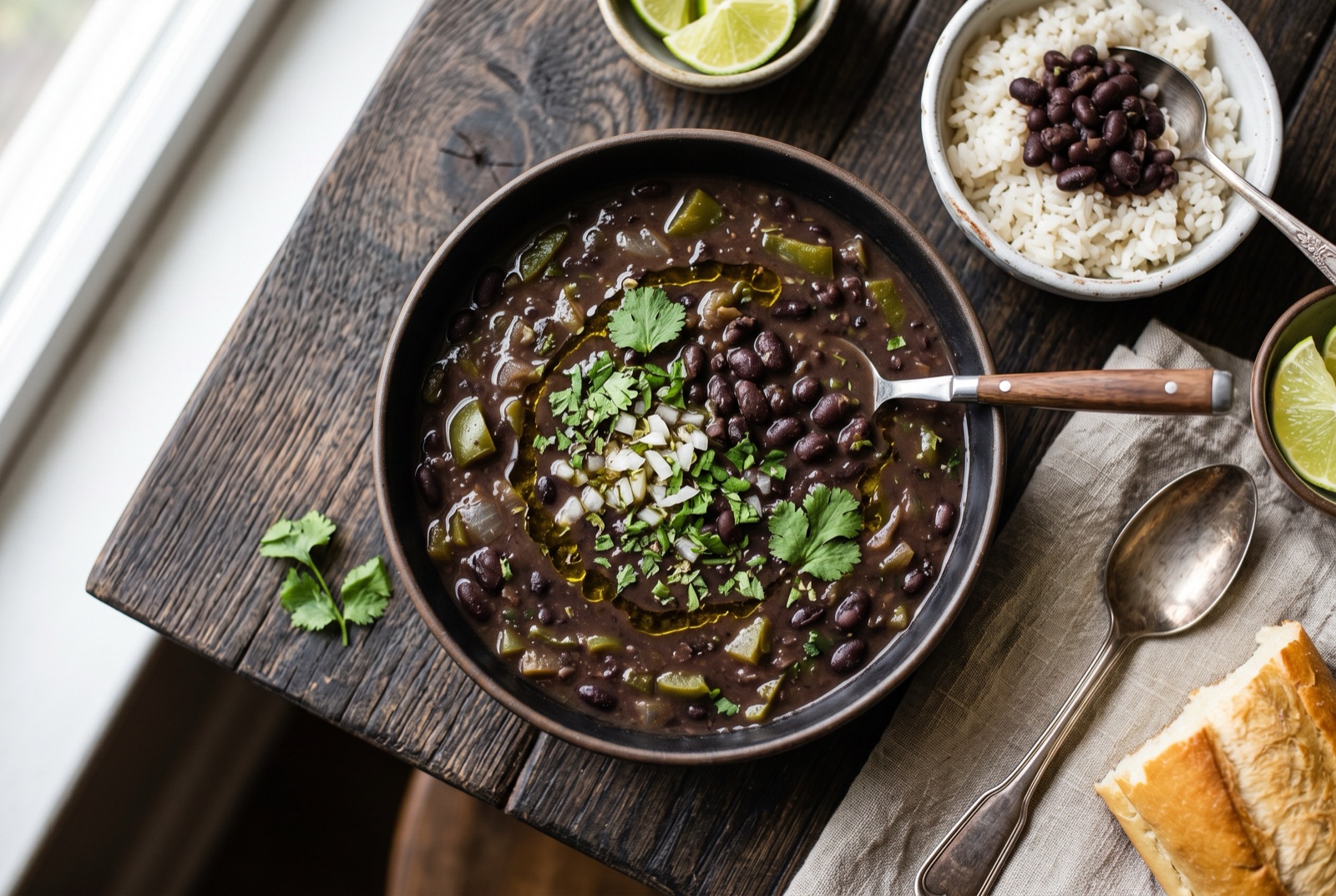
This is the everyday black bean soup of Cuban kitchens: dried beans cooked slowly with a whole green pepper sitting in the pot, seasoned with cumin, oregano and bay, and thickened not with flour but by mashing a ladleful of the beans and stirring them back in. It comes out dark, silky and savoury, with a sharp finish from a splash of vinegar added off the heat — the step that turns a decent pot of beans into the Cuban version. It is vegetarian as written and vegan if you skip nothing but the optional pork, it costs almost nothing to make, and it improves for two days in the fridge. Serve it over a scoop of white rice with raw chopped onion on top.

- Gate
- CubaNationwide
- Prep
- 15 min
- Cook
- 1 hr 45 min
- Total time
- 2 hr
- Serves
- 6
- Status
- Easy
- Nutrition / serving · estimated
- Calories 340 kcal
- Protein 17 g
- Carbs 48 g
- Fat 10 g
- Fiber 16 g
- Sodium 610 mg
Why this recipe works.
- Thickened by mashing beans rather than adding starch, which is how the soup gets its silky body without turning gluey.
- The whole green pepper in the pot and the vinegar off the heat — the two details home recipes usually leave out.
- Genuinely vegetarian and vegan as written, with the pork option given separately rather than assumed.
- Cheap, mostly hands-off, and it tastes better on day two than on day one.
Ingredients.
14 itemsFor the beans
For the sofrito
To finish
Equipment
- Large heavy pot or Dutch oven
- Ladle
- Fork or potato masher
Instructions.
Cook the beans
Put the soaked beans, the whole green pepper, the bay leaves and 2 litres of water in a large pot and bring to a boil. Skim the foam, reduce to a steady simmer, cover partly and cook for 60 to 75 minutes, until a bean crushes easily between your fingers. Add no salt at this stage.
Tip Keep the beans covered by liquid throughout, topping up with hot water if the level drops below them.
Make the sofrito
While the beans cook, heat the olive oil in a frying pan over medium heat and cook the chopped onion and pepper for 12 minutes, until soft, glossy and sweet-smelling with no raw bite left. Add the garlic, cumin and oregano and fry for 1 minute more, until the spices smell toasted rather than dusty.
Combine
Scrape the whole sofrito, oil included, into the bean pot along with the sugar. Simmer uncovered for a further 25 to 30 minutes so the flavours marry and the broth begins to darken and thicken.
Thicken by mashing
Lift out the whole pepper and the bay leaves. Scoop a ladleful of beans with a little liquid into a bowl, mash them to a smooth paste, and stir it back into the pot. The soup should now coat a spoon lightly rather than run off it like water.
Season and sharpen
Take the pot off the heat, season generously with salt and black pepper, then stir in the vinegar. Taste immediately — the soup should taste noticeably brighter and the cumin should come forward. Add a little more vinegar if it still tastes heavy.
Tip Adding the vinegar off the heat keeps its sharpness intact; boiled in, it flattens out within minutes.
Serve
Ladle over a scoop of white rice in each bowl and top with a spoonful of raw chopped onion. Bread or tostones on the side, and a second bowl the next day when it will be thicker and better.
Tips from our kitchen.
- Soak the beans overnight. It cuts the cooking time by nearly half and gives more evenly cooked beans with fewer split skins.
- Do not add salt, vinegar or tomato until the beans are fully tender — acid and salt early on toughen the skins.
- Leave the green pepper whole in the pot rather than chopping it; it flavours the broth without leaving stringy pieces.
- Mash a ladleful of beans against the side of the pot and stir them back in to thicken, instead of reaching for flour or cornstarch.
- Toast and crush the cumin if you have whole seeds. Pre-ground cumin that has sat in a cupboard for a year tastes of dust.
- The soup thickens considerably as it cools, so leave it looser in the pot than you want it in the bowl.
Substitutions.
- Dried black beans → 3 tins of black beans, drained, with 900 ml stock
- Simmer for only 30 minutes with the sofrito. Faster, but the broth is thinner because you lose the bean cooking liquid.
- White vinegar → Red wine vinegar, sherry vinegar or lime juice
- All work. Sherry vinegar is the most flattering; lime is the most common improvisation in Cuban kitchens.
- Vegetarian version → Add a smoked ham hock or 100 g of diced bacon with the beans
- This is the traditional non-vegetarian version, not an upgrade. If you use it, hold back on salt until the end.
Variations.
- Potaje de frijoles negros
- The thicker stew version: use a third less water and add diced pumpkin or potato in the last 30 minutes so it collapses and thickens the pot.
- With ham hock
- Simmer a smoked hock with the beans from the start, then pull the meat off the bone and stir it back in. Deeply savoury and the most common Cuban restaurant version.
- Blended smooth
- Purée half the finished soup and stir it back in for a velvety texture, then top with sour cream and raw onion — closer to the Miami restaurant style.
Storage & reheating.
Refrigerates for 5 days and freezes for 3 months, and it is one of the rare soups that genuinely improves overnight as the cumin settles and the starch continues to thicken it. Reheat over low heat with a splash of water, because it sets almost solid when cold. Add the vinegar only to the batch you are serving, not to the whole pot going into the fridge, so that each reheated portion can be sharpened fresh — the acidity dulls noticeably in storage.
Serve with
A scoop of white rice in the bowl, raw chopped onion on top, and bread or tostones on the side.
The story behind Sopa de Frijoles Negros.
Black beans are so central to Cuban eating that the phrase moros y cristianos, the rice-and-bean dish, is really just a joke about their colour. The beans themselves came from the Americas and were already cultivated across the Caribbean and Mesoamerica long before Spanish arrival; what Spain added was the sofrito, the cumin and the pork fat, and the resulting pot is one of the clearest examples of how Cuban cooking works — indigenous ingredient, Iberian seasoning, African technique in the slow simmer.
The whole green pepper in the pot is a small detail that Cuban cooks treat as essential and that visitors always ask about. It is not chopped; it goes in whole or halved, perfumes the broth as it collapses, and is either fished out at the end or mashed into the soup depending on the household. The vinegar at the end is the other signature. Beans cooked without acid taste heavy and slightly flat, and a tablespoon of vinegar or a squeeze of lime stirred in off the heat lifts the whole pot. Add it too early and it hardens the bean skins, which is why the timing is not negotiable.
During the Special Period of the 1990s, when Cuban food supply collapsed after the loss of Soviet trade, beans and rice carried much of the country. Meat vanished from a great many pots, and the meatless version of this soup — which had always existed for Lent and for poor households — became the default rather than the exception. That history is worth knowing when someone claims the soup must contain ham hock to be authentic. Both versions are real. The vegetarian one is arguably the more Cuban of the two by weight of how often it has actually been eaten.
Questions, answered.
Do I have to soak the beans overnight?
It is not strictly required, but it helps. Soaked beans cook in about 75 minutes instead of two hours or more, and they cook more evenly with fewer burst skins. If you forget, cover the beans with boiling water and leave them for an hour, which recovers most of the benefit.
Why did my beans stay hard?
Almost always salt or acid added too early, or old beans. Salt, vinegar and tomato all firm up bean skins, so they should go in only once the beans are already tender. Beans that have sat in a cupboard for more than a year or two may simply never soften, no matter how long you cook them.
Is Cuban black bean soup vegetarian?
This version is, and so are a great many traditional ones. Cuban households have long cooked beans without meat during Lent and whenever pork was scarce or expensive. A smoked ham hock or bacon is a common addition and makes the soup richer, but the meatless pot is equally authentic and is what most Cubans actually ate through the lean decades.
What is the vinegar for?
Acidity. Beans cooked without it taste heavy and one-note, and a tablespoon of vinegar or a squeeze of lime stirred in off the heat brightens the entire pot and makes the cumin and oregano read clearly. It must be added at the end, because acid introduced early prevents the beans from softening properly.
How do I thicken the soup without flour?
Scoop out a ladleful of cooked beans with a little liquid, mash them to a paste with a fork or the back of a spoon, and stir the paste back into the pot. The bean starch thickens the broth to a silky consistency and keeps the flavour clean, which flour or cornstarch would dull.
You might also like.
All recipes →
Keep exploring Cuba.
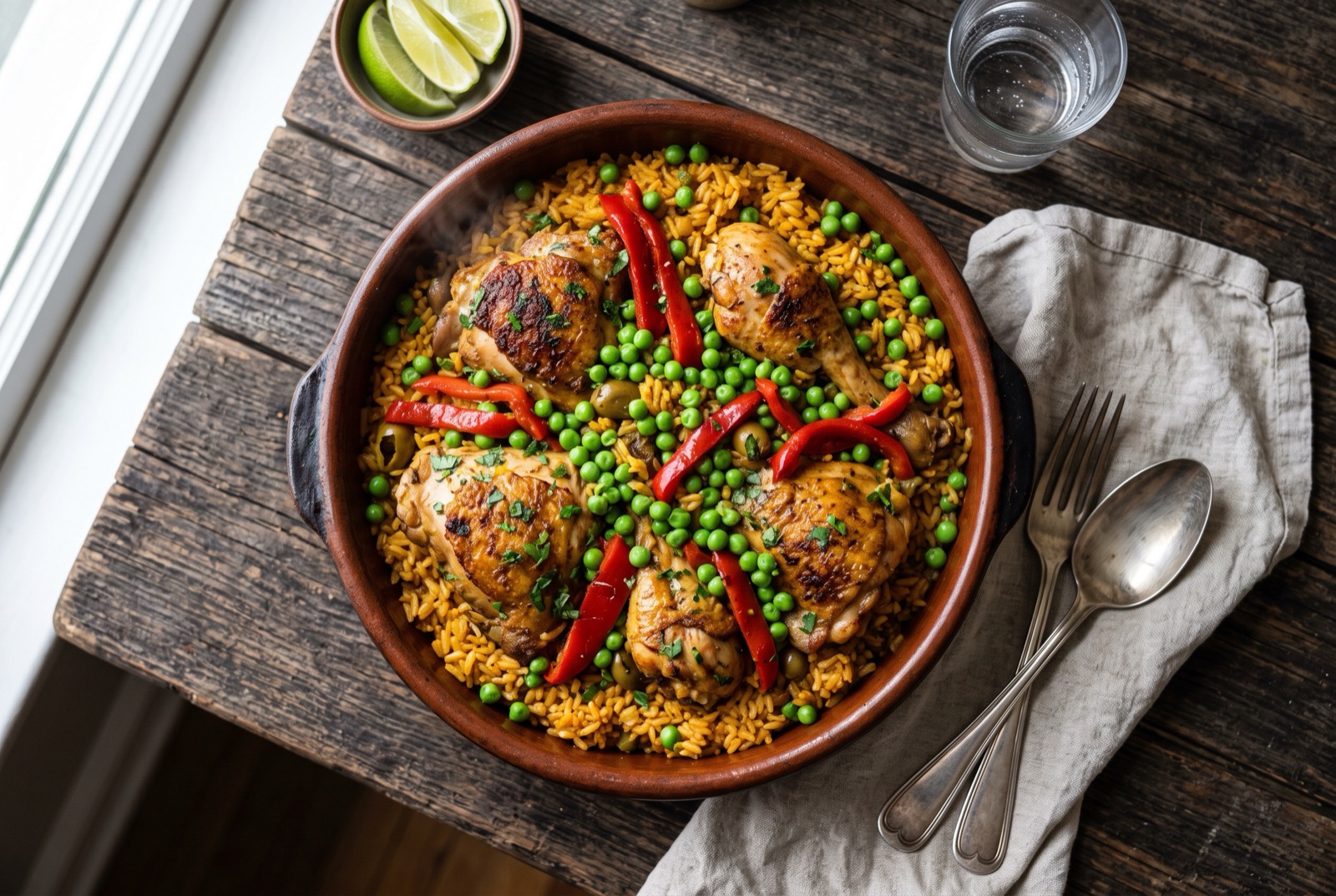
Cuba has 9 more dishes in the atlas — Cuban Arroz con Pollo and Flan Cubano, and 7 more.
All Cuba recipes Black beans recipes Bell pepper recipes Onion recipes soupvegetarianvegangluten freedairy freeRecipe by The DishRoute Kitchen · published August 20, 2026 · updated August 20, 2026