Lechon Asado.
Cuban Mojo Roast Pork Shoulder
Lechón asado · say it: leh-CHOHN ah-SAH-doh
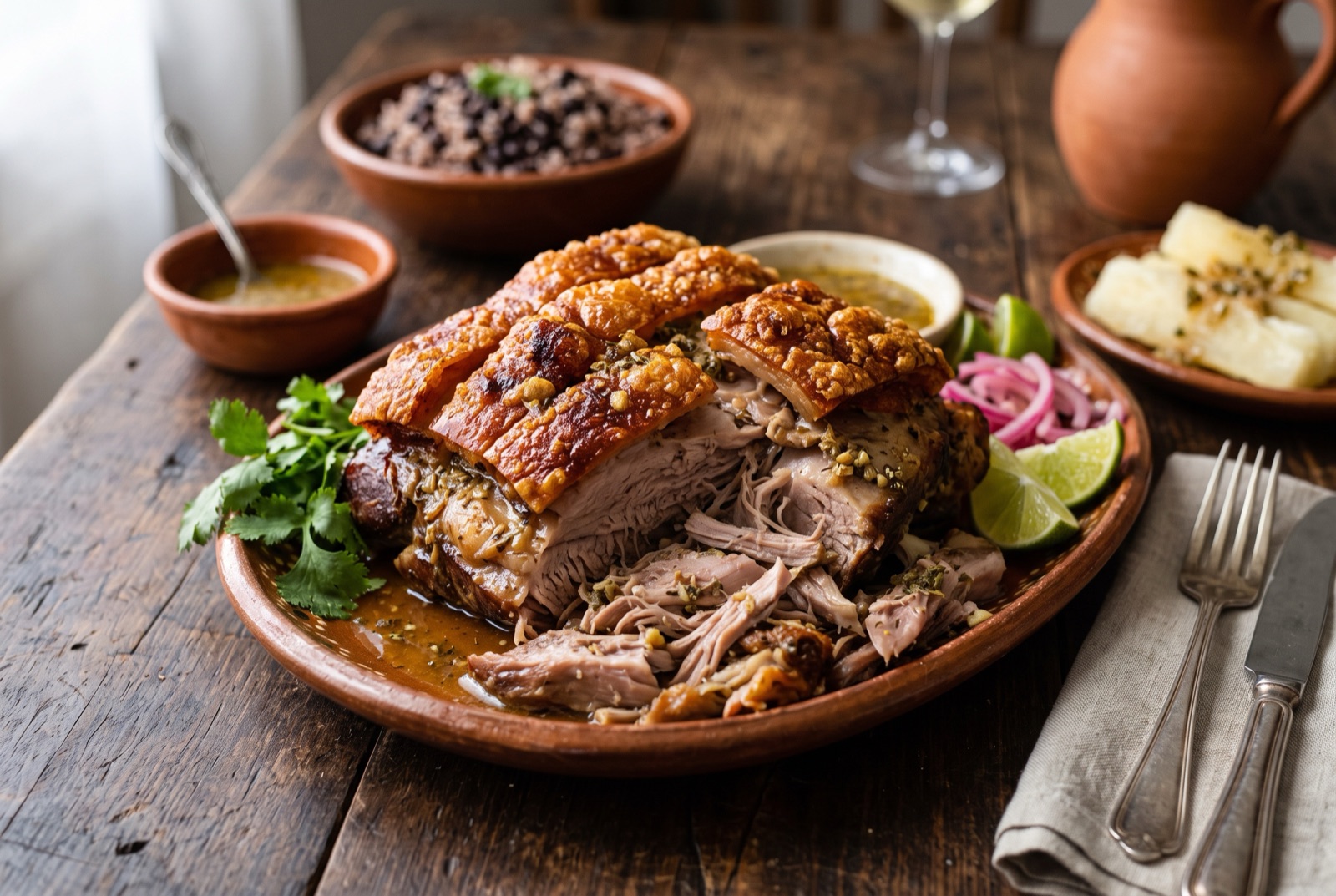
Lechon asado is pork shoulder soaked overnight in mojo — sour orange juice pounded with a genuinely aggressive amount of raw garlic, salt and dried oregano — then roasted slowly until the meat collapses and the skin turns to crackling. The flavour is sharp, garlicky and deeply savoury, with none of the sweetness of American barbecue; the citrus does the cutting that a sauce would do elsewhere. This is Cuba's Christmas Eve dish, cooked whole on a spit or in a caja china for a crowd, and the shoulder version below is the home-kitchen translation: same marinade, same patience, an oven instead of a fire pit. Plan two days, because the overnight marinade is not optional.

- Gate
- CubaNationwide
- Prep
- 30 min
- Cook
- 5 hr 30 min
- Total time
- 6 hr 40 min incl. 40 min rest
- Serves
- 8
- Status
- Takes skill
- Nutrition / serving · estimated
- Calories 610 kcal
- Protein 52 g
- Carbs 6 g
- Fat 42 g
- Fiber 1 g
- Sodium 1050 mg
Why this recipe works.
- A proper overnight mojo marinade with the garlic mashed to a paste, so the seasoning reaches the middle of the meat rather than sitting on the surface.
- Low, covered roasting followed by a hard uncovered blast, which gets both collapsing meat and crisp skin from one piece.
- Uses the marinade twice — once raw for the pork, once boiled into a fresh mojo for the table.
- Sized and timed for a home oven, with an honest account of what the charcoal pit does differently.
Ingredients.
11 itemsFor the pork
For the mojo
To serve
Equipment
- Large roasting tin
- Mortar and pestle or food processor
- Meat thermometer
- Large non-reactive container or bag for marinating
Instructions.
Score the pork
Pat the shoulder dry and cut a diamond pattern through the skin and fat with a sharp knife, spacing the cuts about 2 cm apart and stopping just short of the meat. Then stab the meat itself all over with a thin knife, making 20 or so deep pockets for the marinade.
Tip A clean utility knife or box cutter scores skin far more easily than a kitchen knife.
Make the mojo
Pound the garlic with the coarse salt in a mortar until it becomes a smooth wet paste, then work in the oregano, cumin and black pepper. Stir in the orange and lime juice, the olive oil and the sliced onion. It should taste unpleasantly strong on its own — that is correct for 3 kg of pork.
Marinate overnight
Set aside 150 ml of the mojo in the fridge for the table sauce. Rub the rest into the pork, pushing paste into every slit you cut, then cover and refrigerate for at least 12 and ideally 24 hours, turning it once halfway through.
Bring to room temperature
Take the pork out of the fridge 2 hours before it goes into the oven and heat the oven to 150°C. A fridge-cold 3 kg shoulder can add well over an hour to the cooking time and dries out at the edges while the middle catches up.
Roast low and covered
Set the pork skin side up in a roasting tin with the marinade and 250 ml of water in the base, cover tightly with foil and roast for 5 hours. It is ready for the next stage when a skewer slides into the thickest part with no resistance and the internal temperature reads about 90°C.
Tip Check after 3 hours that the tin has not gone dry and add a cup of water if it has, so the drippings do not burn.
Crisp the skin
Remove the foil, blot the skin completely dry with kitchen paper and rub it with coarse salt. Raise the oven to 240°C and roast for 20 to 30 minutes more, until the skin has puffed, blistered and turned deep amber, watching closely because it goes from crackling to burnt quickly.
Boil the table mojo
While the pork rests, tip the reserved 150 ml of marinade into a small pan with 2 tablespoons of the pan juices and boil for 5 minutes. This is essential because the marinade has been in contact with raw pork, and boiling also softens the raw garlic edge slightly.
Rest, pull and serve
Let the roast stand 30 to 40 minutes before touching it. Break the crackling into shards, pull the meat into large pieces with two forks and moisten it with the skimmed pan juices. Serve with the boiled mojo, lime-soaked onion rings and rice with black beans.
Tips from our kitchen.
- Score the fat cap in a diamond pattern down to the meat, so the marinade gets under the surface and the skin renders evenly.
- Use whole heads of garlic, not a few cloves. Mojo tastes timid at any lower quantity and Cuban cooks would consider it undersalted too.
- Marinate a minimum of 12 hours and ideally 24. Anything under 6 hours only seasons the outer centimetre.
- Take the pork out of the fridge two hours before roasting, or the middle lags far behind and the outside overcooks waiting for it.
- Never pour the raw marinade over the cooked meat. Boil it for five minutes first, then it becomes the table mojo.
- Rest the roast at least 30 minutes before pulling it apart, or the juices run out onto the board instead of staying in the meat.
Substitutions.
- Sour orange (naranja agria) → 160 ml orange juice plus 160 ml lime juice
- This is the standard swap everywhere outside Cuba and Miami, and it lands very close. Bottled sour orange from a Latin grocer is also good.
- Bone-in pork shoulder → Boneless pork shoulder or fresh ham
- Boneless cooks about 45 minutes faster and is easier to carve, but the bone adds flavour and keeps the meat moist, so keep it if you can.
- Oven roasting → A caja china box, or a covered charcoal kettle at 150°C
- Both give smoke and a better crackling. If you have neither, the oven version is genuinely good — you lose smoke, not the dish.
Variations.
- Masitas de puerco
- Cut leftover roast pork into chunks and fry them hard in their own fat until the edges crisp, then squeeze lime over and serve with raw onion rings.
- Pernil style
- The Puerto Rican neighbour: same cut, but the marinade leans on adobo, oregano and olive oil rather than sour orange, with less citrus sharpness.
- Slow-cooker mojo pork
- Cook the marinated shoulder on low for 9 hours, then transfer to a 240°C oven for 25 minutes to crisp the skin — the only way to get crackling from a slow cooker.
Storage & reheating.
Refrigerate pulled pork in its juices for up to 4 days, or freeze for 3 months. Keeping it in the cooking juices matters more than usual here, because lean shoulder meat dries out badly once it is pulled. Reheat covered at 160°C with a splash of juices or stock until steaming. Crackling should be stored separately at room temperature and re-crisped for a few minutes in a hot oven; sealed in a container with the meat it goes leathery within hours.
Serve with
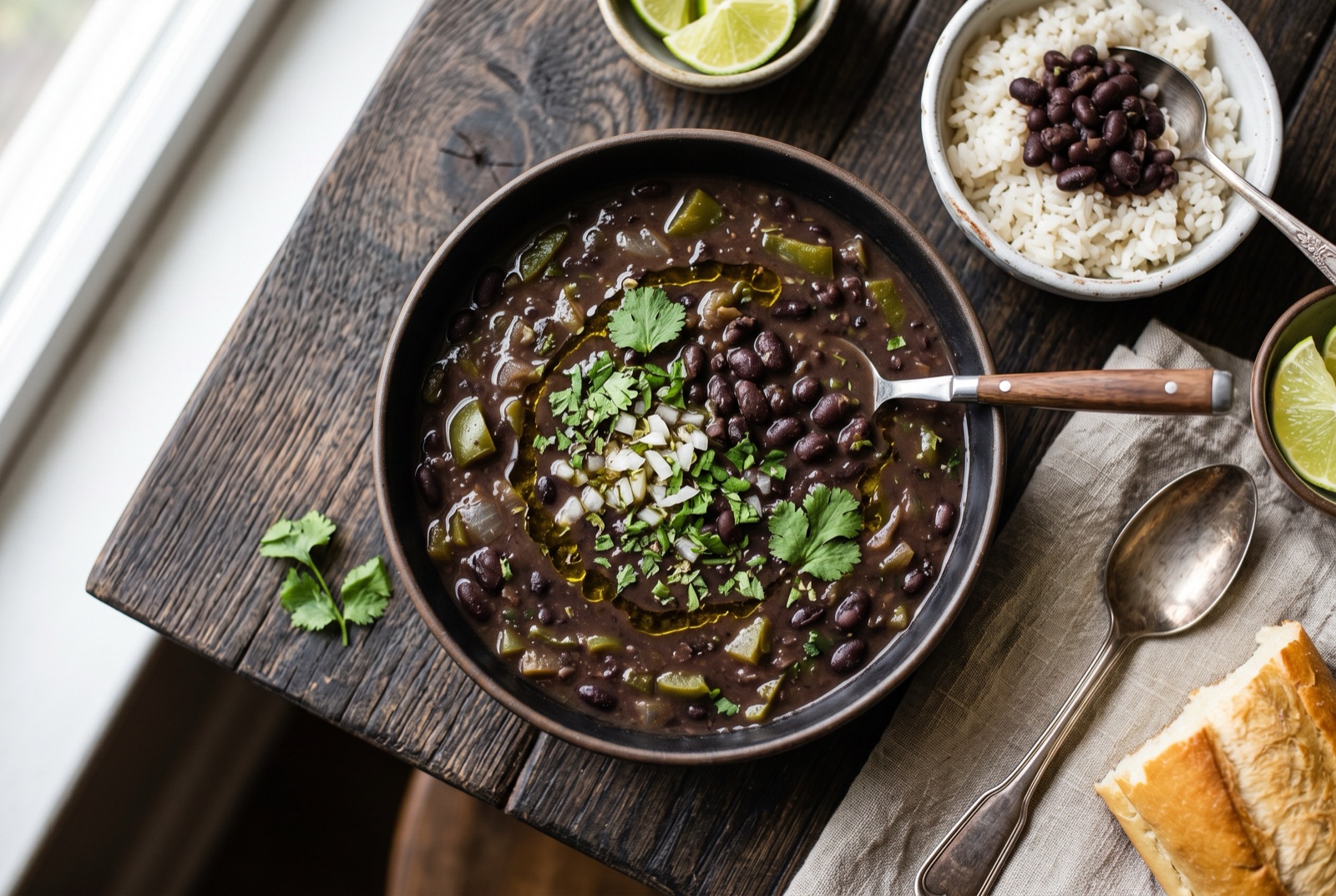
Congri or moros y cristianos, yuca boiled and drenched in the reserved mojo, and raw onion rings soaked in lime.
The story behind Lechon Asado.
Nochebuena, Christmas Eve, is the night the pig is eaten. In the Cuban countryside a whole animal goes onto a spit over coals in the afternoon and is turned by shifts of relatives until well after dark; in cities and across the diaspora the caja china — a plywood-and-metal roasting box with the charcoal on the lid — took over, and its invention is usually credited to Cuban-Chinese cooks in Havana, though the details are murky enough that the attribution is worth treating carefully. Either way, the pig is the centre of the evening, and the surrounding dishes exist to accompany it: congri, yuca con mojo, fried plantains, and rum.
The marinade is the part that travels. Mojo criollo is built on naranja agria, the sour orange the Spanish brought to the Caribbean, whose juice is sharp and faintly bitter and sits somewhere between lime and orange. Outside Cuba most cooks simply mix orange and lime juice to approximate it, and this works well enough that it has become the standard substitution rather than a compromise. What must not change is the garlic, which is used raw and in quantity — whole heads, not cloves — mashed with salt and oregano into a paste. Cuban cooks do not sweat their garlic into mojo; the rawness is the flavour.
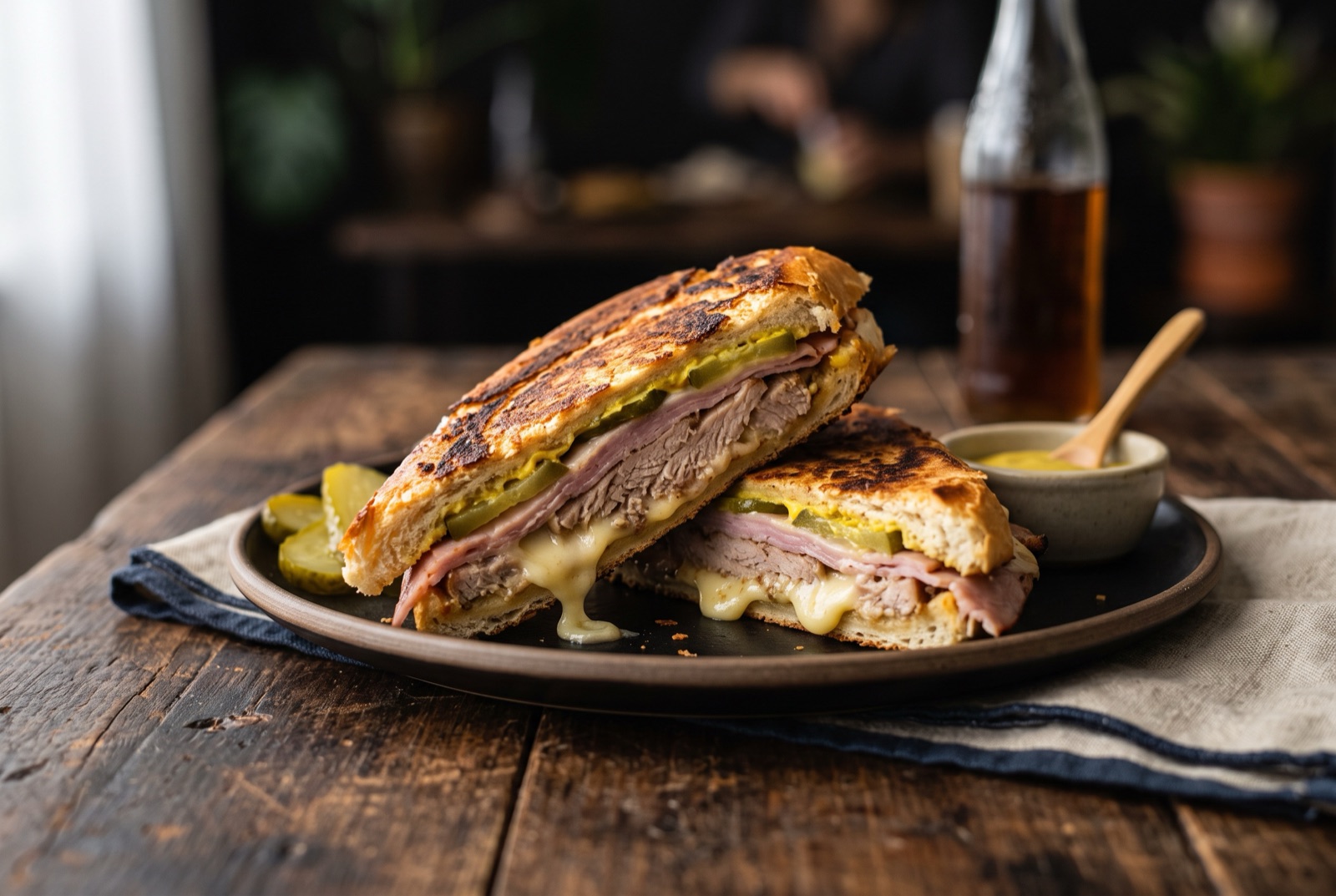
Roast pork is also the engine of the rest of Cuban cooking. Leftover lechon becomes the roast pork layer in a Cuban sandwich, gets chopped and fried into masitas de puerco, and fills tamales and croquettes. That downstream life explains why families roast far more than they can eat at one sitting. It also explains the sandwich shops of Tampa and Miami, which are essentially built on the assumption that somebody roasted a shoulder yesterday. This home version yields the same leftovers, and if you plan to make a Cuban sandwich later in the week, roast the full shoulder rather than half of it.
Questions, answered.
What is mojo and can I buy it?
Mojo criollo is the Cuban marinade and sauce made from sour orange juice, a large quantity of raw mashed garlic, salt, dried oregano and sometimes cumin and oil. Bottled versions are sold in Latin American grocers and are acceptable, but they are usually much milder on garlic than homemade, so most Cuban cooks add extra crushed garlic even to a bought bottle.
What is sour orange and what do I use instead?
Sour orange, naranja agria or bitter orange, is a citrus fruit whose juice is sharp and slightly bitter, closer to lime than to sweet orange. It is standard in Cuban and other Caribbean cooking. Outside those regions, an equal mix of fresh orange juice and fresh lime juice is the accepted substitute and gives a very similar result.
How long should the pork marinate?
Twelve hours minimum, twenty-four is better. The acid and salt need time to travel into a thick cut, and anything under six hours seasons only the outer layer. Marinating longer than two days is not useful — the citrus starts to make the outer surface of the meat mushy rather than adding flavour.
How do I get the skin crisp?
Dry it and blast it. Roast the pork covered at low temperature until the meat is tender, then uncover, pat the skin completely dry with kitchen paper, rub it with salt and raise the oven to 240°C for 20 to 30 minutes. Any moisture left on the skin steams it instead of crisping it, so drying is the step people skip and regret.
Can I make lechon asado without a whole pig or a caja china?
Yes. A bone-in pork shoulder roasted in a home oven uses the same marinade and the same method and is what most Cuban families abroad actually cook. What you lose is charcoal smoke and the theatre of the whole animal, not the flavour of the mojo, which is the part that defines the dish.
You might also like.
All recipes →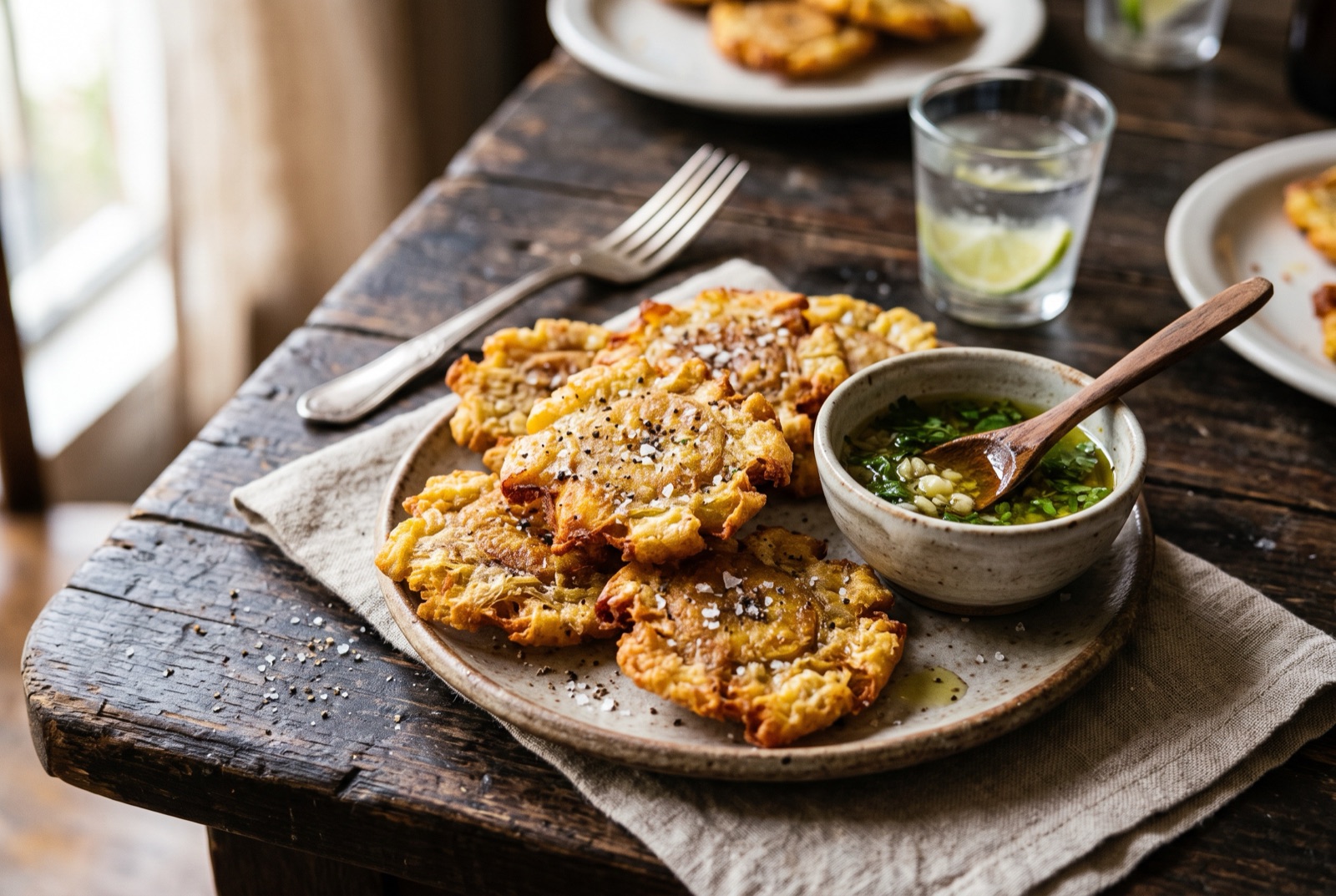
Keep exploring Cuba.
Cuba has 9 more dishes in the atlas — Cuban Arroz con Pollo and Flan Cubano, and 7 more.
Recipe by The DishRoute Kitchen · published August 20, 2026 · updated August 20, 2026