Tostones.
Cuban Twice-Fried Green Plantains
Tostones · say it: tohs-TOH-nes
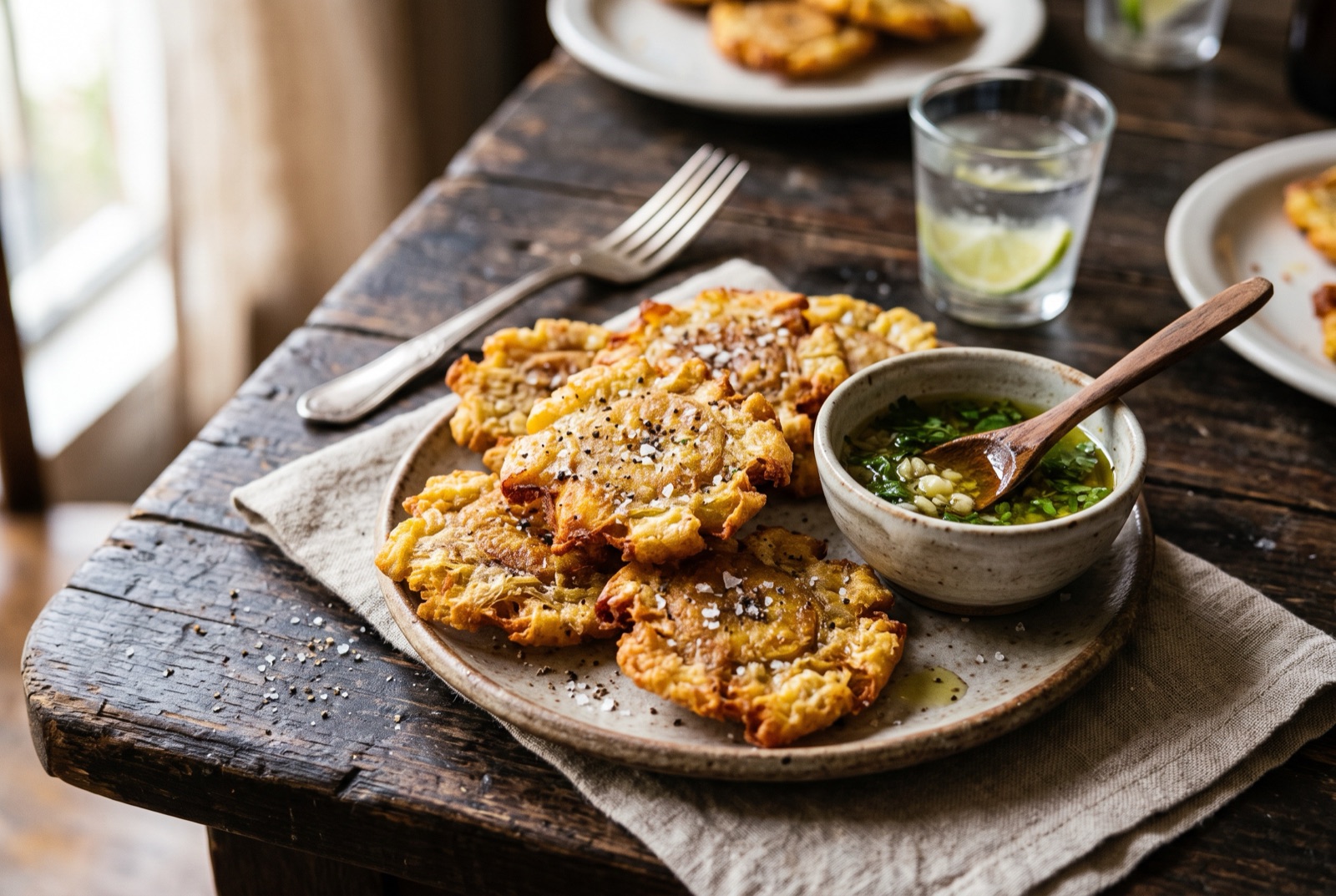
Tostones are green plantains cut into thick rounds, fried gently until they yield, flattened with the bottom of a glass, then dropped back into hot oil until the outsides go crisp and the edges turn lacy and brown. They are not sweet — green plantain is starchy and closer to a potato than to a banana — which is exactly why they work as a savoury side or a snack with rum. The first fry cooks the inside, the second fry makes the crust, and skipping either step gives you something disappointing. Salt them the second they come out of the oil and eat them within minutes, with a bowl of raw garlic mojo for dipping.

- Gate
- CubaNationwide
- Prep
- 15 min
- Cook
- 25 min
- Total time
- 40 min
- Serves
- 4
- Status
- Easy
- Nutrition / serving · estimated
- Calories 320 kcal
- Protein 2 g
- Carbs 47 g
- Fat 15 g
- Fiber 4 g
- Sugar 20 g
- Sodium 420 mg
Why this recipe works.
- Two frying temperatures given separately, because the whole technique depends on the difference between them.
- A trick for peeling green plantains, which is the step that defeats most people the first time.
- The salt-water dip explained honestly, including why some cooks skip it.
- Made with a garlic mojo dip that takes two minutes and turns a side dish into something people stand around eating.
Ingredients.
8 itemsFor the tostones
For the garlic mojo
Equipment
- Deep heavy pan or small pot for frying
- Kitchen thermometer
- Flat-bottomed glass or a tostonera
- Slotted spoon and a cooling rack
Instructions.
Make the mojo first
Pound the garlic with the coarse salt in a mortar until it is a wet paste, then stir in the lime juice, olive oil and oregano. Set it aside at room temperature so the garlic softens while you fry — it should taste sharp and unapologetically garlicky.
Peel and cut the plantains
Trim both ends, score the peel lengthwise in three places down to the flesh, and lever the strips off with your thumb. Cut each plantain into rounds about 3 cm thick, straight across rather than on a diagonal.
Tip Oil your hands lightly first — green plantain sap is sticky and stains fingers and boards.
First fry, moderate heat
Heat the oil to 160°C in a deep pan. Fry the rounds in batches for 4 to 5 minutes, turning once, until they are pale gold and a skewer slides into the centre with no resistance. They should be soft, not browned. Lift onto a rack.
Smash them flat
While still hot, stand each round on a board and press it down with the flat bottom of a glass or a tostonera to about 1 cm thick. The edges will crack and split, which is what you want — those cracks become the crisp lacy bits.
Second fry, hotter
Raise the oil to 190°C and fry the flattened rounds again for 2 to 3 minutes, turning once, until they are deep golden with brown, brittle-looking edges and they sound hard when tapped against the side of the pan.
Tip Do not crowd the pan. Too many at once drops the oil temperature and the tostones absorb oil instead of crisping.
Salt and serve
Lift onto a rack and scatter with flaky salt immediately, while the surface is still glossy enough for it to stick. Serve straight away with the garlic mojo alongside for dipping.
Tips from our kitchen.
- Use plantains that are fully green and hard. Any yellow means sugar has developed, and sugary plantain burns before it crisps.
- Score the peel lengthwise through to the flesh and lever it off in sections; trying to peel a green plantain like a banana does not work.
- Cut the rounds thick, around 3 cm. Thin slices fry into chips rather than tostones with a soft interior.
- Fry at moderate heat first, then hotter for the second fry. Same oil, two different temperatures, and this is the whole technique.
- Smash while still hot but not scalding, to about 1 cm thick — too thin and they turn brittle all the way through with no soft centre.
- Salt immediately as they come out of the oil, while the surface is still greasy enough for the salt to stick.
Substitutions.
- Green plantains → Green cooking bananas or unripe yellow plantains
- Unripe yellow plantains work but brown faster because of the sugar. There is no good substitute using potatoes — the texture is not comparable.
- Neutral frying oil → Lard, or a mix of oil and lard
- Lard is traditional in older Cuban kitchens and gives a noticeably richer result, with a lower smoke point to watch.
- Garlic mojo dip → Plain salt, or a squeeze of lime
- Tostones are frequently eaten with nothing but salt in Cuba. The mojo is standard but not compulsory.
Variations.
- Tostones rellenos
- Press the fried rounds into a small cup to form a bowl instead of flattening them, fry again, then fill with shrimp in sofrito or leftover picadillo.
- Garlic-water dip
- Between the two fries, dip each smashed round briefly in salted water infused with crushed garlic. The crust blisters more and the salt reaches the middle, but the oil spits hard.
- Maduros
- The sweet opposite: use plantains with black skins, cut them on a diagonal and fry once until the sugars caramelise to deep brown at the edges.
Storage & reheating.
Tostones are at their best within about ten minutes and do not store well fried — they go leathery within the hour. The practical make-ahead is to complete the first fry and the smashing, then refrigerate the flattened rounds for up to 2 days or freeze them for a month on a tray, and do the second fry straight from cold when you want them. That second fry from frozen takes about a minute longer and produces results indistinguishable from fresh.
Serve with
Garlic mojo for dipping, alongside roast pork, ropa vieja, fried fish, or on their own with a cold drink.
The story behind Tostones.
Tostones exist wherever plantains and frying oil met in the Caribbean, which means the same thing is eaten across Cuba, Puerto Rico, the Dominican Republic, Colombia, Venezuela and much of Central America under half a dozen names — patacones in Colombia and Ecuador, tachinos or chatinos in parts of Cuba itself, fritos in Venezuela. The plantain is an Old World crop, brought from Africa and Southeast Asia through Spanish and Portuguese trade, that found ideal conditions in the Caribbean and became a staple faster than almost anything else planted there.
The double-fry technique is what makes them specific. A single fry either leaves the middle raw and starchy or burns the outside before the inside cooks, because green plantain is dense and low in sugar. Frying at moderate heat cooks it through, and the smash increases the surface area so the second, hotter fry can crisp a much larger area at once. Some cooks dip the smashed rounds in salted water or garlic water between the two fries, which puts salt inside the plantain and makes the crust blister more dramatically; it also makes the oil spit, so it is a genuine trade-off rather than a straightforward improvement.
In Cuba tostones sit on the table beside roast pork, fried fish and ropa vieja, and they double as a vehicle: pressed thicker and cupped into a mould, they become tostones rellenos, filled with shrimp or picadillo. The everyday household tool for flattening is not a purpose-made tostonera but whatever is heavy and flat — a glass bottom, a plate, a folded piece of paper and a fist. The distinction between tostones and maduros, the sweet fried plantains, is a matter of ripeness: green fruit for these, black-skinned overripe fruit for the sweet ones, and the two are never interchangeable.
Questions, answered.
How do I peel a green plantain?
Cut off both ends, then run a knife lengthwise through the peel down to the flesh in three or four places around the fruit, and lever each strip of peel off with your thumb or the back of the knife. Green plantain peel is thick and clings tightly, so it will not strip away like a banana. Rubbing your hands with a little oil first stops the sticky sap from staining them.
Why do I have to fry them twice?
Green plantain is dense and starchy, so a single fry either leaves the middle undercooked or burns the surface while waiting for the centre. The first fry at moderate heat cooks the inside through, and flattening then increases the surface area so that a second, hotter fry can crisp a wide face quickly without overcooking the interior.
Can I make tostones in an air fryer?
You can get something good, though not identical. Brush the rounds generously with oil, cook at 190°C for about 10 minutes, smash them, brush again and cook another 8 minutes. The result is crisper and drier than the fried version and lacks the lacy browned edges, but it is a reasonable everyday option.
What is the difference between tostones and maduros?
Ripeness. Tostones are made from hard green plantains, are starchy and savoury, and are fried twice. Maduros use very ripe plantains with black skins, are sweet, and are fried once until the sugars caramelise into soft, dark-edged slices. They appear on the same Cuban plates but do completely different jobs.
Why did my tostones come out soggy?
The oil was not hot enough for the second fry, or the pan was overcrowded, which drops the temperature sharply. The second fry needs oil at around 190°C and enough space for each round to sit without touching its neighbours. Draining them on a rack rather than on kitchen paper also helps, since paper traps steam underneath.
You might also like.
All recipes →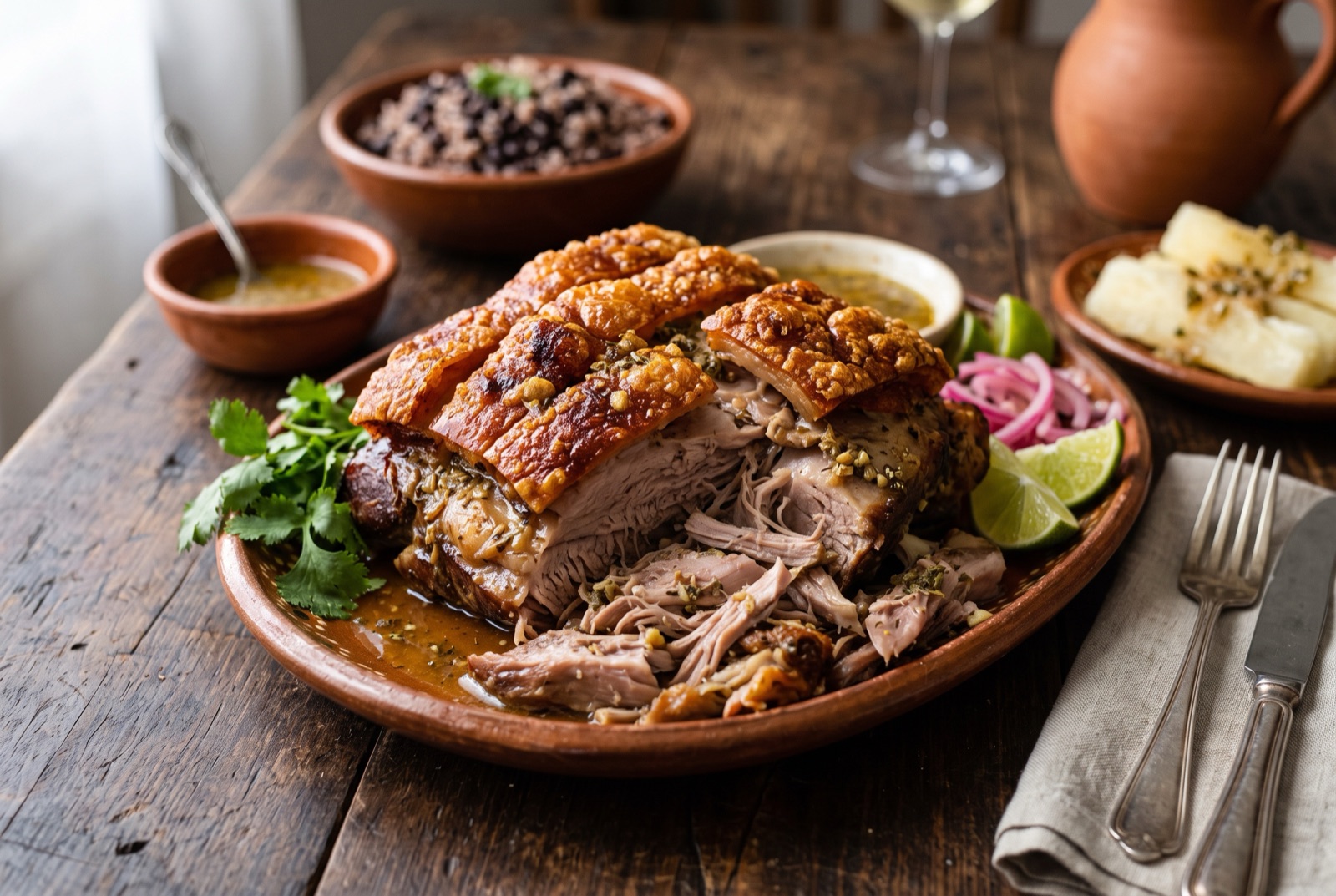
Keep exploring Cuba.
Cuba has 9 more dishes in the atlas — Cuban Arroz con Pollo and Flan Cubano, and 7 more.
All Cuba recipes Plantain recipes Garlic recipes Lime recipes snacksidevegetarianvegangluten freedairy freeRecipe by The DishRoute Kitchen · published August 20, 2026 · updated August 20, 2026