Currywurst.
Berlin Sausage in Curry Ketchup
Currywurst · say it: KUH-ree-voorst
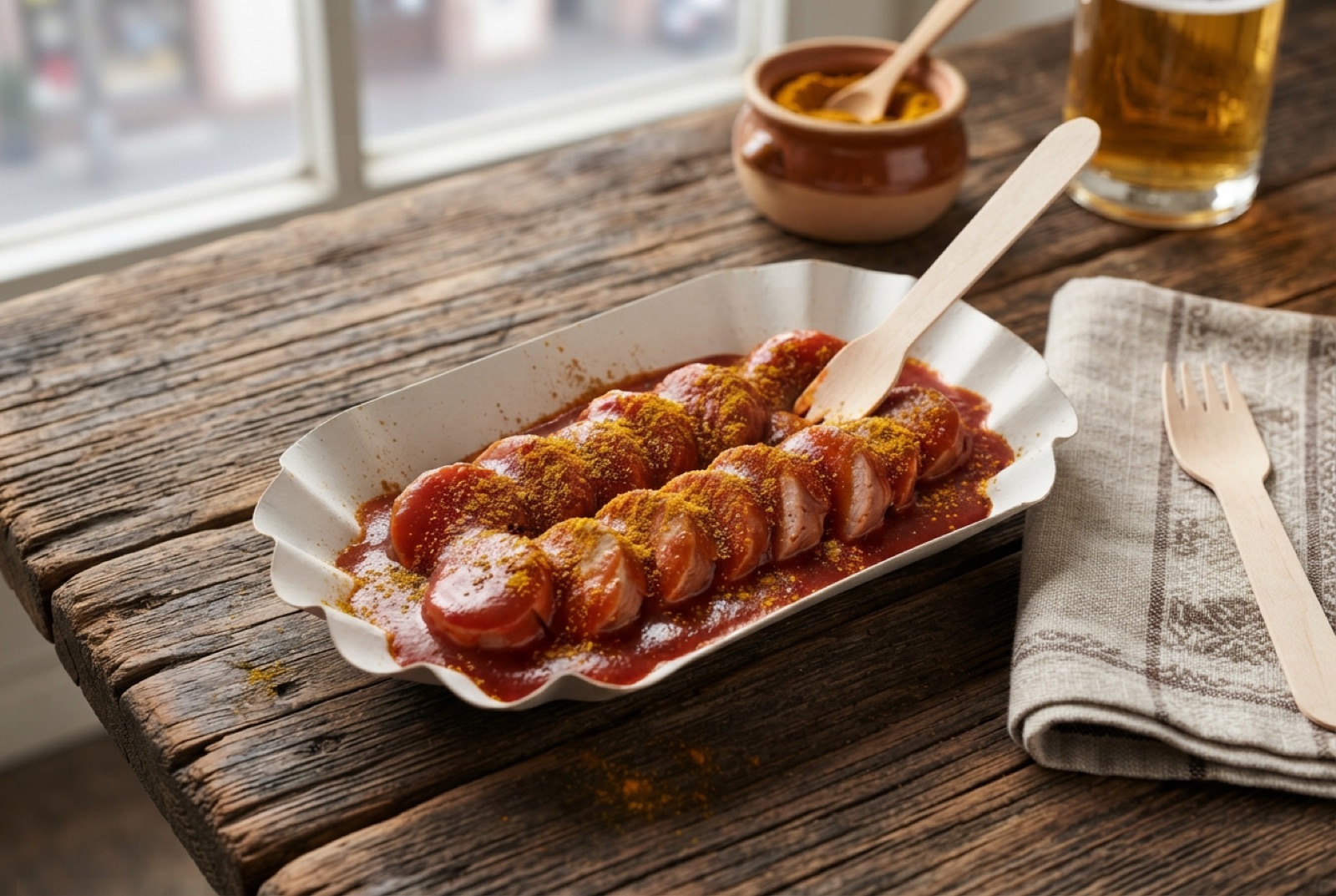
Currywurst is a fried Bratwurst cut into thick coins, buried in a warm tomato sauce spiked with curry powder, and finished with a heavy dusting of dry curry powder over the top. The sauce is the point: sweet from sugar and tomato, sour from vinegar, warm rather than hot, and thin enough to pool on the plate so the last chips can be dragged through it. Nothing about it is subtle and nothing about it is meant to be. It takes twenty minutes, it costs almost nothing, and it is eaten at a standing counter with a small wooden fork and a paper tray of chips beside it.

- Gate
- GermanyBerlin and the Ruhr
- Prep
- 10 min
- Cook
- 25 min
- Total time
- 35 min
- Serves
- 4
- Status
- Easy
- Nutrition / serving · estimated
- Calories 480 kcal
- Protein 20 g
- Carbs 27 g
- Fat 33 g
- Fiber 3 g
- Sugar 19 g
- Sodium 1120 mg
Why this recipe works.
- Sauce built from tomato paste and passata rather than squeezed from a ketchup bottle, so you control the sugar and the acidity.
- Curry powder is bloomed in fat before the liquid goes in, which removes the raw, dusty taste that ruins most home versions.
- Correct order of operations: sausage fried separately and sliced hot, sauce poured over at the last second, dry curry on top.
- Sauce keeps a week and freezes, so the twenty-minute version becomes a five-minute one after the first time.
Ingredients.
16 itemsFor the sausage
For the curry sauce
To finish
Equipment
- Heavy frying pan
- Small saucepan
- Sharp knife
Instructions.
Sweat the onion
Warm the two tablespoons of oil in a small saucepan and cook the diced onion over medium-low heat for 6 to 8 minutes until it turns soft and glassy without taking colour. Browning it here makes the finished sauce taste of fried onion instead of tomato.
Bloom the spices
Stir in the curry powder, sweet paprika and smoked paprika and fry for 30 seconds, until the oil turns orange and the kitchen smells toasted rather than dusty. Add the tomato paste and cook another minute until it darkens to brick red.
Tip Keep the heat moderate. Curry powder scorches quickly and burnt turmeric turns the whole sauce bitter.
Simmer the sauce
Pour in the passata and water, then add the vinegar, brown sugar, honey and chilli flakes. Simmer uncovered on low for 15 minutes, stirring now and then, until the sauce coats the back of a spoon but still runs off it easily.
Balance it
Taste and adjust: it should read sweet, then sour, then warm spice, with salt underneath. Add vinegar a teaspoon at a time if it is flat, sugar if the vinegar bites, and a splash of water if it has gone past pourable. Keep it warm.
Fry the sausages
Heat the remaining oil in a frying pan and fry the Bratwurst over medium heat for 8 to 10 minutes, turning often, until the skin is browned all over and blistered in places and the sausages feel firm.
Slice and drown
Cut the hot sausages into 2 cm coins straight onto the plates and immediately spoon the warm sauce over them so it pools around the pieces. Dust generously with the extra dry curry powder and serve at once, with chips and a small wooden fork.
Tips from our kitchen.
- Fry the sausages in a pan rather than boiling them. You want browned, slightly blistered skin, because the sauce softens whatever it touches.
- Bloom the curry powder in the hot fat for 30 seconds before adding tomato. Raw curry powder stirred into finished sauce tastes chalky and stays that way.
- Slice the sausage only when you are ready to serve. Cut early, it steams itself soft in its own heat and loses the fried edges.
- Balance the sauce at the end with vinegar, not at the beginning — sweetness concentrates as it reduces and what tasted right early will be cloying later.
- The final dusting of dry curry powder is not optional. It supplies the aroma the cooked sauce has already lost.
Substitutions.
- German Bratwurst → Any coarse fresh pork sausage without strong herbs, or a good frankfurter
- Avoid Italian-style sausage with fennel or chilli, which fights the curry. Skinless Bratwurst is the Berlin standard; casing-on is the Ruhr standard.
- Curry powder → Mild madras powder, or 2 tsp turmeric plus 2 tsp ground cumin, 1 tsp ground coriander and 1/2 tsp ground fenugreek
- German Currypulver is mild and turmeric-forward. Anything labelled hot will push the sauce somewhere it is not supposed to go.
- Tomato passata → 400 g tinned chopped tomatoes, blended smooth
- Cook it about 5 minutes longer to lose the extra water. The sauce should be pourable but not watery.
Variations.
- Currywurst mit Darm
- The Ruhr standard: the sausage keeps its casing, so it snaps when bitten instead of yielding softly. Ask a butcher for coarse Bratwurst in natural casing.
- Vegan Currywurst
- Now completely mainstream in Berlin. Use a good plant-based bratwurst and check the sauce sugar; the sauce itself contains nothing animal to begin with.
- Currywurst mit Schranke
- Ruhr slang for the version with chips, the red sauce and mayonnaise piped across it. The white stripes over red are the "barrier" of the name.
Storage & reheating.
The sauce keeps 1 week refrigerated in a sealed jar and freezes for 3 months, so it is worth making a double batch. Reheat it gently with a splash of water, since it thickens in the fridge, and refresh it with a pinch of fresh curry powder before serving because the aroma fades in storage. Cooked sausage keeps 2 days but reheats poorly — it goes rubbery. If you are cooking for later, store the sauce and fry the sausages fresh; that part takes eight minutes.
Serve with
Chips or a plain bread roll to mop the sauce, and a cold Pilsner. In the Ruhr, a stripe of mayonnaise over the top.
The story behind Currywurst.
Currywurst is a post-war Berlin invention, and unusually for a national dish, the credit is fairly specific: Herta Heuwer, who ran a snack stand in Charlottenburg, is widely recorded as having sold the sauce from 1949, and she later registered a trademark for a version she called Chillup. The ingredients say a lot about the moment — curry powder and ketchup were among the things circulating through British-occupied Germany, and pairing them with a fried sausage was a way of making something interesting out of very little. Hamburg makes a competing claim, and the writer Uwe Timm built a novella around a Hamburg origin, so the argument is genuinely unsettled at the edges even if Heuwer's stand is the best-documented starting point.
The dish then split regionally. In Berlin the sausage is usually skinless — ohne Darm — while in the Ruhr area, where Currywurst became the fuel of steelworkers and miners, it is normally served mit Darm, in its casing, which gives a snappier bite. Ruhr sauces tend to be a little sweeter and the portions larger. Both regions treat the sauce recipe as a matter of pride, and stands guard their spice mixes the way barbecue joints elsewhere guard rubs.
Germans eat somewhere in the region of 800 million Currywurst a year, and it long outgrew the snack stand: works canteens serve it, a Berlin museum was devoted to it for several years, and Volkswagen has produced its own branded sausage for its plants for decades, complete with a part number. It is also, quietly, the food that best explains modern German eating — an improvised, imported, industrial-era invention that everybody grew up with, sitting alongside the döner as the country's real street food rather than anything from a folk cookbook.
Questions, answered.
What kind of sausage is used for Currywurst?
A fried pork Bratwurst. Berlin traditionally uses a skinless one, so the texture is soft and the sauce clings to the cut faces, while the Ruhr region serves it with its natural casing on for a snappier bite. Any coarse, mildly seasoned fresh pork sausage works; avoid anything strongly flavoured with fennel, chilli or garlic.
Is Currywurst sauce just ketchup with curry powder?
Cheap versions genuinely are, and it shows. A proper sauce is cooked from tomato paste and passata with onion, vinegar, sugar and bloomed spices, which gives depth and a cleaner sourness that a bottle cannot. It also lets you control the sweetness, which is the main thing wrong with the shortcut version.
Is Currywurst spicy?
Not usually. German curry powder is mild and turmeric-heavy, and the classic sauce is sweet-sour with warmth rather than heat. Stands often offer heat levels, and the hottest ones are made with added chilli, but the standard version is something a child would eat happily.
Can I make the sauce ahead of time?
Yes, and it improves after a day in the fridge as the spices settle into the tomato. Make it up to a week ahead or freeze it for three months. Thin it with a little water when reheating and add a fresh pinch of curry powder, since the aromatics dull in storage.
Who invented Currywurst?
The most widely accepted account credits Herta Heuwer, who sold it from a snack stand in Berlin-Charlottenburg from 1949 and later trademarked her sauce. Hamburg has a rival claim and the question has never been settled definitively, but no version of the story goes back before the late 1940s — this is a post-war dish, not an old tradition.
You might also like.
All recipes →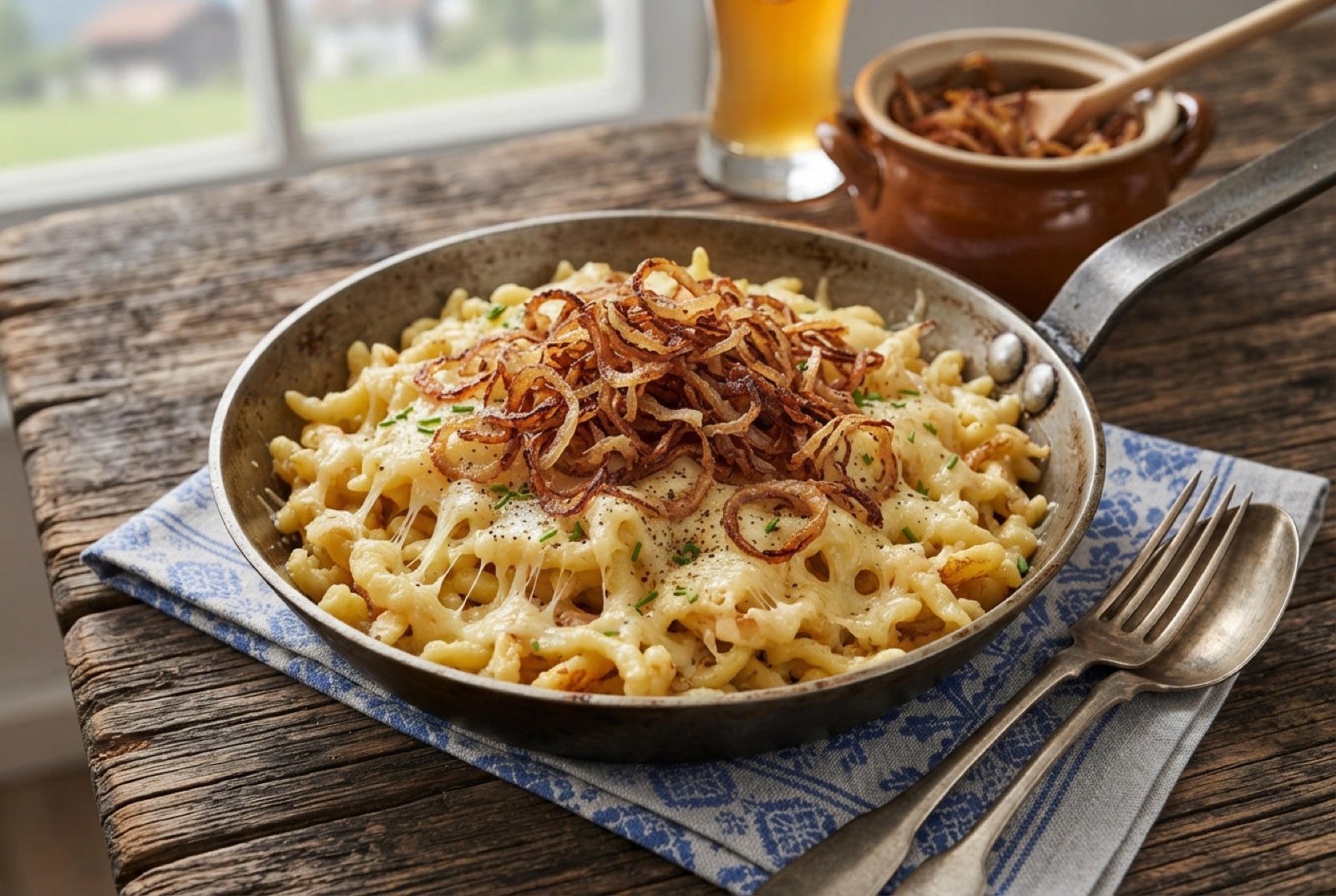
Keep exploring Germany.
Germany has 9 more dishes in the atlas — Handkäse mit Musik and Käsespätzle, and 7 more.
All Germany recipes Tomato paste recipes Curry powder recipes Onion recipes street foodmaindairy freeRecipe by The DishRoute Kitchen · published August 19, 2026 · updated August 19, 2026