Germany.
Deutschland
German cooking is built on preservation, bread and slow heat rather than on spice. Long winters and a short growing season taught the kitchen to salt, smoke, cure, pickle and ferment nearly everything — cabbage into sauerkraut, pork into hundreds of sausages and hams, cucumbers into sharp gherkins that then get chopped back into hot dishes — and that sour, salty backbone is what makes the food taste German rather than merely hearty. Sweetness is deployed as a deliberate counterweight, not as decoration: raisins and gingerbread thicken a beef gravy, sugar softens a Bavarian mustard, apple cuts through braised red cabbage. The second pillar is bread, and Germany bakes more distinct kinds of it than any other country, most of them dark, sour and rye-heavy. Above all, regional loyalty runs deep. There is no single German kitchen — there is a Bavarian one, a Swabian one, a Rhenish one and a northern coastal one, and they agree on very little beyond the importance of the dumpling.

- Continent
- EuropeCentral Europe
- Recipes in atlas
- 10
- Must-try dishes
- 3
- Pantry staples
- 10
Start with the classics.
Must tryThe dishes that explain the Germany kitchen fastest — if you cook only a few things from this page, cook these.
Inside the Germany kitchen.
Pork is the axis the savory cooking turns on, and the sausage is its most elaborate expression. German butchers work with a classification system — Rohwurst that is cured raw, Brühwurst that is scalded, Kochwurst made from already-cooked meat — and every region defends its own examples: fine veal-and-parsley Weißwurst in Munich, finger-thin Nürnberger Rostbratwurst, the coarse Thüringer, the blood and liver sausages of the north. When Germans eat beef it is usually braised rather than grilled, in cuts that reward time: rolled Rinderrouladen, marinated Sauerbraten, boiled Tafelspitz-style brisket with horseradish.
The defining flavor move is sour against sweet. Vinegar and wine appear as cooking liquids, not just as dressings — a Sauerbraten sits in vinegared red wine for days before it ever meets a pan, and a Swabian potato salad is dressed with hot broth and vinegar rather than mayonnaise. Fermentation carries the same logic: sauerkraut, sour-milk cheeses like Handkäse, sourdough rye, and the sour rye ferment behind many northern breads. The sweetening agents that balance them are rarely plain sugar. Rhenish cooks reach for Rübenkraut, a thick sugar-beet syrup; Bavarians reach for süßer Senf; the Rhineland famously crushes Lebkuchen into gravy.
Starch comes in four forms, and where you are decides which. Potatoes, a relatively late arrival that spread through Prussia in the eighteenth century under state encouragement, are now the national staple — boiled, fried into Bratkartoffeln, grated into pancakes, or turned into Klöße. Bavaria and Franconia build meals around bread and potato dumplings. Swabia makes Spätzle, scraped egg noodles that are closer to fresh pasta than to anything else in Central Europe, and stuffs Maultaschen with whatever the kitchen has. And everywhere there is bread: rye, mixed-grain, sourdough, plus the lye-dipped Laugengebäck family that includes the pretzel.
The meal structure is not the Mediterranean one. Frühstück is bread-based and can stretch for hours on a Sunday. The hot meal traditionally lands at midday, which is why so many classic dishes are Sunday-lunch food. The afternoon belongs to Kaffee und Kuchen, an institution rather than a snack, and it supports an entire pastry tradition of tortes, yeasted fruit sheet cakes and cheesecakes made with quark. Abendbrot, the evening meal, is often literally cold bread with cheese, sausage and pickles.
Drink follows the map exactly. Bavaria and Franconia are beer country with their own purity tradition and beer gardens; the Rhine, Mosel and Franconia produce serious dry Riesling and Silvaner; Hesse drinks tart apple wine in its cider taverns. And the modern German street is inseparable from immigration — the döner kebab as Germans eat it was developed in Berlin by Turkish cooks, and Currywurst, the other great German street food, is itself a post-war invention rather than an old tradition.
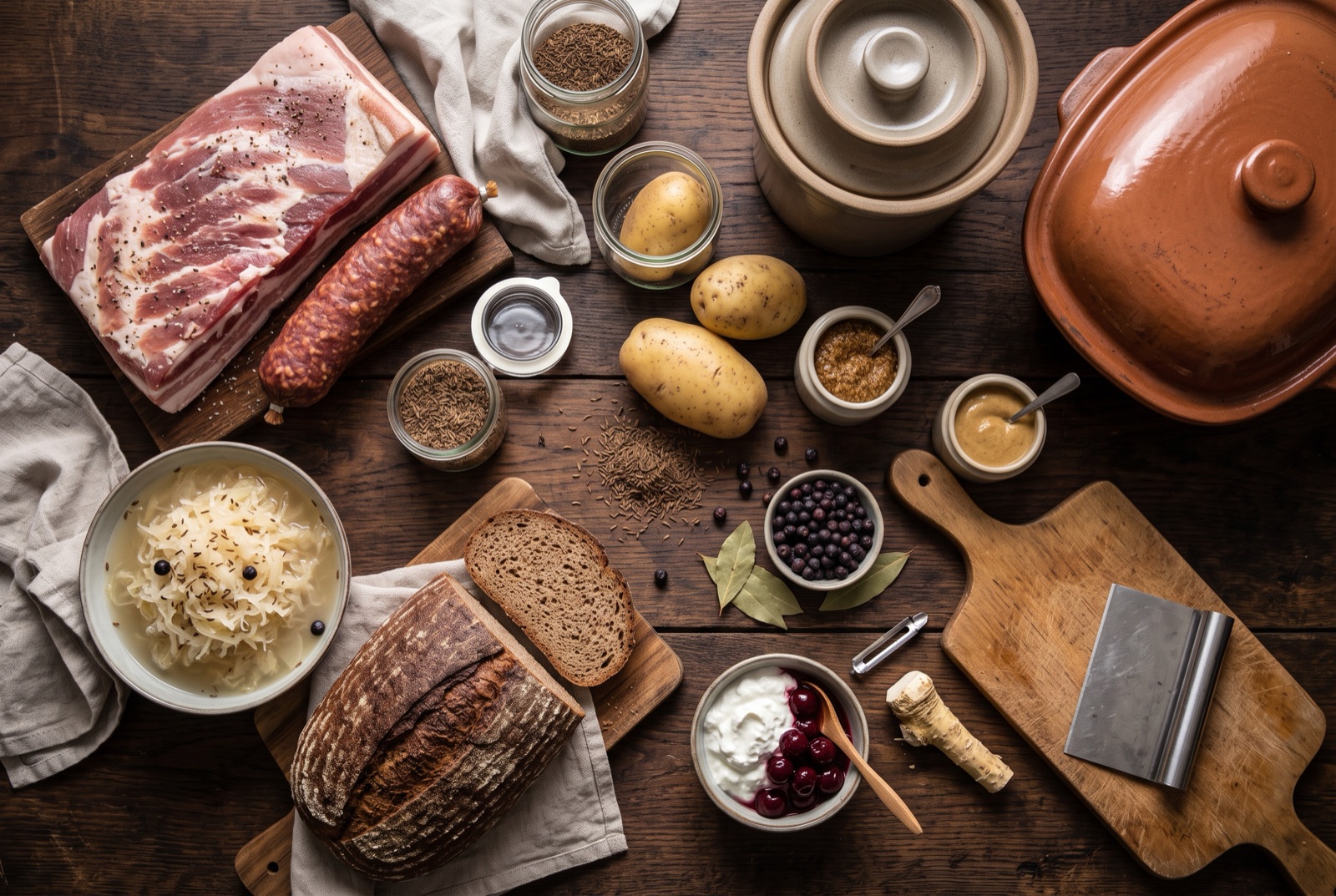
Signature pantry.
10 staplesThe ingredients this cuisine cannot function without.
- pork and cured sausage
- sauerkraut
- rye sourdough bread
- potatoes
- mustard (sweet and medium-hot)
- caraway
- quark
- juniper and bay
- sour cherries
- horseradish
How people eat in Germany.
Punctuality extends to the table: the hot meal is traditionally eaten at midday, and dinner in many households is Abendbrot — sliced bread, cheese, cold cuts and pickles, assembled by each person rather than cooked. Wait for a collective "Guten Appetit" before starting, and keep both wrists above the table with the fork staying in the left hand. When glasses are raised, meet each person's eyes individually as you clink; skipping the eye contact is noticed. Bread is torn or cut, never used to wipe the plate clean in company. Afternoon Kaffee und Kuchen is a real meal slot, especially at weekends, and in beer gardens you are often permitted to bring your own food as long as the drinks come from the house.
Regional kitchens.
Germany cooks 4 distinctly different ways depending on where you stand — here is what changes between them.
- R1Bavaria and Franconia
- Beer-garden country: Weißwurst before noon, pretzels, roast pork with dumplings, and Franconia's dry Silvaner wines. The most exported image of German food, and the least representative of the rest of the country.
- R2Swabia and Baden
- The southwest is Germany's noodle belt — Spätzle scraped fresh, Maultaschen stuffed with greens and meat, warm broth-dressed potato salad — with Black Forest cherries, Kirschwasser and French influence from across the Rhine.
- R3Rhineland and Hesse
- Sweet-sour braises finished with sugar-beet syrup and gingerbread, Sauerbraten above all, plus Hesse's cider taverns serving Handkäse mit Musik and tart Apfelwein by the ribbed glass.
- R4The North and the Baltic coast
- Fish-forward and plainer: herring in every cure, eel soup in Hamburg, dark rye breads, and sweet-savory plates like Labskaus that reflect a long trading and seafaring history.
All Germany recipes.
10 recipes and counting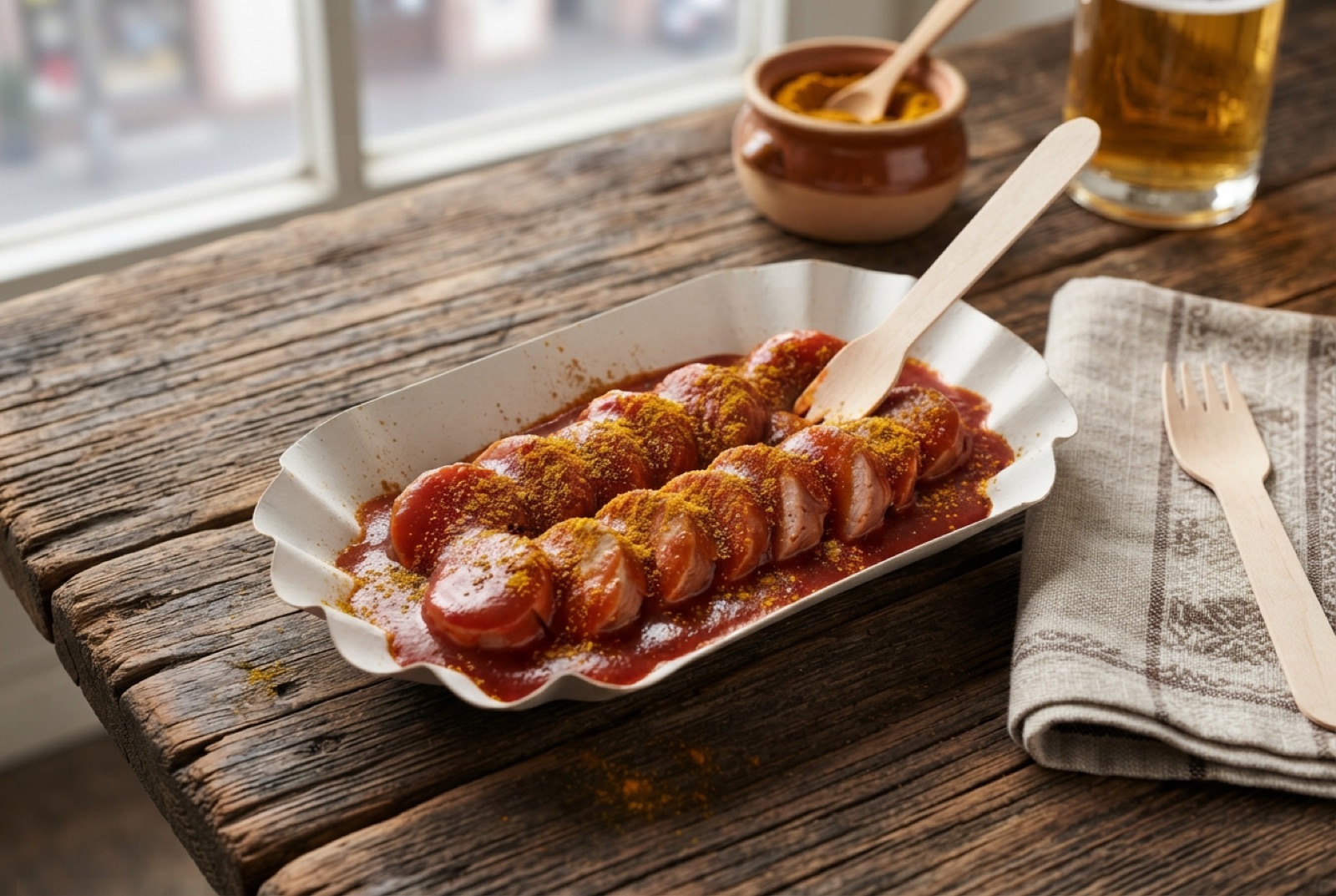
Germany35 min
Currywurst
Berlin Sausage in Curry Ketchup
Germany4 hr 15 min
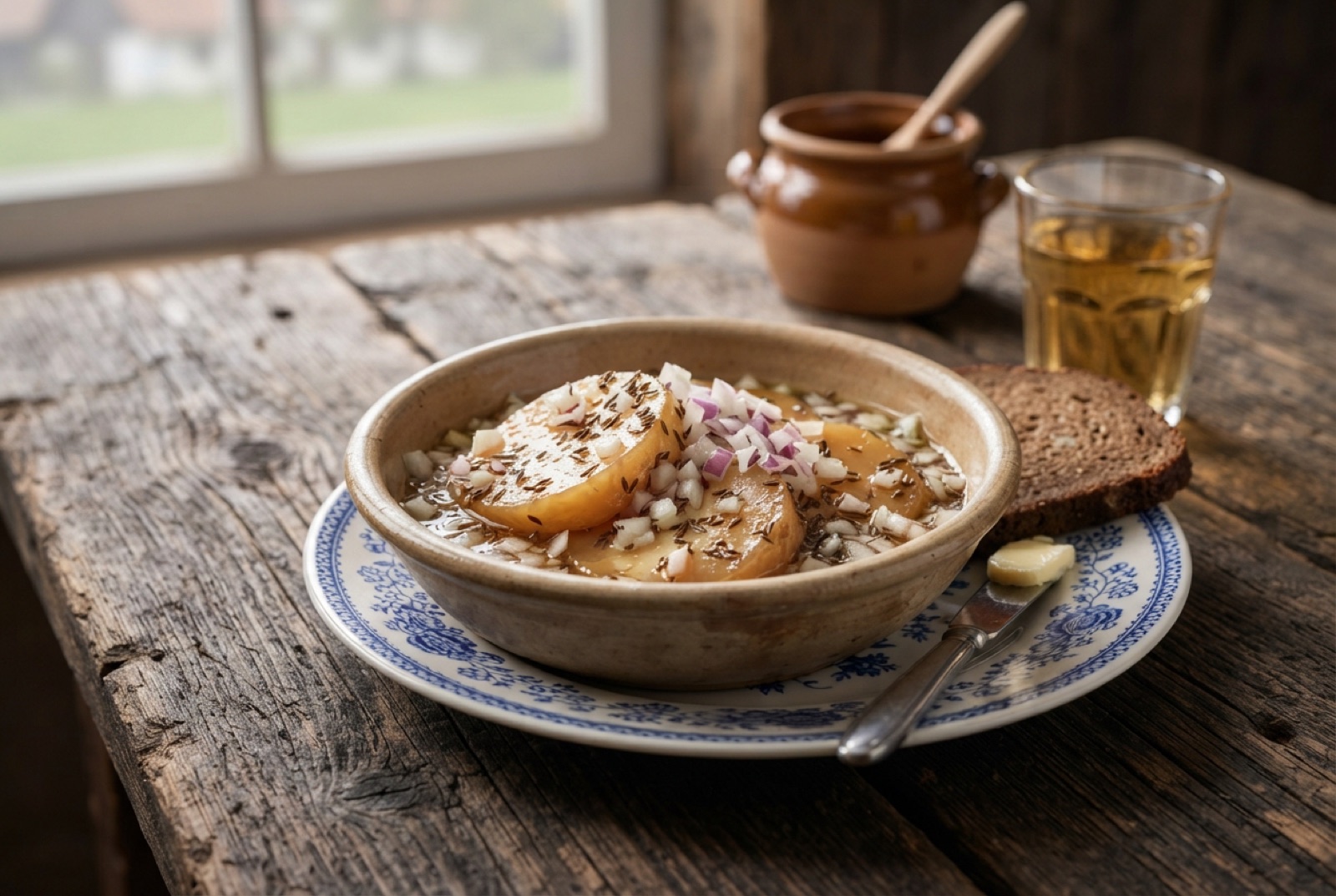
Handkäse mit Musik
Sour Milk Cheese with Onions
Germany45 min
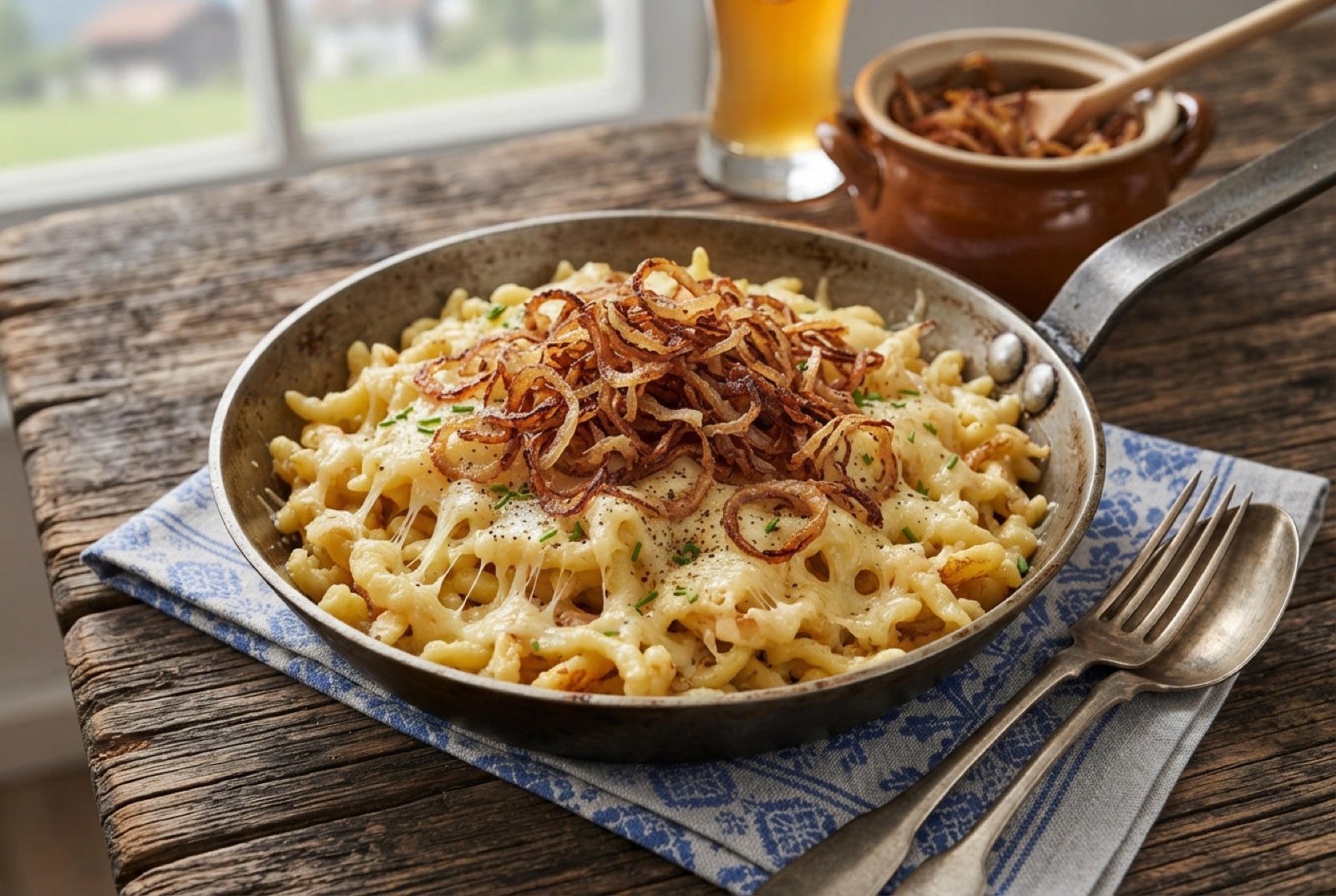
Käsespätzle
Swabian Cheese Noodles with Fried Onions
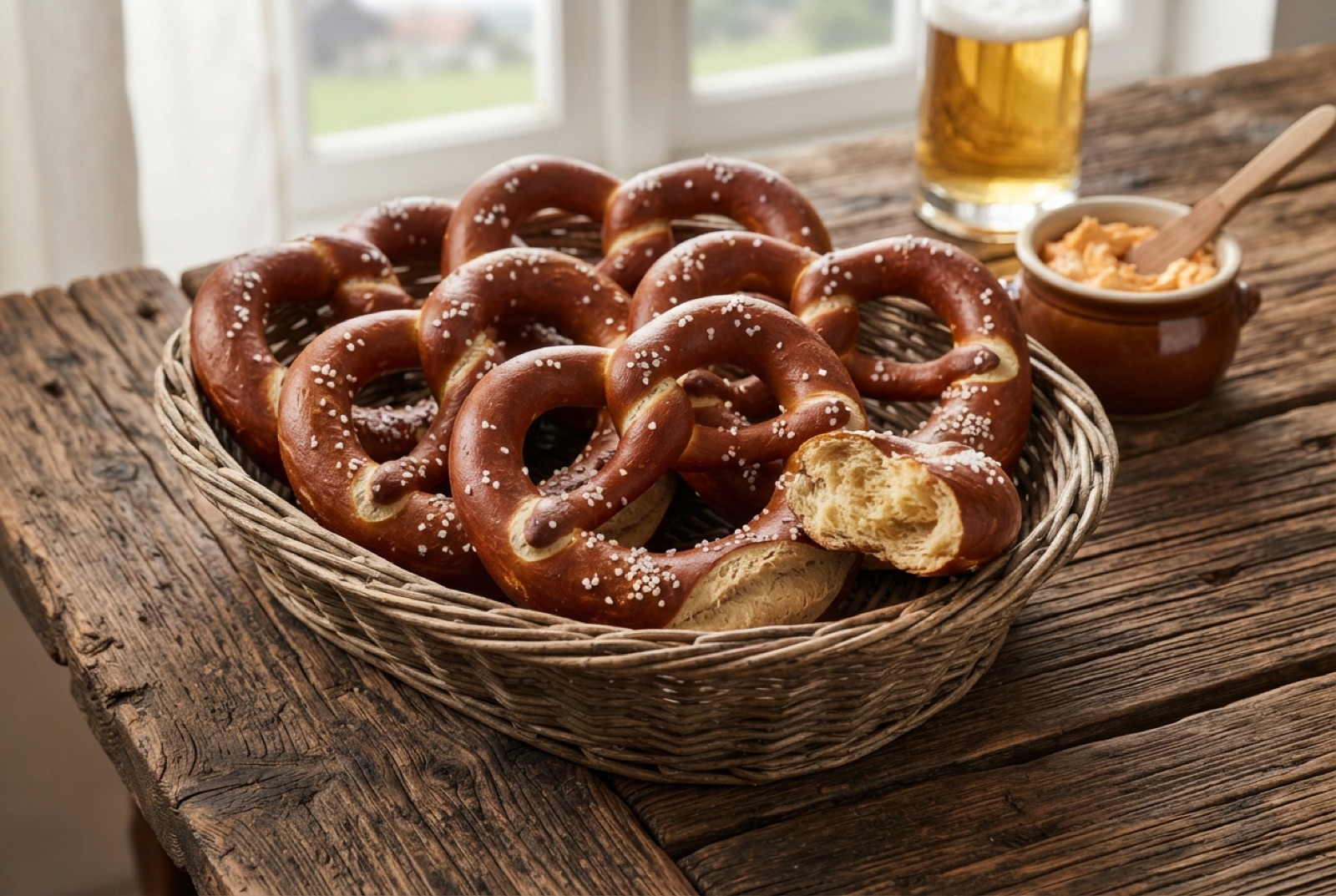
Germany3 hr 25 min
Laugenbrezel
German Lye Pretzels
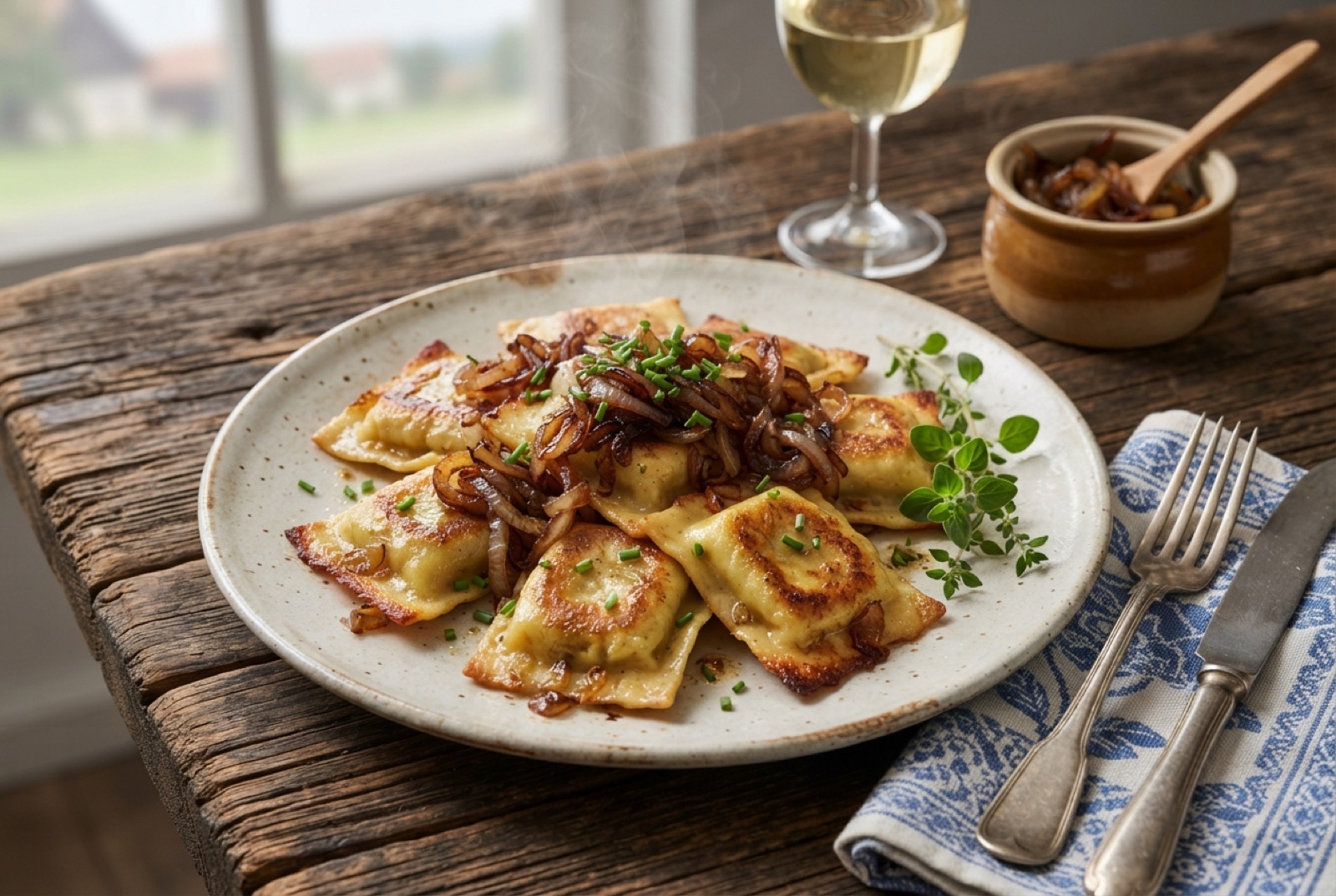
Germany1 hr 50 min
Maultaschen
Swabian Filled Pasta Pockets
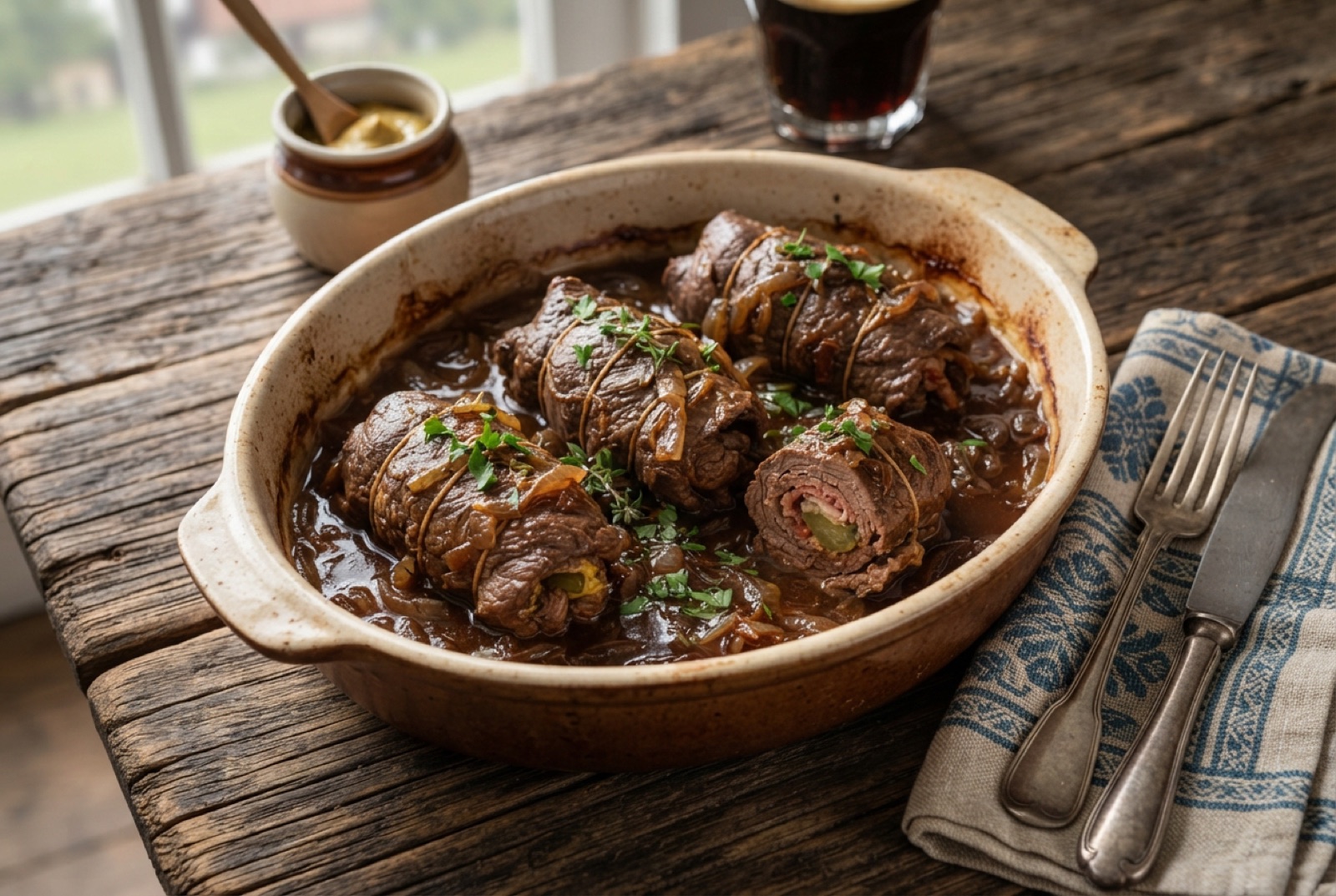
Germany2 hr 20 min
Rinderrouladen
German Beef Roll-Ups in Onion Gravy
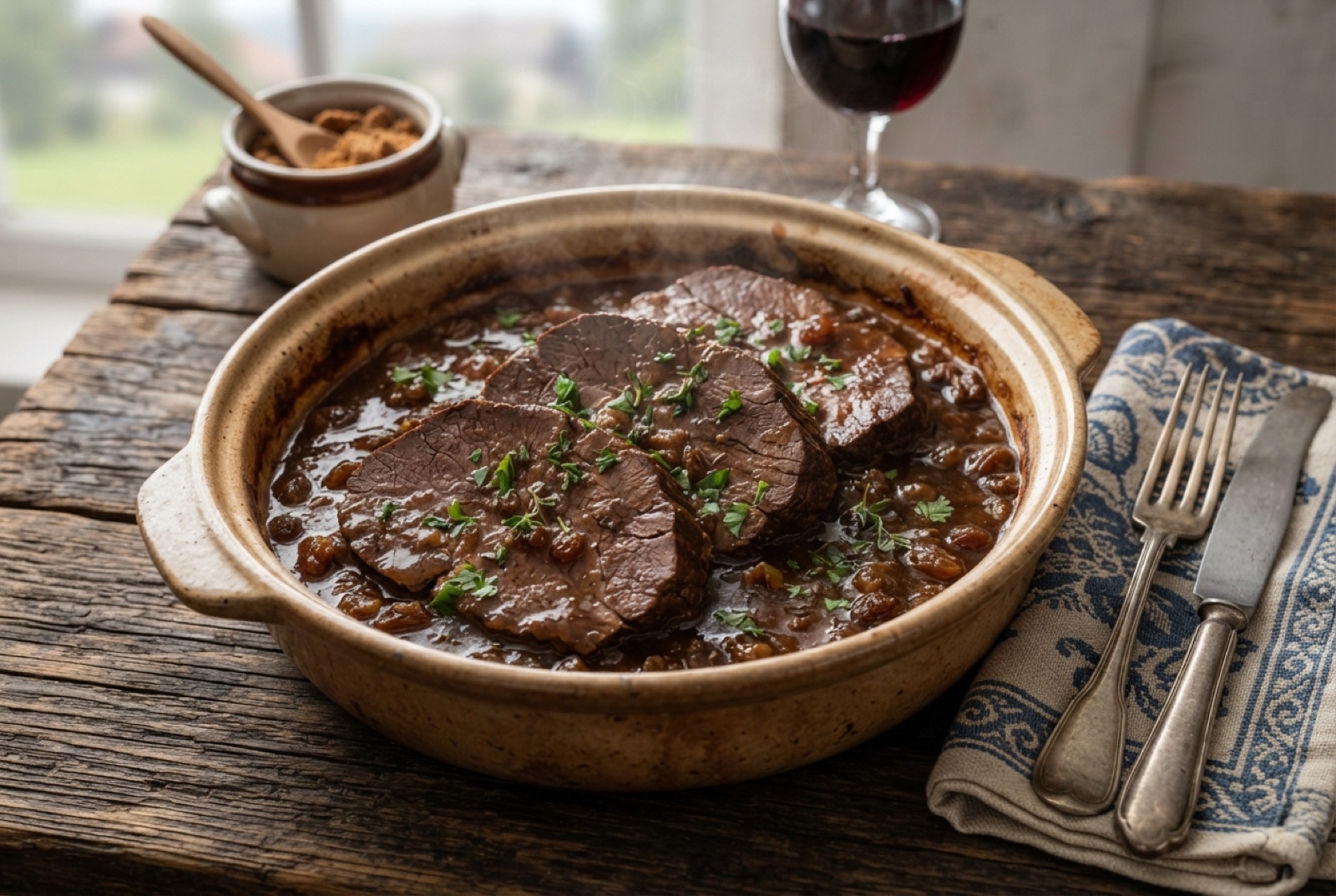
Germany75 hr 40 min
Sauerbraten
Rhineland Marinated Pot Roast
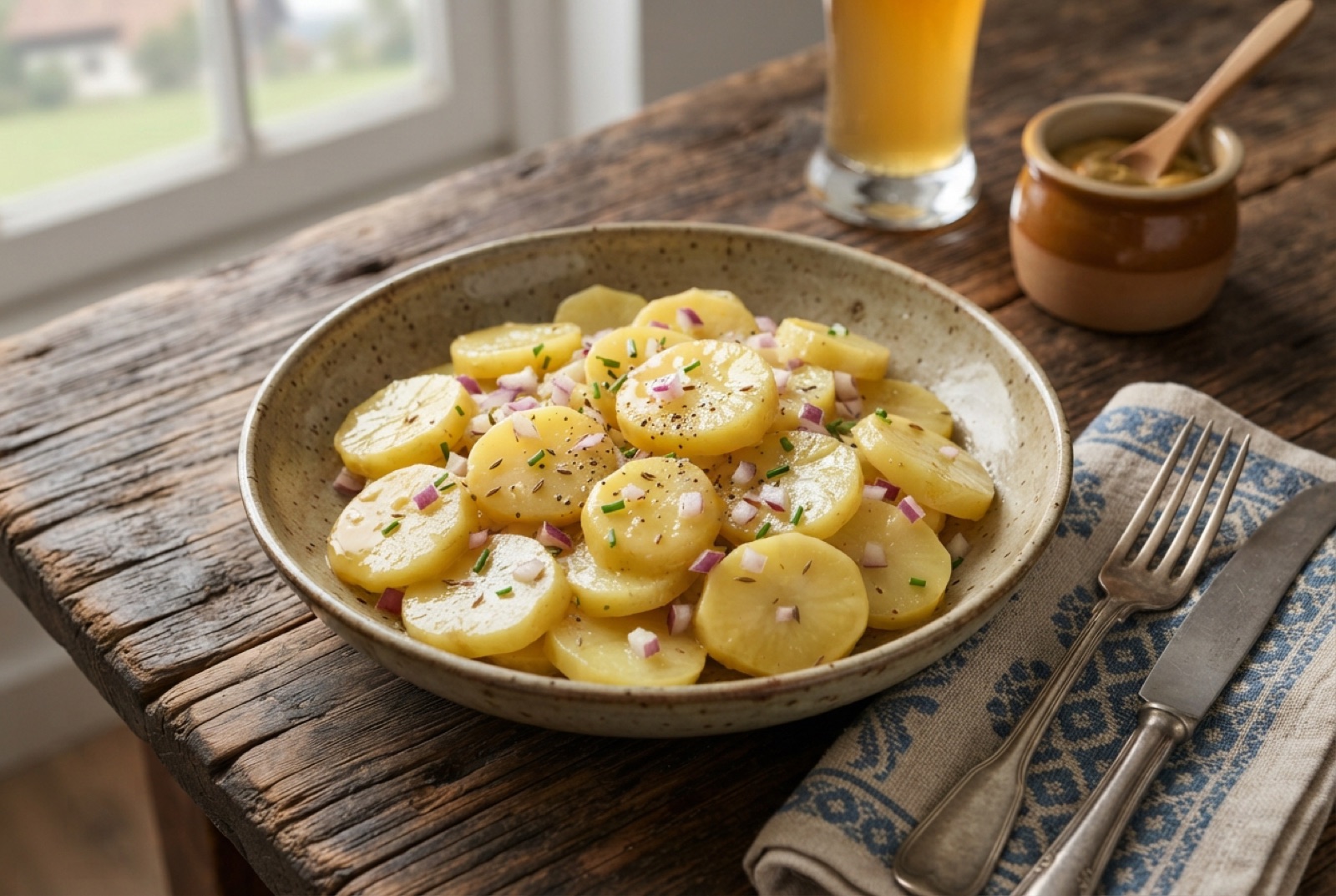
Germany1 hr
Schwäbischer Kartoffelsalat
Warm German Potato Salad
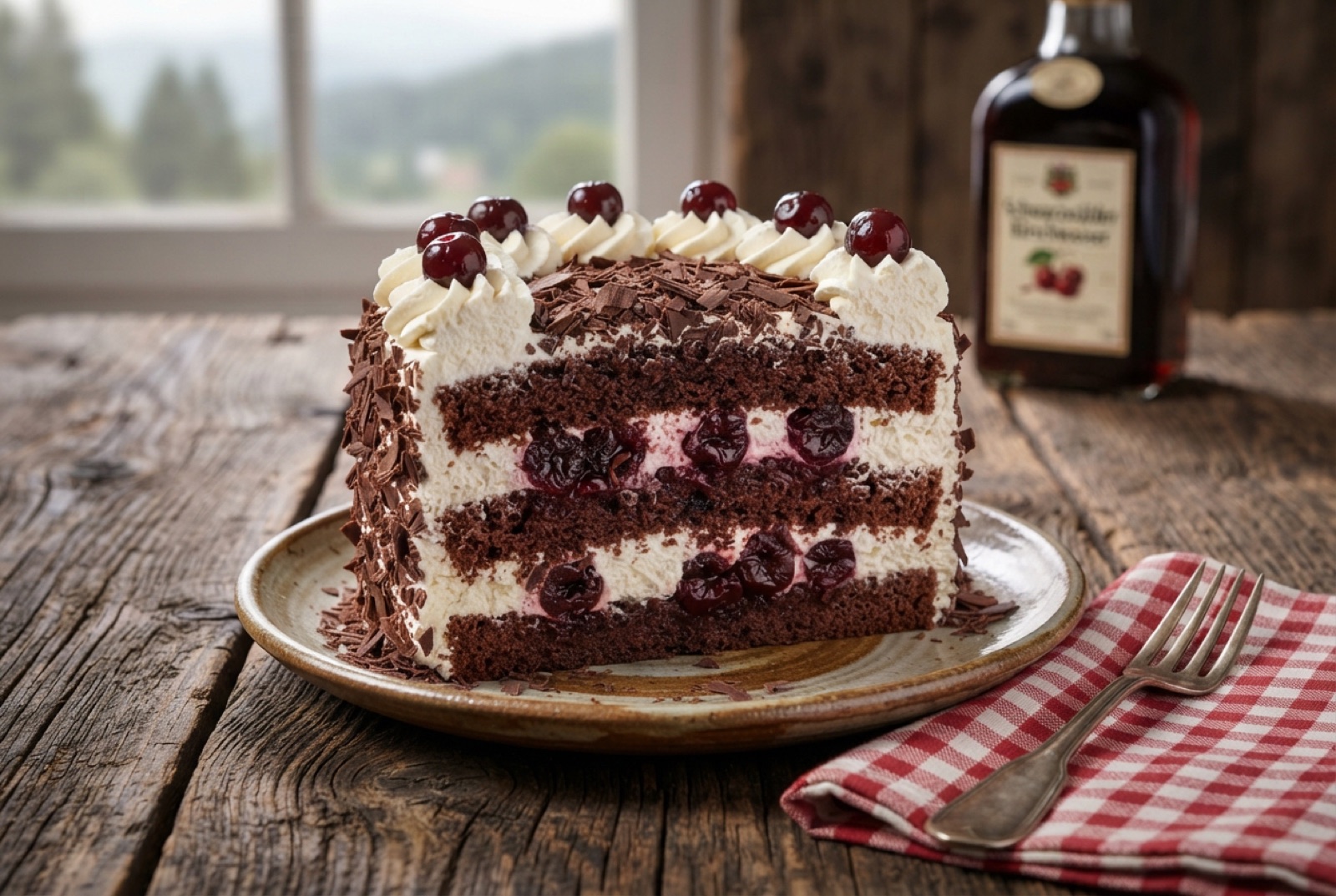
Germany5 hr 35 min
Schwarzwälder Kirschtorte
Black Forest Cherry Cake
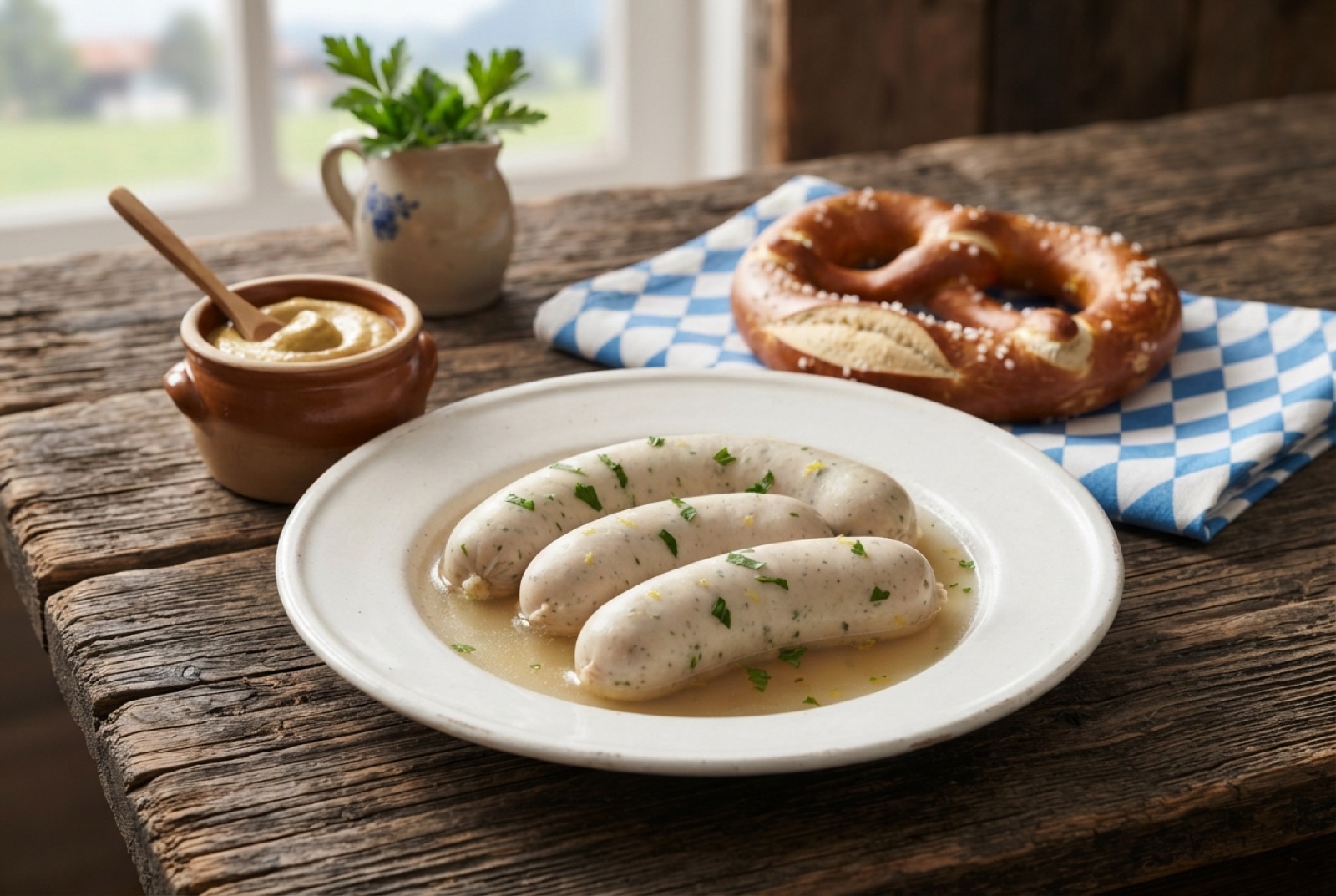
Germany2 hr
Weißwurst with Sweet Mustard
Bavarian White Sausage
Keep traveling.
Germany sits in Central Europe, and its kitchen shares borders as well as ingredients with Albania and Austria.
 Albania
 Austria