Laugenbrezel.
German Lye Pretzels
Laugenbrezel · say it: LOW-gen-BRETS-el
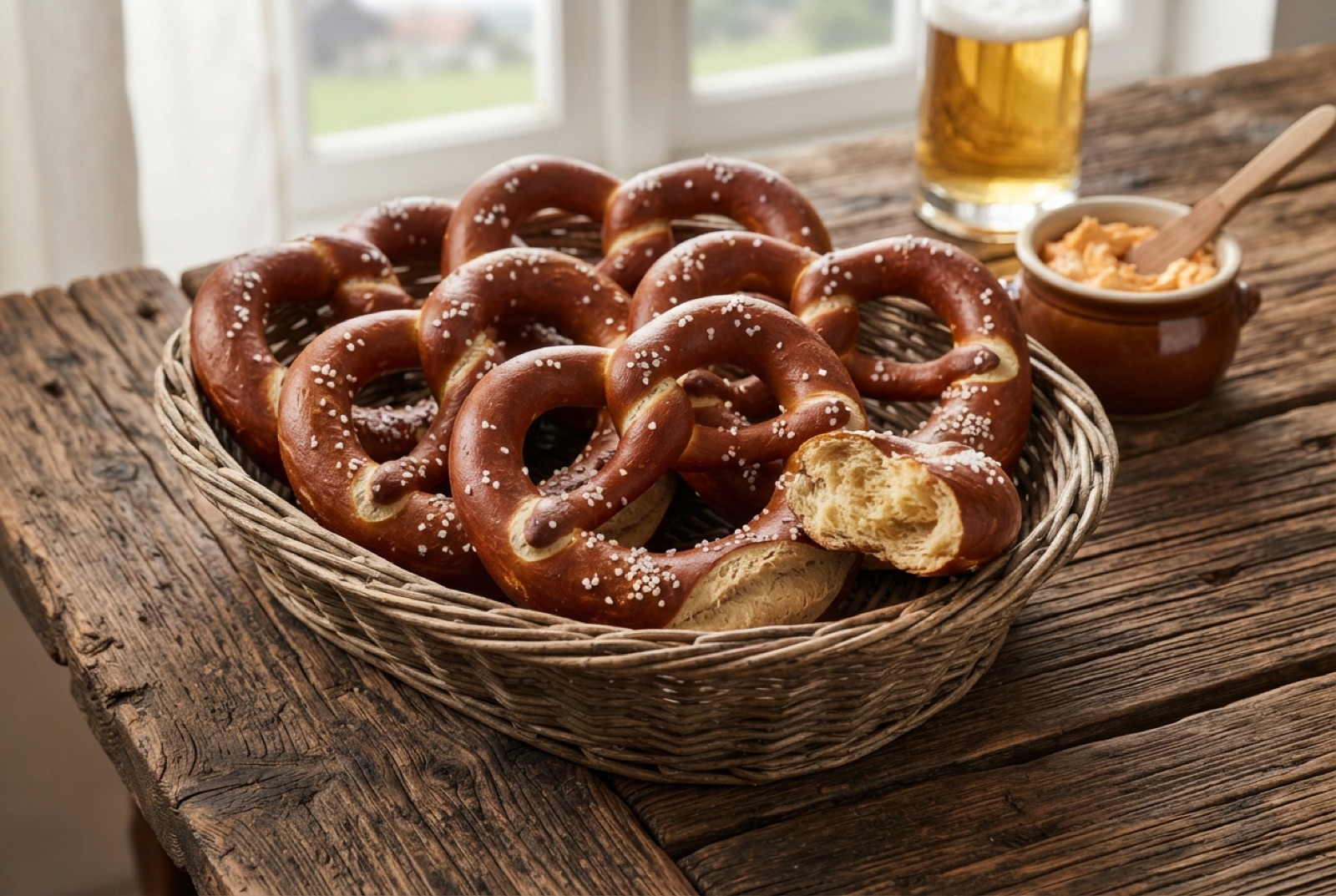
A real Laugenbrezel is a lean wheat dough shaped into the familiar knot, dipped for a few seconds in a dilute solution of food-grade sodium hydroxide, slashed across the fat belly and baked hot. The lye is what makes it: it raises the surface pH so browning reactions run far ahead of the crumb, producing a thin, glossy, deep-brown shell with a distinct mineral tang, a soft chewy interior and arms that go crisp. Fresh from the oven with coarse salt and cold butter it is the reference point every supermarket pretzel is trying and failing to be. Lye demands respect and gloves, and it is genuinely the difference between a pretzel and a bread knot.

- Gate
- GermanyBavaria and Swabia
- Prep
- 40 min
- Cook
- 15 min
- Total time
- 3 hr 25 min incl. 2 hr 30 min rest
- Serves
- 8
- Status
- Medium
- Nutrition / serving · estimated
- Calories 250 kcal
- Protein 8 g
- Carbs 47 g
- Fat 4 g
- Fiber 2 g
- Sugar 1 g
- Sodium 1250 mg
Why this recipe works.
- A cold 4% food-grade lye bath — the strength German bakeries actually use, with the safety procedure written out step by step.
- Overnight chilling of the shaped pretzels, which firms the surface so they hold their shape in the bath instead of sagging.
- Rolling technique that produces the real proportions: thin arms, fat belly, and a belly slash that opens properly.
- A baking soda fallback that is honest about how close it gets, rather than pretending it is the same thing.
Ingredients.
9 itemsFor the dough
For the lye bath
To finish
Equipment
- Stand mixer or strong arms
- Kitchen scale
- Plastic or stainless bowl for the lye bath
- Rubber gloves and eye protection
- Slotted plastic spoon
- Very sharp blade or lame
Instructions.
Mix a stiff dough
Combine the flour, yeast, salt, malt syrup and cold water and knead for 8 to 10 minutes until you have a firm, smooth dough that feels distinctly tighter than a normal bread dough. Work in the soft butter towards the end, a little at a time, until it disappears completely.
Tip Pretzel dough should be dry and dense — around 50% hydration. If it feels soft and sticky, add flour a tablespoon at a time.
First rise
Cover the dough and let it rise at room temperature for about 60 minutes, until it has grown by roughly half. It will not double like a soft bread dough, and it should not; over-risen pretzel dough tears when you roll the arms out.
Divide and pre-shape
Divide the dough into 8 pieces of about 100 g each and roll each into a tight ball. Cover and rest them for 10 minutes so the gluten relaxes and the ropes will stretch without fighting back.
Roll the ropes
Roll each ball into a rope about 55 cm long, working from the centre outwards so the middle stays fat and the ends taper to pencil thickness. If the rope resists, leave it a few minutes and come back — forcing it tears the surface.
Shape the knot
Lay a rope in a U shape, cross the arms over each other twice to make a twist, then fold them back down and press the tips firmly onto the fat belly, about a third of the way in from each side. Set them on a lined tray.
Chill uncovered
Refrigerate the shaped pretzels uncovered for at least 1 hour, or overnight. The surface must dry to the touch — a firm skin is what lets them keep their shape in the bath and take the lye evenly.
Mix the lye bath safely
Put on gloves and eye protection. Measure the cold water into a plastic or stainless steel bowl, then add the lye pearls to the water and stir with a plastic spoon until dissolved. Never add water to lye, and never use an aluminium bowl, which reacts violently.
Tip Keep children and pets out of the kitchen for this step and wipe surfaces down with vinegar afterwards.
Dip, salt and slash
Heat the oven to 220°C. Using a slotted plastic spoon, submerge each cold pretzel in the lye for 10 seconds, drain it well and set it on a lined tray. Sprinkle immediately with coarse salt while the surface is wet, then slash the fat belly lengthways about 5 mm deep with a very sharp blade held at a shallow angle.
Bake without steam
Bake for 13 to 16 minutes, until the shells are deep mahogany brown and glossy and the slash has opened into a pale crack. Do not add steam — it softens the surface and blocks the browning that the lye exists to create.
Cool briefly and eat
Cool on a rack for 10 minutes so the crumb sets, then eat while the arms are still crisp. Split through the belly and spread with cold butter for the classic Butterbrezel.
Tips from our kitchen.
- Wear rubber gloves and eye protection for the lye bath, use a plastic or stainless steel bowl and never aluminium, and always add the lye to the water rather than the water to the lye.
- Roll each rope from the middle outwards with light pressure, leaving a thick belly and tapering arms. A rope of even thickness bakes into a bread knot, not a pretzel.
- If the dough springs back and will not lengthen, let it sit five minutes and come back to it. Fighting it tears the surface and the pretzel bakes with ragged seams.
- Chill the shaped pretzels uncovered for at least an hour, or overnight. A dry, firm skin holds its shape in the bath and takes the lye evenly.
- Slash the belly at a shallow angle with a very sharp blade, about 5 mm deep, just before baking. Cut too deep and the pretzel splits open; too shallow and it never opens at all.
- Salt immediately after the bath while the surface is still wet, since nothing sticks to a dry pretzel, and bake straight away.
Substitutions.
- Food-grade lye (sodium hydroxide) → A boiled solution of 100 g baking soda in 2 l water, dipping each pretzel for 30 seconds
- Safe and easy, and clearly better than nothing, but the colour is lighter, the shell is duller and the characteristic tang is missing. Baking the soda dry at 120°C for an hour first makes it more alkaline and closes some of the gap.
- Barley malt syrup → Honey, or simply omit it
- It contributes colour and a faint malty sweetness. The pretzels work without it, they are just slightly paler and less complex.
- Coarse pretzel salt → Flaky sea salt, crushed slightly
- Pretzel salt is designed not to dissolve into the wet surface. Flaky salt partly melts in, so add a little extra and expect a saltier first bite.
Variations.
- Laugenstangen
- The same dough rolled into short batons instead of knots, dipped and slashed lengthways. Far quicker to shape and the standard base for a German sandwich roll.
- Butterbrezel
- A cooled pretzel split horizontally through the belly and spread thickly with cold butter. Not a variation of the baking so much as the most common way to eat one in Swabia.
- Käsebrezel
- Grated hard cheese scattered over the wet pretzel instead of salt before baking, where it melts into a browned crust. Common in bakeries across the south.
Storage & reheating.
Pretzels are at their peak for about four hours and go noticeably soft the same day, since the lye shell attracts moisture from the air. Store them uncovered rather than in a bag, which turns the shell leathery within an hour. Refresh a day-old pretzel with 4 minutes in a 180°C oven, which brings back much of the crispness. For longer keeping, freeze them baked and cooled for up to a month and reheat straight from frozen for 8 minutes. Shaped raw pretzels also freeze well: dip and bake them from frozen with a couple of extra minutes.
Serve with
Cold unsalted butter, Obatzda or sweet mustard and Weißwurst — and a wheat beer if it is before noon.
The story behind Laugenbrezel.
The pretzel shape is very old in Europe and turns up in medieval imagery long before anyone was dipping anything in lye — the crossed-arms knot appears on bakers' guild signs across German-speaking lands, and it remains the symbol on bakery signage today. The lye treatment is a later refinement, associated above all with southern Germany, and every Bavarian and Swabian town has a version of the same accident story in which a baker supposedly dropped pretzels into a cleaning solution of lye and baked them anyway. The stories name different towns and different years and none of them holds up, but the chemistry does: alkaline surfaces brown dramatically faster and taste distinctly different.
Regional shapes then diverged. The Bavarian Breze has thin, crisp arms and a fat belly that is slashed to open into a wide crack, and it is the pretzel of beer gardens and Weißwurst breakfasts. The Swabian Brezel has a thinner belly with a deeper cut and thicker arms, sometimes brushed with butter. Nobody in either region considers these interchangeable. Further afield the shape travelled with emigrants to Pennsylvania and turned into the hard, dry, snack-food pretzel, which is a genuine descendant but a different food entirely.
The lye itself is the part most home bakers avoid, and there is a legitimate middle ground worth being honest about. A hot baking soda solution, or baking soda that has been dried in a low oven to make it more alkaline, will produce a pretzel that is browner and closer than plain dough. It will not produce the glassy shell or the specific tang, and side by side the difference is obvious. Food-grade lye is cheap, widely sold for exactly this purpose, and completely safe when you wear gloves and goggles, use a plastic or stainless bowl and never let it touch aluminium.
Questions, answered.
Is food-grade lye safe to use at home?
Yes, with basic precautions. Sodium hydroxide is caustic and will burn skin and eyes, so wear rubber gloves and eye protection, mix it in a plastic or stainless steel bowl, never in aluminium, and always add the lye to cold water rather than water to lye. Keep vinegar nearby to neutralise splashes on surfaces. Once the pretzels are baked, the lye has fully reacted and nothing caustic remains.
Can I make pretzels without lye?
You can use a boiling baking soda solution instead, which is completely safe and gives a browner, chewier result than plain dough. It does not reproduce the glossy mahogany shell or the mineral tang of a lye pretzel, and the difference is obvious if you taste them side by side. Baking the soda dry at 120°C for an hour makes it more alkaline and gets you closer.
Why did my pretzels lose their shape in the bath?
The dough was too soft or too warm when it was dipped. Shaped pretzels need to chill uncovered until the surface is dry and firm to the touch — an hour minimum, ideally overnight in the fridge. A cold, skinned pretzel goes into the bath and comes out with its arms and belly intact; a warm slack one relaxes immediately.
Why is my pretzel pale instead of dark brown?
Either the alkaline solution was too weak or the oven was not hot enough. The lye bath should be around 4% and the oven at 220°C with no steam, since steam softens the shell and slows browning. A pretzel that comes out beige and matte has usually spent too little time in the bath — a few seconds fully submerged is enough, but it must be fully submerged.
Why do pretzels go soft so quickly?
The alkaline surface is hygroscopic and pulls moisture out of the air, which is exactly what makes a fresh pretzel so good and why it does not last. Bakeries expect them to be eaten within hours. Storing them in a sealed bag accelerates the process; leave them uncovered and reheat briefly in a hot oven to bring the crust back.
You might also like.
All recipes →
Keep exploring Germany.
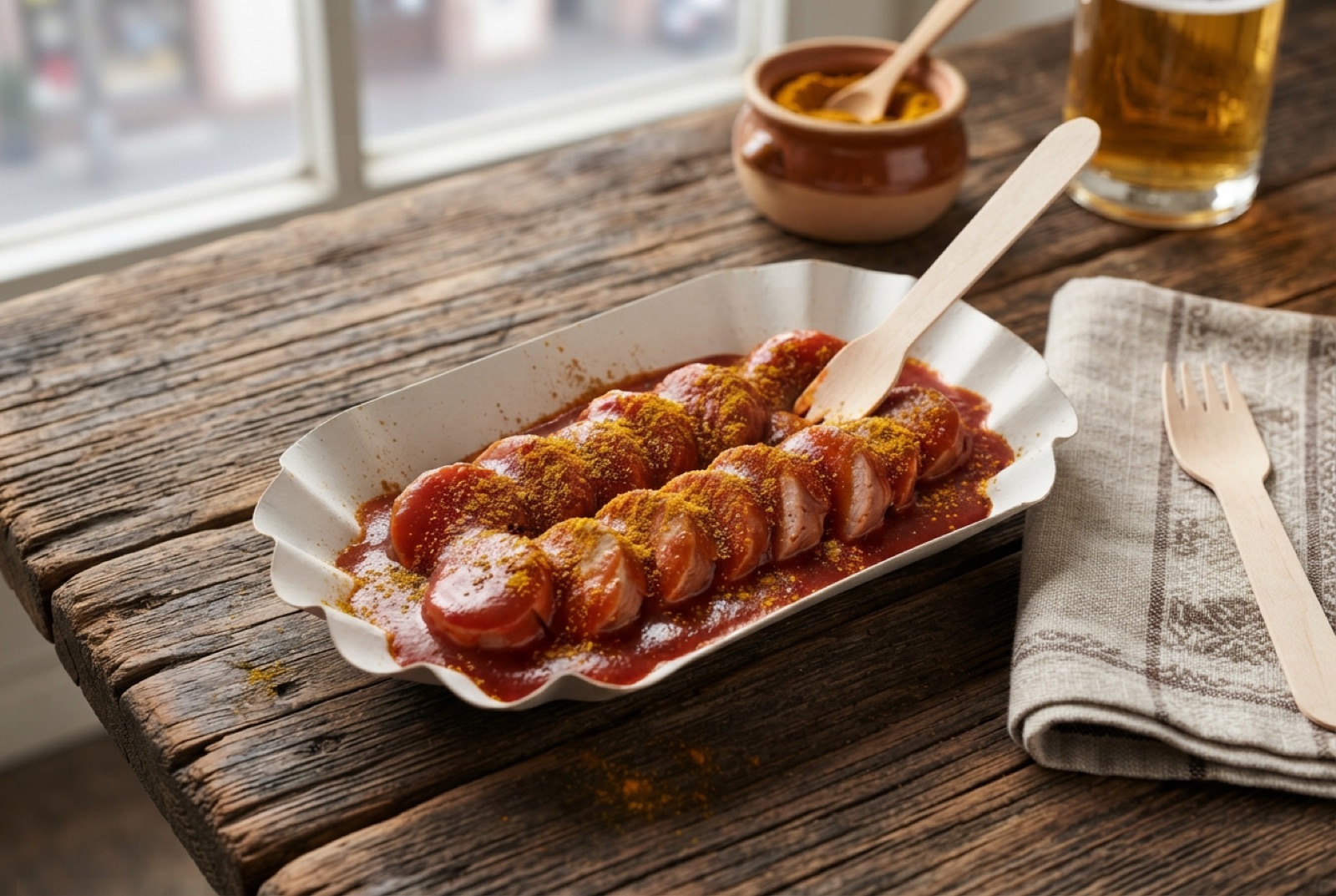
Germany has 9 more dishes in the atlas — Currywurst and Handkäse mit Musik, and 7 more.
Recipe by The DishRoute Kitchen · published August 19, 2026 · updated August 19, 2026