Draadjesvlees.
Dutch Slow-Braised Shredded Beef
Draadjesvlees · say it: DRAHT-yes-vlays
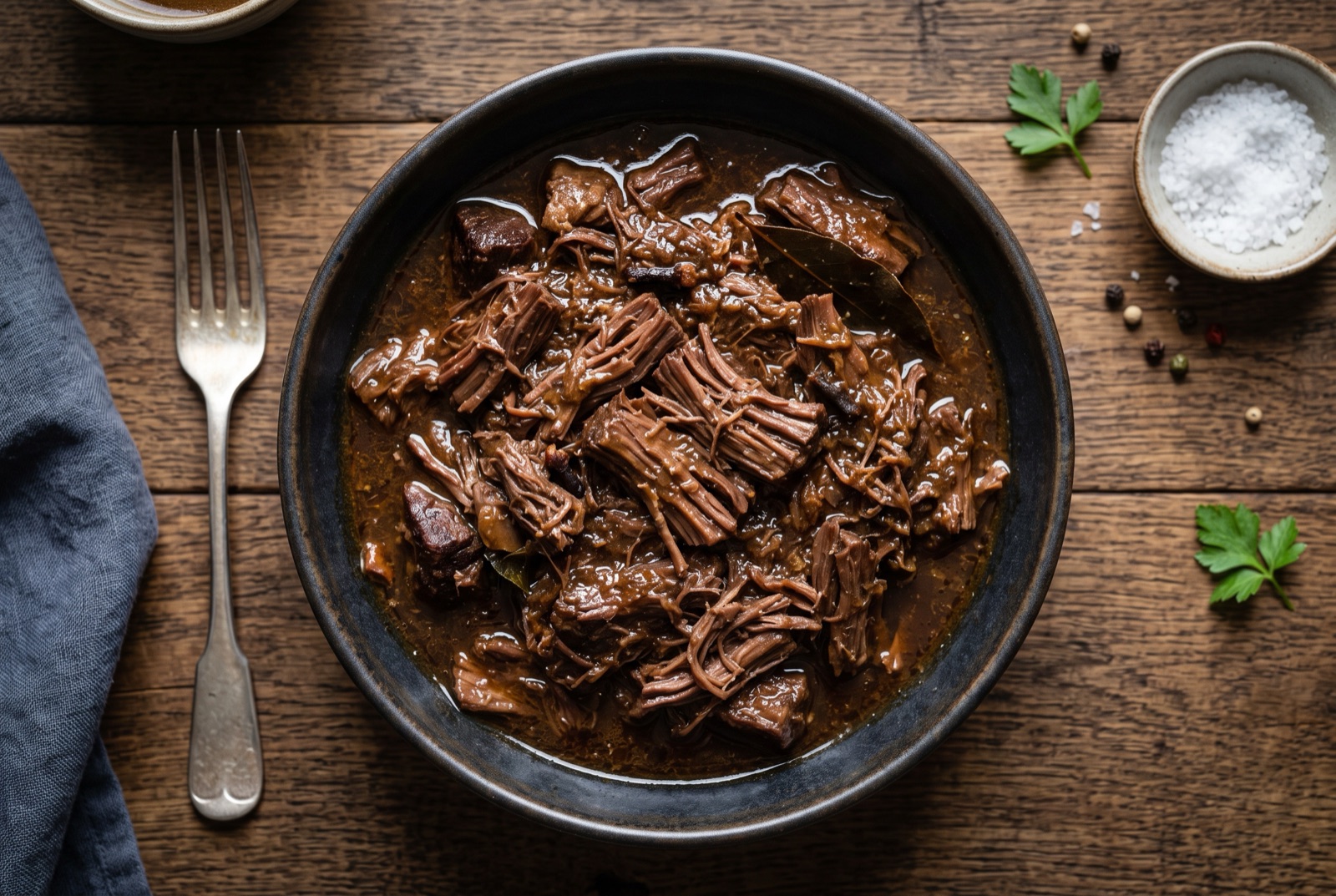
Draadjesvlees is Dutch braised beef cooked past tender and into threads — the name means thread meat, and the test is whether a piece falls into strands when you press it with a fork. The braise is short on ingredients and long on time: beef, a lot of butter, onion, bay, whole cloves, a splash of vinegar and a spoon of syrup or brown sugar. What comes out is dark and glossy, savoury with a clear sweet-sour edge behind it, and a sauce thick enough to coat a potato without any flour at all. It is the Sunday version of Dutch home cooking, and the base of nearly every good Dutch croquette filling.

- Gate
- Netherlands
- Prep
- 20 min
- Cook
- 3 hr 15 min
- Total time
- 3 hr 35 min
- Serves
- 4
- Status
- Medium
- Nutrition / serving · estimated
- Calories 540 kcal
- Protein 52 g
- Carbs 9 g
- Fat 32 g
- Fiber 1 g
- Sugar 6 g
Why this recipe works.
- A true low-and-slow braise with no flour: the sauce thickens on dissolved gelatine, so it stays clean and glossy.
- Explains the doneness signal precisely — threads, not cubes — which is the whole point of the dish and where most recipes stay vague.
- Balances the sweet-sour Dutch profile with measured vinegar and syrup rather than guesswork.
- Makes deliberately more than four people need, because the leftovers are the base for bitterballen and kroketten.
Ingredients.
11 itemsFor the braise
Equipment
- Heavy lidded casserole or Dutch oven
- Tongs
- Fine sieve
Instructions.
Season and dry the beef
Pat 1 kg of beef cubes completely dry with kitchen paper and season them all over with salt and pepper. A dry surface is the difference between a brown crust and grey, steamed meat.
Brown in batches
Melt half the butter in a heavy casserole over medium-high heat and brown the beef in two or three batches, 3–4 minutes a side, until each piece is deeply coloured. Leave space between the cubes and set each batch aside as it is done.
Tip Wait until the meat releases itself from the pan before turning it. If it sticks, the crust is not formed yet.
Soften the onions
Lower the heat, add the rest of the butter and the sliced onions, and cook for 10 minutes, scraping the browned bits off the base as the onions release their moisture. They should be soft, translucent and smelling sweet, with no raw bite left.
Build the braise
Return the beef and any juices to the pot with the bay, cloves, peppercorns, vinegar, appelstroop and mustard. Pour in the hot stock — it should come roughly two-thirds up the meat, not cover it — and bring to a bare simmer.
Cook until it threads
Cover with the lid slightly ajar and simmer on the lowest possible heat for 3 hours, stirring once an hour. The beef is ready when a fork twisted into a cube separates it into strands with no resistance and the sauce clings to the spoon.
Tip If the liquid drops below halfway up the meat, top it up with a splash of hot water. If the meat is still firm at 3 hours, keep going — time is the only fix.
Reduce and season
Fish out the bay leaves and cloves. If the sauce is thin, lift out the meat and boil the liquid for 5–10 minutes until it coats the back of a spoon and looks glossy. Taste and balance: it should read savoury first, with sweet and sour trailing behind.
Pull and serve
Break the beef into rough threads with two forks, stir it back into the sauce and let it stand off the heat for 5 minutes so the strands soak up liquid. Serve with potatoes and red cabbage, with plenty of sauce.
Tips from our kitchen.
- Use chuck, shin or brisket — cuts full of connective tissue. Steak cuts and lean roasting joints dry out long before they reach the thread stage.
- Brown the meat hard and in batches. A crowded pan steams the beef grey, and grey beef gives a pale, thin sauce.
- Butter, not oil, is traditional and it matters: the milk solids brown alongside the meat and add to the colour.
- Keep the pot at the barest possible simmer — one bubble every second or two. Anything harder toughens the fibres before they get the chance to relax.
- Do not add the vinegar and syrup at the very end. They need at least an hour of cooking to lose their raw edge and merge into the sauce.
- If the sauce is thin when the meat is ready, lift out the beef and boil the liquid down hard. Reduction, not cornflour, is the fix.
Substitutions.
- Appelstroop (Dutch apple syrup) → 1 tbsp dark brown sugar plus 1 tsp molasses, or 1 tbsp pomegranate molasses
- Appelstroop is thick, dark and only mildly sweet, closer to molasses than to jam. The point is to round the vinegar, not to sweeten the dish, so go easy.
- Red wine vinegar → Apple cider vinegar, or a splash of dark beer plus half the vinegar
- Beer moves the dish towards Flemish stoofvlees, which is a fine place to be, but you still need some acid to keep the sauce lively.
- Beef chuck → Beef shin, oxtail or brisket point
- Shin gives the most gelatinous sauce of all, but needs an extra 30–45 minutes. Oxtail works beautifully and you pick the meat off the bones at the end.
Variations.
- Zuurvlees (Limburg style)
- The southern cousin: more vinegar, and a slice of ontbijtkoek (spiced gingerbread) melted into the sauce to thicken and sweeten it at once.
- Draadjesvlees for kroketten
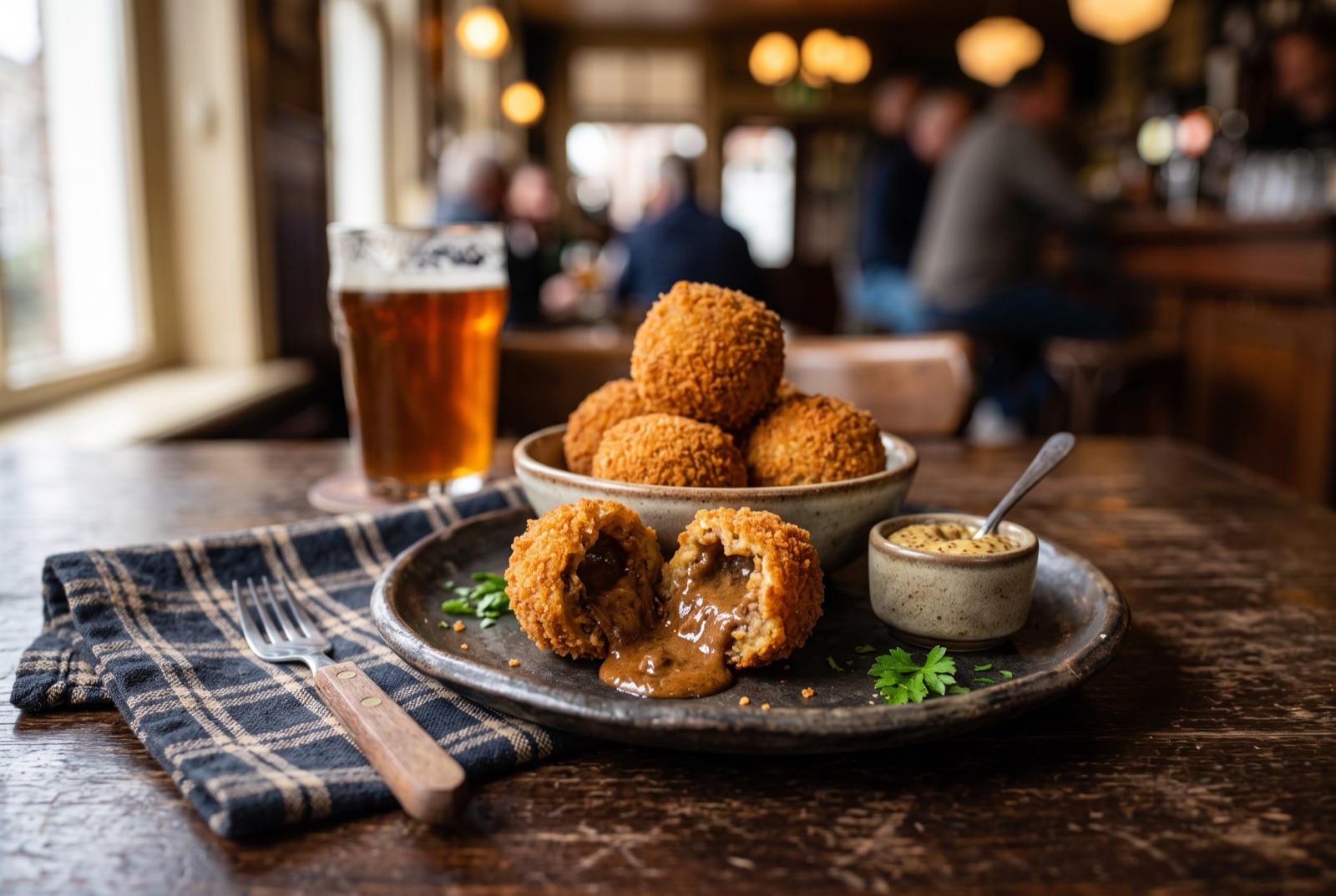
- Shred the cooled meat finely, stir it into a stiff butter-and-flour ragout made with the strained sauce, chill until firm and use it as croquette filling.
- With prunes
- Six prunes added in the last hour dissolve into the sauce and push the sweet-sour balance further towards sweet — common in older Dutch farmhouse recipes.
Storage & reheating.
Draadjesvlees improves overnight and keeps 4 days refrigerated in its sauce, which will set to a firm jelly when cold — that is the gelatine, and it is exactly what you want. Reheat gently, covered, over low heat with a splash of water. It freezes very well for 3 months; portion it so you can thaw enough for a bitterballen batch. Do not reheat in a hot oven uncovered, as the exposed threads dry out fast.
Serve with
Boiled or mashed potatoes, braised red cabbage with apple, and a spoonful of the sauce over everything.
The story behind Draadjesvlees.
The sweet-sour instinct in draadjesvlees is old and specifically Dutch. Long simmering with vinegar, bay and clove — sometimes with a slice of dark gingerbread or a spoon of appelstroop stirred in to round it out — is a technique that runs right through the country's meat cookery, and it points back to the spice-trade centuries, when clove and nutmeg passed through Amsterdam in industrial quantities and ended up in ordinary domestic pots. The same flavour profile shows up in hachee, in zuurvlees in Limburg, and across the border in Flemish stoofvlees, which uses beer where the Dutch use vinegar.
What makes draadjesvlees its own dish rather than a generic stew is the texture goal. Most braises aim for pieces of meat that hold their shape; this one deliberately overshoots, cooking until the connective tissue has fully melted and the muscle fibres separate into visible threads. Dutch cooks watch for the moment the meat stops offering resistance and the surface of the sauce turns glossy from dissolved gelatine. There is no browning of flour, no cream, no wine — the thickness is entirely collagen and reduction.
It also has an important second life. Draadjesvlees, shredded and bound with a thick roux-based sauce, is the classic filling for the Dutch kroket and for bitterballen, which means a large batch of it is rarely wasted. Households make it on a Sunday with potatoes and red cabbage, then turn the remainder into croquettes during the week. Any Dutch cookbook older than a few decades treats this as the natural order of things: you do not make ragout from scratch, you make draadjesvlees first and let it become ragout.
Questions, answered.
How do I know when the meat is actually done?
Press a piece against the side of the pot with a fork. Correctly cooked draadjesvlees separates into visible threads with almost no pressure and offers no springiness at all. If the piece squashes but stays as a lump, it needs more time — undercooked braising beef is tough, and the answer is always another 30 minutes rather than higher heat.
Why is my sauce thin?
Either the pot was covered too tightly to allow any reduction, or the cut was too lean to release much gelatine. Lift the meat out, boil the liquid hard until it thickens enough to coat a spoon, then return the beef. Do not thicken with cornflour — it dulls the shine and gives the sauce a slightly chalky texture that real draadjesvlees never has.
Can I make draadjesvlees in a slow cooker or pressure cooker?
Yes to both, with adjustments. Brown the meat and onions in a pan first either way. In a slow cooker, use half the liquid and cook 8 hours on low, then reduce the sauce in a pan at the end. In a pressure cooker, 50 minutes at high pressure gets you there, but you will still need to reduce the sauce afterwards since nothing evaporates under pressure.
What is the difference between draadjesvlees and hachee?
They share a flavour profile but not a structure. Hachee is roughly equal parts onion and diced beef, cooked until the onions melt into a thick brown stew with distinct pieces of meat. Draadjesvlees is mostly meat, cooked far longer, until it shreds into threads in a thinner, glossier sauce. Hachee is a stew you eat with a spoon; draadjesvlees is meat with sauce.
Can I use this to make bitterballen?
That is its traditional second use. Shred the cold meat as finely as you can, then fold it into a very stiff roux made with butter, flour and the strained braising sauce, chill it solid, roll into balls, crumb and fry. Making the beef a day ahead specifically for croquettes is standard practice in Dutch kitchens.
You might also like.
All recipes →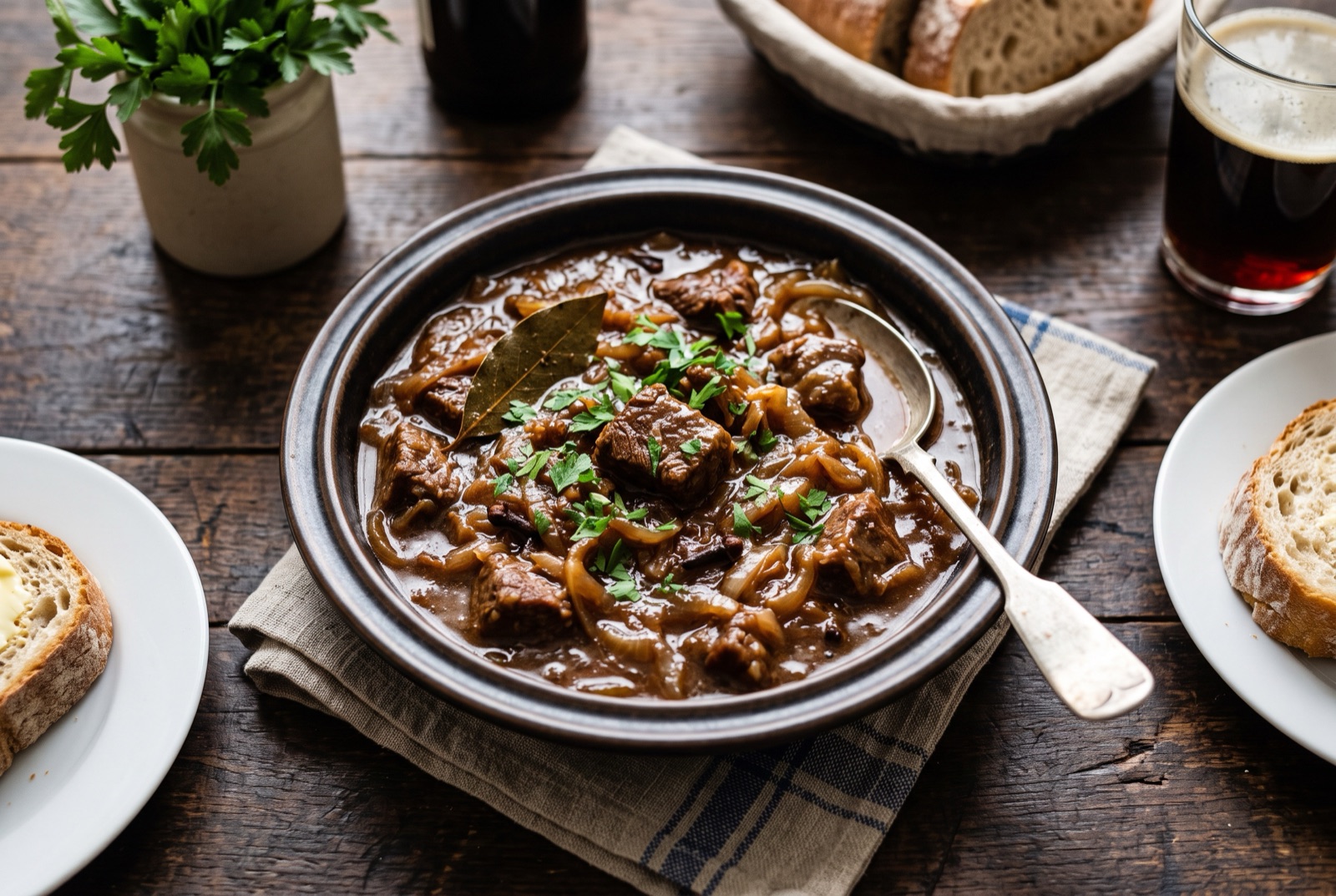
Keep exploring Netherlands.
Netherlands has 9 more dishes in the atlas — Bitterballen and Erwtensoep, and 7 more.
Recipe by The DishRoute Kitchen · published August 19, 2026 · updated August 19, 2026