Stamppot Boerenkool.
Dutch Kale and Potato Mash
Boerenkoolstamppot · say it: STAHM-pot BOO-ren-kohl
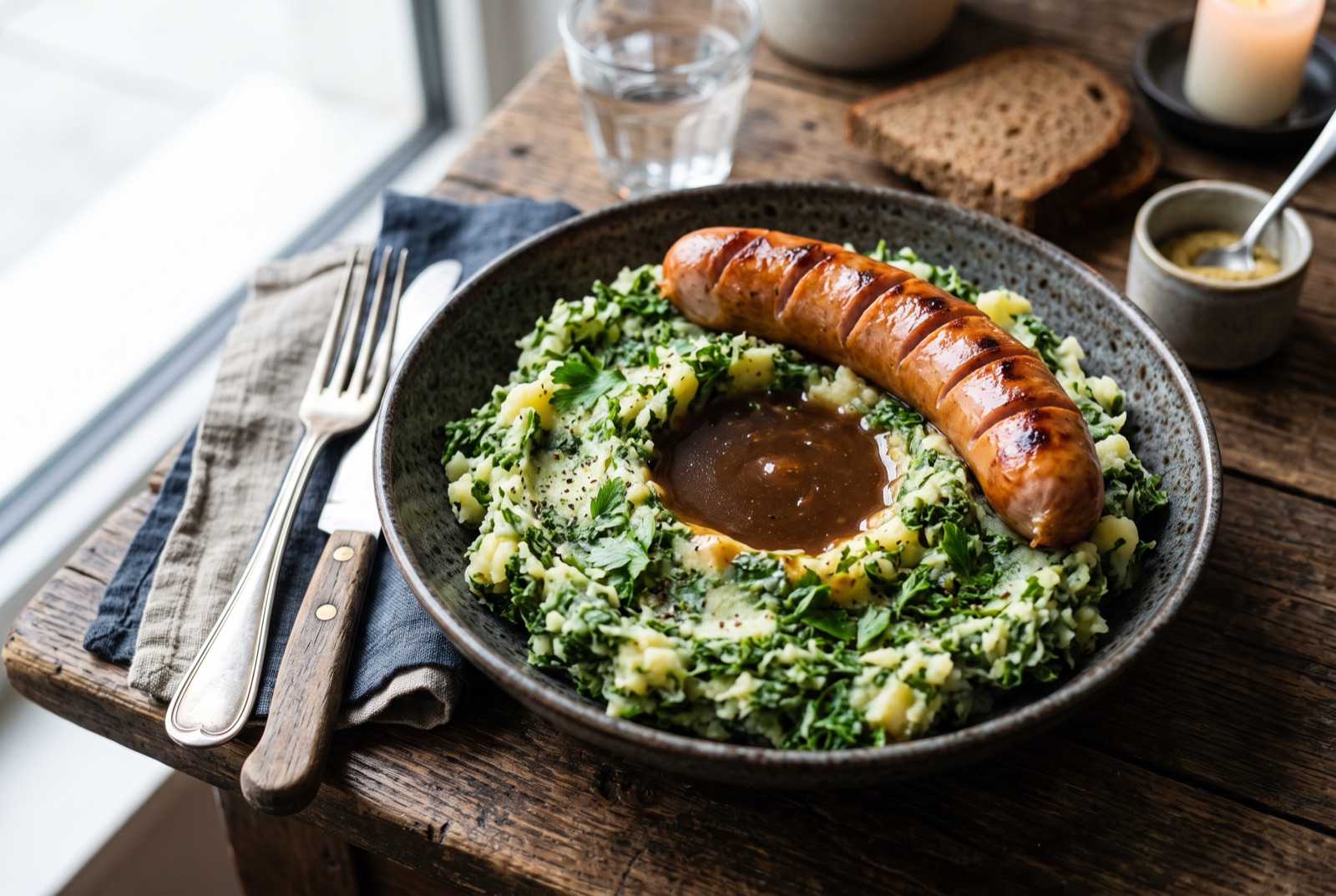
Boerenkoolstamppot is the Dutch answer to cold weather: floury potatoes boiled with a mountain of finely cut kale, then crushed together with butter and hot milk until the mash is green-flecked, coarse and rich. A whole smoked sausage — rookworst — steams on top, and you press a well into your portion with the back of a spoon and fill it with gravy so every forkful is seasoned. The taste is plain in the best sense: sweet-earthy potato, the slight mineral bite of kale softened by long boiling, salt, pepper, nutmeg and a lot of butter. It is one pan, forty minutes, and it feeds people who have been outside all day.

- Gate
- Netherlands
- Prep
- 20 min
- Cook
- 30 min
- Total time
- 50 min
- Serves
- 4
- Status
- Easy
- Nutrition / serving · estimated
- Calories 610 kcal
- Protein 21 g
- Carbs 62 g
- Fat 31 g
- Fiber 9 g
- Sodium 1150 mg
Why this recipe works.
- Cooks the kale with the potatoes in one pan, so the mash comes together in a single pot without a colander in sight.
- Hot milk and generous butter added off the heat give a mash that stays fluffy rather than turning to glue.
- Includes a real onion-and-stock gravy, because the kuiltje of gravy is what makes this a meal instead of a side.
- Honest about rookworst: tells you what to look for and what to use if your shop does not carry it.
Ingredients.
12 itemsFor the stamppot
To serve
For the gravy
Equipment
- Large heavy pot with lid
- Potato masher or wooden stamper
- Small saucepan for the gravy
Instructions.
Boil the potatoes
Put 1.2 kg of potato chunks in a large pot, cover with cold water by 2 cm, add a generous tablespoon of salt and bring to the boil. Cook at a steady simmer for 12 minutes — they should still resist a knife slightly at this stage.
Add the kale
Pile the shredded kale on top of the potatoes, push it down into the water, cover and cook a further 12–15 minutes. The kale should be completely limp and dark, and a knife should slide through a potato chunk with no resistance at all.
Tip The pot will look alarmingly full for the first two minutes, then the kale collapses to a third of its volume.
Heat the sausage
Lay the rookworst on top of the kale for the last 10 minutes with the lid on, so it steams through to piping hot. Lift it out, keep it covered and warm, and do not pierce it — the juices are part of the point.
Make the onion gravy
While the pot cooks, melt the butter in a small pan and fry the onion over medium heat for 8 minutes, until it smells sweet and turns deep gold at the edges. Stir in the flour and cook for a full minute, until it smells toasted rather than raw.
Finish the gravy
Pour in the stock a third at a time, whisking smooth after each addition, then simmer for 5 minutes until it coats the back of a spoon and leaves a clean line when you draw a finger through it. Stir in the mustard and season.
Drain and dry
Drain the potatoes and kale well, keeping a mugful of the cooking water. Return the pot to the low burner for 30 seconds and shake it — you want the last steam to escape so the mash is not watery.
Crush the stamppot
Off the heat, add the hot milk, butter and nutmeg and crush with a masher until the potato has broken down but the mash is still coarse and visibly flecked with kale. Season hard with salt and plenty of black pepper, loosening with cooking water if it is stiff.
Tip Stop mashing while you can still see individual pieces of potato. Smooth stamppot is a mistake, not a refinement.
Serve with a kuiltje
Spoon the mash onto warm plates, press a deep well into each portion with the back of a spoon and fill it with gravy. Slice the sausage thickly, lay it alongside and put the mustard pot on the table.
Tips from our kitchen.
- Use floury, starchy potatoes — Bintje, Maris Piper, russet, King Edward. Waxy salad potatoes refuse to break down and give a lumpy, gluey mash.
- Cut the kale as fine as you can, almost to a shred. Big leaves make stringy mouthfuls that everyone leaves on the plate.
- Strip the kale from the thick central rib before chopping; the rib stays tough no matter how long it cooks.
- Heat the milk before it goes in. Cold milk drops the temperature of the potatoes and turns the mash claggy.
- Crush with a masher or a wooden stamper and stop while it is still coarse. A stick blender or food processor produces wallpaper paste, not stamppot.
- Season harder than feels right — potatoes and kale both swallow salt, and this dish is bland the moment you are timid with it.
Substitutions.
- Rookworst (Dutch smoked sausage) → Any coarse pre-cooked smoked pork sausage: kielbasa, Polish wiejska, or a smoked bratwurst
- You want a smoked, mildly seasoned sausage — not a spicy or paprika-heavy one, which fights the mash. Heat rather than brown it.
- Fresh kale → Frozen chopped kale, or collard greens
- Frozen kale is genuinely fine here and is what many Dutch households use; add it straight from frozen for the last 15 minutes. Collards need a few minutes longer.
- Whole milk → The potato cooking water plus a bigger knob of butter, or oat milk
- Cooking water makes a leaner, slightly saltier mash and keeps the dish dairy-free if you also swap the butter.
Variations.
- Boerenkool met spekjes
- Fry 150 g of diced bacon until crisp and fold it, fat and all, into the finished mash. The most common household upgrade.
- Zuurkoolstamppot
- Swap the kale for drained sauerkraut, mashed in raw at the end so it keeps its sourness and bite. Serve with the same sausage and gravy.
- Andijviestamppot
- Curly endive stirred through the hot mash uncooked, so it wilts but stays fresh and slightly bitter — the summer end of the stamppot family.
Storage & reheating.
Stamppot keeps 3 days refrigerated and reheats better than most mashes. Warm it in a wide pan over low heat with a splash of milk, stirring until it steams through — the microwave dries the edges before the middle is hot. Leftovers are also fried: press the cold mash into a hot buttered pan, leave it undisturbed until a brown crust forms, then flip in sections. It freezes for 2 months, though the kale softens further on thawing.
Serve with
Sharp Dutch mustard on the side, and a glass of cold buttermilk (karnemelk) if you want the full farmhouse version.
The story behind Stamppot Boerenkool.
Stamppot is the oldest surviving shape of Dutch home cooking. Before the potato arrived it was made with beans, parsnip or turnip mashed into porridge; once potatoes took hold in the eighteenth century the format locked into what it is now — one pot, one fire, potatoes and whatever vegetable the season provided, crushed together with a wooden stamper. That tool gives the dish its name: stampen means to pound. Kale was the winter vegetable that survived frost in the field, so boerenkool — literally farmer's cabbage — became the version everyone knows.
Dutch cooks will tell you kale is better after the first frost, and this is not folklore. Cold weather converts some of the plant's starch to sugar, so late-season kale tastes sweeter and less harsh. Traditionally the crop was left standing and cut as needed, which is why the dish belongs so specifically to November through February, and why it appears on menus at winter markets and at the skating rinks along the canals rather than in summer.
The sausage on top is nearly obligatory. Rookworst is a coarse, lightly smoked pork sausage that is sold already cooked, so it is only heated through — classically by hanging it in the pan of boiling potatoes for the last minutes, which is both efficient and slightly perfumes the water. The other fixed elements are the gravy well, called a kuiltje, and mustard on the side; some families add crisp bacon or fried onion, others insist that ruins it. Argument about the correct texture is a national pastime: a stamppot should be crushed, never whipped, and if it looks like a smooth purée you have gone too far.
Questions, answered.
Why did my mash turn out gluey?
Almost always over-working or the wrong potato. Starch cells burst when potatoes are beaten, blended or stirred hard, releasing the sticky starch that makes mash gluey. Use floury potatoes, crush them with a masher only until broken down, and stop. If you already have gluey mash, stirring more will not fix it — fry it as a leftover cake instead.
Can I use frozen kale?
Yes, and it is what a lot of Dutch home cooks use in winter. Add frozen chopped kale straight from the freezer to the potatoes for the last 15 minutes of boiling — it needs no thawing and cooks down to the same texture. Use about the same weight as fresh, since the fresh weight includes ribs you would strip out anyway.
What is rookworst and what can I use instead?
Rookworst is a coarse Dutch pork sausage, lightly smoked and sold fully cooked, so it only needs heating through. Outside the Netherlands a Polish kielbasa or any mild smoked pork sausage works well. Avoid strongly spiced or paprika-heavy sausages, which overpower the mash, and avoid raw sausages unless you cook them separately first.
Do I really need the gravy?
It is what turns the dish from a side into dinner. The Dutch make a well in the mash — a kuiltje — and pour gravy into it, so the mash stays mostly plain and each forkful takes as much as you want. A quick onion gravy from stock, butter and flour takes ten minutes and is worth the extra pan. Sausage juices or leftover roast gravy work just as well.
Is stamppot boerenkool vegetarian?
The mash itself is, as long as you use butter and milk rather than any meat fat. To keep the whole plate vegetarian, replace the rookworst with a smoked vegetarian sausage and make the gravy with vegetable stock plus a teaspoon of soy sauce for depth. Fried onions and toasted walnuts also give the savoury weight the sausage would have added.
You might also like.
All recipes →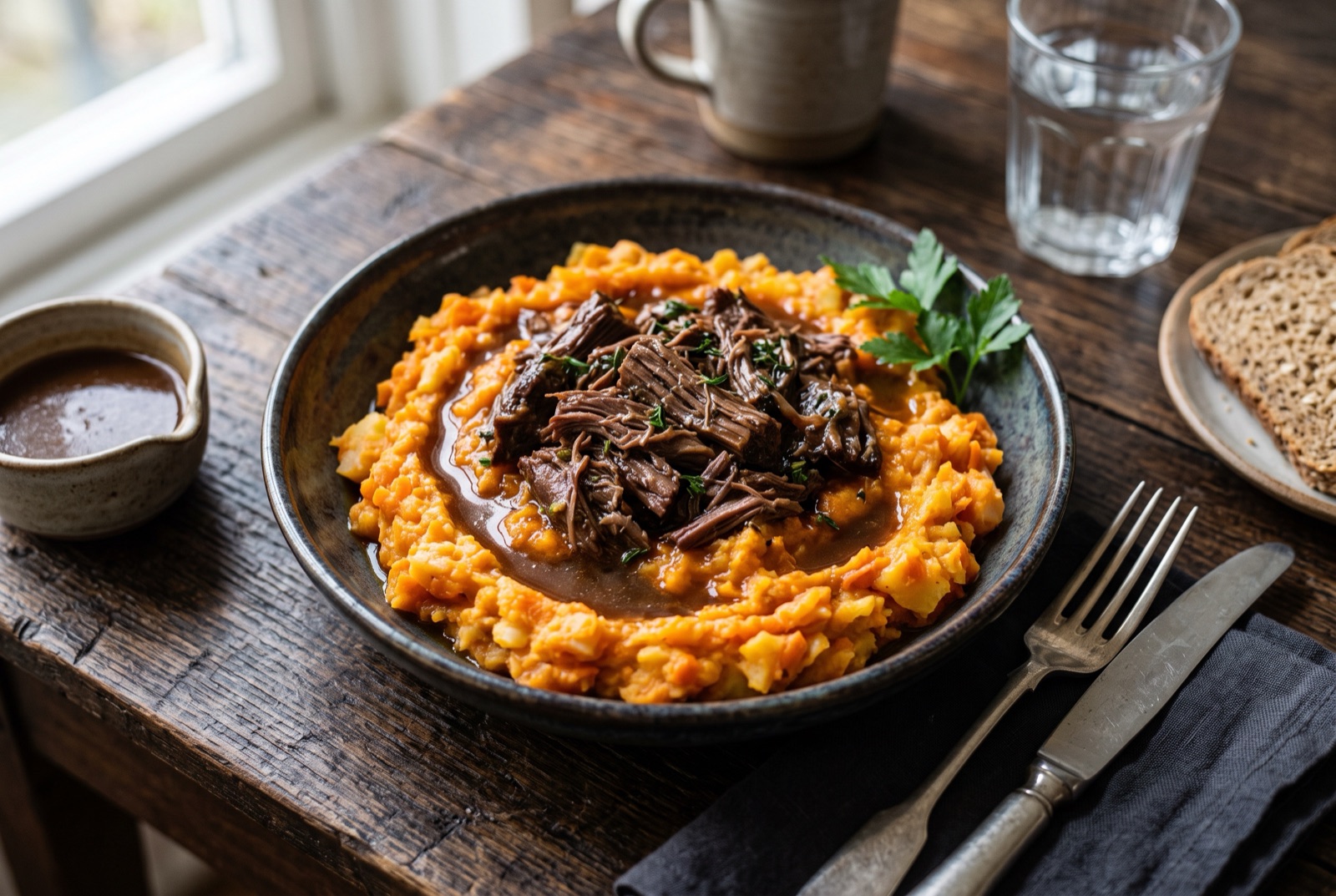
Keep exploring Netherlands.
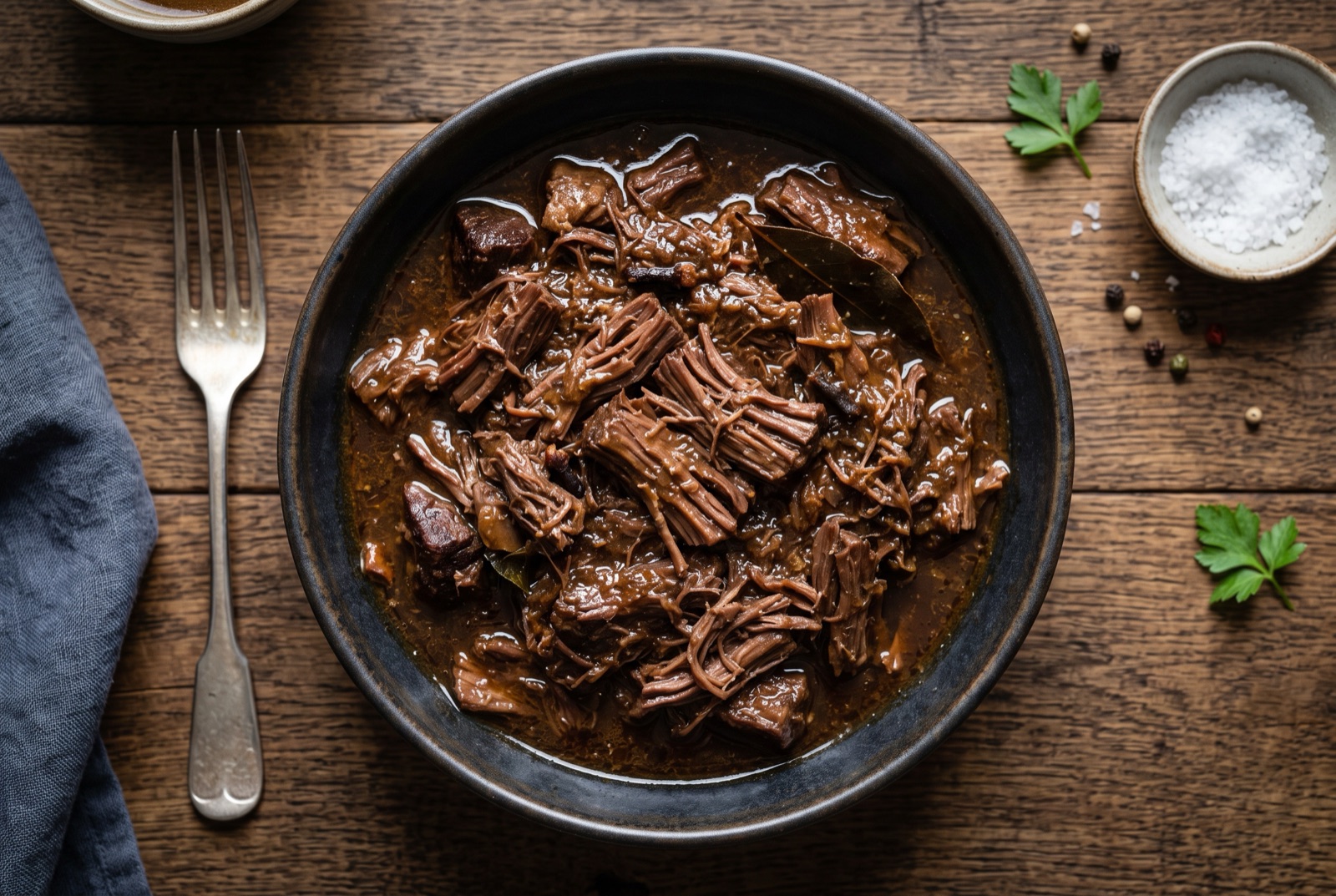
Netherlands has 9 more dishes in the atlas — Bitterballen and Draadjesvlees, and 7 more.
Recipe by The DishRoute Kitchen · published August 19, 2026 · updated August 19, 2026