Netherlands.
Nederland
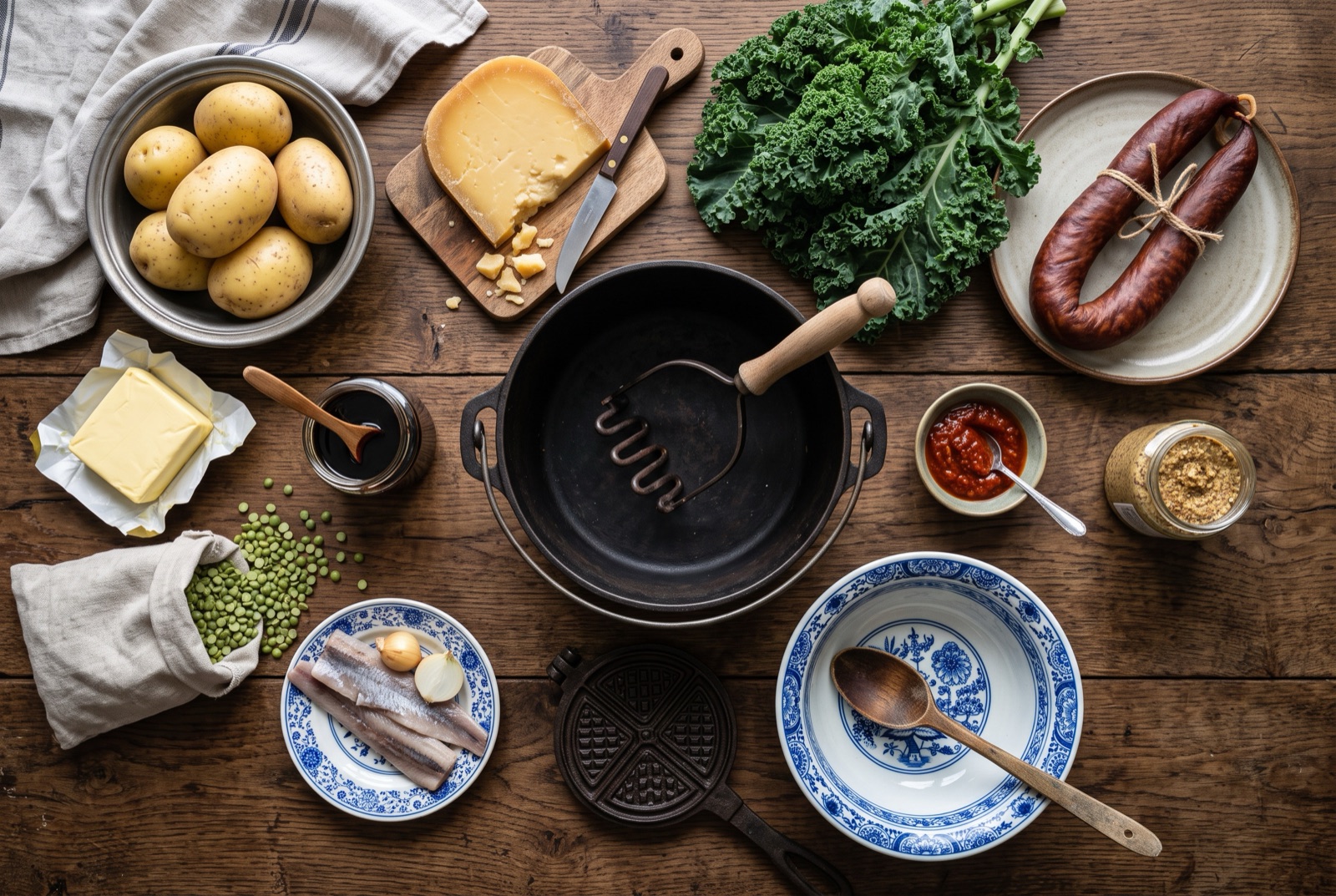
Dutch home cooking is honest, dairy-heavy and built around the potato, and it has never pretended otherwise. The everyday template is famously blunt — potatoes, vegetables and a piece of meat, often mashed together in one pan — and the skill lies not in complexity but in seasoning, texture and the quality of what goes in: butter that tastes of butter, aged Gouda with crunchy crystals in it, kale cut fine enough to disappear into a mash, a sausage smoked hard enough to perfume the whole pot. Alongside this thrifty farmhouse core runs a second, louder kitchen: the Netherlands was a trading and colonial power for four centuries, and its food carries that history openly. Indonesian rice dishes, sambal and peanut sauce sit in every supermarket; Surinamese roti shops, Turkish bakeries and Moroccan butchers shape the cities; and the national snack culture — fried, salted, dipped in mustard or mayonnaise — is a cuisine of its own, eaten standing up.

- Continent
- EuropeBenelux
- Recipes in atlas
- 10
- Must-try dishes
- 3
- Pantry staples
- 10
Start with the classics.
Must tryThe dishes that explain the Netherlands kitchen fastest — if you cook only a few things from this page, cook these.
Inside the Netherlands kitchen.
The backbone is the potato, and specifically the mash. Stamppot — potatoes boiled with a vegetable and crushed together with butter and milk — covers most of the Dutch winter: with kale (boerenkool), with endive stirred in raw (andijviestamppot), with sauerkraut, with carrot and onion (hutspot). The unwritten rule is the kuiltje: you press a well into your mash with the back of the spoon and fill it with gravy or the juices from the meat, so every forkful is seasoned rather than the plate being drowned. Almost all of it is one-pan food, invented by farming households that had one fire, one pot and a great many potatoes.
Dairy is the second pillar and the country's main culinary export. Gouda, Edam, Leiden cheese studded with cumin, Frisian nagelkaas with cloves — cheese is a breakfast and lunch food here, sliced thin with a cheese slicer onto buttered bread, not a course after dinner. Butter goes into the mash and under everything on bread; karnemelk (buttermilk) is drunk cold with a meal; cream and milk thicken soups. A Dutch lunch is typically brood: two or three slices of bread with cheese, ham or, unapologetically, chocolate sprinkles.
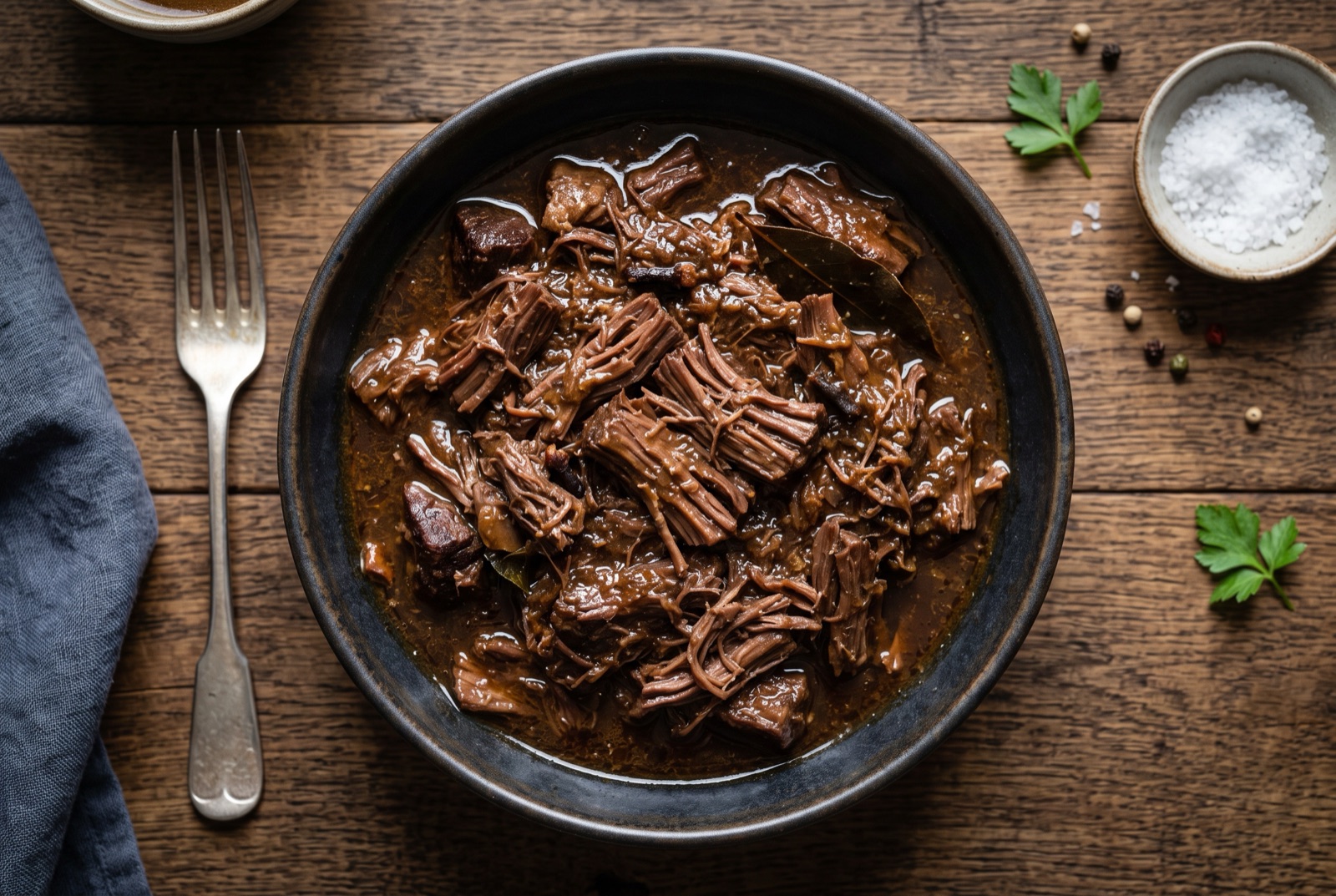
The sea and the art of preserving shaped the rest. Herring built medieval Dutch wealth, and the gibbing method — removing the gut but leaving the pancreas so its enzymes ripen the flesh in light brine — is still exactly how Hollandse Nieuwe is made each spring. Smoked eel from the IJsselmeer, mussels and oysters from Zeeland, and salted, dried and pickled everything are the older coastal repertoire. Sour and sweet-sour flavours run through the meat cooking too: hachee and draadjesvlees both lean on vinegar, bay and clove, a taste that goes straight back to the spice-trade centuries.
Indonesian food is not a foreign cuisine in the Netherlands; it is part of the weekly rotation, and its presence is inseparable from colonial history. The Dutch East Indies were ruled and exploited for over three centuries, and after Indonesian independence in 1949 several hundred thousand people — Indo-Europeans, Moluccans, repatriates — arrived in the Netherlands and brought their kitchens with them. Rijsttafel, the colonial banquet of dozens of small Indonesian dishes served at once, was itself a Dutch construction imposed on Indonesian food, and it is remembered critically in Indonesia even as it thrives in Dutch restaurants. What is uncomplicated is how deep the everyday absorption goes: sambal on the table, satésaus poured over fries, nasi and bami sold in supermarkets, and toko shops in every city. Later arrivals layered on further — Surinamese roti and broodje pom, Turkish and Moroccan bakeries, and the Rotterdam shawarma shops that produced the kapsalon.
Sweet baking is its own department, and it belongs to coffee rather than dessert. Stroop — thick beet or apple syrup — glues stroopwafels together and goes over pancakes; speculaas is spiced with cinnamon, clove and white pepper and pressed into carved wooden moulds; appeltaart is tall, cinnamon-heavy and served with unsweetened whipped cream. The Dutch eat these mid-morning or mid-afternoon with coffee, in strictly rationed quantities, and rarely at the end of dinner.
Signature pantry.
10 staplesThe ingredients this cuisine cannot function without.
- potatoes
- Gouda cheese
- kale
- rookworst (smoked sausage)
- butter
- green split peas
- herring
- stroop (syrup)
- sambal
- mustard
How people eat in Netherlands.
Dinner is early — many households eat at six — and it is a single plate rather than courses. Lunch is bread, eaten at a desk or table in ten minutes, and the working day is punctuated by coffee. Dutch coffee hospitality is real but rationed: a visitor gets one cup and one biscuit from the tin, offered once, and the tin then closes. Weekend and evening drinking is borrel, where beer and jenever come with fried snacks — bitterballen, cheese cubes with mustard, ossenworst — and nobody sits down. Birthdays are their own institution: chairs arranged in a circle, coffee and cake first, congratulations offered to everyone in the room rather than only the birthday person. Sharing plates is uncommon; going Dutch is not a stereotype so much as an accounting habit.
Regional kitchens.
Netherlands cooks 4 distinctly different ways depending on where you stand — here is what changes between them.
- R1North and South Holland
- The old trading heartland, and the source of most things the world calls Dutch: Gouda and Edam cheese, Hollandse Nieuwe herring carts, Leiden hutspot. Rotterdam's immigrant food scene invented the kapsalon; Amsterdam gave the Indonesian rijsttafel its restaurant form.
- R2Friesland and the North
- Dairy country with its own language and its own sweet tooth: sugar bread (suikerbrood), clove-spiked nagelkaas, and dense rye bread eaten with smoked eel from the lakes and the IJsselmeer.
- R3Zeeland and the Delta
- The tidal southwest, built on shellfish — Oosterschelde mussels and lobster, Yerseke oysters — plus sea-salted lamb from the polders and the buttery bolus pastry of Zeeuws Vlaanderen.
- R4Limburg and North Brabant
- The Catholic south, and the country's richest baking and stewing tradition: Limburgse vlaai fruit tarts, zuurvlees (the vinegar-braised cousin of draadjesvlees), and a Carnival appetite that the north finds slightly alarming.
All Netherlands recipes.
10 recipes and counting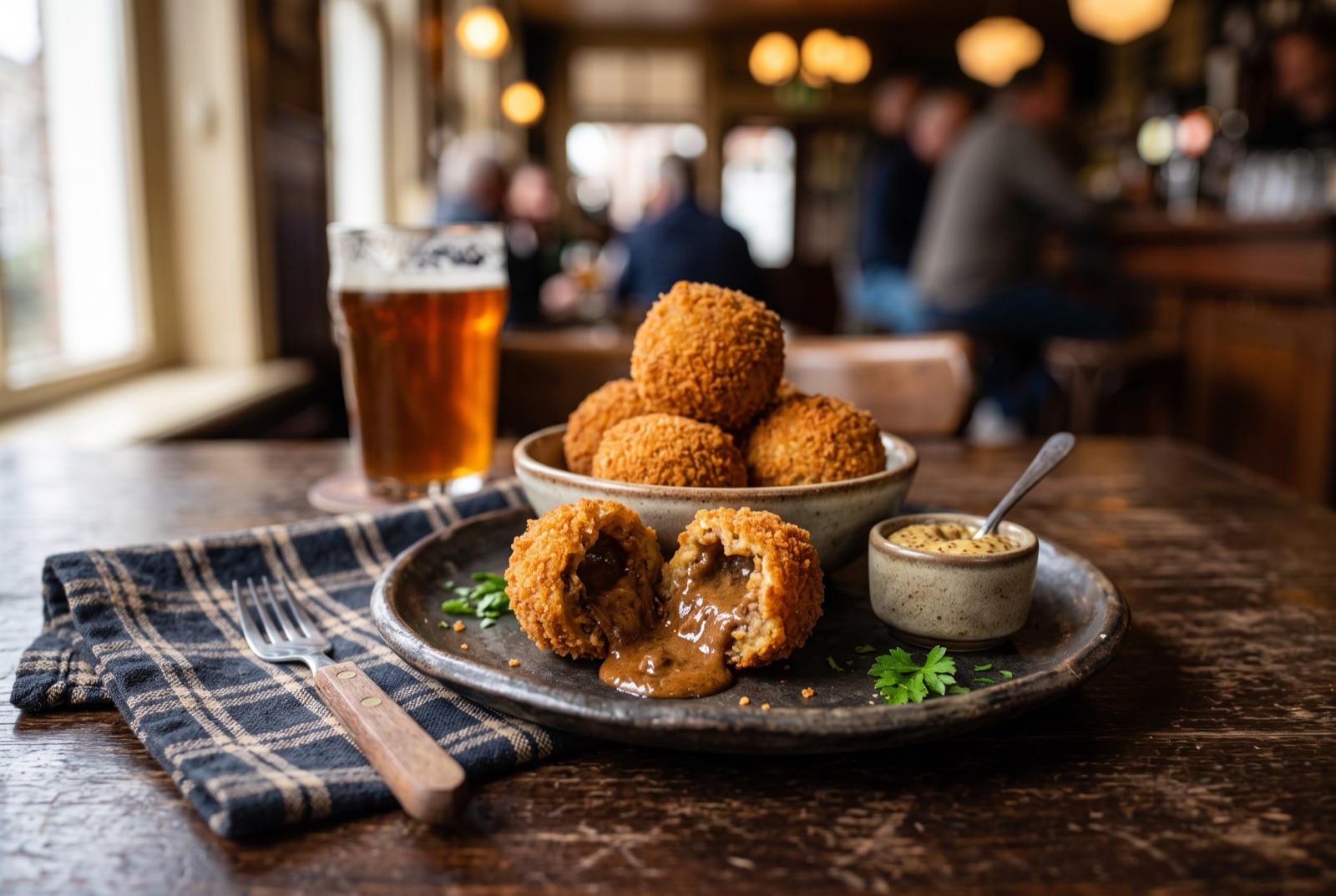
Netherlands11 hr 45 min
Bitterballen
Crisp Dutch Beef Ragout Balls
Netherlands3 hr 35 min
Draadjesvlees
Dutch Slow-Braised Shredded Beef
Netherlands2 hr 25 min
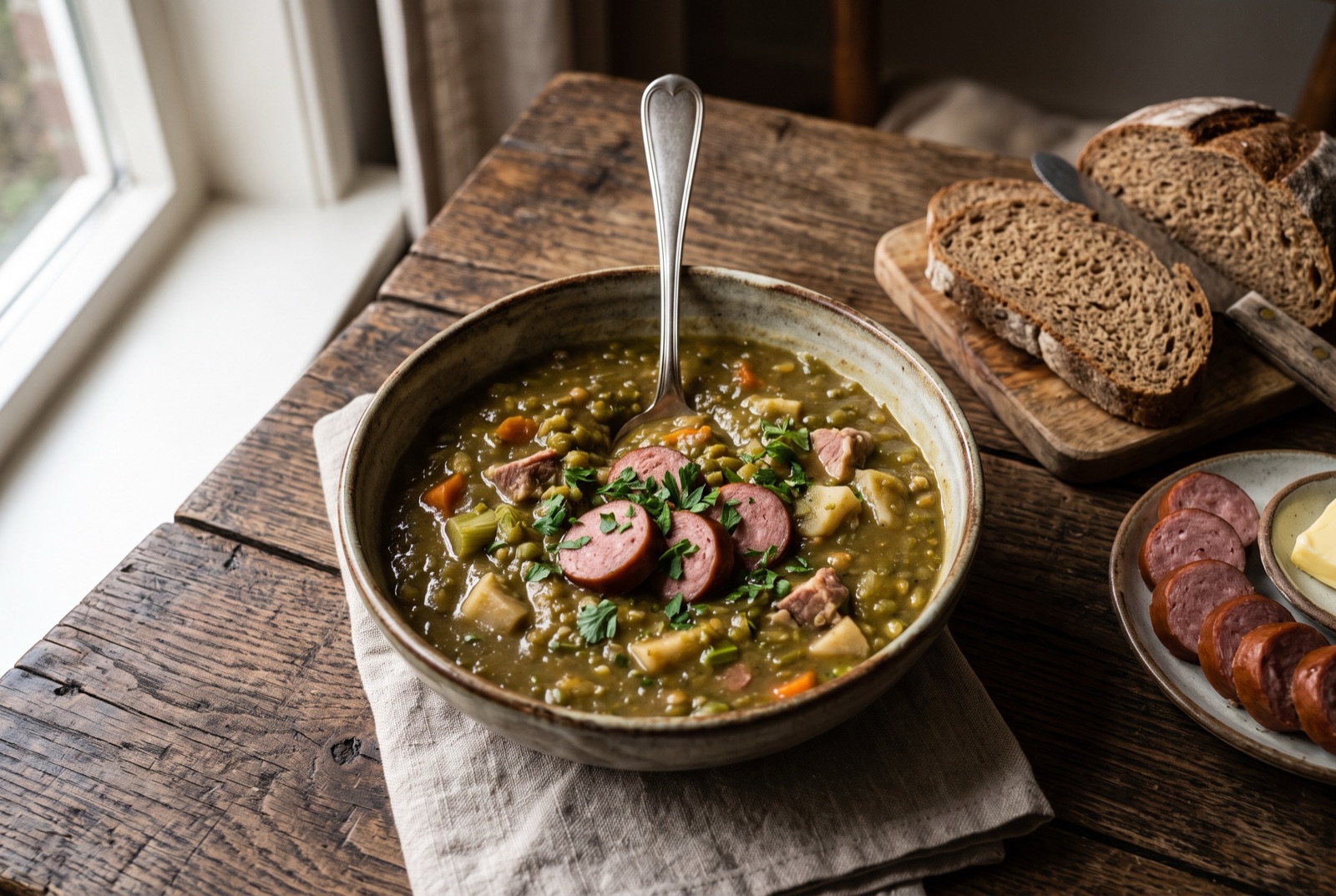
Erwtensoep
Dutch Thick Split Pea Soup
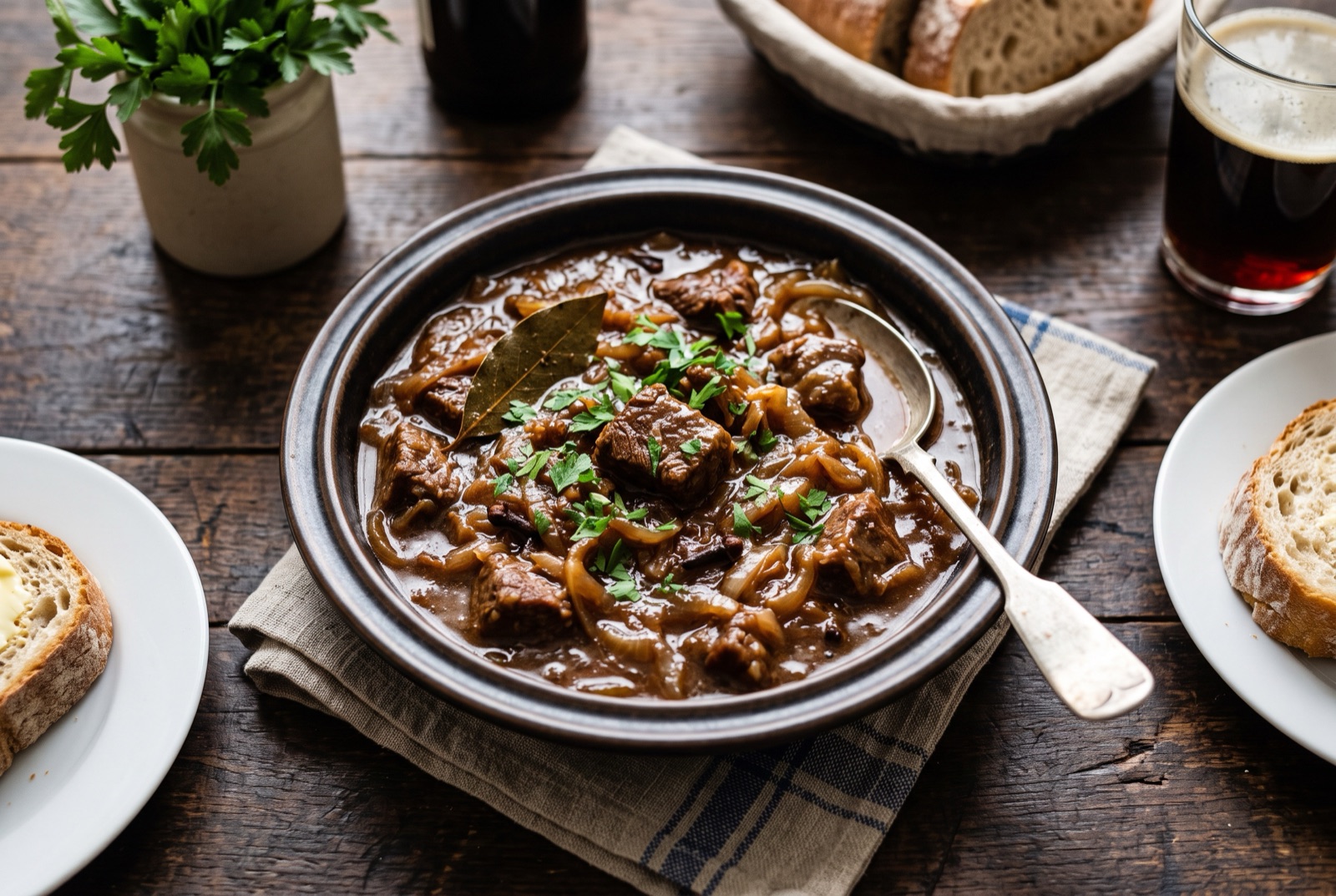
Netherlands2 hr 45 min
Hachee
Dutch Onion and Beef Stew with Vinegar
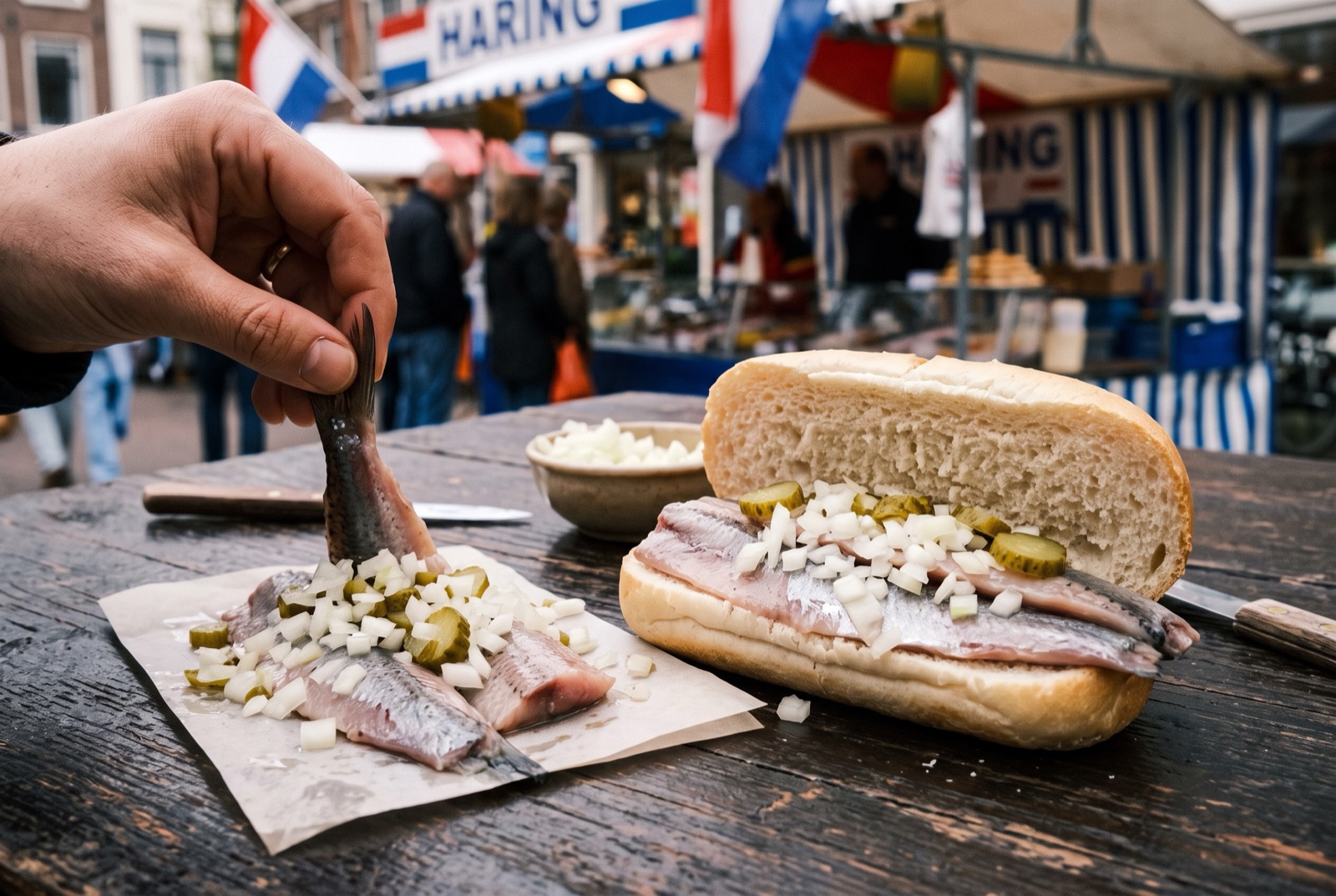
Netherlands48 hr 25 min
Hollandse Nieuwe
Dutch Cured Herring with Raw Onion
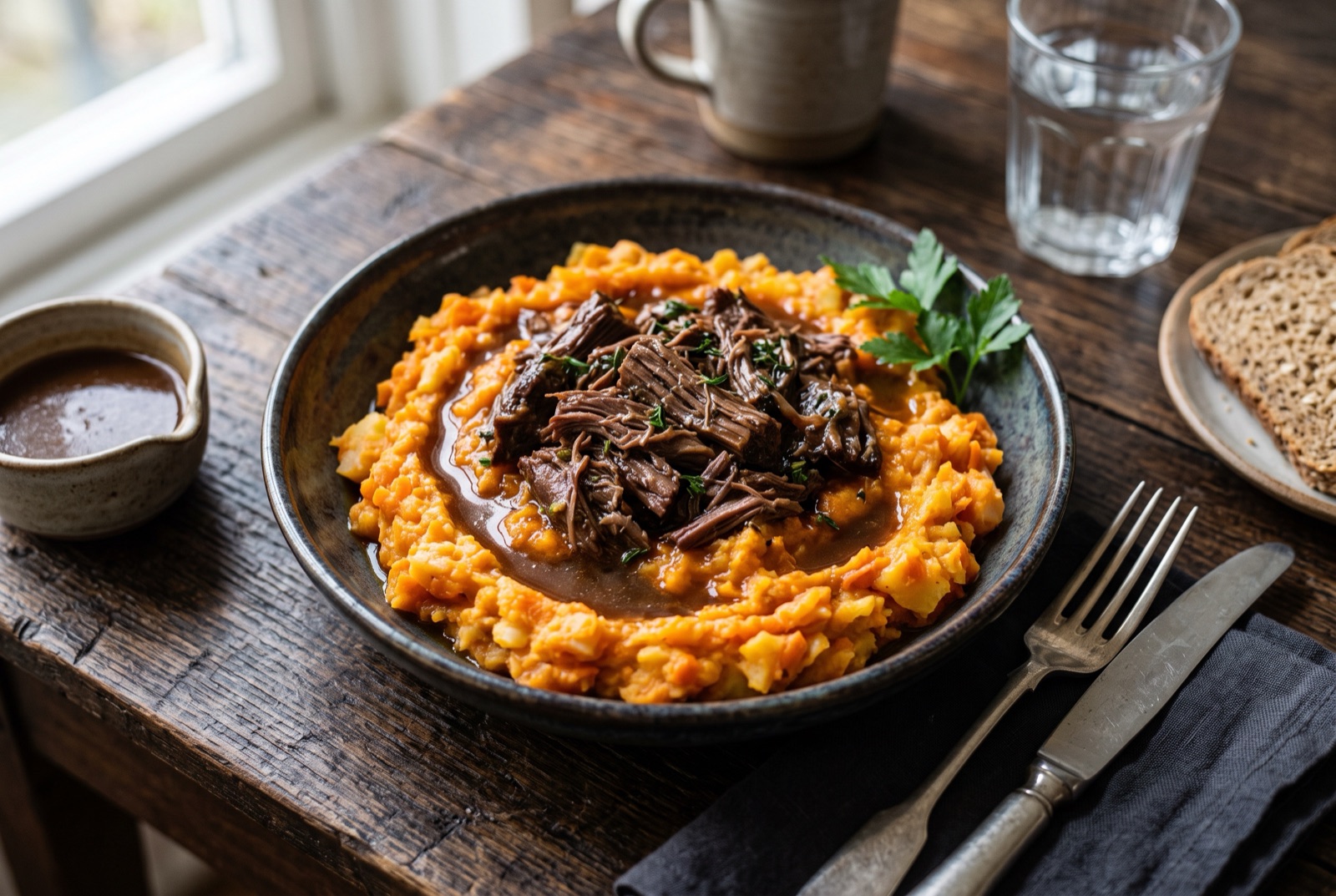
Netherlands3 hr 25 min
Hutspot
Dutch Carrot, Onion and Potato Mash
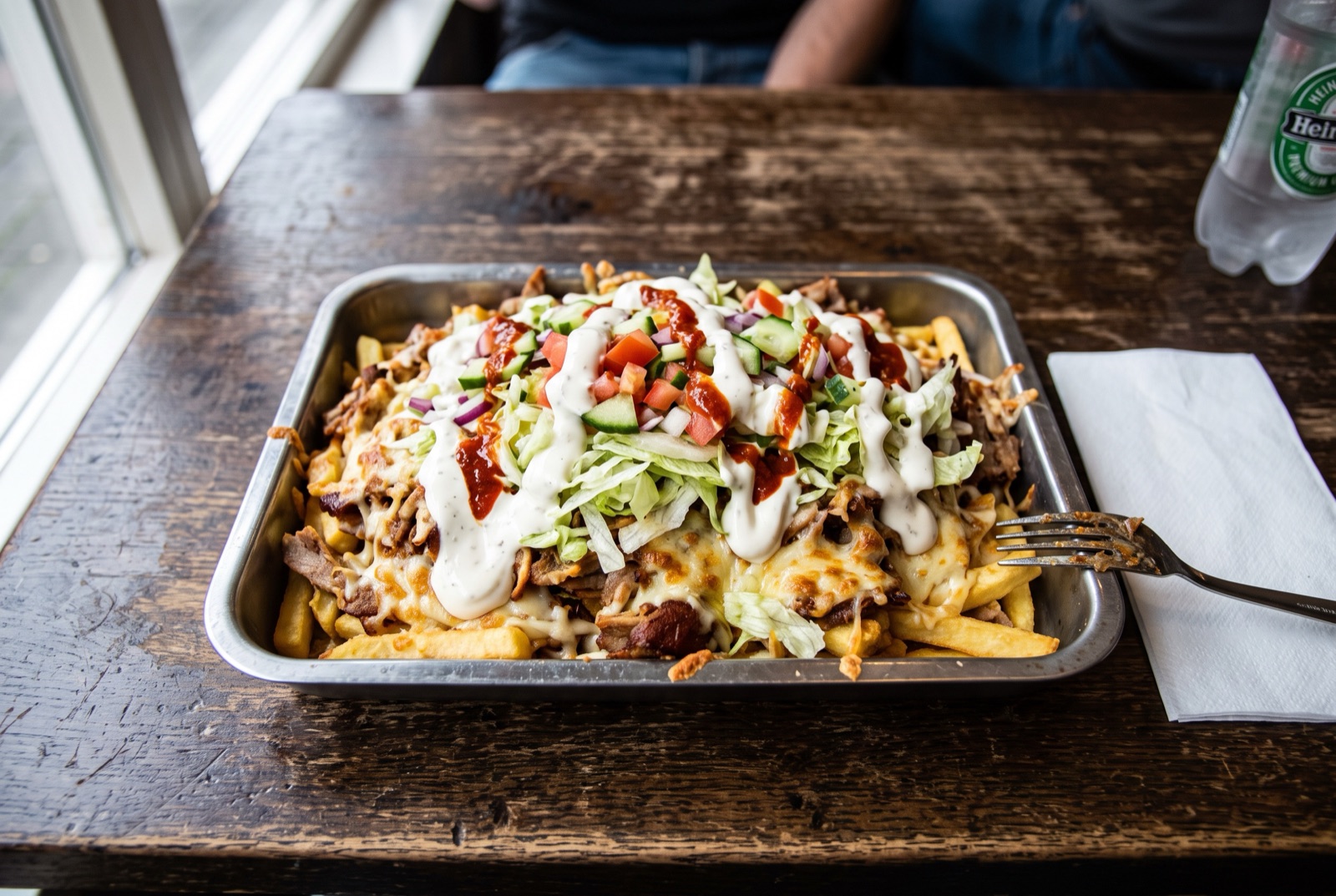
Netherlands1 hr 20 min
Kapsalon
Rotterdam Fries with Shawarma and Gouda
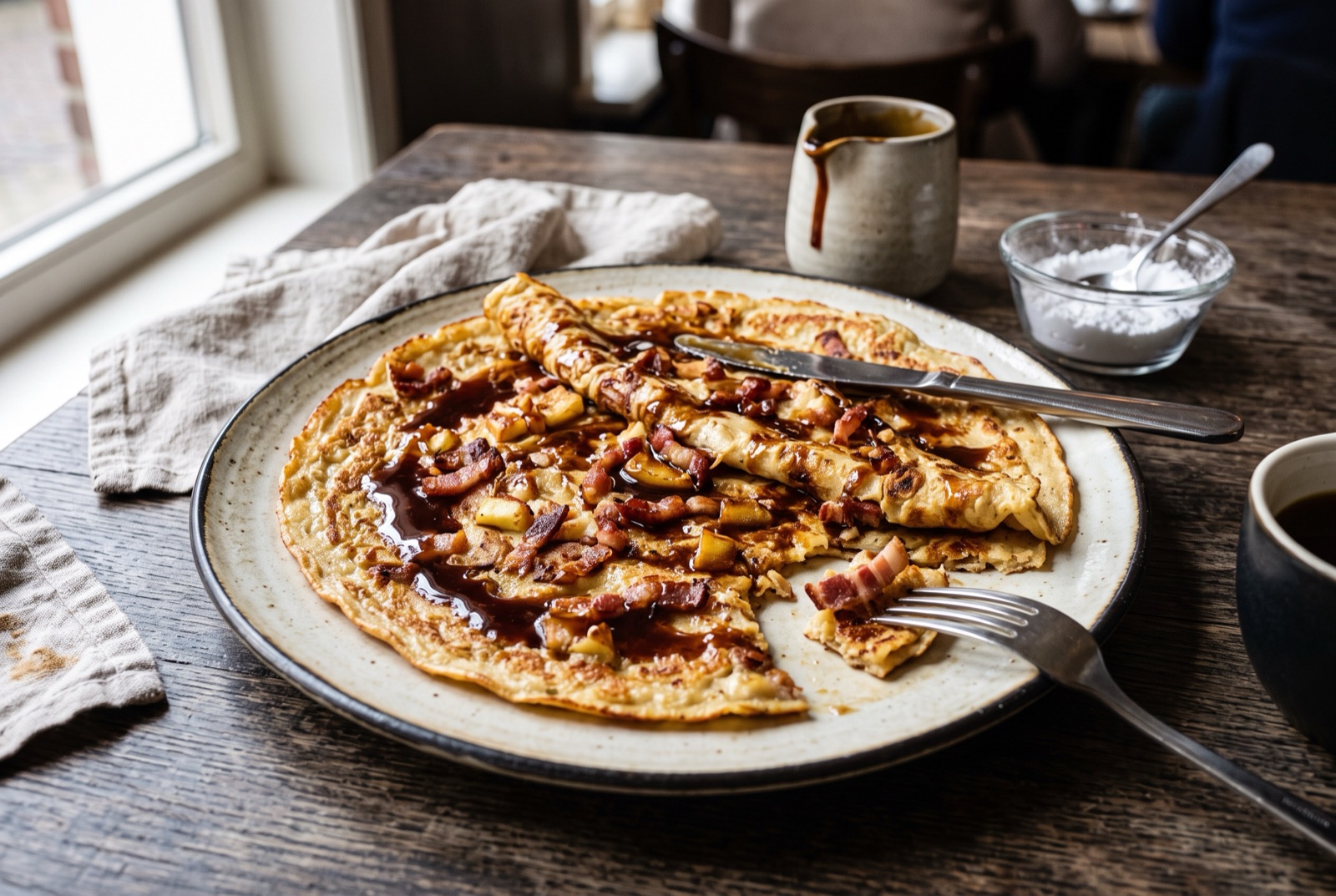
Netherlands1 hr 10 min
Pannenkoeken
Large Thin Dutch Pancakes
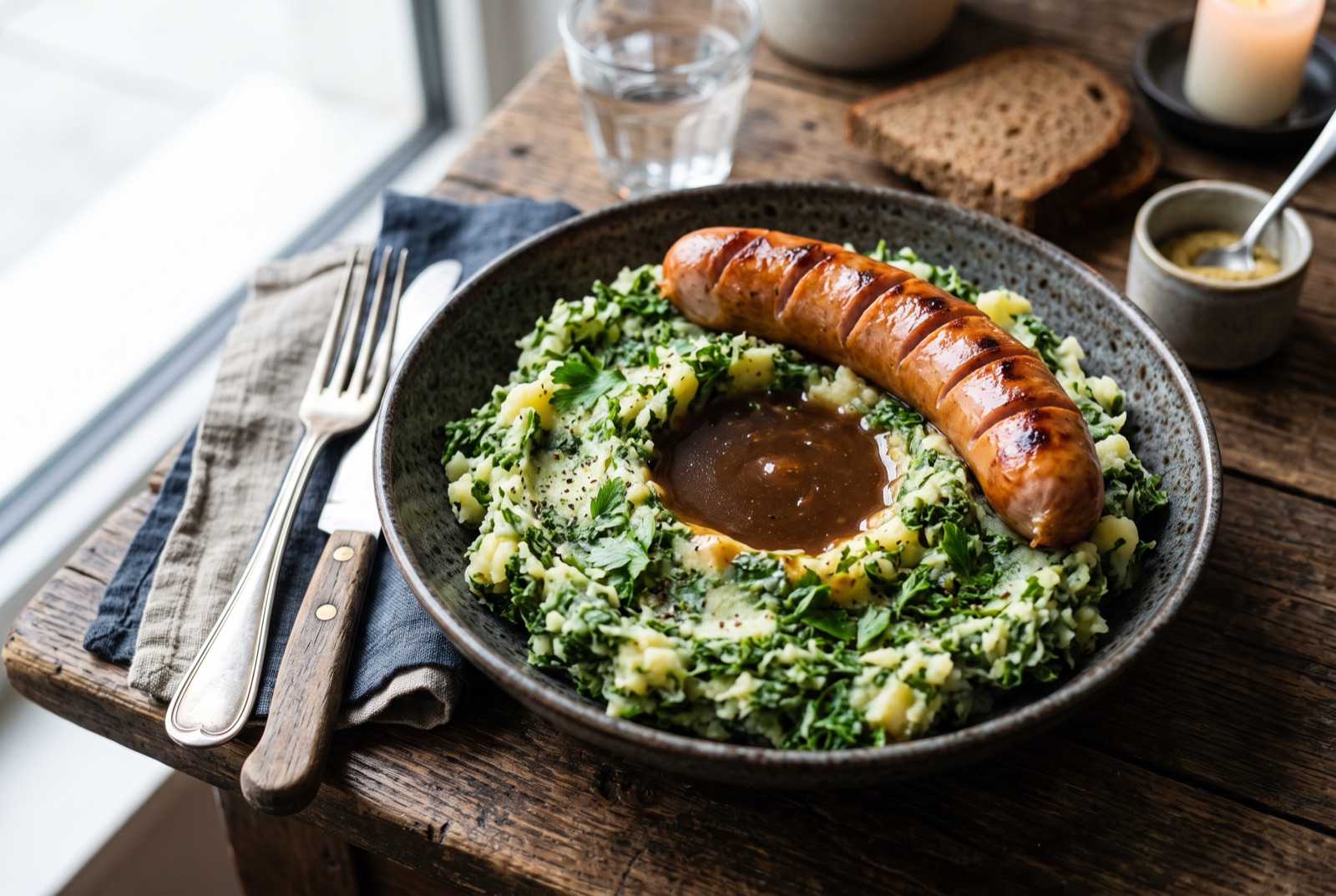
Netherlands50 min
Stamppot Boerenkool
Dutch Kale and Potato Mash
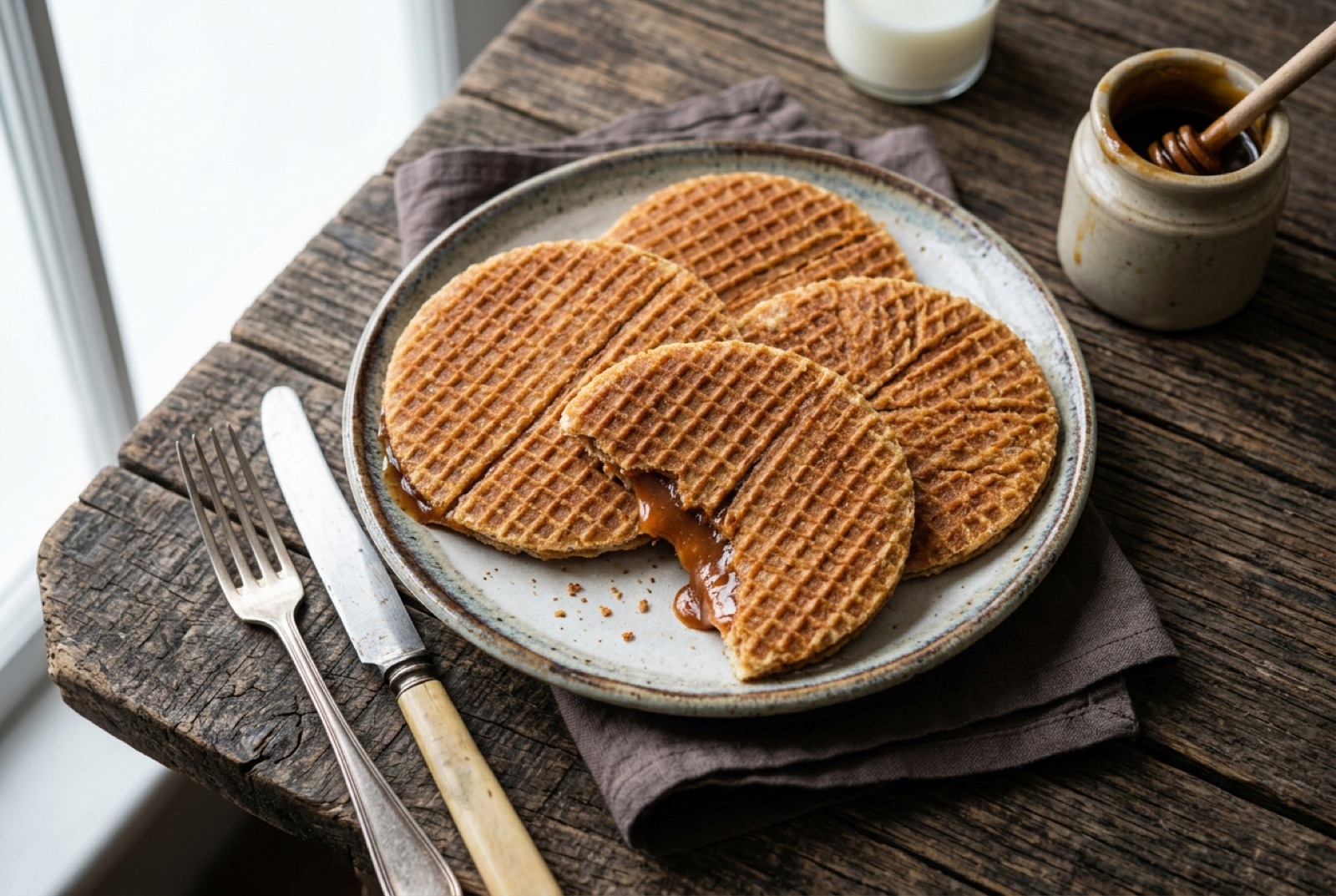
Netherlands2 hr
Stroopwafels
Dutch Caramel Syrup Waffles
Keep traveling.
Netherlands sits in Benelux, and its kitchen shares borders as well as ingredients with Albania and Austria.
 Albania
 Austria