Stroopwafels.
Dutch Caramel Syrup Waffles
Stroopwafels · say it: STROHP-vah-fels
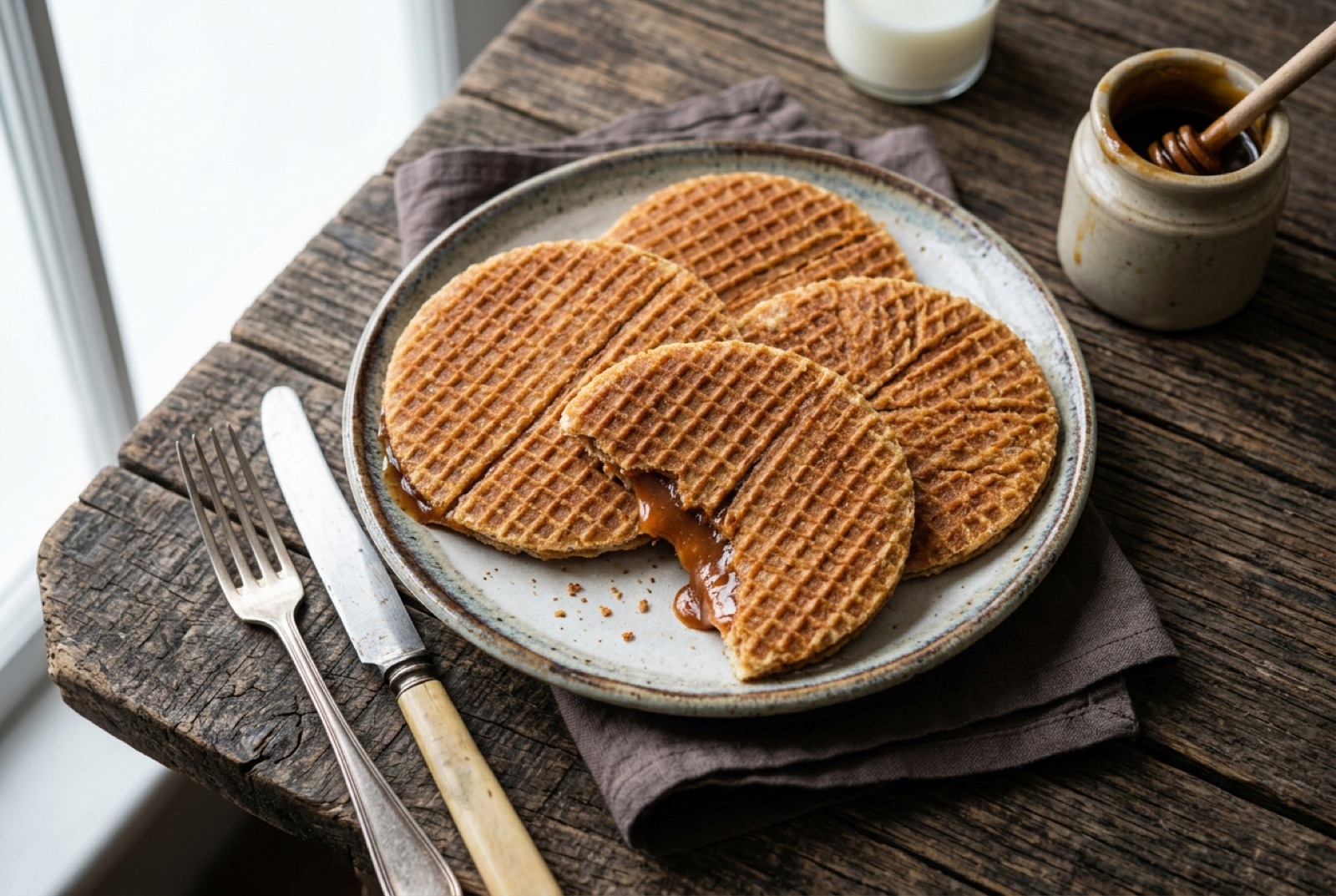
A stroopwafel is two paper-thin waffle discs with a layer of dark caramel syrup between them — but it is made from one. A ball of stiff, cinnamon-scented dough is pressed in a hot waffle iron for under a minute, then split horizontally with a sharp knife while it is still too hot to hold, spread with warm syrup and pressed back together. The result is crisp at the edges, chewy in the middle, and tastes of butter, cinnamon and caramel. Making them at home is fiddly and hot, and the split is the part that goes wrong; done right, a fresh one eaten warm is a completely different object from the packaged version.

- Gate
- NetherlandsGouda, South Holland
- Prep
- 30 min
- Cook
- 30 min
- Total time
- 2 hr incl. 1 hr rest
- Serves
- 12
- Status
- Takes skill
- Nutrition / serving · estimated
- Calories 290 kcal
- Protein 3 g
- Carbs 44 g
- Fat 12 g
- Fiber 1 g
- Sugar 27 g
Why this recipe works.
- A yeasted dough, the traditional way, which gives the waffle its slight chew rather than the snap of a plain biscuit.
- Filling cooked to a spreadable caramel with a clear test for the right consistency, so it neither sets hard nor runs out.
- A realistic method for the split — the step that defeats most home attempts — including what to do when a waffle tears.
- Works with a pizzelle iron or a standard thin waffle iron, no specialist stroopwafel press required.
Ingredients.
14 itemsFor the dough
For the syrup filling
Equipment
- Stroopwafel or pizzelle iron
- Long thin serrated knife
- Small saucepan
- Round cutter, about 10 cm
- Kitchen scales
Instructions.
Make the dough
Rub the softened butter into the flour, brown sugar, yeast, cinnamon and salt until the mixture looks like coarse crumbs. Add the egg and lukewarm milk and bring it together into a stiff, smooth dough that holds a fingerprint without sticking to your hands.
Tip It should feel firmer than cookie dough. Add flour a spoonful at a time if it is tacky.
Let it rise
Cover the bowl and leave in a warm place for 45–60 minutes. It will not double like bread dough — expect a modest puff and a slightly softer, airier feel when you press it.
Cook the syrup filling
Warm the syrup, dark brown sugar, butter, cinnamon and molasses in a small pan over low heat, stirring, until the sugar dissolves. Simmer for 3–4 minutes until a spoonful dropped on a cold plate holds a soft mound instead of spreading flat. Stir in the flaky salt.
Keep the syrup warm
Set the pan over a bowl of hot water, or on the lowest possible heat, so the filling stays spreadable throughout. Cold filling tears the fragile waffle halves the moment you try to spread it.
Portion the dough
Weigh the dough into 30 g pieces — about 24 — and roll each into a ball. Keep them covered so they do not form a skin while you work through them.
Press the waffles
Heat the iron to medium-high. Press one ball at a time for 45–60 seconds, until the waffle is pale gold, fragrant with cinnamon and still bends without cracking when you lift a corner. Do not let it brown.
Tip If the waffle snaps rather than bends, the iron is too hot or the time too long — drop the setting and try the next one shorter.
Split while hot
Move the waffle straight to a board and, within about 15 seconds, cut it horizontally with a long thin serrated knife held flat, sawing gently from one edge to the other. Work fast; a cooled waffle will shatter instead of splitting.
Fill and press
Spread a thin layer of warm syrup over the cut face of the bottom half, leaving 5 mm clear at the edge, then set the top half back on and press gently. Trim to a neat circle with a cutter while still warm if you like.
Cool and serve
Cool on a rack for 10 minutes so the syrup sets to a chew, then eat them warm, or store them once completely cold. Balance one over a hot coffee for two minutes before eating for the standard Dutch experience.
Tips from our kitchen.
- The dough should be stiff, like shortbread dough, not sticky. A soft dough spreads too thin in the iron and cannot be split at all.
- Weigh the dough balls, around 30 g each. Uneven balls give waffles of different thickness and the thin ones tear when you cut them.
- Press hard and cook briefly — 45 to 60 seconds. You want pale gold and pliable, not brown and brittle, because a crisp waffle cannot be split.
- Split immediately, within about 15 seconds of coming off the iron, using a long thin serrated knife held flat and sawing gently from the edge inward.
- Keep the syrup warm over a pan of hot water throughout. Cooled filling drags the delicate waffle halves apart when you spread it.
- Trim the waffles round with a cutter while hot if you want the neat market look — the edges are always ragged and they harden within a minute.
Substitutions.
- Dutch stroop → Dark corn syrup or golden syrup with 1 tbsp molasses stirred in
- Real stroop is darker and less sweet. Adding molasses to a lighter syrup gets you most of the way to the right colour and depth.
- Fresh yeast or dried yeast → 1 tsp baking powder, with no rising time
- An honest shortcut that many modern recipes use. The waffle is slightly more biscuity and less chewy, but it works and saves an hour.
- Stroopwafel iron → A pizzelle iron, or the thinnest setting on a waffle maker
- A pizzelle iron is the closest widely available substitute and gives almost the right thickness. Deep Belgian waffle irons will not work — the waffle is too thick to split.
Variations.
- Chocolate-dipped stroopwafels
- Half-dip the cooled waffles in tempered dark chocolate and set on paper. A modern shop variation, and a good use for slightly broken ones.
- Salted caramel filling
- A good pinch of flaky salt stirred into the warm syrup, which cuts the sweetness noticeably and is now common in Dutch bakeries.
- Stroopwafel crumbs
- Failed or broken waffles crushed over ice cream or yogurt. Not a joke — bags of stroopwafel crumbs are sold in Dutch supermarkets for exactly this.
Storage & reheating.
Store cooled stroopwafels in an airtight tin with baking paper between them, for up to 5 days. They stay best at room temperature — the fridge makes the syrup set hard and the waffle go soft at the same time, which is the worst of both. Revive any that have hardened by resting them over a hot drink for two minutes, or 10 seconds in a low oven. The dough keeps 2 days refrigerated, and the syrup filling keeps 2 weeks in a jar, warmed gently before use.
Serve with
A mug of strong coffee, with a waffle balanced on the rim for two minutes so the steam softens the syrup.
The story behind Stroopwafels.
Stroopwafels come from Gouda, and the usual account has them appearing in the late eighteenth or early nineteenth century as a baker's way of using up scraps: leftover crumbs and offcuts bound together and sweetened with syrup, sold cheaply. The bakers who made them were known as siroopwafelbakkers, and by the end of the nineteenth century Gouda had dozens of them. Whether the specific origin story about one thrifty baker is true is impossible to verify, and Dutch sources are honest that it is a tradition rather than a documented fact.
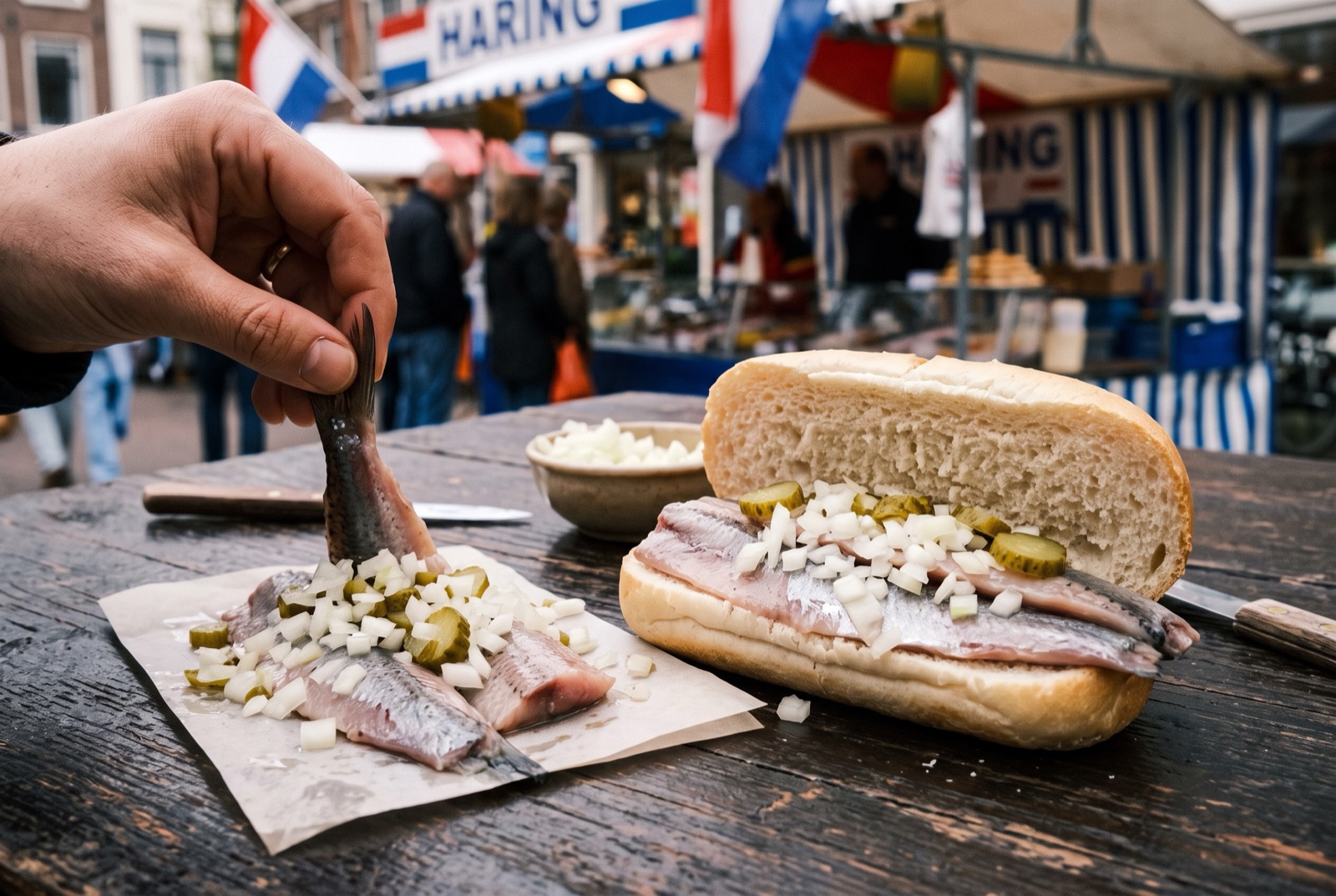
The market ritual is what has survived best. At Dutch outdoor markets stroopwafels are still made in front of you on a hot iron and handed over soft, warm and bending in the middle, in a paper bag that goes translucent within minutes. Packaged ones are engineered for the other classic move: you rest one on top of a mug of hot coffee or tea while it brews, and the steam softens the waffle and melts the syrup back to liquid. This is not a marketing invention — it is genuinely how most Dutch people eat them, and the waffle diameter has settled at roughly the size of a standard mug.
The syrup itself matters. Stroop is a thick, dark syrup made from sugar beet or from apples and pears, less sweet and more caramelised than golden syrup, and the filling is stroop cooked with butter, brown sugar and cinnamon until it is thick enough to stay put but soft enough to spread. Get the filling too stiff and the two halves refuse to bond; too loose and it runs out of the sides for the rest of the day. That balance, and the speed of the split, is the whole craft.
Questions, answered.
Why can I not split my waffles?
Almost always because they cooked too long or cooled too much. A stroopwafel can only be split while hot and pliable, within about fifteen seconds of coming out of the iron; once it crisps it shatters instead of cutting. Cook to pale gold rather than brown, keep a long thin serrated knife ready beside the iron, and work on one waffle at a time.
Do I need a special stroopwafel iron?
No, though it helps. A pizzelle iron produces almost the right thickness and is far easier to find. A thin electric waffle maker on its lowest gap setting will also work. What will not work is a deep Belgian waffle iron, since the waffle it makes is far too thick and too pocketed to split cleanly or hold a thin layer of syrup.
What exactly is stroop?
Stroop is a thick, dark Dutch syrup made from sugar beet, or from apples and pears in the case of appelstroop. It is less sweet and more caramelised than golden syrup, closer in character to molasses but softer. In the filling it is cooked with butter, brown sugar and cinnamon into a spreadable caramel. Dark corn syrup or golden syrup with molasses stirred in are the usual substitutes.
Why did my filling leak out of the sides?
It was too loose, or there was too much of it. Cook the syrup until a spoonful dropped on a cold plate holds a soft mound rather than spreading flat, and use only a thin layer, leaving 5 mm clear at the edge — pressing the halves together spreads it outward anyway. A little seepage at the rim is normal and is trimmed off with a round cutter.
Can I make them ahead for a party?
Yes, up to a few days ahead, stored in an airtight tin. They will lose the warm softness of a freshly made one, which is the main pleasure, but you can restore most of it by warming them briefly in a low oven or resting them over hot mugs. Alternatively make the dough and the syrup in advance and cook the waffles as guests arrive, which is a good deal more fun.
You might also like.
All recipes →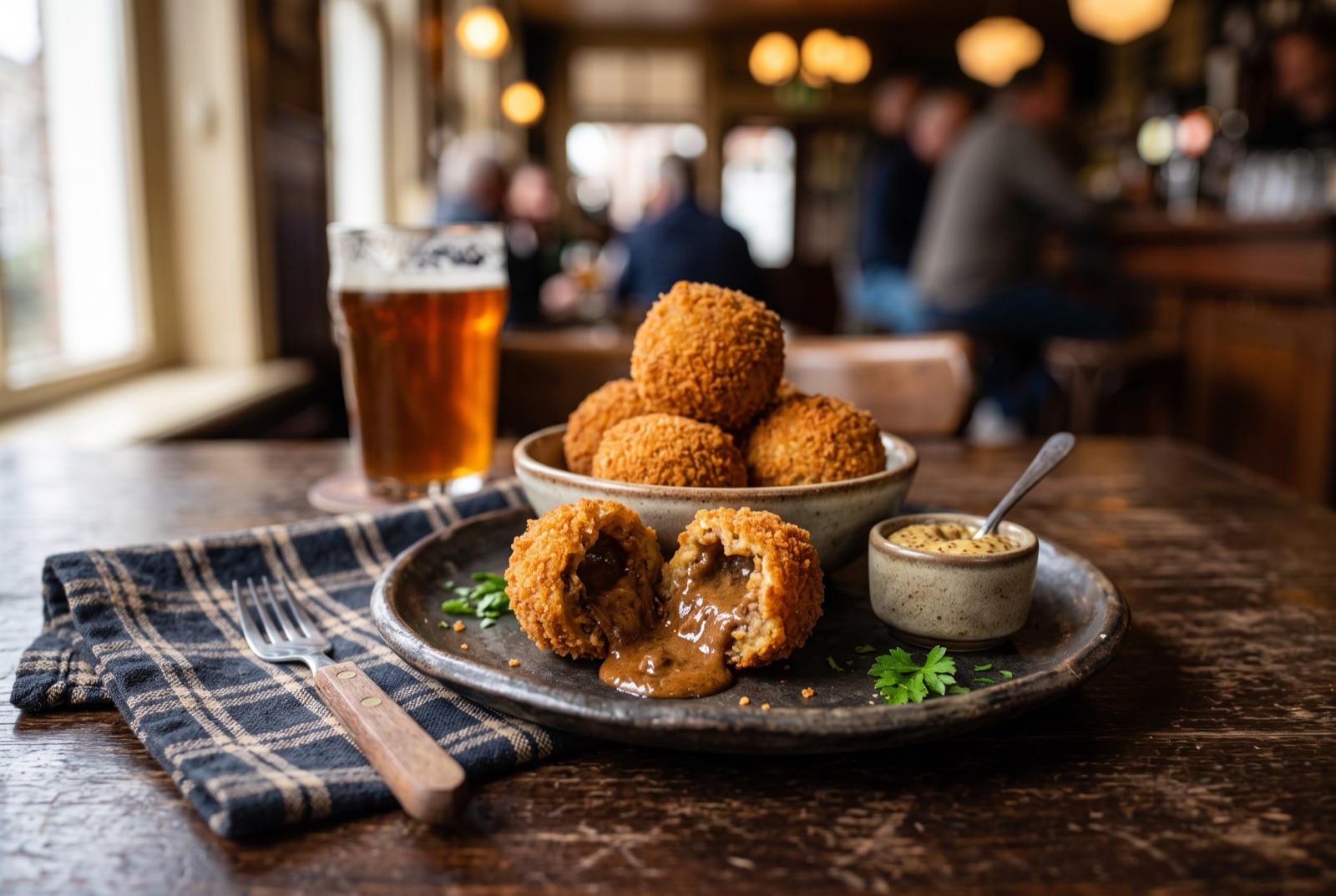
Keep exploring Netherlands.
Netherlands has 9 more dishes in the atlas — Bitterballen and Draadjesvlees, and 7 more.
Recipe by The DishRoute Kitchen · published August 19, 2026 · updated August 19, 2026