Fërgesë Tirane.
Pepper, Tomato and Curd Bake
Fërgesë e Tiranës · say it: fur-GUH-suh tee-RAH-neh
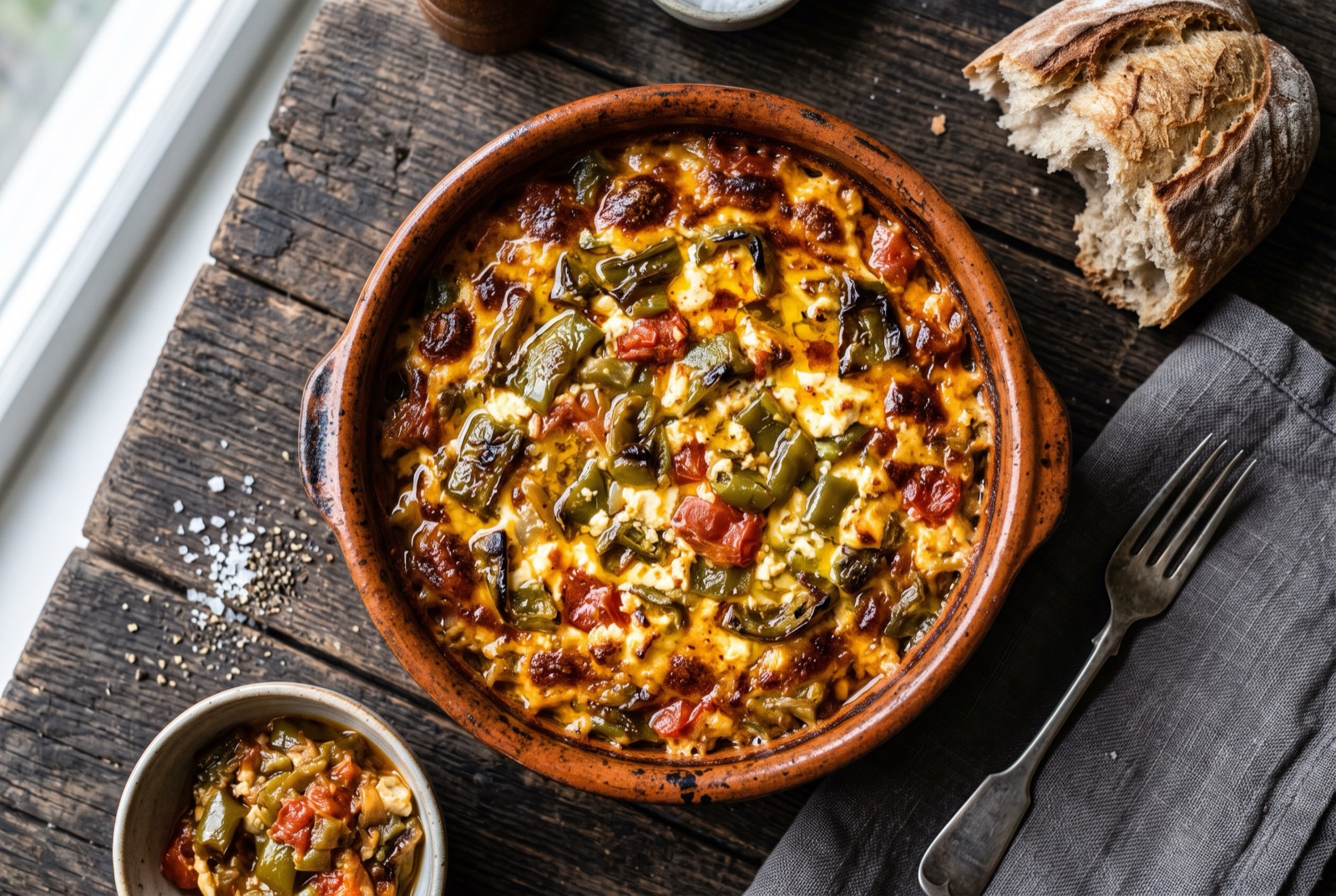
Fërgesë is what arrives first at almost any Albanian restaurant table. Green peppers and ripe tomatoes are fried in olive oil until they collapse and sweeten, then stirred together with gjizë — the fresh curd left from cheesemaking — and baked in a small earthenware dish until the surface takes colour and the edges catch. It comes out somewhere between a dip, a gratin and a very loose scrambled cheese, tasting of sweet cooked pepper, sharp tomato and mild sour dairy, with the olive oil pooling at the rim. It is eaten hot with bread, shared from the middle of the table, and traditionally chased with raki. Nothing about it is refined, and that is exactly the appeal.

- Gate
- AlbaniaTirana
- Prep
- 15 min
- Cook
- 35 min
- Total time
- 50 min
- Serves
- 4
- Status
- Easy
- Nutrition / serving · estimated
- Calories 360 kcal
- Protein 15 g
- Carbs 16 g
- Fat 27 g
- Fiber 3 g
- Sugar 8 g
- Sodium 560 mg
Why this recipe works.
- Fries the peppers and tomato down properly first, which is where the sweetness comes from — no shortcut works here.
- Adds the curd off the heat so it stays in soft curds rather than melting into a uniform paste.
- Includes the flour-and-butter trick Albanian cooks use to stop the mixture weeping oil and water.
- A twenty-minute vegetarian starter that scales cleanly from two people to a full meze table.
Ingredients.
13 itemsFor the base
To bind
To finish
Equipment
- Wide frying pan
- Small clay dish or shallow ovenproof dish
- Wooden spoon
Instructions.
Soften the onion and peppers
Warm the olive oil in a wide pan over medium heat and cook the onion for 5 minutes until translucent. Add the chopped green peppers and cook for 12–15 minutes, stirring now and then, until they slump completely and start to catch gold at the edges.
Tip Rushing this step is the main reason home fërgesë tastes flat. The peppers should taste sweet before anything else goes in.
Add garlic and tomato
Stir in the garlic and the hot pepper if using, cook one minute, then add the grated tomatoes. Simmer for 10 minutes until the mixture thickens, turns glossy and the oil pulls away to the sides of the pan.
Make the binding paste
Push the vegetables to one side, drop in the butter and let it melt, then whisk the flour into it and stir for a minute until it smells toasted. Fold it through the vegetables so everything is lightly bound.
Tip This is what stops the finished dish weeping oil and water on the plate.
Fold in the curd off the heat
Take the pan off the heat and let it cool for two minutes, then fold in the crumbled curd, the white cheese and the black pepper. Keep the mixture loose and lumpy — you want visible curds, not a smooth purée. Taste and add salt.
Bake until browned
Spread into a shallow clay or ovenproof dish and bake at 210°C for 15–18 minutes, until the top is patchily browned, the edges are bubbling and the surface has firmed enough to hold the mark of a spoon.
Serve bubbling
Scatter the parsley over and bring the dish to the table immediately, with plenty of bread for scooping. Eat it directly from the dish, as everyone in Tirana does.
Tips from our kitchen.
- Cook the peppers longer than you think — they should be genuinely soft and sweet, not still squeaky, before the tomato goes in.
- Use ripe tomatoes and cook them until the mixture stops looking watery and starts looking glossy, or the bake will be thin.
- Stir the curd in off the heat. Adding it to a hot pan makes it grainy and squeaks it into rubber.
- Season the curd separately before mixing; it is bland and will flatten the whole dish if you rely on the vegetables for salt.
- A shallow, wide dish gives more browned surface, which is the best part. Deep dishes give you a pale middle.
- Serve it straight from the oven with bread already on the table — fërgesë loses its charm the moment the oil cools and sets.
Substitutions.
- Gjizë (fresh curd) → Dry ricotta, or a mix of ricotta and crumbled feta
- Gjizë is drier and tangier than ricotta. If using ricotta alone, add 50 g of feta and reduce the added salt.
- Long green peppers → Romano peppers or green bell peppers
- Bell peppers hold more water, so cook them 5 minutes longer to drive it off before the tomato goes in.
- Fresh tomatoes → 400 g tinned chopped tomatoes, well drained
- A perfectly normal winter substitution in Albania too. Drain them or the mixture will not thicken.
Variations.
- Fërgesë me mish
- Cubes of veal browned into the base before the peppers go in, turning the starter into a substantial main course served with bread.
- Fërgesë me mëlçi
- The liver version, closely related to tavë dheu — seared liver folded through the pepper and curd base just before baking.
- With egg
- A beaten egg stirred into the curd before baking, which sets the mixture more firmly so it can be cut into wedges rather than scooped.
Storage & reheating.
Fërgesë keeps 3 days refrigerated and is decent cold, spread on bread like a thick relish. Reheat in a covered dish in a 180°C oven for 10 minutes rather than in a microwave, which splits the oil out. It does not freeze — the curd goes grainy and the peppers turn to water when thawed.
Serve with
Warm bread, olives, white cheese and a small glass of raki — the standard opening of an Albanian meal.
The story behind Fërgesë Tirane.
The full name is fërgesë e Tiranës, and Tirana claims it firmly enough that the dish functions as a civic emblem. The verb behind it, fërgoj, simply means to fry, which tells you how the dish is built: everything goes into hot oil first, and the oven is only there to set it and brown the top. Peppers, tomatoes and fresh curd were the three things a central Albanian household would reliably have in late summer, and the dish is what happens when a cook with those three things and a hot clay pot stops trying to be clever.
There are two versions and both are called fërgesë. The vegetarian one — peppers, tomato, curd, sometimes a beaten egg or a spoon of flour to help it hold together — is the everyday version and by far the more common in restaurants. The other is fërgesë me mish, or fërgesë Tirane me tëlyen, made with cubed veal or liver browned into the same base, which turns it from a starter into a main. Some households finish it with a spoonful of tëlyen, the clarified butter of the north, in place of some of the olive oil, giving a rounder, more savoury flavour. All of these are considered legitimate and none is the definitive version.
What is consistent is the setting. Fërgesë belongs to the meze table — small hot dishes brought out one at a time to be shared, alongside tavë dheu, olives, white cheese and pickles, while people drink and talk for a couple of hours before anything resembling a main course appears. It is deliberately built to be eaten slowly and to survive on the table without getting cold too quickly, which is the entire reason for the clay dish. Order it in Tirana and it will still be blipping at the edges when it lands in front of you.
Questions, answered.
What exactly is fërgesë?
It is a hot Albanian starter of green peppers and tomatoes fried down in olive oil, then combined with fresh curd cheese and baked in a small clay dish until browned on top. The name comes from the Albanian verb for frying. It is most associated with Tirana, where it is served as fërgesë e Tiranës, and it exists in both vegetarian and meat versions.
Why did my fërgesë turn out watery?
The vegetables were not cooked down far enough. Peppers and especially tomatoes carry a lot of water, and the mixture needs to be fried until it looks glossy and thick and the oil begins to separate at the edge of the pan before the curd goes in. Wet curd also contributes, so drain ricotta or cottage cheese in a sieve for half an hour first.
Can I make fërgesë without a clay dish?
Yes. Any shallow ovenproof dish, small cast-iron pan or individual gratin dishes will do. Clay is traditional because it holds heat long enough to keep the dish bubbling on the table, which matters when it is being shared slowly over drinks. If you use metal, expect it to brown a few minutes faster, so start checking early.
Is fërgesë vegetarian?
The standard version is, made only with peppers, tomato, olive oil and fresh curd. There are well-known meat versions — fërgesë me mish with veal, and a liver version — but if you order fërgesë plainly in Albania you will usually get the vegetarian one. It is not vegan, since curd cheese is the defining ingredient.
What do I eat it with?
Bread, above all — fërgesë is scooped rather than plated, and a good loaf is half the dish. It normally arrives as part of a shared meze spread with olives, white cheese, pickled vegetables and raki, before any main course. If you want to build a meal around it, serve it with a tomato and cucumber salad and grilled meat or fish.
You might also like.
All recipes →
Keep exploring Albania.
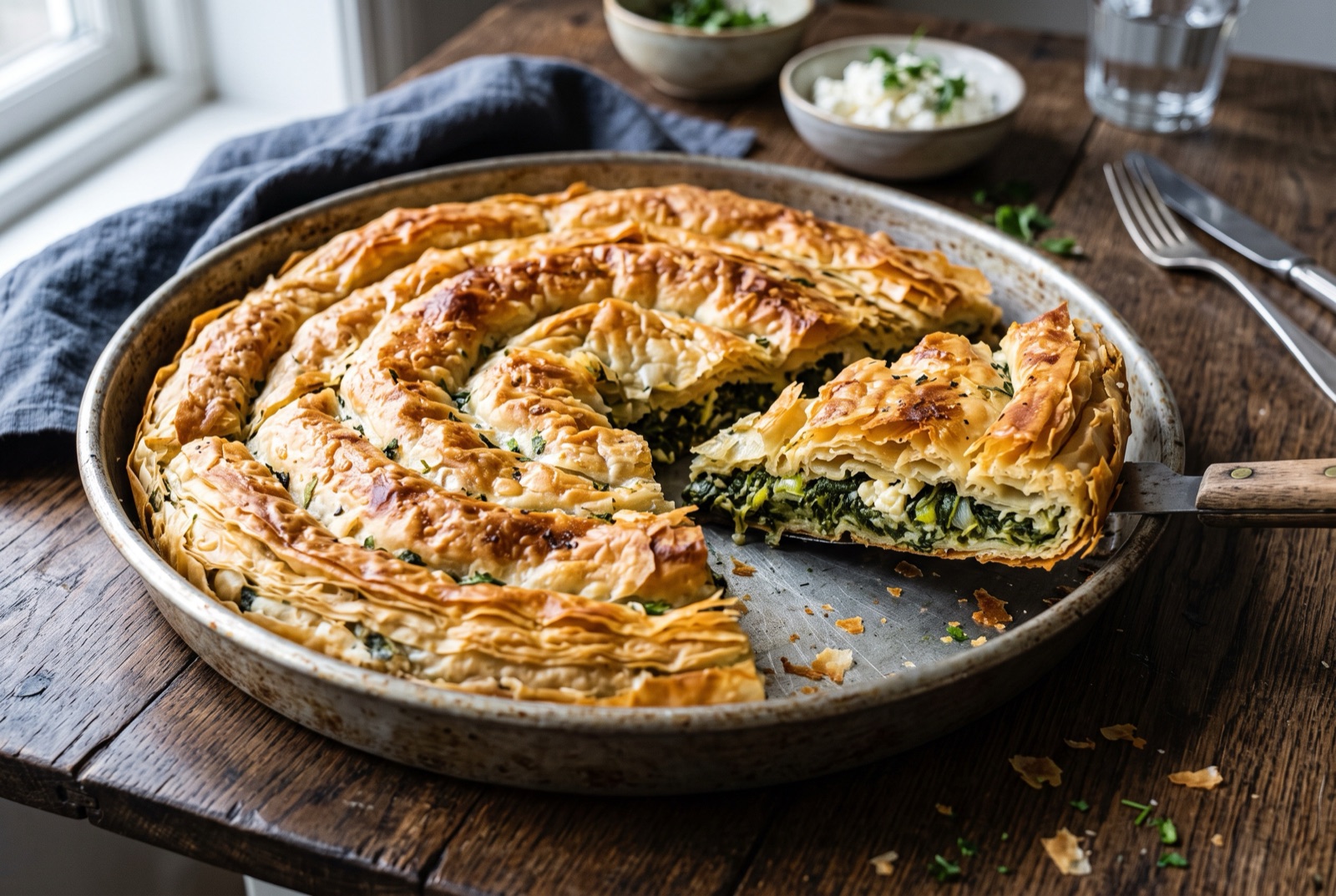
Albania has 9 more dishes in the atlas — Byrek me Spinaq and Jani me Fasule, and 7 more.
All Albania recipes Bell pepper recipes Tomato recipes Olive oil recipes appetizervegetariangluten freeRecipe by The DishRoute Kitchen · published August 20, 2026 · updated August 20, 2026