Fufu.
Ghanaian Pounded Cassava and Plantain
Fufuo · say it: FOO-foo
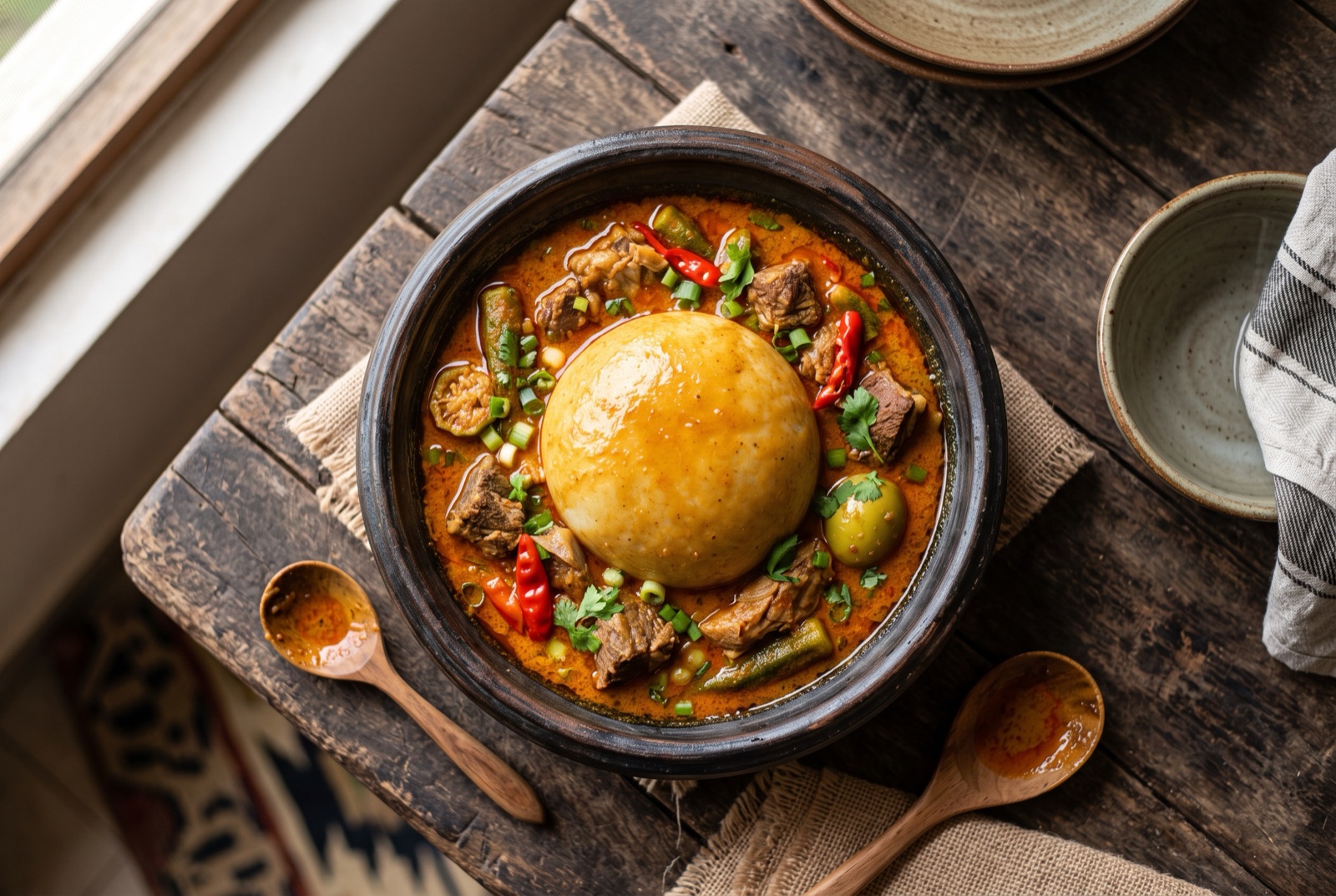
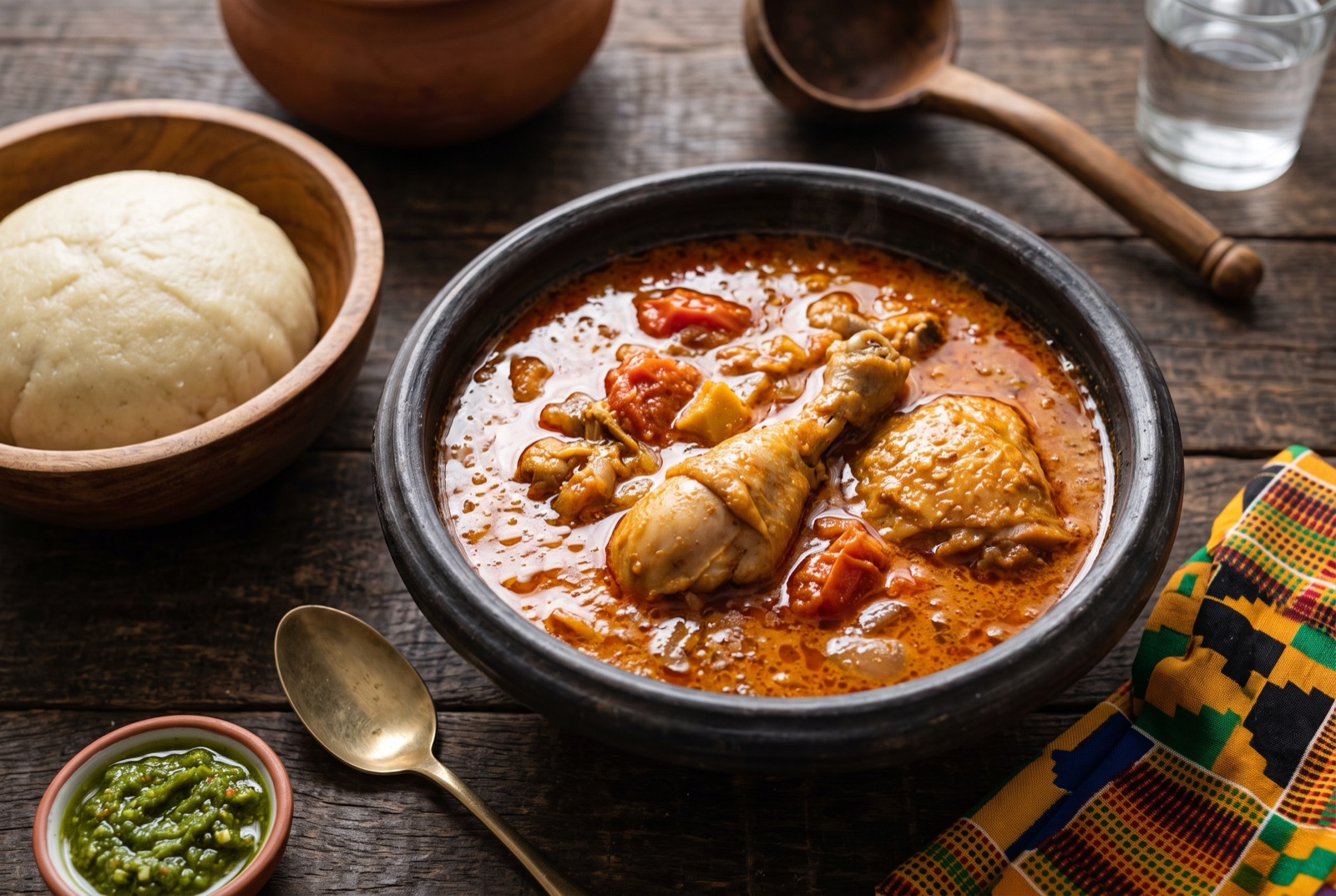
Fufu is a soft, stretchy dough of boiled cassava and unripe plantain, pounded until it has no lumps at all and pulls back when you press it. It has almost no flavour of its own — very faintly sweet from the plantain, faintly sour from the cassava — because its work is to carry soup. A ball sits in a bowl of light soup or groundnut soup, and you pinch off a piece with your right hand, dip it, and swallow it whole without chewing. Getting the texture right is the entire skill: it must be smooth, glossy, elastic and completely free of grain.

- Gate
- GhanaAshanti and the Akan south
- Prep
- 20 min
- Cook
- 35 min
- Total time
- 55 min
- Serves
- 4
- Status
- Takes skill
- Nutrition / serving · estimated
- Calories 400 kcal
- Protein 3 g
- Carbs 96 g
- Fat 1 g
- Fiber 6 g
- Sugar 8 g
- Sodium 25 mg
Why this recipe works.
- Gives the cassava-to-plantain ratio that produces a stretchy dough rather than a gluey or crumbly one.
- Works with a stand mixer or food processor step by step, since almost nobody outside West Africa owns a waduro.
- Flags the woody core in cassava that ruins the texture if it goes into the pot with everything else.
- Is honest about instant fufu flour, which is used widely in Ghana itself and is not a shameful shortcut.
Ingredients.
4 itemsFor the dough
Equipment
- Two saucepans
- Stand mixer with dough hook or food processor (or a wooden mortar and pestle)
- Bowl of warm water for shaping
Instructions.
Prepare the cassava
Peel the cassava down to the white flesh, halve each piece lengthways and pull out the tough fibrous cord running through the middle. Cut into even 5 cm chunks so they cook at the same rate.
Tip That central cord never softens. Left in, it shows up as strings running through the finished ball.
Boil separately
Put the cassava in one pan of unsalted boiling water and the green plantain in another. Cook the cassava for 25 minutes and the plantain for 15, until each piece gives completely under light pressure from a fork with no firm core. Drain both.
Break down the plantain first
Working while everything is still steaming hot, put the plantain into the mixer bowl or processor and run it until it forms a coarse, sticky mass with no visible chunks. Plantain is denser, so it needs the head start.
Add the cassava and work it
Add the hot cassava a few pieces at a time, with a tablespoon of warm water between additions, and keep the machine running. Work for 8–10 minutes total, until the mass turns pale, glossy and elastic and starts to climb the hook or pull away from the sides in one piece.
Tip Add water sparingly. A slack dough cannot be shaped and cannot be rescued by more cassava.
Test the stretch
Pull a small piece between two wet fingers. It should stretch several centimetres before it parts, with a smooth break rather than a crumbly one. If it snaps straight away, return it to the machine for another two minutes.
Shape the balls
Wet both hands in warm water and roll the dough into four smooth balls, turning each one against a cupped palm until the surface is glossy with no cracks or dimples. Re-wet your hands for every ball.
Serve into soup
Set a ball in the bottom of each bowl and ladle hot soup around it so roughly a third of the fufu stands clear of the liquid. Serve immediately, with a bowl of water for washing hands at the table.
Tips from our kitchen.
- Use unripe plantain — green skin, hard to peel, no give at all. Any yellow on the skin means sugar, and sweet fufu is wrong beside a savoury soup.
- Cut out the fibrous cord running down the centre of each cassava root before boiling. It never softens and shows up as stringy threads in the finished dough.
- Boil the cassava and plantain in separate pots. Cassava takes longer, and cooking them together leaves you with one component overdone and the other still hard.
- Keep a bowl of warm water beside you and wet your hands constantly while shaping. Dry hands tear the surface and leave the ball pocked instead of glossy.
- Pound or process while the pieces are genuinely hot. Once they cool below hand-hot the starch stiffens and the dough turns grainy no matter how long you work it.
- Test by stretching: a small piece pulled between two fingers should extend several centimetres before it breaks. If it snaps immediately, keep working it.
Substitutions.
- Fresh cassava and plantain → Packet fufu flour (plantain or cassava blend)
- Stirred hard into boiling water for 8–10 minutes, this gives a very respectable ball and is what a large share of Ghanaian households use midweek. The texture is slightly denser and the flavour flatter, but nobody in Ghana considers it fake.
- Unripe plantain → Cocoyam (taro)
- The cassava-and-cocoyam version is standard in parts of Ghana and gives a softer, smoother, slightly stickier dough. Use the same weight and boil it for about 20 minutes.
- A wooden mortar and pestle → A stand mixer with the dough hook, or a food processor
- Neither reproduces pounding exactly — the dough comes out denser and less airy — but both get you to a smooth, elastic ball, which is the part that actually matters at the table.
Variations.
- Cassava and cocoyam fufu
- The softer southern version, made without plantain. Smoother and slightly tackier, and often preferred with palm nut soup.
- Yam fufu
- Made from boiled white yam alone, pale and firm, with a cleaner flavour. Closer to the Nigerian pounded yam that is often confused with fufu.
- Instant fufu
- Cassava or plantain flour beaten into boiling water on the stove for around ten minutes. Ready in a fraction of the time and in wide use across Ghana.
Storage & reheating.
Fufu is at its best within the hour and stiffens badly in the fridge, so make what you will eat. If you must keep it, wrap each ball tightly in cling film while still warm and refrigerate for up to 2 days; revive it by steaming for 10 minutes and working it briefly with wet hands until it turns elastic again. Microwaving dries the surface into a skin. It does not freeze usefully — thawed fufu is crumbly and no amount of working brings the stretch back.
Serve with
Light soup with goat or fish, groundnut soup, or palm nut soup — always poured around the ball in the same bowl, never served on a separate plate.
The story behind Fufu.
In Ashanti kitchens fufu is made in a waduro, a heavy wooden mortar the size of a stool, with a long pestle worked standing up. It is a two-person job. One person raises and drops the pestle in a steady rhythm; the other crouches beside the mortar and turns the dough between strikes, wetting a hand in a bowl of water so nothing sticks, pulling the mass back into the centre before the next blow lands. The timing between the two people is the difficult part, and mistiming it is how the turner gets injured. The sound of pounding in a compound in the late afternoon is one of the recognisable noises of a Ghanaian town.
The machine has arrived, and Ghanaians argue about it the way other countries argue about bread machines. Motorised fufu pounders are now common in cities, instant fufu flour sits in every supermarket, and plenty of households have not touched a mortar in years. Purists say a machine dough is denser and lacks the elasticity that comes from air worked in by hand; people who cook every day point out that pounding fufu after work is a genuine labour. Both positions are honest, and the dish survives either way.
What does not change is how it is eaten. Fufu is never a plate of its own — it goes into a bowl and soup is poured around it, with the meat or fish placed on top. You eat with the right hand, pinch, dip, swallow. Chewing fufu is the classic outsider mistake, and Ghanaians will tell you it makes the fufu sit heavy; the dough is meant to go down carrying soup. Sunday afternoon after church, with light soup and goat, is when it is most likely to appear, and it is the food Ghanaians abroad name first when asked what they miss.
Questions, answered.
Why is my fufu lumpy instead of smooth?
Either the cassava was not fully cooked or you stopped working it too soon. Every piece must be soft enough to crush with light finger pressure before pounding starts, and the dough needs continuous working until no grain remains. Letting the pieces cool before you start also causes it, because cooled starch firms up and resists breaking down.
Am I really not supposed to chew fufu?
Correct — it is pinched off, dipped in soup and swallowed. The dough is deliberately smooth and elastic so it goes down easily, and it is designed to carry soup rather than to be tasted on its own. Chewing it produces a heavy, gluey mouthful, which is why Ghanaians warn visitors about it before the first bite rather than after.
Is fufu flour an acceptable substitute for pounding?
Yes. Instant fufu flour is sold everywhere in Ghana and used constantly in busy households, so it is not a foreign compromise. You beat it hard into boiling water over heat for eight to ten minutes. The result is a little denser and less springy than pounded fufu, and most people accept that trade on a weeknight.
Do I need to worry about raw cassava?
Cassava must be peeled and thoroughly cooked before eating — this is standard practice everywhere it is grown and not an exotic precaution. Remove the skin and the woody central cord, boil until completely soft, and discard the cooking water. Never taste or process cassava raw.
What ratio of cassava to plantain should I use?
Two parts cassava to one part unripe plantain by weight is the common Akan proportion and gives a good stretch. More plantain makes a firmer, slightly sweeter ball; more cassava makes it softer and stickier. Adjust once you know which texture you prefer, because households genuinely differ on this.
You might also like.
All recipes →
Keep exploring Ghana.
Ghana has 9 more dishes in the atlas — Banku and Ghana Jollof, and 7 more.
Recipe by The DishRoute Kitchen · published August 20, 2026 · updated August 20, 2026