Kelewele.
Ghanaian Spiced Fried Plantain
Kelewele · say it: keh-leh-WEH-leh
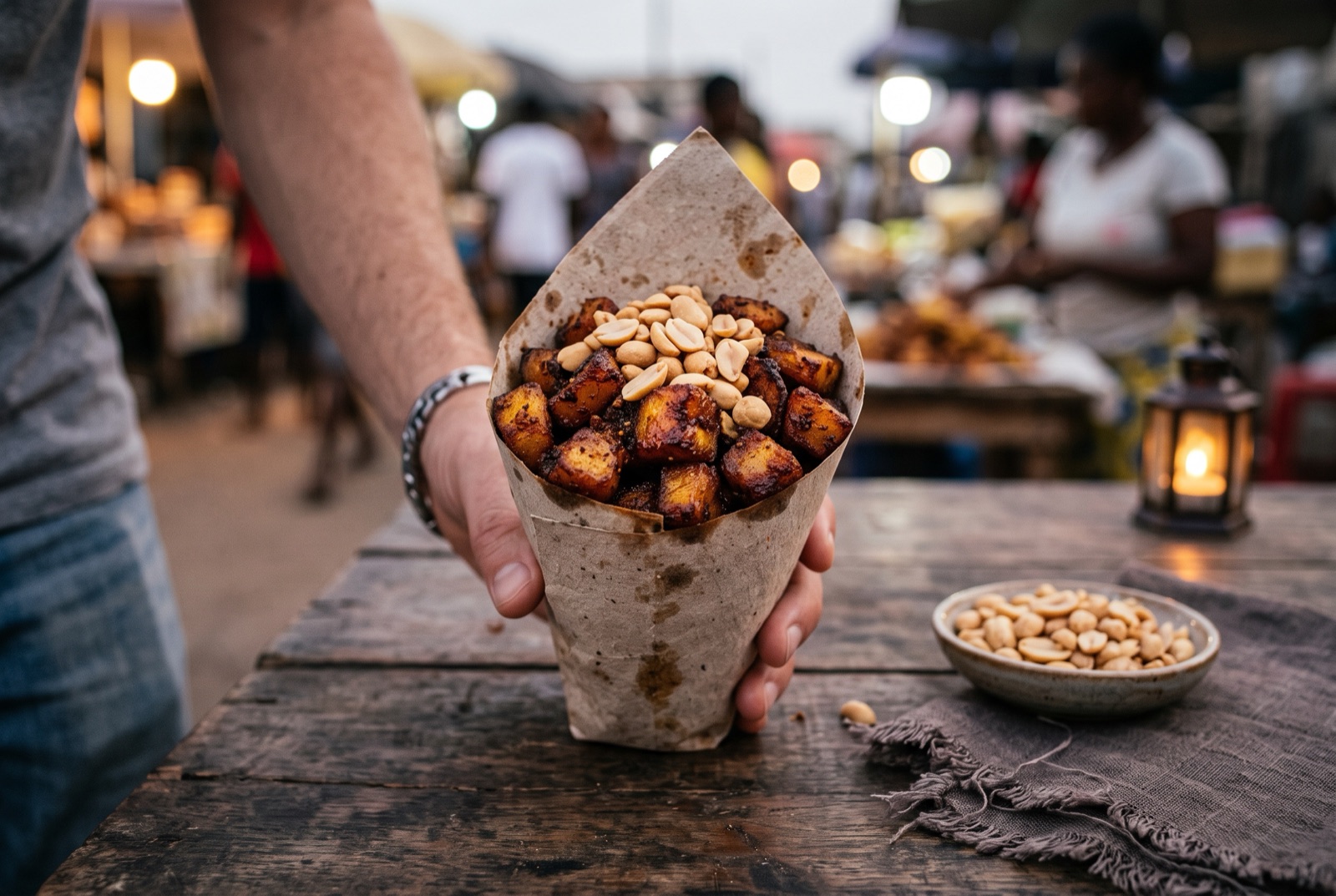
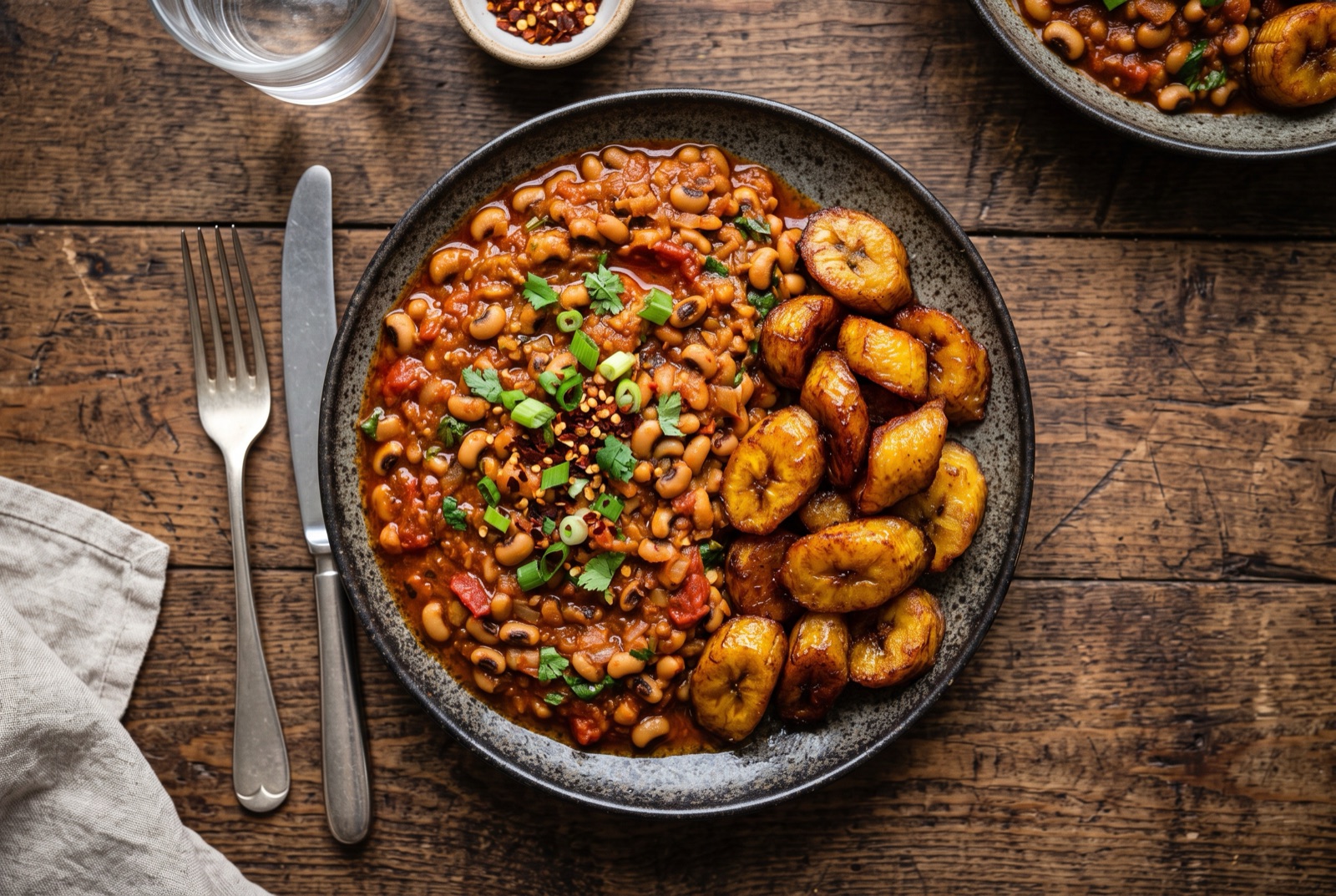
Kelewele is fried plantain with an argument in it. The cubes are cut from plantains ripe enough that the skin has gone black, then rubbed with grated ginger, ground chili, cloves and anise and left to sit before they hit hot oil. What comes out is sweet on the inside and genuinely hot on the outside, with the spices caramelising into a dark crust that tastes of ginger first and chili a moment later. It is a snack rather than a side, sold from roadside pans in the evening in paper cones, usually with a handful of roasted groundnuts tipped over the top.

- Gate
- GhanaGreater Accra
- Prep
- 15 min
- Cook
- 15 min
- Total time
- 45 min incl. 15 min rest
- Serves
- 4
- Status
- Easy
- Nutrition / serving · estimated
- Calories 340 kcal
- Protein 4 g
- Carbs 56 g
- Fat 13 g
- Fiber 4 g
- Sugar 26 g
- Sodium 480 mg
Why this recipe works.
- Uses a wet spice rub rather than a dry dusting, so the seasoning actually clings to the plantain instead of falling into the oil.
- Gives a resting time before frying, which lets the ginger and chili penetrate past the cut surface.
- Sets a specific oil temperature, because the margin between caramelised and burnt on sugar-heavy plantain is very narrow.
- Says plainly how ripe the plantain must be — the single thing that decides whether this works at all.
Ingredients.
10 itemsFor the plantain
For the spice rub
For frying
To serve
Equipment
- Deep frying pan or wok
- Kitchen thermometer
- Slotted spoon
- Wire rack
Instructions.
Mix the rub
Stir the grated ginger, chili, cloves, aniseed, nutmeg, salt and water together in a large bowl into a loose, wet paste. It should pour thickly off the spoon rather than sit as a dry powder.
Cut the plantain
Peel the blackened plantains and cut them into chunks about 2.5 cm across — squares, wedges or the diagonal slices sellers use, as long as they are all the same size. Smaller pieces will burn before the centres soften.
Coat and rest
Turn the chunks through the spice paste with your hands until every face is coated and the plantain looks rust-orange all over. Leave to sit for 15 minutes so the ginger and chili work past the cut surface.
Heat the oil
Bring the oil to 175°C in a deep pan. Test it with a single cube: it should surface within a couple of seconds surrounded by steady, fine bubbles, not violent spitting.
Tip Too hot and the sugars blacken in seconds. Too cool and the plantain drinks oil.
Fry in batches
Lower in a single layer with space between the pieces and fry for 3–4 minutes, turning once, until the outsides are deep mahogany with darker crisp edges and a piece gives easily when pressed with the back of a spoon.
Tip Never fill the pan. Cold plantain drops the oil temperature fast and the batch turns greasy.
Drain and serve hot
Lift the cubes onto a wire rack rather than paper so the crust stays firm, and let the oil come back up to temperature between batches. Tip into paper cones or a bowl, scatter over the roasted groundnuts, and eat straight away.
Tips from our kitchen.
- Wait for the skins to go black and slightly wrinkled. Plantain that is merely yellow has not converted enough starch to sugar, and the cubes will fry hard and taste starchy.
- Cut chunky, around 2.5 cm. Small cubes have too much surface area, burn on the outside and go dry before the middle softens.
- Add a tablespoon of water to the spice rub. Dry spices slide off oiled plantain, while a loose paste coats every face of the cube.
- Fry in batches with room between the pieces. A crowded pan drops the oil temperature and the plantain absorbs fat rather than sealing.
- Watch the colour, not the timer. Sugar-heavy plantain goes from mahogany to black in well under a minute at the end.
- Drain on a wire rack rather than a plate. Sitting in its own steam softens the crust you just spent ten minutes building.
Substitutions.
- Ground aniseed → A quarter teaspoon of ground fennel seed, or crushed star anise used sparingly
- Anise gives kelewele its distinctive warm liquorice note behind the ginger. Fennel is the nearest common-cupboard match; star anise is stronger, so use half as much or it takes over.
- Deep frying → Air fryer at 200°C for 12–14 minutes, tossed in a tablespoon of oil first
- It works and the spicing still tastes right, but the crust is drier and less caramelised. Shake the basket twice and expect a slightly firmer bite.
- Dried chili powder → One finely grated fresh scotch bonnet
- Fresh chili brings more aroma and a sharper heat, and it blends easily into the wet rub. Add it to the paste rather than sprinkling it over.
Variations.
- Kelewele with groundnuts
- The classic street pairing: a handful of salted roasted groundnuts tipped over the hot plantain in the cone, so every few bites are crunchy and salty.
- Kelewele with beans
- Served with a bowl of stewed cowpeas as a full plate rather than a snack, which is how it is eaten at lunch spots.
- Milder kelewele
- Chili cut right back and the ginger and anise pushed forward, which is how it is usually made for children at home.
Storage & reheating.
Kelewele is at its peak in the first ten minutes and there is no honest way around that. It holds an hour at room temperature before the crust softens; after that, spread the cubes on a tray and reheat at 200°C for 6–8 minutes, which gets most of the edge back. Refrigerated it keeps 2 days but goes dense and sweet-sour, and it does not freeze — the cell walls collapse and the thawed cubes are mush. Cut and spice the plantain a couple of hours ahead if you need to prep, and fry to order.
Serve with
Salted roasted groundnuts scattered over while hot, and something cold to drink — the chili builds fast in a full cone.
The story behind Kelewele.
This is evening food. Kelewele sellers set up as the light goes, working a wide pan of oil beside a bowl of cut plantain and a jar of spice mix, and the smell of ginger hitting hot fat is one of the markers of an Accra night street. It is bought on the way home, eaten standing up out of a cone of newspaper or brown paper, and the groundnuts scattered over are not decoration — the salt and the crunch cut the sweetness and make it a more complete thing to eat.
The spice mix is where sellers differentiate themselves, and no two are the same. Ginger and dried chili are constant. Beyond that, cloves, anise, nutmeg and black pepper turn up in different proportions, some cooks add grated onion or a little garlic, and a few keep a blend they will not discuss. Ghanaians develop loyalties to particular sellers on this basis, and asking what is in the mix is usually met with a pleasant non-answer.
The technique looks simple and is not entirely forgiving. Plantain at this stage of ripeness is full of sugar, which means the cubes darken very quickly and go from properly caramelised to burnt in under a minute; the oil has to be hot enough to seal them but not so hot that the outside blackens before the inside softens. Overcrowding is the other failure, because too much cold plantain drops the oil temperature and the cubes soak up fat instead of frying. Done right the outside is deep mahogany with slightly crisp edges, and the centre is soft enough to give under light pressure. Kelewele is also eaten in more substantial company — beside rice and beans, with groundnut soup, or as part of a plate of waakye — but the cone on the street is where most people meet it.
Questions, answered.
How ripe should the plantains be?
The skin should be mostly or entirely black, and the fruit should give when you press it. At that point the starch has converted to sugar, which is what lets the cubes caramelise and taste sweet against the chili. Yellow plantain with green tips will fry into something firm and starchy that misses the whole character of the dish.
Why does my kelewele burn before it is cooked through?
The oil is too hot or the cubes are too small. Ripe plantain is full of sugar and browns very fast, so hold the oil around 175°C and cut the pieces to about 2.5 cm so the centre has time to soften. If the outside is already dark, lower the heat and give the pan a minute to settle before the next batch.
What spices go into kelewele?
Ginger and dried chili are in every version. Cloves, anise, nutmeg and black pepper appear in varying combinations, and some cooks add grated onion, garlic or a pinch of salt to the rub. Street sellers guard their exact proportions, so there is no single correct blend — adjust it to your own taste and it is still kelewele.
Can I make kelewele in an air fryer?
Yes. Toss the spiced cubes with a tablespoon of oil and cook at 200°C for 12 to 14 minutes, shaking the basket twice. The result is drier and less caramelised than deep-fried kelewele, with a firmer bite, but the spicing comes through properly and it is a fair everyday version.
Is kelewele a side dish or a snack?
Mostly a snack, eaten from a paper cone on the street in the evening. It also appears as part of a meal — beside rice and beans, with groundnut soup, or on a waakye plate — so both are correct. The cone with roasted groundnuts is how most Ghanaians would picture it first.
You might also like.
All recipes →
Keep exploring Ghana.
Ghana has 9 more dishes in the atlas — Banku and Fufu, and 7 more.
All Ghana recipes Plantain recipes Ginger recipes street foodsnackveganvegetariangluten freedairy freeRecipe by The DishRoute Kitchen · published August 20, 2026 · updated August 20, 2026