Ostropel de Pui.
Chicken in Garlic and Tomato Sauce
Ostropel de pui · say it: oh-stroh-PEL deh POO-ee
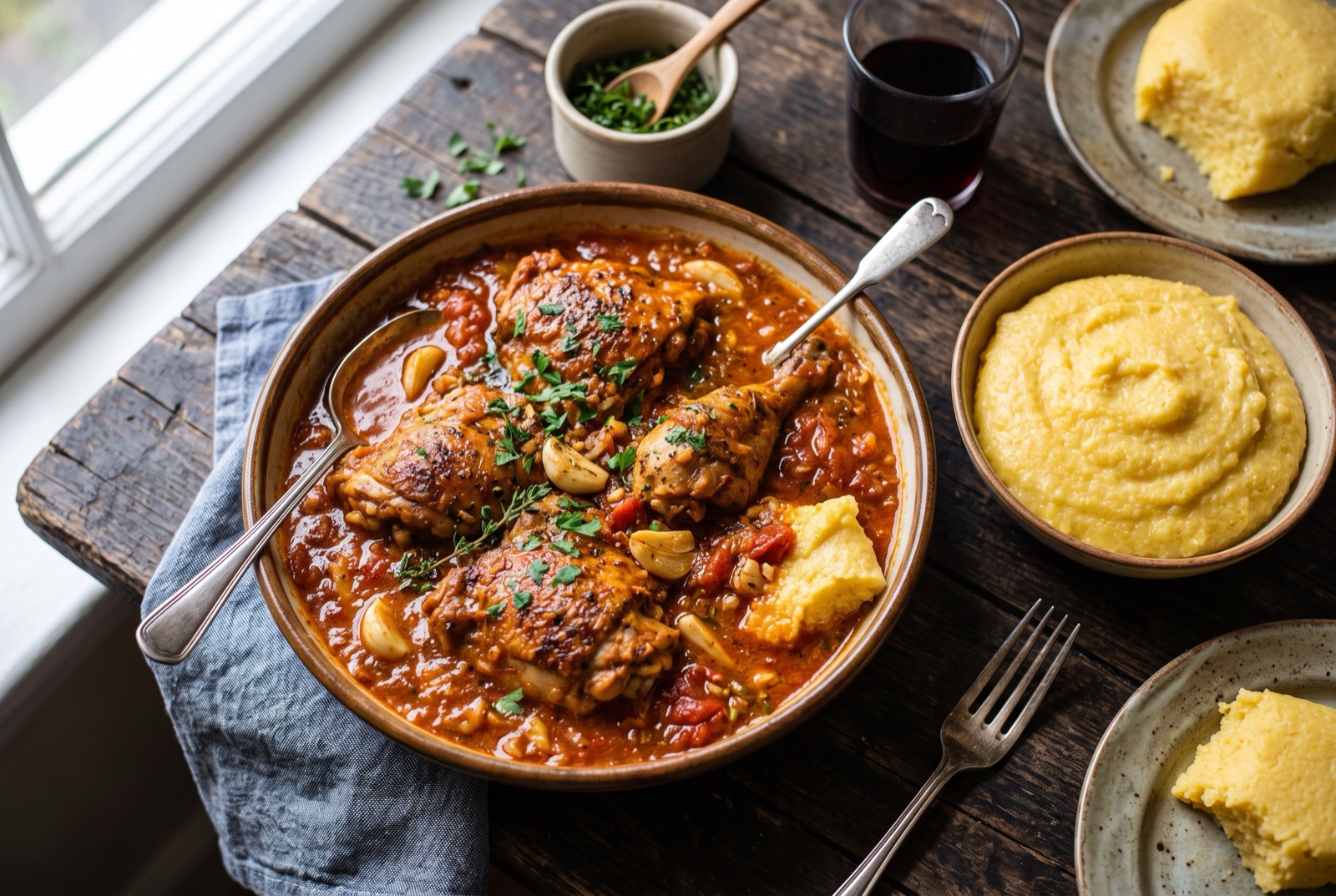
Ostropel is chicken braised in a short, thick tomato sauce built on more garlic than most recipes would dare print — a whole head is normal. The chicken is browned first for colour, then simmered until the sauce clings rather than pools, thickened with a spoonful of flour whisked into water the way a Moldovan grandmother would. It tastes bright and sharply savoury, with the garlic softened by cooking but still clearly the loudest thing on the plate. It takes under an hour, it uses ingredients that are always in the house, and it exists to be eaten with mămăliguță.

- Gate
- Moldova
- Prep
- 15 min
- Cook
- 40 min
- Total time
- 55 min
- Serves
- 4
- Status
- Easy
- Nutrition / serving · estimated
- Calories 520 kcal
- Protein 42 g
- Carbs 16 g
- Fat 32 g
- Fiber 3 g
- Sodium 780 mg
Why this recipe works.
- Bone-in chicken browned properly first, so the sauce tastes roasted rather than boiled.
- Garlic added in two stages — cooked for depth, raw at the end for bite — instead of all at once.
- The traditional flour slurry, explained, so the sauce thickens without the chicken drying out.
- On the table in under an hour with ingredients that live in the cupboard year round.
Ingredients.
13 itemsFor the chicken
For the sauce
To finish
Equipment
- Wide heavy pan or shallow casserole with a lid
- Small bowl and whisk for the slurry
Instructions.
Brown the chicken
Pat the chicken dry, salt it and brown it in the hot oil in two batches, skin side down first, for about 5 minutes a side. Do not move the pieces until they release easily and the skin is deep gold. Set them aside on a plate.
Tip Crowding the pan is the difference between browned chicken and boiled chicken.
Soften the onion
Pour off all but two tablespoons of fat, drop in the onions and cook over medium heat for 8 minutes, scraping the brown crust off the bottom of the pan as they release moisture, until they are soft and translucent.
Bloom the garlic and paste
Add two thirds of the crushed garlic and cook for 30 seconds, only until it smells sweet and not at all browned. Stir in the tomato paste and fry for a full minute, until it darkens to a deep brick red.
Tip Burnt garlic turns bitter and cannot be rescued — keep it moving.
Build the sauce and return the chicken
Tip in the grated tomatoes, bay leaves, pepper and the water, and bring it to a simmer. Nestle the chicken back in skin side up with any juices from the plate, cover, and cook gently for 25 minutes until the meat pulls easily from the bone.
Thicken with the slurry
Whisk the flour into 100 ml of cold water until completely smooth, then stir it into the simmering sauce around the chicken. Cook uncovered for 5 more minutes, until the sauce coats a spoon and slumps slowly rather than running off.
Finish raw and rest
Take the pan off the heat and stir the remaining raw garlic and the parsley into the sauce. Cover and let it stand for 5 minutes so the garlic loses its edge but keeps its bite, then taste and correct the salt before serving over polenta.
Tips from our kitchen.
- Dry the chicken skin with paper before it hits the pan. Wet skin steams grey instead of browning, and the colour is where the flavour starts.
- Do not crowd the pan while browning — work in two batches so the pieces sizzle rather than stew in their own juice.
- Fry the tomato paste for a full minute until it darkens to brick red. Raw tomato paste tastes metallic and sits on top of the sauce.
- Whisk the flour into cold water first, never into the hot pot. Straight flour clumps instantly and the lumps never dissolve.
- Save a third of the garlic to stir in raw at the very end — that late hit is what separates ostropel from an ordinary tomato chicken.
- The sauce should coat the back of a spoon and slump slowly, not run. If it is thin, uncover and simmer five minutes more.
Substitutions.
- Bone-in chicken pieces → Rabbit, or pork shoulder cut into chunks
- Both are traditional. Rabbit needs about the same time; pork shoulder wants an extra 30 minutes at a lower simmer.
- Fresh tomatoes → A jar of passata or a tin of chopped tomatoes
- Out of season, tinned or bottled tomatoes are better than pale fresh ones. Moldovan homes use their own bottled bulion all winter.
- Flour slurry → 1 tsp cornstarch mixed with cold water
- Makes it gluten-free, though the sauce comes out slightly glossier and less soft than the flour version.
Variations.
- Ostropel de iepure
- Made with rabbit, the older village version — leaner meat, and a splash of white wine added with the tomatoes.
- With vinegar
- A tablespoon of wine vinegar stirred in at the end, closer to the sharper historic form of the dish.
- Ostropel de post
- The fasting version with no meat: the same garlic-heavy sauce over thick slices of fried potato or mushrooms.
Storage & reheating.
Keeps three days refrigerated and the garlic mellows and deepens overnight, which many people prefer. Reheat gently with a splash of water, since the sauce thickens further as it chills. It freezes for two months; expect the sauce to look separated on thawing and simply stir it back together over low heat.
Serve with
Mămăliguță (soft polenta), and a plate of pickled cucumbers or soured green tomatoes.
The story behind Ostropel de Pui.
Ostropel is one of those dishes that never got fancy. It has no ceremonial role, no holiday attached, no restaurant reinvention worth mentioning — it is a Tuesday. What it does have is a defining technique, the mujdei principle: garlic crushed with salt and used in volume as a flavour in its own right rather than as a background note. Mujdei, the garlic sauce served with grilled meat and fish across Romania and Moldova, is the same instinct in its purest form, and ostropel is what happens when that instinct meets a pot of tomatoes.
The name has been traced in various directions, most plausibly to older Romance vocabulary for a sharp or vinegary preparation, and older versions of the dish sometimes lean on vinegar as much as tomato. Tomatoes themselves arrived comparatively recently in the region's cooking, but they took hold completely — bulk-preserved every autumn as bulion, a thick homemade tomato passata boiled down and sealed in jars, which is what most households actually reach for when a recipe says tomatoes. Ostropel made with a jar of home bulion in February is a different and better dish than one made with a winter supermarket tomato.
The flour thickening is worth defending. Modern instincts say reduce the sauce instead, but a small slurry of flour whisked into cold water and stirred in near the end does something reduction cannot: it gives the sauce a soft, coating body at a lower temperature, so the chicken does not overcook while you wait for evaporation. It is the same move that appears in dozens of Moldovan stews, and it is why the sauce grips the polenta rather than sliding off it. Rabbit and pork get the ostropel treatment too, and in villages where a rabbit was more likely than a chicken, ostropel de iepure is the version people remember from childhood.
Questions, answered.
Is a whole head of garlic really correct?
Yes. Ostropel is a garlic dish, and Moldovan and Romanian cooks use it in quantities that surprise outsiders. Cooking mellows most of the harshness, and the raw addition at the end supplies the sharpness. If you are cautious, start with eight cloves and taste before adding the raw hit.
Why did my sauce turn out lumpy?
The flour went in dry or into hot liquid. Always whisk flour into cold water until completely smooth, then pour that slurry into the simmering pot while stirring. If lumps have already formed, push the sauce through a sieve — it will not fix itself with more cooking.
Can I use chicken breast?
You can, but it is the weaker choice. Breast dries out over a twenty-minute simmer and contributes nothing to the sauce. Thighs and drumsticks with bone and skin give the sauce body and stay juicy; if you must use breast, cut it thick and add it for only the last ten minutes.
What is mămăliguță and can I use something else?
It is soft cornmeal polenta, the standard Moldovan carbohydrate, cooked thicker than Italian polenta and often turned out as a mound. Mashed potato or plain bread will carry the sauce perfectly well, but polenta is what the dish is designed around.
Can I make it ahead for guests?
Yes, and it is a good candidate. Cook it fully a day early, refrigerate, then reheat gently on the stove with a little water. Add a small amount of fresh raw garlic while reheating to bring back the sharp top note, which softens in the fridge.
You might also like.
All recipes →
Keep exploring Moldova.
Moldova has 9 more dishes in the atlas — Alivenci and Chiftele Marinate, and 7 more.
Recipe by The DishRoute Kitchen · published August 20, 2026 · updated August 20, 2026